Adhyaya 105
Sagara’s Aśvamedha Horse Lost; The Sixty-Thousand Sons Begin the Subterranean Search (Kapila Introduced)
Upa-parva: Tīrtha-yātrā / Purāṇic-Ākhyāna Cycle: The Sagara–Kapila Episode (Lomāśa Narration)
Lomāśa reports that, after an aerial directive is heard, the king complies with what was enjoined. King Sagara, empowered through Rudra’s favor, is said to have sixty-thousand sons of formidable energy who, through overconfidence, harass devas, gandharvas, rākṣasas, and other beings. The afflicted worlds seek refuge in Brahmā, who instructs them to return, foretelling that the Sagaras will soon meet a severe destruction as a consequence of their own deeds. After time passes, Sagara is consecrated for an Aśvamedha; the sacrificial horse, though guarded, disappears near the sea. The sons report the loss and are ordered to search again without returning until the horse is found. They re-scout the entire earth, then discover a rent and begin digging—effectively ‘excavating the ocean’—causing widespread suffering and destruction among subterranean beings. After prolonged effort, in the northeastern region they break into Pātāla, see the horse moving there, and behold the great ascetic Kapila, radiant with tapas, like fire surrounded by flames—closing the chapter on the threshold of the decisive confrontation.
Chapter Arc: Lomasha, guiding Yudhishthira through sacred places, turns the king’s gaze to the ocean-shore and begins the astonishing tale of Agastya—how a single rishi, for the welfare of the worlds, resolved to drink Varuṇa’s abode itself. → Agastya declares his intent openly—he will drink the sea for loka-hita, and commands the gods to swiftly do what must follow. The ocean, vast and inviolable, becomes the stage for a cosmic test: can dharma be served by an act that seems to violate nature’s order? → Before all beings, the unerring son of Mitra and Varuṇa, roused to wrath, drinks the ocean—its waters vanishing as the worlds watch—exposing the hidden terror within and enabling the destruction of the cruel, mighty Kālēyas. → The gods, relieved, praise Agastya: by his grace the worlds gain great happiness and by his radiance the Kālēyas are slain. Yet when they ask for the sea to be restored, Agastya answers with disarming finality: the waters are already digested; another means must be devised. The devas, astonished and downcast, bow and depart; all beings return as they came, and the gods, with Viṣṇu, go to Pitāmaha Brahmā to deliberate the refilling of the ocean. → With the ocean emptied and Agastya unable to return what he has consumed, the devas approach Brahmā—leaving the question hanging: by what new ordinance will the sea be made whole again?
Shlokas
Verse 1
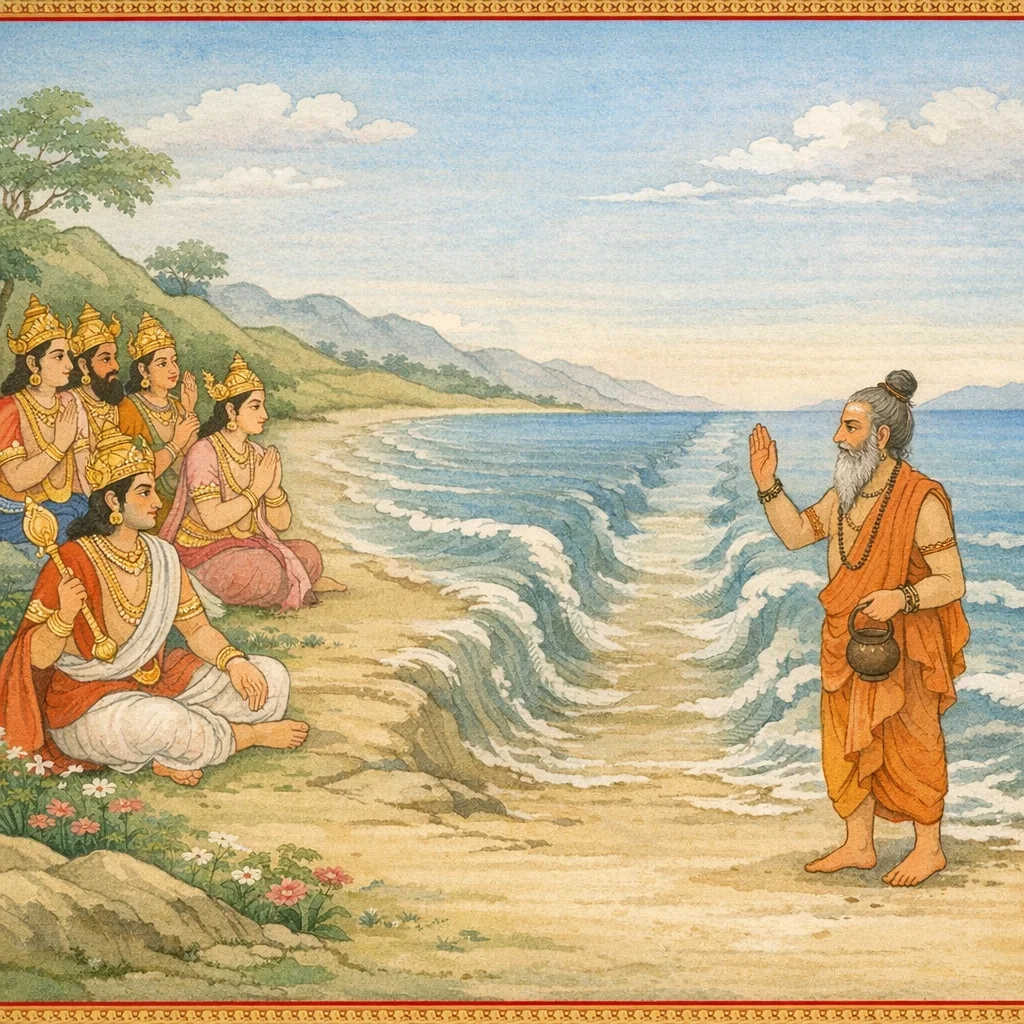
/ (दाक्षिणात्य अधिक पाठका ३ *लोक मिलाकर कुल २४ ३ “लोक हैं) 3 #ासल ९) अपन अभल पञ्चाधिकशततमोब< ध्याय: अगस्त्यजीके द्वारा समुद्रपान और देवताओंका कालेय देत्योंका वध करके ब्रह्माजीसे समुद्रको पुनः भरनेका उपाय पूछना लोगश उवाच समुद्रं स समासाद्य वारुणिर्भगवानृषि: । उवाच सहितान् देवानृषींश्वैव समागतान्,लोमशजी कहते हैं--राजन! समुद्रके तटपर जाकर मित्रावरुण-नन्दन भगवान् अगस्त्यमुनि वहाँ एकत्र हुए देवताओं तथा समागत ऋषियोंसे बोले--“मैं लोकहितके लिये समुद्रका जल पी लेता हूँ। फिर आपलोगोंको जो कार्य करना हो उसे शीघ्र पूरा कर लें!
Lomaśa berkata: “Wahai Raja, setelah mencapai tepi samudra, Bhagawan Agastya—putra Mitra dan Varuṇa—menyapa para dewa yang berkumpul dan para resi yang telah datang.”
Verse 2
अहं लोकहितार्थ वै पिबामि वरुणालयम् । भवद्धिर्यदनुछ्ठेयं तच्छीच्रं संविधीयताम्,लोमशजी कहते हैं--राजन! समुद्रके तटपर जाकर मित्रावरुण-नन्दन भगवान् अगस्त्यमुनि वहाँ एकत्र हुए देवताओं तथा समागत ऋषियोंसे बोले--“मैं लोकहितके लिये समुद्रका जल पी लेता हूँ। फिर आपलोगोंको जो कार्य करना हो उसे शीघ्र पूरा कर लें!
“Demi kesejahteraan dunia, aku akan meminum samudra, kediaman Varuṇa. Maka, apa pun tugas yang harus kalian laksanakan—segeralah tuntaskan.”
Verse 3
एतावदुक्त्वा वचन मैत्रावरुणिरच्युत: । समुद्रमपिबत् क्रुद्ध: सर्वलोकस्य पश्यत:,अपनी मर्यादासे कभी च्युत न होनेवाले मित्रा-वरुण-कुमार अगस्त्यजी कुपित हो सब लोगोंके देखते-देखते समुद्रको पीने लगे
Setelah berkata demikian, Agastya sang Maitrāvaruṇi—yang tak pernah menyimpang dari batas dharmanya—menjadi murka dan, di hadapan pandangan semua makhluk, mulai meneguk samudra.
Verse 4
पीयमानं समुद्र तं दृष्टवा सेन्द्रास्तदामरा: । विस्मयं परमं जग्मु: स्तुतिभिश्चाप्पपूजयन्,उन्हें समुद्र-पान करते देख इन्द्रसहित सम्पूर्ण देवता बड़े विस्मित हुए और स्तुतियोंद्वारा उनका समादर करने लगे
Melihatnya meneguk samudra, para dewa abadi bersama Indra diliputi keheranan yang amat besar, lalu memuliakannya dengan kidung-kidung pujian.
Verse 5
त्वं नस्त्राता विधाता च लोकानां लोकभावन । त्वत्प्रसादात् समुच्छेद॑ न गच्छेत् सामरं जगत्,“लोकभावन महर्षे! आप हमारे रक्षक तथा सम्पूर्ण लोकोंके विधाता हैं। आपकी कृपासे अब देवताओंसहित सम्पूर्ण जगत् विनाशको नहीं प्राप्त होगा'
“Wahai pemelihara makhluk, engkaulah pelindung kami dan penata segala dunia. Berkat anugerahmu, alam semesta ini—bersama para dewa—takkan jatuh ke dalam kebinasaan total.”
Verse 6
स पूज्यमानत्त्रिदशैर्महात्मा गन्धर्वतूर्येषु नदत्सु सर्वश: । दिव्यैश्व पुष्पैरवकीर्यमाणो महार्णवं नि:सलिलं चकार,इस प्रकार जब देवता महात्मा अगस्त्यकी प्रशंसा कर रहे थे, सब ओर गन्धर्वोंके वाद्योंकी ध्वनि फैल रही थी और अगस्त्यजी पर दिव्य फूलोंकी बौछार हो रही थी, उसी समय अगस्त्यजीने सम्पूर्ण महासागरको जलशून्य कर दिया
Ketika para dewa memuliakan Agastya yang berhati luhur, sementara bunyi alat musik para Gandharwa bergema ke segala penjuru dan hujan bunga surgawi ditaburkan ke atasnya—pada saat itulah Agastya menjadikan samudra raya itu tanpa air.
Verse 7
दृष्टवा कृतं निः:सलिलं महार्णवं सुरा: समस्ता: परमप्रहृष्टा: । प्रगृह्य दिव्यानि वरायुधानि तान् दानवाञ्जघ्नुरदीनसत्त्वा:,उस महासमुद्रको निर्जल हुआ देख सब देवता बड़े प्रसन्न हुए। उन्होंने अपने दिव्य एवं श्रेष्ठ आयुध लेकर अत्यन्त उत्साहसे सम्पन्न हो दानवोंपर आक्रमण किया
Melihat samudra raya menjadi tanpa air, semua dewa bersukacita setinggi-tingginya. Mereka mengangkat senjata-senjata ilahi yang unggul, lalu dengan keberanian tak gentar menumpas para Dānawa.
Verse 8
ते वध्यमानास्त्रिदशैर्महात्मभि- महाबलैवेंगिभिरुन्नदद्धि: । न सेहिरे वेगवतां महात्मनां वेगं तदा धारयितुं दिवौकसाम्,महान् बलवान् वेगशाली और महाबुद्धिमान् देवता जब सिंहगर्जना करते हुए दैत्योंको मारने लगे उस समय वे उन वेगवान् महामना देवताओंका वेग न सह सके
Ketika para dewa yang berhati agung—perkasa, cepat, dan mengaum dahsyat—mulai membantai para Daitiya, mereka tak sanggup menahan kedahsyatan laju serangan para penghuni surga itu.
Verse 9
ते वध्यमानास्त्रिदशैर्दानवा भीमनि:स्वना: । चक्रुः सुतुमुलं युद्ध मुहूर्तमिव भारत,भरतनन्दन! देवताओंकी मार पड़नेपर दानवोंने भी भयंकर गर्जना करते हुए दो घड़ीतक उनके साथ घोर युद्ध किया
Wahai Bhārata, putra kebanggaan Bharata! Para Dānawa yang dihantam para dewa, sambil mengaum mengerikan, melancarkan pertempuran yang amat dahsyat; namun perang itu seakan hanya sekejap saja.
Verse 10
ते पूर्व तपसा दग्धा मुनिभिर्भावितात्मभि: । यतमाना: परं शक्त्या त्रिदशैर्विनिषूदिता:,उन दैत्योंको शुद्ध अन्तःकरणवाले मुनियोंने अपनी तपस्याद्वारा पहलेसे ही दग्ध-सा कर रखा था, अतः पूरी शक्ति लगाकर अधिक-से-अधिक प्रयास करनेपर भी देवताओंद्वारा वे मार डाले गये
Mereka telah lebih dahulu seakan terbakar oleh tapa para resi yang berhati suci; maka sekalipun berusaha dengan segenap daya, pada akhirnya mereka ditumpas oleh para dewa.
Verse 11
ते हेमनिष्काभरणा: कुण्डलाड्भदधारिण: । निहता बह्नशोभन्त पुष्पिता इव किंशुका:,सोनेकी मोहरोंकी मालाओंसे भूषित तथा कुण्डल एवं बाजूबंदधारी दैत्य वहाँ मारे जाकर खिले हुए पलाशके वृक्षोंकी भाँति अधिक शोभा पा रहे थे
Para raksasa itu, berhias kalung dan perhiasan emas, mengenakan anting serta gelang lengan, tergeletak terbunuh di sana; namun dalam kejatuhan pun mereka tampak mencolok—laksana pohon kiṃśuka yang sedang mekar penuh.
Verse 12
हतशेषास्तत: केचित् कालेया मनुजोत्तम । विदार्य वसुधां देवीं पातालतलमास्थिता:,नरश्रेष्ठ! मरनेसे बचे हुए कुछ कालेय दैत्य वसुन्धरा देवीको विदीर्ण करके पातालमें चले गये
Wahai manusia utama, kemudian beberapa raksasa Kāleya yang tersisa dari pembantaian merobek Bumi sang Dewi dan berlindung di Pātāla.
Verse 13
निहतान् दानवान् दृष्ट्वा त्रिदशा मुनिपुड्रवम् | तुष्टवुर्विविधैर्वाक्यैरिदं वचनमन्नरुवन्,सब दानवोंको मारा गया देख देवताओंने नाना प्रकारके वचनोंद्वारा मुनिवर अगस्त्यजीका स्तवन किया और यह बात कही--
Melihat para Dānava telah terbunuh, para dewa memandang sang maharsi terunggul (Agastya); dengan hati puas mereka memujinya dengan beragam kata, lalu berkata demikian.
Verse 14
त्वत्प्रसादान्महाभाग लोकै: प्राप्त महत् सुखम् । त्वत्तेजसा च निहता: कालेया: क्रूरविक्रमा:,“महाभाग! आपकी कृपासे समस्त लोकोंने महान् सुख प्राप्त किया है; क्योंकि क्रूरतापूर्ण पराक्रम दिखानेवाले कालेय दैत्य आपके तेजसे दग्ध हो गये
Wahai mulia, berkat anugerahmu semua dunia memperoleh kelegaan dan kebahagiaan besar; sebab para raksasa Kāleya yang ganas dalam keberanian kejam telah ditumpas oleh daya sinarmu.
Verse 15
पूरयस्व महाबाहो समुद्र लोकभावन । यत् त्वया सलिल॑ पीत॑ तदस्मिन् पुनरुत्सूज,“मुने! आपकी बाँहें बड़ी हैं। आप नूतन संसारकी सृष्टि करनेमें समर्थ हैं। अब आप समुद्रको फिर भर दीजिये। आपने जो इसका जल पी लिया है उसे फिर इसीमें छोड़ दीजिये”
Wahai yang berlengan perkasa, penopang dunia, penuhilah samudra kembali. Air yang telah engkau teguk—lepaskanlah lagi ke samudra ini.
Verse 16
एवमुक्त: प्रत्युवाच भगवान् मुनिपुड्भव: । (तांस्तदा सहितान् देवानगस्त्य: सपुरन्दरान् ।) जीर्ण तद्धि मया तोयमुपायो<न्य:प्रचिन्त्यताम्,उनके ऐसा कहनेपर मुनिप्रवर भगवान् अगस्त्यने वहाँ एकत्र हुए इन्द्र आदि समस्त देवताओंसे उस समय यों कहा--'देवगण! वह जल तो मैंने पचा लिया, अतः समुद्रको भरनेके लिये सतत प्रयत्नशील रहकर आपलोग कोई दूसरा ही उपाय सोचें।” शुद्ध अन्तःकरणवाले महर्षिका यह वचन सुनकर सब देवता बड़े विस्मित हो गये; उनके मनमें विषाद छा गया। वे आपसमें सलाह करके मुनिवर अगस्त्यजीको प्रणाम कर वहाँसे चल दिये
Mendengar demikian, Bhagawan Agastya—yang utama di antara para pertapa—menjawab para dewa yang berkumpul, termasuk Indra: “Air itu sungguh telah kucerna. Maka, bila samudra hendak dipenuhi kembali, hendaklah kalian tetap teguh dalam upaya dan memikirkan jalan lain.” Mendengar ujaran yang menggetarkan ini dari maharṣi yang berhati bening, para dewa tertegun; bayang-bayang duka pun menyelimuti batin mereka. Setelah berembuk satu sama lain, mereka bersujud kepada Agastya lalu berangkat pergi.
Verse 17
पूरणार्थ समुद्रस्य भवद्धिर्यत्नमास्थितै: । एतच्छुत्वा तु वचन महर्षेभावितात्मन:,उनके ऐसा कहनेपर मुनिप्रवर भगवान् अगस्त्यने वहाँ एकत्र हुए इन्द्र आदि समस्त देवताओंसे उस समय यों कहा--'देवगण! वह जल तो मैंने पचा लिया, अतः समुद्रको भरनेके लिये सतत प्रयत्नशील रहकर आपलोग कोई दूसरा ही उपाय सोचें।” शुद्ध अन्तःकरणवाले महर्षिका यह वचन सुनकर सब देवता बड़े विस्मित हो गये; उनके मनमें विषाद छा गया। वे आपसमें सलाह करके मुनिवर अगस्त्यजीको प्रणाम कर वहाँसे चल दिये
Lomaśa berkata: “Kalian telah menegakkan upaya untuk mengisi kembali samudra; teruskanlah ketekunan itu—namun kini pikirkanlah jalan yang lain.” Mendengar kata-kata sang maharṣi yang batinnya terlatih dan suci, para dewa terperanjat dan diliputi kemurungan. Setelah berunding satu sama lain, mereka bersujud kepada Agastya lalu pergi.
Verse 18
विस्मिताश्न विषण्णाश्न बभूवु: सहिता: सुरा: । परस्परमनुज्ञाप्य प्रणम्य मुनिपुजड्रवम्,उनके ऐसा कहनेपर मुनिप्रवर भगवान् अगस्त्यने वहाँ एकत्र हुए इन्द्र आदि समस्त देवताओंसे उस समय यों कहा--'देवगण! वह जल तो मैंने पचा लिया, अतः समुद्रको भरनेके लिये सतत प्रयत्नशील रहकर आपलोग कोई दूसरा ही उपाय सोचें।” शुद्ध अन्तःकरणवाले महर्षिका यह वचन सुनकर सब देवता बड़े विस्मित हो गये; उनके मनमें विषाद छा गया। वे आपसमें सलाह करके मुनिवर अगस्त्यजीको प्रणाम कर वहाँसे चल दिये
Tercengang lalu murung, para dewa yang berkumpul menjadi gelisah. Setelah saling berpamitan, mereka bersujud kepada sang mahāmuni Agastya dan berangkat pergi.
Verse 19
प्रजा: सर्वा महाराज विप्रजग्मुर्यथागतम् । त्रिदशा विष्णुना सार्थमुपजग्मु: पितामहम्,महाराज! फिर सारी प्रजा जैसे आयी थी, वैसे ही लौट गयी। देवतालोग भगवान् विष्णुके साथ ब्रह्माजीके पास गये
Wahai Raja, seluruh rakyat pun pergi, kembali sebagaimana mereka datang. Para dewa, bersama Bhagawan Viṣṇu, lalu mendatangi Pitāmaha Brahmā.
Verse 20
पूरणार्थ समुद्रस्य मन्त्रयित्वा पुन: पुन: । (ते धातारमुपागम्य त्रिदशा: सह विष्णुना ।) ऊचुः प्राज्जलय: सर्वे सागरस्थाभिपूरणम्,समुद्रको भरनेके उद्देश्यसे बार-बार आपसमें सलाह करके श्रीविष्णुसहित सब देवता ब्रह्माजीके निकट जा हाथ जोड़कर यह पूछने लगे कि *समुद्रको पुनः भरनेके लिये क्या उपाय किया जाय”
Dengan maksud mengisi kembali samudra, mereka berulang kali bermusyawarah. Lalu, bersama Viṣṇu, para dewa mendatangi Dhātṛ (Brahmā) dan dengan tangan terkatup memohon: “Upaya apakah yang harus ditempuh untuk memenuhi samudra kembali?”
Verse 104
इस प्रकार श्रीमहाभारत वनपर्वके अन्तर्गत तीर्थयात्रापर्वमें लोमशती र्थयात्राके प्रस॑ंगमें अगस्त्यका समुद्रतटटपर गमनविषयक एक सौ चारवाँ अध्याय पूरा हुआ
Demikian berakhir bab ke-104 dari Vana Parva dalam Śrī Mahābhārata, di bagian Tīrthayātrā Parva, pada rangkaian kisah ziarah suci Lomāśa—yang mengisahkan perjalanan Agastya menuju tepi samudra.
Verse 105
इति श्रीमहाभारते वनपर्वणि तीर्थयात्रापर्वणि लोमशतीर्थयात्रायामगस्त्योपाख्याने पजञ्चाधिकशततमो<ध्याय:
Demikian, dalam Śrī Mahābhārata, pada Vana Parva, bagian Tīrthayātrā Parva, dalam kisah ziarah suci Lomāśa, pada episode tentang Agastya, berakhirlah bab ke-105.
Frequently Asked Questions
Whether royal duty to protect ritual legitimacy (recovering the Aśvamedha horse) can justify unbounded coercive action; the narrative frames the sons’ escalation as a failure of proportionality and discernment.
That harm generated by arrogance and indiscriminate force rebounds upon its agents: karmic consequence is depicted as intrinsic to action, not merely as external punishment.
No explicit phalaśruti is stated here; the chapter functions as a causal prologue, positioning Kapila’s tapas as the moral counterweight to violent exertion and preparing the listener for the ensuing resolution.