Sukta 37
Sukta 4.37
Vāmadeva Gautama (traditional attribution for Maṇḍala 4; hymn to the Rbhus/associated powers)
Rbhus (esp. Vāja, Ṛbhukṣaṇa) as divine artisans; invoked also as devāḥ (luminous powers)
Triṣṭubh (probable for RV 4.37; 11-syllable cadence typical of the hymn)
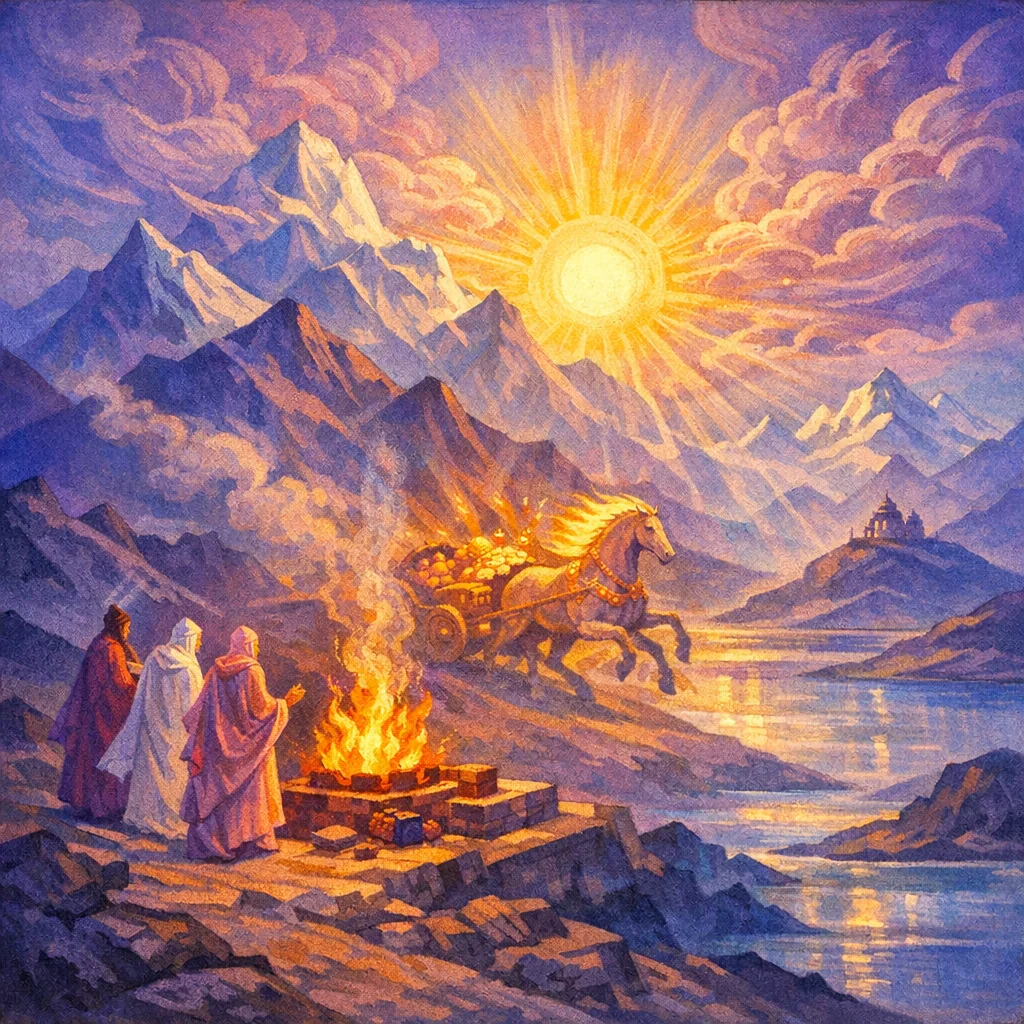
This hymn invites the Rbhus—Vāja and Ṛbhukṣaṇa foremost—divine craftsmen who renew and perfect the rite, to come by the “godward paths” and re-establish the sacrifice among human clans. It asks them to bring rayi (plenitude, wealth, spiritual abundance) and victorious vāja (winning force), linking their aid with Indra’s might and the Aśvins’ swift help. The overall purpose is ritual renewal: to make the yajña run smoothly, delightfully, and fruitfully through auspicious days.
Mantras
Mantra 1
उप नो वाजा अध्वरमृभुक्षा देवा यात पथिभिर्देवयानैः । यथा यज्ञं मनुषो विक्ष्वासु दधिध्वे रण्वाः सुदिनेष्वह्नाम् ॥
Come near to our offering, O Vājas, O Ṛbhukṣaṇas, O bright Powers; travel by the godward paths. As you have set the sacrifice in motion among the human clans, so establish it again—delightful—for us in the fair days of our life.
Mantra 2
ते वो हृदे मनसे सन्तु यज्ञा जुष्टासो अद्य घृतनिर्णिजो गुः । प्र वः सुतासो हरयन्त पूर्णाः क्रत्वे दक्षाय हर्षयन्त पीताः ॥
May the offerings be in your heart and mind—welcome today, shining with the clarity of the anointed Light. Let the pressed Soma-currents, full and overflowing, stream forth for your will and your discerning power; drunk, they make the inner energies rejoice.
Mantra 3
त्र्युदायं देवहितं यथा वः स्तोमो वाजा ऋभुक्षणो ददे वः । जुह्वे मनुष्वदुपरासु विक्षु युष्मे सचा बृहद्दिवेषु सोमम् ॥
As of old, the thrice-uplifted praise—set in the gods—has been given to you, O Vājas, O Ṛbhukṣaṇas. I pour out Soma in the human way, in the higher settlements of the clans, together with you in the vast days of the Greater Heaven.
Mantra 4
पीवोअश्वाः शुचद्रथा हि भूतायःशिप्रा वाजिनः सुनिष्काः । इन्द्रस्य सूनो शवसो नपातोऽनु वश्चेत्यग्रियं मदाय ॥
Rich-horsed, bright-charioted you have become—iron-jawed, forceful, bearing the fair prize. O sons of Indra’s might, descendants of Power, may the foremost rapture move in your wake for the ecstasy of the work.
Mantra 5
ऋभुमृभुक्षणो रयिं वाजे वाजिन्तमं युजम् । इन्द्रस्वन्तं हवामहे सदासातममश्विनम् ॥
We call the Rbhu, the Ṛbhukṣaṇa—bringing the spiritual plenitude (rayi) in the winning force (vāja), the most victorious yoke-fellow. Indra-filled, ever-conquering, he is the Aśvin-like helper we invoke.
Mantra 6
सेदृभवो यमवथ यूयमिन्द्रश्च मर्त्यम् । स धीभिरस्तु सनिता मेधसाता सो अर्वता ॥
He whom you, O Rbhus, and Indra too, protect among mortals—let him become by his illumined thoughts a winner, a conqueror of the light of understanding; let him be one who attains with the steed of energy.
Mantra 7
वि नो वाजा ऋभुक्षणः पथश्चितन यष्टवे । अस्मभ्यं सूरयः स्तुता विश्वा आशास्तरीषणि ॥
Open out for us, O Vājas, O Ṛbhukṣaṇa, the paths for our offering. O seer-powers, praised by us, carry us across all the directions of hope and possibility.
Mantra 8
तं नो वाजा ऋभुक्षण इन्द्र नासत्या रयिम् । समश्वं चर्षणिभ्य आ पुरु शस्त मघत्तये ॥
That plenitude (rayi) for us, O Vājas, O Ṛbhukṣaṇa—O Indra, O Nāsatyas—bring together with the steed of energy for the peoples. Praise it widely, so that the power of generous giving may grow.
Frequently Asked Questions
The Rbhus are divine craftsmen and renewing powers. In RV 4.37 they are called to perfect and re-energize the sacrifice and to bring prosperity and winning strength.
It asks the Rbhus to come by the godward paths, restore the yajña’s effective movement, and grant rayi (plenitude) along with vāja (victorious force) for the people.
The hymn links forms of divine help: Indra represents conquering power, and the Aśvins represent swift assistance. The Rbhus’ gifts of renewal and skill are invoked in harmony with these allied powers.