Sukta 19
Sukta 2.19
Gṛtsamada (traditional for RV 2.19)
Indra
Triṣṭubh (probable for RV 2.19)
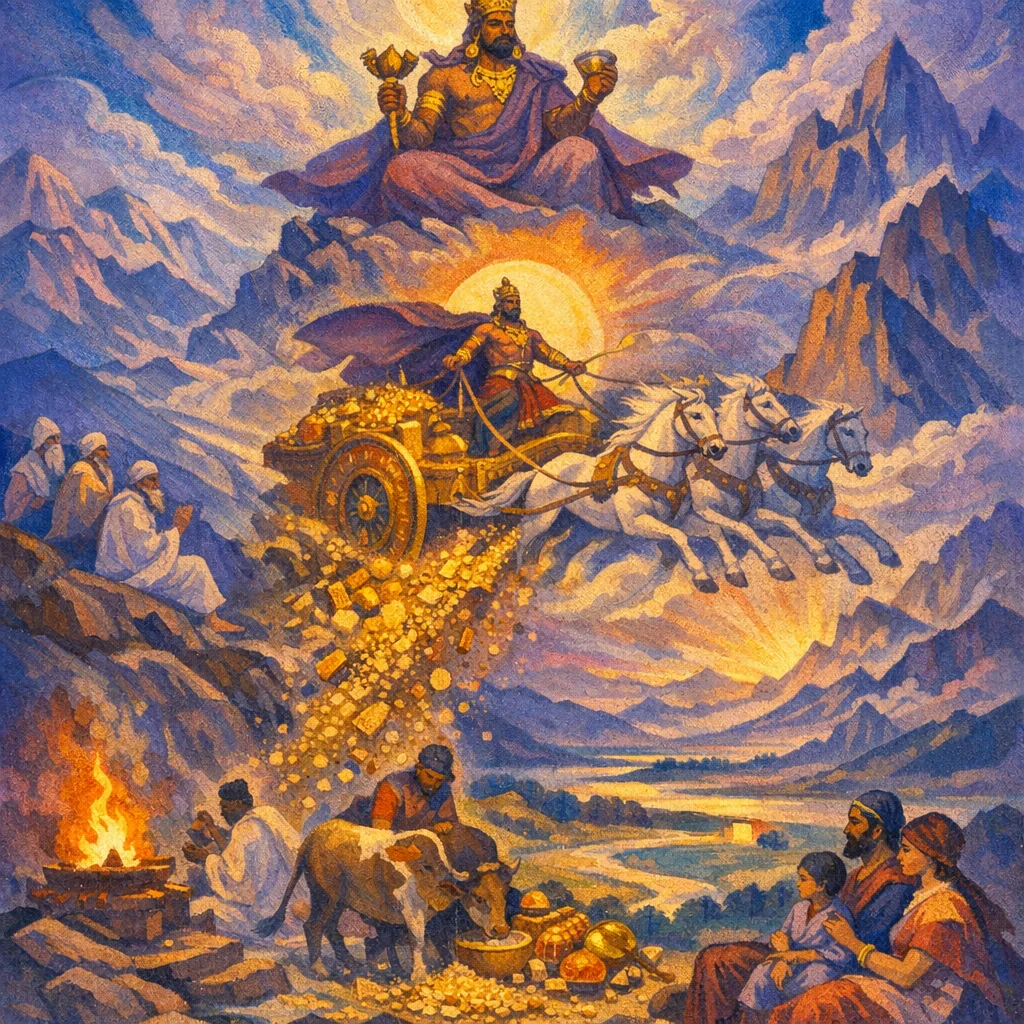
This hymn praises Indra as the Soma-empowered lord who establishes his seat in the “higher heaven,” answers the sacrificer, and brings light, wealth, and victory. It links right praise (brahman) and pressing of Soma with Indra’s tangible gifts—Sun-like illumination, hidden riches, and an undiminished share (bhaga) for the singers. The closing prayer asks that generous Dakṣiṇā be “milked out” for the priestly community so they may speak the Vast (bṛhat) in the assembly with strong progeny and heroic power.
Mantras
Mantra 1
अपाय्यस्यान्धसो मदाय मनीषिणः सुवानस्य प्रयसः । यस्मिन्निन्द्रः प्रदिवि वावृधान ओको दधे ब्रह्मण्यन्तश्च नरः ॥
The pressed delight has been drunk for ecstasy by the seer of thought, from the offering’s fullness; in that (Soma) Indra, growing in the higher heaven, has set his home, and men who seek the Word are gathered to him.
Mantra 2
अस्य मन्दानो मध्वो वज्रहस्तोऽहिमिन्द्रो अर्णोवृतं वि वृश्चत् । प्र यद्वयो न स्वसराण्यच्छा प्रयांसि च नदीनां चक्रमन्त ॥
Rejoicing in this sweetness, Indra, the wielder of the thunder-force, cut apart the serpent who had covered the flood. Then, like birds to their own streams, the movements and forward rushes of the rivers set themselves in motion.
Mantra 3
स माहिन इन्द्रो अर्णो अपां प्रैरयदहिहाच्छा समुद्रम् । अजनयत्सूर्यं विदद्गा अक्तुनाह्नां वयुनानि साधत् ॥
That mighty Indra, slayer of the serpent, drove forth the flood of the waters toward the ocean. He brought the Sun into birth, he found the Rays (cows), and by night and day he accomplished the workings of ordered discernment.
Mantra 4
सो अप्रतीनि मनवे पुरूणीन्द्रो दाशद्दाशुषे हन्ति वृत्रम् । सद्यो यो नृभ्यो अतसाय्यो भूत्पस्पृधानेभ्यः सूर्यस्य सातौ ॥
He, Indra, gave to Manu many irresistible boons; he slays Vṛtra for the giver. He who becomes at once unconquerable for men, in the winning of the Sun, against those who strive in hostility.
Mantra 5
स सुन्वत इन्द्रः सूर्यमा देवो रिणङ्मर्त्याय स्तवान् । आ यद्रयिं गुहदवद्यमस्मै भरदंशं नैतशो दशस्यन् ॥
To the presser, Indra the god brings near the Sun for the mortal who praises. And when he brings to him the hidden plenitude, faultless, he bears it as a due portion, like Etaśa bringing the share, in the act of service.
Mantra 6
स रन्धयत्सदिवः सारथये शुष्णमशुषं कुयवं कुत्साय । दिवोदासाय नवतिं च नवेन्द्रः पुरो व्यैरच्छम्बरस्य ॥
He subdued Śuṣṇa, the drying one, and Kuyava for Kutsa, the charioteer of the heavenly. For Divodāsa, Indra broke open ninety and nine strongholds of Śambara.
Mantra 7
एवा त इन्द्रोचथमहेम श्रवस्या न त्मना वाजयन्तः । अश्याम तत्साप्तमाशुषाणा ननमो वधरदेवस्य पीयोः ॥
Thus, O Indra, we would utter your laud for fame, striving by our own self to win the plenitudes. May we attain that seventh (step/realm), pressing forward; may the weapon of the godless, the swelling hostile force, bow down before us.
Mantra 8
एवा ते गृत्समदाः शूर मन्मावस्यवो न वयुनानि तक्षुः । ब्रह्मण्यन्त इन्द्र ते नवीय इषमूर्जं सुक्षितिं सुम्नमश्युः ॥
Thus the Gṛtsamada seers, desiring your help, O hero, have fashioned their thoughts like skilful workings. Seeking the Word, O Indra, they have reached your newer (higher) gift: the impulsion and the increase, a good settled state, and the grace of plenitude.
Mantra 9
नूनं सा ते प्रति वरं जरित्रे दुहीयदिन्द्र दक्षिणा मघोनी । शिक्षा स्तोतृभ्यो माति धग्भगो नो बृहद्वदेम विदथे सुवीराः ॥
Now indeed, let that bounteous Dakṣiṇā, rich in plenitude, be milked out in response for you, O Indra, for the singer. Grant to the praisers; let not our Bhaga (portion of felicity) be overburnt or diminished; may we speak the Vast (Bṛhat) in the assembly, possessed of good and heroic powers.
Frequently Asked Questions
It teaches that Indra responds to Soma and sincere praise by bringing light (clarity and success), granting wealth (even ‘hidden’ riches), and ensuring the singers receive their rightful share.
Dakṣiṇā is the ritual gift given to priests; calling it ‘to be milked’ uses cow imagery to ask that generous reward and nourishment flow out abundantly for the sacrificer and singers.
Bhaga means one’s allotted portion of good fortune. The hymn asks that this rightful share not be reduced or ‘burnt away,’ so prosperity and strength remain intact.