Sukta 18
Sukta 2.18
Gṛtsamada (Bhārgava) (traditional for RV 2.18)
Indra (hymn context), with chariot imagery central
Triṣṭubh (probable)
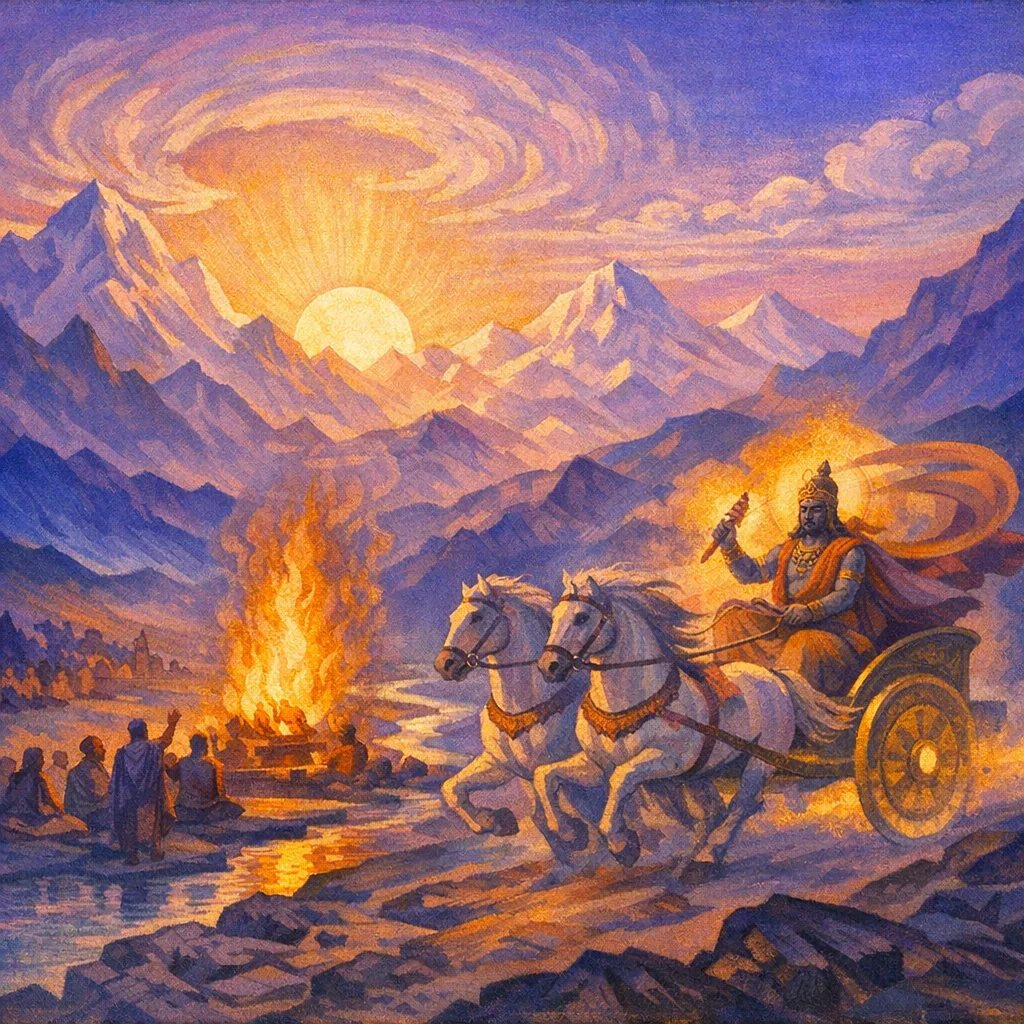
This hymn to Indra evokes the dawn-yoked “new chariot” with richly symbolic parts (multiple yokes, reins, and oars), asking that it become swift through the poets’ offerings and inspired thought. Indra is urgently invited in ever-greater numbers and force to the Soma-drinking, where his arrival secures victory, protection, and the right share (Bhaga) for the sacrificers. The close turns toward dakṣiṇā (the priestly gift) and communal prosperity: may generosity flow, speech be “vast” in the assembly, and the people be endowed with heroic offspring.
Mantras
Mantra 1
प्राता रथो नवो योजि सस्निश्चतुर्युगस्त्रिकशः सप्तरश्मिः । दशारित्रो मनुष्यः स्वर्षाः स इष्टिभिर्मतिभी रंह्यो भूत् ॥
At dawn the new chariot is yoked—bearing its harness, with four yokes, triple-whip, seven-reined; with ten oars, human, winning the solar world. By our offerings and by our thought-impulsions may it become swift to carry us.
Mantra 2
सास्मा अरं प्रथमं स द्वितीयमुतो तृतीयं मनुषः स होता । अन्यस्या गर्भमन्य ऊ जनन्त सो अन्येभिः सचते जेन्यो वृषा ॥
He is fit for this first, he for the second, and also for the third: he is the human Hotar within. One begets the womb of another; and he, the noble Bull, consorts with the others—joining powers into a single working.
Mantra 3
हरी नु कं रथ इन्द्रस्य योजमायै सूक्तेन वचसा नवेन । मो षु त्वामत्र बहवो हि विप्रा नि रीरमन्यजमानासो अन्ये ॥
The two tawny steeds of Indra, indeed, I yoke to his chariot for his coming, with a new and well-fashioned word. Let not many seers here divert you away—other sacrificers, others—drawing you to their call.
Mantra 4
आ द्वाभ्यां हरिभ्यामिन्द्र याह्या चतुर्भिरा षड्भिर्हूयमानः । आष्टाभिर्दशभिः सोमपेयमयं सुतः सुमख मा मृधस्कः ॥
Come, O Indra, with two tawny powers; come with four, come with six as you are invoked. Come with eight, with ten to the Soma-drinking: here is the pressed delight. O fair in sacrifice, be not a bringer of hurt within us.
Mantra 5
आ विंशत्या त्रिंशता याह्यर्वाङा चत्वारिंशता हरिभिर्युजानः । आ पञ्चाशता सुरथेभिरिन्द्रा षष्ट्या सप्तत्या सोमपेयम् ॥
Come toward us with twenty, with thirty; come with forty, yoking your tawny powers. Come, O Indra, with fifty in good chariots; with sixty, with seventy to the Soma-drinking—let the descent be vast and complete.
Mantra 6
आशीत्या नवत्या याह्यर्वाङा शतेन हरिभिरुह्यमानः । अयं हि ते शुनहोत्रेषु सोम इन्द्र त्वाया परिषिक्तो मदाय ॥
Come toward us with eighty, with ninety; come borne with a hundred tawny powers. For this Soma is for you in the Sunahotra offerings, O Indra—poured out all around for your ecstasy: enter and make the joy victorious in us.
Mantra 8
न म इन्द्रेण सख्यं वि योषदस्मभ्यमस्य दक्षिणा दुहीत । उप ज्येष्ठे वरूथे गभस्तौ प्रायेप्राये जिगीवांसः स्याम ॥
May my friendship with Indra not be broken; may his Dakṣiṇā, the right-giving power, yield its milk for us. Held close in the elder, supreme protection, in his grasp, may we be those who win again and again at each advance of the journey.
Mantra 9
नूनं सा ते प्रति वरं जरित्रे दुहीयदिन्द्र दक्षिणा मघोनी । शिक्षा स्तोतृभ्यो माति धग्भगो नो बृहद्वदेम विदथे सुवीराः ॥
Now may that Dakṣiṇā, rich in plenitude, yield in answer to your boon for the singer, O Indra. Teach and increase for the praisers; let not our Bhaga, our share of felicity, be harmed—may we speak the Vast in the assembly, possessed of heroic souls.
Frequently Asked Questions
The ‘new chariot’ is a poetic and ritual image for freshly mobilized divine power at dawn. It also suggests the disciplined harnessing of faculties—reins, yokes, and direction—so the rite and the mind move swiftly toward success.
They intensify the summons, portraying Indra’s approach as ever larger and more complete. The escalating count signals urgency, abundance, and a wish for the deity’s full presence and strength at the Soma-drinking.
Dakṣiṇā is the ritual gift given to priests/singers, and more broadly the principle of generous recompense that sustains the rite. The hymn asks that this generosity ‘yield’ fruitfully, while safeguarding Bhaga—the community’s rightful share of good fortune.