Sukta 74
Sukta 1.74
Gopavana Ātreya (traditional for RV 1.74)
Agni
Gāyatrī (probable; short 3-pāda structure typical of gāyatrī in this hymn style)
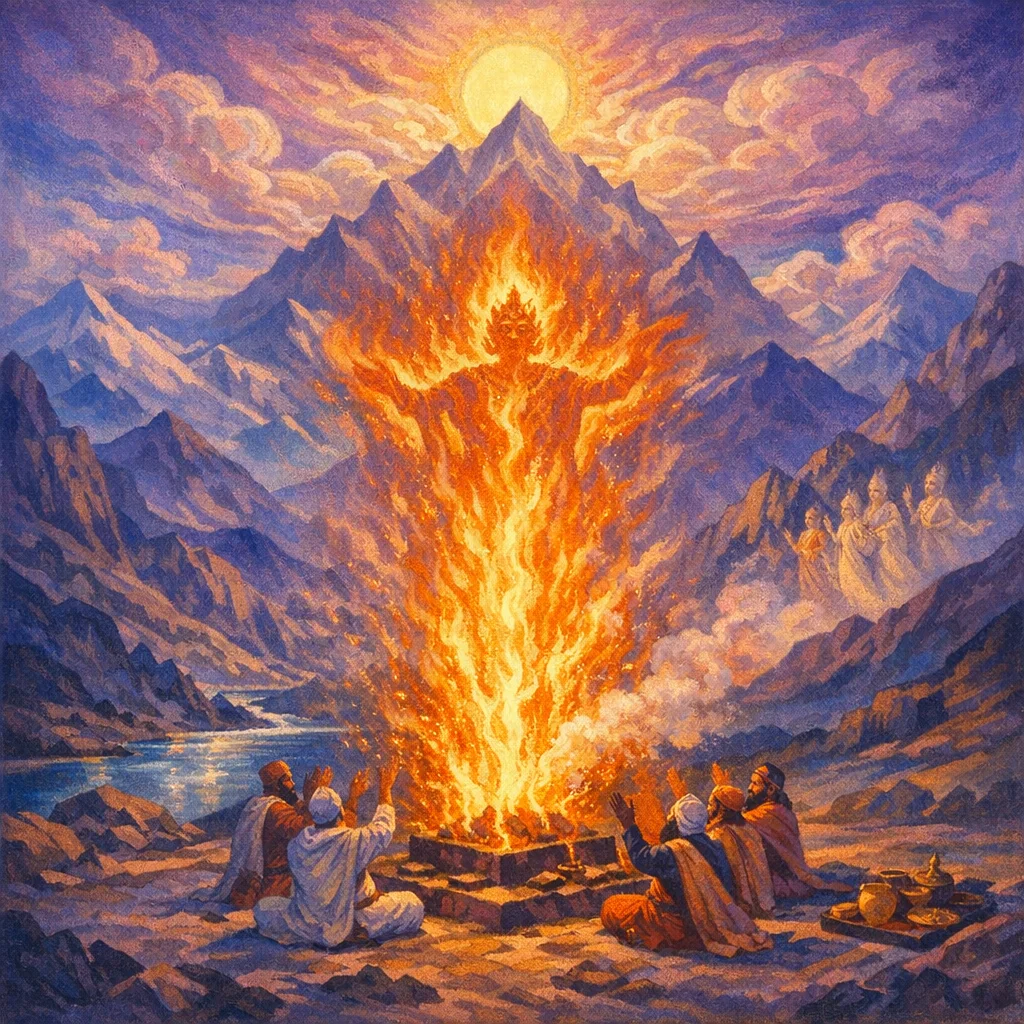
This hymn is an approach-prayer to Agni as the ever-near priest of the sacrifice, asking him to hear the singers both “from afar” and “here” at the rite. It praises Agni by epithets—well-invoked, godly, mighty, well-seated on the barhis—and presents him as the one who makes radiant hero-power and prosperity manifest for the offering worshipper and for the gods.
Mantras
Mantra 1
उपप्रयन्तो अध्वरं मन्त्रं वोचेमाग्नये । आरे अस्मे च शृण्वते ॥
As we advance toward the inner sacrifice, we would speak the mantra to Agni—may he hear us from afar and also here within (close at hand).
Mantra 2
यः स्नीहितीषु पूर्व्यः संजग्मानासु कृष्टिषु । अरक्षद्दाशुषे गयम् ॥
He who from of old, in the close-knit gatherings of the peoples, protected the life-energy of the giver—may that Agni guard what we have won by offering.
Mantra 3
उत ब्रुवन्तु जन्तव उदग्निर्वृत्रहाजनि । धनंजयो रणेरणे ॥
And let the beings proclaim: ‘Agni has arisen, the slayer of Vṛtra’—the winner of plenitude in every battle, the conqueror in each encounter of the soul.
Mantra 4
यस्य दूतो असि क्षये वेषि हव्यानि वीतये । दस्मत्कृणोष्यध्वरम् ॥
In whose home you are the messenger, you carry the offerings for enjoyment; from the wonderful (power) you fashion the sacrifice—making the rite effective and luminous in the dwelling of the seeker.
Mantra 5
तमित्सुहव्यमङ्गिरः सुदेवं सहसो यहो । जना आहुः सुबर्हिषम् ॥
Him indeed, O Angiras, men call “the well-invoked,” the “noble-shining god,” the “impulse of might,” and “he of the good sacred seat (barhis).”
Mantra 6
आ च वहासि ताँ इह देवाँ उप प्रशस्तये । हव्या सुश्चन्द्र वीतये ॥
And thou bringest them here—the gods—near for the perfect praise, O fair-radiant one, for the joyful acceptance of the offerings.
Mantra 7
न योरुपब्दिरश्व्यः शृण्वे रथस्य कच्चन । यदग्ने यासि दूत्यम् ॥
No sound of thy horses is heard, nor any creak of the chariot, when, O Agni, thou goest on thy embassy.
Mantra 8
त्वोतो वाज्यह्रयोऽभि पूर्वस्मादपरः । प्र दाश्वाँ अग्ने अस्थात् ॥
Helped by thee, the bearer of plenitude-force, the unwearied one, another has gone forth beyond the former; the giver, O Agni, has taken his stand in front.
Mantra 9
उत द्युमत्सुवीर्यं बृहदग्ने विवाससि । देवेभ्यो देव दाशुषे ॥
And thou makest manifest the radiant and noble hero-force, O Agni, the Vast; O god, for the giver, (thou openest it) for the gods.
Frequently Asked Questions
It invites Agni into the sacrifice and praises him as the priest-fire who listens to the hymn, receives offerings, and brings strength and success to the worshipper.
Agni is both cosmic and immediate: he is present in the ritual fire before the singers, and also the divine power that can respond beyond the visible rite.
“Suhavya” means ‘easy to invoke’—Agni responds readily to proper calling. “Subarhiṣ” means ‘well-seated on the barhis,’ indicating Agni is correctly installed in ritual order and therefore effective.