Sukta 104
Sukta 1.104
Kutsa Āṅgirasa (traditional attribution for RV 1.104)
Indra
Triṣṭubh (probable for RV 1.104; verse-length and cadence consistent)
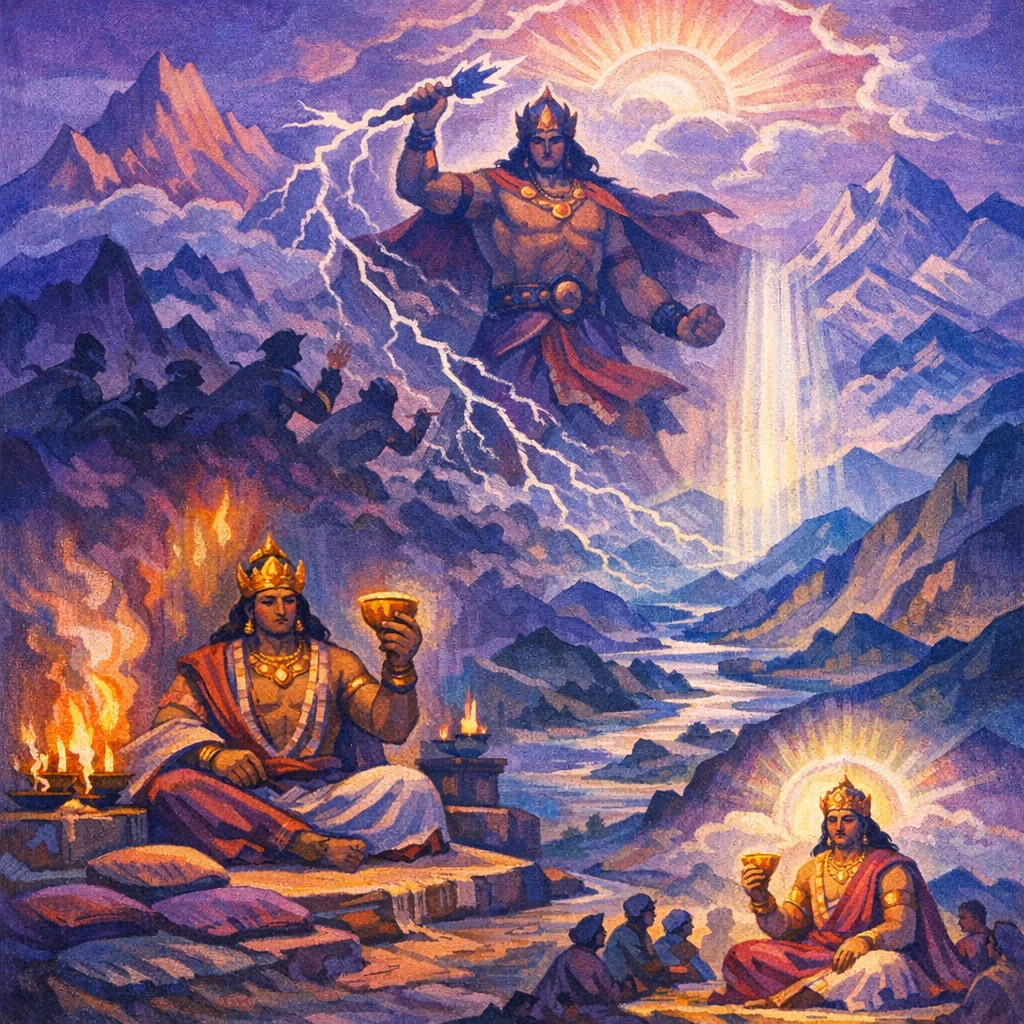
This hymn invites Indra to come near, take his seat at the sacrifice, and drink the freshly pressed Soma, so that his strength may awaken for protection and victory. It blends an intimate welcome—unharnessing the divine horses for rest at dusk and dawn—with urgent petitions to repel Dasyus, crooked hostility, and the loss of the worshippers’ rightful share.
Mantras
Mantra 1
योनिष्ट इन्द्र निषदे अकारि तमा नि षीद स्वानो नार्वा । विमुच्या वयोऽवसायाश्वान्दोषा वस्तोर्वहीयसः प्रपित्वे ॥
A womb of repose has been formed for you, O Indra, for your settling; come, take your seat there—like a neighing steed. Releasing the powers of life for their free course, unharness the horses for rest in the dusk and at dawn, in the nearer intimacy of the being.
Mantra 2
ओ त्ये नर इन्द्रमूतये गुर्नू चित्तान्त्सद्यो अध्वनो जगम्यात् । देवासो मन्युं दासस्य श्चम्नन्ते न आ वक्षन्त्सुविताय वर्णम् ॥
These heroic powers have cried to Indra for help; even now may he come to them straightway from the path. The gods, crushing the wrath of the Dāsa, shall bring us the luminous color for a happy going—an open way of right movement.
Mantra 3
अव त्मना भरते केतवेदा अव त्मना भरते फेनमुदन् । क्षीरेण स्नातः कुयवस्य योषे हते ते स्यातां प्रवणे शिफायाः ॥
Down by his own nature moves Ketavedā; down by his own nature moves the foam upon the waters. Bathed in milk, O wife of Kuyava, may those two be struck down and fall on the slope of Śiphā—let the false brilliance perish in its own descent.
Mantra 4
युयोप नाभिरुपरस्यायोः प्र पूर्वाभिस्तिरते राष्टि शूरः । अञ्जसी कुलिशी वीरपत्नी पयो हिन्वाना उदभिर्भरन्ते ॥
The navel of the upper metal-work has been set in motion; the hero stretches forth the rod with the ancient strengths. Straight is the thunder-weapon, the strong spouse of the hero; urging the milk of plenitude, they bring it with the waters—nourishment carried by the streams of being.
Mantra 5
प्रति यत्स्या नीथादर्शि दस्योरोको नाच्छा सदनं जानती गात् । अध स्मा नो मघवञ्चर्कृतादिन्मा नो मघेव निष्षपी परा दाः ॥
When the guiding lead is seen turned back, and the Dasyu’s dwelling is not approached, then, O bountiful Indra, save us from the clamor of the crooked; do not cast us away like one who gives and then withdraws, do not abandon our right share.
Mantra 6
स त्वं न इन्द्र सूर्ये सो अप्स्वनागास्त्व आ भज जीवशंसे । मान्तरां भुजमा रीरिषो नः श्रद्धितं ते महत इन्द्रियाय ॥
Be that for us, O Indra, in the sun; be that for us in the waters—share with us your blameless protection for the hope of living. Do not wound us in the midway grasp; we have placed our trust in your great Indrian power.
Mantra 7
अधा मन्ये श्रत्ते अस्मा अधायि वृषा चोदस्व महते धनाय । मा नो अकृते पुरुहूत योनाविन्द्र क्षुध्यद्भ्यो वय आसुतिं दाः ॥
Then I perceive that faith has been placed for him in you; O Bull, impel us toward the great treasure. Do not leave us, O much-invoked, in an unmade womb; O Indra, give to the hungry powers the life-force and the pressing—nourishment of the offering.
Mantra 8
मा नो वधीरिन्द्र मा परा दा मा नः प्रिया भोजनानि प्र मोषीः । आण्डा मा नो मघवञ्छक्र निर्भेन्मा नः पात्रा भेत्सहजानुषाणि ॥
Do not strike us down, O Indra; do not cast us away; do not rob us of our dear nourishments. Do not shatter our seeds of becoming, O bountiful Shakra; do not break our vessels, the supports born with us—our innate instruments of the journey.
Mantra 9
अर्वाङेहि सोमकामं त्वाहुरयं सुतस्तस्य पिबा मदाय । उरुव्यचा जठर आ वृषस्व पितेव नः शृणुहि हूयमानः ॥
Come hither, O lover of Soma—they call you; this Soma is pressed, drink of it for the ecstasy. O wide-pervading, grow strong in the belly; like a father, hear us as we call—answer the voice of the seeking.
Frequently Asked Questions
It asks Indra to come close, sit at the sacrifice, drink the pressed Soma, and then protect the worshippers by defeating hostile forces and ensuring their rightful share.
It is a poetic way to welcome Indra as a swift charioteer: he arrives with speed, then is invited to settle, rest, and remain near the ritual at the key times of transition—dusk and dawn.
In this context, “Dasyu” refers to hostile or obstructive forces—often rival groups or symbolic powers of disorder—that threaten the community’s safety, ritual success, and prosperity.