Sarga 61
सूर्यानुगमनवृत्तान्तः — The Account of Following the Sun
किष्किन्धाकाण्ड
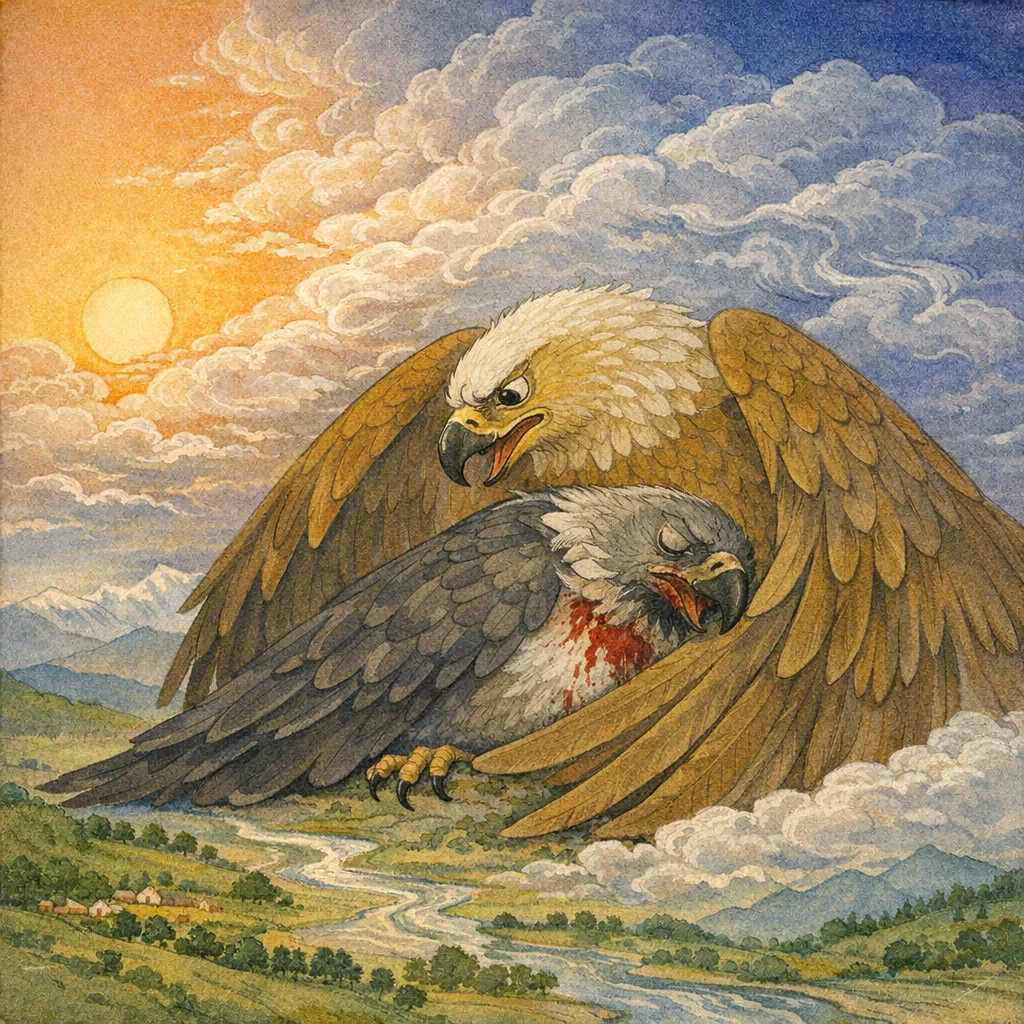
In this sarga, the speaker makes a retrospective confession to a muni, recalling a rash wager born of pride with Jaṭāyu on Mount Kailāsa: to pursue the Sun along its course until it set upon the western mountain. The tale becomes a high-altitude travelogue—cities below look wheel-sized; music and Vedic recitation are heard; forests seem like green lawns; rivers like threads; and the great ranges—Himavān, Vindhya, and Meru—appear like elephants in a pond. As the chase intensifies, body and mind begin to fail: sweat, pain, fear, confusion, darkness, and stupor arise; directions blur, and the world seems like a yuga-ending conflagration. With great effort he regains focus and beholds the Sun as earth-sized, deepening both awe and peril. The episode ends in descent: Jaṭāyu drops to earth without leave; the narrator follows, shielding him with his wings, but is scorched and falls upon the Vindhya, drained of strength. The closing turns into a death-wish born of loss—kingdom, brother, and wings—casting hubris as the cause of irreversible diminishment and upholding restraint as dharmic correction.
Shlokas
Verse 1
ततस्तद्दारुणं कर्म दुष्करं सहसात्कृतम्।आचचक्षे मुनेस्सर्वं सूर्यानुगमनं तथा।।।।
Then I told the sage everything—how that harsh and difficult deed was done rashly, and likewise how I went in pursuit of the Sun.
Verse 2
भगवन्व्रणयुक्तत्वाल्लज्जया व्याकुलेन्द्रियः।परिश्रान्तो न शक्नोमि वचनं परिभाषितुम्।।।।
O venerable one, because my body is wounded and my senses are unsettled by shame, and because I am utterly exhausted, I am unable to speak in reply.
Verse 3
अहं चैव जटायुश्च सङ्घर्षाद्धर्पमोहितौ।आकाशं पतितौ वीरौ जिज्ञासन्तौ पराक्रमम्।।।।
Jatāyu and I—both heroes—were deluded by pride; challenging one another, we rose into the sky, seeking to test and know each other’s prowess.
Verse 4
कैलासशिखरे बद्ध्वा मुनीनामग्रतः पणम्।रविस्स्यादनुयातव्यो यावदस्तं महागिरिम्।।।।
On the summit of Mount Kailāsa, in the presence of the sages, we made a wager: that the Sun was to be followed until his setting upon the great western mountain.
Verse 5
अथाऽवां युगपत्प्राप्तावपश्याव महीतले।रथचक्रप्रमाणानि नगराणि पृथक्पृथक्।।।।
Then, arriving together, we looked down upon the earth and saw cities one after another—so small they seemed no larger than chariot-wheels.
Verse 6
क्वचिद्वादित्रघोषांश्च ब्रह्मघोषांश्च शुश्रुवः।गायन्तीश्चाङ्गना बह्वीः पश्यावो रक्तवाससः।।।।
In some places we heard the blare of instruments and the solemn sound of Vedic recitation; and we saw many women, clad in red garments, singing.
Verse 7
तूर्णमुत्पत्य चाकाशमादित्यपथमाश्रितौ।आवामालोकयावस्तद्वनं शाद्वलसन्निभम्।।।।
Leaping swiftly into the sky and taking to the Sun’s path, we looked down and beheld the forest below, like a smooth expanse of green grass.
Verse 8
उपलैरिव सञ्छन्ना दृश्यते भूश्शिलोच्चयैः।आपगाभिश्च संवीता सूत्रैरिव वसुन्धरा।।।।
The earth appeared as though strewn with pebbles—its lofty mountains; and the land, wrapped about by rivers, looked as if it were laced with threads.
Verse 9
हिमवांश्चैव विन्ध्यश्च मेरुश्च सुमहान्नगः।भूतले सम्प्रकाशन्ते नागा इव जलाशये।।।।
Himavān, Vindhya, and the mighty mountain Meru shone upon the face of the earth, like great elephants standing in a water-reservoir.
Verse 10
तीव्रस्स्वेदश्च खेदश्च भयं चासीत्तदाऽऽवयोः।समाविशति मोहश्च तमो मूर्छा च दारुणा।।।।
Then both of us were seized by intense sweating, distress, and fear; and there came upon us confusion, darkness of perception, and a dreadful stupor.
Verse 11
न दिग्विज्ञायते याम्या नाग्नेयी न च वारुणी।युगान्ते नियतो लोको हतो दग्ध इवाग्निना।।।।
No direction could be discerned—neither south, nor southeast, nor west; the world looked as though, at the end of an age, it had been doomed and burned away by fire.
Verse 12
मनश्च मे हतं भूयस्सन्निवर्त्यतु संश्रयम्।यत्नेन महता ह्यस्मिन्पुनस्सन्धाय चक्षुषी।।।।यत्नेन महता भूयो भास्करः प्रतिलोकितः।तुल्यः पृथ्वीप्रमाणेन भास्करः प्रतिभाति नौ।।।।
My mind, shaken once more, turned away from its support; yet with great effort I refocused my eyes upon it again. Striving hard, I looked once more and beheld the Sun, which to us appeared equal in measure to the earth.
Verse 13
मनश्च मे हतं भूयस्सन्निवर्त्यतु संश्रयम्।यत्नेन महता ह्यस्मिन्पुनस्सन्धाय चक्षुषी।।4.61.12।।यत्नेन महता भूयो भास्करः प्रतिलोकितः।तुल्यः पृथ्वीप्रमाणेन भास्करः प्रतिभाति नौ।।4.61.13।।
(A repetition of the preceding description:) With great effort I refocused my eyes and saw the Sun again, which appeared to us as vast as the earth.
Verse 14
जटायुर्मामनापृच्छ्य निपपात महीं ततः।तं दृष्ट्वा तूर्णमाकाशादात्मानं मुक्तवानहम्।।।।
Without taking leave of me, Jatāyu plunged down to the earth; seeing him, I too quickly let myself drop from the sky.
Verse 15
पक्षाभ्यां च मया गुप्तो जटायुर्न प्रदह्यते।प्रमादात्तत्र निर्दग्धः पतन्वायुपथादहम्।।।।
With my wings I shielded Jatāyu so that he would not be burned; yet through my own heedlessness I was scorched there, and as I fell I dropped from the airy path.
Verse 16
आशङ्के तं निपतितं जनस्थाने जटायुषम्।अहं तु पतितो विन्ध्ये दग्धपक्षो जडीकृतः।।।।
I suppose Jatāyu fell at Janasthāna; but I fell upon the Vindhya—my wings burned, my body rendered senseless and inert.
Verse 17
राज्येन हीनो भ्रात्रा च पक्षाभ्यां विक्रमेण च।सर्वथा मर्तुमेवेच्छन्पतिष्ये शिखराद्गीरेः।।।।
Deprived of my kingdom, my brother, my wings, and my strength, desiring only death in every way, I will cast myself from the mountain’s peak.
Frequently Asked Questions
A pride-motivated vow (paṇa) to pursue the Sun to sunset becomes an ethically charged act of pramāda: the protagonists test power beyond prudent limits, leading to harm, loss of capability, and later despair.
The sarga frames hubris as a distortion of judgment: when self-assertion overrides restraint, perception collapses (directionless confusion), and the aftermath demands humility—protective duty may remain, but power and status can be irretrievably diminished.
Kailāsa as the vow-setting site; Āditya-patha as the aerial route; the western mountain of sunset; Janasthāna as a presumed landing area; Vindhya as the actual fall-site; and the panoramic triad of Himavān–Vindhya–Meru, alongside rivers, cities, and the soundscape of Vedic chanting and instruments.