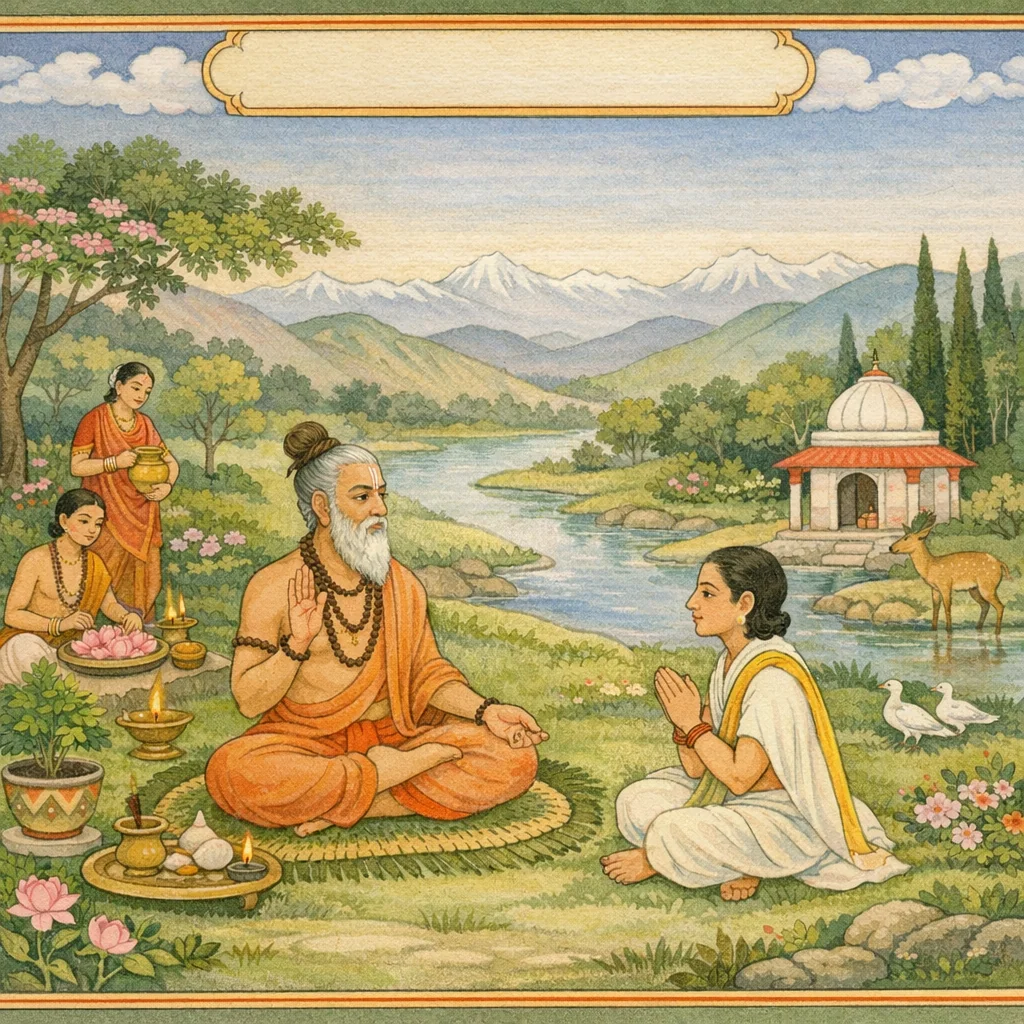
Adhyaya 30
The Manifestation of Viṣṇu’s Footprints: Vāmana–Trivikrama, Bāṣkali’s Subjugation, and the Rise of Viṣṇupadī (Gaṅgā)
PP.1.30 explains why Puṣkara’s “path of footprints” is revered: it is the earthly imprint of Viṣṇu’s Trivikrama deed. In the Kṛta Yuga, the Dānava lord Bāṣkali (Bāṣkalin) seizes the three worlds and disrupts Vedic rites; Indra and the gods seek Brahmā’s aid. Brahmā enters samādhi and Viṣṇu appears, declaring a wise strategy: to assume the Vāmana form and request three steps of land. The chapter portrays Bāṣkali’s city and his virtues as a donor-king, Śukrācārya’s warning, and Bāṣkali’s resolve to keep his promise. Viṣṇu then expands as Trivikrama and places three steps across cosmic stations; from a wound at the tip of the thumb arises the sacred river Vaiṣṇavī/Viṣṇupadī—Gaṅgā. The narrative ends with tīrtha-phala: seeing and bathing at the footprints bestows great merit and leads to Viṣṇu’s abode.
Shlokas
Verse 1
भीष्म उवाच । यज्ञपवर्तमासाद्य विष्णुना प्रभविष्णुना । पदानि चेह दत्तानि किमर्थं पदपद्धतिः
Bhīṣma said: Having reached the sacred place connected with the sacrifice, and with the mighty Viṣṇu having placed His footprints here—what, then, is the purpose of this ‘path of footprints’?
Verse 2
कृता वै देवदेवेन तन्मे वद महामते । कतमो दानवस्तेन विष्णुना दमितोत्र वै
That deed was indeed done by the God of gods—tell me of it, O great-minded one. Which demon was it that was subdued here by that Viṣṇu?
Verse 3
कृत्वा वै पदविन्यासं तन्मे शंस महामुने । स्वर्लोके वसतिर्विष्णोर्वैकुंठेऽस्य महात्मनः
Having arranged the sequence of the sacred steps, tell it to me, O great sage—tell me of the abode of that great-souled Viṣṇu in Svarga, in his Vaikuṇṭha.
Verse 4
स कथं मानुषे लोके पदन्यासं चकार ह । देवलोकेषु वै देव देवाः सेंद्रपुरोगमाः
How indeed did he set his footstep in the world of humans? And in the worlds of the gods, O Deva, the deities—led by Indra—likewise assembled in due order.
Verse 5
तपसा महता ब्रह्मन्भक्ता ये सततं प्रभुम् । श्रीवराहस्य वसतिर्महर्ल्लोके प्रकीर्तिता
O Brahman, for those devotees who, through great austerity (tapas), constantly worship the Lord, it is proclaimed that the celebrated abode of Śrī Varāha is in Maharloka.
Verse 6
नृसिंहस्य तथा प्रोक्ता जनलोके महात्मनः । त्रिविक्रमस्य वसतिस्तपोलोके प्रकीर्तिता
Likewise it is declared that the great-souled Narasiṁha abides in Janaloka; and the dwelling of Trivikrama is renowned to be in Tapoloka.
Verse 7
लोकानेतान्परित्यज्य कथं भूमौ पदद्वयम् । क्षेत्रे पैतामहे चास्मिन्पुष्करे यज्ञपर्वते
How, after abandoning all these worlds, could one place even two steps upon the earth—here, in this ancestral sacred field, at Puṣkara, on the mountain of sacrifice?
Verse 8
पदानि कृतवान्ब्रह्मन्विस्तरान्मम कीर्तय । श्रुतेन सर्वपापस्य नाशो वै भविता ध्रुवम्
O Brahmin, you have composed these verses in full detail—recite them for me. By hearing them, the destruction of all sin will surely come to pass.
Verse 9
पुलस्त्य उवाच । सम्यक्पृच्छसि भोस्त्वं यत्संशृणु त्वं समाहितः । यथापूर्वं पदन्यासः कृतो देवेन विष्णुना
Pulastya said: “You have asked rightly; therefore listen with full attention, your mind composed. I shall relate how, as in former times, the divine Viṣṇu established the sacred placement of steps (padanyāsa).”
Verse 10
यज्ञपर्वतमासाद्य शिलापर्वतरोधसि । पुरा कृतयुगे भीष्म देवकार्यार्थसिद्धये
O Bhīṣma, in ancient times, in the Kṛta Yuga, having reached Yajñaparvata—at the mountain pass blocked by the Śilā mountain—this was done for the successful accomplishment of the gods’ purpose.
Verse 11
विष्णुना च कृतं पूर्वं पृथिव्यर्थे परंतप । त्रिदिवं सर्वमानीतं दानवैर्बलवत्तरैः
And formerly, O scorcher of foes, for the sake of the earth, Viṣṇu had acted; yet the entire heaven was carried off by the Dānavas, exceedingly powerful.
Verse 12
त्रैलोक्यं वशमानीय जित्वा देवान्सवासवान् । दानवा यज्ञभोक्तारस्तत्रासन्बलवत्तराः
Having brought the three worlds under their control and having conquered the gods along with Indra, the Dānavas there became the consumers of the sacrificial offerings, and they were exceedingly powerful.
Verse 13
कृता बाष्कलिना सर्वे दानवेन बलीयसा । एवंभूते तदा लोके त्रैलोक्ये सचराचरे
All this was brought about by Bāṣkalin, the mighty Dānava. Thus, at that time, such was the condition of the world—the three worlds with all that moves and all that does not.
Verse 14
परमार्तिं ययौ शक्रो निराशो जीविते कृतः । स बाष्कलिर्दानवेंद्रोऽवध्योयं मम संयुगे
Śakra (Indra) fell into extreme distress, having become hopeless even about his own survival. “This Bāṣkali, lord of the Dānavas, is invincible—at least in my battle.”
Verse 15
ब्रह्मणो वरदानेन सर्वेषां तु दिवौकसाम् । तदहं ब्रह्मणो लोके वृतः सर्वैर्दिवौकसैः
By Brahmā’s granting of a boon to all the dwellers of heaven, I was then chosen in Brahmā’s realm by all the celestial beings.
Verse 16
व्रजामि शरणं देवं गतिरन्या न विद्यते । एवं विचिंत्य देवेंद्रो वृतः सर्वैर्दिवौकसैः
“I go for refuge to the Lord; there is no other course for me.” Thus reflecting, the king of the gods was surrounded by all the dwellers of heaven.
Verse 17
जगाम त्वरितो भीष्म यत्र देवः पितामहः । ब्रह्मणः स पदं प्राप्य वृतस्तैश्च दिवौकसैः
O Bhīṣma, he quickly went to where the divine Grandfather (Brahmā) was. Reaching the abode of Brahmā, he was surrounded by those celestial beings.
Verse 18
अब्रवीज्जगतः कार्यं प्राप्तामापदमुत्तमाम् । किं न जानासि वै देव यतो नो भयमागतम्
He spoke of the urgent matter affecting the world: “A grave calamity has befallen us. Do you not know, O Deva, from where this fear has come upon us?”
Verse 19
दैत्यैर्यदाहृतं सर्वं वरदानाच्च ते प्रभो । कथितं वै मया सर्वं बाष्कलेश्च दुरात्मनः
O Lord, all that was carried off by the Daityas—by virtue of the boon You granted—has been fully related by me, including the deeds of the wicked Bāṣkala as well.
Verse 20
क्रियतां चाविलंबेन पिता त्वं नः पितामहः । तत्त्वं चिंतय देवेश शांत्यर्थं जगतस्त्विह
Act without delay—you are our father and our grandsire. O Lord of the gods, reflect upon the true principle, for the sake of peace in this world.
Verse 21
तेषां च पश्यतां किंचिच्छ्रौतस्मार्तादिकाः क्रियाः । न प्रावर्तन्त हानिस्तु तैरस्माकं दिनेदिने
Even as they watched, not even a little of the rites enjoined by Śruti and Smṛti—the prescribed observances—could be performed; rather, because of them our loss increased day by day.
Verse 22
यथा हि प्राकृतः कश्चित्स्वार्थमुद्दिश्य भाषते । विज्ञाप्यसे तथास्माभिर्निरस्तोपकृतैः सदा
Just as an ordinary person speaks with his own interest in view, so too do we address You—ever deprived of help and favor.
Verse 23
यद्येनोपकृतं यस्य सहस्रगुणितं पुनः । यो न तस्योपकाराय तत्करोति वृथा मतिः
If someone has been helped by another—help worth a thousandfold—yet does not act to repay that benefactor, his intention is futile.
Verse 24
तस्योपकारदग्धस्य निस्त्रपस्यासतः पुनः । नरकेष्वपि संवासस्तस्य दुष्कृतकारिणः
For that shameless and wicked wrongdoer—scorched in conscience by the very help he received—there is indeed, once again, a dwelling even in the hells, as the fruit of his evil deeds.
Verse 25
नैतावतैव साधुत्वं कृते यातु प्रतिक्रिया । स्वार्थैकनिष्ठबुद्धीनामेतन्नापि प्रवर्तते
Goodness is not established merely by making amends after a wrong has been done; for those whose minds are fixed only on self-interest, even this impulse to atone does not arise.
Verse 26
यद्यस्य नाभवत्स्थानं जगतो ह्यत्र दुःखदं । शतधा हृदयं दीर्णं तन्न तृप्तिमुपागतम्
If here there were no proper abode for the world—one that relieves its suffering—then the heart, though torn into a hundred pieces, would still not attain satisfaction.
Verse 27
तत्र वा यत्र गंतास्मि निमग्नानुद्धरस्व नः । उपायकथनेनास्य येन तेजः प्रवर्तते
Wherever I may go—there or elsewhere—lift us up, who are sunk in distress. Explain the means by which his radiance and power become manifest.
Verse 28
यथाख्यातं मया दृष्टं जगत्तत्स्थमवेक्ष्य ताम् । निःस्वाध्यायवषट्कारं निवृत्तोत्सवमंगलम्
Just as I have described, I beheld that world; and seeing it in that condition, I found it devoid of Vedic study and sacrificial exclamations, with festivals and auspicious rites having ceased.
Verse 29
त्यक्ताध्ययनसंयोगं मुक्तवार्ता परिग्रहम् । दंडनीत्या परित्यक्तं श्वासमात्रावशेषितम्
He had abandoned all association with study; he was free from worldly talk and possessions; he had renounced coercive, punitive governance—remaining with nothing but the bare act of breathing.
Verse 30
जगदार्तिमपि प्राप्तं पुनः कष्टतरां दशां । एतावता हि कालेन वयं ग्लानिमुपागताः
Even the world has fallen into distress, and again into an even more painful condition. In so much time, indeed, we have come to weariness and decline.
Verse 31
ब्रह्मोवाच । जानामि बाष्कलिं तं तु वरदानाच्च गर्वितम् । अजेयं भवतां मन्ये विष्णुसाध्यो भविष्यति
Brahmā said: “I know that Bāṣkali—made proud by a boon. I consider him unconquerable by you; he will be subdued only by Viṣṇu.”
Verse 32
निरुध्य संस्थितो ब्रह्मा भावं तत्वमयं तदा । समाधिस्थस्य तस्यैव ध्यानमात्राच्चतुर्भुजः
Having restrained his senses and becoming steady, Brahmā then entered a state of consciousness filled with true reality. While he remained absorbed in samādhi, by that very act of meditation alone, the four-armed Lord manifested before him.
Verse 33
स्तोकेनैव हि कालेन चिंत्यमानः स्वयंभुवा । आजगाम मुहूर्तेन सर्वेषामेव पश्यताम्
Indeed, in only a short time, he—being thought upon by Svayambhū (Brahmā)—arrived within a moment, in the very sight of everyone.
Verse 34
विष्णुरुवाच । भो भो ब्रह्मन्निवर्त्तस्व ध्यानादस्मान्निवारितः । यदर्थमिष्यते ध्यानं सोहं त्वां समुपागतः
Viṣṇu said: “Ho! Ho! O Brahman (Brahmā), desist. By you I have been drawn away from meditation. For whatever purpose this meditation is undertaken—here I am, having come to you.”
Verse 35
ब्रह्मोवाच । महाप्रसाद एषोऽत्र स्वामिनो हि प्रदर्शनम् । कस्यान्यस्य भवेच्चैषा चिन्ता या जगतः प्रभो
Brahmā said: “This is the great grace here—indeed a manifestation of the Lord. For who else could have such concern, O Lord of the world?”
Verse 36
ममैव तावदुत्पत्तिर्जगदर्थे विनिर्मिता । जगदेतत्त्वदर्थीयं तत्त्वतो नास्ति विस्मयः
My manifestation, indeed, was fashioned for the sake of the world. This universe, too, is meant for your purpose; in truth, there is no cause for wonder.
Verse 37
भवता पालनं कार्यं संहरेद्रुद्र एव तु । एवंभूते जगत्यस्मिन्शक्रस्यास्य महात्मनः
You must undertake the duty of protection; but dissolution is performed only by Rudra. In such a constituted world, this is the role of this great-souled Śakra (Indra).
Verse 38
हृतं राज्यं बाष्कलिना त्रैलोक्यं सचराचरम् । भृत्यस्य क्रियतां साह्यं मंत्रदानेन केशव
“My kingdom—indeed the entire three worlds, with all that moves and does not move—has been seized by Bāṣkali. O Keśava, please aid your servant by granting me the mantra.”
Verse 39
वासुदेव उवाच । भवतो वरदानेन अवध्यः स तु सांप्रतम् । बुद्धिसाध्यः स वै कार्यो बंधनादिह दानवः
Vāsudeva said: “By your boon he is, for the present, invulnerable and cannot be slain. Therefore that Dānava must be dealt with by strategy—by binding him here and the like.”
Verse 40
वामनोहं भविष्यामि दानवानां विनाशकः । मया सह व्रजत्वेष बाष्कलेस्तु निवेशनम्
“I shall become Vāmana, the destroyer of the Dānavas. Come with me now to the dwelling of Bāṣkala.”
Verse 41
तत्र गत्वा वरं त्वेष मदर्थे याचतामिमम् । वामनस्यास्य विप्रस्य भूमे राजन्पदत्रयम्
Go there, and for my sake ask this boon: O king, request from the brāhmaṇa Vāmana—the dwarf—the gift of three steps of land.
Verse 42
प्रयच्छस्व महाभाग याच्ञैषा तु मया कृता । शक्रेणोक्तो दानवेंद्रो दद्यात्स्वमपि जीवितम्
“Grant it, O noble one—this request has indeed been made by me. Even the lord of the Dānavas, when addressed by Śakra (Indra), would give away even his own life.”
Verse 43
गृह्य प्रतिग्रहं तस्य दानवस्य पितामह । तं बध्वा च ततो यत्नात्कृत्वा पातालवासिनम्
Having accepted the offering from that Dānava, the Pitāmaha then, with careful effort, bound him and made him a dweller in Pātāla, the netherworld.
Verse 44
सौकरं रूपमास्थाय वधार्थं च दुरात्मनः । भविष्यामि न संदेहो व्रज शक्र त्वरान्वितः
Assuming the form of a boar, I shall surely come to slay that wicked one—there is no doubt. Go, O Śakra (Indra), quickly and without delay.
Verse 45
विरराम तमुक्त्वैवमंतर्द्धानं गतश्च वै । अथ कालांतरे विष्णावदितेर्गर्भतां गते
Having spoken to him thus, he fell silent and indeed disappeared from sight. Then, after some time had passed—when, in relation to Viṣṇu, Aditi had entered pregnancy—
Verse 46
निमित्तान्यतिघोराणि प्रादुर्भूतान्यनेकशः । समस्तजगदाधारे विष्णौ गर्भत्वमागते
When Viṣṇu—the support of the entire universe—had entered a state of gestation, many exceedingly dreadful omens manifested repeatedly.
Verse 47
शोभनं हि तदा जातं निमित्तं चैवमूर्जितम् । मालतीकुसुमानां तु सुगंधः सुरभिर्ववौ
Then, indeed, an auspicious and powerful omen arose: the sweet fragrance of mālatī blossoms spread forth, richly perfuming the air.
Verse 48
अथ विहितविधानं कालमासाद्य देवस्त्रिदशगणहितार्थं सर्वभूतानुकंपी । विमल विरल केशश्चंद्रशंखोदयश्रीरदितितनयभावं देवदेवश्चकार
Then, when the ordained time for the prescribed rite arrived, the God—compassionate toward all beings and acting for the welfare of the hosts of gods—assumed the state of Aditi’s son; the God of gods shone with spotless, lightly flowing hair and with splendor like the rising moon and conch.
Verse 49
अवतरति च विष्णौ सिद्धदेवासुराणामनिमिषनयनानां विप्रसेदुर्मुखानि । अतिविरतरजोभिर्वायुभिः संवहद्भिर्दिनमपि च तदासीज्जन्म विष्णोः सुगर्भे
As Viṣṇu descended, the faces of the Siddhas, Devas, and Asuras—those with unblinking eyes—grew serene and radiant. The winds, bearing dust that had wholly settled, moved gently; and even the day itself seemed auspicious at the birth of Viṣṇu in that blessed womb.
Verse 50
अदितिरजनगर्भा सापि देवी प्रयांती नतजघनभरार्त्ता मंदसंचाररम्या । अलसवदनखेदं पांडुभावं वहंती गुरुतरमवगाढं गर्भमेवोद्वहंती
Aditi too, bearing a womb heavy with radiance, moved on—her hips bent low under the weight, yet her slow gait was graceful. She carried the weariness of a languid face and a pallor of strain, as she bore within her a deeply settled, exceedingly weighty pregnancy.
Verse 51
ततः प्रविष्टे खलु गर्भवासं नारायणे भूतभविष्ययोगात् । विनापदं प्राप्तमनोरथानि भूतानि सर्वाणि तदा बभूवुः
Then, when Nārāyaṇa truly entered the state of dwelling in the womb—through His connection with what had been and what was yet to come—all beings at that time were free from calamity and attained their desired aims.
Verse 52
समीरणो वाति च मंदमंदं पतत्सु वर्षेषु नगोद्भवेषु । विविक्तमार्गेषु दिगंतरेषु जनेषु वै सत्यमुपागतेषु
The breeze blows gently, ever so softly; the rains fall upon the mountain-born lands. Along secluded paths and in far-flung regions, among people who have truly come to truthfulness (satya), such a time prevails.
Verse 53
विमुच्यमाने गगने रजोभिः शनैश्शनैर्नश्यति चांधकारे । उदरांतर्गते विष्णौ द्रोहबुद्धिस्तदाभवत्
As the dust was gradually released into the sky and the darkness slowly disappeared, a hostile intent arose then toward Viṣṇu who was within the belly.
Verse 54
तां निशामय राजेंद्र देवमातुर्यथाक्रमम् । किमनुक्रमणेनैव लंघयामि त्रिविष्टपम्
O king of kings, behold her—Devamātā—in proper order. For how could I, by mere narration alone, traverse and encompass the heaven of the Thirty-three Gods?
Verse 55
बाष्कलिं दानवेंद्रं तं कुर्यां पातालवासिनम् । शक्रस्य तु मया दत्तं धनं लावण्यमेव च
I shall make Bāṣkali, lord of the Dānavas, a dweller in Pātāla. And to Śakra (Indra) I have granted wealth—and beauty as well.
Verse 56
दानवानां विनाशाय एकैव प्रभवाम्यहम् । क्षिपामि शरजालानि चक्रयानान्यनेकशः
For the destruction of the Dānavas, I alone come forth; again and again I hurl volleys of arrows and many disc-like weapons.
Verse 57
गदाव्रातांश्च विविधान्दानवानां विनाशने । विबुधान्देवलोकस्थानधोभूमेस्तु दानवान्
For the destruction of the Dānavas, he brought forth hosts of diverse mace-bearers—establishing the Vibudhas in Devaloka, and casting the Dānavas down beneath the earth.
Verse 58
करोमि कालयोगेन तत्तु कार्यं व्रतेन मे । निस्सृता सहसा वाणी वक्त्रमेवाभिसंस्थिता
By the conjunction of time, I accomplish that task through the power of my vow. Suddenly, speech burst forth and settled upon my very mouth.
Verse 59
येनेदं चिन्त्यते पूर्वं यन्न दृष्टं न च श्रुतम् । बंधं वै दनुमुख्यस्य कृतं कोपेन पश्य मे
By him this was first conceived—something never seen nor heard of before. Behold: in anger I have truly brought about the binding of Danu’s foremost son.
Verse 60
कश्यपाय पुरा दत्तं धनं लावण्यमेव च । किमयं विगतोत्साहो वायवोथ समाकुलाः
In former times, wealth and beauty were indeed granted to Kaśyapa. Why, then, is he now bereft of vigor—and why are the winds so disturbed and agitated?
Verse 61
भ्रमतीव हि मे दृष्टिर्मैतद्रूपं प्रचिंतितम् । आविष्टा किमहं वच्मि केनाप्यसदृशं वचः
Indeed my sight seems to reel; this form has been deeply contemplated by me. As though possessed, what can I say—words beyond compare, as if prompted by another?
Verse 62
विकल्पवशमापन्नाऽभीक्ष्णं हृदिममर्श सा । दधार दिव्यं वर्षाणां सहस्रं दिव्यमीश्वरम्
Overcome by inner doubt, she pondered again and again within her heart; and she bore the divine Lord for a thousand divine years.
Verse 63
ततः समभवत्तस्यां वामनो भूतवामनः । जातेन येन चक्षूंषि दानवानां हृतानि वै
Then, in her, Vāmana—Vāmana in embodied form—came into being; and by his very birth, the eyes of the Dānavas were truly taken away (their sight and their pride).
Verse 64
जातमात्रे ततस्तस्मिन्देवदेवे जनार्दने । नद्यः स्वच्छांबुवाहिन्यो ववौ गंधवहोऽनिलः
Then, at the very moment Janārdana—the God of gods—was born, the rivers flowed with crystal-clear waters, and a fragrance-bearing wind began to blow.
Verse 65
कश्यपोपि सुखं लेभे तेन पुत्रेण भास्वता । सर्वेषां मानसोत्साहस्त्रैलोक्यांतरवासिनाम्
Kashyapa too found happiness because of that radiant son; and the hearts of all who dwell throughout the three worlds were filled with renewed zeal and joy.
Verse 66
संजातमात्रे तु ततो जनाधिपजनार्दने । स्वर्गलोके दुंदुभयो विनेदुस्तैश्च ताडिताः
Then, at that very moment—when Janārdana, lord of men, had just appeared—drums resounded in the heavenly realm, struck by the gods.
Verse 67
अतिप्रहर्षात्तु जगत्त्रयस्य मोहश्च दुःखानि च नाशमीयुः । जगो च गन्धर्वगणोतिमात्रं भावस्वरैर्भर्तृविमिश्रिताश्च
But through overwhelming delight, delusion and sorrows in the three worlds came to an end; and there arose a great tumult—only the hosts of Gandharvas—mingled with expressive notes and blended with their leaders.
Verse 68
सुराङ्गनाश्चापि च भावयुक्ता नृत्यंति तत्राप्सरसां समूहाः । तथैव विद्याधरसिद्धसंघा विमानयानैर्मुदिता भ्रमंति
There, celestial maidens, filled with refined emotion, dance; hosts of Apsarases gather. Likewise, companies of Vidyādharas and Siddhas, delighted, roam about in aerial chariots.
Verse 69
वदंति सत्यानृतकार्यनिर्णयं तथाभिरंगं प्रतिदर्शयंति । गायंति गेयं विनिवृत्तरागा मुहुर्मुहुर्दुःखसुखप्रभूताः
They speak, discerning what is true and what is false in the fruits of actions, and they reveal what lies within. Free from attachment, they sing what is worthy to be sung—again and again—having passed through many experiences of sorrow and joy.
Verse 70
नृत्यंति वै स्वर्गगताश्च ते तु धर्मार्जितं स्वर्गमितो व्रजंति । इति विगतविषादे निर्मले जीवलोके तिमिरनिकरमुक्ता निर्वृतिं प्राप्तुकामाः
Indeed, those who have attained heaven rejoice there, and from here they go to the heaven earned through dharma. Thus, in the stainless world of living beings—free from sorrow—released from masses of darkness, they long to attain final peace.
Verse 71
तत्रोचुः केचिदुर्व्यां जयजय भगवन्संप्रहृष्टाश्च केचित् । त्वेवं प्रोक्तप्रणादैरविरल मनसश्चानुवादैस्तथान्यैः । ध्यायंतेन्ये निगूढं जननभय जरामृत्युविच्छेदहेतो । रित्येवं कृत्स्नमासीज्जगदिदमखिलं सर्वतः संपृहृष्टम्
There, some on the earth exclaimed, “Victory, victory, O Lord!”, and others too were filled with delight. Others, with unbroken attention, praised you again and again with loudly proclaimed acclamations; and still others meditated on the hidden inner reality as the means to cut off fear of birth, old age, and death. Thus, in this way, the entire world everywhere became completely gladdened.
Verse 72
परमासाद्य यं विष्णुं ब्रह्माह जगतः कृते । जातोयं भवतामर्थे वामनो यदपीश्वरः
Having fully approached that Viṣṇu, Brahmā spoke for the sake of the worlds: “This Vāmana has been born for your benefit, even though he is the Lord Himself.”
Verse 73
एष ब्रह्मा च विष्णुश्च एष एव महेश्वरः । एष वेदाश्च यज्ञाश्च स्वर्गश्चैष न संशयः
He is Brahmā, and he is Viṣṇu; he alone is Maheśvara. He is the Vedas and the sacrifices—and he is heaven itself; of this there is no doubt.
Verse 74
विष्णुव्याप्तमिदं सर्वं जगत्स्थावरजंगमम् । एकः स तु पृथ्क्त्वेन स्वयंभूरिति विश्रुतः
All this universe—both the immovable and the moving—is pervaded by Viṣṇu. Yet that One is renowned as Svayaṃbhū, the Self-born, appearing as distinct in manifold ways.
Verse 75
यथार्थवर्णके स्थाने विचित्रः स्फाटिको मणिः । ततो गुणवशात्तस्य स्वयंभोरनुवर्त्तनम्
Just as a wondrous crystal gem, when set upon a surface of true color, takes on that hue, so too, by the force of its guṇas, there arises an accord with Svayaṃbhū, the Self-born Brahmā.
Verse 76
यथा हि गार्हपत्योग्निरन्यसंज्ञां पुनर्व्रजेत् । लभेत संज्ञां भगवान्ब्राह्मादिषु तथा ह्यसौ
Just as the Gārhapatya fire may again assume another designation, so too the Blessed Lord, among Brahmā and the other deities, takes on various names and appellations.
Verse 77
सर्वथा वामनो देवो देवकार्यं करिष्यति । एवं चिंतयतां तेषां भावितानां दिवौकसाम्
“In every way, the god Vāmana will accomplish the work of the gods.” Thus thought those heaven-dwellers, their minds intent and their resolve made firm.
Verse 78
जगाम शक्रसहितो बाष्कलेश्च निवेशनम् । दूरादेव च तां दृष्ट्वा पुरीं तस्य समावृताम्
Accompanied by Śakra (Indra), he went to Bāṣkala’s dwelling; and from afar he beheld that city of his, enclosed all around.
Verse 79
पांडुरैः खगमागम्यैः सर्वरत्नोपशोभितैः । शोभितां भवनैर्मुख्यैस्सुविभक्तमहापथैः
It was adorned with pale-white, lofty structures where birds could alight, embellished with every kind of jewel—beautified by principal mansions and by broad highways laid out in well-ordered divisions.
Verse 80
नित्यप्रभिन्नैर्मातंगैरंजनाचलसन्निभैः । देवनागकुलोत्पन्नैः शतसंख्यैर्विराजिताम्
It was splendidly adorned with hundreds of elephants—ever in rut, resembling the Añjanācala mountain—born of the lineage of divine nāgas.
Verse 81
निर्मांसगात्रैस्तुरगैरल्पकर्णैर्मनोजवैः । दीर्घग्रीवाक्षिकूटैश्च मनोज्ञैरुपशोभिताम्
It was adorned with horses whose bodies were lean, whose ears were small, swift as the mind, and pleasing—having long necks and prominent eye-sockets.
Verse 82
पद्मगर्भसुवर्णाभाः पूर्णचंद्रनिभाननाः । संल्लापोल्लापकुशलास्तत्र वेश्याः सहस्रशः
There were thousands of courtesans there—golden-hued like lotus-buds, with faces like the full moon, and highly skilled in refined conversation and playful banter.
Verse 83
न तत्पुण्यं न सा विद्या न तच्छिल्पं न सा कला । बाष्कलेर्न पुरेऽस्याथ निवासं प्रतिगच्छति
No merit, no learning, no craft, and no art—none of these will lead one to take up residence in this city of Bāṣkala.
Verse 84
उद्यानशतसंबाधं समाजोत्सवमालिनि । अन्विते दनुमुख्यैश्च सर्वैरंतकवर्जितैः
Crowded with hundreds of gardens and adorned with gatherings and festivals, she was attended by the foremost among the Danu-born (Daityas), all of them free from the fear of death.
Verse 85
वीणावेणुमृदंगानां शब्दैः सर्वत्र नादिते । सदा प्रहृष्टा दनुजा बहुरत्नोपशोभिताः
Everywhere resounded the sounds of vīṇās, flutes, and mṛdaṅga drums; and the Danujas, ever delighted, were adorned with many jewels.
Verse 86
क्रीडमानाः प्रदृश्यंते मेराविव यथामराः । ब्रह्मघोषो महांस्तत्र दनुवृद्धैरुदीरितः
They were seen sporting there, like the gods upon Mount Meru. And in that place a great cry of “Brahmā!” was raised by the aged descendants of Danu.
Verse 87
साज्यधूमेन चाग्नीनां वायुना नष्टकिल्बिषे । सुगंधधूपविक्षेप सुरभीकृतमारुते
And by the ghee-laden smoke of the sacred fires, the wind—its sins destroyed—became fragrant, perfumed by the scattering of sweet-smelling incense.
Verse 88
सुगंधिदनुजाकीर्णे पुरे तस्मिंस्तु बाष्कलि । त्रैलोक्यं तु वशे कृत्वा सुखेनास्ते स दानवः
In that city, O Bāṣkali, crowded with sweet-scented Danuja-demons, that Dānava, having brought the three worlds under his control, dwells at ease.
Verse 89
तत्रस्थः पालयन्नास्ते त्रैलोक्यं सचराचरं । धर्मज्ञश्च कृतज्ञश्च सत्यवादी जितेंद्रियः
Abiding there, he remains the protector of the three worlds—of all moving and unmoving beings—knowing dharma, grateful, truth-speaking, and master of his senses.
Verse 90
सुदर्शः पूर्वदेवानां नयानयविचक्षणः । ब्रह्मण्यश्च शरण्यश्च दीनानामनुकंपकः
Sudarśa, foremost among the gods of old, discerned what should and should not be done; devoted to the Brahmins, a refuge for those who seek shelter, and compassionate toward the distressed.
Verse 91
वेदमंत्रप्रभूत्साह सर्वशक्तिसमन्वितः । षाड्गुण्यविषयोत्साहः स्मितपूर्वाभिभाषितः
Endowed with great zeal born of the Vedic mantras and possessed of every power, he—ardent in the six royal qualities—spoke only after first smiling.
Verse 92
वेदवेदांगतत्वज्ञो यज्ञयाजी तपोरतः । न च दुःशीलनिरतः स सर्वत्राविहिंसकः
He knows the true purport of the Vedas and their auxiliaries; he performs yajñas and is devoted to tapas (austerity). He is not given to bad conduct and is non-violent toward all beings everywhere.
Verse 93
मान्यमानयिता शुद्धः सुमुखः पूज्यपूजकः । सर्वार्थविदनाधृष्यः सुभगः प्रियदर्शनः
He honors the honorable; he is pure, pleasant-faced, a worshipper of the worship-worthy; knowing the true purport of all aims, unassailable, fortunate, and delightful to behold.
Verse 94
बहुधान्यो बहुधनो बहुयानश्च दानवः । त्रिवर्गसाधको नित्यं त्रैलोक्ये वरपूरुषः
That Dānava becomes abundant in grain, abundant in wealth, and possessed of many conveyances; ever devoted to accomplishing the three aims of life, he is esteemed as an excellent man in the three worlds.
Verse 95
स्वपुरीनिलयो नित्यं देवदानवदर्पहा । स चैवं पालयामास त्रैलोक्ये सकलाः प्रजाः
Ever dwelling in his own city, the destroyer of the pride of gods and Dānavas thus protected all beings throughout the three worlds.
Verse 96
नाधमः कश्चिदप्यास्ते तस्मिन्राजनि दानवे । दीनो वा व्यधितो वापि अल्पायुर्वाथ दुःखितः
Under that Daitya king, no one at all was low or base; nor was anyone poor, sick, short-lived, or unhappy.
Verse 97
मूर्खो वा मंदरूपो वा दुर्भगो वा निराकृतः । एवं युतं तं विमलैर्गुणौघैर्दृष्ट्वा च मत्वा च निविष्टबुद्धिं
Whether one is foolish, dull in appearance, unfortunate, or even rejected—having seen such a person endowed with a pure flood of virtues, and having understood it, one’s mind becomes firmly settled (in esteem and acceptance).
Verse 98
प्रसादयन्दैत्यवरं महात्मा पुरंदरस्तं तु दनुप्रधानं । तेजोयुक्तं दानवं तं तपंतमिव भास्करं
The great-souled Purandara (Indra), seeking to conciliate the foremost of the Daityas—Danu’s chief—approached that radiant Dānava, blazing like the sun.
Verse 99
त्रैलोक्यधारणे शक्तं विस्मितः सोऽभवत्तदा । इंद्रं पुरागतं दृष्ट्वा दानवेंद्राय पार्थिव
Then he was astonished at Indra’s power to uphold the three worlds. Seeing Indra who had arrived before him, the king addressed the lord of the Dānavas.
Verse 100
इदमूचुस्तदागत्वा दानवा युद्धदुर्मदाः । आश्चर्यमिति वै कृत्वा इंद्रोभ्येति पुरीं तव
Then, having come there, the Dānavas—made arrogant by battle—said this; and, taking it as a marvel indeed, Indra approached your city.
Verse 101
एकाकी द्विजमुख्येन वामनेन सह प्रभो । अस्माभिर्यदनुष्ठेयं सांप्रतं नो वदस्व राट्
O Lord, you are alone, accompanied only by Vāmana, the foremost of the twice-born. Tell us now, O King, what we should do at present.
Verse 102
दानवानब्रवीत्सर्वान्पुरे तिष्ठत संकुलं । प्रवेश्यतां देवराजः पूज्यः स तु ममाद्य वै
The Dānavas said to everyone, “Stay crowded within the city. Let the king of the gods be brought in; indeed, today he is to be honored by me.”
Verse 103
एतस्मिन्नेव काले तु वामनः स च वासवः । आगतौ दनुनाथेन प्रेम्णा चैवावलोकितौ
Just at that very time, Vāmana and Vāsava (Indra) arrived, and the lord of the Dānavas looked upon them with affection.
Verse 104
कृतार्थं मन्यतात्मानं प्रणिपातपुरःसरम् । उवाच वचनं राजा दानवानां धुरंधरः
Seeing him content within himself, and with a prostration having gone before, the king—the foremost champion of the Dānavas—spoke these words.
Verse 105
अद्य वै त्रिषु लोकेषु नास्ति धन्यतरो मया । योहं श्रियावृतः शक्रं पश्यामि गृहमागतम्
Today indeed, in the three worlds there is none more fortunate than I; for I, encompassed by prosperity, behold Śakra (Indra) come to my house.
Verse 106
अर्थित्वकाम्यया यस्तु मामयं याचयिष्यति । गृहागतस्य तस्याहं दास्ये प्राणानपि ध्रुवम्
Whoever, with the wish to supplicate, asks this of me upon coming to my home, I shall surely give him even my very life-breath.
Verse 107
दारान्पुत्रांस्तथागारं त्रैलोक्ये का कथा मम । आगत्य संमुखं तस्य अंकमानीय सादरम्
“Wife, sons, and even a home—what are they to me in the three worlds?” Then, coming before him, she respectfully brought (the child) into his lap.
Verse 108
परिष्वज्याभिनन्द्यैनं गृहं प्रावेशयत्स्वकम् । तस्य स्वागतमर्घ्याद्यैः कृत्वा पूजां प्रयत्नतः
Embracing him and greeting him with joy, he brought him into his own house. Then, with diligent care, he worshiped him, offering a welcome, the arghya, and the other customary honors.
Verse 109
अद्य मे सफलं जन्म पूर्णाः सर्वे मनोरथाः । यस्त्वां पश्यामि शक्राद्य स्वयमेव गृहागतम्
Today my birth has borne fruit; all my wishes are fulfilled, for I behold you—O Śakra and the others—who have come of your own accord to my home.
Verse 110
ख्याप्योहं दनुमुख्यानां देवराज त्वया कृतः । आगच्छता मम गृहं पुण्यता तु परा हि मे
O king of the gods, you have made me renowned among the foremost of the Dānavas. By your coming to my house, my merit has indeed become supreme.
Verse 111
अग्निष्टोमादिभिर्यज्ञैस्सम्यगिष्टैस्तु यत्फलम् । तत्फलं समवाप्येत त्वयि दृष्टे पुरंदर
Whatever reward is obtained from properly performed sacrifices such as the Agniṣṭoma—one would attain that same reward simply by beholding you, O Purandara.
Verse 112
यत्फलं भूमिदानेन गवां दानेन ऋत्विजे । ममाद्य तत्फलं भूतमथवा राजसूयकम्
O officiating priest, whatever merit arises from gifting land or from gifting cows—today that very merit has come to be mine, as though from performing a Rājasūya sacrifice.
Verse 113
नाल्पेन तपसा लभ्यं दर्शनं तव वासव । एवं गेहे मया यत्ते प्रियं कार्यं तदुच्यताम्
O Vāsava, your vision is not obtained by a little austerity. Since you have come to my house in this way, tell me what dear purpose of yours is to be accomplished.
Verse 114
विकल्पोऽन्यो न भवता हृदि कार्यः कथंचन । कृतं च तद्विजानीया यद्यदि स्यात्सुदुष्करं
Do not entertain any other doubt in your heart in any way. Know that it is already accomplished—even if it should seem exceedingly difficult.
Verse 115
पुण्योहं पुण्यतां प्राप्तो दर्शनात्तव शत्रुहन् । यत्ते देव वरैर्वंद्यौ वंदितौ चरणौ मया
I am blessed—indeed I have attained holiness—by merely beholding you, O slayer of enemies. For, O Lord, I have worshipped your feet, revered even by the foremost of the gods.
Verse 116
किमागमनकृत्यं ते वद सर्वं मयि प्रभो । अत्याश्चर्यमिदं मन्ये तवागमन कारणं
O Lord, tell me everything—what is the purpose of your coming here? I consider the reason for your arrival to be most astonishing.
Verse 117
इंद्र उवाच । जानेहं दनुमुख्यानां प्रधानं त्वां तु बाष्कले । नात्याश्चर्यमिदं भाति त्वयि दृष्टेऽसुरोत्तम
Indra said: “O Bāṣkala, I know you to be the foremost leader among the Danavas. Seeing you, O best of Asuras, this does not appear very surprising to me.”
Verse 118
विमुखा नार्थिनो यांति भवतो गृहमागताः । अर्थिनां कल्पवृक्षोसि दाता चान्यो न विद्यते
No supplicants who come to your house ever go away disappointed. For those who seek help, you are like the wish-fulfilling tree, and there is no other giver like you.
Verse 119
प्रभायां सूर्यतुल्योसि गांभीर्ये सागरोपमः । सहिष्णुत्वे धरा चैव श्रिया नारायणोपमः
In radiance you are like the Sun; in depth you are comparable to the ocean. In forbearance you are like the Earth, and in prosperity you resemble Nārāyaṇa.
Verse 120
ब्राह्मणः कश्यपकुले जातोयं वामनः शुभे । प्रार्थितोहमनेनैवं भूमेर्देहि पदत्रयं
O auspicious lady, this Vāmana—born in the lineage of Kaśyapa as a brāhmaṇa—has thus requested me: ‘Grant me three paces of land.’
Verse 121
ममाग्निशरणार्थाय यत्र कुर्यां मखं त्वहं । तदस्य कारणं कृत्वा अर्थितैषा मम प्रभो
O my Lord, so that I may obtain refuge in the sacred fire, wherever I may perform a sacrifice—make this the cause for it; thus am I petitioned.
Verse 122
लोकत्रयं मेऽपहृतं त्वया विक्रम्य बाष्कले । निर्वृत्तिको निर्धनोस्मि यद्दित्से न तदस्ति मे
O Bali, by striding forth you have taken away my three worlds. I am now without means and bereft of wealth; what you wish to give—I do not have that.
Verse 123
भवंतं याचयिष्यामि परार्थेनापि चात्मना । अर्थित्त्वेन ममाप्यस्य यद्योग्यं तत्समाचर
I shall beseech you—both for another’s sake and for my own. Even I, as a petitioner in this matter, ask you: do whatever is fitting here.
Verse 124
जातोसि काश्यपे च त्वं वंशे वंशविवर्द्धनः । दित्यास्त्वं गर्भसंभूतः पिता त्रैलोकपूजितः
You are born in the lineage of Kaśyapa, an increaser of that noble line. You are born from Diti’s womb, and your father is revered throughout the three worlds.
Verse 125
एवंभूतमहं ज्ञात्वा तेन त्वां याचयाम्यहम् । अस्याग्निशरणार्थाय दीयतां भू पदत्रयम्
Knowing him to be such, I therefore request you: for this one’s refuge and protection from the fire, let three steps of land be granted.
Verse 126
अतीव ह्रस्वगात्रस्य वामनस्यास्य दानव । भूमिभागे च पारक्ये दातुं न त्वहमुत्सहे
O Dānava, since this Vāmana is exceedingly small-bodied, and since the portion of land is already another’s, I do not dare to give it.
Verse 127
एतदेव मया दत्तं यद्भवानर्थितोसि मे । गुरवो यदि मन्यंते मंत्रिणो वा पदत्रयम्
This alone I have granted—what you requested of me—provided the elders approve, or the counsellors also agree, regarding the three steps.
Verse 128
अर्थित्वेन मदीयेन स्वकुले बांधवेपि च । गृहायाते मयि तथा यद्योग्यं तत्समाचर
At my request, and also among your own family and kinsmen—when I come to your house, act in whatever way is proper and fitting.
Verse 129
यदि ते रुचितं वीर दानवेंद्र महाद्युते । तदस्मै दीयतां शीघ्रं वामनाय महात्मने
If it pleases you, O hero—O king of the Dānavas, of great splendor—then let it be given to him at once, to Vāmana, the great-souled one.
Verse 130
बाष्कलिरुवाच । देवेंद्र स्वागतं तेऽस्तु स्वस्ति प्राप्नुहि मा चिरम् । त्वं समीक्षस्वधात्मानं सर्वेषां च परायणम्
Bāṣkali said: “O Lord of the gods, welcome to you. May you attain well-being without delay. Do you, who are the refuge of all, examine your own inner self.”
Verse 131
त्वयि भारं समावेश्य सुखमास्ते पितामहः । ध्यानधारणयायुक्तश्चिंतयानः परं पदम्
Having entrusted the burden to you, the Grandfather (Brahmā) sits at ease, absorbed in meditation and concentration, contemplating the supreme state.
Verse 132
संग्रामैर्बहुभिः खिन्नो जगच्चिंतामपास्य तु । क्षीराब्धिद्वीपमाश्रित्य सुखं स्वपिति केशवः
Wearied by many battles, Keśava, setting aside concern for the world, takes refuge on the island of the Milk Ocean and sleeps peacefully.
Verse 133
अन्ये च दानवाः सर्वे बलिनः सायुधास्त्वया । असहायेनैव शक्र सर्वेपि विनिपातिताः
And all the other Dānavas too—mighty and armed—were struck down by you, O Śakra, even though you stood without any ally.
Verse 134
आदित्या द्वादशैवेह रुद्रास्त्वेकादशापि वा । अश्विनौ वसवश्चैव धर्मश्चैव सनातनः
Here indeed are the twelve Ādityas, and likewise the eleven Rudras; the two Aśvins, the Vasus, and also Dharma—the eternal principle of righteousness.
Verse 135
त्वद्बाहुबलमाश्रित्य त्रिदिवे मखभागिनः । त्वया क्रतुशतैरिष्टं समाप्तवरदक्षिणैः
Relying on the strength of your arms, the sharers of sacrificial portions in heaven have obtained their due; and by you a hundred sacrifices have been performed, duly completed and endowed with excellent priestly fees.
Verse 136
त्वया च घातितो वृत्रो नमुचिः पाकशासन । त्वदाज्ञाकारिणा पूर्वं विष्णुना प्रभविष्णुना
O Pākaśāsana (Indra), Vṛtra and Namuci were slain by you; and formerly they were also slain by Viṣṇu—the mighty all-pervading Lord—who acts in accordance with your command.
Verse 137
हिरण्यकशिपोर्भ्राता हिरण्याक्षोपि घातितः । हिरण्यकशिपुर्योत्र जङ्घे चारोप्य घातितः
Hiraṇyakaśipu’s brother, Hiraṇyākṣa too, was slain. And here Hiraṇyakaśipu himself was killed—having been lifted up and placed upon the thigh.
Verse 138
वज्रपाणिनमायांतमैरावणशिरोगतम् । संग्रामभूमौ दृष्ट्वा त्वां सर्वे नश्यंति दानवाः
Seeing you arrive—Vajra in hand—seated upon Airāvata’s head in the battlefield, all the Dānavas perish.
Verse 139
ये त्वया विजिताः पूर्वं दानवा बलवत्तराः । सहस्रांशेन तत्तुल्यो न भवामि कथंचन
Those mighty Dānavas whom you defeated before—I am not equal to them in any way, not even by a thousandth part.
Verse 140
एवंविधोऽसि देवेंद्र मम का गणना भवेत् । मां समुद्धर्तुकामेन त्वयैवागमनं कृतम्
Such is your nature, O Indra, Lord of the gods; what account could there be of me? You alone, wishing to rescue me, have come here.
Verse 141
करिष्यामि न संदेहो दास्ये प्राणानपि ध्रुवम् । किमर्थं देवराजोक्ता भूमिरेषा त्वया हि मे
I will do it—there is no doubt; indeed, I will surely give even my life. But for what purpose have you mentioned to me this land spoken of by the king of the gods?
Verse 142
इमे दाराः सुता गावो यच्चान्यद्विद्यते वसु । त्रैलोक्यराज्यमखिलं विप्रस्यास्य प्रदीयताम्
“These wives, these sons, these cows, and whatever other wealth exists—indeed, the entire sovereignty of the three worlds—let it all be bestowed upon this brāhmaṇa.”
Verse 143
अपकीर्तिर्भवेन्मह्यं पूर्वेषां च न संशयः । गृहायातस्य शक्रस्य दत्तं बाष्कलिना न तु
Infamy would come upon me—and upon my forefathers too, without doubt—if it were said that Bāṣkali gave a gift to Śakra only after he had come to my house.
Verse 144
अन्योपि योर्थी मे प्राप्तः समे प्रियतरः सदा । भवानत्र विशेषेण विचारं मा कृथाः क्वचित्
Even if another supplicant comes to me, he is always as dear to me as you. Therefore, at no time should you harbor any special misgivings about this matter.
Verse 145
बृहत्त्रपा मे देवेंद्र यद्भूमेस्तु पदत्रयम् । ब्राह्मणस्य विशेषेण प्रार्थितं तु त्वया विभो
O Devendra, I feel profound shame that you—O mighty one—have asked of me three steps of land, especially as a boon sought from a brāhmaṇa.
Verse 146
दास्ये ग्रामवरानस्य भवतस्तु त्रिविष्टपम् । अश्वान्गजान्भूमिधनं स्त्रियश्चोद्भिन्नचूचुकाः
“I shall grant you the finest villages; and for you there shall be heaven as well—horses, elephants, land and wealth, and women with swelling breasts.”
Verse 147
यासां दर्शनमात्रेण वृद्धोपि तरुणायते । ताः स्त्रियो वसुधां चैतां वामनस्य प्रतिग्रहम्
By merely beholding them, even an old man becomes youthful—those women, and this very earth, were accepted by Vāmana as the gift received.
Verse 148
प्रतिदास्यामि देवेन्द्र प्रसादः क्रियतां हि मे । एतावदुक्ते वचने तदा बाष्कलिना नृप
“I will give it back, O lord of the gods; show me your favor.” When these words had been spoken, then—O king—Bāṣkalin spoke thus.
Verse 149
पुरोधास्तूशना प्राह दानवेंद्रं तदा वचः । भवान्राजा दानवेंद्र ऐश्वर्येष्टविधे स्थितः
Then the priest Uśanā spoke these words to the lord of the Dānavas: “O Dānava-king, you are a ruler established in the eightfold modes of desired sovereignty.”
Verse 150
युक्तायुक्तं न जानासि देयं कस्य मया क्वचित् । मंत्रिभिः सुसमालोच्य युक्तायुक्तं परीक्ष्य च
You do not understand what is proper or improper, nor to whom I should ever give anything. After consulting carefully with my ministers and examining what is right and wrong…
Verse 151
प्राप्तं त्रैलोक्यराज्यत्वं जित्वा देवान्सवासवान् । वाक्यस्यास्यावसानेव भवान्प्राप्स्यति बंधनं
You have attained sovereignty over the three worlds, having conquered the gods together with Vāsava (Indra). Yet, as soon as these words come to an end, you will fall into bondage.
Verse 152
य एष वामनो राजन्विष्णुरेव सनातनः । नास्य वै भवता देयं पिता ते घातितः स्वयं
O king, this Vāmana is none other than the eternal Viṣṇu. You should not grant anything to him, for it was he himself who slew your father.
Verse 153
अयं ते पितृहा प्राप्तो मातृहा बंधुघातकः । वंशोच्छेदकरस्तुभ्यं भूतश्चैव भविष्यति
This one has come to you—a slayer of his father, a slayer of his mother, and a killer of his own kin; he has been, and will be, the destroyer of your lineage.
Verse 154
न चैष धर्मं जानाति शक्रादीनां हिते रतः । मायाविना दानवा ये मायया येन निर्जिताः
And he does not know dharma at all, though he is devoted to the welfare of Indra and the other devas—for those Dānava demons, skilled in māyā, were conquered by him through māyā itself.
Verse 155
मायया ब्राह्मणं रूपं वामनं च प्रदर्शितम् । अत्र किं बहुनोक्तेन नास्य देयं तु किंचन
By māyā a brāhmaṇa form—indeed, that of the dwarf Vāmana—has been displayed. What is the use of many words here? Nothing at all should be given to him.
Verse 156
मक्षिकापादमात्रं तु भूमिरस्य प्रतिग्रहः । विनाशमेष्यसि क्षिप्रं सत्यंसत्यं मया श्रुतम्
Even accepting from him a piece of land no bigger than a fly’s foot is a blameworthy reception of a gift. You will quickly come to ruin—true, true; I have heard it so.
Verse 157
गुरुणाप्येवमुक्तस्तु भूयो वाक्यमथाब्रवीत् । धर्मार्थिना मया सर्वं प्रतिज्ञातं गुरो त्विदम्
Though thus addressed by his guru, he again spoke: “O Guru, I—seeking dharma—have promised all this.”
Verse 158
प्रतिज्ञापालनं कार्यं सतां धर्मः सनातनः । यद्येष भगवान्विष्णुर्नास्ति धन्यतरो मया
Keeping one’s promise must be done; it is the eternal dharma of the righteous. If indeed the Lord Viṣṇu is present, then no one is more fortunate than I.
Verse 159
गृह्य प्रतिग्रहं मत्तो यदि देवान्बुभूषति । भूयोपि धन्यतां नीतो देवेनानेन वै गुरो
If, by accepting a gift from me, he wishes to honor the gods, then—O Guru—by this very deity he has been led once again to blessedness.
Verse 160
यं योगिनो ध्यानयुक्ता ध्यायमाना हि दर्शनम् । न लभंते तथा विप्रास्सोयं दृष्टो मयाद्य वै
That vision which yogins, absorbed in meditation, strive to behold yet do not attain—O brāhmaṇas—the same divine one has truly been seen by me today.
Verse 161
दानानि ये प्रयच्छंति सकुशोदकपाणिना । प्रीयतां भगवान्विष्णुः परमात्मा सनातनः
May the blessed Lord Viṣṇu—the eternal Supreme Self—be pleased with those who bestow gifts, holding in their hand sacred water together with kuśa grass.
Verse 162
एवमुक्ते तु वचने अपवर्गस्य भागिनः । यदत्र कार्यकरणे विकल्पो मे बभूव ह
When those words were thus spoken by the one who shares in liberation, I then found myself uncertain about what should be done in this matter of action and its execution.
Verse 163
उपदिष्टोस्मि भवता बालत्वे चावधारितम् । शत्रावपि गृहायाते मास्त्वदेयं तु किंचन
I was instructed by you, and I grasped it even in my childhood: even if an enemy comes to one’s home, nothing that is due to be given to a guest should be withheld.
Verse 164
एतदेव विचिंत्याहं प्राणानपि स्वकान्गुरो । वामनस्य प्रदास्यामि शक्रस्यापि त्रिविष्टपम्
Reflecting only on this, O guru, I shall offer even my own life-breaths; I will give myself to Vāmana, and I will restore heaven itself to Śakra (Indra).
Verse 165
अपीडाकारि यद्दानं तद्दानमिह दीयते । पीडाकारि च यद्दानं तद्दानं समलं स्मृतम्
A gift that causes no hardship is the charity that should be given in this world; but a gift that causes hardship is remembered as tainted charity.
Verse 166
एतच्छ्रुत्वा गुरुस्तत्र त्रपयाधोमुखः स्थितः । बाष्कलिरुवाच । अर्थिता भवतो देव देया सर्वा धरा मया
Hearing this, the teacher stood there with his face lowered in embarrassment. Bāṣkali said: “O divine one, since you have requested it, I shall give you the whole earth.”
Verse 167
त्रपाकरं भवेन्मह्यं यदस्य भूपदत्रयम् । इंद्र उवाच । सत्यमेतद्दानवेन्द्र यदुक्तं भवता हि मे
“It would be a cause of shame for me that he should have three ‘steps of earth.’” Indra said: “This is indeed true, O lord of the Dānavas—what you have spoken to me.”
Verse 168
भूमेः पदत्रयार्थित्वं द्विजेनानेन मे कृतम् । एतावता त्वयं चार्थी मयाप्यस्य कृते भवान्
Through this brāhmaṇa, my request for three steps of land has been accomplished. By so much, you too have become a petitioner—and I, for his sake, have likewise become one through you.
Verse 169
दनुपुत्रो याचितोसि वरमेतत्प्रदीयताम् । बाष्कलिरुवाच । पदत्रयं वामनाय देवराज प्रतीच्छ मे
“You, son of Danu, have been asked for a boon—let this boon be granted.” Bāṣkali said: “O king of the gods, accept from me three steps for Vāmana.”
Verse 170
तत्र त्वं सुचिरं कालं सुखी सुरपते वस । एवमुक्त्वा बाष्कलिना वामनाय पदत्रयम्
“There dwell for a very long time, happily, O lord of the gods.” Having spoken thus, Bāṣkali then offered to Vāmana the gift of three steps.
Verse 171
तोयपूर्वं तदा दत्तं प्रीयतां मे हरिः स्वयम् । दत्ते तु दानवेंद्रेण त्यक्त्वा रूपं च वामनम्
Then, after the offering of ritual water, he said, “May Hari Himself be pleased with me.” And when the lord of the Dānavas had made the gift, Hari cast off the form of Vāmana.
Verse 172
हरिराचक्रमे लोकान्देवानां हितकाम्यया । यज्ञपर्वतमासाद्य गत्वा चैव उदङ्मुखः
Hari strode across the worlds, seeking the welfare of the gods; and having reached Mount Yajña, he proceeded there facing north.
Verse 173
देवस्य वामचरणे निविष्टो दानवालयः । तत्र क्रमं स प्रथमं ददौ सूर्ये जगत्पतिः
The abode of the Dānavas settled upon the Lord’s left foot. There, the Lord of the world first set his step upon the Sun.
Verse 174
द्वितीयं च ध्रुवे देवस्तृतीयेन च पार्थिव । ब्रह्मांडस्ताडितस्तेन देवेनाद्भुतकर्मणा
With the second blow the god struck Dhruva, and with the third, O king, that wondrous-acting deity struck the cosmic egg—the universe.
Verse 175
अंगुष्ठाग्रेण भिन्नेंडे जलं भूरि विनिःसृतम् । प्लावयित्वा ब्रह्मलोकान्सर्वान्लोकाननुक्रमात्
When the cosmic egg was split at its tip, as though by the point of a thumb, abundant water poured forth, flooding the Brahmā-world and then, in due order, all the worlds one after another.
Verse 176
ध्रुवस्थानं सूर्यलोकं प्लाव्य तं यज्ञपर्वतम् । प्रविष्टा पुष्करं धारा धौत्वा विष्णुपदानि सा
That stream, having flowed over Dhruva’s station and the Sun’s realm, and having inundated the Yajña-mountain, entered Puṣkara—after washing the footprints of Viṣṇu.
Verse 177
पदानि यानि जातानि वैष्णवानि धरातले । तत्राश्रमे तु यो गत्वा स्नानं वाप्यां समाचरेत्
Wherever upon the earth the footprints of the Vaiṣṇavas have come to be, whoever goes to that hermitage and duly bathes in its sacred pond,
Verse 178
अश्वमेधफलं तस्य दर्शनादेव जायते । एकविंशगणोपेतो वैकुंठे वासमाप्नुयात्
By merely beholding it, one attains the merit of an Aśvamedha sacrifice; accompanied by twenty-one attendant hosts, one reaches residence in Vaikuṇṭha.
Verse 179
भुक्त्वा तु विपुलान्भोगान्कल्पानां तु शतत्रयम् । तदंते जायते राजा सार्वभौमः क्षिताविह
Having enjoyed abundant pleasures for three hundred kalpas, at the end of that period he is born here on earth as a sovereign, universal monarch.
Verse 180
तोयधारा तु सा भीष्म अंगुष्ठाग्राद्विनिःसृता । नदी सा वैष्णवी प्रोक्ता विष्णुपादसमुद्भवा
O Bhīṣma, that formidable stream of water issued forth from the tip of the thumb. That river is declared to be Vaiṣṇavī, born from the foot of Viṣṇu.
Verse 181
अनेन कारणेनाभूद्गंगा विष्णुपदी नृप । यया सर्वमिदं व्याप्तं त्रैलोक्यं सचराचरम्
For this reason, O king, the Gaṅgā came to be known as ‘Viṣṇupadī’; by her, this entire threefold world—moving and unmoving—has been pervaded.
Verse 182
अंगुष्ठाग्रक्षतादंडाद्यत्प्रविष्टं जलं शुभम् । प्राप्तं देवनदीत्वं तु यातु विष्णुपदी नदी
May that auspicious water which entered through the staff marked by the wound at the tip of the thumb attain the status of a divine river, and become the river Viṣṇupadī.
Verse 183
देवनद्या तया व्याप्तं ब्रह्मांडं सचराचरम् । विभूतिभिर्महाभाग सर्वानुग्रहकाम्यया
O fortunate one, by that divine river the entire universe—everything moving and unmoving—was pervaded through her manifold powers, for she desired to bestow grace upon all.
Verse 184
स बाष्कलिर्वामनेन उक्तः पूरय मे क्रमान् । अधोमुखस्तदा जात उत्तरं नास्य विंदति
Thus Bāṣkali, addressed by Vāmana—“Fulfil my strides”—became downcast at that moment and could find no reply.
Verse 185
मौनीभूतं तु तं दृष्ट्वा पुरोधा वाक्यमब्रवीत् । स्वाभाविकी दानशक्तिर्न तु स्रष्टुं वयं क्षमाः
Seeing him fall silent, the family priest spoke: “The power to give is natural to us, but we are not capable of creating what is to be given.”
Verse 186
यावतीयं धरा देव सा दत्तानेन ते प्रभो । उक्तो बाष्कलिना विष्णुर्यावन्मात्रा वसुंधरा
O Lord, as vast as this earth is, so much has been given to you by him. Thus Bāṣkali spoke to Viṣṇu, describing the full extent and measure of the earth.
Verse 187
या सृष्टा भवता पूर्वं सा मया न च गोपिता । अल्पाभूमिर्भवान्दीर्घो न तु सृष्टेरहं क्षमः
That creation which was previously brought forth by you was not preserved by me. You are of vast extent, while the earth is small; therefore I am not capable of maintaining the work of creation.
Verse 188
इच्छाशक्तिः प्रभवति प्रभोस्ते देव सर्वदा । निरुत्तरस्तदा विष्णुर्मत्वा तं सत्यवादिनम्
O Lord, your power of will ever prevails. Then Viṣṇu, deeming him a speaker of truth, became without reply and fell silent.
Verse 189
ब्रूहि दानवमुख्य त्वं कं ते कामं करोम्यहम् । मम हस्तगतं तोयं त्वया दत्तं तु दानव
“Tell me, O foremost of the Dānavas—what desire of yours shall I fulfill? The water is now in my hand, given by you, O Dānava.”
Verse 190
तेन त्वं वरयोग्योसि वराणां भाजनं शुभं । दास्येहं भवतः काममर्थीयेन वृणुष्व ह
“Therefore you are worthy of a boon—an auspicious recipient of boons. I shall grant your desired wish; choose a boon, for I am ready to bestow it.”
Verse 191
विज्ञप्तो हि तदा तेन देवदेवो जनार्दनः । भक्तिं वृणोमि देवेश त्वद्धस्तान्मरणं हि मे
“Then he petitioned Janārdana, the God of gods. (He said:) ‘O Lord of the gods, I choose devotion; indeed, let my death come from your own hands.’”
Verse 192
व्रजामि श्वेतद्वीपं ते दुर्लभं तु तपस्विनाम् । आहैवमुक्ते विष्णुस्तं तिष्ठस्वैव युगांतरम्
“I am going to Śvetadvīpa, which is indeed difficult even for ascetics to attain.” When this was said, Viṣṇu told him, “Remain here until the end of the age (the yuga).”
Verse 193
वाराहरूपी यदाहं प्रवेक्ष्यामि धरातलम् । तदा हनिष्येहं त्वां तु मदग्रे च यदैष्यसि
“When I, in the form of Varāha, the Boar, enter the surface of the earth, then I shall slay you here—when you come before me.”
Verse 194
उक्तोथ दानवस्तेन अपासर्प्पत्तदग्रतः । वामनेन समाक्रांताः सर्वे लोकास्तदा नृप
Thus addressed by him, the Dānava withdrew from before him. Then, O king, Vāmana pervaded and overstepped all the worlds.
Verse 195
असुरैस्तैस्तदा त्यक्तं देवानां सत्यभाषणम् । देवो हृत्वा तु त्रैलोक्यं जगामादर्शनं विभुः
Then those Asuras cast aside the Devas’ truthful speech; and the mighty Lord, having taken the three worlds, went out of sight.
Verse 196
पातालनिलयश्चापि सुखमास्ते स बाष्कलि । शक्रोपि पालयामास विपश्चिद्भुवनत्रयम्
Bāṣkali too, dwelling in Pātāla, lived there at ease; and Śakra as well—wise in governance—ruled the three worlds.
Verse 197
अयं त्रैविक्रमो नाम प्रादुर्भावो जगद्गुरोः । गंगासंभवसंयुक्तस्सर्वकल्मषनाशनः
This is the manifestation of the World-Teacher known as Trivikrama; joined with the sacred emergence of the Gaṅgā, it destroys all impurities and sins.
Verse 198
विष्णोः पदानामेषा ते उत्पत्तिः कथिता नृप । यां श्रुत्वा तु नरो लोके सर्वपापैः प्रमुच्यते
O king, I have thus explained to you the origin of Viṣṇu’s sacred footprints; hearing this, a person in this world is freed from all sins.
Verse 199
दुःस्वप्नं दुर्विचिंत्यं च दुःष्करं दुःष्कृतानि च । क्षिप्रं हि नाशमायांति दृष्टे विष्णुपदत्रये
Bad dreams, troubling thoughts, hard obstacles, and even evil deeds swiftly meet their end when the three footprints of Viṣṇu are beheld.
Verse 200
युगानुक्रमशो दृष्ट्वा पापिनो जंतवस्तथा । सूक्ष्मता दर्शिता भीष्म विष्णुना पददर्शने
O Bhīṣma, beholding in the sequence of the yugas the sinful beings as they truly are, Viṣṇu revealed subtle realities through the showing of the sacred Footprint.