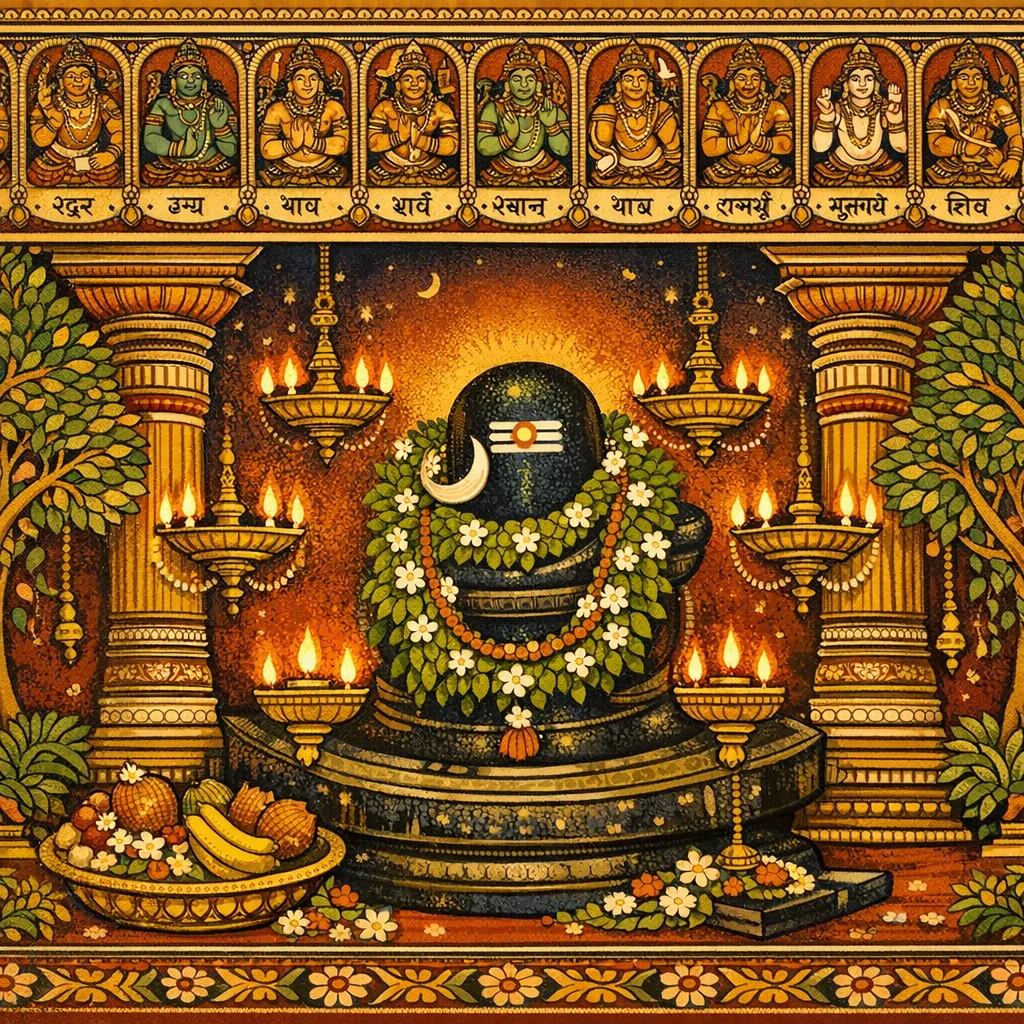
Adhyaya 56: Kṛṣṇāṣṭamī Vrata: Monthly Śiva-Names, Night Worship, and Prescribed Gifts
कृष्णाष्टमी-व्रतविधानम् (शैव-उपासना-क्रमः)
Speaker: Śrī Bhagavān (the Blessed Lord)
The Blessed Lord teaches, in direct instruction, Kṛṣṇāṣṭamī as a purifying observance. He lists month-by-month worship of Śiva under specific names, enjoins honoring brāhmaṇas and sustaining Śiva’s devotees through dāna, and sets out the purification and night-pūjā sequence using pañcagavya and related ritual implements. He names six sacred trees and prescribes a paired-month regimen for dantapavana tooth-twigs, then concludes with arghya offerings and donation protocols. The chapter ends with an ethical warning against deceit in matters of wealth and a promise of extraordinary merit: even fasting on Kṛṣṇāṣṭamī alone grants great puṇya and exalted status in Śiva’s world for vast spans of kalpas.
Key Concepts
Shlokas in Adhyaya 56
Verse 1
*श्रीभगवानुवाच कृष्णाष्टमीमथो वक्ष्ये सर्वपापप्रणाशिनीम् शान्तिर्मुक्तिश्च भवति जयः पुंसां विशेषतः //
The Blessed Lord said: “Now I shall describe Kṛṣṇāṣṭamī, the observance that destroys all sins. From it arise peace and liberation (mokṣa)—and, especially for men, victory as well.”
Verse 2
शंकरं मार्गशिरसि शम्भुं पौषे ऽभिपूजयेत् माघे महेश्वरं देवं महादेवं च फाल्गुने //
In the month of Mārgaśīrṣa one should worship Śaṅkara; in Pauṣa, Śambhu; in Māgha, the Lord Maheśvara; and in Phālguna, Mahādeva.
Verse 3
स्थाणुं चैत्रे शिवं तद्वद् वैशाखे त्वर्चयेन्नरः ज्येष्ठे पशुपतिं चार्चेद् आषाढे उग्रमर्चयेत् //
In the month of Caitra, a man should worship Śiva as Sthāṇu; likewise in Vaiśākha he should worship him as Śiva. In Jyeṣṭha he should worship Paśupati, and in Āṣāḍha he should worship him as Ugra.
Verse 4
पूजयेच्छ्रावणे शर्वं नभस्ये त्र्यम्बकं तथा हरमाश्वयुजे मासि तथेशानं च कार्त्तिके //
In the month of Śrāvaṇa one should worship Śarva; in Bhādrapada, likewise, Tryambaka; in Āśvayuja one should worship Hara; and in Kārttika, Īśāna as well.
Verse 5
कृष्णाष्टमीषु सर्वासु शक्तः सम्पूजयेद्द्विजान् गोभूहिरण्यवासोभिः शिवभक्तानुपोषितः //
On every Kṛṣṇāṣṭamī (the eighth lunar day of the dark fortnight), one who is able should duly honor and worship the twice-born (Brahmins), sustaining devoted worshippers of Śiva by gifts of cows, land, gold, and garments.
Verse 6
गोमूत्रघृतगोक्षीरतिलान् यवकुशोदकम् गोशृङ्गोदशिरीषार्कबिल्वपत्त्रदधीनि च पञ्चगव्यं च संप्राश्य शंकरं पूजयेन्निशि //
Having taken as purificatory substances cow’s urine, ghee, cow’s milk, sesame, barley, and kuśa-water—together with the rite-used cow-horn, odana (cooked offering), śirīṣa, arka, bilva leaves, and curd—and having partaken of pañcagavya, one should worship Śaṅkara at night.
Verse 7
अश्वत्थं च वटं चैवो-दुम्बरं प्लक्षमेव च पलाशं जम्बुवृक्षं च विदुः षष्ठं महर्षयः //
The great sages recognize these as the six principal sacred trees: the aśvattha (sacred fig), the vaṭa (banyan), the udumbara (cluster fig), the plakṣa (white fig), the palāśa (flame-of-the-forest), and the jambu tree.
Verse 8
मार्गशीर्षाषाढमासाभ्यां द्वाभ्यां द्वाभ्यामितिक्रमात् एकैकं दन्तपवनं वृक्षेष्वेतेषु भक्षयेत् //
Beginning with the months Mārgaśīrṣa and Āṣāḍha, proceeding in due order by pairs of months, one should each time chew a single tooth-cleansing twig (dantapavana) from those specified trees.
Verse 9
देवाय दद्यादर्घ्यं च कृष्णां गां कृष्णवाससम् दद्यात्समाप्ते दध्यन्नं वितानध्वजचामरम् //
One should offer arghya to the deity, and also give a black cow together with a black garment. At the conclusion of the rite, one should donate rice mixed with curds, along with a ceremonial canopy (vitāna), a banner (dhvaja), and a yak-tail fan (chāmara).
Verse 10
द्विजानामुदकुम्भांश्च पञ्चरत्नसमन्वितान् गावः कृष्णाः सुवर्णं च वासांसि विविधानि च अशक्तस्तु पुनर्दद्याद् गामेकामपि शक्तितः //
One should give to the twice-born (Brāhmaṇas) water-pots (udakumbha) furnished with the five gems (pañcaratna), along with black cows, gold, and various kinds of garments. But if one is unable, then according to one’s capacity one should at least give even a single cow.
Verse 11
न वित्तशाठ्यं कुर्वीत कुर्वन्दोषमवाप्नुयात् कृष्णाष्टमीमुपोष्यैव सप्तकल्पशतत्रयम् पुमान्सम्पूजितो देवैः शिवलोके महीयते //
One should not practice deceit in matters of wealth; whoever does so incurs fault. But by fasting on Kṛṣṇāṣṭamī alone, a man—honoured and worshipped by the gods—attains great eminence in Śiva’s world for an immeasurably long divine span, as though for hundreds of kalpas.
Frequently Asked Questions
The chapter teaches the Kṛṣṇāṣṭamī vrata as a powerful Shaiva observance: fast on the dark-fortnight eighth day, worship Śiva at night after prescribed purification (including pañcagavya), honor brāhmaṇas and Śiva devotees through appropriate gifts, and maintain honesty in wealth. The text emphasizes that even fasting alone—when done without deceit—brings immense merit, peace, liberation, and long residence in Śiva’s world.
This adhyaya is primarily Dharma-focused, specifically Vrata-Vidhi and Shaiva ritual practice. It does not present Vastu-śāstra measurements or genealogical lists; instead it details calendrical worship, purity substances, sacred trees used for dantapavana, and structured dāna (cows, garments, gold, water pots with gems).