Adhyaya 3
Role-Allocation in Virāṭa’s Court: Nakula, Sahadeva, and Draupadī’s Concealment
Upa-parva: Ajñātavāsa-praveśa (Disguise Planning in Virāṭa’s Court)
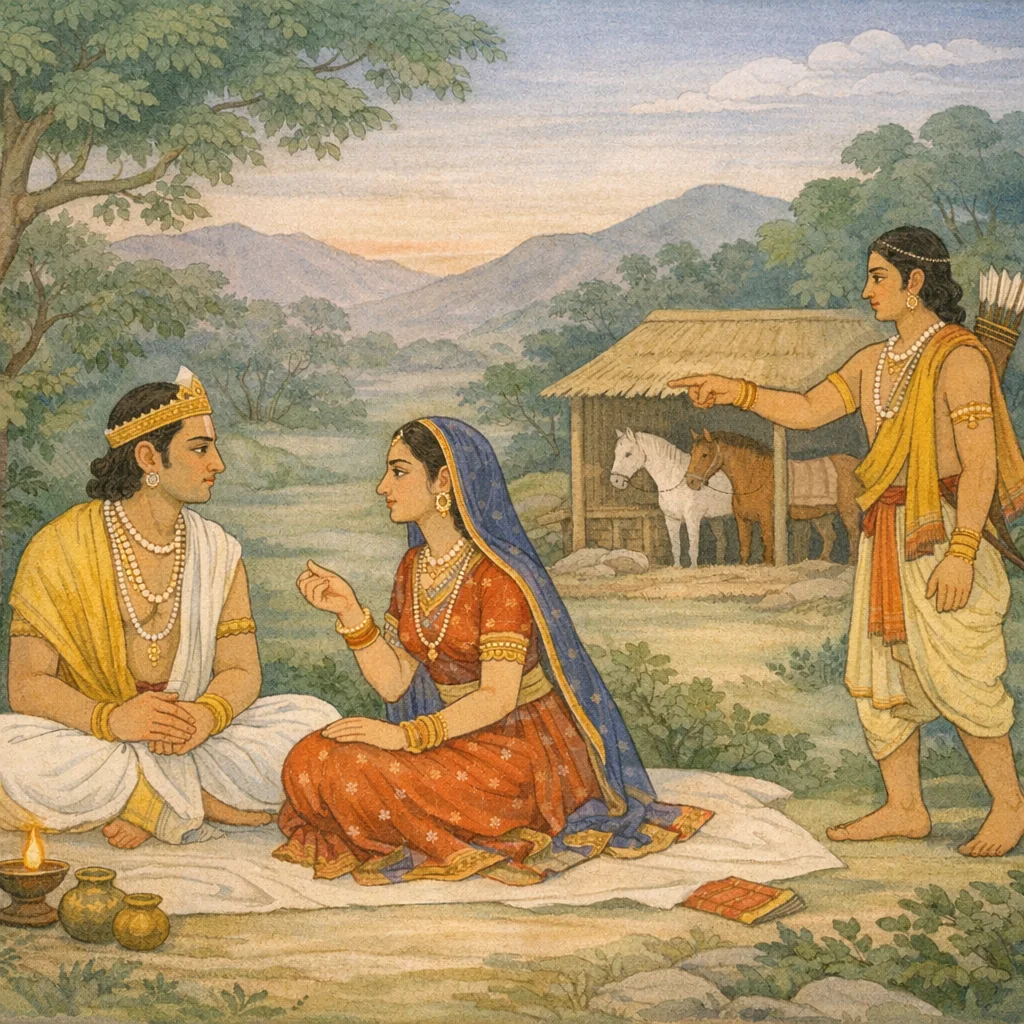
Chapter 3 records a planning dialogue centered on concealment logistics during ajñātavāsa. Yudhiṣṭhira questions Nakula’s intended conduct in Virāṭa’s city, noting his refinement and visibility; Nakula replies that he will serve as Virāṭa’s aśvabandha (horse-attendant/trainer) under the name Granthika, emphasizing proficiency in horse-training and equine care. Yudhiṣṭhira similarly asks Sahadeva how he will remain hidden; Sahadeva states he will be Virāṭa’s gosaṃkhyātā (cattle enumerator/administrator), also acting as restrainer and milker, known as Tantipāla, and details expertise in cattle traits, auspicious marks, and breeding lore. The chapter then turns to Draupadī: Yudhiṣṭhira expresses concern for her safety and suitability for labor; Draupadī answers that she will present herself as a sairandhrī skilled in hairdressing/attendant work, seek placement with Queen Sudeṣṇā, and rely on royal protection. The thematic core is competence-based role selection, controlled self-presentation, and ethical concealment as a disciplined practice.
Chapter Arc: अर्जुन अपनी बात कहकर मौन हो जाते हैं; अब अज्ञातवास की सबसे नाज़ुक योजना—किस रूप में विराटनगर में प्रवेश किया जाए—युधिष्ठिर के नेतृत्व में आगे बढ़ती है। → नकुल अपना वेश और कार्य निश्चित करते हैं—विराट के अश्वशाला में अश्वबन्ध (घोड़ों को साधने/पालने वाला) बनकर रहेंगे और पूछे जाने पर अपने कौशल का विश्वसनीय उत्तर देंगे। इसके साथ ही युधिष्ठिर का ध्यान द्रौपदी की सुरक्षा पर टिक जाता है: सुकुमारी, नवयौवना, राजकुमारी—अज्ञातवास की कठोरता और पुरुषों की दृष्टि के बीच वह कैसे सुरक्षित रहेगी? → द्रौपदी स्वयं अपना उपाय घोषित करती है—वह सुदेष्णा (विराट की रानी) की सेवा में रहकर संरक्षण पाएगी, और आवश्यकता पड़ने पर अपनी रक्षा स्वयं करने का संकल्प भी व्यक्त करती है। → युधिष्ठिर द्रौपदी की बुद्धि और साध्वी-व्रत की प्रशंसा करते हैं, पर साथ ही सावधानी का आदेश देते हैं—ऐसा आचरण कि शत्रु पहचान न सकें और पापी विरोधी सुखी होकर फिर सिर न उठा सकें। → योजना बन गई है, पर विराटनगर में प्रवेश के बाद—विशेषतः द्रौपदी के प्रति दरबार की दृष्टि और संभावित अपमान—किस रूप में संकट बनकर उभरेगा, यह अनकहा भय अगले अध्यायों में लटकता रहता है।
Shlokas
Verse 1
इस प्रकार श्रीमह्माभारत विराटपर्वके अन्तर्गत पाण्डवप्रवेशपर्वमें युधिष्ठटिर आदिकी मन्त्रणाविषयक दूसरा अध्याय पूरा हुआ ॥/ २ ॥ (दाक्षिणात्य अधिक पाठका १ श्लोक मिलाकर कुल ३३ “लोक हैं।) हि 8 मो (0) है 7 7 $. पुरोगु कहते हैं वायुको, उसके पुत्र होनेसे भीमसेनका 'पौरोगव” नाम सत्य एवं सार्थक है। २. बल्लवका अर्थ है सूपकर्ता अर्थात् रसोइया। रसोईके काममें निपुण होनेसे उनका यह नाम यथार्थ ही है। तृतीयो<थध्याय: नकुल, सहदेव तथा द्रौपदीद्वारा अपने-अपने भावी कर्तव्योंका दिग्दर्शन वैशग्पायन उवाच इत्येवमुक्त्वा पुरुषप्रवीर- स्तथार्जुनो धर्मभृतां वरिष्ठ: । वाक््यं तथासौ विरराम भूयो नृपो5परं भ्रातरमाबभाषे
Vaiśaṃpāyana said: Having spoken thus, that heroic man—Arjuna, foremost among the upholders of dharma—fell silent. Then the king (Yudhiṣṭhira) addressed another of his brothers again, continuing their counsel about how to live rightly in concealment.
Verse 2
वैशम्पायनजी कहते हैं--जनमेजय! धर्मात्माओंमें श्रेष्ठ तथा पुरुषोंमें महान् वीर अर्जुन इस प्रकार कहकर चुप हो गये। तब राजा युधिष्छिर पुन: दूसरे भाईसे बोले ।। युधिछिर उवाच कि त्वं नकुल कुर्वाणस्तत्र तात चरिष्यसि । कर्म तत् त्वं समाचक्ष्व राज्ये तस्य महीपते: । सुकुमारश्न शूरश्न॒ दर्शनीय: सुखोचित:,युधिष्ठिरने पूछा--नकुल! तुम राजा विराटके राज्यमें कौन-सा कार्य करते हुए निवास करोगे? वह कार्य बताओ। तात! तुम तो शूरवीर होनेके साथ ही अत्यन्त सुकुमार, परम दर्शनीय और सर्वथा सुख भोगनेके ही योग्य हो
Vaiśaṃpāyana said: “O Janamejaya, Arjuna—foremost among the righteous and a great hero among men—having spoken thus, fell silent. Then King Yudhiṣṭhira again addressed another of his brothers.” Yudhiṣṭhira said: “Nakula, my dear brother, what role will you take up there, living in the kingdom of that ruler? Tell me clearly what work you will do in King Virāṭa’s realm. For you are both delicate and heroic—handsome to behold, and one who seems fit for comfort.”
Verse 3
नकुल उवाच अश्वबन्धो भविष्यामि विराटनूपतेरहम् । सर्वथा ज्ञानसम्पन्न: कुशल: परिरक्षणे,नकुल बोले--राजन्! मैं राजा विराटके यहाँ अश्वबन्ध (घोड़ोंको वशमें करनेवाला सवार) होकर रहूँगा। मैं अश्वविज्ञानसे सम्पन्न और घोड़ोंकी रक्षाके कार्यमें कुशल हूँ इति श्रीमहाभारते विराटपर्वणि पाण्डवप्रवेशपर्वणि युधिष्ठिरादिमन्त्रणे तृतीयो<5ध्याय:
Nakula said: “O King, I shall serve here under King Virāṭa as the master of horses—one who trains and manages them. I am fully equipped with knowledge of horsemanship and skilled in the protection and care of horses.”
Verse 4
ग्रन्थिको नाम नाम्नाहं कर्मतत् सुप्रियं मम । कुशलो>थस्म्यश्वशिक्षायां तथैवाश्वचिकित्सने | प्रियाश्न॒ सततं मे5श्वा: कुरुराज यथा तव,मैं राजसभामें ग्रन्थिक नामसे अपना परिचय दूँगा। घोड़ोंकी देखभालका काम मुझे अत्यन्त प्रिय है। उन्हें भाँति-भाँतिकी चालें सिखाने और उनकी चिकित्सा करनेमें भी मैं निपुण हूँ। कुरुागाज! आपकी ही भाँति मुझे भी घोड़े सदैव प्रिय रहे हैं-
Nakula said: “I shall introduce myself in the royal court by the name ‘Granthika’. The work of tending horses is exceedingly dear to me. I am skilled in training horses—teaching them various gaits—and likewise in treating their ailments. O king of the Kurus, horses have always been dear to me, just as they are to you.”
Verse 5
ये मामामन्त्रयिष्यन्ति विराटनगरे जना: । तेभ्य एवं प्रवक्ष्यामि विहरिष्याम्यहं यथा,विराटनगरमें जो लोग मुझसे पूछेंगे, उन्हें मैं इस प्रकार उत्तर दूँगा--“तात! पहले पाण्डुनन्दन राजा युधिष्ठिरने मुझे अश्वोंका अध्यक्ष बनाकर रख रखा था।' महीपते! मैं जिस प्रकार वहाँ विहार करूँगा, वह सब मैंने आपको बता दिया। राजा विराटके नगरमें अपनेको छिपाये रखकर ही मैं सर्वत्र विचरूगा
Nakula said: “If the people in the city of Virāṭa question me, I will answer them in this manner: ‘Dear sir, formerly King Yudhiṣṭhira, the son of Pāṇḍu, appointed me as superintendent of horses.’ O king, I have explained to you how I shall conduct myself there. Concealing my identity in Virāṭa’s city, I will move about everywhere accordingly.”
Verse 6
पाण्डवेन पुरा तात अश्वेष्वधिकृत: पुरा । विराटनगरे छन्नश्षरिष्यामि महीपते,विराटनगरमें जो लोग मुझसे पूछेंगे, उन्हें मैं इस प्रकार उत्तर दूँगा--“तात! पहले पाण्डुनन्दन राजा युधिष्ठिरने मुझे अश्वोंका अध्यक्ष बनाकर रख रखा था।' महीपते! मैं जिस प्रकार वहाँ विहार करूँगा, वह सब मैंने आपको बता दिया। राजा विराटके नगरमें अपनेको छिपाये रखकर ही मैं सर्वत्र विचरूगा
Nakula said: “Dear father, formerly I was appointed by the Pandava (Yudhiṣṭhira) as the officer in charge of horses. O lord of the earth, I shall move about in Virāṭa’s city in disguise. To those in Virāṭanagara who question me, I will reply in this manner: ‘Dear sir, earlier King Yudhiṣṭhira, son of Pāṇḍu, had placed me as superintendent of horses.’ Thus, keeping myself concealed in King Virāṭa’s city, I will roam everywhere as I have explained to you.”
Verse 7
युधिछिर उवाच सहदेव कथं तस्य समीपे विहरिष्यसि । किं वा त्वं कर्म कुर्वाण: प्रच्छन्नो विहरिष्यसि,युधिष्ठिरने सहदेवसे पूछा--भैया सहदेव! तुम राजा विराटके समीप कैसे जाओगे उनके यहाँ क्या काम करते हुए गुप्तरूपसे निवास करोगे?
Yudhiṣṭhira said: “Sahadeva, how will you live in his proximity? And what work will you do, living there in concealment?” In the ethical tension of exile, Yudhiṣṭhira probes not merely the logistics of disguise but the propriety of livelihood and conduct while remaining hidden, so that their survival does not compromise dharma.
Verse 8
सहदेव उवाच गोसंख्याता भविष्यामि विराटस्य महीपते: । प्रतिषेद्धा च दोग्धा च संख्याने कुशलो गवाम्,सहदेवने कहा--महाराज! मैं राजा विराटके यहाँ गौओंकी गिनती--जाँच-पड़ताल करनेवाला गो-शालाध्यक्ष होकर रहूँगा। मैं गौओंको नियन्त्रणमें रखने और दुहनेका काम अच्छी तरह जानता हूँ। उन्हें गिनने और उनकी परख-पहचानके काममें भी कुशल हूँ
Sahadeva said: “I shall serve King Virāṭa as the keeper who counts and audits the cattle. I am skilled at restraining the herd and at milking; and I am proficient in numbering the cows and recognizing them accurately.”
Verse 9
तन्तिपाल इति ख्यातो नाम्नाहं विदितस्त्वथ । निपुणं च चरिष्यामि व्येतु ते मानसो ज्वर:,मैं वहाँ तन्तिपाल नामसे प्रसिद्ध होऊँगा। इसी नामसे मुझे सब लोग जानेंगे। मैं बड़ी चतुराईसे अपनेको छिपाये रखकर वहाँ सब ओर विचरूँगा; अतः मेरे विषयमें आपकी मानसिक चिन्ता दूर हो जानी चाहिये
Sahadeva said: “I shall be known by the name Tantipāla; by that name everyone will recognize me there. I will move about skillfully, keeping my true identity concealed—so let the fever of anxiety in your mind be dispelled regarding me.”
Verse 10
(अरोगा बहुला: पुष्टा: क्षीरवत्यो बहुप्रजा: । निष्पन्नस त्त्वा: सुभृता व्यपेतज्वरकिल्बिषा: ।। नष्टचोरभया नित्यं व्याधिव्याप्रविवर्जिता: । गावश्व सुसुखा राजन् निरुद्धिग्ना निरामया: ।। भविष्यन्ति मया गुप्ता विराटपशवो नृप ।।) राजन! मेरे द्वारा रक्षित होकर राजा विराटके पशु तथा गौएँ नीरोग, संख्यामें अधिक, हृष्ट-पुष्ट, अधिक दूध देनेवाली, बहुत संतानोंवाली, सत्त्वयुक्त, अच्छी तरह सम्हाल होनेसे रोगरूप पापसे रहित, चोरोंके भयसे मुक्त तथा सदा व्याधि एवं बाघ आदिके भयसे रक्षित होंगी। महाराज! वे उद्वेगरहित, सुखी और निरामय तो होंगी ही। अहं हि सततं गोषु भवता प्रहितः पुरा । तत्र मे कौशलं सर्वमवबुद्धं विशाम्पते,भूपाल! पहले आपने मुझे सदा गौओंकी देखभालके कार्यमें नियुक्त किया है। इस कार्यमें मैं कितना दक्ष हूँ, यह सब आपको विदित ही है
Sahadeva said: “O King, when protected by me, King Virāṭa’s cattle and horses will be healthy—numerous, well-nourished, rich in milk, and prolific. Properly tended, they will be free from the ‘sin’ of disease and from fever and affliction; fear of thieves will be gone, and they will remain safe from illness and from dangers such as tigers and other predators. They will be untroubled, comfortable, and free from ailments. For you once appointed me continually to the care of cattle; you already know, O lord of the people, the full measure of my skill in that work.”
Verse 11
लक्षणं चरितं चापि गवां यच्चापि मड़लम् । तत् सर्व मे सुविदितमन्यच्चापि महीपते,महीपते! गौओंके जो लक्षण और चरित्र मंगल-कारक होते हैं, वे सब मुझे भलीभाँति मालूम हैं। उनके विषयमें और भी बहुत-सी बातें मैं जानता हूँ। राजन्! इसके सिवा मैं ऐसे प्रशंसनीय लक्षणोंवाले साँड्रोंको भी जानता हूँ, जिनके मूत्रको सूँघ लेनेमात्रसे वन्ध्या स्त्री भी गर्भवती हो सकती है
Sahadeva said: “O king, I know well all the auspicious marks and customary traits of cattle—their signs and their conduct. And besides these, I know many other matters too, O lord of the earth.”
Verse 12
वृषभानपि जानामि राजन् पूजितलक्षणान् | येषां मूत्रमुपाप्राय अपि वन्ध्या प्रसूयते,महीपते! गौओंके जो लक्षण और चरित्र मंगल-कारक होते हैं, वे सब मुझे भलीभाँति मालूम हैं। उनके विषयमें और भी बहुत-सी बातें मैं जानता हूँ। राजन्! इसके सिवा मैं ऐसे प्रशंसनीय लक्षणोंवाले साँड्रोंको भी जानता हूँ, जिनके मूत्रको सूँघ लेनेमात्रसे वन्ध्या स्त्री भी गर्भवती हो सकती है
Sahadeva said: “O King, I also know the bulls whose marks are esteemed and auspicious. Such is their celebrated potency that, merely by coming into contact with (or smelling) their urine, even a barren woman is said to conceive and give birth, O lord of the earth.”
Verse 13
सो5हमेवं चरिष्यामि प्रीतिरत्र हि मे सदा । नच मां वेत्स्यते कश्चित् तोषयिष्ये च पार्थिवम्,इस प्रकार मैं गौओंकी सेवा करूँगा। इस कार्यमें मुझे सदासे प्रेम रहा है। वहाँ मुझे कोई पहचान नहीं सकेगा। मैं अपने कार्यसे राजा विराटको संतुष्ट कर लूँगा-
“So I shall live in this manner. For this work has always been dear to me. There, no one will recognize me, and by my service I will satisfy the king.”
Verse 14
युधिछिर उवाच इयं हि नः प्रिया भार्या प्राणेभ्योडपि गरीयसी । मातेव परिपाल्या च पूज्या ज्येछ्रेव च स्वसा,युधिष्ठिर बोले--यह ट्रुपदकुमारी कृष्णा हमलोगोंकी प्यारी भार्या है। इसका गौरव हमारे लिये प्राणोंसे भी बढ़कर है। यह माता (पृथ्वी)-की भाँति पालन करनेयोग्य तथा बड़ी बहन (धेनु)-के समान आदरणीय है। यह तो दूसरी स्त्रियोंकी भाँति कोई काम-काज भी नहीं जानती; फिर वहाँ किस कर्मका आश्रय लेकर निवास करेगी?
Yudhiṣṭhira said: “This woman is our beloved wife, dearer to us even than our own lives. She must be protected like a mother and honored like an elder sister.”
Verse 15
केन सम द्रौपदी कृष्णा कर्मणा विचरिष्यति । न हि किज्चिद् विजानाति कर्म कर्तु यथा स्त्रिय:,युधिष्ठिर बोले--यह ट्रुपदकुमारी कृष्णा हमलोगोंकी प्यारी भार्या है। इसका गौरव हमारे लिये प्राणोंसे भी बढ़कर है। यह माता (पृथ्वी)-की भाँति पालन करनेयोग्य तथा बड़ी बहन (धेनु)-के समान आदरणीय है। यह तो दूसरी स्त्रियोंकी भाँति कोई काम-काज भी नहीं जानती; फिर वहाँ किस कर्मका आश्रय लेकर निवास करेगी?
Yudhiṣṭhira said: “By what kind of work will Draupadī—Kṛṣṇā—manage to live there? For she does not know any task at all in the way ordinary women do. What occupation could she take up as a support for dwelling in that place?”
Verse 16
सुकुमारी च बाला च राजपुत्री यशस्विनी । पतिव्रता महाभागा कथं नु विचरिष्यति,इसका शरीर अत्यन्त सुकुमार है। इसकी अवस्था नयी है। यह यशस्विनी राजकुमारी परम सौभाग्यवती तथा पतिव्रता है। भला, यह विराटनगरमें किस प्रकार रहेगी?
Yudhiṣṭhira said: “She is delicate and still very young—a renowned princess. She is devoted to her husband and greatly fortunate. How, then, will she be able to live and move about in Virāṭa’s city?”
Verse 17
माल्यगन्धानलड्कारान् वस्त्राणि विविधानि च । एतान्येवाभिजानाति यतो जाता हि भामिनी,इस भामिनीने जबसे जन्म लिया है, तबसे अबतक माला, सुगन्धित पदार्थ, भाँति- भाँतिके गहने तथा अनेक प्रकारके वस्त्रोंको ही जाना है। इसने कभी कष्टका अनुभव नहीं किया है
Yudhiṣṭhira said: “Since the day this noble lady was born, she has known only garlands, perfumes, ornaments, and garments of many kinds. She has never had any experience of hardship.”
Verse 18
द्रौपहयुवाच सैरन्ध्र्यो रक्षिता लोके भुजिष्या: सन्ति भारत । नैवमन्या: स्त्रियो यान्ति इति लोकस्य निश्चय: ।। साहं ब्रुवाणा सैरन्ध्री कुशला केशकर्मणि,द्रौपदीने कहा--भारत! इस जगत्में बहुत-सी ऐसी स्त्रियाँ हैं, जिनका दूसरोंके घरोंमें पालन होता है और जो शिल्पकर्मोंद्वारा जीवननिर्वाह करती हैं। वे अपने सदाचारसे स्वतः सुरक्षित होती हैं। ऐसी स्त्रियोंको सैरन्ध्री कहते हैं। लोगोंको अच्छी तरह मालूम है कि सैरन्ध्रीकी भाँति दूसरी स्त्रियाँ बाहरकी यात्रा नहीं करतीं, [अतः सैरन्ध्रीके वेशमें मुझे कोई पहचान नहीं सकेगा।] इसलिये मैं सैरन्ध्री कहकर अपना परिचय दूँगी। बालोंको सँवारने और वेणी-रचना आदिके कार्योंमें मैं बहुत निपुण हूँ। यदि राजा मुझसे पूछेंगे, तो कह दूँगी कि “मैं महाराज युधिष्ठिरके महलमें महारानी द्रौपदीकी परिचारिका बनकर रही हूँ”
Draupadī said: “O Bhārata, in this world there are many women who live under the protection of others’ households and sustain themselves by skilled service. Such women are deemed safe by their own good conduct; they are called ‘sairandhrīs’. People are firmly convinced that women other than a sairandhrī do not go about traveling in this manner. Therefore, if I present myself as a sairandhrī, I shall not be recognized. I will declare myself a sairandhrī; and I am proficient in the work of hair—arranging it, dressing it, and braiding it.”
Verse 19
युधिष्ठिरस्य गेहे वै द्रौपद्या: परिचारिका । उषितास्मीति वक्ष्यामि पृष्टा राज्ञा च भारत,द्रौपदीने कहा--भारत! इस जगत्में बहुत-सी ऐसी स्त्रियाँ हैं, जिनका दूसरोंके घरोंमें पालन होता है और जो शिल्पकर्मोंद्वारा जीवननिर्वाह करती हैं। वे अपने सदाचारसे स्वतः सुरक्षित होती हैं। ऐसी स्त्रियोंको सैरन्ध्री कहते हैं। लोगोंको अच्छी तरह मालूम है कि सैरन्ध्रीकी भाँति दूसरी स्त्रियाँ बाहरकी यात्रा नहीं करतीं, [अतः सैरन्ध्रीके वेशमें मुझे कोई पहचान नहीं सकेगा।] इसलिये मैं सैरन्ध्री कहकर अपना परिचय दूँगी। बालोंको सँवारने और वेणी-रचना आदिके कार्योंमें मैं बहुत निपुण हूँ। यदि राजा मुझसे पूछेंगे, तो कह दूँगी कि “मैं महाराज युधिष्ठिरके महलमें महारानी द्रौपदीकी परिचारिका बनकर रही हूँ”
“If the king questions me, O Bhārata, I shall say this: ‘Indeed, I have lived in King Yudhiṣṭhira’s household as an attendant of Draupadī.’”
Verse 20
आत्मगुप्ता चरिष्यामि यन्मां त्वं परिपृच्छसि,मैं अपनी रक्षा स्वयं कर लूँगी। आप जो मुझसे पूछते हैं कि तुम वहाँ क्या करोगी? कैसे रहोगी? उसके उत्तरमें निवेदन है कि मैं यशस्विनी राजपत्नी सुदेष्णाके पास जाऊँगी। मुझे अपने पास आयी हुई जानकर वे रख लेंगी और सब प्रकारसे मेरी रक्षा करेंगी। अतः आपके मनमें इस बातका दुःख नहीं होना चाहिये कि द्रौपदी कैसे सुरक्षित रह सकेगा
Yudhiṣṭhira said: “I shall live in concealment, protecting myself, as you ask. As for what I will do there and how I will stay: I will go to Queen Sudeṣṇā, the renowned royal consort. Knowing that I have come to her, she will keep me with her and safeguard me in every way. Therefore you should not grieve in your mind, thinking, ‘How will Draupadī remain safe?’”
Verse 21
सुदेष्णां प्रत्युपस्थास्ये राजभार्या यशस्विनीम् । सा रक्षिष्यति मां प्राप्तां मा भूत् ते दु:खमीदृशम्,मैं अपनी रक्षा स्वयं कर लूँगी। आप जो मुझसे पूछते हैं कि तुम वहाँ क्या करोगी? कैसे रहोगी? उसके उत्तरमें निवेदन है कि मैं यशस्विनी राजपत्नी सुदेष्णाके पास जाऊँगी। मुझे अपने पास आयी हुई जानकर वे रख लेंगी और सब प्रकारसे मेरी रक्षा करेंगी। अतः आपके मनमें इस बातका दुःख नहीं होना चाहिये कि द्रौपदी कैसे सुरक्षित रह सकेगा
Yudhiṣṭhira said: “I shall go and present myself to Sudeshnā, the illustrious queen. When she knows that I have come seeking refuge, she will keep me near her and protect me. Therefore, let no such sorrow arise in your mind.”
Verse 22
युधिछिर उवाच कल्याणं भाषसे कृष्णे कुले जातासि भामिनि । न पापमभिजानासि साध्वी साधुव्रते स्थिता,युधिष्ठिर बोले--कृष्णे! तुमने भली बात कही, इसमें कल्याण ही भरा है। क्यों न हो, तुम ऊँचे कुलमें उत्पन्न जो हुई हो! भामिनि! तुम्हें पापका रंचमात्र भी ज्ञान नहीं है। तुम साध्वी हो और उत्तम व्रतके पालनमें तत्पर रहती हो
Yudhiṣṭhira said: “O Kṛṣṇā, you speak what is wholesome and auspicious; it is only fitting, for you are born in a noble lineage. O passionate-hearted lady, you do not even recognize sin in the least. You are virtuous, steadfast in good vows and disciplined conduct.”
Verse 23
यथा न दुर्ह्वद: पापा भवन्ति सुखिन: पुनः । कुर्यास्तत् त्वं हि कल्याणि लक्षयेयुर्न ते तथा,कल्याणि! वहाँ ऐसा बर्ताव करना, जिससे वे पापी शत्रु फिर सुखी होनेका अवसर न पा सकें; वे तुम्हें किसी तरह पहचान न सकें
Yudhiṣṭhira said: “Act in such a way, O auspicious lady, that those sinful enemies do not again find an opportunity to become secure and happy. Conduct yourself so that they cannot recognize you in any manner.”
Frequently Asked Questions
The dilemma is how to remain truthful to one’s dharma and exile-terms while adopting assumed identities—choosing concealment without collapsing into deception that endangers others or violates the covenant’s intent.
Competence and restraint can ethically stabilize crisis: aligning one’s role with real skill, limiting self-display, and seeking lawful protection are presented as disciplined means of preserving dharma under constraint.
No explicit phalaśruti occurs in the given passage; the chapter functions as operational and ethical framing within the ajñātavāsa narrative rather than as a self-contained merit-text.