Adhyaya 9
Vyāsa’s Counsel to Dhṛtarāṣṭra on Restraining Duryodhana (व्यास-धृतराष्ट्र-उपदेशः)
Upa-parva: Dhṛtarāṣṭra-prati Vyāsa-nīti (Counsel to Dhṛtarāṣṭra regarding the Pāṇḍavas’ exile)
In this chapter, Vyāsa addresses Dhṛtarāṣṭra with a cautionary policy-ethical briefing. He states that the Pāṇḍavas’ exile—achieved through deceit and coercive victory by Duryodhana’s faction—is not a desirable outcome and carries deferred risk. Vyāsa predicts that, upon completion of the thirteenth year, remembered hardships may intensify the Pāṇḍavas’ resolve against the Kauravas. He questions why Dhṛtarāṣṭra’s son remains continually hostile for the sake of kingship, and urges that Duryodhana be restrained and moved toward śama (calm/appeasement). Vyāsa warns that attempting to harm the forest-dwelling Pāṇḍavas could lead to fatal consequences for the aggressor. He reinforces that Vidura, Bhīṣma, Kṛpa, and Droṇa share aligned counsel, and describes civil strife with one’s own kin as condemned, unlawful, and reputation-destroying. As a pragmatic alternative, he suggests sending Duryodhana alone to the forest among the Pāṇḍavas, hoping proximity might generate conciliatory affection; yet he also notes the inertia of ingrained character. The chapter closes by directing Dhṛtarāṣṭra to consult senior authorities promptly before circumstances become irreversible.
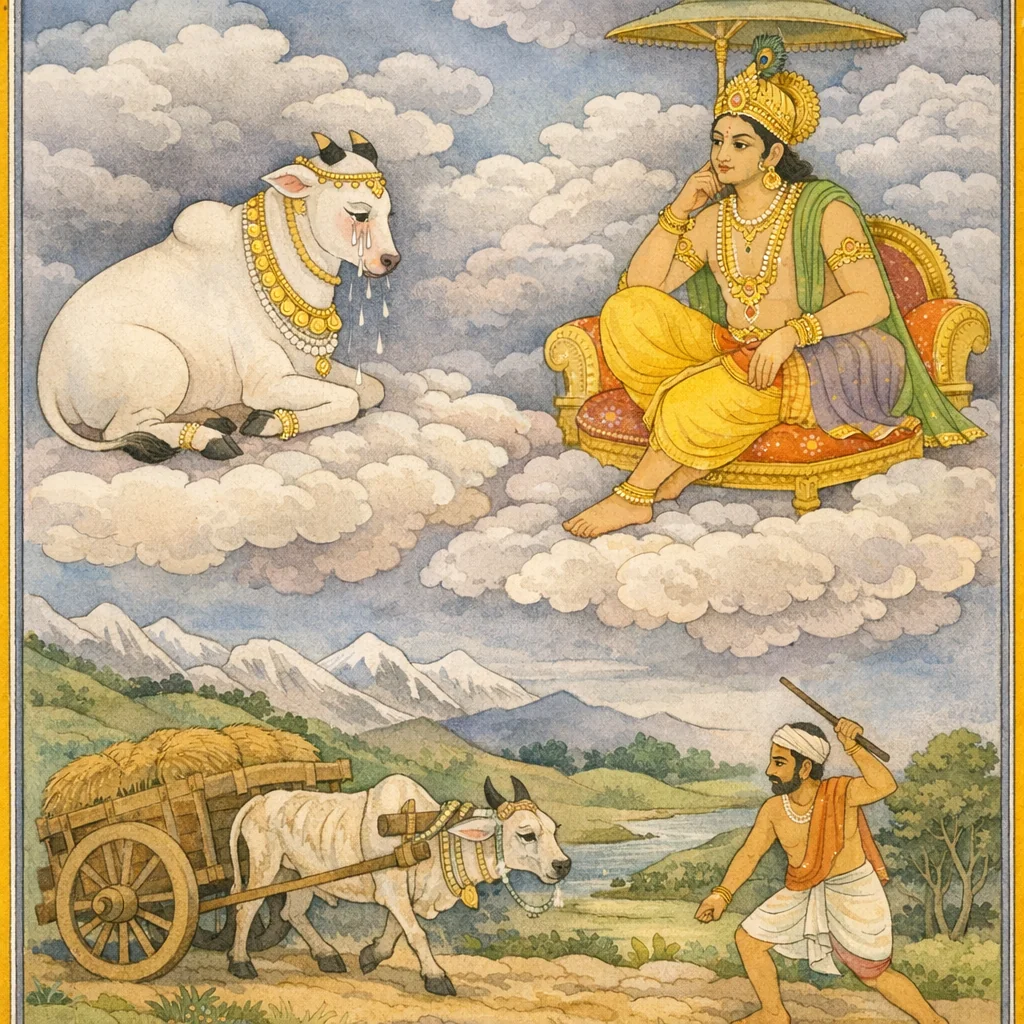
Chapter Arc: धृतराष्ट्र अपने ही अंतःकरण की ग्लानि और असहायता लेकर व्यास से पूछता है—जिस द्यूत ने कुल को जला दिया, उसे रोकने की बुद्धि होते हुए भी मैं क्यों न रोक सका? → वह स्वीकार करता है कि भीष्म, द्रोण, विदुर और गान्धारी तक को द्यूत-आयोजन रुचिकर न था, फिर भी मोह और पुत्रस्नेह के कारण वह दुर्योधन को छोड़ नहीं पाया। व्यास उसके इस ‘जानते हुए भी न रुकने’ को कठोर सत्य की तरह सामने रखते हैं और उसे समझाने हेतु एक उपाख्यान का द्वार खोलते हैं। → व्यास ‘सुरभि-इन्द्र संवाद’ सुनाते हैं: स्वर्ग में गोमाता सुरभि एक दुर्बल, कृश, धमनियों से उभरे बैल की पीड़ा देखकर फूट-फूटकर रोती है—किसान उसे डंडों से मारकर असह्य भार खिंचवा रहा है। इन्द्र करुणा से पूछता है, और सुरभि बताती है कि धृतराष्ट्र के सौ-एक पुत्रों के बीच पाण्डु के पाँच पुत्र ही लक्ष्य बनकर मंदभाग्य और दुःखी हैं; उनके जीवन-वृद्धि की चिंता से उसका मन जलता है। → उपाख्यान का निष्कर्ष धृतराष्ट्र के लिए सीधा उपदेश बनता है—यदि वह चाहता है कि कौरव जीवित रहें, तो दुर्योधन को पाण्डवों के प्रति शम (शांति/संयम) में लाना होगा; अन्यथा अन्याय का भार उसी तरह कुल को तोड़ेगा जैसे दुर्बल बैल को तोड़ता है। → धृतराष्ट्र के सामने अब एक ही प्रश्न खड़ा है—क्या वह पुत्रमोह से ऊपर उठकर दुर्योधन को रोकेगा, या करुणा का यह संकेत भी अनसुना होकर विनाश की ओर ले जाएगा?
Shlokas
Verse 1
अनार (0) है नवमो<्ध्याय: व्यासजीके द्वारा सुरभि और इन्द्रके उपाख्यानका वर्णन तथा उनका पाण्डवोंके प्रति दया दिखलाना धृतराष्ट उवाच भगवन् नाहमप्येतद् रोचये द्यूतसम्भवम् | मन्ये तद्विधिना55कृष्य कारितो<स्मीति वै मुने,धृतराष्ट्रने कहा--भगवन्! यह जूएका खेल मुझे भी पसंद नहीं था। मुने! मैं तो ऐसा समझता हूँ कि विधाताने मुझे बलपूर्वक खींचकर इस कार्यमें लगा दिया
Dhṛtarāṣṭra said: “Revered sir, I too did not approve of this affair born of the dice-game. O sage, I believe that Fate dragged me along by force and made me an agent in this deed.”
Verse 2
नैतद् रोचयते भीष्मो न द्रोणो विदुरो न च । गान्धारी नेच्छति द्यूतं तत्र मोहात् प्रवर्तितम्,भीष्म, द्रोण और विदुरको भी यह द्यूतका आयोजन अच्छा नहीं लगता था। गान्धारी भी नहीं चाहती थी कि जूआ खेला जाय; परंतु मैंने मोहवश सबको जूएमें लगा दिया
Dhṛtarāṣṭra said: “This did not please Bhīṣma—nor Droṇa, nor Vidura. Gāndhārī too did not wish for the gambling match; yet, driven by delusion, I set that game in motion there.”
Verse 3
परित्यक्तुंन शक्नोमि दुर्योधनमचेतनम् । पुत्रस्नेहेन भगवन् जानन्नपि प्रियव्रत,भगवन! प्रियव्रत! मैं यह जानता हूँ कि दुर्योधन अविवेकी है, तो भी पुत्रस्नेहके कारण मैं उसका त्याग नहीं कर सकता
Dhṛtarāṣṭra said: “O revered one, dear keeper of sacred vows, I know Duryodhana is foolish and lacking discernment; yet, bound by a father’s love, I cannot bring myself to abandon him.”
Verse 4
व्यास उवाच वैचित्रवीर्य नृपते सत्यमाह यथा भवान् | दृढं विद्य: परं पुत्र परं पुत्रान्न विद्यते,व्यासजी बोले--राजन्! विचित्रवीर्यनन्दन! तुम ठीक कहते हो, हम अच्छी तरह जानते हैं कि पुत्र परम प्रिय वस्तु है। पुत्रसे बढ़कर संसारमें और कुछ नहीं है
Vyāsa said: “O king, son of Vicitravīrya, you have spoken the truth, just as you have stated. We know with certainty, dear child, that a son is the highest treasure; in this world there is nothing greater than a son.”
Verse 5
इन्द्रोडप्यश्रुनिपातेन सुरभ्या प्रतिबोधित: । अन्यै: समृद्धैरप्यर्थर्न सुतान्मन्यते परम्,सुरभिने पुत्रके लिये आँसू बहाकर इन्द्रको भी यह बात समझायी थी, जिससे वे अन्य समृद्धिशाली पदार्थोंसे सम्पन्न होनेपर भी पुत्रसे बढ़कर दूसरी किसी वस्तुको नहीं मानते हैं
By the fall of her tears Surabhī awakened Indra to understanding; thus, though possessed of other abundant riches, he deemed nothing greater than a son.
Verse 6
अत्र ते कीर्तयिष्यामि महदाख्यानमुत्तमम् । सुरभ्याश्चैव संवादमिन्द्रस्य च विशाम्पते,जनेश्वर! इस विषयमें मैं तुम्हें एक परम उत्तम इतिहास सुनाता हूँ; जो सुरभि तथा इन्द्रके संवादके रूपमें है
Here I shall recount to you a great and excellent ancient narrative—namely, the dialogue between Surabhī and Indra, O lord of the people.
Verse 7
त्रिविष्टपगता राजन् सुरभी प्रारूुदत् किल | गवां माता पुरा तात तामिन्द्रोडन्वकृपायत,राजन! पहलेकी बात है, गोमाता सुरभि स्वर्गलोकमें जाकर फूट-फ़ूटकर रोने लगी। तात! उस समय इन्द्रको उसपर बड़ी दया आयी
O King, it is said that Surabhī, the mother of the cows, once went to Triviṣṭapa (heaven) and began to weep bitterly. Dear child, seeing her thus, Indra was moved with compassion for her.
Verse 8
इस प्रकार श्रीमह्या भारत वनपवके अन्तर्गत अरण्यपर्वमें व्यासवाक्यविषयक आठवाँ अध्याय पूरा हुआ,इन्द्र रवाच किमिदं रोदिषि शुभे कच्चित् क्षेमं दिवौकसाम् | मानुषेष्वथ वा गोषु नैतदल्पं भविष्यति इन्द्रने पूछा--शुभे! तुम क्यों इस तरह रो रही हो? देवलोकवासियोंकी कुशल तो है न? मनुष्यों तथा गौओंमें तो सब लोग कुशलसे हैं न? तुम्हारा यह रोदन किसी अल्प कारणसे नहीं हो सकता?
Indra said: “Auspicious one, why do you weep like this? Is all well with the dwellers of heaven? Or among human beings and among the cattle—are they safe and unharmed? Such lament cannot arise from a trivial cause.”
Verse 9
युराभिरुवाच विनिपातो न वः वच्चिद् दृश्यते त्रिदशाधिप । अहं तु पुत्र शोचामि तेन रोदिमि कौशिक,सुरभिने कहा--देवेश्वर! आपलोगोंकी अवनति नहीं दिखायी देती। इन्द्र! मुझे तो अपने पुत्रके लिये शोक हो रहा है, इसीसे रोती हूँ इति श्रीमहा भारते वनपर्वणि अरण्यपर्वणि सुरभ्युपाख्याने नवमो5ध्याय:
Surabhī said: “O lord of the gods, I do not see any downfall befalling you. Yet I grieve for my son; therefore I weep, O Kauśika (Indra).”
Verse 10
पश्यैनं कर्षकं क्षुद्रं दुर्बलं मम पुत्रकम् । प्रतोदेनाभिनिधघ्नन्तं लाड़्लेन च पीडितम्,देखो, इस नीच किसानको जो मेरे दुर्बल बेटेको बार-बार कोड़ेसे पीट रहा है और वह हलसे जुतकर अत्यन्त पीड़ित हो रहा है
Vyāsa said: “Look at this wretched ploughman—he keeps striking my frail son again and again with a goad, and my child, yoked to the plough, is being grievously tormented.”
Verse 11
निषीदमान सोत्कण्ठं वध्यमानं सुराधिप । कृपाविष्टास्मि देवेन्द्र मनश्लोद्विजते मम । एकस्तत्र बलोपेतो धुरमुद्ग॒हतेडधिकाम्,सुरेश्वर! वह तो विश्रामके लिये उत्सुक होकर बैठ रहा है और वह किसान उसे डंडे मारता है। देवेन्द्र! यह देखकर मुझे अपने बच्चेके प्रति बड़ी दया हो आयी है और मेरा मन उद्विग्न हो उठा है। वहाँ दो बैलोंमेंसे एक तो बलवान है जो भारयुक्त जूएको खींच सकता है; परंतु दूसरा निर्बल है, प्राणशून्य-सा जान पड़ता है। वह इतना दुबला-पतला हो गया है कि उसके सारे शरीरमें फैली हुई नाड़ियाँ दीख रही हैं। वह बड़े कष्टसे उस भारयुक्त जूएको खींच पाता हैं। वासव! मुझे उसीके लिये शोक हो रहा है। इन्द्र! देखो-देखो, चाबुकसे मार- मारकर उसे बार-बार पीड़ा दी जा रही है, तो भी उस जूएके भारको वहन करनेमें वह असमर्थ हो रहा है
Vyāsa said: “O Lord of the gods, O Devendra, I am overcome with compassion and my mind is shaken. Look—one of the oxen, longing for rest, sits down, yet the farmer beats him. Among the pair, one is strong and can draw the heavy yoke; the other is weak, almost lifeless, and though struck again and again, he cannot bear the burden. Seeing this suffering, my heart grieves.”
Verse 12
अपरोअप्यबलप्राण: कृशो धमनिसंततः । कृच्छादुद्गहते भारं तं वै शोचामि वासव,सुरेश्वर! वह तो विश्रामके लिये उत्सुक होकर बैठ रहा है और वह किसान उसे डंडे मारता है। देवेन्द्र! यह देखकर मुझे अपने बच्चेके प्रति बड़ी दया हो आयी है और मेरा मन उद्विग्न हो उठा है। वहाँ दो बैलोंमेंसे एक तो बलवान है जो भारयुक्त जूएको खींच सकता है; परंतु दूसरा निर्बल है, प्राणशून्य-सा जान पड़ता है। वह इतना दुबला-पतला हो गया है कि उसके सारे शरीरमें फैली हुई नाड़ियाँ दीख रही हैं। वह बड़े कष्टसे उस भारयुक्त जूएको खींच पाता हैं। वासव! मुझे उसीके लिये शोक हो रहा है। इन्द्र! देखो-देखो, चाबुकसे मार- मारकर उसे बार-बार पीड़ा दी जा रही है, तो भी उस जूएके भारको वहन करनेमें वह असमर्थ हो रहा है
Vyāsa said: “The other bull, too, is weak and seems almost bereft of life. He has become so emaciated that the veins spread across his body stand out clearly. With great difficulty he manages to draw the load. O Vāsava (Indra), it is for him that I grieve.”
Verse 13
वध्यमान: प्रतोदेन तुद्यमान: पुन: पुनः । नैव शक्नोति तं भारमुद्वोढुं पश्य वासव,सुरेश्वर! वह तो विश्रामके लिये उत्सुक होकर बैठ रहा है और वह किसान उसे डंडे मारता है। देवेन्द्र! यह देखकर मुझे अपने बच्चेके प्रति बड़ी दया हो आयी है और मेरा मन उद्विग्न हो उठा है। वहाँ दो बैलोंमेंसे एक तो बलवान है जो भारयुक्त जूएको खींच सकता है; परंतु दूसरा निर्बल है, प्राणशून्य-सा जान पड़ता है। वह इतना दुबला-पतला हो गया है कि उसके सारे शरीरमें फैली हुई नाड़ियाँ दीख रही हैं। वह बड़े कष्टसे उस भारयुक्त जूएको खींच पाता हैं। वासव! मुझे उसीके लिये शोक हो रहा है। इन्द्र! देखो-देखो, चाबुकसे मार- मारकर उसे बार-बार पीड़ा दी जा रही है, तो भी उस जूएके भारको वहन करनेमें वह असमर्थ हो रहा है
Vyāsa said: “Beaten with the goad and struck again and again, he is still unable to carry that load. Look, O Vāsava: though he is repeatedly pained by the whip, he remains incapable of bearing the burden of the yoke.”
Verse 14
ततो<हं तस्य शोकार्ता विरौमि भृशदुः:खिता । अश्रूण्यावर्तयन्ती च नेत्राभ्यां करुणायती,यही देखकर मैं शोकसे पीड़ित हो अत्यन्त दु:खी हो गयी हूँ और करुणामग्न हो दोनों नेत्रोंस आँसू बहाती हुई रो रही हूँ
Then, overwhelmed by grief at that sight, I began to wail—deeply distressed. With compassion rising within me, I wept, letting tears stream again and again from both my eyes.
Verse 15
शक्र उवाच तव पुत्रसहस््रेषु पीड्यमानेषु शो भने । कि कृपायितवत्यत्र पुत्र एकत्र हन्यति,इन्द्रने कहा--कल्याणी! तुम्हारे तो सहस्रों पुत्र इसी प्रकार पीड़ित हो रहे हैं, फिर तुमने एक ही पुत्रके मार खानेपर यहाँ इतनी करुणा क्यों दिखायी?
Śakra (Indra) said: “O fair one, when your thousands of sons are afflicted in the same way, why have you shown such compassion here when only one son is being slain?”
Verse 16
युराभिरुवाच यदि पुत्रसहस््राणि सर्वत्र समतैव मे । दीनस्यथ तु सतः शक्र पुत्रस्याभ्यधिका कृपा,सुरभि बोली--देवेन्द्र! यदि मेरे सहस्ौरों पुत्र हैं, तो मैं उन सबके प्रति समानभाव ही रखती हूँ; परंतु दीन-दुःखी पुत्रके प्रति अधिक दया उमड़ आती है
Surabhi said: “O Śakra (Indra), even if I have thousands of sons, my attitude toward them is equal everywhere; yet when one son is helpless and suffering, a greater compassion naturally rises in me for that afflicted child.”
Verse 17
व्यास उवाच तदिन्द्र: सुरभीवाक्यं निशम्य भृशविस्मित: । जीवितेनापि कौरव्य मेने5भ्यधिकमात्मजम्,व्यासजी कहते हैं--कुरुराज! सुरभिकी यह बात सुनकर इन्द्र बड़े विस्मित हो गये। तबसे वे पुत्रको प्राणोंसे भी अधिक प्रिय मानने लगे
Vyāsa said: “O scion of the Kuru line, when Indra heard Surabhī’s words, he was greatly astonished. From that time onward, he regarded his own son as dearer even than his very life.”
Verse 18
प्रववर्ष च तत्रैव सहसा तोयमुल्बणम् । कर्षकस्याचरन् विधघ्नं भगवान् पाकशासन:,उस समय वहाँ पाकशासन भगवान् इन्द्रने किसानके कार्यमें विध्न डालते हुए सहसा भयंकर वर्षा की
Then, right there, Pākaśāsana (Indra) suddenly poured down a fierce, overwhelming rain, deliberately creating an obstacle to the farmer’s work.
Verse 19
तद् यथा सुरकि: प्राह समवेतास्तु ते तथा । सुतेषु राजन् सर्वेषु हीनेष्वभ्यधिका कृपा,इस प्रसंगमें सुरभिने जैसा कहा है, वह ठीक है, कौरव और पाण्डव सभी मिलकर तुम्हारे ही पुत्र हैं। परंतु राजन! सब पुत्रोंमें जो हीन हों, दयनीय दशामें पड़े हों, उन्हींपर अधिक कृपा होनी चाहिये
In this matter, what Surabhī said is indeed right. O king, the Kauravas and the Pāṇḍavas together are all your sons; yet, among one’s sons, those who are weaker and fallen into a pitiable state deserve the greater compassion.
Verse 20
यादृशो मे सुतः पाण्डुस्तादृशो मे5सि पुत्रक | विदुरश्न महाप्राज्ञ: स्नेहादेतद् ब्रवीम्पहम्,वत्स! जैसे पाण्डु मेरे पुत्र हैं, वैसे ही तुम भी हो, उसी प्रकार महाज्ञानी विदुर भी हैं। मैंने स्नेहवश ही तुमसे ये बातें कही हैं
Vyāsa said: “My dear child, you are to me just as my son Pāṇḍu was. And Vidura too is a man of great wisdom. It is only out of affection that I speak these words to you.”
Verse 21
चिराय तव पुत्राणां शतमेकश्न भारत । पाण्डो: पज्चैव लक्ष्यन्ते तेडपि मन्दा: सुदु:ःखिता:,भारत! दीर्घकालसे तुम्हारे एक सौ एक पुत्र हैं, किंतु पाण्डुके पाँच ही पुत्र देखे जाते हैं। वे भी भोले-भाले, छल-कपटसे रहित हैं और अत्यन्त दुःख उठा रहे हैं
Vyāsa said: “O Bhārata, for a long time you have had ninety-nine sons; yet only the five sons of Pāṇḍu are seen as truly standing forth. And even they are simple-hearted—free from deceit—and are suffering intensely.”
Verse 22
कथं जीवेयुरत्यन्तं कथं वर्धेयुरित्यपि । इति दीनेषु पार्थेषु मनो मे परितप्यते,“वे कैसे जीवित रहेंगे और कैसे वृद्धिको प्राप्त होंगे?” इस प्रकार कुन्तीके उन दीन पुत्रोंके प्रति सोचते हुए मेरे मनमें बड़ा संताप होता है
Vyāsa said: “How will they manage to live at all, and how will they ever prosper?” Thinking thus about the Pārthas in their misery, my heart is consumed with anguish.
Verse 23
यदि पार्थिव कौरव्याज्जीवमानानिहेच्छसि । दुर्योधनस्तव सुत: शमं गच्छतु पाण्डवै:,राजन! यदि तुम चाहते हो कि समस्त कौरव यहाँ जीवित रहें तो तुम्हारा पुत्र दुर्योधन पाण्डवोंसे मेल करके शान्तिपूर्वक रहे
Vyāsa said: “O king, if you truly wish that the Kauravas here remain alive, then let your son Duryodhana go to peace—let him enter into reconciliation with the Pāṇḍavas.”
Frequently Asked Questions
The dilemma is whether a ruler should tolerate a successor’s aggressive policy toward wronged kin for political gain, or intervene to enforce restraint—balancing dynastic ambition against lawful conduct, social condemnation, and foreseeable escalation.
The chapter teaches that power without restraint is self-defeating: ethical governance requires listening to wise counsel, preventing intra-family hostility, and recognizing that injustice produces delayed but predictable consequences.
No explicit phalaśruti is stated; the meta-function is practical instruction—positioning this counsel as a preventive intervention whose value lies in averting irreversible harm and preserving dharma and reputation before political conditions harden.