Adhyaya 78
Akṣa-hṛdaya-dāna and Phalāśruti of the Nalopākhyāna (अक्षहृदयदानम् / नलोपाख्यान-फलश्रुतिः)
Upa-parva: Nalopākhyāna (The Nala–Damayantī Episode)
Bṛhadaśva concludes the Nala narrative by describing Damayantī’s return to Nala amid civic celebration and Nala’s restored sovereignty, followed by his performance of properly regulated sacrifices with due gifts. The speaker reframes Nala’s extreme suffering as a precedent for recovery, offering Yudhiṣṭhira a consolatory comparison: the Pāṇḍava’s forest life is accompanied by brothers, Draupadī, and learned Brāhmaṇas, mitigating grounds for lament. The chapter then presents explicit meta-commentary: the Nalopākhyāna is termed ‘kali-nāśana’ (a remover of misfortune/discord) and includes a phalāśruti promising prosperity, social esteem, wellbeing, and lineage benefits for those who recite or repeatedly hear Nala’s great conduct. Addressing Yudhiṣṭhira’s anxiety about being challenged again in dice-play, Bṛhadaśva promises to remove the stigma of being ‘unskilled at dice’ by imparting the complete ‘akṣa-hṛdaya’ (the “heart/secret of dice,” i.e., technical mastery). Vaiśaṃpāyana then narrates that Yudhiṣṭhira receives this knowledge; Bṛhadaśva departs for ritual purification. Subsequent report-lines shift attention to Arjuna (Dhanaṃjaya) undertaking severe austerities in solitude—described by multiple ascetic witnesses—prompting Yudhiṣṭhira’s concern and inquiries among learned Brāhmaṇas.
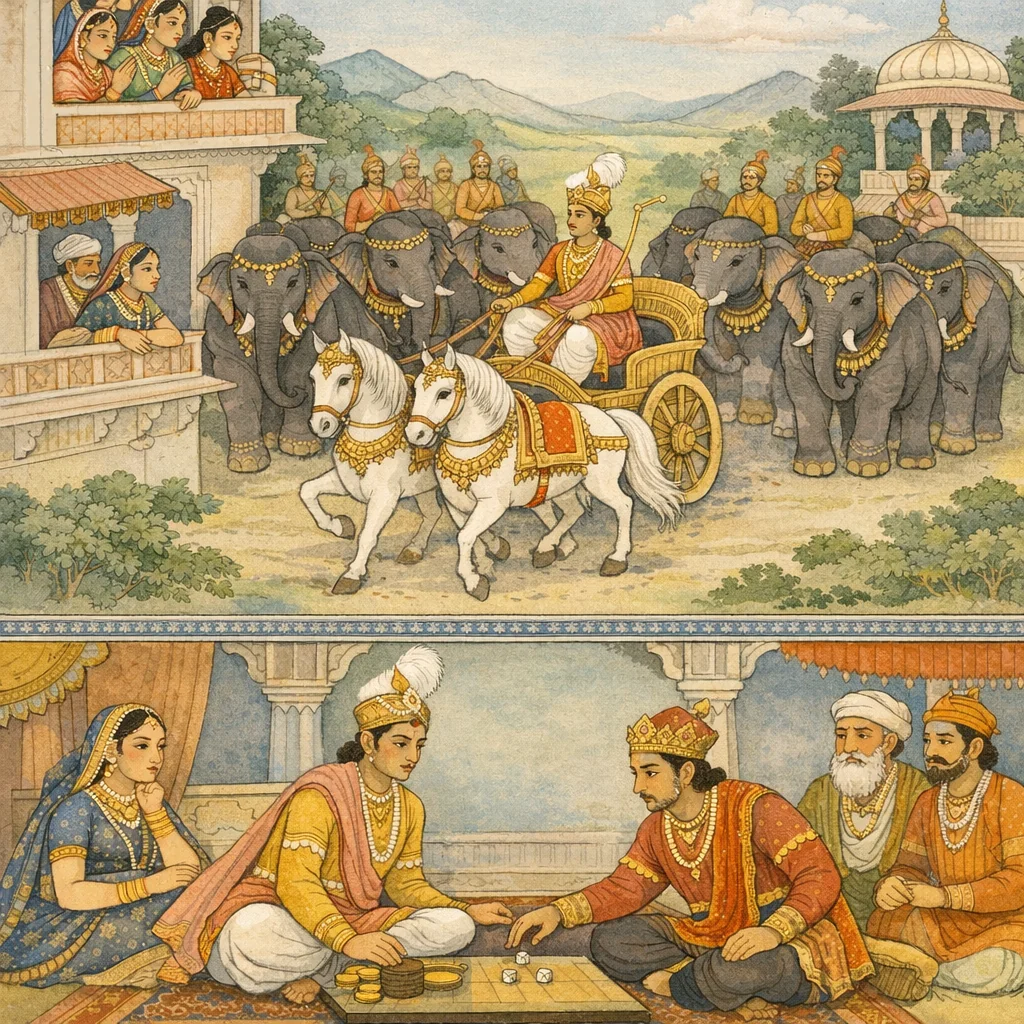
Chapter Arc: ऋतुपर्ण के स्वदेश लौट जाने के बाद, नल अपने भीतर संचित धैर्य और कौशल के साथ निर्णायक प्रतिज्ञा लेकर पुष्कर के द्वार पर पहुँचता है—अब भाग्य नहीं, न्याय बोलने वाला है। → राजसी वैभव के साथ नल का आगमन होता है—एक शुभ्र रथ, सोलह हाथियों का घेरा, पचास घोड़े और असंख्य पदाति; पृथ्वी काँपती-सी लगती है। सभा में संदेश फैलता है कि वही नल लौट आया है। नल पुष्कर को चुनौती देता है और स्पष्ट करता है कि वह ‘परकृत दोष’ (कली के अपराध) को पुष्कर के माथे नहीं मढ़ेगा—पर राज्य और दमयन्ती का अपमान अब सह्य नहीं। → पुष्कर और नल के बीच द्यूत आरम्भ होता है; इस बार नल के पास ऋतुपर्ण से प्राप्त अक्ष-विद्या/कौशल है। पुष्कर की वाणी—“पणावः किं व्याहरसे… ततः प्रावर्तत द्यूतं”—के साथ खेल चरम पर पहुँचता है और नल पुष्कर को पराजित कर देता है, धन-वैभव और राज्य पर अपना अधिकार पुनः सिद्ध करता है। → नल पुष्कर को जीवनदान देता है और कहता है कि वह कली के कारण हुए अपराध को पुष्कर पर नहीं थोपेगा—‘यथासुखं वै जीव… प्राणानवसृजामि ते’। पुष्कर पराजय स्वीकार कर राज्य लौटाता है; नगर-जन और मंत्रीगण नल का स्वागत करते हैं, जैसे इन्द्रयज्ञ के शतक्रतु की उपासना को देव लौट आए हों। दमयन्ती के पुनर्मिलन और प्रतिष्ठा की पुनर्स्थापना का भाव दृढ़ होता है। → नल का ‘कृतकृत्य’ होने का संकेत मिलते हुए भी, द्यूत के विष और कली की छाया का प्रश्न शेष रहता है—क्या यह विजय केवल राज्य की है, या आत्म-विजय की भी?
Shlokas
Verse 1
इस प्रकार श्रीमह्याभारत वनपर्वके अन्तर्गत नलोपाख्यानपर्वमें ऋतुपर्णका स्वदेशगमनविषयक सतहत्तरवाँ अध्याय पूरा हुआ ॥/ ७७ ॥ हि मय ० (0) है ० अष्टसप्ततितमो< ध्याय: राजा नलका की आ जूएमें हताना और उसको राजधानीमें अपने नगरमें प्रवेश करना बृहदश्चव उवाच स मासमुष्य कौन्तेय भीममामन्त्र्य नैषध: । पुरादल्पपरीवारो जगाम निषधान् प्रति,बृहदश्व मुनि कहते हैं-युधिष्ठिर! निषध-नरेश एक मासतक कुण्डिनपुरमें रहकर राजा भीमकी आज्ञा ले थोड़े-से सेवकोंसहित वहाँसे निषधदेशकी ओर प्रस्थित हुए
Bṛhadaśva said: “O son of Kuntī, after staying there for a month, the king of Niṣadha, Nala, took leave of King Bhīma and, with only a small retinue, departed from the city, setting out toward the land of Niṣadha.”
Verse 2
रथेनैकेन शुभ्रेण दन्तिभि: परिषोडशै: । पज्चाशद्/ि्यैश्वेव षघट्शतैश्व पदातिभि:,उनके साथ चारों ओरसे सोलह हाथियोंद्वारा घिरा हुआ एक सुन्दर रथ, पचास घोड़े और छः: सौ पैदल सैनिक थे
Bṛhadaśva said: With a single splendid chariot, encircled by sixteen elephants, and accompanied by fifty horses and six hundred foot-soldiers, he advanced.
Verse 3
स कम्पयन्न्रिव महीं त्वरमाणो महीपति: । प्रविवेशाथ संरब्धस्तरसैव महामना:,महामना राजा नलने इन सबके द्वारा पृथ्वीको कम्पित-सी करते हुए बड़ी उतावलीके साथ रोषावेशमें भरे वेगपूर्वक निषधदेशकी राजधानीमें प्रवेश किया
The great-souled king, hurrying in agitation, entered the capital with impetuous force—so swift and wrathful that it seemed as though he were shaking the very earth.
Verse 4
ततः पुष्करमासाद्य वीरसेनसुतो नल: । उवाच दीव्याव पुनर्बहुवित्तं मयार्जितम्,तदनन्तर वीरसेनपुत्र नलने पुष्करके पास जाकर कहा--“अब हम दोनों फिरसे जूआ खेलें। मैंने बहुत धन प्राप्त किया है। दमयन्ती तथा अन्य जो कुछ भी मेरे पास है, यह सब मेरी ओरसे दाँवपर लगाया जायगा और पुष्कर! तुम्हारी ओरसे सारा राज्य ही दाँवपर रखा जायगा। इस एक पणके साथ हम दोनोंमें फिर जूएका खेल प्रारम्भ हो, यह मेरा निश्चित विचार है। तुम्हारा भला हो, यदि ऐसा न कर सको तो हम दोनों अपने प्राणोंकी बाजी लगावें
Then Nala, the son of Vīrasena, approached Puṣkara and said: “Let us gamble again. I have acquired great wealth.”
Verse 5
दमयन्ती च यच्चान्यन्मम किंचन विद्यते | एष वै मम संन्यासस्तव राज्यं तु पुष्कर,तदनन्तर वीरसेनपुत्र नलने पुष्करके पास जाकर कहा--“अब हम दोनों फिरसे जूआ खेलें। मैंने बहुत धन प्राप्त किया है। दमयन्ती तथा अन्य जो कुछ भी मेरे पास है, यह सब मेरी ओरसे दाँवपर लगाया जायगा और पुष्कर! तुम्हारी ओरसे सारा राज्य ही दाँवपर रखा जायगा। इस एक पणके साथ हम दोनोंमें फिर जूएका खेल प्रारम्भ हो, यह मेरा निश्चित विचार है। तुम्हारा भला हो, यदि ऐसा न कर सको तो हम दोनों अपने प्राणोंकी बाजी लगावें
Bṛhadaśva said: “Damayantī—and whatever else of any kind belongs to me—this is my stake. But, Puṣkara, let your kingdom be the stake on your side.”
Verse 6
पुन: प्रवर्ततां द्यूतमिति मे निश्चिता मति: । एकपाणेन भद्रं ते प्राणयोश्व॒ पणावहे,तदनन्तर वीरसेनपुत्र नलने पुष्करके पास जाकर कहा--“अब हम दोनों फिरसे जूआ खेलें। मैंने बहुत धन प्राप्त किया है। दमयन्ती तथा अन्य जो कुछ भी मेरे पास है, यह सब मेरी ओरसे दाँवपर लगाया जायगा और पुष्कर! तुम्हारी ओरसे सारा राज्य ही दाँवपर रखा जायगा। इस एक पणके साथ हम दोनोंमें फिर जूएका खेल प्रारम्भ हो, यह मेरा निश्चित विचार है। तुम्हारा भला हो, यदि ऐसा न कर सको तो हम दोनों अपने प्राणोंकी बाजी लगावें
Bṛhadaśva said: “Let the game of dice be set in motion again—this is my settled resolve. With a single stake, may it be well with you: let us wager even our very lives.”
Verse 7
जित्वा परस्वमाहृत्य राज्यं वा यदि वा वसु । प्रतिपाण: प्रदातव्य: परमो धर्म उच्यते,'जूएके दाँवमें दूसरेका राज्य या धन जीतकर रख लिया जाय तो उसे यदि वह पुनः खेलना चाहे तो प्रतिपण (बदलेका दाव) देना चाहिये, यह परम धर्म कहा गया है
Bṛhadaśva said: “If, having won another’s property—be it a kingdom or mere wealth—one keeps it, then should the defeated party wish to play again, a counter-stake must be offered to him. This is declared to be the highest rule of fair conduct.”
Verse 8
न चेद् वाञ्छसि त्वं द्यूतं युद्धद्यूत॑ प्रवर्तताम् । द्वैरथेनास्तु वै शान्तिस्तव वा मम वा नृप,“यदि तुम पासोंसे जूआ खेलना न चाहो तो बाणोंद्वारा युद्धका जूआ प्रारम्भ होना चाहिये। राजन! द्वैरथयुद्धके द्वारा तुम्हारी अथवा मेरी शान्ति हो जाय
Bṛhadaśva said: “If you do not wish to gamble with dice, then let the gambling of war begin—waged with arrows. O king, let peace be secured for either you or me through a duel of chariots.”
Verse 9
वंशभोज्यमिदं राज्यमर्थितव्यं यथा तथा । येन केनाप्युपायेन वृद्धानामिति शासनम्,“यह राज्य हमारी वंशपरम्पराके उपभोगमें आनेवाला है। जिस-किसी उपायसे भी जैसे-तैसे इसका उद्धार करना चाहिये; ऐसा वृद्ध पुरुषोंका उपदेश है
Bṛhadaśva said: “This kingdom is meant to be enjoyed as the hereditary possession of our lineage. Therefore it must be sought and secured somehow—by whatever means may be possible. Such is the injunction given by the elders.”
Verse 10
द्वयोरेकतरे बुद्धि: क्रियतामद्य पुष्कर । कैतवेनाक्षवत्यां तु युद्धे वा ना ताम्यतां धनु:,“पुष्कर! आज तुम दोमेंसे एकमें मन लगाओ। छलपूर्वक जूआ खेलो अथवा युद्धके लिये धनुषपर प्रत्यज्चा चढ़ाओ”
Bṛhadaśva said: “Puṣkara, decide today where your mind will stand—choose one of the two. Either play at dice with deceit, or else, without faltering, string your bow for battle.”
Verse 11
नैषधेनैवमुक्तस्तु पुष्कर: प्रहसन्निव । ध्रुवमात्मजयं मत्वा प्रत्याह पृथिवीपतिम्,निषधराज नलके ऐसा कहनेपर पुष्करने अपनी विजयको अवश्यम्भावी मानकर हँसते हुए उनसे कहा--
Thus addressed by the king of Naiṣadha, Puṣkara—smiling as though in mockery—deemed his own victory certain and replied to the lord of the earth.
Verse 12
दिष्ट्या त्वयार्जित वित्त प्रतिपाणाय नैषध । दिष्ट्या च दुष्कृतं कर्म दमयन्त्या: क्षयं गतम्,“नैषध! सौभाग्यकी बात है कि तुमने दाँवपर लगानेके लिये धनका उपार्जन कर लिया है। यह भी आनन्दकी बात है कि दमयन्तीके दुष्कर्मोंका क्षय हो गया
Bṛhadaśva said: “Good fortune to you, O king of Naiṣadha: you have gained the wealth required to stake in the game. And good fortune too, that the evil deed—and its burden—connected with Damayantī has been brought to an end.”
Verse 13
दिष्ट्या च प्रियसे राजन् सदारोउद्य महाभुज | धनेनानेन वै भेमी जितेन समलंकृता,“महाबाहु नरेश! सौभाग्यसे तुम पत्नीसहित अभी जीवित हो। इसी धनको जीत लेनेपर दमयन्ती शृंगार करके निश्चय ही मेरी सेवामें उपस्थित होगी, ठीक उसी तरह, जैसे स्वर्गलोककी अप्सरा देवराज इन्द्रकी सेवामें जाती है। नैषध! मैं प्रतिदिन तुम्हारी याद करता हूँ और तुम्हारी राह भी देखा करता हूँ
Bṛhadaśva said: “By good fortune, O king, mighty-armed one, you are alive today together with your wife. With this wealth, once I have won it, Damayantī will surely adorn herself and come to serve me, just as the heavenly Apsarases attend upon Indra, lord of the gods.”
Verse 14
मामुपस्थास्यति व्यक्त दिवि शक्रमिवाप्सरा: । नित्यशो हि स्मरामि त्वां प्रतीक्षेषपि च नैषध,“महाबाहु नरेश! सौभाग्यसे तुम पत्नीसहित अभी जीवित हो। इसी धनको जीत लेनेपर दमयन्ती शृंगार करके निश्चय ही मेरी सेवामें उपस्थित होगी, ठीक उसी तरह, जैसे स्वर्गलोककी अप्सरा देवराज इन्द्रकी सेवामें जाती है। नैषध! मैं प्रतिदिन तुम्हारी याद करता हूँ और तुम्हारी राह भी देखा करता हूँ
Bṛhadaśva said: “Surely she will come to attend upon me, just as the Apsarases in heaven attend upon Śakra (Indra). For I remember you every day, O Naiṣadha, and I keep watch, awaiting you as well.”
Verse 15
देवनेन मम प्रीतिर्न भवत्यसुहद्रणै: । जित्वा त्वद्य वरारोहां दमयन्तीमनिन्दिताम्
Bṛhadaśva said: “I take no pleasure in gambling, nor in contests waged with those who bear ill-will. Yet today, having conquered the blameless Damayantī—she of noble form—I shall indeed be satisfied.”
Verse 16
श्रुत्वा तु तस्य वा वाचो बह्नबद्धप्रलापिन:,इस प्रकार बहुत-से असम्बद्ध प्रलाप करनेवाले पुष्करकी ये बातें सुनकर राजा नलको बड़ा क्रोध हुआ। उन्होंने तलवारसे उसका सिर काट लेनेकी इच्छा की। रोषसे उनकी आँखें लाल हो गयीं तो भी राजा नलने हँसते हुए उससे कहा--
Hearing his words—many of them rambling and incoherent—King Nala was seized by fierce anger. He even felt the urge to strike off Puṣkara’s head with his sword. Yet though his eyes reddened with wrath, Nala mastered himself and, with a controlled smile, addressed him—showing how self-command can restrain violent impulse even under insult and provocation.
Verse 17
इयेष स शिरश्छेत्तुं खड्गेन कुपितो नल: । स्मयंस्तु रोषताम्राक्षस्तमुवाच नलो नृप:,इस प्रकार बहुत-से असम्बद्ध प्रलाप करनेवाले पुष्करकी ये बातें सुनकर राजा नलको बड़ा क्रोध हुआ। उन्होंने तलवारसे उसका सिर काट लेनेकी इच्छा की। रोषसे उनकी आँखें लाल हो गयीं तो भी राजा नलने हँसते हुए उससे कहा--
Enraged, Nala wished to cut off his head with a sword. Yet though his eyes had reddened with wrath, Nala—still smiling—spoke to him, revealing restraint and self-command even at the height of provocation.
Verse 18
पणाव: किं व्याहरसे जितो न व्याहरिष्यसि । ततः प्रावर्तत द्यूतं पुष्करस्य नलस्य च,“अब हम दोनों जूआ प्रारम्भ करें, तुम अभी व्यर्थ बकवाद क्यों करते हो? हार जानेपर ऐसी बातें न कर सकोगे।” तदनन्तर पुष्कर तथा राजा नलमें एक ही दाँव लगानेकी शर्त रखकर जूएका खेल प्रारम्भ हुआ। तब वीर नलने पुष्करको हरा दिया। पुष्करने रत्न, खजाना तथा प्राणोंतककी बाजी लगा दी थी
Bṛhadaśva said: “Why do you keep speaking at the stake? Once you are defeated, you will not be able to speak so.” Thereupon the game of dice commenced between Puṣkara and King Nala. They played on the condition of a single, matched stake; and in that bout the valiant Nala overcame Puṣkara, who had wagered riches—gems, treasury, and even his very life.
Verse 19
एकपाणेन वीरेण नलेन स पराजित: । स रत्नकोशनिचयै: प्राणेन पणितो5पि च,“अब हम दोनों जूआ प्रारम्भ करें, तुम अभी व्यर्थ बकवाद क्यों करते हो? हार जानेपर ऐसी बातें न कर सकोगे।” तदनन्तर पुष्कर तथा राजा नलमें एक ही दाँव लगानेकी शर्त रखकर जूएका खेल प्रारम्भ हुआ। तब वीर नलने पुष्करको हरा दिया। पुष्करने रत्न, खजाना तथा प्राणोंतककी बाजी लगा दी थी
With a single hand, the heroic Nala defeated him. Puṣkara had staked heaps of jewels and treasure—and went so far as to wager his very life. The episode shows how pride and reckless speech can drive a person from fair contest into self-destructive gambling, while true valor is proved in mastery rather than in boastful talk.
Verse 20
जित्वा च पुष्करं राजा प्रहसन्निदमब्रवीत् । मम सर्वमिदं राज्यमव्यग्रं हतकण्टकम्,पुष्करको परास्त करके राजा नलने हँसते हुए उससे कहा--“नृपाधम! अब यह शान्त और अकण्टक सारा राज्य मेरे अधिकारमें आ गया। विदर्भकुमारी दमयन्तीकी ओर तू आँख उठाकर देख भी नहीं सकता। मूर्ख! आजसे तू परिवारसहित दमयन्तीका दास हो गया
Having defeated Puṣkara, King Nala, smiling, said: “This entire kingdom is now mine—secure, undisturbed, and ‘without thorns,’ that is, free of obstacles and rivals. You may not even raise your eyes toward Damayantī, the princess of Vidarbha. Fool! From today, you and your household have become Damayantī’s slaves.”
Verse 21
वैदर्भी न त्वया शक््या राजापसद वीक्षितुम् | तस्यास्त्वं सपरीवारो मूढ दासत्वमागत:,पुष्करको परास्त करके राजा नलने हँसते हुए उससे कहा--“नृपाधम! अब यह शान्त और अकण्टक सारा राज्य मेरे अधिकारमें आ गया। विदर्भकुमारी दमयन्तीकी ओर तू आँख उठाकर देख भी नहीं सकता। मूर्ख! आजसे तू परिवारसहित दमयन्तीका दास हो गया
Bṛhadaśva said: “O disgrace of kings, you are not fit even to cast your eyes upon the princess of Vidarbha. Bewildered as you are, you have now fallen into slavery to her—together with your attendants.”
Verse 22
न त्वया तत् कृतं कर्म येनाहं विजित: पुरा । कलिना तत् कृतं कर्म त्वं च मूढ न बुध्यसे,'पहले तेरे द्वारा जो मैं पराजित हो गया था, उसमें तेरा कोई पुरुषार्थ नहीं था। मूढ़! वह सब कलियुगकी करतूत थी, जिसे तू नहीं जानता है
“It was not by your own effort that deed was done, by which I was once defeated. That deed was wrought by Kali; and you, deluded one, do not understand it.”
Verse 23
नाहं परकृतं दोषं त्वय्याधास्थे कथंचन । यथासुखं वै जीव त्वं प्राणानवसृजामि ते,“दूसरे (कलियुग)-के किये हुए अपराधको मैं किसी तरह तेरे मत्थे नहीं मदूँगा। तू सुखपूर्वक जीवित रह। मैं तेरे प्राण तुझे वापस देता हूँ
Bṛhadaśva said: “I will not, in any way, lay upon you the blame for a fault committed by another. Live on in comfort; I release your life-breaths back to you.”
Verse 24
तथैव सर्वसम्भारं स्वमंशं वितरामि ते । तथैव च मम प्रीतिस्त्वयि वीर न संशय:,“तेरा सारा सामान और तेरे हिस्सेका धन भी तुझे लौटाये देता हूँ। वीर! तेरे ऊपर मेरा पूर्ववत् प्रेम बना रहेगा, इसमें संशय नहीं है
‘Just so, I return to you all your equipment and provisions, and I also restore to you your rightful share. And, O hero, my affection for you remains exactly as before—of this there is no doubt.’
Verse 25
सौहार्द चापि मे त्वत्तो न कदाचित् प्रहास्यति । पुष्कर त्वं हि मे भ्राता संजीव शरद: शतम्,तेरे प्रति जो मेरा सौहार्द रहा है, वह कभी मेरे हृदयसे दूर नहीं होगा। पुष्कर! तू मेरा भाई है, जा, सौ वर्षोतक जीवित रह”
Bṛhadaśva said: “The bond of goodwill I have toward you will never, at any time, fade away from my heart. Puṣkara, you are truly my brother—go, and live for a hundred autumns.”
Verse 26
एवं नल: सान्त्वयित्वा भ्रातरं सत्यविक्रम: । स्वपुरं प्रेषयामास परिष्वज्य पुन: पुन:,इस प्रकार सत्यपराक्रमी राजा नलने अपने भाई पुष्करको सान्त्वना दे बार-बार हृदयसे लगाकर उसकी राजधानीको भेज दिया
Thus Nala, whose valor was true to his word, consoled his brother. Embracing him again and again, he sent Puṣkara back to his own city—showing restraint after conflict and choosing reconciliation over continued enmity.
Verse 27
सान्त्वितो नैषधेनैवं पुष्कर: प्रत्युवाच तम् पुण्यश्लोकं तदा राजन्नभिवाद्य कृताउ्जलि:,राजन्! निषधराजके इस प्रकार सान्त्वना देनेपर पुष्करने पुण्यश्लोक नलको हाथ जोड़कर प्रणाम किया और इस प्रकार कहा--'पृथ्वीनाथ! आप जो मुझे प्राण और निवासस्थान भी वापस दे रहे हैं, इससे आपकी अक्षय कीर्ति बनी रहे। आप सौ वर्षोंतक जीयें और सुखी रहें"
When the king of Niṣadha (Nala) had thus consoled him, Puṣkara replied. Bowing to the illustrious Nala with folded hands, he spoke respectfully: “O lord of the earth, since you are restoring to me even my life and my dwelling, may your fame be imperishable. May you live a hundred years and remain happy.”
Verse 28
कीर्तिरस्तु तवाक्षय्या जीव वर्षशतं सुखी । यो मे वितरसि प्राणानधिष्ठानं च पार्थिव,राजन्! निषधराजके इस प्रकार सान्त्वना देनेपर पुष्करने पुण्यश्लोक नलको हाथ जोड़कर प्रणाम किया और इस प्रकार कहा--'पृथ्वीनाथ! आप जो मुझे प्राण और निवासस्थान भी वापस दे रहे हैं, इससे आपकी अक्षय कीर्ति बनी रहे। आप सौ वर्षोंतक जीयें और सुखी रहें"
May your fame be imperishable. Live happily for a hundred years. O king, O lord of the earth—since you restore to me my very life and also a place of refuge and residence, may this act of gracious protection secure for you undying renown.
Verse 29
स तथा सत्कृतो राज्ञा मासमुष्य तदा नृप । प्रययौ पुष्करो हृष्ट:स्वपुरं स्वजनावृत:,नरश्रेष्ठ युधिष्ठिर! राजा नलके द्वारा इस प्रकार सत्कार पाकर पुष्कर एक मासतक वहाँ टिका रहा और फिर आत्मीय जनोंके साथ प्रसन्नतापूर्वक अपनी राजधानीको चला गया। उसके साथ विशाल सेना और विनयशील सेवक भी थे। वह शरीरसे सूर्यकी भाँति प्रकाशित हो रहा था
Thus honored by the king, Puṣkara stayed there for a month. Then, delighted and surrounded by his own people, he departed for his own city.
Verse 30
महत्या सेनया सार्ध विनीतै: परिचारकै: । भ्राजमान इवादित्यो वपुषा पुरुषर्षभ,नरश्रेष्ठ युधिष्ठिर! राजा नलके द्वारा इस प्रकार सत्कार पाकर पुष्कर एक मासतक वहाँ टिका रहा और फिर आत्मीय जनोंके साथ प्रसन्नतापूर्वक अपनी राजधानीको चला गया। उसके साथ विशाल सेना और विनयशील सेवक भी थे। वह शरीरसे सूर्यकी भाँति प्रकाशित हो रहा था
Bṛhadaśva said: “O bull among men, O best of men, Yudhiṣṭhira! Accompanied by a great army and by well-disciplined attendants, Puṣkara shone in his person like the sun. Having received such honor from King Nala, Puṣkara stayed there for a month; then, together with his own people, he departed gladly for his capital—his vast forces and courteous servants going with him, while he himself radiated like the sun.”
Verse 31
प्रस्थाप्य पुष्करं राजा वित्तवन्तमनामयम् | प्रविवेश पुरं श्रीमानत्यर्थमुपशोभिताम्,पुष्करको धन--वित्तके साथ सकुशल घर भेजकर श्रीमान् राजा नलने अपने अत्यन्त शोभासम्पन्न नगरमें प्रवेश किया
Having sent Puṣkara on his way—well supplied with wealth and in sound health—the illustrious King Nala entered his city, adorned with exceptional splendor.
Verse 32
प्रविश्य सान्त्वयामास पौरांक्षु निषधाधिप: । पौरा जानपदाश्चापि सम्प्रहृष्टतनूरूहा:,प्रवेश करके निषधनरेशने पुरवासियोंको सान्त्वना दी। नगर और जनपदके लोग बड़े प्रसन्न हुए। उनके शरीरमें रोमांच हो आया
Having entered the city, the lord of Niṣadha consoled the townspeople. The citizens and the folk from the surrounding districts too were greatly delighted—so much so that their bodies thrilled with joy.
Verse 33
ऊचुः: प्राज्जलय: सर्वे सामात्यप्रमुखा जना: । अद्य सम निर्वता राजन् पुरे जनपदेडपि च । उपासितुं पुनः प्राप्ता देवा इव शतक्रतुम्,मन्त्री आदि सब लोगोंने हाथ जोड़कर कहा--'महाराज! आज हम नगर और जनपदके निवासी संतोषसे साँस ले सके हैं। जैसे देवता देवराज इन्द्रकी सेवामें उपस्थित होते हैं, उसी प्रकार अब हमें पुन: आपकी उपासना करने--आपके पास बैठनेका शुभ अवसर प्राप्त हुआ है”
Bṛhadaśva said: With palms joined, all the people—led by the ministers and other chief officials—spoke: “O King, today we in the city and throughout the countryside can breathe freely in relief. Just as the gods attend upon Śatakratu (Indra), so have we once again obtained the auspicious opportunity to serve you and sit in your presence.”
Verse 78
इति श्रीमहा भारते वनपर्वणि नलोपाख्यानपर्वणि पुष्करपरा भवपूर्वक॑ राज्यप्रत्यानयने अष्टसप्ततितमो<ध्याय:
Thus ends the seventy-eighth chapter in the Vana Parva of the Śrī Mahābhārata, within the Nala-episode section, describing how—after Puṣkara’s defeat and the events that followed—Nala’s kingdom was restored.
Verse 153
कृतकृत्यो भविष्यामि सा हि मे नित्यशो हृदि । 'शत्रुओंके साथ जूआ खेलनेसे मुझे कभी तृप्ति ही नहीं होती। आज श्रेष्ठ अंगोंवाली अनिन्द्य सुन्दरी दमयन्तीको जीतकर मैं कृतार्थ हो जाऊँगा; क्योंकि वह सदा मेरे हृदयमन्दिरमें निवास करती है”
Bṛhadaśva said: “I shall feel my purpose fulfilled, for she abides constantly in my heart. I am never satisfied by gambling with enemies; but today, by winning Damayantī—she of excellent limbs, the blameless beauty—I will be truly content.”
Frequently Asked Questions
The chapter addresses how a ruler should respond to prior failure in high-stakes play: whether to remain vulnerable to repeated provocation or to pursue corrective knowledge and restraint, balancing humility with prudent preparedness.
That fortune is unstable and recovery is possible through disciplined conduct; further, that lament is moderated by comparative reflection and by seeking competent guidance (technical and moral) rather than repeating avoidable errors.
Yes. The text states that narrating or repeatedly hearing Nala’s great story brings prosperity and auspiciousness—material support, social esteem, wellbeing, and continuity of lineage—functioning as a formal endorsement of the episode’s didactic efficacy.