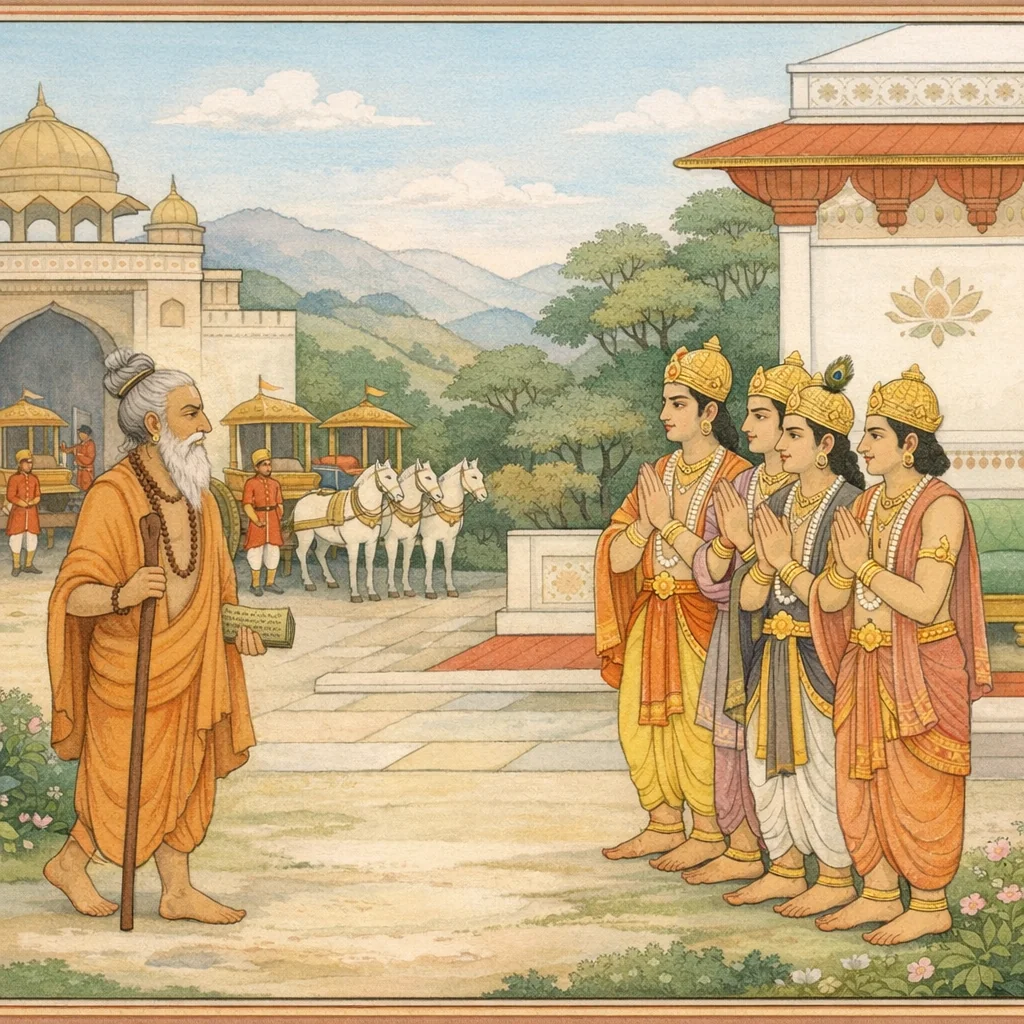
Adhyaya 7
Vidura’s Recall from Kāmyaka-vana and Reconciliation with Dhṛtarāṣṭra (विदुरानयनम् / क्षमायाचनम्)
Upa-parva: Vidurāgamana / Vidura–Dhṛtarāṣṭra Reconciliation Episode (Kāmyaka-vana context)
Vaiśaṃpāyana reports that after Vidura’s departure toward the Pandavas’ āśrama, Dhṛtarāṣṭra becomes acutely distressed, overwhelmed by remembrance of Vidura’s integrity and fraternal closeness. He collapses at the assembly threshold before the kings, regains consciousness, and instructs Saṃjaya to find Vidura and bring him back, stressing that Vidura had never wronged him and should not be lost due to the king’s own fault. Saṃjaya travels swiftly to Kāmyaka-vana, finds Yudhiṣṭhira seated with Vidura amid many brāhmaṇas and the Pandava brothers, and conveys Dhṛtarāṣṭra’s message. With Yudhiṣṭhira’s permission, Vidura returns to Gajāhvaya. Dhṛtarāṣṭra receives him with visible relief, confesses sleeplessness and bodily agitation caused by anxiety, embraces him, and asks forgiveness for angry speech. Vidura replies that he has already forgiven the offense, recognizing Dhṛtarāṣṭra as an elder, and articulates a dharmic disposition: righteous persons incline toward aiding the distressed without extended deliberation; he further states that he regards the sons of Pāṇḍu as he regards Dhṛtarāṣṭra’s own sons. The chapter closes with mutual appeasement and shared joy.
Chapter Arc: हस्तिनापुर के राजमहल में अज्ञानजनित मोह के अँधेरे में डूबा दुर्योधन शकुनि, कर्ण और दुःशासन को बुलाता है—पाण्डवों को वन में ही समाप्त करने का विचार उसके भीतर धधक रहा है। → विदुर के लौट आने और पाण्डवों के हितैषी होने की चर्चा दुर्योधन के भीतर ईर्ष्या और भय को और भड़काती है। कर्ण दुर्योधन के मनोभाव को भाँपकर क्रोध में आँखें फैलाकर शकुनि-दुःशासन पर तीखी दृष्टि डालता है और अपनी नीति/मत प्रकट करने को उद्यत होता है। → चारों की उग्र मंत्रणा निर्णायक रूप लेती है—वे रथों पर अलग-अलग चढ़कर, रोष और जोश से भरे, पाण्डव-वध के लिए वन की ओर कृतनिश्चय होकर निकल पड़ते हैं। → उनके प्रस्थान को दिव्य दृष्टि से जानकर लोकपूजित महर्षि कृष्णद्वैपायन व्यास स्वयं आते हैं और दुर्योधन सहित सबको रोकते हैं—राजनीतिक उन्माद पर धर्म-प्रज्ञा का अंकुश लगने लगता है। → व्यास का त्वरित आगमन और सिंहासनासीन दुर्योधन से संवाद का आरम्भ—अब प्रश्न यह है कि क्या दुर्योधन ऋषि-वचन से रुकेगा या हठ को और कठोर करेगा?
Shlokas
Verse 1
#2:8 #:23:.7 () हि २ 7 सप्तमो<्ध्याय: दुर्योधन, दःशासन, शकुनि और कर्णकी सलाह, पाण्डवोंका वध करनेके लिये उनका वनमें जानेकी तैयारी तथा व्यासजीका आकर उनको रोकना वैशम्पायन उवाच श्र॒ुत्वा च विदुरं प्राप्त राज्ञा च परिसान्त्वितम् । धृतराष्ट्रात्मजो राजा पर्यतप्यत दुर्मति:,वैशम्पायनजी कहते हैं--जनमेजय! विदुर आ गये और राजा धूृतराष्ट्रने उन्हें सान्त्वना देकर रख लिया, यह सुनकर दुष्ट बुद्धिवाला धृतराष्ट्रकुमार राजा दुर्योधन संतप्त हो उठा
Vaiśampāyana said: “O Janamejaya, when Duryodhana heard that Vidura had arrived and that King Dhṛtarāṣṭra had soothed and reassured him, the king—Dhṛtarāṣṭra’s son—burned with distress, his mind bent toward wrongdoing.”
Verse 2
स सौबलेयमानाय्य कर्णदुःशासनौ तथा । अब्रवीद् वचन राजा प्रविश्याबुद्धिजं तम:,उसने शकुनि, कर्ण और दुःशासनको बुलाकर अज्ञानजनित मोहमें मग्न हो इस प्रकार कहा--
Having summoned Śakuni, and likewise Karṇa and Duḥśāsana, the king—having entered a darkness born of ignorance—spoke these words.
Verse 3
एष प्रत्यागतो मन्त्रो धृतराष्ट्रस्य धीमत: । विदुर: पाण्डुपुत्राणां सुहृद् विद्वान् हिते रत:,“बुद्धिमान पिताजीका यह मन्त्री विदुर फिर लौट आया। विदुर विद्वान् होनेके साथ ही पाण्डवोंका सुहृद् और उन्हींके हितसाधनमें संलग्न रहनेवाला है
Vaiśampāyana said: “This wise minister of Dhṛtarāṣṭra—Vidura—has returned. Learned and discerning, he is a true well-wisher of the sons of Pāṇḍu, ever devoted to what benefits them.”
Verse 4
यावदस्य पुनर्बुद्धिं विदुरो नापकर्षति । पाण्डवानयने तावन्मन्त्रयध्वं हित॑ं मम,“यह पिताजीके विचारको पुनः पाण्डवोंके लौटा लानेकी ओर जबतक नहीं खींचता, तभीतक मेरे हित-साधनके विषयमें तुमलोग कोई उत्तम सलाह दो
Vaiśampāyana said: “So long as Vidura has not yet drawn his (the king’s) mind back again toward bringing the Pāṇḍavas here, you should, in the meantime, deliberate and advise me on what would truly serve my welfare.”
Verse 5
अथ पश्याम्यहं पार्थान् प्राप्तानिह कथंचन । पुन: शोषं गमिष्यामि निरम्बुर्निरवग्रह:,“यदि मैं किसी प्रकार पाण्डवोंको यहाँ आया देख लूँगा तो जलका भी परित्याग करके स्वेच्छासे अपने शरीरको सुखा डालूँगा
Vaiśampāyana said: “If somehow I may behold the sons of Pṛthā arrived here, then I shall again go to self-drying—without water, without restraint—willingly letting my body waste away.”
Verse 6
इस प्रकार श्रीमह्याभारत वनपर्वके अन्तर्गत अरण्यपर्वमें विदुरप्रत्यागयमनविषयक छठा अध्याय पूरा हुआ,विषमुद्धन्धनं चैव शस्त्रमग्निप्रवेशनम् । करिष्ये न हि तानृद्धान् पुनर्द्रष्टमिहोत्सहे “मैं जहर खा लूँगा, फाँसी लगा लूँगा, अपने-आपको ही शस्त्रसे मार दूँगा अथवा जलती आगममें प्रवेश कर जाऊँगा; परंतु पाण्डवोंको फिर बढ़ते या फलते-फूलते नहीं देख सकूँगा”
Thus, in the Mahābhārata, within the Vana Parva and the Aranya Parva, the sixth chapter concerning Vidura’s return was completed. “I will drink poison, or hang myself, or strike myself down with a weapon, or even enter a blazing fire; for I cannot bear to see the Pāṇḍavas prosper and flourish again here.” The utterance signals a collapse of moral restraint: envy hardens into self-destructive resolve rather than acceptance of dharma and the rightful rise of the virtuous.
Verse 7
शकुनिरुवाच कि बालिशमतिं राजन्नास्थितो5सि विशाम्पते । गतास्ते समयं कृत्वा नैतदेवं भविष्यति,शकुनि बोला--राजन्! तुम भी क्या नादान बच्चोंके-से विचार रखते हो? पाण्डव प्रतिज्ञा करके वनमें गये हैं। वे उस प्रतिज्ञाको तोड़कर लौट आवें, ऐसा कभी नहीं होगा इति श्रीमहाभारते वनपर्वणि अरण्यपर्वणि व्यासागमने सप्तमो5ध्याय:
Śakuni said: “O King, lord of the people, have you taken up the childish notion that they will act otherwise? The Pāṇḍavas have gone to the forest after making a solemn pact; it will not be as you imagine—they will not break their pledged term and return.”
Verse 8
सत्यवाक्यस्थिता: सर्वे पाण्डवा भरतर्षभ | पितुस्ते वचन तात न ग्रहीष्यन्ति कहिचित्,भरतवंशशिरोमणे! सब पाण्डव सत्य वचनका पालन करनेमें संलग्न हैं। तात! वे तुम्हारे पिताकी बात कभी स्वीकार नहीं करेंगे
Vaiśampāyana said: “O bull among the Bharatas, all the Pāṇḍavas stand firm in truthfulness and fidelity to their pledged word. Dear child, they will never, under any circumstance, accept your father’s proposal.”
Verse 9
अथवाते ग्रहीष्यन्ति पुनरेष्यन्ति वा पुरम् । निरस्य समयं सर्वे पणो5स्माकं भविष्यति,अथवा यदि वे तुम्हारे पिताकी बात मान लेंगे और प्रतिज्ञा तोड़कर इस नगरमें आ जायूँगे तो हमारा व्यवहार इस प्रकार होगा
Vaiśampāyana said: “Either they will seize (us/it), or they will return again to the city. If all of them cast aside the agreed compact, then the stake will become ours.”
Verse 10
सर्वे भवामो मध्यस्था राज्ञश्छन्दानुवर्तिन: । छिद्रं बहु प्रपश्यन्त: पाण्डवानां सुसंवृता:,हम सब लोग राजाकी आज्ञाका पालन करते हुए मध्यस्थ हो जायँगे और छिपे-छिपे पाण्डवोंके बहुत-से छिद्र देखते रहेंगे
Vaiśampāyana said: “Let us all present ourselves as neutral arbiters, outwardly complying with the king’s wishes; yet, remaining well-concealed, we shall keep watching for many vulnerabilities in the Pāṇḍavas.”
Verse 11
दुःशासन उवाच एवमेतन्महाप्राज्ञ यथा वदसि मातुल । नित्यं हि मे कथयतस्तव बुद्धिर्विरोचते,दुःशासनने कहा--महाबुद्धिमान् मामाजी! आप जैसा कहते हैं, वही मुझे भी ठीक जान पड़ता है। आपके मुखसे जो विचार प्रकट होता है, वह मुझे सदा अच्छा लगता है
Duḥśāsana said: “It is exactly so, O great-minded one, as you say, uncle. Indeed, whenever you speak, the counsel that comes forth from your understanding always shines clearly to me and seems right.”
Verse 12
कर्ण उवाच काममीक्षामहे सर्वे दुर्योधन तवेप्सितम् । ऐकमत्यं हि नो राजन् सर्वेषामेव लक्षये,कर्ण बोला--ददुर्योधन! हम सब लोग तुम्हारी अभिलषित कामनाकी पूर्तिके लिये सचेष्ट हैं। राजन! इस विषयमें हम सभीका एक मत दिखायी देता है
Karna said: “Duryodhana, we all look toward the fulfillment of the desire you seek. O king, I perceive that in this matter there is unanimity among all of us.”
Verse 13
नागमिष्यन्ति ते धीरा अकृत्वा कालसंविदम् | आगमिष्यन्ति चेन्मोहात् पुनर्यूतेन तान् जय,धीरबुद्धि पाण्डव निश्चित समयकी अवधिको पूर्ण किये बिना यहाँ नहीं आयँगे; और यदि वे मोहवश आ भी जायाँ तो तुम पुनः जूएके द्वारा उन्हें जीत लेना
Karna said: “Those steadfast men will not come here without first fulfilling the time-bound agreement. But if, through delusion, they do come before the term is complete, then defeat them again by means of the dice.”
Verse 14
वैशम्पायन उवाच एवमुक्तस्तु कर्णेन राजा दुर्योधनस्तदा । नातिदृष्टमना: क्षिप्रमभवत् स पराड्मुख:,वैशम्पायनजी कहते हैं--जनमेजय! कर्णके ऐसा कहनेपर उस समय राजा दुर्योधनको अधिक प्रसन्नता नहीं हुई। उसने तुरंत ही अपना मुँह फेर लिया
Vaiśampāyana said: When Karṇa had spoken thus, King Duryodhana at that time was not greatly pleased; he quickly turned his face away, showing displeasure and withdrawal rather than agreement.
Verse 15
उपलभ्य तत: कर्णो विवृत्य नयने शुभे । रोषाद् दुःशासनं चैव सौबलं च तमेव च,तब उसके आशयको समझकर कर्णने रोषसे अपनी सुन्दर आँखें फाड़कर दुःशासन, शकुनि और दुर्योधनकी ओर देखते हुए स्वयं ही उत्साहमें भरकर अत्यन्त क्रोधपूर्वक कहा --“भूमिपालो! इस विषयमें मेरा जो मत है, उसे सुन लो
Then Karṇa, discerning his intent, flung wide his handsome eyes in anger and looked toward Duḥśāsana, Saubala (Śakuni), and Duryodhana himself. Filled with rising ardor, he spoke in fierce wrath: “O lord of the earth, hear now my counsel in this matter.”
Verse 16
उवाच परमक्रुद्ध उद्यम्यात्मानमात्मना | अथो मम मतं यत् तु तन्निबोधत भूमिपा:,तब उसके आशयको समझकर कर्णने रोषसे अपनी सुन्दर आँखें फाड़कर दुःशासन, शकुनि और दुर्योधनकी ओर देखते हुए स्वयं ही उत्साहमें भरकर अत्यन्त क्रोधपूर्वक कहा --“भूमिपालो! इस विषयमें मेरा जो मत है, उसे सुन लो
Vaiśampāyana said: Then, overwhelmed with fierce anger and rousing his own resolve by his own will, he spoke: “O kings, listen now to the counsel that I hold in this matter.”
Verse 17
प्रियं सर्वे करिष्यामो राज्ञ: किड्करपाणय: । न चास्य शवनुमः स्थातु प्रिये सर्वे हमृतन्द्रिता:,“हम सब लोग राजा दुर्योधनके किंकर और भुजाएँ हैं; अतः हम सब मिलकर इनका प्रिय कार्य करेंगे; परंतु हम आलस्य छोड़कर इनके प्रियसाधनमें लग नहीं पाते
Vaiśampāyana said: “We are all the king’s servants—indeed, his very hands and arms. Therefore, together we shall do what is pleasing to him. Yet we are unable to remain steadily engaged in accomplishing his desired aim, for we are all overcome by indolence.”
Verse 18
वयं तु शस्त्राण्यादाय रथानास्थाय दंशिता: । गच्छाम: सहिता हन्तुं पाण्डवान् वनगोचरान्,“मेरी राय यह है कि हम कवच पहनकर अपने-अपने रथपर आखरूढ़ हो अस्त्र-शस्त्र लेकर वनवासी पाण्डवोंको मारनेके लिये एक साथ उनपर धावा करें
Vaiśampāyana said: “My counsel is this: let us don our armor, mount our chariots, take up our weapons, and together advance to strike down the Pāṇḍavas who now roam the forest.”
Verse 19
तेषु सर्वेषु शान्तेषु गतेष्वविदितां गतिम् । निर्विवादा भविष्यन्ति धार्तराष्ट्रस्त्था वयम्,“जब वे सभी मरकर शान्त जो जाये और अज्ञात गतिको अर्थात्र परलोकको पहुँच जायँ, तब धृतराष्ट्रके पुत्र तथा हम सब लोग सारे झगड़ोंसे दूर हो जायँगे
Vaiśampāyana said: “When all of them have been stilled—having died and gone to an unknown destination (the hereafter)—then the sons of Dhṛtarāṣṭra and we as well will become free from all quarrels.”
Verse 20
यावदेव परिद्यूना यावच्छोकपरायणा: । यावम्मित्रविहीनाक्ष॒ तावच्छक्या मतं मम,“वे जबतक क्लेशगमें पड़े हैं, जबतक शोकमें डूबे हुए हैं और जबतक मित्रों एवं सहायकोंसे वंचित हैं, तभीतक युद्धमें जीते जा सकते हैं, मेरा तो यही मत है"
Vaiśampāyana said: “So long as they are worn down by hardship, so long as they are absorbed in grief, and so long as they are deprived of friends and support—only for that long, in my view, can they be overcome in war.”
Verse 21
तस्य तदू् वचन श्रुत्वा पूजयन्त: पुनः पुनः । बाढमित्येव ते सर्वे प्रत्यूचु: सूतजं तदा,कर्णकी यह बात सुनकर सबने बार-बार उसकी सराहना की और कर्णकी बातके उत्तरमें सबके मुखसे यही निकला--“बहुत अच्छा, बहुत अच्छा”
Hearing his words, they honored him again and again. Then all of them replied to the son of the charioteer, saying only, “So be it—indeed, very well.”
Verse 22
एवमुकक््त्वा सुसंरब्धा रथै: सर्वे पृथक्पृथक् । निर्ययु: पाण्डवान् हन्तुं सहिता: कृतनिश्चया:,इस प्रकार आपसमें बातचीत करके रोष और जोशगमें भरे हुए वे सब पृथक्-पृथक् रथोंपर बैठकर पाण्डवोंके वधका निश्चय करके एक साथ नगरसे बाहर निकले
Vaiśampāyana said: Having thus spoken among themselves, all of them—highly agitated and inflamed with anger—mounted their chariots separately. United in purpose and firm in resolve, they rode out of the city, determined to slay the Pāṇḍavas.
Verse 23
तान् प्रस्थितान् परिज्ञाय कृष्णद्वैपायन: प्रभु: । आजगाम विशुद्धात्मा दृष्टवा दिव्येन चक्षुषा,उन्हें वनकी ओर प्रस्थान करते जान शक्तिशाली महर्षि शुद्धात्मा श्रीकृष्णद्वैपायन व्यास दिव्य दृष्टिसे सब कुछ देखकर सहसा वहाँ आये
Seeing that they had set out (toward the forest) and understanding their situation, the mighty sage Kṛṣṇa-Dvaipāyana Vyāsa—pure in spirit—came there at once, having perceived everything with his divine sight.
Verse 24
प्रतिषिध्याथ तान् सर्वान् भगवॉल्लोकपूजित: । प्रज्ञाचक्षुषमासीनमुवाचा भ्येत्य सत्वरम्,उन लोकपूजित भगवान् व्यासने उन सबको रोका और सिंहासनपर बैठे हुए प्रज्ञाचक्षु धृतराष्ट्रके पास शीघ्र आकर कहा
Vaiśampāyana said: Then the revered sage, honored by the world, restrained them all. Approaching swiftly the wise Dhṛtarāṣṭra, who sat upon his seat, he addressed him.
Frequently Asked Questions
The dilemma concerns repairing harm caused by anger and authority: whether a ruler who has spoken harshly can ethically restore a wronged counselor, and whether the counselor should return without compromising loyalty to those currently under his protection.
The chapter frames forgiveness and aid to the distressed as markers of dharmic character: ethical persons prioritize compassionate response and reconciliation, while leaders must actively seek to correct relational damage to preserve moral order.
No explicit phalaśruti is stated here; the closure functions as narrative meta-commentary by showing the stabilizing consequence of kṣamā and mutual appeasement within the epic’s broader ethics of counsel, kinship, and governance.