Adhyaya 271
कुम्भकर्णवधः — Kumbhakarṇa’s Fall and the Renewal of the Engagement
Upa-parva: Mārkaṇḍeya-upākhyāna (Markandeya’s Embedded Narrative Cycle)
Mārkaṇḍeya recounts Kumbhakarṇa emerging from the city and encountering the vānaras, who surround and strike him with uprooted trees and claws, engaging through varied tactical approaches. Despite being assaulted, Kumbhakarṇa laughs and consumes prominent vānaras (Panasa, Gavākṣa, Vajrabāhu), causing alarm among leaders such as Tārā. Sugrīva charges without retreat and strikes Kumbhakarṇa with a śāla tree; the blow breaks but does not incapacitate the rākṣasa, who seizes and carries Sugrīva away. Lakṣmaṇa (Saumitri) advances and releases a powerful arrow that pierces Kumbhakarṇa, described as rending the earth and being blood-wet, forcing Kumbhakarṇa to release Sugrīva. Kumbhakarṇa then attacks Lakṣmaṇa with a massive rock; Lakṣmaṇa severs the raised arms with sharp arrows, repeatedly cutting down the rock-bearing limbs. As Kumbhakarṇa manifests an even more formidable form, Lakṣmaṇa employs the Brahmāstra, burning him down; Kumbhakarṇa falls like a lightning-burnt tree. Seeing him dead, the rākṣasas flee. Two rākṣasa warriors (identified as Dūṣaṇa’s younger brothers) then rush Lakṣmaṇa; a fierce exchange ensues until Hanūmān kills Vajravega with a mountain peak and Nīla crushes Pramāthin with a great boulder. The broader battle between Rāma’s and Rāvaṇa’s forces resumes with heavy rākṣasa losses described as predominant.
Chapter Arc: वन में अचानक घोर कोलाहल उठता है; ध्वजों की छाया और रथों की गड़गड़ाहट से संकेत मिलता है कि पाण्डव निकट हैं, और जयद्रथ के हृदय में भय-गर्व का द्वंद्व जागता है। → जयद्रथ रथ पर स्थित याज्ञसेनी (द्रौपदी) से पाण्डवों के विषय में पूछता है—ये पाँच विशाल रथ कौन-से हैं? द्रौपदी, जो सब जानती है, एक-एक कर पाण्डवों के पराक्रम, स्वभाव और प्रतिशोध-धर्म का वर्णन करती है, और चेतावनी देती है कि उनका वैर कभी शान्त नहीं होता जब तक उसका अन्त न कर दें। → द्रौपदी का वचन तीक्ष्ण शिखर पर पहुँचता है—वह जयद्रथ को ‘मोह’ में पाण्डवों का तिरस्कार करने वाला बताकर भविष्यवाणी-सी चेतावनी देती है कि यदि वह उनके हाथों से बच भी गया तो भी अपमानित देह के साथ जीवित रहकर पुनर्जन्म का फल पाएगा; साथ ही वह पाण्डवों की अजेयता को रूपक-भाषा में चित्रित करती है कि उसकी सेना पाण्डवों द्वारा विक्षुब्ध और नष्टप्राय हो जाएगी। → अध्याय का निष्कर्ष द्रौपदी के ‘पराक्रम-वर्णन’ और ‘वैर-समाप्ति’ के सिद्धान्त पर टिकता है—पाण्डव क्षमा नहीं करेंगे; जयद्रथ के लिए अब मार्ग केवल भय, पलायन या अनिवार्य दण्ड की ओर जाता है। → पाण्डवों के रथ निकट हैं; द्रौपदी की चेतावनी के बाद अगला क्षण यह तय करेगा कि जयद्रथ सामना करेगा या भागेगा—और किस प्रकार उसका अपराध दण्डित होगा।
Shlokas
Verse 1
हि >> मो न (0) हि २ 7 सप्तत्यधिकद्विशततमो< ध्याय: द्रौपदीद्वारा जयद्रथके सामने पाण्डवोंके पराक्रमका वर्णन वैशम्पायन उवाच ततो घोरतर: शब्दो वने समभवत् तदा | भीमसेनार्जुनौ दृष्ट्वा क्षत्रियाणाममर्षिणाम्,वैशम्पायनजी कहते हैं--जनमेजय! तदनन्तर उस वनमें भीमसेन और अर्जुनको देखकर अमर्षमें भरे हुए क्षत्रियोंका अत्यन्त घोर कोलाहल सुनायी देने लगा
Vaiśampāyana said: Then, at that moment, an even more dreadful uproar arose in the forest, as the wrathful kṣatriyas caught sight of Bhīmasena and Arjuna—an outcry born of wounded pride and the surge of martial anger before conflict.
Verse 2
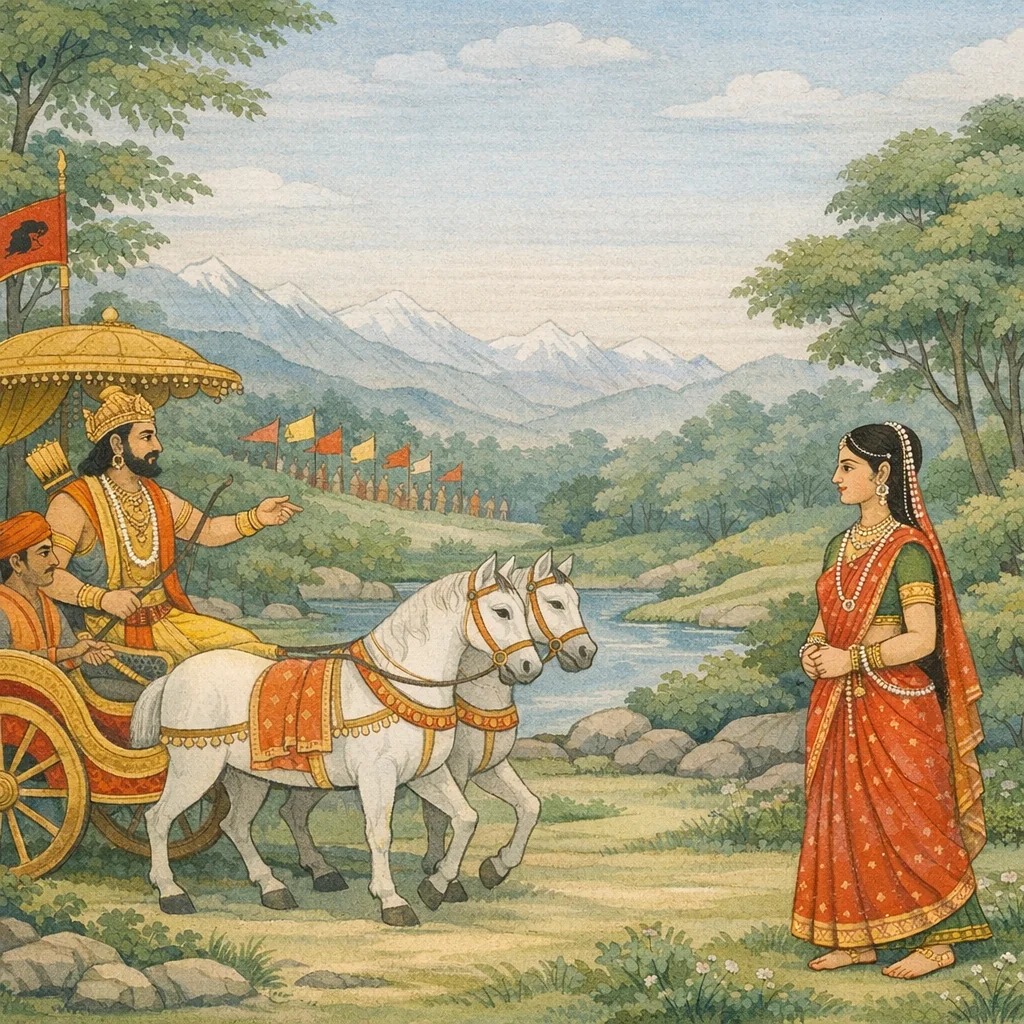
तेषां ध्वजाग्राण्यभिवी क्ष्य राजा स्वयं दुरात्मा नरपुज्गवानाम् | जयद्रथो याज्ञसेनीमुवाच रथे स्थितां भानुमतीं हतौजा:,उन नरश्रेष्ठ वीरोंकी ध्वजाओंके अग्रभागोंको देखकर हतोत्साह हुए दुरात्मा राजा जयद्रथने अपने रथपर बैठी हुई तेजस्विनी द्रौपदीसे स्वयं कहा--
Seeing the crests of the banners of those heroes, the foremost among men, King Jayadratha—evil-minded and with his spirit broken—spoke of his own accord to Yājñasenī, Draupadī, seated upon the chariot:
Verse 3
आयान्तीमे पञ्च रथा महान्तो मन्ये च कृष्णे पतयस्तवैते । सा जानती ख्यापय न: सुकेशि परं पर पाण्डवानां रथस्थम्,'सुन्दर केशोंवाली कृष्णे! ये पाँच विशाल रथ आ रहे हैं। जान पड़ता है, इनमें तुम्हारे पति ही बैठे हैं। तुम तो सबको जानती ही हो। मुझे रथपर बैठे हुए इन पाण्डवोंमेंसे एक- एकका उत्तरोत्तर परिचय दो”
Vaiśampāyana said: “Five great chariots are approaching. O Kṛṣṇā, I think those seated in them are your husbands. You know them well—O fair-haired lady, tell us, one after another, the identity of each Pāṇḍava as he sits upon his chariot.”
Verse 4
द्रौपहुुवाच कि ते ज्ञातैर्मूढड महा धनुर्थरै- रनायुष्यं कर्म कृत्वातिघोरम् । एते वीरा: पतयो मे समेता न व: शेष: कश्िदिहास्ति युद्धे,द्रौपदी बोली--अरे मूढ़! आयुका नाश करनेवाला वह अत्यन्त भयंकर नीच कर्म करके अब तू इन महाधनुर्धर पाण्डव वीरोंका परिचय जानकर क्या करेगा? ये मेरे सभी वीर पति जुट गये हैं। इनके साथ जो युद्ध होनेवाला है, उसमें तेरे पक्षका कोई भी मनुष्य जीवित नहीं बचेगा
Draupadī said: “O fool! What will you gain by recognizing these mighty bowmen now, after committing that most dreadful and base deed that destroys one’s very life and fortune? Here my heroic husbands stand assembled. In the battle that is to come, not a single man of your side will remain alive.”
Verse 5
आखूयाततव्यं त्वेव सर्व मुमूर्षो- मैया तुभ्यं पृष्टया धर्म एष: । न मे व्यथा विद्यते त्वद्भयं वा सम्पश्यन्त्या: सानुजं धर्मराजम्,मैं भाइयोंसहित धर्मराज युधिष्ठिरको सामने देख रही हूँ; अतः अब न मुझे दुःख है और न तेरा डर ही है। अब तू शीघ्र ही मरना चाहता है; अतः ऐसे समयमें तूने मुझसे जो कुछ पूछा है, उसका उत्तर तुझे दे देना उचित है; यही धर्म है। (अतः मैं अपने पतियोंका परिचय देती हूँ)
Vaiśampāyana said: “I must indeed tell you everything. Since you are eager to die and have questioned me at such a moment, it is right—this is the way of dharma—that I answer you. Seeing Dharmarāja Yudhiṣṭhira before me together with his brothers, I feel no distress, nor any fear of you. Therefore I will now identify my husbands.”
Verse 6
यस्य ध्वजाग्रे नदतो मृदड़ौ नन्दोपनन्दौ मधुरौ युक्तरूपौ | एत॑ स्वधर्मार्थविनिश्चयज्ञं सदा जना: कृत्यवन्तो$नुयान्ति,जिनकी ध्वजाके सिरेपर बँधे हुए नन्द और उपनन्द नामक दो सुन्दर मृदंग मधुर स्वरमें बज रहे हैं, जिनका शरीर जाम्बूनद सुवर्णके समान विशुद्ध गौरवर्णका है, जिनकी नासिका ऊँची और नेत्र बड़े-बड़े हैं, जो देखनेमें दुबले-पतले हैं, कुरुकुलके इन श्रेष्ठतम पुरुषको ही धर्मनन्दन युधिष्ठिर कहते हैं। ये मेरे पति हैं। ये अपने धर्म और अर्थके सिद्धान्तको अच्छी तरह जानते हैं; अतः आवश्यकता पड़नेपर लोग इनका सदा अनुसरण करते हैं
Vaiśampāyana said: “At the tip of whose banner two kettledrums—Nanda and Upananda—sound out sweetly, well-tuned and fair in form; that man, who knows how to determine what is right (dharma) and what is beneficial (artha), is followed by capable people whenever duty calls.”
Verse 7
य एष जाम्बूनदशुद्धगौर: प्रचण्डघोणस्तनुरायताक्ष: । एतं कुरुश्रेष्ठतमं वदन्ति युधिष्ठिरं धर्मसुतं पतिं मे,जिनकी ध्वजाके सिरेपर बँधे हुए नन्द और उपनन्द नामक दो सुन्दर मृदंग मधुर स्वरमें बज रहे हैं, जिनका शरीर जाम्बूनद सुवर्णके समान विशुद्ध गौरवर्णका है, जिनकी नासिका ऊँची और नेत्र बड़े-बड़े हैं, जो देखनेमें दुबले-पतले हैं, कुरुकुलके इन श्रेष्ठतम पुरुषको ही धर्मनन्दन युधिष्ठिर कहते हैं। ये मेरे पति हैं। ये अपने धर्म और अर्थके सिद्धान्तको अच्छी तरह जानते हैं; अतः आवश्यकता पड़नेपर लोग इनका सदा अनुसरण करते हैं
Vaiśampāyana said: “He there—fair and radiant like purified Jāmbūnada gold, with a prominent nose, a slender frame, and long, wide eyes—people call him the foremost of the Kurus: Yudhiṣṭhira, the son of Dharma. He is my husband.”
Verse 8
अप्येष शत्रो: शरणागतस्य दद्यात् प्राणान् धर्मचारी नृवीर: । परेहोनं मूढ जवेन भूतये त्वमात्मन: प्राउजलिि्न्यस्तशस्त्र:,ये धर्मात्मा नरवीर अपनी शरणमें आये हुए शत्रुको भी प्राणदान दे देते हैं। अरे मूर्ख! यदि तू अपनी भलाई चाहता है तो हथियार नीचे डाल दे और हाथ जोड़कर शीघ्र इनकी शरणमें जा
Vaiśampāyana said: “Even this righteous warrior, steadfast in dharma, would grant life to an enemy who has come seeking refuge. Therefore, O fool, if you desire your own welfare, quickly lay down your weapons and, with joined hands, go to his protection.”
Verse 9
अथाप्येनं पश्यसि यं रथस्थं महाभुजं शालमिव प्रवृद्धम् । संदष्टौष्ठ॑ भ्रुकुटीसंहत भरुवं वृकोदरो नाम पतिममैष:,ये जो शाल (साखू)-के वृक्षकी तरह ऊँचे और विशाल भुजाओंसे सुशोभित वीर पुरुष तुझे रथमें बैठे दिखायी देते हैं, जो क्रोधके मारे भौंहें टेढ़ी करके दाँतोंसे अपने ओंठ चबा रहे हैं, ये मेरे दूसरे पति वृकोदर हैं। बड़े बलवान, सुशिक्षित और शक्तिशाली आजानेय नामक अश्व इन शूरशिरोमणिके रथको खींचते हैं। इनके सभी कर्म प्राय: ऐसे होते हैं, जिन्हें मानवजगत् नहीं कर सकता। ये अपने भयंकर पराक्रमके कारण इस भूतलपर भीमके नामसे विख्यात हैं
Vaiśaṃpāyana said: “And now, do you see that hero seated in the chariot—mighty-armed, towering like a fully grown śāla tree? With lips bitten in wrath and brows drawn tight into a frown, he is my husband named Vṛkodara. By his dreadful prowess he is famed on this earth as Bhīma.”
Verse 10
आजानेया बलिन: साधु दान्ता महाबला: शूरमुदावहन्ति । एतस्य कर्माण्यतिमानुषाणि भीमेति शब्दोडस्य गत: पृथिव्याम्,ये जो शाल (साखू)-के वृक्षकी तरह ऊँचे और विशाल भुजाओंसे सुशोभित वीर पुरुष तुझे रथमें बैठे दिखायी देते हैं, जो क्रोधके मारे भौंहें टेढ़ी करके दाँतोंसे अपने ओंठ चबा रहे हैं, ये मेरे दूसरे पति वृकोदर हैं। बड़े बलवान, सुशिक्षित और शक्तिशाली आजानेय नामक अश्व इन शूरशिरोमणिके रथको खींचते हैं। इनके सभी कर्म प्राय: ऐसे होते हैं, जिन्हें मानवजगत् नहीं कर सकता। ये अपने भयंकर पराक्रमके कारण इस भूतलपर भीमके नामसे विख्यात हैं
Vaiśampāyana said: “Powerful, well-trained, and greatly strong horses of the Ājāneya breed draw this heroic warrior’s chariot. His deeds are beyond ordinary human measure; and because of his fearsome prowess, his fame has spread across the earth under the name ‘Bhīma.’”
Verse 11
इनके अपराधी कभी जीवित नहीं रह सकते। ये वैरको कभी नहीं भूलते हैं और वैरका बदला लेकर ही रहते हैं। बदला लेनेके बाद भी अच्छी तरह शान्त नहीं हो पाते
Vaiśaṃpāyana said: “Those who are guilty of such offenses cannot be allowed to live. They never forget enmity; they persist until they have taken revenge. And even after exacting retaliation, they do not truly become calm.”
Verse 12
धनुर्धराग्रयो धृतिमान् यशस्वी जितेन्द्रियो वृद्धसेवी नृवीर: । भ्राता च शिष्यश्व युधिष्ठिरस्य धनंजयो नाम पतिर्ममैष:,ये जो तीसरे वीर पुरुष दिखायी दे रहे हैं, वे मेरे पति धनंजय हैं। इन्हें समस्त धनुर्धरोंमें श्रेष्ठ माना गया है। ये धैर्यवान, यशस्वी, जितेन्द्रिय, वृद्धपुरुषोंक सेवक तथा महाराज युधिष्ठिरके भाई और शिष्य हैं। अर्जुन कभी काम, भय अथवा लोभवश न तो अपना धर्म छोड़ सकते हैं और न कोई निष्ठुरतापूर्ण कार्य ही कर सकते हैं। इनका तेज अग्निके समान है। ये कुन्तीनन्दन धनंजय समस्त शत्रुओंका सामना करनेमें समर्थ और सभी दुष्टोंका दमन करनेमें दक्ष हैं
Vaiśampāyana said: “That foremost of bowmen—steadfast, renowned, self-restrained, and devoted to serving the elders—is a heroic man. He is both the brother and the disciple of Yudhiṣṭhira. He is my husband, named Dhanaṃjaya.”
Verse 13
नास्यापराद्धा: शेषमवाप्रुवन्ति नायं वैरं विस्मरते कदाचित् | वैरस्यान्तं संविधायोपयाति पश्चाच्छान्तिं न च गच्छत्यतीव,यो वै न कामान्न भयान्न लोभात् त्यजेद् धर्म न नृशंसं च कुर्यात् । स एष वैश्वानरतुल्यतेजा: कुन्तीसुत: शत्रुसह: प्रमाथी ये जो तीसरे वीर पुरुष दिखायी दे रहे हैं, वे मेरे पति धनंजय हैं। इन्हें समस्त धनुर्धरोंमें श्रेष्ठ माना गया है। ये धैर्यवान, यशस्वी, जितेन्द्रिय, वृद्धपुरुषोंक सेवक तथा महाराज युधिष्ठिरके भाई और शिष्य हैं। अर्जुन कभी काम, भय अथवा लोभवश न तो अपना धर्म छोड़ सकते हैं और न कोई निष्ठुरतापूर्ण कार्य ही कर सकते हैं। इनका तेज अग्निके समान है। ये कुन्तीनन्दन धनंजय समस्त शत्रुओंका सामना करनेमें समर्थ और सभी दुष्टोंका दमन करनेमें दक्ष हैं
Vaiśampāyana said: “Those who have wronged him do not easily obtain any remainder of safety; he never forgets an enmity. He advances only after arranging the end of hostility, and even then he does not quickly settle into peace. Yet he is one who would not abandon dharma for the sake of desire, fear, or greed, nor would he commit a cruel deed. That very son of Kuntī—of fire-like splendor, able to face enemies and crush the wicked—is (Arjuna) Dhanañjaya.”
Verse 14
यः सर्वरधर्मार्थविनि श्षयज्ञो भयार्तानां भयहर्ता मनीषी । यस्योत्तमं रूपमाहु: पृथिव्यां यं पाण्डवा: परिरक्षन्ति सर्वे
Vaiśampāyana said: “He who is discerning in the final determination of all dharma and worldly aims, the wise one who removes the fear of those afflicted by fear—whose form is proclaimed the most excellent upon the earth—him all the Pāṇḍavas together protect.”
Verse 15
य: खड्गयोधी लघुचित्रहस्तो महांश्व धीमान् सहदेवोडद्धितीय:,जो खड्गद्वारा युद्ध करनेकी कलामें कुशल हैं, जिनका हाथ बड़ी फुर्तीसे अदभुत पैंतरे दिखाता हुआ चलता है, जो परम बुद्धिमान् और अद्वितीय वीर हैं, वे सहदेव मेरे पाँचवें पति हैं। ओ मूढ़ प्राणी! जैसे दैत्योंकी सेनामें देवराज इन्द्रका पराक्रम प्रकट होता है, उसी प्रकार युद्धमें तू आज सहदेवका महान् पौरुष देखेगा। वे शौर्यसम्पन्न, अस्त्रविद्याके विशेषज्ञ, बुद्धिमान, मनस्वी तथा धर्मपुत्र राजा युधिष्ठिरका प्रिय करनेवाले हैं
Vaiśampāyana said: “Sahadeva—peerless and second to none—is a swordsman; his hand is swift and deft, displaying wondrous feints. Skilled in the art of war through the sword, supremely intelligent, and an unrivalled hero, he is my fifth husband. O deluded creature! Just as Indra’s might shines forth amid the armies of the Daityas, so today in battle you will behold Sahadeva’s great manliness. He is endowed with valor, a master of weapon-lore, wise and high-spirited, and ever intent on what pleases King Yudhiṣṭhira, the son of Dharma.”
Verse 16
यस्याद्य कर्म द्रक्ष्यसे मूढसत्त्व शतक्रतोर्वा दैत्यसेनासु संख्ये । शूर: कृतास्त्रो मतिमान् मनस्वी प्रियड्करो धर्मसुतस्य राज्ञ:,जो खड्गद्वारा युद्ध करनेकी कलामें कुशल हैं, जिनका हाथ बड़ी फुर्तीसे अदभुत पैंतरे दिखाता हुआ चलता है, जो परम बुद्धिमान् और अद्वितीय वीर हैं, वे सहदेव मेरे पाँचवें पति हैं। ओ मूढ़ प्राणी! जैसे दैत्योंकी सेनामें देवराज इन्द्रका पराक्रम प्रकट होता है, उसी प्रकार युद्धमें तू आज सहदेवका महान् पौरुष देखेगा। वे शौर्यसम्पन्न, अस्त्रविद्याके विशेषज्ञ, बुद्धिमान, मनस्वी तथा धर्मपुत्र राजा युधिष्ठिरका प्रिय करनेवाले हैं
Vaiśampāyana said: “O deluded one, today you will witness the deed and prowess of that hero—like the might of Śatakratu (Indra) revealed amid the ranks of the Daitya armies in battle. He is a valiant warrior, fully trained in the use of weapons, intelligent and high-minded, and ever intent on what is dear and beneficial to the dharma-born king (Yudhiṣṭhira).”
Verse 17
य एष चन्द्रार्कसमानतेजा जघन्यज: पाण्डवानां प्रियश्न । बुद्धया समो यस्य नरो न विद्यते वक्ता तथा सत्सु विनिश्चयज्ञ:,इनका तेज चन्द्रमा और सूर्यके समान है। ये पाण्डवोंमें सबसे छोटे और सबके प्रिय हैं। बुद्धिमें इनकी समानता करनेवाला दूसरा कोई नहीं है। ये अच्छे वक्ता और सत्पुरुषोंकी सभामें सिद्धान्तके ज्ञाता माने गये हैं
Vaiśampāyana said: “This one shines with a radiance like the moon and the sun. Though the youngest among the Pāṇḍavas, he is dear to all. No man is found who equals him in intelligence. He is also an excellent speaker, and in the assemblies of the virtuous he is regarded as one who knows how to reach sound and settled conclusions.”
Verse 18
स एष शूरो नित्यममर्षणश्न धीमान् प्राज्ञ: सहदेव: पतिर्मे त्यजेत् प्राणान् प्रविशेद्धव्यवाहं न त्वेवैष व्याहरेद् धर्मबाहमम्
Vaiśampāyana said: “This man is a hero—ever intolerant of dishonour, steadfast in spirit, intelligent and wise. Sahadeva, my lord, would sooner give up his life and enter the sacrificial fire than utter any word that would violate dharma.”
Verse 19
सदा मनस्वी क्षत्रधर्मे रतश्न कुन्त्या: प्राणैरिष्टतमो नृवीर: । मेरे पति सहदेव शूरवीर, सदा ईर्ष्यारहित, बुद्धिमान् और दिद्वान् हैं। ये अपने प्राण छोड़ सकते हैं, प्रजजलित आगमें प्रवेश कर सकते हैं, परंतु धर्मके विरुद्ध कोई बात नहीं बोल सकते। नरवीर सहदेव सदा क्षत्रियधर्मके पालनमें तत्पर रहनेवाले और मनस्वी हैं। आर्या कुन्तीको ये प्राणोंसे भी बढ़कर प्रिय हैं ।। १८ ई ।। विशीर्यन्ती नावमिवार्णवान्ते रत्नाभिपूर्णा मकरस्य पृष्ठे
Vaiśampāyana said: “That heroic man, ever high-minded and steadfastly devoted to the kṣatriya code, is dearer to Kuntī than life itself. He would sooner give up his very breath or enter a blazing fire than utter a single word opposed to dharma.”
Verse 20
इत्येते वै कथिता: पाण्डुपुत्रा यांस्त्वं मोहादवमन्य प्रवृत्त: । यद्येतेभ्यो मुच्यसे<रिष्टदेह: पुनर्जन्म प्राप्स्पसे जीव एव,इस प्रकार मैंने तुझे इन पाण्डवोंका परिचय दिया है, जिनका अपमान करके तू मोहवश इस नीच कर्ममें प्रवृत्त हुआ है। यदि आज तू इनके हाथोंसे जीवित बच जाय और तेरे शरीरपर कोई आँच नहीं आये, तो तुझे जीते-जी यह दूसरा जन्म प्राप्त हो
Vaiśaṃpāyana said: “Thus have I described to you the sons of Pāṇḍu—those whom, out of delusion, you have scorned and against whom you have set yourself upon this base course. If you should escape from them today with your body unscathed and your life still intact, then even while living you will be made to undergo a ‘second birth’—a rebirth in the sense of a forced transformation brought about by the consequences of your wrongdoing.”
Verse 21
वैशम्पायन उवाच ततः पार्था: पञ्च पउ्चेन्द्रकल्पा- स्त्यवत्वा त्रस्तान् प्राउ्जलींस्तान् पदातीन् । रथानीकं शरवर्षान्धकारं चक्कुः क्रुद्धा: सर्वत: संनिगृहर्,वैशम्पायनजी कहते हैं--जनमेजय! द्रौपदी यह बात कह ही रही थी कि पाँच इन्द्रोंके समान पराक्रमी पाँचों पाण्डव भयभीत होकर हाथ जोड़नेवाले पैदल सैनिकोंको छोड़कर कुपित हो रथ, हाथी और घोड़ोंसे युक्त अवशिष्ट सेनाको सब ओरसे घेरकर खड़े हो गये और बाणोंकी ऐसी घनघोर वर्षा करने लगे कि चारों ओर अन्धकार छा गया
Vaiśampāyana said: Then the five Pārthas—five heroes comparable to Indra—leaving aside those frightened foot-soldiers who stood with joined palms in supplication, became wrathful. Surrounding the remaining force of chariots (and the rest of the host) on every side, they unleashed such a dense shower of arrows that darkness seemed to spread everywhere.
Verse 146
प्राणैर्गरीयांसमनुव्रतं वै स एष वीरो नकुलः पतिर्मे | जो समस्त धर्म और अर्थके निश्चयको जानते हैं, भयसे पीड़ित मनुष्योंका भय दूर करते हैं, जो परम बुद्धिमान् हैं, इस भूमण्डलमें जिनका रूप सबसे सुन्दर बताया जाता है, जो अपने बड़े भाइयोंकी सेवामें तत्पर रहनेवाले और उन्हें प्राणोंसे भी अधिक प्रिय हैं, समस्त पाण्डव जिनकी रक्षा करते हैं, वे ही ये मेरे वीर पति नकुल हैं
Vaiśampāyana said: “This is my husband, the hero Nakula—one whose loyal service is dearer than life itself. He is steadfast in following the righteous path, discerning in matters of dharma and practical welfare, and he dispels the fear of those who are afflicted by terror. Supremely intelligent and renowned as the most handsome on earth, he is devoted to serving his elder brothers and is cherished by them beyond measure; therefore all the Pāṇḍavas protect him.”
Verse 193
सेनां तवेमां हतसर्वयोधां विक्षोभितां द्रक्ष्यसि पाण्डुपुत्रै: । (अरे मूढ!) रत्नोंसे लदी हुई नाव जैसे समुद्रके बीचमें जाकर किसी मगरमच्छकी पीठसे टकराकर टूट जाती है, उसी प्रकार पाण्डवलोग आज तेरे समस्त सैनिकोंका संहार करके तेरी इस सारी सेनाको छिलन्न-भिन्न कर डालेंगे और तू अपनी आँखोंसे यह सब कुछ देखेगा
Vaiśampāyana said: “You will behold this army of yours—its warriors all slain—thrown into utter turmoil by the sons of Pāṇḍu. Like a jewel-laden boat that, upon reaching the midst of the sea, strikes the back of a crocodile and shatters, so will the Pāṇḍavas today destroy all your soldiers, tear your entire host to pieces, and you will witness it with your own eyes.”
Verse 270
इति श्रीमहाभारते वनपर्वणि द्रौपदीहरणपर्वणि द्रौपदीवाक्ये सप्तत्यधिकद्धिशततमो<ध्याय:
Thus ends the two-hundred-and-seventieth chapter in the Vana Parva of the Śrī Mahābhārata, within the section concerning Draupadī’s abduction, in the portion presenting Draupadī’s words.
Frequently Asked Questions
The immediate ethical pressure is protective duty under crisis: leaders must decide how to prevent an ally’s abduction and wider panic while avoiding disorganized retaliation, requiring rapid but proportionate escalation.
Brute strength and mass assault are insufficient without command clarity and precision; disciplined leadership and accurate, context-appropriate means (including astric measures) restore stability when conventional tactics fail.
No explicit phalaśruti appears in the supplied verses; the meta-function is structural—embedding a paradigmatic legend within Mārkaṇḍeya’s discourse to exemplify crisis-management, alliance-protection, and controlled escalation.