Adhyaya 241
Bhīṣma’s Admonition; Duryodhana’s Rājasūya Aspiration and the Proposal of a Vaiṣṇava-satra
Upa-parva: Gandharva-episode aftermath: Dhṛtarāṣṭra–Karṇa counsel and the proposed Vaiṣṇava-satra (Rājasūya-equivalent)
Janamejaya asks what the Kaurava leaders did while the Pandavas resided in the forest. Vaiśaṃpāyana reports that after the Gandharva incident and the Pandavas’ intervention, Bhīṣma addresses Duryodhana with a corrective assessment: he had earlier advised against the forest venture; Duryodhana was seized by enemies and released by the dharma-aligned Pandavas, yet shows no shame. Bhīṣma highlights that Karṇa retreated in fear during the Gandharva battle, underscoring the limits of their martial standing relative to the Pandavas. Bhīṣma recommends a settlement (saṃdhi) with the Pandavas for the growth of the Kuru line. Duryodhana departs with Śakuni; Karṇa and Duḥśāsana follow. Bhīṣma withdraws in embarrassment. Duryodhana then consults ministers on what is beneficial. Karṇa encourages him to rule as unrivaled and proposes initiating a major sacrifice. Duryodhana expresses desire for a Rājasūya like Yudhiṣṭhira’s; Karṇa supports preparations and summons priests. The purohita refuses: a Rājasūya is not feasible while Yudhiṣṭhira lives and while Dhṛtarāṣṭra remains alive, citing precedence and conflict with propriety. He proposes an alternative great rite, a Vaiṣṇava-satra comparable to Rājasūya, funded by tribute and requiring preparation of the yajña-ground (including ploughing). The court approves; the king assigns tasks; artisans are ordered to execute the required implements and arrangements.
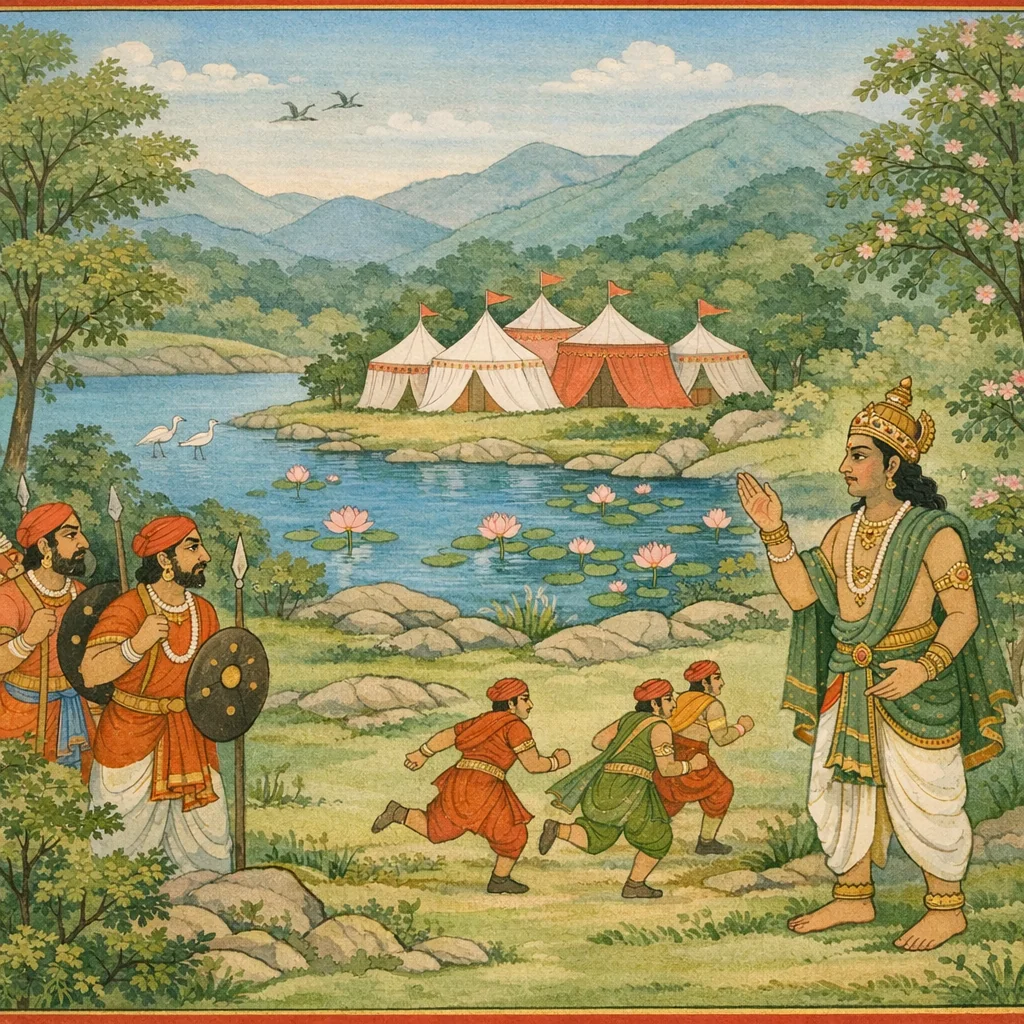
Chapter Arc: दुर्योधन अपनी विशाल सेना सहित वन में ‘घोषयात्रा’ के लिए आता है—गौओं की देखभाल और शिकार-विहार के बहाने, पर भीतर-भीतर पाण्डवों को दिखाकर अपमानित करने का गर्व भी साथ चलता है। → रमणीय, जल-वनस्पति से भरपूर देश में कौरवों के अलग-अलग शिविर सजते हैं—दुर्योधन के निकट कर्ण, शकुनि, दुःशासन आदि; फिर वे चारों ओर वन्य पशुओं का शिकार करते हुए पुण्य-प्रसिद्ध द्वैतवन-सरोवर की ओर बढ़ते हैं और वहाँ क्रीड़ा-स्थल बनवाने की आज्ञा देते हैं। → द्वैतवन के क्षेत्र में गन्धर्वों से सामना होता है; गन्धर्व दूत कौरव सैनिकों को फटकारते हैं—‘तुम्हारा राजा मूर्ख है, देवलोकवासी गन्धर्वों को बनियों की तरह समझकर आदेश दे रहा है’—और चेतावनी देते हैं कि तुरंत लौटो, नहीं तो परिणाम भोगो। → गन्धर्वों की कठोर वाणी सुनकर कौरव सेना के अग्रणी योद्धा घबरा उठते हैं और जहाँ धृतराष्ट्र-पुत्र दुर्योधन है, उसी ओर भागकर सूचना देने दौड़ते हैं। → गन्धर्वों की चेतावनी के बाद दुर्योधन क्या झुकेगा या अहंकार में टकराव को बुलाएगा—यह संकट अगले प्रसंग में फूटने को तैयार है।
Shlokas
Verse 1
हि >> आय न (0) हि 7 2 चत्वारिशर्दाधिकद्विशततमो< ध्याय: दुर्योधनका सेनासहित वनमें जाकर गौओंकी देखभाल करना और उसके सैनिकों एवं गन्धर्वो्में परस्पर कटु संवाद वैशम्पायन उवाच अथ दुर्योधनो राजा तत्र तत्र वने वसन् | जगाम घोषानभितत्तत्र चक्रे निवेशनम्,वैशम्पायनजी कहते हैं--जनमेजय! तदनन्तर राजा दुर्योधन जहाँ-तहाँ वनमें पड़ाव डालता हुआ उन घोषों (गोशालाओं)-के पास पहुँच गया और वहाँ उसने अपनी छावनी डाली
Vaiśampāyana said: Then King Duryodhana, moving from place to place while encamped in the forest, reached the cowherd settlements (grazing stations). Having arrived there, he established his camp. The episode sets the stage for a morally charged encounter: a royal expedition framed as “protecting cattle” becomes a vehicle for pride, provocation, and conflict, foreshadowing harsh exchanges and violence that test restraint and dharma.
Verse 2
रमणीये समाज्ञाते सोदके समहीरुहे । देशे सर्वगुणोपेते चक्कुरावसथान् परा:,उसके साथ गये हुए लोगोंने भी उस सर्वगुणसम्पन्न, रमणीय, सुपरिचित, सजल तथा सघन वृक्षावलियोंसे युक्त प्रदेशमें अपने डेरे डाल दिये
Vaiśaṃpāyana said: In that delightful, well-known region—rich with water and dense with trees, endowed with every convenience—the others (who had accompanied them) also set up their encampments. The narrative underscores a prudent, dharma-aligned choice of dwelling: selecting a place that sustains life, supports guests and dependents, and enables orderly conduct even in exile.
Verse 3
तथैव तत्समीपस्थान् पृथगावसथान् बहुन् कर्णस्य शकुने श्वैव ३ 2७ | चैव सर्वश:,इसी प्रकार दुर्योधनके डेकके पास ही कर्ण, शकुनि तथा दुःशासन आदि सब भाइयोंके लिये पृथक्-पृथक् बहुत-से खेमे पड़ गये
Vaiśampāyana said: In the same manner, close by Duryodhana, many separate encampments were set up—distinct quarters for Karṇa, for Śakuni, and likewise for all the others. The arrangement underscores deliberate alliance and preparedness: the chief instigators and principal supporters of Duryodhana are positioned near him, signaling coordinated counsel and shared responsibility for the course they are about to pursue.
Verse 4
ददर्श स तदा गाव: शतशो5थ सहस््रश: । अड्कैरल॑क्षैश्ष ता: सर्वा लक्षयामास पार्थिव:,(रहनेकी व्यवस्था ठीक हो जानेपर) राजा दुर्योधनने अपनी सैकड़ों एवं हजारों गौओंका निरीक्षण करना आरम्भ किया। उन सबपर संख्या और निशानी डलवा दी
Vaiśampāyana said: Then the king beheld his cows in hundreds and in thousands. He had them all marked—by numbers and identifying signs—so that they could be recognized and duly accounted for.
Verse 5
अड्कयामास वसत्सांश्व॒ जज्ञे चोपसूतांस्त्वपि । बालवसत्साश्न या गाव: कालयामास ता अपि,फिर बछड़ोंपर भी संख्या और निशानी डलवायी और उनमेंसे जो नाथनेयोग्य थे, उन सबकी गणना कराकर उनपर पहचान डाल दी। जिन गौओंके बछड़े बहुत छोटे थे, उनकी भी अलग गणना करवायी
Vaiśampāyana said: He had the calves marked and counted, and he also had the newly calved cows duly enumerated. Even those cows whose calves were still very young were separately recorded and set apart.
Verse 6
अथ स स्मारणं कृत्वा लक्षयित्वा त्रिहायनान् | वृतो गोपालकै: प्रीतो व्यहरत् कुरुनन्दन:,इस प्रकार जाँच-पड़तालका काम पूरा करके कुरुनन्दन दुर्योधनने तीन सालके बछड़ोंकी पृथक् गणना करवायी और स्मरणके लिये सब कुछ लिखकर वह बड़ी प्रसन्नताके साथ ग्वालोंसे घिरकर उस वनमें विहार करने लगा
Then, having made a written record for remembrance and having identified the three-year-old calves, the Kuru prince—pleased—roamed about in that forest, surrounded by the cowherds.
Verse 7
स च पौरजन: सर्व: सैनिकाश्न सहस्रश: | यथोपजोषं चिक्रीडुर्वने तस्मिन् यथामरा:,वे समस्त पुरवासी और सहस्रोंकी संख्यामें आये हुए सैनिक उस वनमें अपनी-अपनी रुचिके अनुसार देवताओंके समान क्रीड़ा करने लगे
Vaiśampāyana said: All the townspeople, along with the soldiers who had come in their thousands, began to sport in that forest according to each one’s own liking—moving about with the carefree ease of the gods.
Verse 8
ततो गोपा: प्रगातार: कुशला नृत्यवादने । धार्रराष्ट्रमुपातिष्ठन् कन्याश्वैव स्वलंकृता:,तदनन्तर नृत्य और वादनकी कलामें कुशल कुछ गवैये गोप तथा गहने-कपड़ोंसे सजी हुई उनकी कन्याएँ दुर्योधनके समीप आयीं
Then some cowherd singers, well trained in song, dance, and instrumental performance, together with their maidens adorned with ornaments and fine dress, approached Dhārtarāṣṭra (Duryodhana).
Verse 9
स स्त्रीगणावृतो राजा प्रदह्ृष्ट: प्रददौ वसु । तेभ्यो यथाहमन्नानि पानानि विविधानि च,अपनी स्त्रियोंके साथ राजा दुर्योधन उनको देखकर बहुत प्रसन्न हुआ और उन्हें बहुत- सा धन दिया तथा यथायोग्य नाना प्रकारकी खाने-पीनेकी वस्तुएँ अर्पित की
Vaiśampāyana said: Surrounded by his womenfolk, King Duryodhana was delighted on seeing them. He bestowed wealth upon them and, as was fitting, offered them various kinds of food and drink. The scene shows how royal power is displayed through hospitality and gifts—outwardly generous acts that may yet serve pride, influence, and the politics of reputation.
Verse 10
ततस्ते सहिता: सर्वे तरक्षून् महिषान् मृगान् । गवयर्क्षवराहांश्व समन्तात् पर्यकालयन्,तदनन्तर वे सब लोग तरक्षुओं (जरखों), जंगली भैंसों, गवयों, रीछों और शूकरों एवं अन्य जंगली हिंसक पशुओंका सब ओरसे शिकार करने लगे
Vaiśampāyana said: Then all of them together surrounded on every side and began hunting—jackals, wild buffaloes, deer, gayals, bears, boars, and other wild beasts. The scene underscores a collective, organized pursuit of forest game, reflecting the harsh necessities and martial habits that can arise during life in the wilderness, while also hinting at the ethical tension between survival, sport, and restraint.
Verse 11
स ताउछरैविनिर्भिद्य गजांश्व सुबहून् वने । रमणीयेषु देशेषु ग्राहयामास वै मृगान्,उन्होंने वनके रमणीय प्रदेशोंमें बहुत-से हाथियोंको अपने बाणोंसे विदीर्ण करके अनेकानेक हिंस्र पशुओंको पकड़ लिया
Vaiśampāyana said: Having pierced them from above with his arrows, he struck down many elephants and horses in the forest; and in those delightful woodland tracts he caused wild animals to be seized—an episode that underscores the tension between royal prowess and the ethical weight of violence exercised in the name of control and display.
Verse 12
गोरसानुपयुञ्जान उपभोगांश्व भारत । पश्यन् स रमणीयानि वनान्युपवनानि च,भरतनन्दन! दुर्योधन अपने साथियोंसहित दूध आदि गोरसोंका उपयोग करता और भाँति-भाँतिके भोग भोगता हुआ वहाँके रमणीय वनों और उपवनोंकी शोभा देखने लगा। उनमें मतवाले भ्रमर गुंजार करते थे और मयूरोंकी मधुर वाणी सब ओर गूँज रही थी। इस प्रकार क्रमशः आगे बढ़ता हुआ वह परम पवित्र द्वैववननामक सरोवरके समीप जा पहुँचा
Vaiśampāyana said: “O Bhārata, enjoying dairy delicacies and indulging in various pleasures, he began to gaze upon the charming forests and groves there.” In context, the verse highlights Duryodhana’s self-indulgent ease amid natural beauty—an ethical contrast to the austerity and restraint expected in the forest setting, foreshadowing how pleasure-seeking and pride can dull discernment and invite conflict.
Verse 13
मत्तभ्रमरजुष्टानि बर्हिणाभिरुतानि च । अगच्छदानुपूर्व्येण पुण्यं द्वैतववनं सर:,भरतनन्दन! दुर्योधन अपने साथियोंसहित दूध आदि गोरसोंका उपयोग करता और भाँति-भाँतिके भोग भोगता हुआ वहाँके रमणीय वनों और उपवनोंकी शोभा देखने लगा। उनमें मतवाले भ्रमर गुंजार करते थे और मयूरोंकी मधुर वाणी सब ओर गूँज रही थी। इस प्रकार क्रमशः आगे बढ़ता हुआ वह परम पवित्र द्वैववननामक सरोवरके समीप जा पहुँचा
Vaiśampāyana said: As he proceeded step by step, O joy of the Bharatas, he came to the supremely sacred lake in the Dvaitavana. The woods and groves there were alive with the humming of intoxicated bees, and the sweet calls of peacocks resounded on every side. In this setting of abundance and pleasure, Duryodhana—enjoying rich foods and comforts with his companions—began to take in the beauty of the forest, a scene that quietly contrasts worldly indulgence with the sanctity of a holy place.
Verse 14
मत्तभ्रमरसंजुष्ट नीलकण्ठरवाकुलम् । सप्तच्छदसमाकीर्ण पुन्नागबकुलैर्युतम्,वहाँ मधुमत्त भ्रमर कमलपुष्पोंका रस ले रहे थे। मयूरोंकी मधुर वाणीसे वह सारा प्रदेश व्याप्त हो रहा था। सप्तच्छद (छितवन)-के वृक्षोंसे वह सरोवर आच्छादित-सा जान पड़ता था। उसके तटोंपर मौलसिरी और नागकेसरके वृक्ष शोभा पा रहे थे
Vaiśampāyana said: The place was alive with intoxicated bees drinking the nectar of lotus-flowers; it resounded with the calls of peacocks. It seemed covered over by saptacchada trees, and its banks were beautified with punnāga and bakula trees.
Verse 15
ऋद्धया परमया युक्तो महेन्द्र इव वज्रभृत् । यदृच्छया च तत्रस्थो धर्मपुत्रो युधिष्ठिर:,उसी सरोवरके तटपर वज्रधारी इन्द्रके समान उत्तम ऐश्वर्यसे सम्पन्न बुद्धिमान धर्मपुत्र राजा युधिष्ठिर अपनी धर्मपत्नी महारानी द्रौपदीके साथ साद्यस्क (एक दिनमें पूर्ण होनेवाले) राजर्षियज्ञका अनुष्ठान कर रहे थे। कुरुश्रेष्ठ जनमेजय! उस यज्ञमें उनके साथ बहुत-से वनवासी दिद्दान् ब्राह्मण भी थे। राजा वनमें सुलभ होनेवाली सामग्रीद्वारा दिव्य विधिसे यज्ञ कर रहे थे। वे उसी सरोवरके आस-पास कुटी बनाकर रहते थे
Vaiśampāyana said: Endowed with supreme prosperity, like great Indra the wielder of the thunderbolt, Dharmaputra Yudhiṣṭhira happened to be staying there. With clear judgment and royal dignity even in exile, he was performing a one-day royal seers’ sacrifice (sādyaska) together with his lawful queen Draupadī, using whatever forest materials could be obtained and following the proper sacred procedure. Many learned forest-dwelling brāhmaṇas were present, and the king lived nearby in huts built around the lake’s shore.
Verse 16
ईजे राजर्षियज्ञेन साद्यस्केन विशाम्पते । दिव्येन विधिना चैव वन्येन कुरुसत्तम,उसी सरोवरके तटपर वज्रधारी इन्द्रके समान उत्तम ऐश्वर्यसे सम्पन्न बुद्धिमान धर्मपुत्र राजा युधिष्ठिर अपनी धर्मपत्नी महारानी द्रौपदीके साथ साद्यस्क (एक दिनमें पूर्ण होनेवाले) राजर्षियज्ञका अनुष्ठान कर रहे थे। कुरुश्रेष्ठ जनमेजय! उस यज्ञमें उनके साथ बहुत-से वनवासी दिद्दान् ब्राह्मण भी थे। राजा वनमें सुलभ होनेवाली सामग्रीद्वारा दिव्य विधिसे यज्ञ कर रहे थे। वे उसी सरोवरके आस-पास कुटी बनाकर रहते थे
Vaiśampāyana said: O lord of the people, O best of the Kurus—there, on the bank of that lake, the wise Dharmaputra King Yudhiṣṭhira, endowed with splendid majesty like Indra the wielder of the thunderbolt, was performing a royal-sage sacrifice of the sādyaska type (completed in a single day) together with his lawful queen Draupadī. Using what the forest readily provided, he carried out the rite according to a sacred, proper procedure, dwelling in huts built around that very lake along with many forest-dwelling learned brāhmaṇas.
Verse 17
(विद्वद्धिः सहितो धीमान् ब्राह्मुणैर्वनवासिभि: ।) कृत्वा निवेशमभित: सरसस्तस्य कौरव । द्रौपद्या सहितो धीमान् धर्मपत्न्या नराधिप:,उसी सरोवरके तटपर वज्रधारी इन्द्रके समान उत्तम ऐश्वर्यसे सम्पन्न बुद्धिमान धर्मपुत्र राजा युधिष्ठिर अपनी धर्मपत्नी महारानी द्रौपदीके साथ साद्यस्क (एक दिनमें पूर्ण होनेवाले) राजर्षियज्ञका अनुष्ठान कर रहे थे। कुरुश्रेष्ठ जनमेजय! उस यज्ञमें उनके साथ बहुत-से वनवासी दिद्दान् ब्राह्मण भी थे। राजा वनमें सुलभ होनेवाली सामग्रीद्वारा दिव्य विधिसे यज्ञ कर रहे थे। वे उसी सरोवरके आस-पास कुटी बनाकर रहते थे
Vaiśampāyana said: O Kaurava, the wise king—accompanied by learned forest-dwelling brāhmaṇas—made his encampment all around that lake. That prudent lord of men, together with Draupadī, his lawful wife, was residing there.
Verse 18
ततो दुर्योधन: प्रेष्यानादिदेश सहस्रश: । आक्रीडावसथा: क्षिप्रं क्रियन्तामिति भारत
Then Duryodhana issued orders to his attendants in their thousands: “Let the pleasure-grounds and lodging-quarters be prepared at once, O Bhārata.”
Verse 19
भारत! तदनन्तर दुर्योधनने अपने सहस्रों सेवकोंको आज्ञा दी--'तुमलोग बहुत-से क्रीडामण्डप तैयार करो” ।। ते तथेत्येव कौरव्यमुक्त्वा वचनकारिण: । चिकीर्षन्तस्तदा55क्रीडाञ्जम्मुर्दतवनं सर:,आज्ञाकारी सेवक दुर्योधनसे “तथास्तु'” कहकर क्रीडाभवन बनानेकी इच्छासे द्वैतवनके सरोवरके निकट गये
Vaiśampāyana said: Thereafter Duryodhana commanded his thousands of attendants, “Prepare many pavilions for sport.” Those obedient servants of the Kaurava replied, “So be it,” and set out, intent on arranging the amusements. They went to the lake in the Dvaitavana forest to make ready the pleasure-pavilions as ordered.
Verse 20
प्रविशन्तं वनद्वारि गन्धर्वा: समवारयन् | सेनाग्रयं धार्तराष्ट्रस्य प्राप्तं द्वैतवनं सर:,दुर्योधनका सेनानायक द्वैतवन सरोवरके अत्यन्त निकटतक पहुँच गया था, उस वनके द्वारपर पैर रखते ही उसको गन्धर्वोने रोक दिया
Vaiśampāyana said: As the foremost division of Dhṛtarāṣṭra’s army reached the lake in the Dvaitavana grove and began to enter at the forest-gate, the Gandharvas barred their way.
Verse 21
तत्र गन्धर्वराजो वै पूर्वमेव विशाम्पते । कुबेरभवनाद् राजन्नाजगाम गणावृतः,राजन! वहाँ गन्धर्वराज चित्रसेन पहलेसे ही अपने सेवकगणोंके साथ कुबेरभवनसे आये हुए थे
There, O lord of the people, the king of the Gandharvas had already arrived beforehand. O king, he had come from Kubera’s abode, surrounded by his attendant hosts.
Verse 22
गणैरप्सरसां चैव त्रिदशानां तथा55त्मजै: । विहारशील: क्रीडार्थ तेन तत् संवृतं सर:,वे उन दिनों अप्सराओं तथा देवकुमारोंके साथ विभिन्न स्थानोंमें भ्रमण करते थे। उन्होंने स्वयं ही क्रीड़ाविहारके लिये उस सरोवरको सब ओरसे घेर लिया था
Vaiśampāyana said: Accompanied by groups of Apsarases and by the sons of the gods, he was ever inclined to recreation. For the sake of sport and pleasure, he had that lake enclosed on all sides.
Verse 23
तेन तत् संवृतं दृष्टवा ते राजपरिचारका: । प्रतिजग्मुस्ततो राजन् यत्र दुर्योधनो नूप:,राजन्! उस सरोवरको गन्धर्वराजने घेर रखा है, यह देखकर वे राजसेवक जहाँ राजा दुर्योधन था, वहाँ लौट गये। जनमेजय! अपने सेवकोंका कथन सुनकर राजा दुर्योधनने युद्धके लिये उन्मत्त रहनेवाले सैनिकोंको यह आदेश देकर भेजा कि “गन्धर्वोको वहाँसे मार भगाओ'
Vaiśaṃpāyana said: Seeing that the lake had been enclosed and guarded by the king of the Gandharvas, the royal attendants returned, O king, to the place where King Duryodhana was.
Verse 24
स तु तेषां वच: श्रुत्वा सैनिकान् युद्धदुर्मदान् प्रेषयामास कौरव्य उत्सारयत तानिति,राजन्! उस सरोवरको गन्धर्वराजने घेर रखा है, यह देखकर वे राजसेवक जहाँ राजा दुर्योधन था, वहाँ लौट गये। जनमेजय! अपने सेवकोंका कथन सुनकर राजा दुर्योधनने युद्धके लिये उन्मत्त रहनेवाले सैनिकोंको यह आदेश देकर भेजा कि “गन्धर्वोको वहाँसे मार भगाओ'
Vaiśampāyana said: Hearing the report of his attendants, the Kaurava king dispatched soldiers intoxicated with the pride of battle, ordering, “Drive them out!” O King, seeing that the lake had been surrounded by the lord of the Gandharvas, those royal servants returned to where King Duryodhana was. O Janamejaya, after listening to his servants’ words, Duryodhana sent forth his war-maddened troops with the command: “Strike down the Gandharvas and chase them away from that place.”
Verse 25
तस्य तद् वचन श्रुत्वा राज्ञ: सेनाग्रयायिन: । सरो द्वैतवनं गत्वा गन्धर्वानिदमब्रुवन्,राजाका यह आदेश सुनकर उसकी सेनाके नायक द्वैतवन सरोवरके समीप जाकर गन्धर्वोंसे इस प्रकार बोले--
Hearing those words of the king, the leaders at the head of his army went to the Dvaitavana lake and addressed the Gandharvas in this manner—
Verse 26
राजा दुर्योधनो नाम धृतराष्ट्रसुतो बली । विजिहीर्षुरिहायाति तदर्थमपसर्पत,“गन्धर्वो! महाराज धृतराष्ट्रके बलवान् पुत्र राजा दुर्योधन यहाँ विहार करनेकी इच्छासे पधार रहे हैं। तुमलोग उनके लिये यह स्थान खाली करके दूर चले जाओ'
“O Gandharvas! King Duryodhana, the mighty son of Dhṛtarāṣṭra, is coming here, wishing to enjoy himself. Therefore withdraw—vacate this place and go far away.”
Verse 27
एवमुक्तास्तु गन्धर्वा: प्रहसन्तो विशाम्पते | प्रत्यब्रुवंस्तान् पुरुषानिदं हि परुषं वच:,राजन्! उनके ऐसा कहनेपर गन्धर्व जोर-जोरसे हँसने लगे; और उन राजसेवकोंको उत्तर देते हुए उनसे इस प्रकार कठोर वाणीमें बोले--
Vaiśampāyana said: When those men had spoken in that manner, the Gandharvas burst into loud laughter, O lord of the people. Then, replying to those attendants of the king, they addressed them with these harsh words—
Verse 28
न चेतयति वो राजा मन्दबुद्धि: सुयोधन: । योअस्मानाज्ञापयत्येवं वैश्यानिव दिवौकस:
Vaiśampāyana said: “Your king Suyodhana, dull of understanding, does not reflect at all—he who issues commands to us in this manner, as though we were mere vaiśyas, even though we are dwellers of heaven.”
Verse 29
“तुम्हारा राजा दुर्योधन मूर्ख है। उसे तनिक भी चेत नहीं है; क्योंकि वह हम देवलोकवासी गन्धर्वको भी बनियोंके समान समझकर इस प्रकार आज्ञा दे रहा है ।। यूयं मुमूर्षवश्चापि मन्दप्रज्ञा न संशय: । ये तस्य वचनादेवमस्मान् ब्रूत विचेतस:,“तुमलोगोंकी भी बुद्धि मारी गयी है। इसमें संदेह नहीं कि तुम सब-के-सब मरना चाहते हो। तभी तो उस दुर्योधनके कहनेसे तुम इस प्रकार हमसे विचारहीन होकर बातें कर रहे हो
Vaiśampāyana said: “You are indeed bent on death, and your understanding is dull—of this there is no doubt. For at Duryodhana’s mere command you address us in this manner, speaking without discernment.” In context, the speech condemns arrogant misjudgment: treating celestial Gandharvas as if they were ordinary men and issuing orders to them is portrayed as a moral and practical blindness that invites ruin.
Verse 30
गच्छध्वं त्वरिता: सर्वे यत्र राजा स कौरव: । न चेदद्यैव गच्छथध्वं धर्मराजनिवेशनम्,“या तो तुम सब लोग तुरन्त वहीं लौट जाओ, जहाँ तुम्हारा राजा दुर्योधन रहता है। या यदि ऐसा नहीं करना है, तो अभी धर्मराजके नगर (यमलोक) की राह लो”
Vaiśampāyana said: “All of you, hurry and go at once to where that Kaurava king is. Otherwise—if you will not do so—then even today set out for the abode of Dharmarāja (the Lord of Death),” implying that refusal or delay will bring immediate destruction and moral consequence.
Verse 31
एवमुक्तास्तु गन्धर्व राज्ञ: सेनाग्रयायिन: । सम्प्राद्रवन् यतो राजा धृतराष्ट्रसुतो&$भवत्,गन्धर्वोके ऐसा कहनेपर राजाके सेनानायक योद्धा वहीं भाग गये, जहाँ धृतराष्ट्रपुत्र राजा दुर्योधन स्वयं विराजमान था
Vaiśampāyana said: Thus addressed by the Gandharva king, the foremost leaders of the army at once ran off to the place where the king—Dhṛtarāṣṭra’s son (Duryodhana)—was stationed. The scene underscores how fear and sudden crisis can dissolve martial pride, driving even commanders to seek the protection and direction of their ruler.
Verse 240
इति श्रीमहाभारते वनपर्वणि घोषयात्रापर्वणि गन्धर्वदुर्योधनसेनासंवादे चत्वारिंशदधिकद्विशततमो<ध्याय:
Thus, in the Śrī Mahābhārata, within the Vana Parva—specifically in the section on the cattle-raid expedition (Ghoṣa-yātrā)—in the dialogue concerning the Gandharvas and Duryodhana’s army, ends the two-hundred-and-fortieth chapter (240).
Frequently Asked Questions
Whether to pursue reconciliation after receiving undeserved rescue (acknowledging obligation and shame) or to convert resentment into a prestige project that competes for status through ritual display.
Ethical authority requires self-assessment and restraint: public humiliation and dependence on rivals should motivate prudence and settlement, not denial and escalation through vanity.
No explicit phalaśruti appears; the meta-function is structural—linking political embarrassment to ritual strategy, showing how legitimacy is negotiated through both conduct and sanctioned ceremonial order.