Adhyaya 218
स्कन्दसेनापत्याभिषेकः (Skanda’s Consecration as Devasenāpati)
Upa-parva: Mārkaṇḍeya-Saṃvāda (Skanda-Abhiṣeka Episode) — Āraṇyaka-parva
Mārkaṇḍeya describes Skanda’s radiant, gold-adorned form and universal favor, followed by brāhmaṇa-ṛṣi praise that frames him as a stabilizing protector. A constitutional dialogue unfolds: Skanda queries what Indra’s function entails; the ṛṣis define Indra’s duties as distributing strength, splendor, prosperity, and welfare, restraining misconduct, and sustaining cosmic operations (sun, moon, fire, wind, earth, waters) through causal governance. Śakra (Indra) urges Skanda to assume Indratva for unity, warning that divided authority would fracture the worlds and provoke conflict. Skanda refuses the throne yet accepts service, requesting instruction. Indra then proposes a resolution: Skanda should be consecrated as Devasenāpati to accomplish protective aims—defense against Dānavas, securing divine interests, and safeguarding cows and brāhmaṇas. The chapter proceeds with Skanda’s abhiṣeka amid divine celebration, insignia (golden umbrella, divine garland), and the articulation of Skanda’s derived epithets and origin motifs (Rudra/Agni/tejas). It culminates with the introduction of Devasenā as divinely appointed spouse, formalized by ritual action, and calendrical remembrance (Śrīpañcamī, Ṣaṣṭhī) linked to Skanda’s auspicious association with Śrī (Lakṣmī).
Chapter Arc: युधिष्ठिर, अग्नि के एक होते हुए भी कर्मों में अनेक रूपों के रहस्य से कौतूहल-ग्रस्त होकर ऋषि से पूछते हैं—अग्नि वन को कैसे गए, कैसे ‘अंगिरा’ बने, और हव्य को कौन वहन करता रहा। → प्रश्न के साथ ही कथा-भूमि फैलती है: प्राचीन काल में अंगिरा का उत्तम तप, जगत् को प्रकाशमान करने वाली अग्नि-प्रभा, और स्वयं अग्नि का यह संशय कि तप में लीन होने से उसका ‘अग्नित्व’ नष्ट-सा हो गया—अब वह पुनः अपने स्वभाव को कैसे पाए। → अग्नि ‘अग्निवत् लोकों को तपाते’ हुए दिखाई देते हैं और भीतर-ही-भीतर टूटते हैं—‘मेरा अग्नित्व नष्ट हो गया; अब मैं फिर अग्नि कैसे बनूँ?’—यहीं एकत्व बनाम बहुरूपत्व का रहस्य सबसे तीव्र होकर उभरता है। → अंगिरा भयभीत-से निकट जाकर अग्नि को संबोधित करते हैं और उन्हें पुनः लोक-कल्याणकारी अग्नि-धर्म में प्रतिष्ठित होने का मार्ग बताते हैं; कथा यह संकेत देती है कि अग्नि का बहुरूप कर्म-भेद से है, मूल तत्त्व एक ही रहता है। → अगले प्रसंग के लिए भूमिका बनती है—ब्राह्मण-ग्रंथों में वर्णित ‘विविध अग्नियों’ का क्रमबद्ध वर्णन और उनके कर्म-प्रयोजन (विधि-वाक्य) आगे विस्तार से आएगा।
Shlokas
Verse 1
हि >> आय न () हि २ यु सप्तदर्शाधिकद्वधिशततमो< ध्याय: अग्निका अंगिराको अपना प्रथम पुत्र स्वीकार करना तथा अंगिरासे बृहस्पतिकी उत्पत्ति वैशम्पायन उवाच श्र॒त्वेमां धर्मसंयुक्तां धर्मराज: कथां शुभाम् । पुन: पप्रच्छ तमृषिं मार्कण्डेयमिदं तदा,वैशम्पायनजी कहते हैं-जनमेजय! यह धर्मयुक्त शुभ कथा सुनकर धर्मराज युधिष्ठिरने उन मार्कण्डेयमुनिसे पुनः इस प्रकार प्रश्न किया
Vaiśampāyana said: Having heard this auspicious tale, imbued with dharma, Dharmarāja (Yudhiṣṭhira) then again questioned that sage Mārkaṇḍeya as follows.
Verse 2
युधिछिर उवाच कथमन्निर्वनं यातः कथं चाप्यज्िरा: पुरा । नष्टेउग्नौ हव्यमवहदन्निर्भूत्वा महाद्युति:,युधिष्ठिरने पूछा--मुने! पूर्वकालमें अग्निदेवने किस कारणसे जलमें प्रवेश किया था? और अग्निके अदृश्य हो जानेपर महातेजस्वी अंगिरा ऋषिने किस प्रकार अग्नि होकर देवताओंके लिये हविष्य पहुँचानेका कार्य किया?
Yudhiṣṭhira said: “How did Agni come to enter the forest, and why did he formerly go into the waters? And when Agni had disappeared, how did the great-lustrous sage Aṅgirā, becoming Agni, carry the oblations for the gods?”
Verse 3
अग्निर्यदा त्वेक एव बहुत्वं चास्य कर्मसु । दृश्यते भगवन् सर्वमेतदिच्छामि वेदितुम्,भगवन! जब अग्निदेव एक ही हैं, तब विभिन्न कर्मोमें उनके अनेक रूप क्यों दिखायी देते हैं? मैं यह सब कुछ जानना चाहता हूँ
Yudhiṣṭhira said: “O venerable one, if Agni is truly one alone, why is his multiplicity seen in the various rites and functions he performs? I wish to understand this whole matter.”
Verse 4
कुमारश्न यथोत्पन्नो यथा चाग्ने: सुतो5भवत् | यथा रुद्राच्च सम्भूतो गड़ायां कृत्तिकासु च,कुमार कार्तिकेयकी उत्पत्ति कैसे हुई? वे अग्निके पुत्र कैसे हुए? भगवान् शंकरने तथा गंगादेवी और कृत्तिकाओंसे उनका जन्म कैसे सम्भव हुआ?
Yudhiṣṭhira said: “How was the youthful god Kumāra born? In what manner did he become the son of Agni, the Fire-god? And how did his birth come to be linked with Rudra (Śiva), with the river-goddess Gaṅgā, and with the Kṛttikās?”
Verse 5
एतदिच्छाम्यहं त्वत्त: श्रीतुं भार्गवसत्तम । कौतूहलसमाविष्टो याथातथ्यं महामुने,भूगुकुलतिलक महामुने! मैं आपके मुखसे यह सब वृत्तान्त यथार्थरूपसे सुनना चाहता हूँ, इसके लिये मेरे मनमें बड़ी उत्कण्ठा है
Yudhiṣṭhira said: “O best of the Bhārgavas, I wish to hear this from you directly. Filled with keen curiosity, O great sage, I desire to learn the truth exactly as it happened.”
Verse 6
मार्कण्डेय उदाच अत्राप्युदाहरन्तीममितिहासं पुरातनम् । यथा क्रुद्धों हुतवहस्तपस्तप्तुं वनं गत:,मार्कण्डेयजीने कहा--राजन्! इस विषयमें जानकार लोग उस प्राचीन इतिहासको दुहराया करते हैं, जिसमें यह स्पष्ट किया गया है कि किस प्रकार अग्निदेव कुपित हो तपस्याके लिये जलनमें प्रविष्ट हुए थे?
Mārkaṇḍeya said: “Here too, the learned recount an ancient tradition—how Agni, the Fire-god, once became enraged and went into the forest to undertake austerities.”
Verse 7
यथा च भगवानग्नि: स्वयमेवाज्धिरा35भवत् । संतापयंश्ष प्रभया नाशयंस्तिमिराणि च,कैसे स्वयं महर्षि अंगिरा ही भगवान् अग्नि बन गये और अपनी प्रभासे अन्धकारका निवारण करते हुए जगत्को ताप देने लगे?
Yudhiṣṭhira said: “How did the blessed Fire-god himself become Aṅgiras, and, by the radiance of his own splendor, begin to warm the world while dispelling darkness?”
Verse 8
पुराड्चिरा महाबाहो चचार तप उत्तमम् | आश्रमस्थो महाभागो हव्यवाहं विशेषयन् । तथा स भूत्वा तु तदा जगत् सर्व व्यकाशयत्,महाबाहो! प्राचीन कालकी बात है, महाभाग अंगिरा ऋषि अपने आश्रममें ही रहकर उत्तम तपस्या करने लगे। वे अग्निसे भी अधिक तेजस्वी होनेके लिये यत्नशील थे। अपने उद्देश्यमें सफल होकर वे सम्पूर्ण जगतको प्रकाशित करने लगे
Yudhiṣṭhira said: “Long ago, O mighty-armed one, the illustrious sage Aṅgiras, dwelling in his hermitage, undertook an excellent and sustained austerity, striving to surpass even Fire (Agni) in radiance. Having attained that aim, he then shone forth so powerfully that he illuminated the entire world.”
Verse 9
तपश्चरंस्तु हुतभुक् संतप्तस्तस्य तेजसा । भृशं ग्लानश्न तेजस्वी न च किंचित् प्रजज्ञिवान्,उन्हीं दिनों अग्निदेव भी तपस्या कर रहे थे। वे तेजस्वी होकर भी अंगिराके तेजसे संतप्त हो अत्यन्त मलिन पड़ गये। परंतु इसका कारण क्या है? यह कुछ भी उनकी समझमें नहीं आया
In those days the Fire-god, Hutabhuk, was himself engaged in austerities. Though radiant with tejas, he was scorched by Aṅgirā’s tejas and grew greatly enfeebled and dim; yet he could not understand in the least what the cause might be.
Verse 10
अथ संचिन्तयामास भगवान् हव्यवाहन: । अन्योडग्निरिह लोकानां ब्रह्मुणा सम्प्रकल्पित:,तब भगवान् अग्निने यह सोचा--'हो-न-हो, ब्रह्माजीने इस जगत्के लिये किसी दूसरे अग्निदेवताका निर्माण कर लिया है'
Then the blessed Fire-god, Havyavāhana, reflected to himself: “Perhaps Brahmā has appointed another Agni here for the worlds.”
Verse 11
अन्नित्व॑ विप्रणष्टं हि तप्यमानस्य मे तप: । कथमग्नि: पुनरहं भवेयमिति चिन्त्य सः
“Indeed, my austerity—undertaken amid suffering—has become fruitless and is lost.” Thinking thus, he reflected: “How might I become Agni once again?”
Verse 12
सोपासर्पच्छनैर्भीतस्तमुवाच तदाड्रिरा:,यह देख वे डरते-डरते धीरेसे उनके पास गये। उस समय उनसे अंगिरा मुनिने कहा -- देव! आप पुनः शीघ्र ही लोकभावन अग्निके पदपर प्रतिष्ठित हो जाइये; क्योंकि तीनों लोकों तथा स्थावर-जंगम प्राणियोंमें आपकी प्रसिद्धि है
Frightened, they approached him slowly and spoke. Then the sage Aṅgirā said: “O divine one, quickly regain your established station as Agni, the sustainer of the worlds. For throughout the three worlds—among all beings, both moving and unmoving—your renown is well known.”
Verse 13
शीघ्रमेव भवस्वाग्निस्त्वं पुनलॉक भावन: । विज्ञातश्नासि लोकेषु त्रिषु संस्थानचारिषु,यह देख वे डरते-डरते धीरेसे उनके पास गये। उस समय उनसे अंगिरा मुनिने कहा -- देव! आप पुनः शीघ्र ही लोकभावन अग्निके पदपर प्रतिष्ठित हो जाइये; क्योंकि तीनों लोकों तथा स्थावर-जंगम प्राणियोंमें आपकी प्रसिद्धि है
“Become Agni again at once—O sustainer of the worlds. You are already well known throughout the three worlds, among all beings that move and those that are fixed in their stations.”
Verse 14
त्वमग्नि: प्रथम सृष्टो ब्रह्मणा तिमिरापह: । स्वस्थानं प्रतिपद्यस्व शीघ्रमेव तमोनुद,“ब्रह्माजीनी आपको ही अन्धकारनाशक प्रथम अग्निके रूपमें उत्पन्न किया है। तिमिरपुणञ्जको दूर भगानेवाले देवता! आप शीघ्र ही अपना स्थान ग्रहण कीजिये”
Yudhiṣṭhira said: “You are Agni, first brought forth by Brahmā as the dispeller of darkness. O deity who drives away gloom, return at once to your own proper station and quickly thrust back the darkness.”
Verse 15
अग्निर॒वाच नष्टकीर्तिरहं लोके भवान् जातो हुताशन: । भवन्तमेव ज्ञास्यन्ति पावकं न तु मां जना:,अग्निदेव बोले--मुने! संसारमें मेरी कीर्ति नष्ट हो गयी है। अब आप ही अग्निके पदपर प्रतिष्ठित हैं। आपको ही लोग अग्नि समझेंगे, आपके सामने मुझे कोई अग्नि नहीं मानेगा
Agni said: “My fame in the world has been ruined. You have now come to stand in the very station of the Fire-god. People will recognize you alone as the purifier-fire; before you, men will not acknowledge me as Agni.”
Verse 16
निक्षिपाम्यहमन्नित्वं त्वमग्नि: प्रथमो भव । भविष्यामि द्वितीयो& हें प्राजापत्यक एव च,मैं अपना अग्नित्व आपमें ही रख देता हूँ, आप ही प्रथम अग्निके पदपर प्रतिष्ठित होइये। मैं द्वितीय प्राजापत्य नामक अग्नि होऊँगा
Yudhiṣṭhira said: “I entrust my state of being ‘fire’ to you. You should be established as the first Fire. I shall become the second—indeed the Prajāpatya fire.”
Verse 17
अंगिरा उवाच कुरु पुण्य॑ प्रजास्वर्ग्य भवाग्निस्तिमिरापह: । मां च देव कुरुष्वाग्ने प्रथमं पुत्रमजजसा,अज़्िराने कहा--अग्निदेव! आप प्रजाको स्वर्गलोककी प्राप्ति करानेवाला पुण्यकर्म (देवताओंके पास हविष्य पहुँचानेका कार्य) सम्पन्न कीजिये और स्वयं ही अन्धकारनिवारक अग्निपदपर प्रतिष्ठित होइये; साथ ही मुझे अपना पहला पुत्र स्वीकार कर लीजिये
Aṅgiras said: “O Agni, perform the meritorious rite that leads the offspring to heaven—carry the offerings as is your sacred function—and become yourself the remover of darkness. And, O divine Fire, accept me at once as your first son.”
Verse 18
मार्कण्डेय उवाच तच्छुत्वाज्धिरसो वाक््यं जातवेदास्तथाकरोत् । राजन् बृहस्पतिर्नाम तस्याप्यज्धिरस: सुत:,मार्कण्डेयजी कहते हैं--राजन्! अंगिराका यह वचन सुनकर अग्निदेवने वैसा ही किया। उन्हें अपना प्रथम पुत्र मान लिया। फिर अंगिराके भी बृहस्पति नामक पुत्र उत्पन्न हुआ
Mārkaṇḍeya said: “O King, having heard the words of Aṅgiras, Jātavedas (Agni) acted accordingly. He accepted him as his first-born. Thereafter, even Aṅgiras had a son named Bṛhaspati.”
Verse 19
ज्ञात्वा प्रथमजं त॑ तु वह्लेराज्िरसं सुतम् । उपेत्य देवा: पप्रच्छु: कारणं तत्र भारत,भरतनन्दन! अंगिराको अग्निदेवका प्रथम पुत्र जानकर सब देवता उनके पास आये और इसका कारण पूछने लगे
Mārkaṇḍeya said: Recognizing him as the first-born son of Agni, born in the line of Aṅgiras, the gods approached and asked, “What is the reason for this?” O Bhārata, O delight of the Bharatas.
Verse 20
स तु पृष्टस्तदा देवैस्तत: कारणमत्रवीत् । प्रत्यगृह्लंस्तु देवाश्न॒ तद् वचो5ड्रिरसस्तदा,देवताओंके पूछनेपर अंगिराने उन्हें कारण बताया और देवताओंने अंगिराके उस कथनपर विश्वास करके उसे यथार्थ माना
Questioned then by the gods, Aṅgiras declared to them the cause. The gods accepted Aṅgiras’s words as true and held them to be the correct account of the matter.
Verse 23
तत्र नानाविधानग्नीन् प्रवक्ष्यामि महाप्रभान् । कर्मभिर्बहुभि: ख्यातान् नानार्थान् ब्राह्मणेष्विह
“There I shall describe the many kinds of sacred fires—radiant and mighty—renowned through numerous rites and actions, and understood among Brahmins here as serving diverse purposes.”
Verse 116
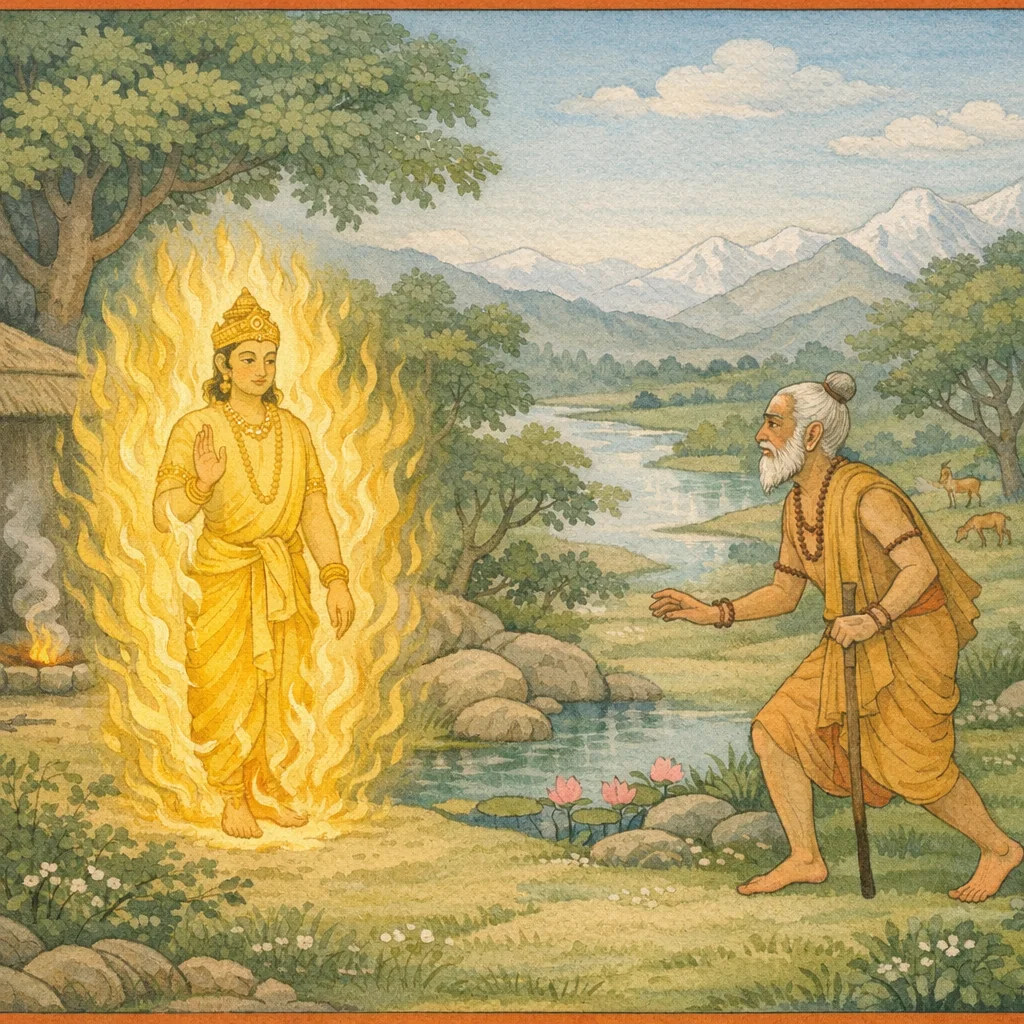
अपश्यदग्निवल्लोकांस्तापयन्तं महामुनिम् । “जान पड़ता है, तपस्यामें लग जानेसे मेरा अग्नित्व नष्ट हो गया। अब मैं पुन: किस प्रकार अग्नि हो सकता हूँ?” यह विचार करते हुए उन्होंने देखा कि महामुनि अंगिरा अग्निकी ही भाँति प्रकाशित हो सम्पूर्ण जगत्को ताप दे रहे
He beheld the great sage, blazing like fire and heating all the worlds. And he reflected: “It seems that, through my absorption in austerity (tapas), my very nature as fire has been lost. How now may I become fire again?”
Verse 216
इस प्रकार श्रीमहाभारत वनपर्वके अन्तर्गत मार्कण्डेयसमगास्यापर्वमें ब्राह्मण- व्याधसंवादविषयक दो सौ सोलहवाँ अध्याय पूरा हुआ
Thus ends the two-hundred-and-sixteenth chapter of the Mahābhārata’s Vana Parva, within the section known as the Mārkaṇḍeya Samāsyā Parva, concerning the dialogue between the Brahmin and the hunter.
Verse 217
अब मैं महान् कान्तिमान् विविध अग्नियोंका, जो ब्राह्मणग्रंथोक्त विधि-वाक्योंमें अनेक कर्मोद्वारा विभिन्न प्रयोजनोंकी सिद्धिके लिये विख्यात हैं, वर्णन करूँगा ।। इति श्रीमहाभारते वनपर्वणि मार्कण्डेयसमास्यापर्वणि आज्धिरसे सप्तदशाधिकद्विशततमो 5 ध्याय:,इस प्रकार श्रीमहाभारत वनपर्वके अन्तर्गत मार्कण्डेयसमास्यापर्वमें अंगिरसयके प्रसंगमें दो सौ सत्रहवाँ अध्याय पूरा हुआ
Markandeya said: “Now I shall describe the many splendid sacred fires—those renowned in the Brahmanical texts and their injunctions—by which, through numerous rites, diverse aims are accomplished.” (Thus ends Chapter 217 of the Vana Parva, within the Markandeya-samasya section, in the episode concerning Angiras.)
Frequently Asked Questions
The tension between capability and constitutional stability: although Skanda is supremely powerful, assuming Indra’s office could destabilize the worlds; the chapter resolves this by aligning power with a functionally appropriate role (senāpatya) rather than supreme sovereignty.
Sustainable order depends on clearly defined duties and coordinated authority: leadership is validated not by personal strength alone but by preserving unity, distributing welfare, restraining harm, and accepting the role that best serves collective stability.
Yes, it embeds commemorative framing by linking Skanda’s association with Śrī to Śrīpañcamī and his fulfillment on Ṣaṣṭhī, presenting a memory-structure that anchors the narrative in ritual time rather than offering a direct recitational phalaśruti.