Adhyaya 154
Jaṭāsura-praveśa, Draupadī-apaharaṇa, and Jaṭāsura-vadha (जटासुरप्रवेशः द्रौपद्यपहरणं च जटासुरवधः)
Upa-parva: Jaṭāsura-vadha (Episode of Jaṭāsura’s deception and defeat)
Vaiśaṃpāyana describes how Jaṭāsura, reputed and vigilant, remains near the Pāṇḍavas in a brāhmaṇa guise, studying their arms and seeking a lapse. When Bhīma departs for hunting, the rākṣasa assumes a terrifying form, gathers the weapons, and abducts Yudhiṣṭhira, the twins, and Draupadī. As they are carried away, Yudhiṣṭhira rebukes the captor with a moral indictment: betrayal of those whose food and shelter one has accepted violates social and sacred norms, and such conduct yields only disrepute. Sahadeva, seeing the situation, appeals to kṣatriya duty, arguing that confronting the aggressor is the proper occasion for valor and protection. Bhīma arrives, identifies the deception, and explains why the impostor was previously spared due to the protective aura of the brāhmaṇa-guest role. Declaring the time now ripe, Bhīma engages Jaṭāsura in escalating hand-to-hand conflict: trees are uprooted and used as weapons, then stones, then grappling and blows. Bhīma overpowers, crushes, dismembers, and finally severs Jaṭāsura’s head, after which he returns to Yudhiṣṭhira, praised by the assembled brāhmaṇas—reaffirming protective leadership and the limits of tolerance toward fraudulent harm.
Chapter Arc: लोमश के तीर्थ-प्रसंग में भीम कैलास-निकट कुबेर-भवन के पास पहुँचता है और पर्वत-झरनों से पोषित एक दिव्य सरोवर का दर्शन करता है—जहाँ सौगन्धिक कमलों की सुगन्ध स्वयं कथा को खींच लाती है। → सरोवर की अलौकिक शोभा—हरित अम्बुजों से ढकी स्वर्ण-सी कुमुदिनियाँ, पक्षियों की क्रीड़ा, निर्मल अमृत-तुल्य जल—भीम को आकर्षित करती है; पर जैसे ही वह कमल तोड़ने/लेने की इच्छा से आगे बढ़ता है, क्षेत्र की ‘रक्षा’ का संकेत उभरता है और अदृश्य सीमा का उल्लंघन आसन्न हो जाता है। → सशस्त्र राक्षस/यक्ष-रक्षक (कुबेर-परिसर के प्रहरी) एक साथ आकर भीम को घेर लेते हैं; वे परस्पर पुकारते हुए उस ‘अपरिचित, आयुधधारी’ को रोकते हैं और तीखे स्वर में प्रश्न करते हैं—“कस्त्वम्? किस हेतु से यहाँ आए हो?” → भीम के सामने अब स्पष्ट हो जाता है कि यह सरोवर साधारण नहीं, कुबेर-लोक की मर्यादा से बँधा है; रक्षकों का प्रतिरोध कथा को संवाद/संघर्ष की देहरी पर स्थिर कर देता है—भीम को अपनी पहचान और प्रयोजन बताना ही होगा। → भीम का उत्तर और आगे होने वाला टकराव/समझौता अगले अध्याय के लिए छोड़ दिया जाता है—क्या वह बल से मार्ग बनाएगा या मर्यादा के भीतर अपना प्रयोजन सिद्ध करेगा?
Shlokas
Verse 1
इस प्रकार श्रीमहाभारत वनपर्वके अन्तर्गत तीर्थयात्रापर्वमें लोमशती र्थयात्राके प्रस॑ंगमें सौगन्धिक कमलको लानेसे सम्बन्ध रखनेवाला एक सौ बावनवाँ अध्याय पूरा हुआ ॥/ १५२ ॥। हि आय ० () हि २ 7 त्रिपठ्चाशदाधिकशततमोब< ध्याय: क्रोधवश नामक राक्षसोंका भीमसेनसे सरोवरके निकट आनेका कारण पूछना वैशम्पायन उवाच स गत्वा नलिनीं रम्यां राक्षसैरभिरक्षिताम् । कैलासशिखराभ्याशे ददर्श शुभकाननाम्,वैशम्पायनजी कहते हैं--जनमेजय! इस प्रकार आगे बढ़नेपर भीमसेनने कैलास पर्वतके निकट कुबेरभवनके समीप एक रमणीय सरोवर देखा, जिसके आस-पास सुन्दर वनस्थली शोभा पा रही थी। बहुत-से राक्षस उसकी रक्षाके लिये नियुक्त थे। वह सरोवर पर्वतीय झरनोंके जलसे भरा था। वह देखनेमें बहुत ही सुन्दर, घनी छायासे सुशोभित तथा अनेक प्रकारके वृक्षों और लताओंसे व्याप्त था
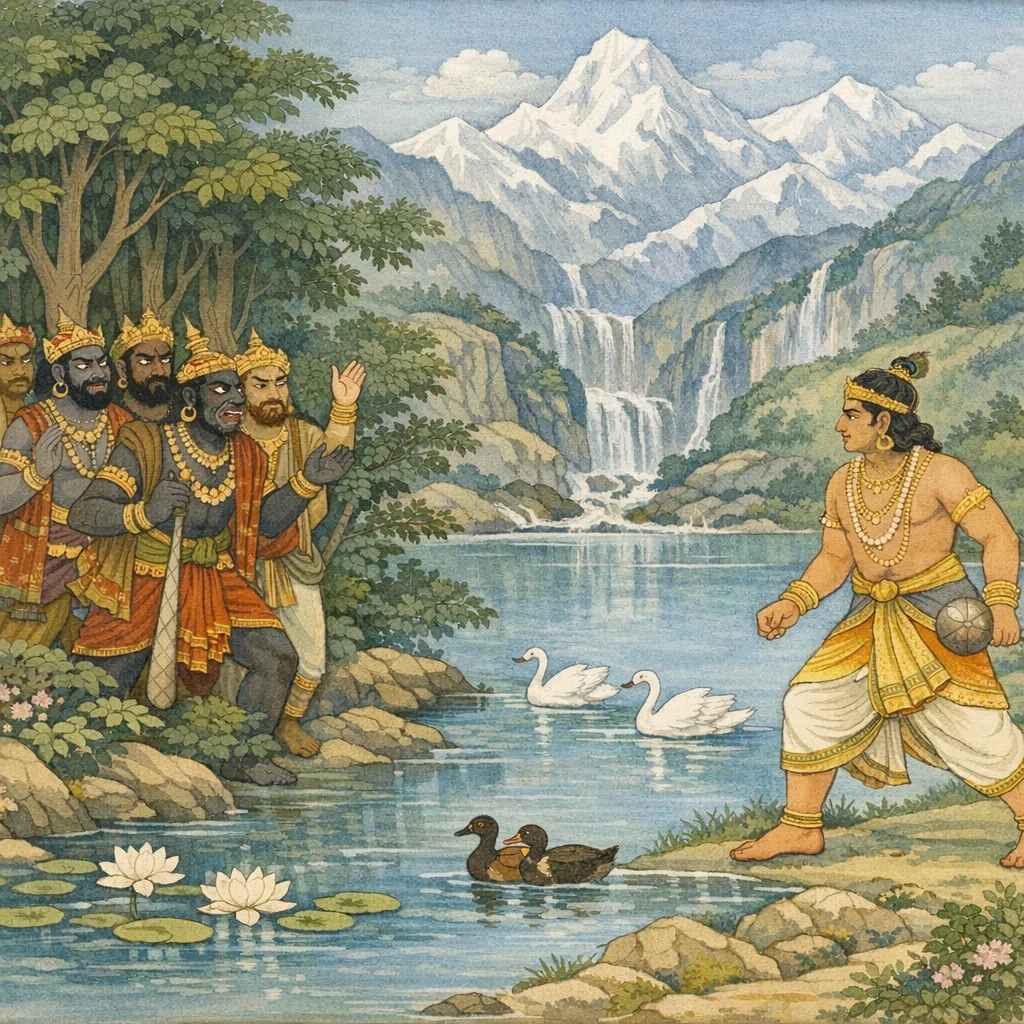
Vaiśampāyana said: Bhīmasena, pressing onward, came upon a delightful lotus-lake guarded by rākṣasas. Near the peaks of Mount Kailāsa he beheld a beautiful woodland. The lake was filled by mountain streams—exceedingly fair to see—adorned with deep shade and spread with many kinds of trees and climbing vines.
Verse 2
कुबेरभवनाभ्याशे जातां पर्वतनिझरै: । सुरम्यां विपुलच्छायां नानाद्रुमलताकुलाम्,वैशम्पायनजी कहते हैं--जनमेजय! इस प्रकार आगे बढ़नेपर भीमसेनने कैलास पर्वतके निकट कुबेरभवनके समीप एक रमणीय सरोवर देखा, जिसके आस-पास सुन्दर वनस्थली शोभा पा रही थी। बहुत-से राक्षस उसकी रक्षाके लिये नियुक्त थे। वह सरोवर पर्वतीय झरनोंके जलसे भरा था। वह देखनेमें बहुत ही सुन्दर, घनी छायासे सुशोभित तथा अनेक प्रकारके वृक्षों और लताओंसे व्याप्त था
Vaiśaṃpāyana said: Near Kubera’s abode, fed by mountain cascades, there lay a delightful lake—broadly shaded and thick with many kinds of trees and creepers. In the tale, this sight marks Bhīma’s advance into a guarded, otherworldly region, where natural beauty and divine nearness signal both temptation and trial: the hero’s strength must be matched by restraint and right conduct as he approaches a deity’s domain.
Verse 3
हरिताम्बुजसंच्छन्नां दिव्यां कनकपुष्कराम् । नानापक्षिजनाकीर्णा सूपतीर्थामकर्दमाम्
Vaiśaṃpāyana said: “(They beheld) a divine lotus-lake, its surface covered with green lotuses, shining with golden lotus-flowers; thronged with many kinds of birds and creatures, furnished with excellent bathing-places, and free from mud.”
Verse 4
३ ।। अतीवरम्यां सुजलां जातां पर्वतसानुषु । विचित्रभूतां लोकस्य शुभामद्भुतदर्शनाम्,वह सरोवर अत्यन्त रमणीय, सुन्दर जलसे परिपूर्ण, पर्वतीय शिखरोंके झरनोंसे उत्पन्न, देखनेमें विचित्र, लोकके लिये मंगलकारक तथा अद्भुत दृश्यसे सुशोभित था
Vaiśampāyana said: That lake was exceedingly delightful and filled with clear, abundant water. Born among the mountain slopes, it appeared wondrous and varied to behold—an auspicious sight for the world, adorned with an extraordinary beauty that uplifted the mind.
Verse 5
तत्रामृतरसं शीतं लघु कुन्तीसुत: शुभम् | ददर्श विमल॑ तोयं पिबंश्व बहु पाण्डव:,उस सरोवरमें कुन्तीकुमार पाण्डुपुत्र भीमने अमृतके समान स्वादिष्ट, शीतल, हलका, शुभकारक और निर्मल जल देखा तथा उसे भरपेट पीया
There, Kuntī’s son—the Pāṇḍava—beheld water that was pure and clear, cool to the touch, light to drink, and auspicious, tasting like nectar; and he drank it deeply to his fill. In the wilderness setting, the verse underscores the life-sustaining value of pure water and the relief it brings to a weary traveler, while also hinting that even ordinary acts (like drinking) can bear consequences depending on restraint and regard for what is right.
Verse 6
तां तु पुष्करिणीं रम्यां दिव्यसौगन्धिकावृताम् । जातरूपमयै: पद्मैश्छन्नां परमगन्धिभि:,वह सरोवर दिव्य सौगन्धिक कमलोंसे आवृत तथा रमणीय था। परम सुगन्धित सुवर्णमय कमल उसे ढँके हुए थे। उन कमलोंकी नाल उत्तम वैदूर्यमणिमय थी। वे कमल देखनेमें अत्यन्त विचित्र और मनोरम थे। हंस और कारण्डव आदि पक्षी उन कमलोंको हिलाते रहते थे, जिससे वे निर्मल पराग प्रकट किया करते थे
Vaiśaṃpāyana said: They came upon a lovely lotus-pond, covered with divine, sweet-scented Saugandhika lotuses. Supremely fragrant lotus-flowers, as though made of gold, overlaid it, creating an air of wonder and purity that draws the mind away from harshness and toward calm discernment.
Verse 7
वैदूर्यवरनालैश्व बहुचित्रैर्मनोरमै: । हंसकारण्डवोदधूतै: सृजद्धिरमलं रज:,वह सरोवर दिव्य सौगन्धिक कमलोंसे आवृत तथा रमणीय था। परम सुगन्धित सुवर्णमय कमल उसे ढँके हुए थे। उन कमलोंकी नाल उत्तम वैदूर्यमणिमय थी। वे कमल देखनेमें अत्यन्त विचित्र और मनोरम थे। हंस और कारण्डव आदि पक्षी उन कमलोंको हिलाते रहते थे, जिससे वे निर्मल पराग प्रकट किया करते थे
Vaiśampāyana said: The lake was delightful, covered with divine fragrant lotuses. Their excellent stalks were of vaidūrya-gem, and the blossoms were wondrous and charming to behold. Swans and kāraṇḍava ducks kept stirring them, so that they released pure, spotless pollen—an image of natural beauty and auspiciousness surrounding the sacred flowers.
Verse 8
आक्रीडं राजराजस्य कुबेरस्य महात्मन: । गन्धर्वैरप्सरोभिश्व देवैश्व परमार्चिताम्,वह सरोवर राजाधिराज महाबुद्धिमान् कुबेरका क्रीडास्थल था। गन्धर्व, अप्सरा और देवता भी उसकी बड़ी प्रशंसा करते थे
Vaiśampāyana said: This was the splendid pleasure-ground of the great-souled Kubera, the king of kings—an abode held in the highest honor and praise by Gandharvas, Apsarases, and even the gods.
Verse 9
सेवितामृषिभिर्दिव्यैर्यक्षे: किम्पुरुषैस्तथा । राक्षसै: किन्नरैश्वापि गुप्तां वैश्रवणेन च,दिव्य ऋषि-मुनि, यक्ष, किम्पुरुष, राक्षत और किन्नर उसका सेवन करते थे तथा साक्षात् कुबेरके द्वारा उसके संरक्षणकी व्यवस्था की जाती थी
Vaiśampāyana said: That sacred place was frequented by divine seers, by Yakṣas and Kimpuruṣas, and also by Rākṣasas and Kinnaras; and it was kept under protection by Vaiśravaṇa (Kubera) himself.
Verse 10
तां च दृष्टवैव कौन्तेयो भीमसेनो महाबल: । बभूव परमप्रीतो दिव्यं सम्प्रेक्ष्य तत् सर:,कुन्तीनन्दन महाबली भीमसेन उस दिव्य सरोवरको देखते ही अत्यन्त प्रसन्न हो गये
As soon as the mighty Bhīmasena, Kuntī’s son, beheld it, he became exceedingly delighted; for on seeing that wondrous, divine lake, his heart was filled with joy.
Verse 11
तच्च क्रोधवशा नाम राक्षसा राजशासनात् । रक्षन्ति शतसाहसारश्रित्रायुधपरिच्छदा:,महाराज कुबेरके आदेशसे क्रोधवश नामक राक्षस, जिनकी संख्या एक लाख थी, विचित्र आयुध और वेशभूषासे सुसज्जित हो उसकी रक्षा करते थे
Vaiśampāyana said: “And, by the king’s command, the rākṣasas called Krodhavaśa—numbering a hundred thousand and equipped with varied weapons and martial gear—stood guard over it.”
Verse 12
ते तु दृष्टवैव कौन्तेयमजिनै: प्रतिवासितम् | रुक्माड्रदधरं वीरं॑ भीम॑ भीमपराक्रमम्
But when they saw Bhīma, Kuntī’s son—clad in deerskins, wearing golden armlets, a hero of fearsome might—they recognized in him that same formidable strength which upholds righteous resolve even amid hardship and exile.
Verse 13
सायुध॑ बद्धनिस्त्रिंशभशड्कितमरिंदमम् | पुष्करेप्सुमुपायान्तमन्योन्यमभिचुक्रुशु:
Seeing him approach—armed, with his sword bound at his waist, a crusher of foes—and seeming to come with the desire to obtain the lotus, they cried out to one another.
Verse 14
उस समय भयानक पराक्रमी कुन्तीकुमार वीरवर भीम अपने अंगोंमें मृगचर्म लपेटे हुए थे। भुजाओंमें सोनेके अंगद (बाजूबंद) पहन रखे थे। वे धनुष और गदा आदि आयुधोंसे युक्त थे। उन्होंने कमरमें तलवार बाँध रखी थी। वे शत्रुओंका दमन करनेमें समर्थ और निर्भीक थे। उन्हें कमल लेनेकी इच्छासे वहाँ आते देख वे पहरा देनेवाले राक्षस आपसमें कोलाहल करने लगे ।। अयं पुरुषशार्दूल: सायुधोडजिनसंवृत: । यच्चिकीर्षरिह प्राप्तस्तत् सम्प्रष्टमिहारहथ,उनमें परस्पर इस प्रकार बातचीत हुई--'देखो, यह नरश्रेष्ठ मृगचर्मसे आच्छादित होनेपर भी हाथमें आयुध लिये हुए है। यह यहाँ जिस कार्यके लिये आया है, उसे पूछो”
Vaiśampāyana said: At that time the mighty Bhīma, Kuntī’s heroic son, appeared with fearsome prowess. Though wrapped in a deerskin, his arms were adorned with golden armlets; he carried weapons such as bow and mace, and had a sword fastened at his waist. Capable of crushing enemies and utterly fearless, he came there desiring to obtain the lotus. Seeing him approach, the guarding rākṣasas raised a clamour among themselves, saying: “This tiger among men has come armed, even though covered in deerskin. Ask him what purpose has brought him here.”
Verse 15
ततः: सर्वे महाबाहुं समासाद्य वृकोदरम् । तेजोयुक्तमपृच्छन्त कस्त्वमाख्यातुमहसि
Then all of them approached Vṛkodara, the mighty-armed one, radiant with energy, and questioned him: “Who are you? You ought to tell us.”
Verse 16
तब वे सब राक्षस परम तेजस्वी महाबाहु भीमसेनके पास आकर पूछने लगे--“तुम कौन हो?” यह बताओ ।। मुनिवेषधरश्वैव सायुधश्वैव लक्ष्यसे । यदर्थमभिसम्प्राप्तस्तदाचक्ष्व महामते,“महामते! तुमने वेष तो मुनियोंका-सा धारण कर रखा है; परंतु आयुधोंसे सम्पन्न दिखायी देते हो। तुम किसलिये यहाँ आये हो?” बताओ
Then all those mighty, radiant rākṣasas came up to the great-armed Bhīmasena and questioned him: “Who are you? Tell us.” “You appear to be wearing a sage’s guise, yet you are clearly armed. For what purpose have you come here? Declare it, O wise one.”
Verse 153
इति श्रीमहाभारते वनपर्वणि तीर्थयात्रापर्वणि लोमशतीर्थयात्रायां सौगन्धिकाहरणे त्रिपउचाशदधिकशततमो<ध्याय:
Thus ends, in the Śrī Mahābhārata, within the Vana Parva, in the section on the pilgrimage to sacred fords (Tīrtha-yātrā Parva), in the account of Lomāśa’s pilgrimage, in the episode concerning the bringing of the fragrant saugandhika flowers, the one-hundred-and-fifty-third chapter. This is a colophon marking the close of the chapter and situating the narrative within its larger ethical frame: the forest exile, the sanctifying power of pilgrimage, and the testing of desire, pride, and restraint.
Frequently Asked Questions
The tension lies between honoring the presumed sanctity of a brāhmaṇa-guest (which discourages suspicion and harm) and ensuring protective vigilance when that status is exploited as a cover for abduction and violence.
Dharma is contextual: hospitality and restraint are foundational, but when trust is weaponized through deception, protective duty requires timely, proportionate intervention to safeguard dependents and restore moral order.
No explicit phalaśruti is presented here; the chapter’s meta-significance is conveyed narratively through reputational consequence (kīrti/apakīrti), the sanctity of social norms, and the legitimizing function of protective action in exile.