Adhyaya 113
Ṛśyaśṛṅga’s Luring, Rainfall at Aṅga, and Reconciliation with Vibhāṇḍaka (ऋश्यशृङ्गोपाख्यानम्)
Upa-parva: Ṛśyaśṛṅga-Ākhyāna (Legend of Ṛśyaśṛṅga and Śāntā)
The chapter opens with Vibhāṇḍaka warning his son that deceptive beings (framed as rakṣasas moving in alluring forms) disrupt tapas by enticing ascetics with pleasures, intoxicants, and garlands—objects coded as incompatible with muni-discipline. Lomāśa then narrates how, during Vibhāṇḍaka’s absence for gathering forest produce, a courtesan is sent to entice Ṛśyaśṛṅga; the youth, inexperienced with social contact, agrees to leave quickly before his father returns. Through staged means (boat crossing and continued persuasion), he is brought to the Aṅga king (Lomapāda). Upon Ṛśyaśṛṅga’s arrival, rain falls suddenly, relieving the realm’s crisis. The king gives his daughter Śāntā in marriage and arranges appeasement measures anticipating Vibhāṇḍaka’s anger. Vibhāṇḍaka searches, becomes enraged, travels toward the capital, but is progressively honored en route; seeing his son, the settlements, and Śāntā, his anger subsides and he grants favor. He instructs Ṛśyaśṛṅga to return to the forest after fulfilling the king’s wishes; Śāntā accompanies him with exemplary devotion. The chapter ends by sacralizing the hermitage as a tīrtha-like site and recommending ritual bathing there before proceeding to other sacred places.
Chapter Arc: लोमश मुनि तीर्थयात्रा के प्रसंग में एक प्राचीन उपाख्यान छेड़ते हैं—अंगदेश के राजा लोमपाद और वनवासी तपस्वी विभाण्डक के पुत्र ऋष्यशृंग का वृत्तांत, जहाँ राजधर्म और तपोधर्म का टकराव छिपा है। → वन में तपस्वियों को विचलित करने वाले मनोहर रूपधारी, पर भीतर से उग्र स्वभाव वाले प्रलोभन-रूप ‘राक्षसी’ उपक्रमों का वर्णन होता है—जो सुख और लोक-लाभ का लालच दिखाकर मुनियों को पतन की ओर ढकेलते हैं; साथ ही यह चेतावनी भी कि यतात्मा मुनि को ऐसे दृश्यों/संगों से बचना चाहिए। → राजकीय योजना और प्रलोभन की शक्ति के सामने तप की निष्कपटता कसौटी पर आती है—ऋष्यशृंग को आश्रम-सीमा से बाहर खींचने की युक्तियाँ, नाव-आश्रम जैसे छल-आवरण, और ‘सत्कार’ के नाम पर तपस्वी-जीवन में व्यवधान का निर्णायक क्षण बनते हैं। → कथा लोमपाद द्वारा विभाण्डक मुनि के सत्कार/मनुहार और राजकीय प्रबंधों की ओर मुड़ती है—जहाँ राजसत्ता अपने अपराध-बोध/भय के साथ तपस्वी-क्रोध को शांत करने का उपाय खोजती है; उपाख्यान का नैतिक संकेत स्पष्ट होता है कि प्रलोभन से बचना और धर्म-सीमा का पालन ही तप का रक्षण है। → विभाण्डक के क्रोध और राजा के भय के बीच यह प्रश्न लटकता है—क्या राजकीय प्रायश्चित्त और सत्कार तपस्वी के आक्रोश को शांत कर पाएगा, और ऋष्यशृंग का मार्ग किस दिशा में स्थिर होगा?
Shlokas
Verse 1
हि >> आय ० (0) हि २ 7 त्रयोदशाधिकशततमो< ध्याय: ऋष्यशृंगका अंगराज लोमपादके यहाँ जाना, राजाका उन्हें अपनी कन्या देना, राजाद्वारा विभाण्डक मुनिका सत्कार तथा उनपर मुनिका प्रसन्न होना विभाण्डक उवाच रक्षांसि चैतानि चरन्ति पुत्र रूपेण तेनाद्भुतदर्शनेन । अतुल्यवीर्याण्यभिरूपवन्ति विघ्नं सदा तपसभश्रिन्तयन्ति,विभाण्डकने कहा--बेटा! इस प्रकार अद्भुत दर्शनीय रूप धारण करके तो राक्षस ही इस वनमें विचरा करते हैं। ये अनुपम पराक्रमी और मनोहर रूप धारण करनेवाले होते हैं, तथा ऋषि-मुनियोंकी तपस्यामें सदा विघ्न डालनेका ही उपाय सोचते रहते हैं
Vibhāṇḍaka said: “My son, these are indeed rākṣasas who roam this forest by assuming such wondrous, pleasing forms. They possess unmatched power and attractive appearances, and they are always devising ways to obstruct the austerities of sages.”
Verse 2
सुरूपरूपाणि च तानि तात प्रलोभयन्ते विविधैरुपायै: । सुखाच्च लोकाच्च निपातयन्ति तान्युग्ररूपाणि मुनीन् वनेषु,तात! वे मनोहर रूपधारी राक्षस नाना प्रकारके उपायोंद्वारा मुनिलोगोंको प्रलोभनमें डालते रहते हैं। फिर वे ही भयानक रूप धारण करके वनमें निवास करनेवाले मुनियोंको आनन्दमय लोकोंसे नीचे गिरा देते हैं
Vibhāṇḗaka said: “Dear son, those beings assume alluring and beautiful forms and, by many stratagems, entice ascetics. Then, taking on terrifying shapes, they cause the sages who dwell in the forests to fall away—from happiness and from the higher worlds—by making them slip from their vows and spiritual attainment.”
Verse 3
न तानि सेवेत मुनिर्यतात्मा सतां लोकान् प्रार्थयान: कथंचित् | कृत्वा विघ्नं तापसानां रमन्ते पापाचारास्तापसस्तान् न पश्येत्,अतः जो साधु पुरुषोंको मिलनेवाले पुण्यलोकोंको पाना चाहता है, वह मुनि मनको संयममें रखकर उन राक्षसोंका (जो मोहक रूप बनाकर धोखा देनेके लिये आते हैं) किसी प्रकार सवेन न करे। वे पापाचारी निशाचर तपस्वी मुनियोंके तपमें विघध्न डालकर प्रसन्न होते हैं, अतः तपस्वीको चाहिये कि वह उनकी ओर आँख उठाकर देखे ही नहीं
Vibhāṇḍaka said: “A sage who has mastered his mind and seeks the meritorious worlds attained by the righteous should never, in any way, associate with those beings. Sinful night-roamers delight in creating obstacles to the austerities of ascetics; therefore an ascetic should not even raise his eyes to look at them.”
Verse 4
असज्जनेनाचरितानि पुत्र पापान्यपेयानि मधूनि तानि । माल्यानि चैतानि न वै मुनीनां स्मृतानि चित्रोज्ज्वलगन्धवन्ति,वत्स! जिसे तुम जल समझते थे, वह मद्य था। वह पापजनक और अपेय है, उसे कभी नहीं पीना चाहिये। दुष्ट पुरुष उसका उपयोग करते हैं तथा ये विचित्र, उज्ज्वल और सुगन्धित पुष्पमालाएँ भी मुनियोंके योग्य नहीं बतायी गयी हैं
Vibhāṇḍaka said: “My son, those ‘sweet drinks’ are things practiced by the wicked—sinful and unfit to be drunk. They should never be taken. And these garlands too—bright, showy, and fragrant—are not regarded as proper for sages.”
Verse 5
रक्षांसि तानीति निवार्य पुत्र विभाण्डकस्तां मृगयाम्बभूव । नासादयामास यदा तःयहेण तदा स पर्याववृते55श्रमाय,'ऐसी वस्तुएँ लानेवाले राक्षस ही हैं।। ऐसा कहकर विभाण्डक मुनिने पुत्रको उससे मिलने-जुलनेसे मना कर दिया और स्वयं उस वेश्याकी खोज करने लगे। तीन दिनोंतक ढूँढ़नेपर भी जब वे उसका पता न लगा सके, तब आश्रमपर लौट आये
Saying, “Those must be rākṣasas,” Vibhāṇḍaka restrained his son from associating with her and set out himself to search for the woman. But when, even after days of seeking, he could not find her, he turned back to the hermitage, weary and frustrated.
Verse 6
यदा पुनः काश्यपो वै जगाम फलान्याहर्तु विधिना$5श्रमात् सः । तदा पुनर्लोभयितुं जगाम सा वेशयोषा मुनिमृष्यशृड्रम्,जब काश्यपनन्दन विभाण्डक मुनि आश्रमसे पुनः विधिके अनुसार फल लानेके लिये वनमें गये, तब वह वेश्या ऋष्यशृंग मुनिको लुभानेके लिये फिर उनके आश्रमपर आयी
When Vibhāṇḍaka, descendant of Kāśyapa, again went out from the hermitage in due observance to gather fruits, that courtesan came once more to the ashram to entice the sage Ṛṣyaśṛṅga.
Verse 7
दृष्टवैव तामृष्यश्ड्: प्रह्ृष्ट: सम्भ्रान्तरूपो5भ्यपतत् तदानीम् | प्रोवाच चैनां भवत: श्रमाय गच्छाव यावन्न पिता ममैति,उसे देखते ही ऋष्यशुंग मुनि हर्ष-विभोर हो उठे और घबराकर तुरंत उसके पास दौड़ गये। निकट जाकर उन्होंने कहा--'ब्रह्मन! मेरे पिताजी जबतक लौटकर नहीं आते, तभीतक मैं और आप--दोनों आपके आश्रमकी ओर चल दें”
The moment he saw her, the sage Ṛṣyaśṛṅga was filled with delight; flustered in his demeanor, he ran up to her at once. Drawing near, he addressed her with courteous concern: “Revered one, for your comfort let us go to your hermitage—at least until my father returns.”
Verse 8
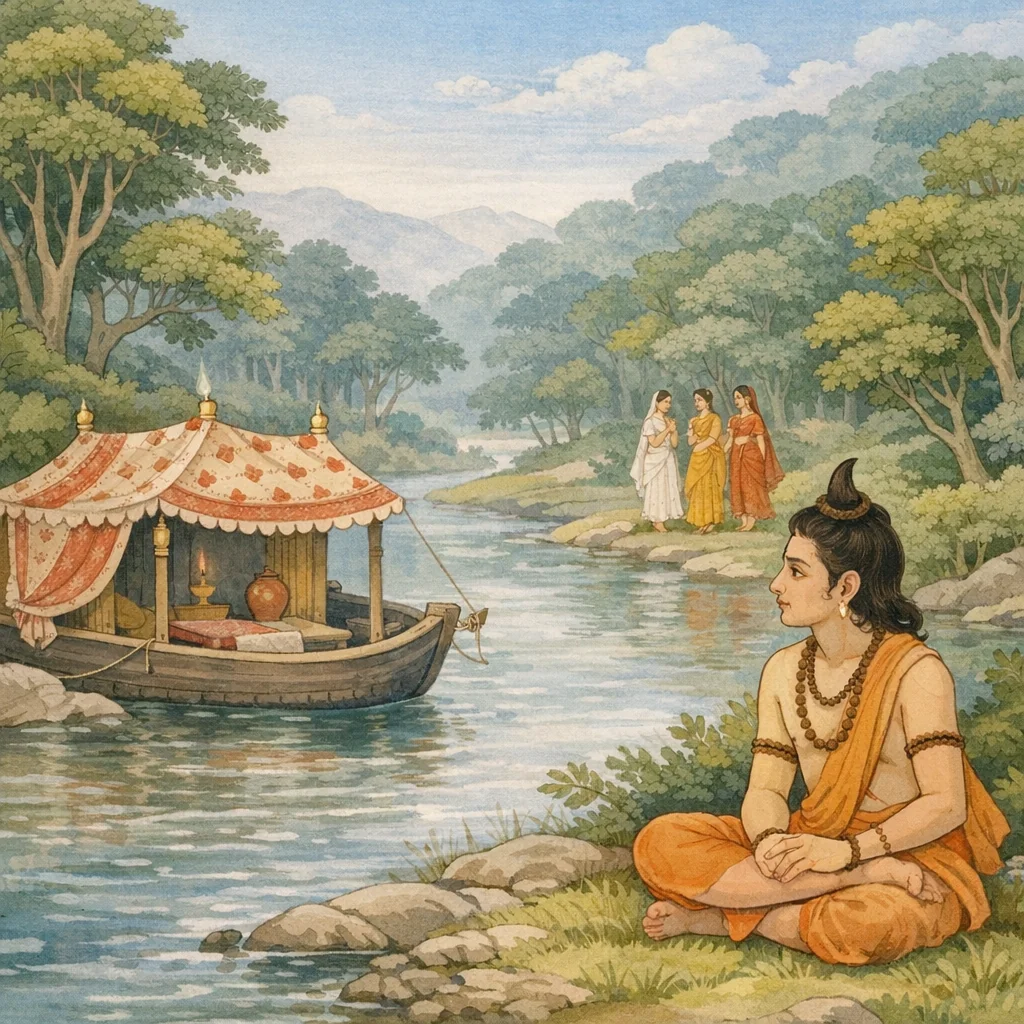
ततो राजन् काश्यपस्यैकपुत्र प्रवेश्य योगेन विमुच्य नावम् । प्रमोदयन्त्यो विविधैरुपायै- राजग्मुरज्राधिपते: समीपम्,राजन! तदनन्तर विभाण्डक मुनिके इकलौते पुत्रको युक्तिसे नावमें ले जाकर वेश्याने नाव खोल दी। फिर सभी युवतियाँ भाँति-भाँतिके उपायोंद्वारा उनका मनोरंजन करती हुई अंगराजके समीप आयीं
Then, O king, the courtesan, by a stratagem, brought Vibhāṇḍaka’s only son into a boat and cast it off. Thereafter, as the young women delighted him by various means, they came into the presence of the lord of Aṅga.
Verse 9
संस्थाप्य तामाश्रमदर्शने तु संतारितां नावमथातिशु भ्राम् । नीरादुपादाय तथैव चक्रे नाव्याश्रमं नाम वन विचित्रम्,नाविकोंद्वारा संचालित उस अत्यन्त उज्ज्वल नौकाको जलसे बाहर निकालकर राजाने एक स्थानपर स्थापित कर दिया और जितनी दूरीसे वह नौकागत आश्रम दिखायी देता था, उतनी दूरीके विस्तृत मैदानमें उन्होंने ऋष्यशृंग मुनिके आश्रम-जैसे ही एक विचित्र वनका निर्माण करा दिया, जो '“नाव्याश्रम” के नामसे प्रसिद्ध हुआ
Having brought that exceedingly bright boat safely across, the king drew it out of the water and set it in a place from which an ashram could be seen. Then, over a wide open tract extending as far as the boat-borne hermitage appeared to the eye, he caused a wondrous forest to be fashioned—made to resemble Ṛṣyaśṛṅga’s hermitage—so that it became renowned by the name “Nāvyāśrama” (the ‘Boat-Hermitage’).
Verse 10
अन्त:पुरे तं तु निवेश्य राजा विभाण्डकस्यात्मजमेकपुत्रम् । ददर्श देवं सहसा प्रवृष्ट- मापूर्यमाणं च जगज्जलेन,राजा लोमपादने विभाण्डक मुनिके इकलौते पुत्रको महलके भीतर रनिवासमें ठहरा दिया और देखा, सहसा उसी क्षण इन्द्रदेवने वर्षा आरम्भ कर दी तथा सारा जगत् जलसे परिपूर्ण हो गया
After installing Vibhāṇḍaka’s only son within the inner apartments, King Lomapāda beheld a marvel at once: Indra began to pour down rain immediately, and the whole world seemed to be filled with water.
Verse 11
स लोमपाद: परिपूर्णकाम: सुतां ददावृष्यशृज्भाय शान्ताम् | क्रोधप्रतीकारकरं च चक्रे गाश्जैव मार्गेषु च कर्षणानि,लोमपादकी कामना पूरी हुई। उन्होंने प्रसन्न होकर अपनी पुत्री शान्ता ऋष्यशृंग मुनिको ब्याह दी। फिर विभाण्डक मुनिके क्रोधके निवारणका भी उपाय कर दिया। जिस रास्तेसे महर्षि आनेवाले थे, उसमें स्थान-स्थानपर बहुत-से गाय-बैल रखवा दिये और किसानोंद्वारा खेतोंकी जुताई आरम्भ करा दी
Thus King Lomapāda, his desire fulfilled, gladly gave his daughter Śāntā in marriage to the sage Ṛśyaśṛṅga. He also arranged a means to avert the anger of the sage Vibhāṇḍaka: along the routes by which the great seer would come, he had cows and bulls placed at intervals and had the ploughing of fields begun, so that the land would appear well tended and auspicious—an outward restitution meant to pacify an offended ascetic.
Verse 12
विभाण्डकस्याव्रजत: स राजा पशून् प्रभूतान् पशुपांश्न वीरान् समादिशत् पुत्रगृद्धी महर्षि- विभाण्डक: परिपृच्छेद् यदा व:,राजाने विभाण्डक मुनिके आगमन-पथमें बहुत-से पशु तथा वीर पशुरक्षक भी नियुक्त कर दिये और सबको यह आदेश दे दिया था कि जब पुत्रकी अभिलाषा रखनेवाले महर्षि विभाण्डक तुमसे पूछें तब हाथ जोड़कर उन्हें इस प्रकार उत्तर देना--“ये सब आपके पुत्रके ही पशु हैं, ये खेत भी उन्हींके जोते जा रहे हैं। महर्षे! आज्ञा दें, हम आपका कौन-सा प्रिय कार्य करें। हम सब लोग आपके आज्ञापालक दास हैं"
As the sage Vibhāṇḍaka was on his way, that king stationed abundant cattle and brave cowherds, and issued them an order: “When the great seer Vibhāṇḍaka—who longs for a son—questions you, answer him with folded hands in this manner: ‘All these cattle belong to your son; these fields too are being ploughed for him. O sage, command us—what service may we do that is dear to you? We are all obedient servants of your command.’”
Verse 13
स वक्तव्य: प्राउ्जलिभियर्भवद्धि: पुत्रस्य ते पशव: कर्षणं च | किं ते प्रियं वै क्रियतां महर्षे दासा: सम सर्वे तव वाचि बद्धा:,राजाने विभाण्डक मुनिके आगमन-पथमें बहुत-से पशु तथा वीर पशुरक्षक भी नियुक्त कर दिये और सबको यह आदेश दे दिया था कि जब पुत्रकी अभिलाषा रखनेवाले महर्षि विभाण्डक तुमसे पूछें तब हाथ जोड़कर उन्हें इस प्रकार उत्तर देना--“ये सब आपके पुत्रके ही पशु हैं, ये खेत भी उन्हींके जोते जा रहे हैं। महर्षे! आज्ञा दें, हम आपका कौन-सा प्रिय कार्य करें। हम सब लोग आपके आज्ञापालक दास हैं"
“You must reply to him with joined hands: ‘These cattle are your son’s, and this ploughing too is being done for your son. O great sage, what pleasing service shall we perform for you? We are all your servants, bound to your command.’”
Verse 14
अथोपायात् स मुनिश्चण्डकोप: स्वमाश्रमं मूलफल गृहीत्वा । अन्वेषमाणश्च न तत्र पुत्र ददर्श चुक्रोध ततो भूशं सः:,इधर प्रचण्ड कोपधारी महात्मा विभाण्डक फल-मूल लेकर अपने आश्रमपर आये। वहाँ बहुत खोज करनेपर भी जब अपना पुत्र उन्हें दिखायी न दिया, तब वे अत्यन्त क्रोधमें भर गये
Then the sage Vibhāṇḍaka, fierce in temper, returned to his own hermitage carrying roots and fruits. When, even after searching, he did not see his son there, he was seized by intense anger.
Verse 15
ततः स कोपेन विदीर्यमाण आशड्कमानो नृपतेर्विधानम् । जगाम चम्पां प्रति धक्ष्यमाण- स्तमड्राजं सपुरं सराष्ट्रम,कोपसे उनका हृदय विदीर्ण-सा होने लगा। उनके मनमें यह संदेह हुआ कि कहीं राजा लोमपादकी तो यह करतूत नहीं है। तब वे चम्पानगरीकी ओर चल दिये, मानो अंगराजको उनके राष्ट्र और नगरसहित जला देना चाहते हों
Then, his heart seeming to split under the pressure of anger, he grew suspicious that the king himself had engineered this deed. Burning with wrath, he set out toward Campā, as though he meant to reduce the Aṅga king—together with his city and realm—to ashes.
Verse 16
स वै श्रान्त: क्षुधित: काश्यपस्तान् घोषान् समासादितवान् समृद्धान् । गोपैश्न तैर्विधिवत् पूज्यमानो राजेव तां रात्रिमुवास तत्र,थककर भूखसे पीड़ित होनेपर विभाण्डक मुनि सायंकालनमें उन्हीं समृद्धिशाली गोष्ठोंमें गये। गोपगणोंने उनकी विधिपूर्वक पूजा की। वे राजाकी भाँति सुख-सुविधाके साथ वहीं रातभर रहे
Worn out and hungry, the sage Kāśyapa (Vibhāṇḍaka) reached those prosperous cattle-settlements. The cowherds honored him in due form, and he spent the night there in comfort, like a king.
Verse 17
अवाप्य सत्कारमतीव तेभ्य: प्रोवाच कस्य प्रथिता: स्थ गोपा: । ऊचुस्ततस्ते< भ्युपगम्य सर्वे धनं तवेदं विहितं सुतस्य
Having received great honor from them, Vibhaṇḍaka asked, “To whom do you belong—whose cowherds are you, famed as you are?” Then all of them approached him and replied, “This wealth is yours; it has been set aside for your son.”
Verse 18
गोपगणोंसे अत्यन्त सत्कार पाकर मुनिने पूछा--“तुम किसके गोपालक हो?” तब उन सबने निकट आकर कहा--'यह सारा धन आपके पुत्रका ही है” ।। देशेषु देशेषु स पूज्यमान- स्तांश्वैव शृण्वन् मधुरान् प्रलापान् प्रशान्तभूयिष्ठरजा: प्रह्ृष्ट: समाससादाजझ्भपतिं पुरस्थम्,देश-देशमें सम्मानित हो वे ही मधुर वचन सुनते-सुनते मुनिका रजोगुणजनित अत्यधिक क्रोध बिलकुल शान्त हो गया। वे प्रसन्नतापूर्वक राजधानीमें जाकर अंगराजसे मिले
Honoured from region to region, and listening all the while to those same sweet words of praise, the sage’s passion-born anger became thoroughly calmed. Pleased at heart, he went to the capital and met the lord of Aṅga.
Verse 19
स पूजितस्तेन नरर्षभेण ददर्श पुत्र॑ दिवि देवं यथेन्द्रम् । शान्तां स्नुषां चैव ददर्श तत्र सौदामनीमुच्चरन्ती यथैव,>> उप: र्स्क | ७० | (४३) नरश्रेष्ठ लोमपादसे पूजित हो मुनिने अपने पुत्रको उसी प्रकार ऐश्वर्यसम्पन्न देखा, जैसे देवराज इन्द्र स्वर्गलोकमें देखे जाते हैं। पुत्रके पास ही उन्होंने बहू शान्ताको भी देखा, जो विद्युतके समान उद्धासित हो रही थी
Honoured by that bull among men, the sage beheld his son shining with splendour, like Indra among the gods in heaven. There too he saw his daughter-in-law Śāntā, radiant and flashing like a streak of lightning.
Verse 20
ग्रामांश्व घोषांश्व॒ सुतस्य दृष्टवा शान्तां च शान्तो5स्य पर: स कोप: । चकार तस्यैव परं प्रसाद विभाण्डको भूमिपतेनरिन्द्र,अपने पुत्रके अधिकारमें आये हुए ग्राम, घोष और बहू शान्ताको देखकर उनका महान् कोप शान्त हो गया। युधिष्ठिर! उस समय विभाण्डक मुनिने राजा लोमपादपर बड़ी कृपा की
Vibhāṇḍaka said: “When he saw the villages and the cowherd-settlements that had come under his son’s rightful claim, and also beheld Śāntā, his intense anger was pacified. O best of kings, Vibhāṇḍaka then showed the highest favor to that ruler.”
Verse 21
स तत्र निक्षिप्य सुतं महर्षि- रुवाच सूर्याग्निसमप्रभाव: । जाते च पुत्रे वनमेवात्रजेथा राज्ञ: प्रियाण्यस्य सर्वाणि कृत्वा,सूर्य और अग्निके समान प्रभावशाली महर्षिने अपने पुत्रको वहीं छोड़ दिया और कहा --<बेटा! पुत्र उत्पन्न हो जानेपर इन अंगराजके सारे प्रिय कार्य सिद्ध करके फिर वनमें ही आ जाना”
Having left his son there, the great seer—radiant like the sun and fire—spoke: “My child, now that a son has been born to you, accomplish all the cherished wishes of this king; then return again to the forest.”
Verse 22
स तद्वच: कृतवानृष्यश्ज्ो ययौ च यत्रास्य पिता बभूव । शान्ता चैन पर्यचरन्नरेन्द्र खे रोहिणी सोममिवानुकूला,ऋष्यशुंगने पिताकी आज्ञाका अक्षरश: पालन किया। अन्तमें वे पुनः: उसी आश्रममें चले गये जहाँ उनके पिता रहते थे। नरेन्द्र! शान्ता उसी प्रकार अनुकूल रहकर उनकी सेवा करती थी जैसे आकाशमें रोहिणी चन्द्रमाकी सेवा करती है
Ṛśyaśṛṅga carried out that instruction exactly and then returned to the hermitage where his father was staying. O king, Śāntā attended upon him with steady goodwill—like Rohiṇī in the sky, ever favorable, serving the Moon.
Verse 23
अरुन्धती वा सुभगा वसिष्ठं लोपामुद्रा वा यथा हाुगस्त्यम् । नलस्य वै दमयन्ती यथा भूद् यथा शची वज्रधरस्य चैव,अथवा जैसे सौभाग्यशालिनी अरुन्धती वसिष्ठजीकी, लोपामुद्रा अगस्त्यजीकी, दमयन्ती नलकी तथा शची वज्रधारी इन्द्रकी सेवा करती है
Vibhāṇḍaka said: “Just as the fortunate Arundhatī serves Vasiṣṭha, as Lopāmudrā serves Agastya, as Damayantī served Nala, and as Śacī serves Indra the wielder of the thunderbolt—so too should a wife render devoted service to her husband.”
Verse 24
नारायणी चेन्द्रसेना बभूव वश्या नित्यं मुद्रलस्पाजमीढ । (यथा सीता दाशरयथेमहात्मनो यथा तव द्रौपदी पाण्डुपुत्र ।) तथा शान्ता ऋष्यशुड्रं वनस्थं प्रीत्या युक्ता पर्यचरत्नरेन्द्र,युधिष्ठि!! जैसे नारायणी इन्द्रसेना सदा महर्षि मुद्लके अधीन रहती थी तथा पाण्डुनन्दन! जैसे सीता महात्मा दशरथनन्दन श्रीरामके अधीन रही हैं और द्रौपदी सदा तुम्हारे वशमें रहती आयी है, उसी प्रकार शान्ता भी सदा अधीन रहकर वनवासी ऋष्यशुंगकी प्रसन्नतापूर्वक सेवा करती थी
Vibhāṇḍaka said: “O descendant of Ajamiḍha, Nārāyaṇī—also known as Indrasenā—remained ever obedient to the sage Mudgala. Just as Sītā was devoted to the great-souled Rāma, the son of Daśaratha, and just as Draupadī has lived under your guidance, O son of Pāṇḍu, so too did Śāntā, with loving goodwill, attend upon the forest-dwelling Ṛṣyaśṛṅga.”
Verse 25
तस्याश्रम: पुण्य एषो5वभाति महाहदं शोभयन् पुण्यकीर्ति: । अत्र स्नात: कृतकृत्यो विशुद्ध- स्तीर्थान्यन्यान्यनुसंयाहि राजन्,उनका यह पुण्यमय आश्रम, जो पवित्र कीर्तिसे युक्त है, इस महान् कुण्डकी शोभा बढ़ाता हुआ प्रकाशित हो रहा है, राजन! यहाँ स्नान करके शुद्ध एवं कृतकृत्य होकर अन्य तीर्थोंकी यात्रा करो
Vibhāṇḍaka said: “This holy hermitage of hers shines forth, enhancing the splendor of this great lake, renowned for its sacred fame. O king, bathe here; becoming purified and having fulfilled your religious duty, proceed onward to other sacred fords (tīrthas) as well.”
Verse 112
इस प्रकार श्रीमह्याभारत वनपर्वके अन्तर्गत तीर्थयात्रापर्वमें लोगशती ्थयात्राके प्रसंगमें ऋष्यशूंगोपाख्यानविषयक एक सौ बारहवाँ अध्याय पूरा हुआ
Thus ends the one hundred and twelfth chapter of the Ṛṣyaśṛṅga episode, occurring within the Tīrthayātrā section of the Vana Parva of the Śrī Mahābhārata, in the context of Lomasha’s narration of the pilgrimage.
Verse 113
इति श्रीमहाभारते वनपर्वणि तीर्थयात्रापर्वणि लोमशतीर्थयात्रायामृष्यशूड्रोपाख्याने त्रयोदशाधिकशततमो< ध्याय:,इस प्रकार श्रीमहाभारत वनपर्वके अन्तर्गत तीर्थयात्रापर्वमें लोमशती र्थयात्राके प्रस॑ंगमें ऋष्यशुंगोपाख्या0/गविषयक एक सौ तेरहवाँ अध्याय पूरा हुआ
Thus, in the Śrī Mahābhārata, within the Vana Parva, in the Tīrtha-yātrā Parva, in the account of Lomāśa’s pilgrimage—within the episode concerning Ṛṣyaśṛṅga and the Śūdra—ends the one-hundred-and-thirteenth chapter.
Frequently Asked Questions
The core dilemma is how an ascetic life grounded in tapas and seclusion can be destabilized by engineered temptation, and whether ends such as public welfare (rainfall relief) justify morally ambiguous means (deliberate seduction and relocation).
The chapter teaches vigilance over sensory contact and companionship: disciplined seekers should avoid contexts designed to provoke craving, because repeated indulgence converts external stimuli into enduring obstacles to sustained practice.
A functional phalaśruti-like closure appears via tīrtha framing: the hermitage is declared spiritually efficacious, with bathing there described as purifying and as a preparatory act before visiting other sacred sites, indicating the episode’s devotional and ritual indexing.