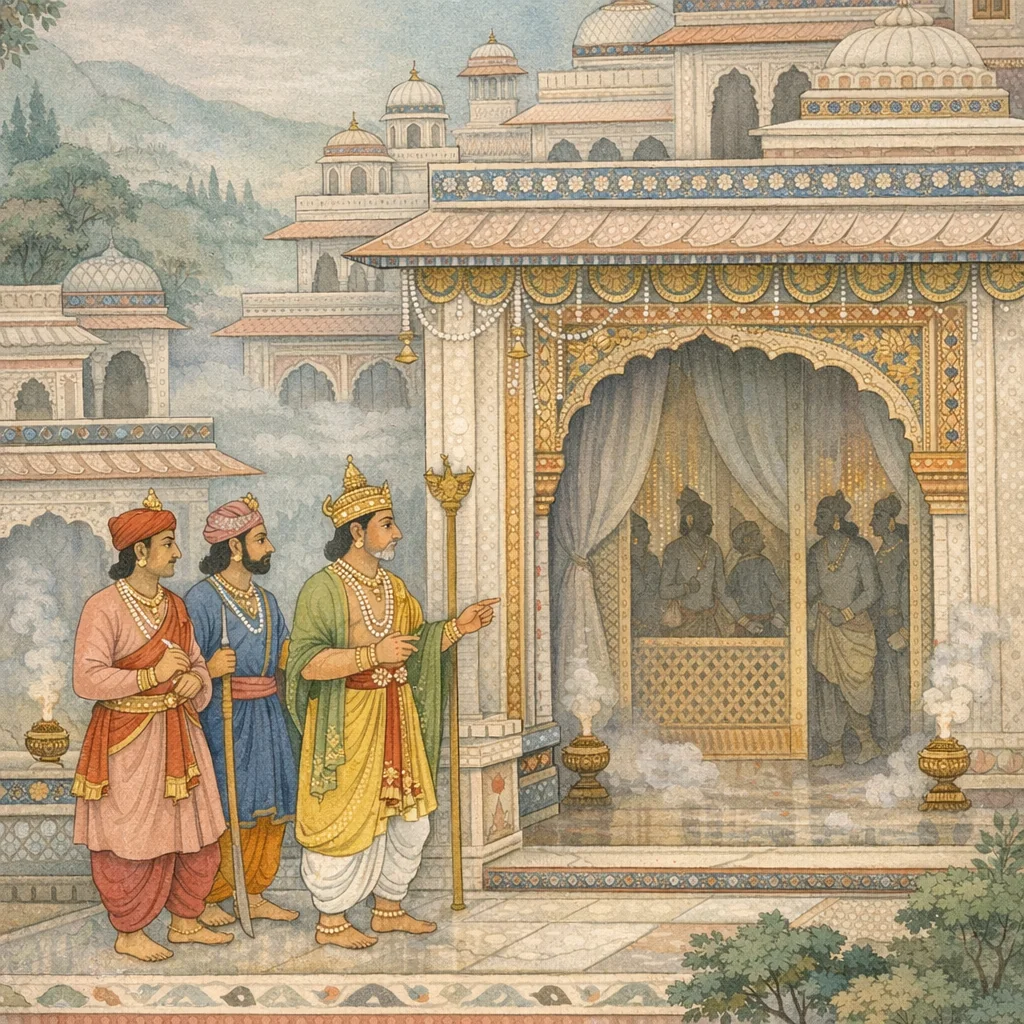
Adhyaya 99
नारदेन गरुडात्मजानां नामकीर्तनम् | Nārada’s Enumeration of Garuḍa’s Descendants
Upa-parva: Nārada–Mātali Saṃvāda (Garudātmāja-vaṃśa-kathana)
Nārada addresses Mātali with a descriptive account of the Suparṇa (great bird) community—portrayed as swift, strong, and unwearied by distance or burden. He situates them genealogically in Kaśyapa’s line through Vinatā, noting their prosperity and auspicious marks, while also characterizing their conduct as kṣatriya-like and severe, including the consumption of serpents and the consequence that they do not attain brāhmaṇya due to kin-destruction. Nārada then declares the clan’s theological orientation: Viṣṇu is their deity, refuge, and constant inner focus. He proceeds to list numerous names of Garuḍa’s sons/descendants (a catalogic register), presenting the enumeration as selective (pradeśamātra) yet focused on prominent, renowned figures. The chapter concludes with Nārada offering to guide Mātali to a region suited to his preference if he finds no delight where they are, framing the discourse as both informational and situationally responsive guidance.
Chapter Arc: नारद हिरण्यपुर—दानवों के उस मायामय महान नगर—का नाम लेकर उसके वैभव और रहस्य का द्वार खोलते हैं, मानो किसी अदृश्य लोक की परिक्रमा आरम्भ हो। → विश्वकर्मा-सदृश शिल्प और मय-दानव की मानसिक सृष्टि से बने पातालाश्रित भवनों का वर्णन बढ़ता जाता है—सोने-चाँदी, पद्मराग, शैल-सा, दारु-सा प्रतीत होने वाले रूप; और साथ ही वहाँ निवास करने वाले शूर दानव, जिनकी सहस्र मायाएँ किसी भी आगन्तुक को भ्रमित कर सकती हैं। → मातलि (इन्द्र के सारथि) को यह बोध होता है कि इन दानवों के बीच ठहरना या उनसे साक्षात् मिलना उचित नहीं—क्योंकि वे हिंसात्मक प्रवृत्ति के हैं और स्वयं मातलि का उद्देश्य (वर-खोज) संघर्ष में फँस सकता है; अतः वह कहता है कि ‘किसी दूसरी जगह चलें’। → हिरण्यपुर के अद्भुत वैभव का दर्शन-समापन करते हुए मातलि दानवों से टकराव टालने का निर्णय लेता है और यात्रा को आगे बढ़ाने की दिशा बनती है—वरान्वेषण का प्रयोजन सुरक्षित रहता है। → अगला पड़ाव कौन-सा लोक/नगर होगा और मातलि का वर-खोज किस दिशा में निर्णायक रूप लेगा—यह प्रश्न खुला रह जाता है।
Shlokas
Verse 1
ऑपन--माज छा अं ऋाज शततमो< ध्याय: हिरण्यपुरका दिग्दर्शन और वर्णन नारद उवाच हिरण्यपुरमित्येतत् ख्यातं पुरवरं महत् | दैत्यानां दानवानां च मायाशतविचारिणाम्,नारदजी कहते हैं--मातले! यह हिरण्यपुर नामक श्रेष्ठ एवं विशाल नगर है जहाँ सैकड़ों मायाओंके साथ विचरनेवाले दैत्यों और दानवोंका निवासस्थान है
Narada said: “O Mātali, this is the famed city called Hiraṇyapura—a great and excellent metropolis. It is the dwelling-place of Daityas and Dānavas, who roam about employing hundreds of magical illusions.”
Verse 2
अनल्पेन प्रयत्नेन निर्मित विश्वकर्मणा । मयेन मनसा सृष्टं पातालतलमाश्रितम्,असुरोंके विश्वकर्मा मयने अपने मानसिक संकल्पके अनुसार महान् प्रयत्न करके पाताललोकके भीतर इस नगरका निर्माण किया है
Narada said: “With no small effort, Viśvakarman constructed it—yet it was first conceived by Maya through the power of his mind. This city, born of that mental design and realized through great craftsmanship, lies established in the subterranean realm of Pātāla.”
Verse 3
अत्र मायासहस्राणि विकुर्वाणा महौजस: । दानवा निवसन्ति सम शूरा दत्तवरा: पुरा,यहाँ सहस्रों मायाओंका प्रयोग करनेवाले और महान् बल-पराक्रमसे सम्पन्न वे शूरवीर दानव निवास करते हैं, जिन्हें पूर्वकालमें अवध्य होनेका वरदान प्राप्त हो चुका है
Here dwell the Dānavas—heroes of equal prowess—endowed with great strength and valor, who wield thousands of magical stratagems. In former times they were granted boons that made them hard to slay, and thus they remain formidable presences in this place.
Verse 4
नैते शक्रेण नानयेन यमेन वरुणेन वा । शक्यन्ते वशमानेतुं तथैव धनदेन च,इन्द्र, यम, वरुण, कुबेर तथा और कोई देवता भी इन्हें वशमें नहीं कर सकता
Nārada said: These persons cannot be brought under control—neither by Śakra (Indra), nor by any other god, nor by Yama, nor by Varuṇa, nor even by Dhanada (Kubera). The statement underscores their unassailable resolve and power.
Verse 5
असुरा: कालखज्जाश्व तथा विष्णुपदोद्धवा: । नैर्नता यातुधानाश्र ब्रह्मपादोद्धवाश्व ये,मातले! भगवान् विष्णुके चरणोंसे उत्पन्न हुए कालखंज नामक असुर तथा ब्रह्माजीके पैरोंसे प्रकट हुए बड़ी-बड़ी दाढ़ोंवाले, भयंकर वेगसे युक्त, प्रगतिशील पवनके समान पराक्रमी एवं मायाबलसे सम्पन्न नै#ऋत और यातुधान इस नगरमें निवास करते हैं
Nārada said: “O Mātali, here dwell the Asuras called Kālakhajja, born from the feet of Bhagavān Viṣṇu; and also the Nairṛtas and Yātudhānas—terrible, tusked, swift as the advancing wind, mighty in prowess and endowed with powers of illusion—who are said to have arisen from the feet of Brahmā.”
Verse 6
दंष्टिणो भीमवेगाश्न वातवेगपराक्रमा: । मायावीर्योपसम्पन्ना निवसन्त्यत्र मातले,मातले! भगवान् विष्णुके चरणोंसे उत्पन्न हुए कालखंज नामक असुर तथा ब्रह्माजीके पैरोंसे प्रकट हुए बड़ी-बड़ी दाढ़ोंवाले, भयंकर वेगसे युक्त, प्रगतिशील पवनके समान पराक्रमी एवं मायाबलसे सम्पन्न नै#ऋत और यातुधान इस नगरमें निवास करते हैं
Narada said: “O Matali! Here dwell beings with huge fangs and terrifying speed—valiant like the rushing wind—endowed with powers of illusion and supernatural might.”
Verse 7
निवातकवचा नाम दानवा युद्धदुर्मदा: । जानासि च यथा शक्रो नैतान् शकनोति बाधितुम्,यहीं निवातकवच नामक दानव निवास करते हैं, जो युद्धमें उन््मत्त होकर लड़ते हैं। तुम तो जानते ही हो कि इन्द्र भी इन्हें पराजित करनेमें समर्थ नहीं हो रहे हैं
Nārada said: “There are Dānava demons called the Nivātakavacas, made arrogant and reckless by war. You already know how even Śakra (Indra) is unable to subdue or check them.”
Verse 8
बहुशो मातले त्वं च तव पुत्रश्न गोमुख: । निर्भग्नो देवराजश्न सहपुत्र: शचीपति:,मातले! तुम, तुम्हारा पुत्र गोमुख तथा पुत्रसहित शचीपति देवराज इन्द्र अनेक बार इनके सामनेसे मैदान छोड़कर भाग चुके हैं
Nārada said: “Many times, O Mātali, you and your son Gomukha—and even Indra himself, lord of the gods, Śacī’s consort, together with his son—have been routed and forced to withdraw from the battlefield before them.”
Verse 9
पश्य वेश्मानि रौक्माणि मातले राजतानि च | कर्मणा विधियुक्तेन युक्तान्युपगतानि च,मातले! देखो, इनके ये सोने और चाँदीके भवन कितनी शोभा पा रहे हैं। इनका निर्माण शिल्पशास्त्रीय विधानके अनुसार हुआ है तथा ये सभी महल एक-दूसरेसे सटे हुए हैं
Nārada said: “Look, O Mātali—these mansions of gold, and these of silver as well. Built through workmanship aligned with proper rule and method, they stand beautifully arranged, set close together in ordered harmony.”
Verse 10
वैदूर्यमणिचित्राणि प्रवालरुचिराणि च । अर्कस्फटिकशु भ्राणि वज्जसारोज्ज्वलानि च,इन सबमें वैदूर्यमणि जड़ी हुई है, जिससे इनकी विचित्र शोभा हो रही है। स्थान- स्थानपर मूँगोंसे सुसज्जित होनेके कारण इनका सौन्दर्य अधिक बढ़ गया है। आकके फूल और स्फटिकमणिके समान ये उज्ज्वल दिखायी देते हैं तथा उत्तम हीरोंसे जटित होनेके कारण इनकी दीप्ति अधिक बढ़ गयी है
Narada said: “They are adorned with variegated inlays of vaidūrya (cat’s-eye) gems and made lovely with coral. They shine with a whiteness like arka-flowers and crystal, and, being set with excellent diamonds, blaze with heightened brilliance.”
Verse 11
पार्थिवानीव चाभान्ति पद्मरागमयानि च । शैलानीव च दृश्यन्ते दारवाणीव चाप्युत,इनमेंसे कुछ तो मिट्टीके बने हुए-से जान पड़ते हैं, कुछ पद्मरागमणिद्धारा निर्मित प्रतीत होते हैं, कुछ मकान पत्थरोंके और कुछ लकड़ियोंके बने हुए-से दिखायी देते हैं
Narada said: “Some of these structures appear as though made of earth; some seem fashioned from ruby-like gemstones; some look as if built of stone, and others as if made of wood.”
Verse 12
सूर्यरूपाणि चाभान्ति दीप्ताग्निसदृशानि च । मणिजालविचित्राणि प्रांशूनि निबिडानि च,ये सूर्य तथा प्रज्वलित अग्निके समान प्रकाशित हो रहे हैं। मणियोंकी झालरोंसे इनकी विचित्र छटा दृष्टिगोचर हो रही है। ये सभी भवन ऊँचे और घने हैं
Nārada describes the splendid buildings: they shine with a radiance like the sun and blaze like kindled fire. Adorned with intricate networks of gems, they appear wondrous to behold—lofty in height and densely clustered.
Verse 13
नैतानि शक््यं निर्देष्टर रूपतो द्रव्यतस्तथा । गुणतश्वैव सिद्धानि प्रमाणगुणवन्ति च,हिरण्यपुरके ये भवन कितने सुन्दर हैं और किन-किन द्रव्योंसे बने हुए हैं, इसका निरूपण नहीं किया जा सकता। अपने उत्तम गुणोंके कारण इनकी बड़ी प्रसिद्धि है। लंबाई-चौड़ाई तथा सर्वगुणसम्पन्नताकी दृष्टिसे ये सभी प्रशंसाके योग्य हैं
Nārada said: These cannot truly be described—neither by their outward form nor by the materials from which they are made. Their excellence is established by their very qualities, and they are renowned for perfect proportion and complete endowment.
Verse 14
आक्रीडान् पश्य दैत्यानां तथैव शयनान्युत । रत्नवन्ति महाहाणि भाजनान्यासनानि च,देखो, दैत्योंके उद्यान एवं क्रीड़ास्थान कितने सुन्दर हैं! इनकी शय्याएँ भी इनके अनुरूप ही हैं। इनके उपयोगमें आनेवाले पात्र और आसन भी रत्नजटित एवं बहुमूल्य हैं
Nārada said: “Look at the Daityas’ pleasure-gardens and their play-grounds—how splendid they are. See also their beds, fashioned in the same lavish style. Even the vessels they use and the seats they sit upon are studded with gems and of great value.”
Verse 15
जलदाभांस्तथा शैलांस्तोयप्रस्रवणानि च । कामपुष्पफलांश्वापि पादपान् कामचारिण:,यहाँके पर्वत मेघोंकी घटाके समान जान पड़ते हैं। वहाँसे जलके झरने गिर रहे हैं। इन वृक्षोंकी ओर दृष्टिपात करो, ये सभी इच्छानुसार फल और फूल देनेवाले तथा कामचारी हैं
Nārada said: “These mountains appear like masses of rain-clouds, and from them streams of water cascade down. Look upon these trees as well: they are wish-fulfilling—granting flowers and fruits according to desire—and they move at will.”
Verse 16
मातले कश्िदत्रापि रुचिरस्ते वरो भवेत् । अथवान्यां दिशं भूमेर्गच्छाव यदि मन्यसे,मातले! यहाँ भी तुम्हें कोई सुन्दर वर प्राप्त हो सकता है अथवा तुम्हारी राय हो, तो इस भूमिकी किसी दूसरी दिशाकी ओर चलें
Nārada said: “O Mātali, perhaps even here you may obtain some splendid boon. Or, if you think it better, let us go to another quarter of this land.”
Verse 17
मातलिस्त्वब्रवीदेनं भाषमाणं तथाविधम् | देवर्षे नैव मे कार्य विप्रियं त्रेदिवौकसाम्,तब ऐसी बातें करनेवाले नारदजीसे मातलिने कहा--*देवर्षे! मुझे कोई ऐसा कार्य नहीं करना चाहिये, जो देवताओंको अप्रिय लगे
As Nārada spoke in that manner, Mātali replied: “O divine seer, it is not for me to do anything that would become displeasing to the dwellers of the three heavens—the gods.”
Verse 18
नित्यानुषक्तवैरा हि भ्रातरो देवदानवा: । परपक्षेण सम्बन्धं रोचयिष्याम्यहं कथम्,“यद्यपि देवता और दानव परस्पर भाई ही हैं, तथापि इनमें सदा वैरभाव बना रहता है। ऐसी दशामें मैं शत्रुपक्षके साथ अपनी पुत्रीका सम्बन्ध कैसे पसंद करूँगा?
Nārada said: “Although the gods and the Dānavas are indeed brothers, their hostility is perpetual. In such a situation, how could I ever approve an alliance for my daughter with the enemy’s side?”
Verse 19
अन्यत्र साधु गच्छाव द्रष्ठ नाहामि दानवान् । जानामि तव चात्मानं हिंसात्मकमनं तथा,“इसलिये अच्छा यही होगा कि हमलोग किसी दूसरी जगह चलें। मैं दानवोंसे साक्षात्कार भी नहीं कर सकता। मैं यह भी जानता हूँ कि आपके मनमें हिंसात्मक कार्य (युद्ध)-का अवसर उपस्थित करनेकी प्रबल इच्छा रहती है'
Nārada said: “It would be best for us to go elsewhere. Here I am not able to meet the Dānavas. And I also know your disposition—your mind is of a violent bent, ever eager for an occasion to set harmful action, even war, in motion.”
Verse 99
इस प्रकार श्रीमहाभारत उद्योगपर्वके अन्तर्गत भगवद्यानपर्वमें मातलिके द्वारा वरका खोजविषयक निन्यानबेवाँ अध्याय पूरा हुआ
Thus ends the ninety-ninth chapter, concerning the search for a suitable bridegroom as undertaken through Mātali, within the Bhagavad-yāna section of the Udyoga Parva of the Śrī Mahābhārata.
Verse 100
इति श्रीमहाभारते उद्योगपर्वणि भगवद्यानपर्वणि मातलिवरान्वेषणे शततमो<ध्याय:
Thus, in the Śrī Mahābhārata, within the Udyoga Parva, in the Bhagavad-yāna section, in the episode of Mātali’s search, ends the hundredth chapter.
Frequently Asked Questions
The chapter juxtaposes prosperity and auspicious signs with a conduct-based critique: despite eminence and strength, the clan is described as severe and implicated in kin-destruction, which is presented as a disqualifying factor for brāhmaṇya—raising the question of how status is ethically constrained by behavior.
Identity is not only genealogical but normative: lineage confers recognition, yet ethical consequences track conduct; simultaneously, stable orientation toward a transcendent refuge (Viṣṇu as daivata, parāyaṇa, and gati) is depicted as a unifying inner principle for a collective.
There is no explicit phalaśruti formula; however, Nārada’s framing—‘I will speak the names in order of prominence’ and ‘this is only a partial enumeration’—serves as meta-commentary that the list is an authorized index rather than an exhaustive census, guiding how the passage should be interpreted and used.