Adhyaya 88
कुन्ती-विलापः तथा गोविन्द-आश्वासनम् (Kuntī’s Lament and Govinda’s Consolation)
Upa-parva: Vidurāgamana / Kuntī-santvāna Episode (Udyoga Parva, Adhyāya 88 context)
Vaiśaṃpāyana narrates Kṛṣṇa’s late-day arrival at Vidura’s residence and Kuntī’s emotional reception. Kuntī embraces Kṛṣṇa and, through a structured lament, recounts the Pāṇḍavas’ unjust loss of kingdom, their forest hardships, and the rupture of familial security. She enumerates each Pāṇḍava’s virtues—Yudhiṣṭhira’s dharma-oriented kingship, Bhīma’s controlled power and remembered enmity, Arjuna’s martial excellence and protective role, and the twins’ youthful valor and filial devotion—using praise as an evidentiary argument for their rightful restoration. She foregrounds Draupadī’s suffering, especially the assembly humiliation, presenting it as the deepest moral injury. Kuntī also reflects on her own displacement and dependency, and urges timely action consonant with kṣatriya-dharma. Kṛṣṇa consoles her by reframing the Pāṇḍavas’ endurance as disciplined heroism, affirming their well-being and impending success. Kuntī concludes by authorizing Kṛṣṇa to act without compromising dharma; Kṛṣṇa then respectfully circumambulates and departs toward Duryodhana’s house, linking maternal testimony to imminent political engagement.
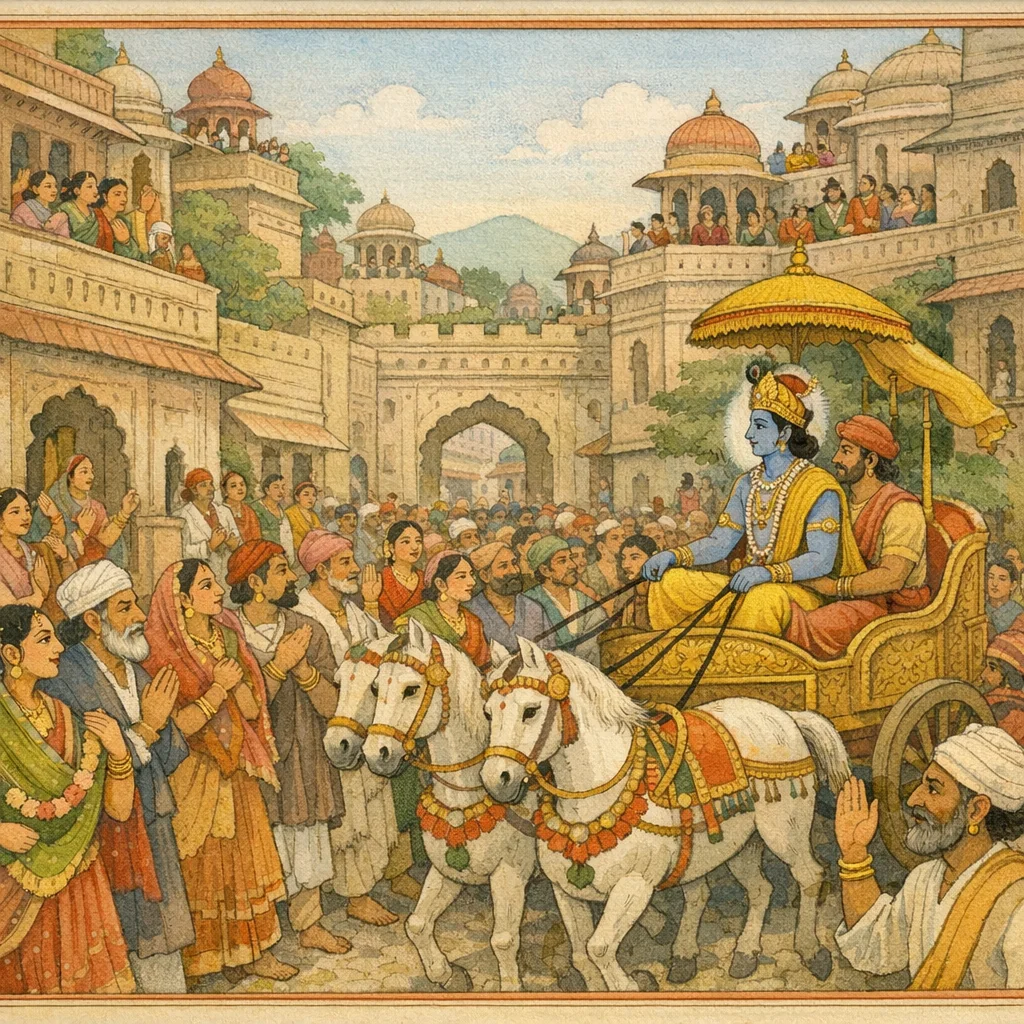
Chapter Arc: प्रातःकाल उठकर श्रीकृष्ण दूत-धर्म के अनुरूप सब तैयारी करके हस्तिनापुर की ओर प्रस्थान करते हैं—और नगर में उनके आगमन का समाचार बिजली-सा फैल जाता है। → वृकस्थल के निवासी उन्हें विदा कर लौटते हैं; उधर धृतराष्ट्र-पुत्र और नगर-जन अलंकारों सहित, विविध यानों में, केवल ‘हृषीकेश के दर्शन’ के लिए उमड़ पड़ते हैं। राजमार्ग जनसमुदाय से इतना भर जाता है कि वासुदेव के वेगवान घोड़े भी अपनी गति खो बैठते हैं—यह स्वागत नहीं, आने वाले निर्णय का पूर्व-संकेत है। → केशव राजवेश्म की तीन कक्ष्याएँ पार कर भीतर प्रवेश करते हैं और धृतराष्ट्र के निकट पहुँचते हैं; तत्पश्चात द्रोण, बाह्लीक, कृप, सोमदत्त आदि वरिष्ठों से भेंट कर सभा-तंत्र के केंद्र में स्वयं को स्थापित करते हैं—यहीं से दूत-वाक्य का भार पूरे कुरु-समाज पर पड़ता है। → विदुर, जो प्रत्यक्षदर्शी और बुद्धिमानों में श्रेष्ठ हैं, पाण्डवों की समस्त चेष्टाओं और स्थिति का विस्तृत वृत्तान्त श्रीकृष्ण को बताते हैं, जिससे दूत-कार्य की दिशा स्पष्ट होती है और कृष्ण का नैतिक आधार दृढ़ होता है। → कुरु-राजसभा के भीतर कृष्ण का अगला कदम—धृतराष्ट्र और दुर्योधन के सम्मुख शान्ति-प्रस्ताव का निर्णायक उच्चारण—अब तुरंत होने वाला है।
Shlokas
Verse 1
अपन क्रात बा अर: एकोननवतितमो<ध्याय: श्रीकृष्णका स्वागत, धृतराष्ट्र तथा विदुरके घरोंपर उनका आतिथ्य वैशम्पायन उवाच प्रातरुत्थाय कृष्णस्तु कृतवान् सर्वमाह्विकम् । ब्राह्मणैरभ्यनुज्ञात: प्रययौ नगरं प्रति,वैशम्पायनजी कहते हैं--जनमेजय! (उधर वृकस्थलमें) प्रातःकाल उठकर भगवान् श्रीकृष्णने सारा नित्यकर्म पूर्ण किया। फिर ब्राह्मणोंकी आज्ञा लेकर वे हस्तिनापुरकी ओर चले
Vaiśampāyana said: At dawn, Kṛṣṇa rose and completed all the prescribed daily rites. Then, having received the Brahmins’ permission and blessing, he set out toward the city (Hastināpura). The narrative underscores disciplined conduct and respect for religious counsel even amid urgent political and ethical crisis.
Verse 2
त॑ प्रयान््तं महाबाहुमनुज्ञाप्प महाबलम् | पर्यवर्तन्त ते सर्वे वृकस्थलनिवासिन:
After granting leave to that mighty-armed, greatly powerful hero as he set out, all those who dwelt at Vṛkasthala turned back. The scene underscores proper conduct in departure: honoring a leader with due permission and then returning in orderly restraint, rather than clinging or creating disorder.
Verse 3
तब वहाँसे जाते हुए महाबाहु महाबली श्रीकृष्णकी आज्ञा ले सम्पूर्ण वृकस्थलनिवासी वहाँसे लौट गये ।। धार्तराष्ट्रास्तमायान्तं प्रत्युज्जग्मु: स्वलंकृता: । दुर्योधनादते सर्वे भीष्मद्रोणकृपादय:,दुर्योधनके सिवा धृतराष्ट्रके सभी पुत्र तथा भीष्म, द्रोण और कृपाचार्य आदि यथायोग्य वस्त्राभूषणोंसे सुसज्जित हो हस्तिनापुरकी ओर आते हुए श्रीकृष्णकी अगवानीके लिये गये
Vaiśampāyana said: As Śrī Kṛṣṇa approached, the Dhārtarāṣṭras—adorned in fitting garments and ornaments—went forth to receive him. All of them did so, including Bhīṣma, Droṇa, and Kṛpa and others, except Duryodhana. The scene underscores the courtly duty of honoring a revered envoy and elder, while Duryodhana’s refusal signals pride and hostility that obstruct reconciliation and dharma.
Verse 4
पौराश्न बहुला राजन् हृषीकेशं दिदृक्षव: । यानैर्बहुविधैरन्यै: पद्धिरेव तथा परे,राजन! श्रीकृष्णका दर्शन करनेके लिये बहुत-से नागरिक भी नाना प्रकारकी सवारियोंपर बैठकर तथा अन्य कुछ लोग पैदल ही चलकर गये
Vaiśampāyana said: “O King, many townspeople too, eager to behold Hṛṣīkeśa (Kṛṣṇa), set out—some mounted on various kinds of conveyances, while others went on foot.”
Verse 5
स वै पथि समागम्य भीष्मेणाक्लिष्टकर्मणा । द्रोणेन धार्तराष्ट्रैश्न तैर्वृतो नगरं ययौ,अनायास ही महान् पराक्रम कर दिखानेवाले भीष्म तथा द्रोणाचार्यसे मार्गमें ही मिलकर धृतराष्ट्रपुत्रोंसे घिरे हुए भगवान् श्रीकृष्णने नगरमें प्रवेश किया
On the way, he met Bhīṣma—whose deeds were tireless and untroubled—and Droṇa; then, surrounded by the sons of Dhṛtarāṣṭra, he proceeded into the city.
Verse 6
कृष्णसम्माननार्थ च नगरं समलंकृतम् । बभूव राजमार्गश्व बहुरत्नसमाचितः,श्रीकृष्णके स्वागत-सत्कारके लिये हस्तिनापुरको खूब सजाया गया था। वहाँका राजमार्ग भी अनेक प्रकारके रत्नोंसे सुशोभित किया गया था
Vaiśampāyana said: In order to honor Kṛṣṇa, the city was splendidly decorated. Even the royal highway became resplendent, richly inlaid with many kinds of jewels.
Verse 7
न च कश्चिद् गृहे राजंस्तदा55सीद् भरतर्षभ । नस््त्री न वृद्धो न शिशुर्वासुदेवदिदृक्षया,भरतश्रेष्ठ] उस समय भगवान् वासुदेवके दर्शनकी तीव्र इच्छाके कारण स्त्री, बालक अथवा वृद्ध कोई भी घरमें नहीं ठहर सका
Vaiśampāyana said: O King, O bull among the Bharatas, at that time no one remained at home. Driven by an intense longing to behold Vāsudeva, neither women, nor the aged, nor even children could stay back.
Verse 8
राजमार्गे नरास्तस्मिन् संस्तुवन्त्यवरनिं गता: । तस्मिन् काले महाराज हषीकेशप्रवेशने,महाराज! जब श्रीकृष्ण नगरमें प्रवेश कर रहे थे, तब राजमार्ममें भूमिपर खड़े हुए मनुष्य उनकी स्तुति करने लगे
Vaiśaṃpāyana said: O king, at that time, as Hṛṣīkeśa (Śrī Kṛṣṇa) was entering the city, the people standing along the royal road began to praise him.
Verse 9
आवूृतानि वरस्त्रीभिर्गुहाणि सुमहान्त्यपि । प्रचलन्तीव भारेण दृश्यन्ते सम महीतले,(भगवान् श्रीकृष्णको देखनेके लिये एकत्रित हुई) सुन्दरी स्त्रियोंसे भरे हुए बड़े-बड़े महल भी उनके भारसे इस भूतलपर विचलित होते-से दिखायी देते थे
Vaiśampāyana said: Even the very large mansions, packed full with beautiful women gathered to behold Bhagavān Śrī Kṛṣṇa, appeared on the level ground as though they were swaying under the weight of the crowd.
Verse 10
तथा च गतिमन्तस्ते वासुदेवस्य वाजिन: । प्रणष्टगतयो 5भूवन् राजमार्ग नरैर्वृते,वहाँकी प्रधान सड़क लोगोंसे ऐसी खचाखच भर गयी थी कि श्रीकृष्णके वेगपूर्वक चलनेवाले घोड़ोंकी गति भी अवरुद्ध हो गयी
And so it happened that even the swift horses of Vāsudeva lost their pace: the royal highway was so densely packed with people that their forward rush was checked.
Verse 11
स गंह धृतराष्ट्रस्य प्राविशच्छत्रुकर्शन: । पाण्डुरं पुण्डरीकाक्ष: प्रासादैरुपशोभितम्,शत्रुओंको क्षीण करनेवाले कमलनयन श्रीकृष्णने राजा धुृतराष्ट्रके अट्टालिकाओंसे सुशोभित उज्ज्वल भवनमें प्रवेश किया
Vaiśampāyana said: The lotus-eyed Kṛṣṇa, the subduer of foes, entered Dhṛtarāṣṭra’s residence—bright and gleaming, adorned with lofty palaces.
Verse 12
तिस््र: क॒क्ष्या व्यतिक्रम्प केशवो राजवेश्मन: । वैचित्रवीर्य राजानमभ्यगच्छदरिंदम:,उस राजभवनकी तीन ड्यौढ़ियोंको पार करके शत्रुसूदन केशव विचित्रवीर्यकुमार राजा धृतराष्ट्रके समीप गये
Vaiśampāyana said: Having passed through the three inner gateways of the royal palace, Keśava—the subduer of foes—approached the king, the son of Vicitravīrya (Dhṛtarāṣṭra).
Verse 13
अभ्यागच्छति दाशाहें प्रज्ञाचक्षुर्नराधिप: । सहैव द्रोणभीष्माभ्यामुदतिष्ठन्महायशा:,श्रीकृष्णके आते ही महायशस्वी प्रज्ञाचक्षु राजा धृतराष्ट्र द्रोणाचार्य तथा भीष्मजीके साथ ही अपने आसनसे उठकर खड़े हो गये
Vaiśampāyana said: As Śrī Kṛṣṇa, the descendant of Daśārha, approached, the wise-sighted king Dhṛtarāṣṭra—renowned for his great fame—rose from his seat at once, together with Droṇa and Bhīṣma.
Verse 14
कृपश्च सोमदत्तश्न महाराजश्न बाह्वलिक: । आसनेभ्योडचलन् सर्वे पूजयन्तो जनार्दनम्,धृतराष्ट्रके द्वारा श्रीकृष्णका स्वागत कृपाचार्य, सोमदत्त तथा महाराज बाह्िक--ये सब लोग जनार्दनका सम्मान करते हुए अपने आसनोंसे उठ गये
Vaiśampāyana said: Kṛpa, Somadatta, and King Bāhvlika—all of them—rose from their seats, honoring Janārdana (Kṛṣṇa). In the royal assembly, this act of standing became a public affirmation of respect for virtue and rightful conduct, even amid the gathering tensions that would lead to war.
Verse 15
ततो राजानमासाद्य धृतराष्ट्रं यशस्विनम् । स भीष्म पूजयामास वार्ष्णेयो वाग्भिरञ्जसा,तब वृष्णिनन्दन श्रीकृष्णने यशस्वी राजा धृतराष्ट्रसे मिलकर अपने उत्तम वचनोंद्वारा भीष्मजीका आदर किया
Then, having approached the illustrious king Dhṛtarāṣṭra, Vārṣṇeya (Śrī Kṛṣṇa) honored Bhīṣma straightforwardly with fitting and noble words. The scene underscores a deliberate ethic of respectful speech and reverence toward elders even amid the mounting tensions of war.
Verse 16
तेषु धर्मानुपूर्वी तां प्रयुज्य मधुसूदन: । यथावय: समीयाय राजभि: सह माधव:,यदुकुलतिलक मधुसूदन उन सबकी धर्मानुकूल पूजा करके अवस्थाक्रमके अनुसार वहाँ आये हुए समस्त राजाओंसे मिले
Then Madhusūdana (Kṛṣṇa), having rendered to them the honors and worship appropriate to dharma and in due order, greeted and met with the assembled kings according to their respective age and rank. Thus Mādhava, the ornament of the Yadu line, conducted himself with propriety, upholding social and ethical decorum even amid the tense political gathering.
Verse 17
अथ द्रोणं सबाह्लीकं सपुत्रं च यशस्विनम् | कृपं च सोमदत्तं च समीयाय जनार्दन:,तत्पश्चात् जनार्दन पुत्रसहित यशस्वी द्रोणाचार्य, बाह्नीक, कृपाचार्य तथा सोमदत्तसे मिले
Vaiśampāyana said: Then Janārdana (Kṛṣṇa) went to meet Droṇa—together with Bāhlīka—and the illustrious Droṇa’s son; and he also met Kṛpa and Somadatta. In the narrative context, Kṛṣṇa’s deliberate approach to these senior Kuru-aligned elders underscores a diplomatic and ethically charged effort: to address those who carry authority, lineage-duty, and martial responsibility before the conflict hardens into war.
Verse 18
तत्रासीदूर्जितं मृष्टं काउचनं महदासनम् । शासनाद् धृतराष्ट्रस्य तत्रोपाविशदच्युत:,वहाँ एक स्वच्छ और जगमगाता हुआ सुवर्णका विशाल सिंहासन रखा हुआ था। धृतराष्ट्रकी आज्ञासे भगवान् श्रीकृष्ण उसीपर विराजमान हुए
There stood a great throne, splendid and well-polished, fashioned of gold. At Dhṛtarāṣṭra’s command, Acyuta (Śrī Kṛṣṇa) sat there—marking the formal, courtly setting in which authority is exercised and honored, even as the larger moral crisis of the impending conflict looms in the background.
Verse 19
अथ गां मधुपर्क चाप्युदकं च जनार्दने । उपजहूर्यथान्यायं धृतराष्ट्रपुरोहिता:,तदनन्तर धृतराष्ट्रके पुरोहितलोग भगवान् जनार्दनके आतिथ्यसत्कारके लिये उत्तम गौ, मधुपर्क तथा जल ले आये
Then Dhṛtarāṣṭra’s household priests, observing the proper rule of hospitality, brought for Janārdana a fine cow, the madhuparka offering, and water.
Verse 20
कृतातिथ्यस्तु गोविन्द: सर्वान् परिहसन् कुरून् । आस्ते साम्बन्धिकं कुर्वन् कुरुभि: परिवारित:,उनका आतिथ्य ग्रहण करके भगवान् गोविन्द हँसते हुए कौरवोंके साथ बैठ गये और सबसे अपने सम्बन्धके अनुसार यथायोग्य व्यवहार करते हुए कौरवोंसे घिरे हुए कुछ देर बैठे रहे
Having accepted their hospitality, Govinda sat down among all the Kurus, smiling and jesting; surrounded by them, he dealt with each according to their proper relationship and remained there for a while.
Verse 21
सोअर्चितो धृतराष्ट्रेण पूजितश्च महायशा: । राजानं समनुज्ञाप्य निरक्रामदरिंदम:,धृतराष्ट्रसे पूजित एवं सम्मानित हो महायशस्वी शत्रुदमन श्रीकृष्ण उनकी अनुज्ञा ले उस राजभवनसे बाहर निकले
Thus honored by Dhṛtarāṣṭra and duly worshipped, the illustrious Kṛṣṇa—subduer of foes—took leave of the king, sought his permission, and departed from the royal residence.
Verse 22
तैः समेत्य यथान्यायं कुरुभि: कुरुसंसदि । विदुरावसथं रम्यमुपातिष्ठत माधव:,फिर कौरवसभामें यथायोग्य सबसे मिल-जुलकर यदुवंशी श्रीकृष्णने विदुरजीके रमणीय गृहमें पदार्पण किया
Having met the Kurus in due and proper manner in the Kuru assembly, Mādhava (Śrī Kṛṣṇa) then proceeded to Vidura’s delightful residence.
Verse 23
विदुर: सर्वकल्याणैरभिगम्य जनार्दनम् अर्चयामास दाशार्ह सर्वकामैरुपस्थितम्,विदुरजीने अपने घर पधारे हुए दशा्हनन्दन श्रीकृष्णके निकट जाकर समस्त मनोवांछित भोगों तथा सम्पूर्ण मांगलिक वस्तुओंद्वारा उनका पूजन किया (और इस प्रकार कहा--)
Vidura approached Janārdana and worshipped the Dāśārha hero (Śrī Kṛṣṇa) with every auspicious offering and with all that could fulfill one’s desires.
Verse 24
ए ५“ । रा कु] ँ 5 च््् हिट "5७७5७७७७७७७-७ १ ७3०::५७:>>>ऊ*ऋ> >> या मे प्रीति: पुष्कराक्ष त्वद्दर्शनसमुद्धवा । सा किमाख्यायते तुभ्यमन्तरात्मासि देहिनाम्,“कमलनयन! आपके दर्शनसे मुझे जो प्रसन्नता हुई है, उसका आपसे क्या वर्णन किया जाय; आप तो समस्त देहधारियोंके अन्तर्यामी आत्मा हैं (आपसे क्या छिपा है?)
Vaiśampāyana said: “O lotus-eyed one, the joy that has arisen in me from seeing you—how could it be described to you? You are the inner Self dwelling within all embodied beings; nothing can be hidden from you.”
Verse 25
कृतातिथ्यं तु गोविन्द विदुर: सर्वधर्मवित् कुशल पाण्डुपुत्राणामपृच्छन्मधुसूदनम्,मधुसूदन श्रीकृष्ण जब उनका आतिथ्य ग्रहण कर चुके, तब सब धर्मोके ज्ञाता विदुरजीने उनसे पाण्डवोंका कुशल-समाचार पूछा
Vaiśampāyana said: After Govinda (Kṛṣṇa) had been duly received as a guest, Vidura—knower of all dharma—asked Madhusūdana about the welfare of the sons of Pāṇḍu.
Verse 26
प्रीयमाणस्य सुहृदो विदुरो बुद्धिसत्तम: । धर्मार्थनित्यस्य सतो गतरोषस्यथ धीमत:,विदुरजी बुद्धिमानोंमें श्रेष्ठ थे। सब कुछ प्रत्यक्ष देखनेवाले श्रीकृष्णने सदा धर्ममें ही तत्पर रहनेवाले, रोषशून्य प्रेमी सुहृद् बुद्धिमान् विदुरसे पाण्डवोंकी सारी चेष्टाएँ विस्तारपूर्वक कह सुनायीं
Vaiśampāyana said: Vidura—foremost among the wise—was a loving well-wisher, steadfast in dharma and right purpose, truthful, clear-sighted, calm, and free from anger. To that discerning Vidura, Kṛṣṇa, who perceived matters directly, related in detail the entire course of the Pāṇḍavas’ actions and intentions.
Verse 27
तस्य सर्व सविस्तारं पाण्डवानां विचेष्टितम् । क्षत्तुराचष्ट दाशार्ह: सर्व प्रत्यक्षदर्शिवान्,विदुरजी बुद्धिमानोंमें श्रेष्ठ थे। सब कुछ प्रत्यक्ष देखनेवाले श्रीकृष्णने सदा धर्ममें ही तत्पर रहनेवाले, रोषशून्य प्रेमी सुहृद् बुद्धिमान् विदुरसे पाण्डवोंकी सारी चेष्टाएँ विस्तारपूर्वक कह सुनायीं
Vaiśampāyana said: Then Dāśārha (Śrī Kṛṣṇa), who had seen everything directly, related to Vidura the chamberlain—wise, affectionate, free from anger, and ever devoted to dharma—the entire course of the Pāṇḍavas’ actions in full detail.
Verse 88
इस प्रकार श्रीमह्ााभारत उद्योगपर्वके अन्तर्गत भगवद्यानपर्वमें दुर्योधनवाक्यविषयक अद्वासीवाँ अध्याय पूरा हुआ
Thus ends the eighty-eighth chapter of the Bhagavad-yāna section within the Udyoga Parva of the sacred Mahābhārata, a chapter centered on Duryodhana’s words.
Verse 89
इति श्रीमहाभारते उद्योगपर्वणि भगवद्यानपर्वणि धृतराष्ट्रगृहप्रवेशपूर्वक॑ श्रीकृष्णस्य विदुरगृहप्रवेशे एकोननवतितमो<ध्याय:
Thus, in the Śrī Mahābhārata, within the Udyoga Parva—specifically in the section concerning the Lord’s embassy—ends the eighty-ninth chapter, describing Śrī Kṛṣṇa’s entry into Vidura’s house, as a prelude to His entering Dhṛtarāṣṭra’s palace. The closing line underscores the ethical contrast between power and righteousness: before approaching the royal court, Kṛṣṇa first honors the home of the just and clear-sighted Vidura, signaling that dharma and integrity are the proper threshold for any political negotiation.
Frequently Asked Questions
Kuntī frames a dharma-sankat between continued restraint after repeated injustice and the obligation to pursue restoration of rightful order—especially after the public violation represented by Draupadī’s assembly humiliation.
Legitimacy and authority are argued as products of character and disciplined conduct; endurance under hardship is portrayed as a qualifying virtue for rulership when aligned with truthfulness and ethical counsel.
No explicit phalaśruti is stated; the chapter’s meta-function is archival and juridical—preserving testimony of suffering and virtue to contextualize subsequent diplomatic actions within a dharma-based narrative logic.