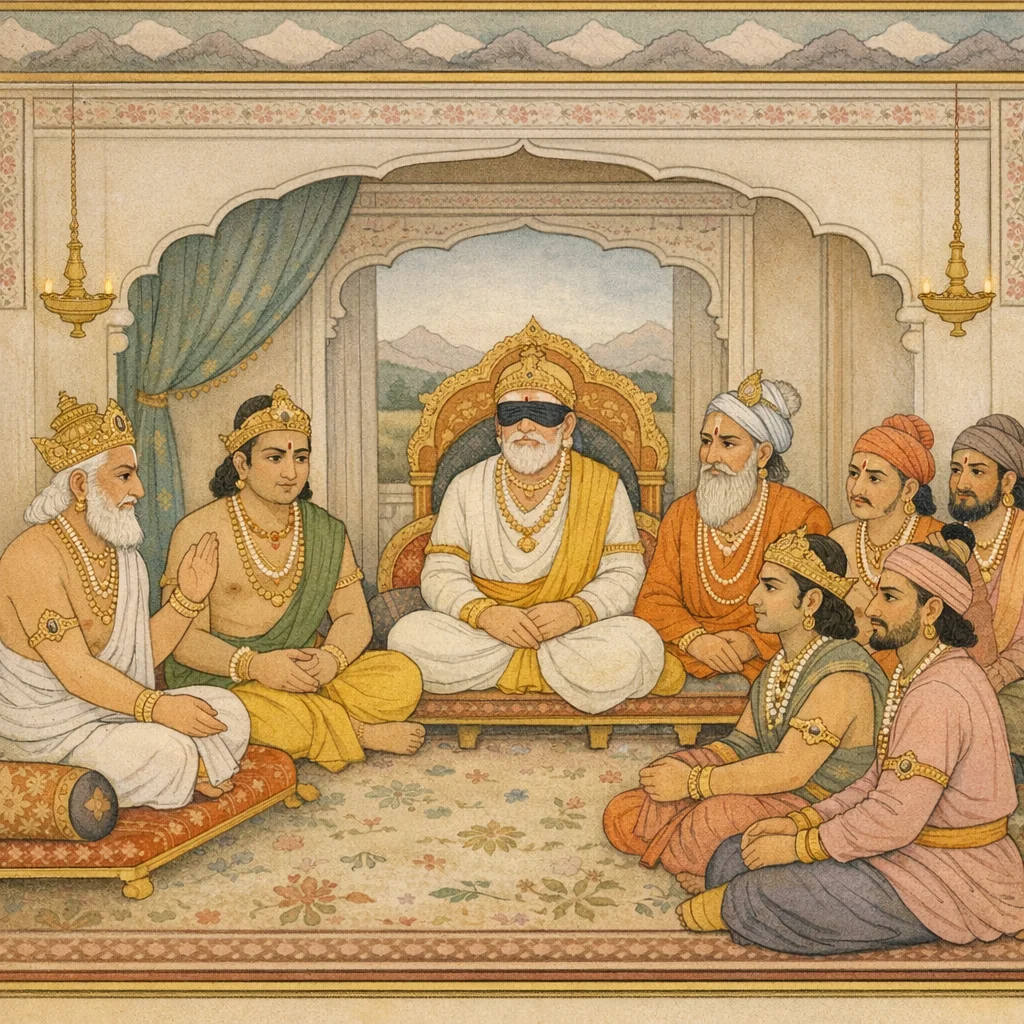
Adhyaya 84
Dhṛtarāṣṭra’s Reception Plan for Janārdana (Kṛṣṇa): Gifts, Procession, and Protocol
Upa-parva: Kṛṣṇāgamana / Kṛṣṇa-sandhi (Krishna’s Arrival and Reception at Hastināpura)
Dhṛtarāṣṭra informs his counselor (kṣattṛ/Vidura contextually) that Janārdana has come from Upaplavya and is staying at Vṛkasthala, expected to arrive in the morning. He extols Kṛṣṇa as leader among the Sātvatas and protector of the flourishing Vṛṣṇi lineage, whose intellect is revered as Bṛhaspati’s is by the gods. He then outlines a formal program of honor: elaborate pūjā and an extensive inventory of gifts—gold-adorned chariots with Bāhlika horses, powerful elephants with attendants, male and female servants, fine woolen textiles, numerous hides from distant regions, a radiant jewel, swift conveyances, and sustained provisions exceeding Kṛṣṇa’s retinue needs. Dhṛtarāṣṭra orders public decorations (flags and banners), cleansing and sprinkling of roads, and the rapid preparation of a superior residence—Duḥśāsana’s house—described as richly appointed with palaces and treasures. The chapter’s technical thrust is the political use of hospitality: ceremonial honor and material generosity as tools to shape the reception of a high-authority envoy during a fragile diplomatic moment.
Chapter Arc: हस्तिनापुर में दूतों से यह अद्भुत समाचार फैलता है कि पाण्डवों के हित में स्वयं मधुसूदन श्रीकृष्ण आ रहे हैं—और घर-घर स्त्री, बालक, वृद्ध तक उसी की चर्चा करते हैं। → धृतराष्ट्र के सम्मुख सभा में दुर्योधन, द्रोण, संजय, विदुर और अन्य महात्मा एकत्र होते हैं। भीष्म आदि यह आग्रह करते हैं कि कृष्ण का यथोचित सम्मान ही सनातन धर्म है—पूजा से सुख, अपूजा से अनिष्ट। साथ ही यह भी चिंता उठती है कि कैसे ऐसा सत्कार हो जिससे कृष्ण का हृदय प्रसन्न हो और वार्ता अनुकूल बने। → भीष्म दुर्योधन से स्पष्ट कहते हैं—‘ऐसा उपाय करो कि कृष्ण की प्रीति तुम पर हो’; और सभा एक स्वर से इस प्रस्ताव की प्रशंसा कर धृतराष्ट्र के सामने इसे नीति और धर्म का अनिवार्य कर्तव्य ठहराती है। → कौरव-पक्ष की अनुमति से मार्ग में विश्राम-स्थल, सभाएँ और सत्कार की व्यवस्था बनती है; पर श्रीकृष्ण उन बाह्य वैभवों को देखे बिना, लक्ष्य-निष्ठ होकर पाण्डव-कार्य हेतु आगे बढ़ते हैं। → कृष्ण का हस्तिनापुर-प्रवेश निकट है—क्या यह सत्कार शांति का द्वार बनेगा, या केवल युद्ध-पूर्व औपचारिकता?
Shlokas
Verse 1
2: बछ। अकाल पञ्चाशीतितमोब् ध्याय: दुर्योधनका धृतराष्ट्र आदिकी अनुमतिसे श्रीकृष्णके स्वागत-सत्कारके लिये मार्गमें विश्रामस्थान बनवाना वैशम्पायन उवाच तथा दूतै: समाज्ञाय प्रयान्तं मधुसूदनम् । धृतराष्ट्रोडब्रवीद् भीष्ममर्चयित्वा महाभुजम्,वैशम्पायनजी कहते हैं--जनमेजय! दूतोंके द्वारा भगवान् मधुसूदनके आगमनका समाचार जानकर धृतराष्ट्रके शरीरमें रोमांच हो आया। उन्होंने महाबाहु भीष्म, द्रोण, संजय तथा परम बुद्धिमान् विदुरका यथावत् सत्कार करके मन्त्रियोंसहित दुर्योधनसे इस प्रकार कहा--
Vaiśampāyana said: Having learned through messengers that Madhusūdana (Kṛṣṇa) was on his way, Dhṛtarāṣṭra—after duly honoring the mighty-armed Bhīṣma—spoke. The scene signals the court’s outward readiness to receive Kṛṣṇa with respect, even as the moral crisis of the coming war presses upon them.
Verse 2
द्रोणं च संजयं चैव विदुरं च महामतिम् । दुर्योधनं सहामात्यं हृष्टरोमाब्रवीदिदम्,वैशम्पायनजी कहते हैं--जनमेजय! दूतोंके द्वारा भगवान् मधुसूदनके आगमनका समाचार जानकर धृतराष्ट्रके शरीरमें रोमांच हो आया। उन्होंने महाबाहु भीष्म, द्रोण, संजय तथा परम बुद्धिमान् विदुरका यथावत् सत्कार करके मन्त्रियोंसहित दुर्योधनसे इस प्रकार कहा--
Vaiśampāyana said: Thrilled with gooseflesh on hearing—through the messengers—the news of Lord Madhusūdana’s arrival, Dhṛtarāṣṭra duly honored Bhīṣma of mighty arms, Droṇa, Saṃjaya, and the supremely wise Vidura; then, with his ministers present, he addressed Duryodhana as follows. The scene underscores how even a ruler clouded by attachment recognizes Kṛṣṇa’s moral authority and the gravity of the impending decision between peace and war.
Verse 3
अद्भुतं महदाश्चर्य श्रूयते कुरुनन्दन । स्त्रियो बालाश्च वृद्धाश्व कथयन्ति गृहे गृहे,“कुरुनन्दन! एक अद्भुत और अत्यन्त आश्वर्यकी बात सुनायी देती है। घर-घरमें स्त्री बालक और बूढ़े इसीकी चर्चा करते हैं। जो यहाँके निवासी हैं, वे तथा जो बाहरसे आये हुए हैं, वे भी आदरपूर्वक उसी बातको कहते हैं। चौराहोंपर और सभाओंमें भी पृथक्-पृथक् वही चर्चा चलती है
Vaiśampāyana said: “O joy of the Kurus, a great and wondrous marvel is being heard. In every household, women, children, and the aged are speaking of it.”
Verse 4
सत्कृत्याचक्षते चान्ये तथैवान्ये समागता: । पृथग्वादाश्न वर्तन्ते चत्वरेषु सभासु च,“कुरुनन्दन! एक अद्भुत और अत्यन्त आश्वर्यकी बात सुनायी देती है। घर-घरमें स्त्री बालक और बूढ़े इसीकी चर्चा करते हैं। जो यहाँके निवासी हैं, वे तथा जो बाहरसे आये हुए हैं, वे भी आदरपूर्वक उसी बातको कहते हैं। चौराहोंपर और सभाओंमें भी पृथक्-पृथक् वही चर्चा चलती है
Vaiśampāyana said: “Some speak of it with due honour, and likewise others who have assembled here also speak of the same. In the crossroads and in the public halls, too, separate groups carry on that very discussion.”
Verse 5
उपायास्यति दाशार्ह: पाण्डवार्थे पराक्रमी । स नो मान्यश्नव पूज्यश्व सर्वथा मधुसूदन:,“वह बात यह है कि पाण्डवोंकी ओरसे परम पराक्रमी भगवान् श्रीकृष्ण यहाँ पधारेंगे। वे मधुसूदन हमलोगोंके माननीय तथा सब प्रकारसे पूजनीय हैं
Vaiśampāyana said: “The mighty Dāśārha (Kṛṣṇa) will soon arrive here on behalf of the Pāṇḍavas. That Madhusūdana is worthy of our honor and, in every way, deserving of reverent worship.”
Verse 6
तस्मिन् हि यात्रा लोकस्य भूतानामीश्वरो हि सः | तस्मिन् धृतिश्च वीर्य च प्रज्ञा चौजश्न माधवे,“सम्पूर्ण लोकोंका जीवन उन्हींपर निर्भर है, क्योंकि वे सम्पूर्ण भूतोंके अधीश्वर हैं। उन माधवमें धैर्य, पराक्रम, बुद्धि और तेज सब कुछ है
For upon him depends the very course and continuance of the world; indeed, he is the sovereign lord of all beings. In that Mādhava reside steadfastness and courage, discerning wisdom and radiant power—qualities by which the welfare of all is upheld.
Verse 7
स मान्यतां नरश्रेष्ठ: स हि धर्म: सनातन: । पूजितो हि सुखाय स्यादसुख: स्यादपूजित:,“उन नरश्रेष्ठ श्रीकृष्णका यहाँ सम्मान होना चाहिये; क्योंकि वे सनातन धर्मस्वरूप हैं। सम्मानित होनेपर वे हमारे लिये सुखदायक होंगे और सम्मानित न होनेपर हमारे दुःखके कारण बन जायँगे
Let Kṛṣṇa, best of men, be honored here; for he is the very form of the eternal Dharma. When revered, he will bring us well-being; when not revered, he will become the cause of our sorrow.
Verse 8
स चेत् तुष्यति दाशार्ह उपचारैररिंदम: । कृष्णात् स्निभिप्रायान् प्राप्स्याम: सर्वराजसु,'शत्रुओंका दमन करनेवाले भगवान् श्रीकृष्ण यदि हमारे सत्कार-साधथनोंसे संतुष्ट हो जायँगे, तब हम समस्त राजाओंमें उनसे अपने सारे मनोरथ प्राप्त कर लेंगे
Vaiśaṃpāyana said: “If the Dāśārha—Śrī Kṛṣṇa, subduer of foes—be pleased by our honors and hospitality, then through Kṛṣṇa we shall win, among all the kings, the fulfillment of our aims.”
Verse 9
तस्य पूजार्थमद्यैव संविधत्स्व परंतप । सभा: पथि विधीयन्तां सर्वकामसमन्विता:,'परंतप! तुम श्रीकृष्णके स्वागत-सत्कारके लिये आजसे ही तैयारी करो। मार्गमें अनेक विश्रामस्थान बनवाओ और उनमें सब प्रकारकी मनोनुकूल उपभोग-सामग्री प्रस्तुत करो
Vaiśaṃpāyana said: “O scorcher of foes, begin the arrangements today itself for his reception and honor. Let rest-halls be set up along the road, fully supplied with every comfort and desired provision.”
Verse 10
यथा प्रीतिर्महाबाहो त्वयि जायेत तस्य वै । तथा कुरुष्व गान्धारे कथं वा भीष्म मन्यसे,“महाबाहु गान्धारीनन्दन! तुम ऐसा प्रयत्न करो, जिससे श्रीकृष्णके हृदयमें तुम्हारे प्रति प्रेम उत्पन्न हो जाय। अथवा भीष्मजी! इस विषयमें आपकी क्या सम्मति है?”
Vaiśaṃpāyana said: “O mighty-armed one, O son of Gāndhārī, make such an effort that affection may arise in Śrī Kṛṣṇa’s heart toward you. Or else, Bhīṣma—what, in this matter, is your considered opinion?”
Verse 11
ततो भीष्मादय: सर्वे धृतराष्ट्र जनाधिपम् । ऊचु: परममित्येवं पूजयन्तो5स्थ तद् वच:,तब भीष्म आदि सब लोगोंने उस प्रस्तावकी भूरि-भूरि प्रशंसा करते हुए राजा धृतराष्ट्रसे कहा--“बहुत उत्तम बात है”
Then Bhīṣma and all the others, honoring that statement of King Dhṛtarāṣṭra—the lord of the people—said, “Excellent indeed!” Thus they praised his proposal with great approval.
Verse 12
तेषामनुमतं ज्ञात्वा राजा दुर्योधनस्तदा । सभावास्तूनि रम्याणि प्रदेष्टमुपचक्रमे,उन सबकी अनुमति जानकर राजा दुर्योधनने उस समय जगह-जगह सुन्दर सभामण्डप तथा विश्रामस्थान बनवानेके लिये आदेश जारी किया
Having learned that they had given their consent, King Duryodhana then set about arranging for delightful assembly-halls and resting-places to be prepared at various locations.
Verse 13
ततो देशेषु देशेषु रमणीयेषु भागश: । सर्वरत्नसमाकीर्णा: सभाश्षक्कुरनेकश:,तब कारीगरोंने विभिन्न रमणीय प्रदेशोंमें अलग-अलग सब प्रकारके रत्नोंसे सम्पन्न अनेक विश्राम-स्थान बनाये
Then, in many different regions—each chosen for its charm and beauty—craftsmen built, in separate allotments, numerous assembly-halls and resting places, richly adorned and strewn with every kind of precious gem.
Verse 14
आसनानि विचित्राणि युतानि विविधैर्गुणै: । स्त्रियो गन्धानलंकारान् सूक्ष्माणि वसनानि च,नाना प्रकारके गुणोंसे युक्त विचित्र आसन, स्त्रियाँ, सुगन्धित पदार्थ, आभूषण, महीन वस्त्र, गुणकारक अन्न और पेय पदार्थ, भाँति-भाँतिके भोजन तथा सुगन्धित पुष्पमालाएँ आदि वस्तुओंको राजा दुर्योधनने उन स्थानोंमें रखवाया
Vaiśaṃpāyana said: “There were wondrous seats furnished with many kinds of excellences; women attendants, perfumes, ornaments, and fine garments as well.”
Verse 15
गुणवन्त्यन्नपानानि भोज्यानि विविधानि च | माल्यानि च सुगन्धीनि तानि राजा ददौ ततः,नाना प्रकारके गुणोंसे युक्त विचित्र आसन, स्त्रियाँ, सुगन्धित पदार्थ, आभूषण, महीन वस्त्र, गुणकारक अन्न और पेय पदार्थ, भाँति-भाँतिके भोजन तथा सुगन्धित पुष्पमालाएँ आदि वस्तुओंको राजा दुर्योधनने उन स्थानोंमें रखवाया
Vaiśampāyana said: Then the king had provisions of food and drink of excellent quality, many kinds of prepared dishes, and fragrant garlands supplied and placed there.
Verse 16
विशेषतश्च वासार्थ सभां ग्रामे वृकस्थले । विदधे कौरवो राजा बहुरत्नां मनोरमाम्,विशेषतः वृकस्थल नामक ग्राममें निवास करनेके लिये कुरुराज दुर्योधनने जो विश्रामस्थान बनवाया था, वह बड़ा मनोरम तथा प्रचुर रत्नराशिसे सम्पन्न था
Vaiśampāyana said: In particular, for the purpose of residence, the Kaurava king had a splendid assembly-hall constructed in the village called Vṛkasthala—charming to behold and richly adorned with many treasures and gems.
Verse 17
एतदू विधाय वै सर्व देवारहमतिमानुषम् । आचर्ख्यौ धृतराष्ट्राय राजा दुर्योधनस्तदा,मनुष्योंके लिये अत्यन्त दुर्लभ यह सब देवोचित व्यवस्था करके राजा दुर्योधनने धृतराष्ट्रको इसकी सूचना दे दी
Vaiśampāyana said: Having thus arranged everything in a manner worthy of the gods—something exceedingly beyond the ordinary reach of men—King Duryodhana then reported the whole matter to Dhṛtarāṣṭra.
Verse 18
ता: सभा: केशव: सर्वा रत्नानि विविधानि च | असमीक्ष्यैव दाशा्ह उपायात् कुरुसझ तत्,परंतु यदुकुलतिलक श्रीकृष्ण उन विश्रामस्थानों तथा नाना प्रकारके रत्नोंकी ओर दृष्टिपाततक न करके कौरवोंके निवासस्थान हस्तिनापुरकी ओर बढ़ते चले गये
Vaiśaṃpāyana said: Keśava (Kṛṣṇa), the Dāśārha, without so much as casting a glance at those many halls of rest and the various precious gems, went onward toward the place known as the Kuru residence—Hastināpura. The tale thus marks his disciplined indifference to luxury and display, for his mind remained fixed upon the grave duty of his mission among the Kurus.
Verse 84
इस प्रकार श्रीमह्ााभारत उद्योगपर्वके अन्तर्गत भगवद्यानपर्वमें श्रीकृष्णका हस्तिनापुरको प्रस्थानविषयक चौरासीवाँ अध्याय पूरा हुआ
Thus ends the eighty-fourth chapter of the Bhagavad-yāna section within the Udyoga Parva of the Śrī Mahābhārata, describing Śrī Kṛṣṇa’s departure for Hastināpura—an episode that frames his mission of diplomacy and the righteous effort to avert war through dharma-guided counsel.
Verse 85
इति श्रीमहाभारते उद्योगपर्वणि भगवद्यानपर्वणि मार्गे सभानिर्माणे पज्चाशीतितमो<ध्याय:
Thus, in the Śrī Mahābhārata, within the Udyoga Parva—specifically in the Bhagavad-yāna section concerning the Lord’s embassy—in the episode of constructing the assembly hall on the journey, the eighty-fifth chapter ends. This colophon marks the close of a narrative unit, setting the events within the ethical tension of diplomacy undertaken to avert war.
Frequently Asked Questions
The tension lies between sincere atithi-dharma (honoring a revered guest/envoy) and instrumental generosity—using ritual and wealth to manage influence without addressing the substantive ethical dispute driving negotiations.
Legitimacy in governance is not secured by spectacle alone; correct protocol and generosity must align with truthful counsel and just decision-making, otherwise ceremonial virtue becomes a substitute for ethical resolution.
No explicit phalaśruti appears in the provided verses; the chapter operates as narrative-ethical documentation, where meaning is inferred from the contrast between outward honor and the unresolved political-moral crisis.