Adhyaya 73
Udyoga Parva, Adhyāya 73 — Kr̥ṣṇa’s Appraisal of Bhīma’s Altered Temper and Reaffirmation of Martial Resolve
Upa-parva: Udyoga Parva — Krishna’s Consolation and Reorientation of Bhima (Chapter 73 context unit)
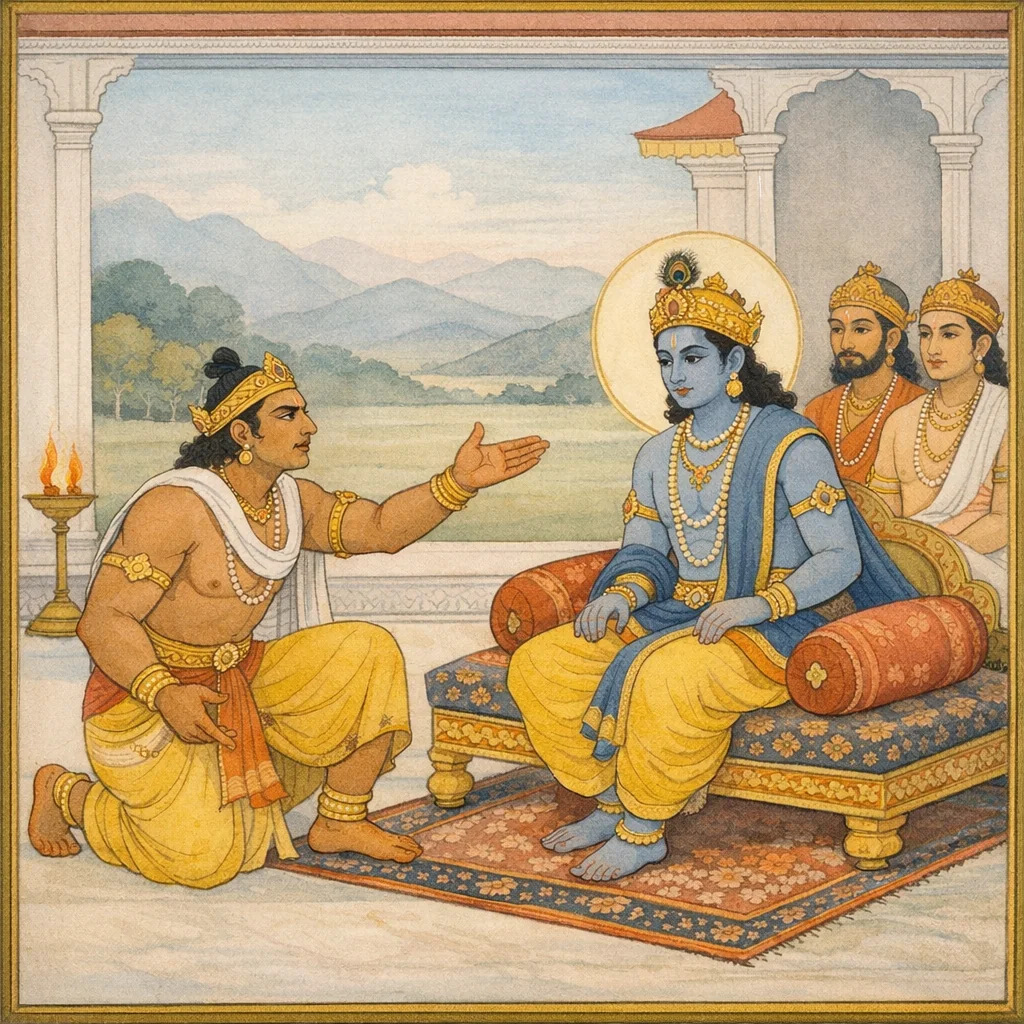
Vaiśaṃpāyana narrates that Kr̥ṣṇa (Keśava), appearing almost amused by the rarity of Bhīma’s softened speech, evaluates the incongruity as something like “lightness in a mountain” or “coolness in fire.” Kr̥ṣṇa then addresses Bhīma compassionately yet firmly, describing outward markers of agitation: sleeplessness, harsh and restless speech, heated breathing, solitary lamentation, sudden laughter and weeping, prolonged silence with head on knees, and repeated frowning—symptoms attributed to anger and inner turmoil. He notes that uninformed observers may misjudge such conduct as instability. Kr̥ṣṇa recalls Bhīma’s earlier public vow among his brothers to strike Duryodhana with the gadā, asserting its certainty and urging a return to composure. He challenges Bhīma’s perception of adverse omens and fear at the very moment when war-time decision is imminent, framing the wavering mind as transient and wind-tossed. The chapter concludes with a directive: remember one’s deeds, lineage, and kṣatriya capacity; rise from dejection, reject despondency, and regain stable resolve aligned with duty and prior commitment.
Chapter Arc: कृष्ण के शान्ति-प्रयास की पृष्ठभूमि में भीमसेन का उग्र स्वर उठता है—वह मधुसूदन से कहता है कि कुरुओं में शान्ति तभी टिकेगी जब दुर्योधन की प्रकृति को पहचानकर उसी के अनुरूप नीति अपनाई जाए। → भीम दुर्योधन के स्वभाव का कठोर चित्र खींचता है—अमर्षी, जातसंरम्भी, श्रेय-द्वेषी, ऐश्वर्य-मद में मतवाला और पाण्डवों से वैर बाँध चुका; वह चेतावनी देता है कि ऐसे व्यक्ति को केवल ‘साम’ से साधना भ्रम है। → भीम दुर्योधन को ‘कुलाङ्गार’ और ‘युगान्त-कालसम्भृत’ विनाश-कारक के रूप में रखकर अतीत के अठारह विख्यात राजाओं का उदाहरण देता है, जिन्होंने धर्म-विप्लव के समय कुल-नाश और सुहृद-बान्धवों के उच्छेद का कारण बनकर इतिहास में कलंक छोड़ा—और कहता है कि दुर्योधन भी उसी पंक्ति का है। → भीम स्पष्ट करता है कि वह शान्ति-स्थापन के हित में ही बोल रहा है; युधिष्ठिर भी शान्ति चाहता है, अर्जुन स्वभावतः दयालु है और युद्ध-लोलुप नहीं—परन्तु शान्ति का मार्ग दुर्योधन की हठ-प्रकृति से टकराए बिना पूरा नहीं होगा। → कृष्ण के दूत-धर्म और शान्ति-नीति के सामने भीम की यह भविष्यवाणी खड़ी रह जाती है—क्या दुर्योधन समझेगा, या शान्ति-प्रयास विफल होकर युद्ध को अवश्यंभावी बना देगा?
Shlokas
Verse 1
अपन बक। ] अत्णशाए<म चतु:ःसप्ततितमो< ध्याय: भीमसेनका शान्तिविषयक प्रस्ताव भीम उवाच यथा यथैव शान्ति: स्यात् कुरूणां मधुसूदन । तथा तथैव भाषेथा मा सम युद्धेन भीषये:,भीमसेन बोले--मधुसूदन! आप कौरवोंके बीचमें वैसी ही बातें कहें, जिससे हमलोगोंमें शान्ति स्थापित हो सके। युद्धकी बात सुनाकर उन्हें भयभीत न कीजियेगा
Bhima said: “Madhusudana, speak—again and again—in such a way that peace may truly be established among the Kurus. Speak accordingly, and do not frighten them by raising the prospect of war.”
Verse 2
अमर्षी जातसंरम्भ: श्रेयोद्वेषी महामना: । नोग्र॑ दुर्योधनो वाच्य: साम्नैवैनं समाचरे:,दुर्योधन असहनशील, क्रोधमें भरा रहनेवाला, श्रेयका विरोधी और मनमें बड़े-बड़े हौसले रखनेवाला है। अत: उसके प्रति कठोर बात न कहियेगा, उसे सामनीतिके द्वारा ही समझानेका प्रयत्न कीजियेगा
Duryodhana is intolerant, quick to flare with anger, hostile to what is best, and great-souled yet filled with proud resolve. Therefore do not speak harshly to him; try to counsel him only through sāma—gentle persuasion.
Verse 3
प्रकृत्या पापसत्त्वश्न तुल्यचेतास्तु दस्युभि: । ऐश्वर्यमदमत्तश्न कृतवैरश्न पाण्डवै:,दुर्योधन स्वभावसे ही पापात्मा है। उसके हृदयमें डाकुओंके समान क्रूरता भरी रहती है। वह ऐश्वर्यके मदसे उन्मत्त हो गया है और पाण्डवोंके साथ सदा वैर बाँधे रखता है
Duryodhana is evil by nature, his mind as cruel as that of bandits. Intoxicated by the pride of power and prosperity, he has deliberately bound himself to lasting enmity with the Pāṇḍavas—driven by arrogance and hostility rather than dharma.
Verse 4
अदीर्घदर्शी निष्टूरी क्षेप्ता क्रूरपराक्रम: । दीर्घमन्युरनेयश्व पापात्मा निकृतिप्रिय:,वह अदूरदर्शी, निषह्ठर वचन बोलनेवाला, परनिन्दक, क्रूर पराक्रमी, दीर्घकालतक क्रोधको मनमें संचित रखनेवाला, शिक्षा देने या सन्मार्गपर ले जाया जानेकी योग्यतासे रहित, पापात्मा तथा शठतासे प्रेम रखनेवाला है
He is short-sighted in judgment, harsh in speech, a scoffer and reviler of others, fierce in violent prowess, one who nurses anger for a long time, unfit to be guided onto the right path, sinful at heart, and fond of deceit.
Verse 5
ग्रियेतापि न भज्येत नैव जह्यात् स्वकं मतम् । तादृशेन शम: कृष्ण मन्ये परमदुष्कर:,श्रीकृष्ण! वह मर जायगा, किंतु झुक न सकेगा। अपनी टेक नहीं छोड़ेगा। मैं समझता हूँ, ऐसे दुराग्रही मनुष्यके साथ संधि स्थापित करना अत्यन्त दुष्कर कार्य है
O Krishna! He may be crushed, yet he will not break; he will never abandon his own fixed opinion. Therefore I judge that making peace with a man of such stubborn obstinacy is an exceedingly difficult task.
Verse 6
सुहृदामप्यवाचीनस्त्यक्तधर्मा प्रियानृतः । प्रतिहन्त्येव सुह्दां वाचश्वैव मनांसि च,दुर्योधन हितैषी सुहृदोंके भी विपरीत आचरण करनेवाला है। उसने धर्मको तो त्याग ही दिया है, झूठको भी प्रिय मानकर अपना लिया है। वह मित्रोंकी भी बातोंका खण्डन करता है और उनके हृदयको चोट पहुँचाता है
Even toward his well-wishers, Duryodhana behaves in a base manner. Having abandoned dharma and taken a liking to falsehood, he strikes at his friends—rejecting their counsel and wounding their hearts as well as their words.
Verse 7
स मन्युवशमापतन्न: स्वभावं दुष्टमास्थित: । स्वभावात् पापमभ्येति तृणैश्छन्न इवोरग:,उसने क्रोधके वशीभूत होकर दुष्ट स्वभावका आश्रय ले रखा है। वह तिनकोंमें छिपे सर्पकी भाँति स्वभावतः दूसरोंकी हिंसा करता है
He has fallen under the sway of wrath and has taken refuge in a wicked disposition. By his very nature he moves toward sin, like a serpent hidden beneath dry grass—concealed, yet ready to strike and harm others.
Verse 8
दुर्योधनो हि यत्सेन: सर्वथा विदितस्तव । यच्छीलो यत्स्वभावश्न यद्धलो यत्पराक्रम:,भगवन! दुर्योधनकी सेना जैसी है, उसका शील और स्वभाव जैसा है, उसका बल और पराक्रम जिस प्रकारका है, वह सब कुछ आपको सब प्रकारसे ज्ञात है
Bhīma said: “You know Duryodhana completely—what his army is like in every respect, what his character and temperament are, and what sort of strength and valor he possesses.”
Verse 9
पुरा प्रसन्ना: कुरव: सहपुत्रास्तथा वयम् । इन्द्रज्येष्ठा इवा भूम मोदमाना: सबान्धवा:
Bhima recalls an earlier time when the Kurus, together with their sons, and we too, were all content and harmonious—like the gods with Indra as their foremost—rejoicing in unity along with all our kinsmen. The line evokes the ethical contrast between former familial concord and the present breakdown of kinship-dharma that has led toward conflict.
Verse 10
पूर्वकालमें पुत्र तथा बन्धु-बान्धवोंसहित कौरव और हमलोग इन्द्र आदि देवताओंकी भाँति परस्पर मिलकर बड़ी प्रसन्नता और आनन्दके साथ रहते थे ।। दुर्योधनस्य क्रोधेन भरता मधुसूदन । धक्ष्यन्ते शिशिरापाये वनानीव हुताशनै:,परंतु मधुसूदन! जैसे शिशिरके अन्तमें (ग्रीष्मकाल आनेपर) वन दावानलसे जलने लगते हैं उसी प्रकार सम्पूर्ण भरतवंशी इस समय दुर्योधनकी क्रोधाग्निसे जलनेवाले हैं
Bhima said: “Formerly, together with our sons and our kinsmen, the Kauravas and we lived in mutual harmony—like Indra and the other gods—meeting one another with great gladness and joy. But now, O Madhusudana, because of Duryodhana’s wrath, the Bharatas will be consumed: just as forests, at the end of winter, are set ablaze by fire, so will the whole Bharata line be burned by the fire of Duryodhana’s anger.”
Verse 11
अष्टादशेमे राजान: प्रख्याता मधुसूदन । ये समुच्चिच्छिदुर्जातीन् सुहृदश्च॒ सबान्धवान्,श्रीकृष्ण! आगे बताये जानेवाले ये अठारह विख्यात नरेश हैं, जिन्होंने बन्धु- बान्धवोंसहित कुट॒म्बीजनों तथा हितैषी सुहृदोंका संहार कर डाला था
Bhima said: “O Madhusūdana, these are the eighteen renowned kings—men who utterly destroyed their own kin-groups, and who slaughtered even their well-wishing friends together with their relatives.”
Verse 12
असुराणां समृद्धानां ज्वलतामिव तेजसा । पर्यायकाले धर्मस्य प्राप्त कलिरजायत,जैसे धर्मके विप्लवका समय उपस्थित होनेपर तेजसे प्रज्वलित होनेवाले समृद्धिशाली असुरोंमें भयंकर कलह उत्पन्न हुआ था, उसी प्रकार हैहयवंशमें मुदावर्त, नीपकुलमें जनमेजय, तालजंघोंके वंशमें बहुल, कृमिकुलमें उद्ण्ड वसु, सुवीरोंके वंशमें अजबिंदु, सुराष्ट्रकुलमें रुषद्धिक, बलीहवंशमें अर्कज, चीनोंके कुलमें धौतमूलक, विदेहवंशमें हयग्रीव, महौजा नामक क्षत्रियोंके कुलमें वरयु, सुन्दरवंशी क्षत्रियोंमें बाहु, दीप्ताक्षकुलमें पुरूरवा, चेदि और मत्स्यदेशमें सहज, प्रवीरवंशमें वृषध्वज, चन्द्रवत्सकुलमें धारण, मुकुटवंशमें विगाहन तथा नन्दिवेगकुलमें शम--ये सभी कुलांगार एवं नराधम क्षत्रिय युगान्तकाल आनेपर ऊपर बताये अनुसार भिन्न-भिन्न कुलोंमें प्रकट हुए थे
Bhima said: “Just as, among prosperous Asuras blazing with power, a dreadful strife arose when the cycle turned and the time came for Dharma to wane, so too, when the age approached its end, base and ruinous Kshatriyas manifested in many royal lineages.”
Verse 13
हैहयानां मुदावर्तो नीपानां जनमेजय: । बहुलस्तालजंघानां कृमीणामुद्धतो वसु:,जैसे धर्मके विप्लवका समय उपस्थित होनेपर तेजसे प्रज्वलित होनेवाले समृद्धिशाली असुरोंमें भयंकर कलह उत्पन्न हुआ था, उसी प्रकार हैहयवंशमें मुदावर्त, नीपकुलमें जनमेजय, तालजंघोंके वंशमें बहुल, कृमिकुलमें उद्ण्ड वसु, सुवीरोंके वंशमें अजबिंदु, सुराष्ट्रकुलमें रुषद्धिक, बलीहवंशमें अर्कज, चीनोंके कुलमें धौतमूलक, विदेहवंशमें हयग्रीव, महौजा नामक क्षत्रियोंके कुलमें वरयु, सुन्दरवंशी क्षत्रियोंमें बाहु, दीप्ताक्षकुलमें पुरूरवा, चेदि और मत्स्यदेशमें सहज, प्रवीरवंशमें वृषध्वज, चन्द्रवत्सकुलमें धारण, मुकुटवंशमें विगाहन तथा नन्दिवेगकुलमें शम--ये सभी कुलांगार एवं नराधम क्षत्रिय युगान्तकाल आनेपर ऊपर बताये अनुसार भिन्न-भिन्न कुलोंमें प्रकट हुए थे
“Among the Haihayas arose Mudāvarta; among the Nīpas, Janamejaya; among the Tālajaṅghas, Bahula; and among the Kṛmis, the arrogant Vasu—”
Verse 14
अजबिन्दु: सुवीराणां सुराष्ट्राणां रुषर्द्धिक: । अर्कजश्न बलीहानां चीनानां धौतमूलक:,जैसे धर्मके विप्लवका समय उपस्थित होनेपर तेजसे प्रज्वलित होनेवाले समृद्धिशाली असुरोंमें भयंकर कलह उत्पन्न हुआ था, उसी प्रकार हैहयवंशमें मुदावर्त, नीपकुलमें जनमेजय, तालजंघोंके वंशमें बहुल, कृमिकुलमें उद्ण्ड वसु, सुवीरोंके वंशमें अजबिंदु, सुराष्ट्रकुलमें रुषद्धिक, बलीहवंशमें अर्कज, चीनोंके कुलमें धौतमूलक, विदेहवंशमें हयग्रीव, महौजा नामक क्षत्रियोंके कुलमें वरयु, सुन्दरवंशी क्षत्रियोंमें बाहु, दीप्ताक्षकुलमें पुरूरवा, चेदि और मत्स्यदेशमें सहज, प्रवीरवंशमें वृषध्वज, चन्द्रवत्सकुलमें धारण, मुकुटवंशमें विगाहन तथा नन्दिवेगकुलमें शम--ये सभी कुलांगार एवं नराधम क्षत्रिय युगान्तकाल आनेपर ऊपर बताये अनुसार भिन्न-भिन्न कुलोंमें प्रकट हुए थे
“Among the Suvīras, Ajabindu; among the Surāṣṭras, Ruṣarddhika; among the Balīhas, Arkaja; and among the Cīnas, Dhauta-mūlaka—”
Verse 15
हयग्रीवो विदेहानां वरयुश्न महौजसाम् । बाहु: सुन्दरवंशानां दीप्ताक्षाणां पुरूरवा:,जैसे धर्मके विप्लवका समय उपस्थित होनेपर तेजसे प्रज्वलित होनेवाले समृद्धिशाली असुरोंमें भयंकर कलह उत्पन्न हुआ था, उसी प्रकार हैहयवंशमें मुदावर्त, नीपकुलमें जनमेजय, तालजंघोंके वंशमें बहुल, कृमिकुलमें उद्ण्ड वसु, सुवीरोंके वंशमें अजबिंदु, सुराष्ट्रकुलमें रुषद्धिक, बलीहवंशमें अर्कज, चीनोंके कुलमें धौतमूलक, विदेहवंशमें हयग्रीव, महौजा नामक क्षत्रियोंके कुलमें वरयु, सुन्दरवंशी क्षत्रियोंमें बाहु, दीप्ताक्षकुलमें पुरूरवा, चेदि और मत्स्यदेशमें सहज, प्रवीरवंशमें वृषध्वज, चन्द्रवत्सकुलमें धारण, मुकुटवंशमें विगाहन तथा नन्दिवेगकुलमें शम--ये सभी कुलांगार एवं नराधम क्षत्रिय युगान्तकाल आनेपर ऊपर बताये अनुसार भिन्न-भिन्न कुलोंमें प्रकट हुए थे
“Among the Videhas arose Hayagrīva; among the Mahaujas, Varayu; among the Sundara lineage, Bāhu; and among the Dīptākṣas, Purūravas—”
Verse 16
सहजकश्नेदिमत्स्यानां प्रवीराणां वृषध्वज: । धारणभश्रन्द्रवत्सानां मुकुटानां विगाहन:,जैसे धर्मके विप्लवका समय उपस्थित होनेपर तेजसे प्रज्वलित होनेवाले समृद्धिशाली असुरोंमें भयंकर कलह उत्पन्न हुआ था, उसी प्रकार हैहयवंशमें मुदावर्त, नीपकुलमें जनमेजय, तालजंघोंके वंशमें बहुल, कृमिकुलमें उद्ण्ड वसु, सुवीरोंके वंशमें अजबिंदु, सुराष्ट्रकुलमें रुषद्धिक, बलीहवंशमें अर्कज, चीनोंके कुलमें धौतमूलक, विदेहवंशमें हयग्रीव, महौजा नामक क्षत्रियोंके कुलमें वरयु, सुन्दरवंशी क्षत्रियोंमें बाहु, दीप्ताक्षकुलमें पुरूरवा, चेदि और मत्स्यदेशमें सहज, प्रवीरवंशमें वृषध्वज, चन्द्रवत्सकुलमें धारण, मुकुटवंशमें विगाहन तथा नन्दिवेगकुलमें शम--ये सभी कुलांगार एवं नराधम क्षत्रिय युगान्तकाल आनेपर ऊपर बताये अनुसार भिन्न-भिन्न कुलोंमें प्रकट हुए थे
Bhīma said: “In the lands of Cedi and Matsya there arose Sahaja; among the Pravīras, Vṛṣadhvaja; among the (so‑called) Cāndravatsa lineage, Dhāraṇa; and among the Mukuṭas, Vigāhana. Thus, as in times when dharma is overturned and the world’s order is shaken, fierce and ruinous forces flare up, so too do degraded kṣatriyas appear in various clans at the approach of an age’s end—bringing strife and moral collapse rather than protection.”
Verse 17
शमश्न नन्दिवेगानामित्येते कुलपांसना: । युगान्ते कृष्ण सम्भूता: कुले कुपुरुषाधमा:,जैसे धर्मके विप्लवका समय उपस्थित होनेपर तेजसे प्रज्वलित होनेवाले समृद्धिशाली असुरोंमें भयंकर कलह उत्पन्न हुआ था, उसी प्रकार हैहयवंशमें मुदावर्त, नीपकुलमें जनमेजय, तालजंघोंके वंशमें बहुल, कृमिकुलमें उद्ण्ड वसु, सुवीरोंके वंशमें अजबिंदु, सुराष्ट्रकुलमें रुषद्धिक, बलीहवंशमें अर्कज, चीनोंके कुलमें धौतमूलक, विदेहवंशमें हयग्रीव, महौजा नामक क्षत्रियोंके कुलमें वरयु, सुन्दरवंशी क्षत्रियोंमें बाहु, दीप्ताक्षकुलमें पुरूरवा, चेदि और मत्स्यदेशमें सहज, प्रवीरवंशमें वृषध्वज, चन्द्रवत्सकुलमें धारण, मुकुटवंशमें विगाहन तथा नन्दिवेगकुलमें शम--ये सभी कुलांगार एवं नराधम क्षत्रिय युगान्तकाल आनेपर ऊपर बताये अनुसार भिन्न-भिन्न कुलोंमें प्रकट हुए थे
Bhīma said: “Śamaśna of the Nandivega line and others like him—these are the soot and disgrace of their clans. At the end of an age, when order collapses and dharma is overturned, such vile men are born in various royal houses, as though sprung from darkness itself, bringing ruin and internecine strife. Just as, in a time of dharma’s upheaval, fierce discord once arose among powerful, blazing Asuras, so too at a yugānta do these base Kṣatriyas appear in different dynasties, becoming causes of degeneration and conflict.”
Verse 18
अप्ययं न: कुरूणां स्याद् युगान्ते कालसम्भृत: । दुर्योधन: कुलाड्रारो जघन्य: पापपूरुष:,पूर्वोक्त (अठारह) राजाओंकी भाँति यह कुलांगार, नीच एवं पापपुरुष दुर्योधन भी इस द्वापरयुगके अन्तमें कालसे प्रेरित हो हमारे कुरुकुलके विनाशका कारण होकर उत्पन्न हुआ है
Bhīma declares that Duryodhana too—like those earlier-mentioned kings—has arisen at the end of the age, driven by Time itself, to become the cause of ruin for their Kuru line. He brands him a ‘firebrand of the family,’ a base and sinful man, whose very birth and conduct threaten the destruction of the clan.
Verse 19
तस्मान्मृदु शनैर््रूया धर्मार्थसहितं हितम् । कामानुबन्धबहुल नोग्रमुग्रपराक्रम,अतः भयंकर पराक्रमी श्रीकृष्प! आप उससे जो कुछ भी कहें, कोमल एवं मधुर वाणीमें धीरे-धीरे कहें। आपका कथन धर्म एवं अर्थसे युक्त तथा हितकर हो। उसमें तनिक भी उग्रता न आने पावे। साथ ही इसका भी ध्यान रखें कि आपकी अधिकांश बातें उसकी रुचिके अनुकूल हों
Therefore, speak to him gently and gradually, in words that are beneficial and aligned with dharma and practical good. Let your speech be largely attuned to what he desires, and let there be no harshness in it—O mighty one of fierce prowess.
Verse 20
अपि दुर्योधन कृष्ण सर्वे वयमधश्च्रा: । नीचैर्भूत्वानुयास्यथामो मा सम नो भरतानशन्,भगवन्! हम सब लोग नीचे पैदल चलकर अत्यन्त नम्र होकर दुर्योधनका अनुसरण करते रहेंगे; परंतु हमारे कारणसे भरतवंशियोंका नाश न हो
Bhīma said: “O Krishna, even if it comes to this—that all of us must walk below, on foot, humbled and submissive, following after Duryodhana—so be it. Only let it not be that, because of us, the Bharatas are brought to ruin.”
Verse 21
अप्युदासीनवृत्ति: स्याद् यथा न: कुरुभि: सह । वासुदेव तथा कार्य न कुरूननय: स्पृशेत्,वासुदेव! हमारा कौरवोंके साथ उदासीनभाव एवं तटस्थताका बर्ताव भी जैसे बना रहे, वैसा ही प्रयत्न आपको करना चाहिये। किसी प्रकार भी कौरवोंको अन्यायका स्पर्श नहीं होना चाहिये
Bhīma said: “Let our stance toward the Kurus remain one of detachment and neutrality, just as it has been. O Vāsudeva, you must act in such a way that no taint of injustice touches the Kurus—let no wrong be done to them.”
Verse 22
वाच्य: पितामहो वृद्धो ये च कृष्ण सभासद: । भ्रातृणामस्तु सौक्षात्रं धार्तराष्ट्र: प्रशाम्यताम्,श्रीकृष्ण! आप वहाँ बूढ़े पितामह भीष्मजी तथा अन्य सभासदोंसे ऐसा करनेके लिये ही कहें, जिससे सब भाइयोंमें सौहार्द बना रहे और दुर्योधन भी शान्त हो जाय
Bhima said: “O Śrī Kṛṣṇa, speak to the aged grandsire Bhīṣma and to the other members of the royal assembly, urging them to act so that concord may prevail among the brothers and that Duryodhana, the son of Dhṛtarāṣṭra, may be pacified.”
Verse 23
अहमेतद् ब्रवीम्येवं राजा चैव प्रशंसति । अर्जुनो नैव युद्धार्थी भूयसी हि दयार्जुने,मैं इस प्रकार शान्ति-स्थापनके लिये कह रहा हूँ। राजा युधिष्ठिर भी शान्तिकी ही प्रशंसा करते हैं और अर्जुन भी युद्धके इच्छुक नहीं हैं; क्योंकि अर्जुनमें बहुत अधिक दया भरी हुई है
I speak thus to establish peace. King Yudhiṣṭhira too praises peace alone, and Arjuna is not eager for war, for Arjuna is filled with great compassion.
Verse 73
इस प्रकार श्रीमह्याभारत उद्योगपर्वके अन्तर्गत भगवद्यानपर्वनें श्रीकृष्णवाक्यविषयक तिहत्तरवाँ अध्याय पूरा हुआ
Thus ends the seventy-third chapter of the Bhagavadyāna section within the Udyoga Parva of the revered Mahābhārata, a chapter centered on the words of Śrī Kṛṣṇa.
Verse 74
इति श्रीमहाभारते उद्योगपर्वणि भगवद्यानपर्वणि भीमवाक्ये चतु:सप्ततितमो<ध्याय:
Thus, in the Śrī Mahābhārata, within the Udyoga Parva—specifically the Bhagavadyāna section—ends the seventy-fourth chapter, presented as Bhīma’s speech.
Frequently Asked Questions
The dilemma is whether a warrior bound by prior vows and collective duty may yield to inward fear, adverse-omen interpretation, and emotional exhaustion at a decisive time—risking both personal integrity and group morale.
The chapter teaches that the mind is volatile and can distort perception; therefore, one should stabilize conduct through duty, self-knowledge, and remembered commitments, converting agitation into disciplined resolve.
No explicit phalaśruti is stated here; the implicit meta-point is pragmatic: understanding this counsel clarifies how ethical commitment and psychological steadiness function as enabling conditions for dharmic action within the epic’s war-preparatory frame.