Adhyaya 51
अर्जुन-माहात्म्य-चिन्ता (Dhṛtarāṣṭra’s Appraisal of Arjuna’s Strategic Supremacy)
Upa-parva: Sañjaya–Dhṛtarāṣṭra Saṃvāda (Strategic Appraisal of Arjuna)
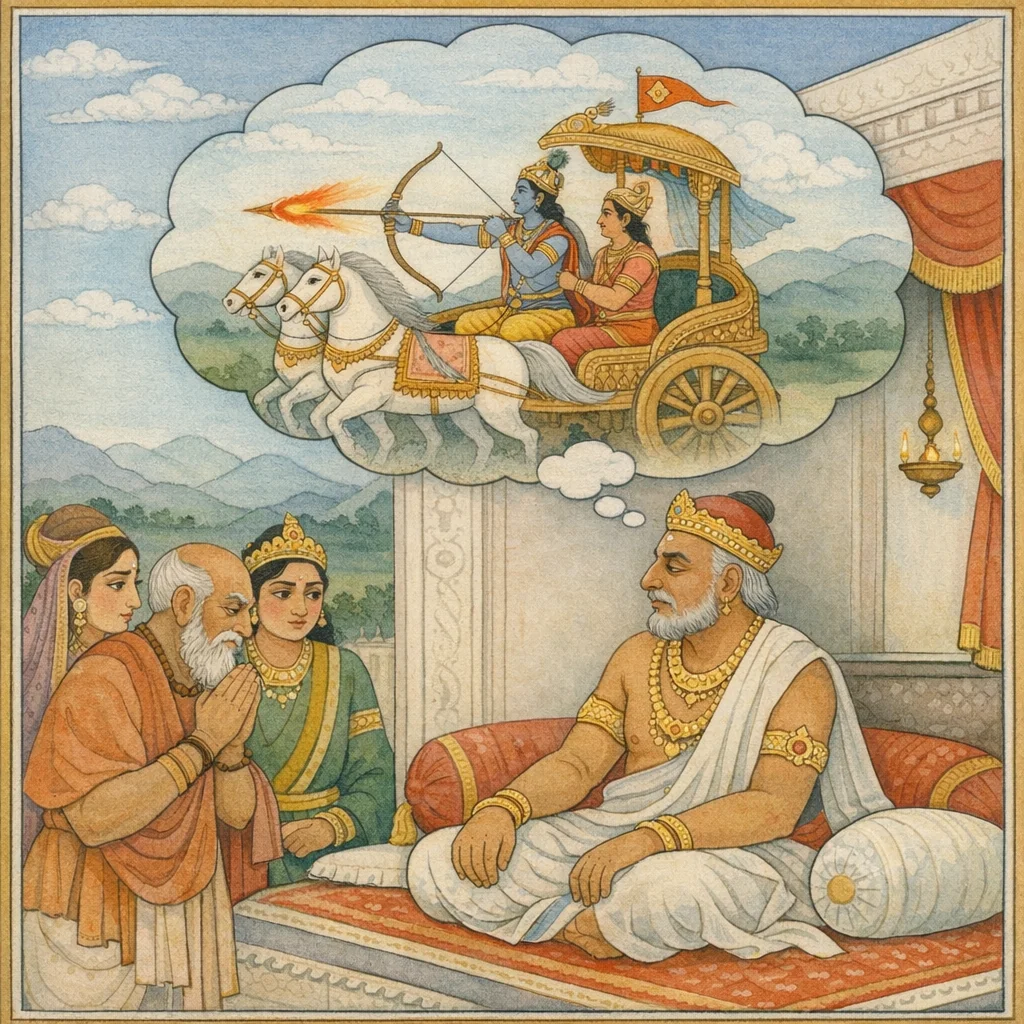
Chapter 51 presents Dhṛtarāṣṭra’s extended evaluation of Arjuna’s battlefield profile as a determinant of political outcome. He emphasizes Arjuna’s reputation for truthful speech and frames him as a warrior whose presence can secure dominion. Dhṛtarāṣṭra doubts whether any opponent can meet Arjuna in combat, even if elite figures such as Droṇa and Karṇa were to confront him. He characterizes the prospective engagement as catastrophically costly and suggests that “peace” would arise only through the death of either Arjuna or his principal rivals—yet he simultaneously asserts the improbability of Arjuna being defeated or killed. The chapter cites Arjuna’s prior exploits (notably the Khāṇḍava episode and victories over divine opponents) as empirical proof of consistent success. A core strategic thesis is introduced: with Kṛṣṇa (Hṛṣīkeśa) as Arjuna’s charioteer, victory is depicted as structurally assured, akin to Indra’s assured triumph. The imagery intensifies into predictive battlefield effects—arrow-storms, panic in the Kaurava ranks, and destruction likened to a spreading fire—functioning as a court-level warning about the consequences of misjudging capability and moral momentum.
Chapter Arc: धृतराष्ट्र, संजय से अर्जुन के विषय में सुनी हुई अचूक सत्य-वाणी और उसके अद्भुत पराक्रम को स्मरण कर, अपने पुत्रों के भविष्य को लेकर भीतर-ही-भीतर काँप उठता है। → वह निरन्तर विचार करता है कि युद्धभूमि में गाण्डीवधारी अर्जुन के सामने रथारूढ़ होकर टिक सकने वाला कोई वीर उसे दिखाई नहीं देता; कृष्ण के साथ एक ही रथ पर स्थित अर्जुन की छवि उसके मन में भय को और घना कर देती है। → धृतराष्ट्र की कल्पना में अर्जुन का बाण-तेज सर्वत्र फैलती प्रचण्ड अग्नि के समान ‘मामक’ सेना को भस्म कर देता है—वह मानो देखता है कि किरीटधारी के शर-वर्षा से शेष कुछ नहीं बचेगा। → वह निष्कर्ष पर पहुँचता है कि शान्ति का एकमात्र मार्ग या तो अर्जुन का वध है या युद्ध का विराम—पर अर्जुन को जीतने वाला कोई नहीं दिखता; इस असमर्थता-बोध से उसकी आशा टूटती और भय स्थिर हो जाता है। → कृष्ण के रथ-संचालन की ध्वनि मात्र से सेना के विचलित होने की आशंका के साथ प्रश्न हवा में लटकता है—क्या धृतराष्ट्र समय रहते दुर्योधन को रोक पाएगा, या भय जानते हुए भी विनाश की ओर बढ़ेगा?
Shlokas
Verse 1
ऑपन--माज बक। जि द्विपञज्चाशत्तमो<ड ध्याय: धृतराष्ट्रद्वारा अर्जुनसे प्राप्त होनेवाले भयका वर्णन धृतराष्ट्र रवाच यस्य वै नानृता वाच: कदाचिदनुशुश्रुम । त्रैलोक्यमपि तस्य स्याद् योद्धा यस्य धनंजय:,धृतराष्ट्र बोले--संजय! जिनके मुँहसे कभी कोई झूठ बात निकलती हमने नहीं सुनी है तथा जिनके पक्षमें धनंजय-जैसे योद्धा हैं, उन धर्मराज युधिष्ठिरको (भूमण्डलका कौन कहे,) तीनों लोकोंका राज्य भी प्राप्त हो सकता है
Dhṛtarāṣṭra said: “Sañjaya, we have never heard that falsehood ever issues from his mouth. And for the one on whose side stands a warrior like Dhanañjaya (Arjuna), even sovereignty over the three worlds could be his—what then to say of the earth.”
Verse 2
तस्यैव च न पश्यामि युधि गाण्डीवधन्चन: । अनिशं चिन्तयानो5पि य: प्रतीयाद् रथेन तम्
Dhṛtarāṣṭra said: “Even on his side, I do not see anyone in battle who could truly match that wielder of the Gāṇḍīva. Though I ponder it without cease, I find no warrior who could confront him, chariot to chariot.”
Verse 3
मैं निरन्तर सोचने-विचारनेपर भी युद्धमें गाण्डीवधारी अर्जुनका ही सामना करनेवाले किसी ऐसे वीरको नहीं देखता, जो रथपर आरूढ़ हो उनके सम्मुख जा सके ।। अस्यत: कर्णिनालीकान् मार्गणान् हृदयच्छिद: । प्रत्येता न सम: कश्चिद् युधि गाण्डीवधन्चन:,जो हृदयको विदीर्ण कर देनेवाले कर्णी और नालीक आदि बाणोंकी निरन्तर वर्षा करते हैं, उन गाण्डीवधन्वा अर्जुनका युद्धमें सामना करनेवाला कोई भी समकक्ष योद्धा नहीं है
Dhṛtarāṣṭra said: “Though I ponder without ceasing, I see no warrior in battle who can stand as an equal before Arjuna, the wielder of the Gāṇḍīva. When he pours forth an unbroken rain of heart-piercing arrows—barbed and needle-like shafts—there is none who can ride out in a chariot and meet him on the field on equal terms.”
Verse 4
द्रोणकर्णो प्रतीयातां यदि वीरौ नरर्षभौ । कृतास्त्रौ बलिनां श्रेष्ठी समरेष्वपराजितौ,यदि बलवानोंमें श्रेष्ठ, अस्त्रविद्याके पारंगत विद्वान् तथा युद्धमें कभी पराजित न होनेवाले, मनुष्योंमें अग्रगण्य वीरवर द्रोणाचार्य और कर्ण अर्जुनका सामना करनेके लिये आगे बढ़ें तो भी मुझे अर्जुनपर विजय प्राप्त होनेमें महान् संदेह रहेगा। मैं तो देखता हूँ मेरी विजय होगी ही नहीं; क्योंकि कर्ण दयालु और प्रमादी है और आचार्य द्रोण वृद्ध होनेके साथ ही अर्जुनके गुरु हैं
Dhṛtarāṣṭra said: “Even if the two bull-like heroes among men—Droṇa and Karṇa—advance to face (Arjuna), both fully trained in weapons, foremost among the strong, and undefeated in battles, I still feel great doubt that victory over Arjuna can be won. For I see no sure triumph for my side: Karṇa is compassionate and prone to lapses, and Droṇa, besides being aged, is also Arjuna’s own teacher.”
Verse 5
महान् स्यात् संशयो लोके न त्वस्ति विजयो मम । घृणी कर्ण: प्रमादी च आचार्य: स्थविरो गुरु:,यदि बलवानोंमें श्रेष्ठ, अस्त्रविद्याके पारंगत विद्वान् तथा युद्धमें कभी पराजित न होनेवाले, मनुष्योंमें अग्रगण्य वीरवर द्रोणाचार्य और कर्ण अर्जुनका सामना करनेके लिये आगे बढ़ें तो भी मुझे अर्जुनपर विजय प्राप्त होनेमें महान् संदेह रहेगा। मैं तो देखता हूँ मेरी विजय होगी ही नहीं; क्योंकि कर्ण दयालु और प्रमादी है और आचार्य द्रोण वृद्ध होनेके साथ ही अर्जुनके गुरु हैं
Dhṛtarāṣṭra said: “There would be great doubt in the world, and as for me, victory is not to be found. Even if Karṇa—compassionate yet prone to lapses—and the Teacher, Droṇa—aged and moreover Arjuna’s own guru—were to advance to face Arjuna, I still see grave uncertainty about overcoming him. Indeed, I perceive no assured triumph for my side.”
Verse 6
समर्थों बलवान् पार्थो दृढ्धन्वा जितक्लम: । भवेत् सुतुमुलं युद्ध सर्वशो5प्यपराजय:,कुन्तीपुत्र अर्जुन समर्थ और बलवान हैं। उनका धनुष भी सुदृढ़ है। वे आलस्य और थकावटको जीत चुके हैं, अतः उनके साथ जो अत्यन्त भयंकर युद्ध छिड़ेगा, उसमें सब प्रकारसे उनकी ही विजय होगी
Arjuna, Kuntī’s son, is capable and mighty; his bow is steadfast and strong. He has conquered sloth and weariness; therefore, in the utterly dreadful battle that will be joined with him, victory in every way will be his.
Verse 7
सर्वे हस्त्रविद: शूरा: सर्वे प्राप्ता महद् यश: । अपि सर्वामरैश्वर्य त्यजेयुर्न पुनर्जयम्,समस्त पाण्डव अस्त्रविद्याके ज्ञाता, शूरवीर तथा महान् यशको प्राप्त हैं। वे समस्त देवताओंका ऐश्वर्य छोड़ सकते हैं, परंतु अपनी विजयसे मुह नहीं मोड़ेंगे
Dhṛtarāṣṭra said: “All the Pāṇḍavas are masters of weapons, all are valiant, and all have attained great renown. They might even renounce sovereignty equal to that of the gods, yet they would not turn away from victory.”
Verse 8
वधे नूनं भवेच्छान्तिस्तयोर्वा फाल्गुनस्य च | नतु हन्तार्जुनस्यास्ति जेता चास्य न विद्यते
Dhṛtarāṣṭra said: “Peace, it seems, will come only through death—either theirs or Phālguna’s. For there is no slayer of Arjuna, nor is there anyone who can truly conquer him.”
Verse 9
मन्युस्तस्य कथं शाम्येन्मन्दान् प्रति य उत्थित: । निश्चय ही द्रोणाचार्य और कर्णका वध हो जानेपर हमारे पक्षके लोग शान्त हो जायूँगे अथवा अर्जुनके मारे जानेपर पाण्डव शान्त हो बैठेंगे, परंतु अर्जुनका वध करने-वाला तो कोई है ही नहीं, उन्हें जीतनेवाला भी संसारमें कोई नहीं है। मेरे मन्दबुद्धि पुत्रोंके प्रति उनके हृदयमें जो क्रोध जाग उठा है, वह कैसे शान्त होगा? ।। ८ है ।। अन्ये>प्यस्त्राणि जानन्ति जीयन्ते च जयन्ति च
Dhṛtarāṣṭra said: “How can his wrath—aroused against my foolish sons—ever be appeased? It is certain that if Droṇa and Karṇa are slain, our side will be subdued; or, if Arjuna is killed, the Pāṇḍavas will sit down in quiet. But there is no one who can truly slay Arjuna, and no one in the world who can overcome him. So how will the anger that has risen in his heart toward my misguided sons be brought to rest?”
Verse 10
एकान्तविजयमस्त्वेव श्रूयते फाल्गुनस्य ह । दूसरे योद्धा भी अस्त्र चलाना जानते हैं, परंतु वे कभी हारते हैं और कभी जीतते भी हैं। केवल अर्जुन ही ऐसे हैं, जिनकी निरन्तर विजय ही सुनी जाती है ।। त्रयस्त्रिंशत् समाहूय खाण्डवेडग्निमतर्पयत्
Dhṛtarāṣṭra said: “Indeed, one hears only of Phālguna’s unbroken victory. Other warriors may know how to wield weapons, yet they sometimes lose and sometimes win; but Arjuna alone is renowned for victory without interruption. Having summoned the Thirty-Three (gods), he satisfied Agni in the Khāṇḍava forest.”
Verse 11
जिगाय च सुरान् सर्वान् नास्य विद्य: पराजयम् । खाण्डवदाहके समय अर्जुनने (मुख्य-मुख्य) तैंतीस- देवताओंको युद्धके लिये ललकारकर अग्नि-देवको तृप्त किया और सभी देवताओंको जीत लिया। उनकी कभी पराजय हुई हो, इसका पता हमें आजतक नहीं लगा || १० है ।। यस्य यन्ता हृषीकेश: शीलवृत्तसमो युधि
Dhṛtarāṣṭra said: “He has conquered all the gods; no defeat of his is known. At the time of the burning of the Khāṇḍava forest, Arjuna challenged the chief among the thirty-three deities to battle, satisfied the Fire-god, and overcame them all. To this day we have never learned of any occasion on which he was defeated. And when Hṛṣīkeśa himself is the charioteer of such a man—one whose conduct and discipline are steady in war—how could his side be shaken?”
Verse 12
कृष्णावेकरथे यत्तावधिज्यं गाण्डिवं धनु:
Dhṛtarāṣṭra said: “As long as Kṛṣṇa and Arjuna remain together on a single chariot, with the Gāṇḍīva bow strung and ready, what can be done against them?”
Verse 13
युगपत् त्रीणि तेजांसि समेतान्यनुशुश्रुम । श्रीकृष्ण और अर्जुन एक रथपर उपस्थित हैं और गाण्डीव धनुषकी प्रत्यंचा चढ़ी हुई है, इस प्रकार ये तीनों तेज एक ही साथ एकत्र हो गये हैं, यह हमारे सुननेमें आया है ।। १२ - नैवास्ति नो धनुस्तादूक् न योद्धा न च सारथि:
Dhṛtarāṣṭra said: “We have heard that three mighty splendors have come together at once: Śrī Kṛṣṇa and Arjuna are stationed on a single chariot, and the bow Gāṇḍīva stands strung with its bowstring. Thus, these three powers—Kṛṣṇa, Arjuna, and the fully readied Gāṇḍīva—are united in one place at the same time. This is what has reached our ears.”
Verse 14
शेषयेदशनिर्दीप्तो विपतन् मूर्थ्नि संजय
Dhṛtarāṣṭra said: “O Saṃjaya, if a blazing thunderbolt were to fall upon my head, it would still leave something remaining—yet the tidings you bring strike me so utterly that nothing seems left within me.”
Verse 15
अपि चास्यन्निवाभाति निध्नन्निव धनंजय:
Dhṛtarāṣṭra said: “Even so, Dhanañjaya (Arjuna) appears as though he were hurling (his weapons), as though he were striking down (his foes).”
Verse 16
उद्धरन्निव कायेभ्य: शिरांसि शरवृशिभि: । मुझे तो वीर धनंजय युद्धमें बाणोंको चलाते, योद्धाओंके प्राण लेते और अपनी बाणवर्षद्वारा उनके शरीरोंसे मस्तकोंको काटते हुए-से प्रतीत हो रहे हैं ।। अपि बाणमयं तेज: प्रदीप्तमिव सर्वतः
Dhṛtarāṣṭra said: “It seems as though he is tearing heads away from bodies by showers of arrows; and that blazing, arrow-made radiance appears to flare up on every side.”
Verse 17
अपि सारशथ्यघोषेण भयार्ता सव्यसाचिन:
Dhṛtarāṣṭra said: “Were they, stricken with fear, at all shaken by the clamor arising from the charioteer’s cunning—those belonging to Savyasācin (Arjuna)?”
Verse 18
यथा कक्ष महानग्नि: प्रदहेत् सर्वतश्नरन् । हि 5. 2:08 धक्ष्यति मामकान्,जैसे वायुके बढ़ी हुई आग सब ओर फैलकर प्रचण्ड लपटोंसे युक्त हो घास-फ़ूस अथवा जंगलको जलाकर भस्म कर देती है, उसी प्रकार अर्जुन मेरे पुत्रोंको दग्ध कर डालेंगे
Dhṛtarāṣṭra said: “Just as a great wildfire, moving everywhere, burns up dry grass and thickets on all sides, so will Arjuna burn my sons to ashes.” In this image of an uncontrollable blaze, the blind king voices fearful foreknowledge: when adharma ripens into war, even royal power cannot shield those who have chosen injustice from the consuming consequences of their deeds.
Verse 19
यदोद्वमन् निशितान् बाणसंघां- स्तानाततायी समरे किरीटी । सृष्टोडन्तकः सर्वहरो विधात्रा यथा भवेत् तद्भधदपारणीय:,जिस समय शस्त्रपाणि किरीटधारी अर्जुन समर-भूमिमें रोषपूर्वक पैने बाणसमूहोंकी वर्षा करेंगे, उस समय विधाताके रचे हुए सर्वसंहारक कालके समान उनसे पार पाना असम्भव हो जायगा
Dhṛtarāṣṭra said: “When the diadem-wearing Arjuna, weapon in hand, in the fury of battle, pours forth volleys of razor-sharp arrows, then to withstand him will be impossible—just as one cannot escape the all-destroying Time (Death) fashioned by the Creator, the universal taker-away.”
Verse 20
तदा हाभीक्ष्णं सुबहून् प्रकारान् श्रोतास्मि तानावसथे कुरूणाम् | तेषां समन्ताच्च तथा रणाग्रे क्षय: किलायं भरतानुपैति,उस समय मैं महलोंमें बैठा हुआ बार-बार कौरवोंकी विविध अवस्थाओंकी कथा सुनता रहूँगा। अहो! युद्धके मुहानेपर निश्चय ही सब ओरसे यह भरतवंशका विनाश आ पहुँचा है
Then, seated within the palace, I shall again and again be forced to hear, in many different ways, reports of the Kuru princes and their changing conditions. Alas—at the very threshold of battle, from every side, the destruction of this Bharata line has surely drawn near.
Verse 51
इस प्रकार श्रीमह्ाभारत उद्योगपर्वके अन्तर्गत यानसंधिपवमें धृतराष्ट्रवाक्यविषयक इकक््यावनवाँ अध्याय पूरा हुआ
Thus ends the fifty-first chapter of the Yāna-saṃdhi section within the Udyoga Parva of the Śrī Mahābhārata, comprising the words attributed to Dhṛtarāṣṭra. The colophon marks a formal closure, reminding the listener that the narrative has been framed as a king’s utterance—an ethical pivot-point in the diplomacy that precedes war.
Verse 52
इति श्रीमहाभारते उद्योगपर्वणि यानसंधिपर्वणि धृतराष्ट्रवाक्ये द्विपज्चाशत्तमो5ध्याय:
Thus, in the Śrī Mahābhārata, within the Udyoga Parva—specifically the section on mission and negotiations (Yāna–Sandhi Parva)—ends the fifty-second chapter, presented in the context of Dhṛtarāṣṭra’s words. The colophon marks a formal closure of the chapter, underscoring that the narrative is situated amid attempts at diplomacy and settlement before the outbreak of war.
Verse 113
ध्रुवस्तस्य जयस्तात यथेन्द्रस्य जयस्तथा । तात! साक्षात् भगवान् श्रीकृष्ण, जिनका स्वभाव और आचार-व्यवहार भी अर्जुनके ही समान है, अर्जुनका रथ हाँकते हैं, अतः इन्द्रकी विजयकी भाँति उनकी भी विजय निश्चित है
Dhṛtarāṣṭra said: “Dear son, his victory is certain—just as Indra’s victory is certain. For Bhagavān Śrī Kṛṣṇa himself, whose very nature and conduct are in harmony with Arjuna’s, serves as Arjuna’s charioteer; therefore, like Indra’s assured triumph, Arjuna’s triumph too is assured.”
Verse 136
तच्च मन्दा न जानन्ति दुर्योधनवशानुगा: । हमलोगोंके यहाँ न तो वैसा धनुष है, न अर्जुन-जैसा पराक्रमी योद्धा है और न श्रीकृष्णके समान सारथि ही है, परंतु दुर्योधनके वशीभूत हुए मेरे मूर्ख पुत्र इस बातको नहीं समझ पाते
Dhṛtarāṣṭra laments that those who have fallen under Duryodhana’s sway do not grasp a plain truth: in their own camp there is neither a bow like that, nor a warrior as mighty as Arjuna, nor a charioteer equal to Śrī Kṛṣṇa. Yet his deluded sons, mastered by Duryodhana’s influence, refuse to understand.
Verse 143
न तु शेषं शरास्तात कुर्युरस्ता: किरीटिना । तात संजय! अपने तेजसे जलता हुआ वज्र किसीके मस्तकपर पड़कर सम्भव है, उसके जीवनको बचा दे, परंतु किरीटधारी अर्जुनके चलाये हुए बाण जिसे लग जायाँगे, उसे जीवित नहीं छोड़ेंगे
Dhṛtarāṣṭra said: “But, dear one, the arrows released by the diademed warrior will leave no remainder. O Sañjaya, it may be possible that a thunderbolt—blazing with its own power—could strike someone’s head and yet spare his life; but the shafts loosed by Arjuna, the wearer of the diadem, once they find their mark, do not let a man live.”
Verse 166
गाण्डीवोत्थं दहेताजौ पुत्राणां मम वाहिनीम् । क्या गाण्डीव धनुषसे प्रकट हुआ बाणमय तेज सब ओर प्रज्वलित-सा होकर मेरे पुत्रोंकी (विशाल) वाहिनीको युद्धमें जलाकर भस्म कर डालेगा?
Dhṛtarāṣṭra said: “Will the blazing, arrow-born radiance unleashed from the Gāṇḍīva in battle burn and reduce to ashes the vast army of my sons?”
Verse 176
वित्रस्ता बहुधा सेना भारती प्रतिभाति मे । मुझे स्पष्ट प्रतीत हो रहा है कि श्रीकृष्णके रथ-संचालनकी आवाज सुनकर भरतवंशियोंकी यह सेना सव्यसाची अर्जुनके भयसे पीड़ित और नाना प्रकारसे आतंकित हो जायगी
Dhṛtarāṣṭra said: “It appears to me that the Bhārata host will be thrown into repeated panic and confusion. Hearing the sound of Śrī Kṛṣṇa driving the chariot, this army of the Bharatas will be afflicted with fear of the ambidextrous archer Arjuna and will become alarmed in many ways.”
Frequently Asked Questions
The dilemma is whether a ruler should persist in a policy driven by factional loyalty and pride when credible counsel indicates disproportionate harm—contrasting attachment to power with the duty to minimize avoidable destruction and uphold just settlement.
Ethical governance requires truth-aligned judgment and sober evaluation of consequences; when leadership ignores accurate assessments and moral legitimacy, outcomes become less a matter of chance and more a predictable result of flawed policy.
No explicit phalaśruti is stated here; the chapter functions as meta-commentary through prognostic imagery—using Arjuna’s record and Kṛṣṇa’s presence to underscore how understanding capability, counsel, and legitimacy clarifies the epic’s causal logic.