Adhyaya 172
अम्बा-शाल्वसंवादः | Amba’s Appeal to Śālva and His Refusal
Upa-parva: Amba–Śālva Saṃvāda (Bhīṣma-narrated episode within Udyoga Parva)
Bhīṣma reports that, after obtaining permission from Satyavatī (Kālī), ministers, Brahmins, and priests, he authorizes the elder princess Amba to depart. Guarded by elder twice-born men and accompanied by her nurse, Amba travels to Śālva’s city and addresses the king directly, declaring she has come for him. Śālva responds with a restrained, policy-inflected refusal: he states he is not seeking her as a wife because she has been taken by Bhīṣma ‘by force,’ and he frames acceptance as improper for a ruler who instructs others in dharma. Amba counters that she was not taken willingly; she was carried away by force while weeping, and she appeals to Śālva’s prior bond and to the ethical impropriety of abandoning one who is devoted and without fault. She adds that Bhīṣma does not desire her, having acted for his brother’s sake, and notes that her sisters were given to Vicitravīrya. Despite repeated entreaties and oaths of exclusivity, Śālva does not credit her claims, repeatedly telling her to depart, citing fear of Bhīṣma and the fact of Bhīṣma’s ‘parigraha.’ Amba leaves the city distressed and lamenting, marking a narrative turning point where personal testimony fails against public perception and political caution.
Chapter Arc: दुर्योधन, भीष्म से उनके पुराने वचन का रहस्य पूछता है—“आपने कहा था कि मैं सोमक आदि को मार दूँगा, फिर शिखण्डी को युद्ध में क्यों नहीं मारूँगा?” इसी प्रश्न से अम्बोपाख्यान का द्वार खुलता है। → भीष्म दुर्योधन को सुनाते हैं कि शिखण्डी-वध से उनका संकोच किस पुराने कारण से जुड़ा है; कथा पीछे लौटती है—शान्तनु के निधन के बाद राज्य-धर्म, विचित्रवीर्य का अभिषेक, और कुरुवंश की रक्षा हेतु भीष्म का कठोर संकल्प। → काशिराज की कन्याओं के स्वयंवर में भीष्म का रथ-प्रचण्ड पराक्रम: अनेक राजाओं के क्रुद्ध आक्रमण के बीच वे एक-एक बाण से घोड़े, हाथी और सारथी गिराते हुए तीनों राजकन्याओं का अपहरण कर ले जाते हैं। → भीष्म स्पष्ट करते हैं कि यह कर्म उन्होंने भाई (विचित्रवीर्य) के हित और सत्यवती के वचन/वंश-रक्षा के लिए किया—यही वह बीज है जिससे आगे अम्बा का वैर और शिखण्डी का कारण-रूप बनना समझ में आएगा। → अपहृत कन्याओं में अम्बा का भविष्य क्या होगा—और यह घटना भीष्म के लिए ‘अवध्यता’ का शाप/बंधन कैसे बनेगी—कथा वहीं से आगे बढ़ने को ठहरती है।
Shlokas
Verse 1
अपन प्रात छा अ-काज जा (अम्बोपाख्यानपर्व) त्रिसप्तत्यधिकशततमो< ध्याय: अम्बोपाख्यानका आरम्भ--भीष्मजीके द्वारा काशिराजकी कन्याओंका अपहरण दुर्योधन उवाच किमर्थ भरतश्रेष्ठ नैव हनन्या: शिखण्डिनम् । उद्यतेषुमथो दृष्टवा समरेष्वाततायिनम्,दुर्योधनने पूछा--भरतश्रेष्ठत जब शिखण्डी धनुष-बाण उठाये समरमें आततायीकी भाँति आपको मारने आयेगा, उस समय उसे इस रूपमें देखकर भी आप क्यों नहीं मारेंगे?
Duryodhana said: “For what reason, O best of the Bharatas, would you not strike down Śikhaṇḍin—when you see him on the battlefield with weapons raised, advancing like an assailant intent on killing?”
Verse 2
पूर्वमुक्त्वा महाबाहो पठचालान् सह सोमकै: । हनिष्यामीति गाड़्ेय तन्मे ब्रूहि पितामह,महाबाहु गंगानन्दन! पितामह! आप पहले तो यह कह चुके हैं कि “मैं सोमकोंसहित पंचालोंका वध करूँगा” (फिर आप शिखण्डीको छोड़ क्यों रहे हैं?) यह मुझे बताइये
Duryodhana said: “O mighty-armed one, O Gāṅgeya, Grandfather—earlier you declared, ‘I shall slay the Pāñcālas together with the Somakas.’ Then why do you now refrain (in this resolve) with regard to Śikhaṇḍin? Tell me this.”
Verse 3
भीष्म उवाच शृणु दुर्योधन कथां सहैभिवसुधाधिपै: । यदर्थ युधि सम्प्रेक्ष्य नाहं हन्यां शिखण्डिनम्,भीष्मजीने कहा--दुर्योधन! मैं जिस कारणसे समरांगणमें प्रहार करते देखकर भी शिखण्डीको नहीं मारुँगा, उसकी कथा कहता हूँ, इन भूमिपालोंके साथ सुनो
Bhishma said: “Listen, Duryodhana, together with these kings. I will tell you the reason why, even when I see Shikhandin striking in the midst of battle, I will not kill him.”
Verse 4
महाराजो मम पिता शान्तनुर्लोकविश्रुत: । दिष्टान्तमाप धर्मात्मा समये भरतर्षभ,भरतश्रेष्ठ! मेरे धर्मात्मा पिता लोकविख्यात महाराज शान्तनुका जब निधन हो गया, उस समय अपनी प्रतिज्ञाका पालन करते हुए मैंने भाई चित्रांगदको इस महान् राज्यपर अभिषिक्त कर दिया
Bhīṣma said: “My father, the great king Śāntanu—renowned throughout the world—met his destined end. At that time, O bull among the Bharatas, in faithful observance of my vow, I installed my brother Citrāṅgada upon this great kingdom.”
Verse 5
ततो<हं भरतश्रेष्ठ प्रतिज्ञां परिपालयन् । चित्राड्दं भ्रातरं वै महाराज्ये5 भ्यषेचयम्,भरतश्रेष्ठ! मेरे धर्मात्मा पिता लोकविख्यात महाराज शान्तनुका जब निधन हो गया, उस समय अपनी प्रतिज्ञाका पालन करते हुए मैंने भाई चित्रांगदको इस महान् राज्यपर अभिषिक्त कर दिया
Then, O best of the Bharatas, keeping my vow, I anointed my brother Chitrāṅgada with the royal consecration and installed him over this great kingdom.
Verse 6
तस्मिंश्न निधन प्राप्ते सत्यवत्या मते स्थित: । विचित्रवीर्य राजानमभ्यषिज्चं॑ यथाविधि,तदनन्तर जब चित्रांगदकी भी मृत्यु हो गयी; तब माता सत्यवतीकी सम्मतिसे मैंने विधिपूर्वक विचित्रवीर्यका राजाके पदपर अभिषेक किया
When he had met his end, acting in accordance with Satyavatī’s counsel, I duly performed the royal consecration of King Vichitravīrya and installed him upon the throne.
Verse 7
मयाभिषिक्तो राजेन्द्र यवीयानपि धर्मत: । विचित्रवीर्यों धर्मात्मा मामेव समुदैक्षत,राजेन्द्र! छोटे होनेपर भी मेरे द्वारा अभिषिक्त होकर धर्मात्मा विचित्रवीर्य धर्मतः मेरी ही ओर देखा करते थे अर्थात् मेरी सम्मतिसे ही सारा राजकार्य करते थे
O king, though he was younger, once I had consecrated him, the righteous Vichitravīrya—acting in accordance with dharma—looked to me alone for guidance; he conducted the affairs of the kingdom only with my assent.
Verse 8
तस्य दारक्रियां तात चिकीर्षुरहमप्युत । अनुरूपादिव कुलादित्येव च मनो दथे,तात! तब मैंने अपने योग्य कुलसे कन्या लाकर उनका विवाह करनेका निश्चय किया
My child, wishing to perform his marriage rites, I resolved in my mind to bring him a bride from a family truly suitable to him.
Verse 9
तथाश्रौषं महाबाहो तिस््र: कन्या: स्वयंवरा: । रूपेणाप्रतिमा: सर्वा: काशिराजसुतास्तदा । अम्बां चैवाम्बिकां चैव तथैवाम्बालिकामपि,महाबाहो! उन्हीं दिनों मैंने सुना कि काशिराजकी तीन कन्याएँ हैं, जो सब-की-सब अप्रतिम रूप-सौन्दर्यसे सुशोभित हैं और वे स्वयंवर-सभामें स्वयं ही पतिका चुनाव करनेवाली हैं। उनके नाम हैं अम्बा, अम्बिका और अम्बालिका
So I heard, O mighty-armed one, that at that time the king of Kāśī had three daughters—maidens of svayaṃvara—each incomparable in beauty. Their names were Ambā, Ambikā, and likewise Ambālikā.
Verse 10
राजानश्न समाहूता: पृथिव्यां भरतर्षभ । अम्बा ज्येष्ठाभवत् तासामम्बिका त्वथ मध्यमा,भरतश्रेष्ठ! राजेन्द्र! उन तीनोंके स्वयंवरके लिये भूमण्डलके सम्पूर्ण नरेश आमन्त्रित किये गये थे। उनमें अम्बा सबसे बड़ी थी, अम्बिका मझली थी और राजकन्या अम्बालिका सबसे छोटी थी। स्वयंवरका समाचार पाकर मैं एक ही रथके द्वारा काशिराजके नगरमें गया
Bhishma said: “O bull among the Bharatas, the kings of the whole earth had been invited for the svayaṃvara. Among those princesses, Ambā was the eldest, Ambikā the middle one.”
Verse 11
अम्बालिका च राजेन्द्र राजकन्या यवीयसी । सो5हमेकरथेनैव गत: काशिपते: पुरीम्,भरतश्रेष्ठ! राजेन्द्र! उन तीनोंके स्वयंवरके लिये भूमण्डलके सम्पूर्ण नरेश आमन्त्रित किये गये थे। उनमें अम्बा सबसे बड़ी थी, अम्बिका मझली थी और राजकन्या अम्बालिका सबसे छोटी थी। स्वयंवरका समाचार पाकर मैं एक ही रथके द्वारा काशिराजके नगरमें गया
Bhishma said: “O king, the princess Ambālikā was the youngest daughter. Therefore I myself went alone, in a single chariot, to the city of the lord of Kāśī.”
Verse 12
अपश्यं ता महाबाहो तिस््र: कन्या: स्वलंकृता: । राज्ञश्नेव समाहूतान् पार्थिवान् पृथिवीपते,महाबाहो! वहाँ पहुँचकर मैंने वस्त्राभूषणोंसे अलंकृत हुई उन तीनों कन्याओंको देखा। पृथ्वीपते! वहाँ उसी समय आमन्त्रित होकर आये हुए सम्पूर्ण राजाओंपर भी मेरी दृष्टि पड़ी
O mighty-armed one, when I arrived there I saw those three maidens, adorned with garments and ornaments. O lord of the earth, my gaze also fell upon all the kings who had come there at the invitation.
Verse 13
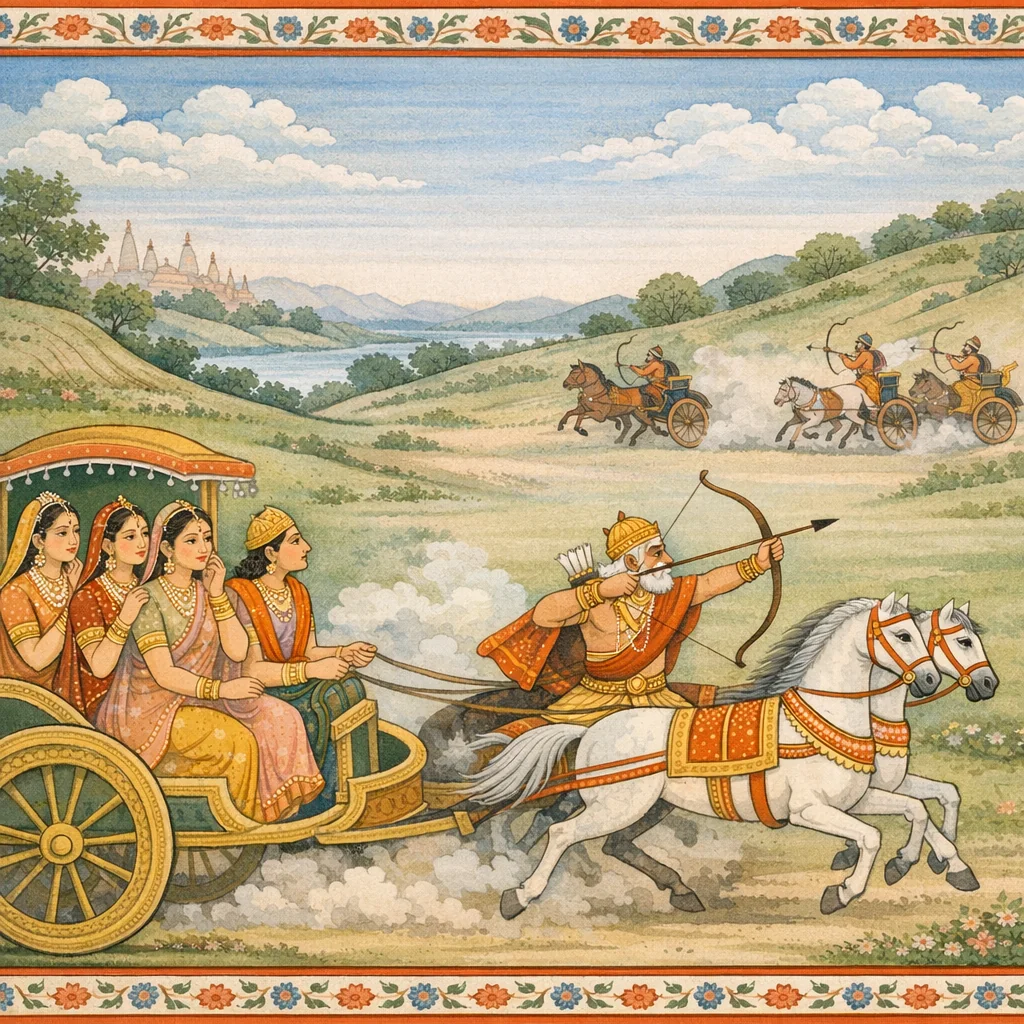
ततोऊहं तान् नृपान् सर्वानाहूय समरे स्थितान् । रथमारोपयांचक्रे कन्यास्ता भरतर्षभ,भरतश्रेष्ठ! तदनन्तर मैंने युद्धके लिये खड़े हुए उन समस्त राजाओंको ललकारकर उन तीनों कन््याओंको अपने रथपर बैठा लिया
Then I challenged all those kings who stood ready for battle, and, O bull among the Bharatas, I placed those maidens upon my chariot.
Verse 14
वीर्यशुल्काश्न ता ज्ञात्वा समारोप्य रथं तदा | अवोचं पार्थिवान् सर्वानहं तत्र समागतान् | भीष्म: शान्तनव: कन्या हरतीति पुन: पुन:,पराक्रम ही इन कन्याओंका शुल्क है, यह जानकर उन्हें रथपर चढ़ा लेनेके पश्चात् मैंने वहाँ आये हुए समस्त भूपालोंसे कहा--“नरश्रेष्ठ राजाओ! शान्तनुपुत्र भीष्म इन राजकन्याओंका अपहरण कर रहा है, तुम सब लोग पूरी शक्ति लगाकर इन्हें छुड़ानेका प्रयत्न करो; क्योंकि मैं तुम्हारे देखते-देखते बलपूर्वक इन्हें लिये जाता हूँ"; इस बातको मैंने बारंबार दुहराया
Knowing that their bride-price was valor, and after placing those maidens upon my chariot, I addressed all the kings assembled there: “Bhishma, son of Shantanu, is carrying off these princesses!” I repeated it again and again—so that, as kshatriyas, they might exert their full strength to rescue them, for I was taking them away by force in their very sight.
Verse 15
ते यतथध्वं परं शक््त्या सर्वे मोक्षाय पार्थिवा: । प्रसह् हि हराम्येष मिषतां वो नरर्षभा:,पराक्रम ही इन कन्याओंका शुल्क है, यह जानकर उन्हें रथपर चढ़ा लेनेके पश्चात् मैंने वहाँ आये हुए समस्त भूपालोंसे कहा--“नरश्रेष्ठ राजाओ! शान्तनुपुत्र भीष्म इन राजकन्याओंका अपहरण कर रहा है, तुम सब लोग पूरी शक्ति लगाकर इन्हें छुड़ानेका प्रयत्न करो; क्योंकि मैं तुम्हारे देखते-देखते बलपूर्वक इन्हें लिये जाता हूँ"; इस बातको मैंने बारंबार दुहराया
Bhishma said: “O kings, bull-like among men, all of you strive with your utmost strength to rescue them. For I am carrying these princesses away by force, even as you look on.” Having mounted the maidens upon his chariot, he repeatedly proclaimed this to the assembled rulers—openly inviting them to contest the abduction, so that the act would be decided by valor in battle rather than by stealth.
Verse 16
ततस्ते पृथिवीपाला: समुत्पेतुरुदायुधा: । योगो योग इति क्रुद्धा: सारथीनभ्यचोदयन्,फिर तो वे महीपाल कुपित हो हाथमें हथियार लिये टूट पड़े और अपने सारथियोंको 'रथ तैयार करो, रथ तैयार करो” इस प्रकार आदेश देने लगे
Then those kings, enraged, sprang up with weapons in hand. Crying, “Harness! Harness!”, they urgently drove their charioteers to make the chariots ready—an outward surge of wrath that signals how quickly royal pride can tip into warlike resolve.
Verse 17
ते रथैर्गजसंकाशैगजैश्नल गजयोधिन: । पुष्टैश्नाश्वचैर्महीपाला: समुत्पेतुरुदायुधा:,वे राजा हाथियोंके समान विशाल रथों, हाथियों और हृष्ट-पुष्ट अश्वोंपर सवार हो अस्त्र- शस्त्र लिये मुझपर आक्रमण करने लगे। उनमेंसे कितने ही हाथियोंपर सवार होकर युद्ध करनेवाले थे
Those kings, weapons raised, surged to attack me—some mounted on chariots vast as elephants, some upon war-elephants, and others upon sturdy, well-fed steeds. Among them were many warriors skilled in fighting from the backs of elephants.
Verse 18
ततस्ते मां महीपाला: सर्व एव विशाम्पते । रथव्रातेन महता सर्वत: पर्यवारयन्,प्रजानाथ! तदनन्तर उन सब नरेशोंने विशाल रथ-समूहद्वारा मुझे सब ओरसे घेर लिया
Then, O lord of the people, all those kings surrounded me on every side with a great mass of chariots—closing in as a coordinated encirclement, a battlefield act that tests resolve and the warrior’s duty amid overwhelming force.
Verse 19
तानहं शरवर्षेण समन्तात् पर्यवारयम् । सर्वान् नृपांश्वाप्पजयं देवराडिव दानवान्,तब मैंने भी बाणोंकी वर्षा करके चारों ओरसे उनकी प्रगति रोक दी और जैसे देवराज इन्द्र दानवोंपर विजय पाते हैं, उसी प्रकार मैंने भी उन सब नरेशोंको जीत लिया
Bhīṣma said: “I hemmed them in on every side with a rain of arrows, checking their advance. And just as Indra, lord of the gods, overcomes the Dānavas, so too did I subdue all those kings.”
Verse 20
अपातयं शरैर्दीप्तै: प्रहसन् भरतर्षभ । तेषामापततां चित्रान् ध्वजान् हेमपरिष्कृतान्,भरतश्रेष्ठ। जिस समय उन्होंने आक्रमण किया उसी समय मैंने प्रज्वलित बाणोंद्वारा हँसते-हँसते उनके स्वर्णभूषित विचित्र ध्वजोंको काट गिराया
Bhīṣma said: “O bull among the Bharatas, as they charged I laughed, and with blazing arrows I struck down their splendid, many-colored standards adorned with gold.”
Verse 21
फिर एक-एक बाण मारकर मैंने समरभूमिमें उनके घोड़ों, हाथियों और सारथियोंको भी धराशायी कर दिया
Bhīṣma said: “Then, striking with arrows one by one, I brought down on the battlefield even their horses, elephants, and charioteers.”
Verse 22
ते निवृत्ताश्न भग्नाश्न दृष्टवा तल्लाघवं मम । (प्रणिपेतुश्न सर्वे वै प्रशशंसुश्न पार्थिवा: । तत आदाय ता: कन्या नृपतींश्व विसृज्य तान् ॥। ) अथाहं हास्तिनपुरमायां जित्वा महीक्षित:,मेरे हाथोंकी वह फुर्ती देखकर वे पीछे हटने और भागने लगे। वे सब भूपाल नतमस्तक हो गये और मेरी प्रशंसा करने लगे। तत्पश्चात् मैं राजाओंको परास्त करके उन सबको वहीं छोड़ तीनों कन्याओंको साथ ले हस्तिनापुरमें आया
Bhīṣma said: “Seeing my swiftness and prowess, they recoiled, broke ranks, and fled. All those kings bowed before me and praised me. Thereafter, having subdued the rulers and leaving them there, I took the maidens with me and returned to Hastinapura as the victor.”
Verse 23
एकैकेन हि बाणेन भूमौ पातितवानहम् । हयांस्तेषां गजांश्रैव सारथींक्षाप्पहं रणे,ततोऊहं ताश्न कन्या वै भ्रातुरर्थाय भारत | तच्च कर्म महाबाहो सत्यवत्यै न््यवेदयम् महाबाहु भरतनन्दन! फिर मैंने उन कन्याओंको अपने भाईसे ब्याहनेके लिये माता सत्यवतीको सौंप दिया और अपना वह पराक्रम भी उन्हें बताया
Bhīṣma said: “With single arrows, one by one, I struck them down to the ground in battle—horses, elephants, and even charioteers. Then, O Bharata, for my brother’s sake I brought those maidens, and, O mighty-armed one, I reported that deed to Satyavati.”
Verse 172
इस प्रकार श्रीमहाभारत उद्योगपर्वके अन्तर्गत रथातिरथसंख्यानपर्वमें एक सौ बहत्तरवाँ अध्याय पूरा हुआ
Thus ends the one hundred and seventy-second chapter of the Udyoga Parva of the Śrī Mahābhārata, within the section known as the “Enumeration of Chariot-warriors and Great Chariot-warriors.”
Verse 173
इति श्रीमहा भारते उद्योगपर्वणि अम्बोपाख्यानपर्वणि कन्याहरणे त्रिसप्तत्यधिकशततमो< ध्याय:,इस प्रकार श्रीमहाभारत उद्योगपर्वके अन्तर्गत अमग्बोपाख्यानपर्वमें कन््याहरणविषयक एक सौ तिहत्तरवाँ अध्याय पूरा हुआ
Thus, in the holy Mahābhārata, within the Udyoga Parva, in the section called the Ambā-upākhyāna, the one-hundred-and-seventy-third chapter—concerning the abduction of maidens—comes to its close. In this manner the tale of Ambā concludes this chapter, setting forth the ethical strain between royal power and personal autonomy, and the far-reaching consequences of deeds done in the name of duty and honor.
Frequently Asked Questions
The chapter presents a dharma-conflict between Amba’s asserted consent and prior intention (personal truth) versus Śālva’s reliance on public fact-patterns—forceful taking and perceived prior claim (social legitimacy and political prudence).
It illustrates how dharma is negotiated amid competing evidentiary standards: individual testimony, public reputation, and the political calculus of rulers can diverge, producing outcomes that are procedurally ‘defensible’ yet ethically unresolved.
No explicit phalaśruti appears in this passage; its meta-function is narrative-ethical, establishing the causal background for later developments by showing how institutional caution and honor logic can intensify personal grievance.