Adhyaya 167
भीष्मकृतः पाण्डवपक्ष-महारथ-प्रशंसा (Bhishma’s appraisal of Pandava-aligned chariot-warriors)
Upa-parva: Sena-nirṇaya / Ratha-mahāratha-vicāra (Bhīṣma’s appraisal of allied chariot-warriors)
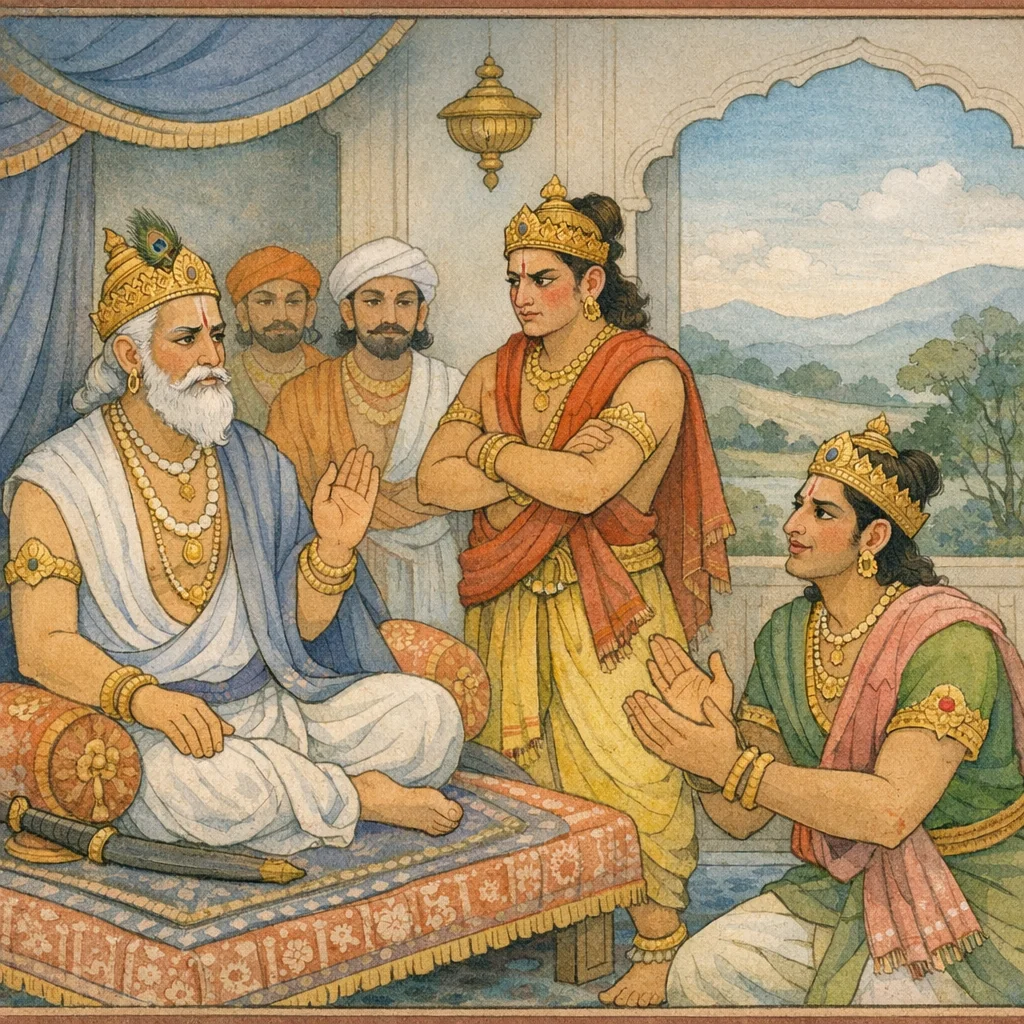
Bhīṣma addresses the king and enumerates major Pāṇḍava-aligned combat leaders, classifying them as eminent chariot-warriors (mahāratha / ratha-yūthapa-yūthapa). He identifies the five Draupadeyas and Uttara (of Virāṭa’s line) as formidable. Abhimanyu is characterized as a mobile, versatile fighter (laghv-astra, citra-yodhī), mentally resolute and firm in valor, capable of parity in battle with Arjuna or even Vāsudeva by reputation and command-role framing. Sātyaki is profiled as a leading Vṛṣṇi hero—fearless, unshaken, and energetically assertive. Uttamaujā and Yudhāmanyu are also marked as highly regarded chariot-warriors. Bhīṣma then emphasizes force depth—thousands of chariots, elephants, and horses—whose fighters are prepared to risk their bodies for the sake of the Pāṇḍavas, creating mutual challenge ‘like fire and wind’ within the opposing armies. Finally, he highlights the senior kings Virāṭa and Drupada as difficult to overcome despite age: steadfast in kṣatra-dharma, bound by alliance affection (sneha-pāśa) and shared cause, committed to preserving trust and kinship obligations, and prepared to undertake “great work” in the coming engagement.
Chapter Arc: कौरव-पक्ष के रथियों-अतिरथियों की गणना के बीच सभा में एक चिंगारी सुलगती है—भीष्म कर्ण के युद्ध-मूल्य पर रोषपूर्वक कठोर वचन कह उठते हैं, और दुर्योधन उसे रोकने का यत्न करता है। → भीष्म शत्रु-पक्ष की शक्ति-गणना और गान्धार-वीरों जैसे प्रमुख योद्धाओं का उल्लेख करते हुए युद्ध की निकटता को तीखा करते हैं; साथ ही कर्ण को ‘रणकर्कश’ मित्र बताकर दुर्योधन की आसक्ति और निर्भरता को भी उजागर करते हैं। → भीष्म का विस्फोट: वे कर्ण को ‘अर्धरथ’ ठहराते हैं—उसके घमंड, प्रमाद, और रण में विमुख होने की बात कहकर; कर्ण प्रतिवाद करता है कि भीष्म का यह मत जगत में फैल जाएगा और वह असत्य नहीं बोलते। → दुर्योधन दोनों स्तम्भों—भीष्म और कर्ण—को एकाग्र होकर ‘मेरे परम कल्याण’ पर विचार करने को कहता है, और फिर शत्रु-पक्ष के श्रेष्ठ रथियों-अतिरथियों तथा उनकी बलाबल-समीक्षा सुनने की इच्छा प्रकट करता है। → रात्रि के प्रभात होते ही युद्ध निश्चित है—अब शत्रु-पक्ष की पूरी शक्ति-सूची और रणनीतिक आकलन की ओर कथा मुड़ती है।
Shlokas
Verse 1
अत-४-णका+ अष्ट षष्ट्यांधिकशततमोब& ध्याय: कौरवपक्षके रथियों और अतिरथियोंका वर्णन, कर्ण और भीष्मका रोषपूर्वक हक तथा दुर्योधनद्वारा उसका वारण भीष्म उवाच अचलो वृषकश्चैव सहितौ भ्रातरावुभौ । रथौ तव दुराधर्षो शत्रून् विध्वंसयिष्यत:,भीष्म कहते हैं--अचल और वृषक--ये साथ रहनेवाले दोनों भाई दुर्धर्ष रथी हैं, जो तुम्हारे शत्रुओंका विध्वंस कर डालेंगे
Bhīṣma said: “Achala and Vṛṣaka—these two brothers, ever united—are formidable chariot-warriors on your side. They will shatter your enemies.”
Verse 2
बलवन्तौ नरव्याप्रौ दृढक्रोधौ प्रहारिणौ । गान्धारमुख्यौ तरुणौ दर्शनीयौं महाबलौ,गान्धारदेशके ये प्रधान वीर मनुष्योंमें सिंहके समान पराक्रमी, बलवान, अत्यन्त क्रोधी, प्रहार करनेमें कुशल, तरुण, दर्शनीय एवं महाबली हैं
Bhīṣma said: “Those two are powerful—tiger-like among men—unyielding in wrath and swift to strike. They are foremost among the Gandhāras: young, impressive to behold, and of great might.”
Verse 3
सखा ते दयितो नित्यं य एष रणकर्कश: । उत्साहयति राजंस्त्वां विग्रहे पाण्डवैः सह,राजन! यह जो तुम्हारा प्रिय सखा कर्ण है, जो तुम्हें पाण्डवोंके साथ युद्धके लिये सदा उत्साहित करता रहता है और रणक्षेत्रमें सदा अपनी क्रूरताका परिचय देता है, बड़ा ही कटुभाषी, आत्मप्रशंसी और नीच है। यह कर्ण तुम्हारा मन्त्री, नेता और बन्धु बना हुआ है। यह अभिमानी तो है ही, तुम्हारा आश्रय पाकर बहुत ऊँचे चढ़ गया है
Bhīṣma said: “O King, this Karṇa—your ever-beloved companion—hard and ruthless in battle, continually urges you toward conflict with the Pāṇḍavas. His influence pushes you away from restraint and reconciliation, inflaming warlike resolve rather than the kingly duty of measured judgment.”
Verse 4
परुष: कत्थनो नीच: कर्णो वैकर्तनस्तव । मन्त्री नेता च बन्धुश्न मानी चात्यन्तमुच्छित:,राजन! यह जो तुम्हारा प्रिय सखा कर्ण है, जो तुम्हें पाण्डवोंके साथ युद्धके लिये सदा उत्साहित करता रहता है और रणक्षेत्रमें सदा अपनी क्रूरताका परिचय देता है, बड़ा ही कटुभाषी, आत्मप्रशंसी और नीच है। यह कर्ण तुम्हारा मन्त्री, नेता और बन्धु बना हुआ है। यह अभिमानी तो है ही, तुम्हारा आश्रय पाकर बहुत ऊँचे चढ़ गया है
Bhishma said: “Your Karna, Vaikartana, the son of the charioteer, is harsh of speech, boastful, and base in conduct. Yet he has become your minister, your leader, and your kinsman; and being proud, he has risen exceedingly high under your patronage.”
Verse 5
एष नैव रथ: कर्णो न चाप्यतिरथो रणे | वियुक्त: कवचेनैष सहजेन विचेतन:,यह कर्ण युद्धभूमिमें न तो अतिरथी है और न रथी ही कहलानेयोग्य है, क्योंकि यह मूर्ख अपने सहज कवच तथा दिव्य कुण्डलोंसे हीन हो चुका है। यह दूसरोंके प्रति सदा घृणाका भाव रखता है। परशुरामजीके अभिशापसे, ब्राह्मणकी शापोक्तिसे तथा विजयसाधक उपर्युक्त उपकरणोंको खो देनेसे मेरी दृष्टिमें यह कर्ण अर्धरथी है। अर्जुनसे भिड़नेपर यह कदापि जीवित नहीं बच सकता
Bhīṣma said: “This Karṇa is, in truth, no longer even a proper chariot-warrior, much less an ‘overwhelming champion’ in battle. Deprived of his inborn armor, he has become senseless. In my judgment, stripped of the very means that secured victory, he has fallen to the level of a half-warrior; and when he confronts Arjuna, he will not escape with his life.”
Verse 6
कुण्डलाभ्यां च दिव्याभ्यां वियुक्त: सततं घृणी । अभिशापाच्च रामस्य ब्राह्मणस्य च भाषणात्,यह कर्ण युद्धभूमिमें न तो अतिरथी है और न रथी ही कहलानेयोग्य है, क्योंकि यह मूर्ख अपने सहज कवच तथा दिव्य कुण्डलोंसे हीन हो चुका है। यह दूसरोंके प्रति सदा घृणाका भाव रखता है। परशुरामजीके अभिशापसे, ब्राह्मणकी शापोक्तिसे तथा विजयसाधक उपर्युक्त उपकरणोंको खो देनेसे मेरी दृष्टिमें यह कर्ण अर्धरथी है। अर्जुनसे भिड़नेपर यह कदापि जीवित नहीं बच सकता
Bhīṣma said: “Deprived of his two divine earrings, and ever inclined to contempt, Karṇa stands diminished. By the curse of Rāma (Paraśurāma) and by the utterance of a brāhmaṇa’s curse, his prowess is impaired; thus, in my judgment, he is no longer to be counted among the foremost chariot-warriors. When he closes with Arjuna in battle, he will not escape with his life.”
Verse 7
करणानां वियोगाच्च तेन मे<र्थरथो मतः । नैष फाल्गुनमासाद्य पुनर्जीवन् विमोक्ष्यते,यह कर्ण युद्धभूमिमें न तो अतिरथी है और न रथी ही कहलानेयोग्य है, क्योंकि यह मूर्ख अपने सहज कवच तथा दिव्य कुण्डलोंसे हीन हो चुका है। यह दूसरोंके प्रति सदा घृणाका भाव रखता है। परशुरामजीके अभिशापसे, ब्राह्मणकी शापोक्तिसे तथा विजयसाधक उपर्युक्त उपकरणोंको खो देनेसे मेरी दृष्टिमें यह कर्ण अर्धरथी है। अर्जुनसे भिड़नेपर यह कदापि जीवित नहीं बच सकता
Bhishma said: “Because he has been separated from the means that make a warrior effective, I regard him as only a half-charioteer (a diminished fighter). When he comes up against Phalguna (Arjuna), he will not be released alive again.”
Verse 8
ततोअब्रवीत् पुनद्रोण: सर्वशस्त्रभृतां वर: । एवमेतद् यथा<>त्थ त्वं न मिथ्यास्ति कदाचन,यह सुनकर समस्त शस्त्रधारियोंमें श्रेष्ठ द्रोणाचार्य भी बोल उठे--“आप जैसा कहते हैं, बिलकुल ठीक है। आपका यह मत कदापि मिथ्या नहीं है
Then Droṇa, the foremost among all bearers of weapons, spoke again: “It is exactly as you have said. Your judgment is never false.”
Verse 9
रणे रणे5भिमानी च विमुखश्चापि दृश्यते । घृणी कर्ण: प्रमादी च तेन मे<र्थरथो मत:,“यह प्रत्येक युद्धमें घमंड तो बहुत दिखाता है; परंतु वहाँसे भागता ही देखा जाता है। कर्ण दयालु और प्रमादी है। इसलिये मेरी रायमें भी यह अर्धरथी ही है'
Bhīṣma said: “In battle after battle he shows great pride, yet he is also seen turning away from the fight. Karṇa is compassionate and also prone to lapses of judgment; therefore, in my assessment, he is only an ‘ardharatha’—a warrior of merely middling rank.”
Verse 10
एतच्छुत्वा तु राधेय: क्रोधादुत्फाल्य लोचने । उवाच भीष्म राधेयस्तुदन् वाग्भि: प्रतोदवत्,यह सुनकर राधानन्दन कर्ण क्रोधसे आँखें फाड़-फाड़कर देखने लगा और अपने वचनरूपी चाबुकसे पीड़ा देता हुआ भीष्मसे बोला--
Hearing this, Radheya (Karna), inflamed with anger, stared with eyes widened in fury. Then Karna addressed Bhishma, lashing him with words like a goad—speech meant not to seek truth or reconciliation, but to wound and provoke in the charged atmosphere of impending war.
Verse 11
पितामह यथेष्ट॑ मां वाकृशरैरुपकृन्तसि । अनागसं सदा द्वेषादेवमेव पदे पदे,'पितामह! यद्यपि मैंने तुम्हारा कोई अपराध नहीं किया है, तो भी सदा मुझसे द्वेष रखनेके कारण तुम इसी प्रकार पग-पगपर मुझे अपने वाग्बाणोंद्वारा इच्छानुसार चोट पहुँचाते रहते हो
Karna said: “O Grandsire, you wound me as you please with arrows made of words. Though I am without fault, out of sheer and constant hatred you strike me like this again and again at every step.”
Verse 12
मर्षयामि च तत् सर्व दुर्योधनकृतेन वै । त्वं तु मां मन्यसे मन्दं यथा कापुरुषं तथा,“मैं दुर्योधनके कारण यह सब कुछ चुपचाप सह लेता हूँ, परंतु तुम मुझे मूर्ख और कायरके समान समझते हो
Karna said: “For Duryodhana’s sake I silently endure all of this. Yet you take me to be foolish—indeed, you regard me as a cowardly man.”
Verse 13
भवानर्धरथो महां मतो वै नात्र संशय: । सर्वस्य जगतश्चैव गाड़ेयो न मृषा वदेत्,“तुम मेरे विषयमें जो अर्धरथी होनेका मत प्रकट कर रहे हो, इससे सम्पूर्ण जगत्को नि:संदेह ऐसा ही प्रतीत होने लगेगा; क्योंकि सब यही जानते हैं कि गंगानन्दन भीष्म झूठ नहीं बोलते
Karna said: “You are indeed regarded as only an ‘ardharatha’—a warrior of merely half measure; of this there is no doubt. And when such a judgment is spoken by you, the whole world will take it as certain—because all know that Bhīṣma, the son of Gaṅgā, does not speak falsely.”
Verse 14
कुरूणामहितो नित्य न च राजावबुध्यते । को हि नाम समानेषु राजसूदारकर्मसु,“तुम कौरवोंका सदा अहित करते हो; परंतु राजा दुर्योधन इस बातको नहीं समझते हैं। तुम मेरे गुणोंके प्रति द्वेष रखनेके कारण जिस प्रकार राजाओंकी मुझपर विरक्ति कराना चाहते हो, वैसा प्रयत्न तुम्हारे सिवा दूसरा कौन कर सकता है? इस समय युद्धका अवसर उपस्थित है और समान श्रेणीके उदारचरित राजा एकत्र हुए हैं; ऐसे अवसरपर आपसमें भेद (फूट) उत्पन्न करनेकी इच्छा रखकर कौन पुरुष अपने ही पक्षके योद्धाका इस प्रकार तेज और उत्साह नष्ट करेगा?
Bhishma said: “You are continually acting against the welfare of the Kurus, yet King Duryodhana does not perceive it. For who else, when the occasion for war has arisen and noble kings of equal standing are assembled, would seek to create division and thereby sap the brilliance and ardour of a warrior on his own side?”
Verse 15
तेजोवधमिमं कुर्याद् विभेदयिषुराहवे । यथा त्वं गुणविद्वेषादपरागं चिकीर्षसि,“तुम कौरवोंका सदा अहित करते हो; परंतु राजा दुर्योधन इस बातको नहीं समझते हैं। तुम मेरे गुणोंके प्रति द्वेष रखनेके कारण जिस प्रकार राजाओंकी मुझपर विरक्ति कराना चाहते हो, वैसा प्रयत्न तुम्हारे सिवा दूसरा कौन कर सकता है? इस समय युद्धका अवसर उपस्थित है और समान श्रेणीके उदारचरित राजा एकत्र हुए हैं; ऐसे अवसरपर आपसमें भेद (फूट) उत्पन्न करनेकी इच्छा रखकर कौन पुरुष अपने ही पक्षके योद्धाका इस प्रकार तेज और उत्साह नष्ट करेगा?
Bhīṣma said: “Who, seeking to sow division in the midst of battle, would do such a thing as to destroy the ardor and spirit of a warrior on his own side? Just as you, out of hatred for my virtues, wish to make the kings turn away from me, so too you attempt to create a rift at this very moment—when the occasion for war has arrived and noble kings of equal rank have assembled.”
Verse 16
न हायनैर्न पलितैर्न वित्तैर्न च बन्धुभि: । महारथत्वं संख्यातुं शक्यं क्षत्रस्य कौरव,“कौरव! केवल बड़ी अवस्था हो जाने, बाल पक जाने, अधिक धनका संग्रह कर लेने तथा बहुसंख्यक भाई-बन्धुओंके होनेसे ही किसी क्षत्रियको महारथी नहीं गिना जा सकता
Bhishma said: “O Kaurava, a kshatriya cannot be counted as a ‘great chariot-warrior’ merely because he is advanced in years, or because his hair has turned grey, or because he has amassed great wealth, or because he is supported by many kinsmen.”
Verse 17
बलज्येष्ठं स्मृतं क्षत्रं मन्त्रज्येष्ठा द्विजातय: । धनज्येष्ठा: स्मृता वैश्या: शूद्रास्तु ववसाधिका:,'क्षत्रियजातिमें जो बलमें अधिक हो, वही श्रेष्ठ माना गया है। ब्राह्मण वेदमन्त्रोंके ज्ञानसे, वैश्य अधिक धनसे और शूद्र अधिक आयु होनेसे श्रेष्ठ समझे जाते हैं
“Among kshatriyas, superiority is remembered to belong to the one who excels in strength. Among the twice-born (brahmanas), superiority belongs to the one who excels in Vedic mantras. Among vaishyas, superiority is said to belong to those who excel in wealth. But among shudras, superiority belongs to those who excel in service and labor.”
Verse 18
यथेच्छकं स्वयं ब्रूया रथानतिरथांस्तथा । कामद्वेषसमायुक्तो मोहात् प्रकुरुते भवान्
Bhīṣma said: “You speak entirely as you please, even in matters of charioteers and great chariot-warriors. But what you are doing now is born of delusion—driven by desire and aversion.”
Verse 19
“तुम राग-द्वेषसे भरे हुए हो; अतः मोहवश मनमाने ढंगसे रथी-अतिरथियोंका विभाग कर रहे हो ।। दुर्योधन महाबाहो साधु सम्यगवेक्ष्यताम् त्यज्यतां दुष्टभावो<यं भीष्म: किल्बिषकृत् तव,“महाबाहु दुर्योधन! तुम अच्छी तरह विचार करके देख लो। ये भीष्म दुर्भावसे दूषित होकर तुम्हारी बुराई कर रहे हैं। तुम इन्हें अभी त्याग दो
You are filled with attachment and hatred; therefore, under the sway of delusion you are arbitrarily classifying warriors as ‘rathīs’ and ‘atirathīs.’ O mighty-armed Duryodhana, reflect carefully and see clearly: abandon this wicked notion that ‘Bhīṣma is acting sinfully against you.’
Verse 20
भिन्ना हि सेना नृपते दुःसंधेया भवत्युत । मौला हि पुरुषव्यात्र किमु नानासमुत्थिता:,“नरेश्वर! पुरुषसिंह! एक बार सेनामें फ़ूट पड़ जानेपर उसमें पुनः: मेल कराना कठिन हो जाता है। उस दशामें मौलिक (पीढ़ियोंसे चले आनेवाले) सेवक भी हाथसे निकल जाते हैं। फिर जो भिन्न-भिन्न स्थानोंके लोग किसी एक कार्यके लिये उद्यत होकर एकत्र हुए हों, उनकी तो बात ही कया है?
Bhīṣma said: “O king, once an army is split by internal dissension, it becomes exceedingly hard to reunite. In such a condition even hereditary, long-established retainers slip out of one’s control—how much more so those who have come together from many different places, gathered only for a single purpose.”
Verse 21
एषां द्वैधं समुत्पन्नं योधानां युधि भारत । तेजोवधो न: क्रियते प्रत्यक्षेण विशेषत:,'भारत! इन योद्धाओंमें युद्धूके अवसरपर दुविधा उत्पन्न हो गयी है। तुम प्रत्यक्ष देख रहे हो, हमारे तेज और उत्साहकी विशेषरूपसे हत्या की जा रही है
O Bhārata, among these warriors a divided mind has arisen in the very midst of battle. You can see it plainly: our splendor and fighting spirit are being struck down—most visibly and most of all.
Verse 22
रथानां क््व च विज्ञानं क््व च भीष्मोडल्पचेतन: । अहमावारयिष्यामि पाण्डवानामनीकिनीम्,“कहाँ रथियोंको समझना और कहाँ अल्पबुद्धि भीष्म? मैं अकेला ही पाण्डवोंकी सेनाको आगे बढ़नेसे रोक दूँगा
“Where is true discernment about the warriors of the chariot-corps, and where am I—Bhīṣma—of little understanding? Yet I shall, by myself, hold back the army of the Pāṇḍavas.”
Verse 23
आसाद्य माममोधेषुं गमिष्यन्ति दिशो दश । पाण्डवा: सहपज्चाला: शार्दूलं वृषभा इव,“मेरे बाण अमोघ हैं। मेरे सामने आकर पाण्डव और पांचाल उसी प्रकार दसों दिशाओंमें भाग जायँगे, जैसे सिंहको देखकर बैल भागते हैं
“My arrows do not fail. When they come up against me, the Pāṇḍavas together with the Pañcālas will flee in all ten directions, just as bulls scatter at the sight of a tiger.”
Verse 24
क्व च युद्ध विमर्दो वा मन्त्रे सुव्याहृतानि च । क्व च भीष्मो गतवया मन्दात्मा कालचोदित:,“कहाँ युद्ध, मारकाट और गुप्त मन्त्रणामें अच्छी बातें बतानेका कार्य और कहाँ कालप्रेरित मन्दबुद्धि भीष्म, जिनकी आयु समाप्त हो चुकी है
“Where is the business of war—its crushing clashes—and where is the task of speaking well in secret counsel? And where am I, Bhīṣma—my span of life already spent—of dulled resolve, driven onward by Time?”
Verse 25
एकाकी स्पर्धते नित्यं सर्वेण जगता सह । न चान्यं पुरुषं कंचिन्मन्यते मोघदर्शन:,'ये अकेले ही सदा सम्पूर्ण जगत्के साथ स्पर्धा रखते हैं और अपनी व्यर्थ दृष्टिके कारण दूसरे किसीको पुरुष ही नहीं समझते हैं
Bhīṣma said: “Such a man, though alone, is forever in rivalry with the whole world. And, because his vision is futile and misguided, he does not regard any other person as a true ‘man’ at all.”
Verse 26
श्रोतव्यं खलु वृद्धानामिति शास्त्रनिदर्शनम् | न त्वेव हातिवृद्धानां पुनर्बाला हि ते मता:,“वृद्धोंकी बातें सुननी चाहिये; यह शास्त्रका आदेश है। परंतु जो अत्यन्त बूढ़े हो गये हैं, उनकी बातें श्रवण करनेयोग्य नहीं हैं; क्योंकि वे तो फिर बालकोंके ही समान माने गये हैं
“The śāstras set forth this rule: one should indeed listen to the words of the elders. Yet those who have grown exceedingly old are not fit to be heeded, for they are deemed to have become like children once more.”
Verse 27
अहमेको हनिष्यामि पाण्डवानामनीकिनीम् | सुयुद्धे राजशार्दूल यशो भीष्मं गमिष्यति
“O tiger among kings, I alone shall strike down the Pāṇḍavas’ host; and in a battle fought as it ought to be, the glory will come to Bhīṣma.”
Verse 28
“नृपश्रेष्ठ! मैं इस युद्धमें अकेला ही पाण्डवोंकी सेनाका विनाश करूँगा; परंतु सारा यश भीष्मको मिल जायगा ।। कृत: सेनापतिस्त्वेष त्वया भीष्मो नराधिप | सेनापतौ यशो गनन््ता न तु योधान् कथंचन,“नरेश्वर! तुमने इन भीष्मको ही सेनापति बनाया है। विजयका यश सेनापतिको ही प्राप्त होता है; योद्धाओंको किसी प्रकार नहीं मिलता
Bhīṣma said: “O best of kings, in this war I alone can bring about the destruction of the Pāṇḍavas’ army; yet all the glory will be credited to Bhīṣma. O ruler of men, you have appointed this Bhīṣma as commander-in-chief. The fame of victory goes to the commander, not to the individual fighters—however they may strive.”
Verse 29
नाहं जीवति गाड़ेये योत्स्ये राजन् कथंचन । हते भीष्मे तु योद्धास्मि सर्वरेव महारथै:,“अतः राजन! मैं भीष्मके जीते-जी किसी प्रकार युद्ध नहीं करूँगा; परंतु भीष्मके मारे जानेपर सम्पूर्ण महारथियोंके साथ टक्कर लूँगा”
Bhīṣma said: “So long as Bhīṣma yet lives, O King, I will not fight in any manner. But once Bhīṣma is slain, I shall then engage in battle, contending against all the great chariot-warriors.”
Verse 30
भीष्म उवाच समुद्यतो<यं भारो मे सुमहान् सागरोपम: । धार्रराष्ट्रस्य संग्रामे वर्षपूगाभिचिन्तित:,भीष्मने कहा--सूतपुत्र! इस युद्धमें दुर्योधनका यह समुद्रके समान अत्यन्त गुरुतर भार मैंने अपने कंधोंपर उठाया है। जिसके लिये मैं बहुत वर्षोंसे चिन्तित हो रहा था, वह संतापदायक रोमांचकारी समय अब आकर उपस्थित हो ही गया, ऐसे अवसरमें मुझे यह पारस्परिक भेद नहीं उत्पन्न करना चाहिये, इसीलिये तू अभीतक जी रहा है
Bhishma said: “This burden that I have taken up is immense—like an ocean. It concerns the war on behalf of Dhritarashtra’s son, and it has weighed on my mind through heaps of years. Now the long-foreseen, heat-bringing, hair-raising hour has finally arrived; at such a moment I ought not to create divisions among our own—therefore you are still alive.”
Verse 31
तस्मिन्नभ्यागते काले प्रतप्ते लोमहर्षणे । मिथो भेदो न मे कार्यस्तेन जीवसि सूतज,भीष्मने कहा--सूतपुत्र! इस युद्धमें दुर्योधनका यह समुद्रके समान अत्यन्त गुरुतर भार मैंने अपने कंधोंपर उठाया है। जिसके लिये मैं बहुत वर्षोंसे चिन्तित हो रहा था, वह संतापदायक रोमांचकारी समय अब आकर उपस्थित हो ही गया, ऐसे अवसरमें मुझे यह पारस्परिक भेद नहीं उत्पन्न करना चाहिये, इसीलिये तू अभीतक जी रहा है
Bhīṣma said: “Now that the long-anticipated moment has arrived—burning with anguish and raising the hairs in dread—I must not create division among our own. Therefore, O son of a sūta, you still live.”
Verse 32
न हाहं त्वद्य विक्रम्प स्थविरोडपि शिशोस्तव । युद्धश्रद्धामहं छिन्द्यां जीवितस्य च सूतज,सूतकुमार! यदि ऐसी बात न होती तो मैं वृद्ध होनेपर भी पराक्रम करके आज तुझ बालककी युद्ध-विषयक श्रद्धा और जीवनकी आशाका एक ही साथ उच्छेद कर डालता
Bhīṣma said: “No—if it were not for this restraint, then even though I am old, I would exert my full prowess today and, O son of a charioteer, cut down at once both your childish confidence in battle and your hope of life.”
Verse 33
जामदग्न्येन रामेण महास्त्राणि विमुज्चता । न मे व्यथा कृता काचितू त्वं तु मे कि करिष्यसि,जमदग्निनन्दन परशुरामने मेरे ऊपर बड़े-बड़े अस्त्रोंका प्रयोग किया था; परंतु वे भी मुझे कोई पीड़ा न दे सके। फिर तू तो मेरा कर ही क्या लेगा?
Bhīṣma said: “When Rāma Jāmadagnya (Paraśurāma) unleashed mighty celestial weapons against me, they could not cause me the least pain. So what, then, will you be able to do to me?”
Verse 34
काम नैतत् प्रशंसन्ति सन्त: स्वबलसंस्तवम् । वक्ष्यामि तु त्वां संतप्तो निहीनकुलपांसन,नीचकुलांगार! साधु पुरुष अपने बलकी प्रशंसा करना कदापि अच्छा नहीं मानते हैं, तथापि तेरे व्यवहारसे संतप्त होकर मैं अपनी प्रशंसाकी बात भी कह रहा हूँ
Bhīṣma said: “The good do not approve of this—self-praise of one’s own strength. Yet, provoked and pained by your conduct, I will speak to you even in that manner. O dust of a fallen lineage, O ember of a base clan!”
Verse 35
समेतं पार्थिव क्षत्रं काशिराजस्वयंवरे । निर्जित्यैकरथेनैव या: कन्यास्तरसा हृता:,काशिराजके यहाँ स्वयंवरमें समस्त भूमण्डलके क्षत्रियनरेश एकत्र हुए थे, परंतु मैंने केवल एक रथपर ही आरूढ़ होकर उन सबको जीतकर बलपूर्वक काशिराजकी कन्याओंका अपहरण किया था
Bhishma said: “At the svayaṃvara of the king of Kāśī, the assembled warrior-kings of the earth had gathered together. Yet, mounted on a single chariot, I overcame them all and, by force and swift action, carried off the princesses of Kāśī.”
Verse 36
ईदृशानां सहस्राणि विशिष्टानामथो पुन: । मयैकेन निरस्तानि ससैन्यानि रणाजिरे,यहाँ जो लोग एकत्र हुए हैं, ऐसे तथा इनसे भी बढ़-चढ़कर पराक्रमी हजारों नरेश वहाँ एकत्र थे; परंतु मैंने समरांगणमें अकेले ही उन सबको सेनाओंसहित परास्त कर दिया था
Bhishma said: “Thousands of kings—men of this very kind, and again others even more distinguished—had assembled there. Yet on the battlefield I, alone, repelled and defeated them together with their armies.”
Verse 37
त्वां प्राप्प वैरपुरुषं कुरूणामनयो महान् | उपस्थितो विनाशाय यतस्व पुरुषो भव,तू वैरका मूर्तिमान् स्वरूप है। तेरा सहारा पाकर कुरुकुलके विनाशके लिये बहुत बड़ा अन्याय उपस्थित हो गया है। अब तू रक्षाका प्रबन्ध कर और पुरुषत्वका परिचय दे
Bhishma said: “Having obtained you—the embodied personification of enmity among the Kurus—a great and grievous wrong has arisen, poised to bring destruction. Therefore, bestir yourself; take measures of protection and show true manly resolve.”
Verse 38
युद्धयस्व समरे पार्थ येन विस्पर्थसे सह | द्रक्ष्यामि त्वां विनिर्मुक्तमस्माद् युद्धात् सुदुर्मते,दुर्मते! तू जिसके साथ सदा स्पर्धा रखता है, उस अर्जुनके साथ समरभूमिमें युद्ध कर। मैं देखूँगा कि तू इस संग्रामसे किस प्रकार बच पाता है?
Bhīṣma said: “Fight on the battlefield, O Pārtha, with that Arjuna with whom you have always maintained rivalry. I shall see how you, of perverse understanding, can possibly escape from this war.”
Verse 39
तमुवाच ततो राजा धारतराष्ट्र: प्रतापवान् | मां समीक्षस्व गाड़ेय कार्य हि महदुद्यतम्,तदनन्तर प्रतापी राजा दुर्योधनने भीष्मजीसे कहा--“गंगानन्दन! आप मेरी ओर देखिये; क्योंकि इस समय महान् कार्य उपस्थित है
Then the mighty King Dhṛtarāṣṭra addressed him: “O Gāṅgeya, look toward me. A great undertaking now stands before us.”
Verse 40
चिन्त्यतामिदमेकाग्रं मम नि:श्रेयसं परम् | उभावपि भवन्तौ मे महत् कर्म करिष्यत:,“आप एकाग्रचित्त होकर मेरे परम कल्याणकी बात सोचिये। आप और कर्ण दोनों ही मेरा महान् कार्य सिद्ध करेंगे
Bhīṣma said: “Reflect on this with a single-pointed mind—on what I regard as my highest good. You and Karṇa, both of you, will accomplish for me a great and weighty task.”
Verse 41
भूयश्व श्रोतुमिच्छामि परेषां रथसत्तमान् | ये चैवातिरथास्तत्र ये चैव रथयूथपा:,“अब मैं पुनः शत्रुपक्षके श्रेष्ठ रथियों, अतिरथियों तथा रथयूथपतियोंका परिचय सुनना चाहता हूँ
Bhīṣma said: “I wish to hear once again about the foremost chariot-warriors on the opposing side—who among them are the great champions (atirathas) and who are the leaders of chariot-squadrons.”
Verse 42
बलाबलममित्राणां श्रोतुमिच्छामि कौरव । प्रभातायां रजन्यां वै इदं युद्ध भविष्यति,“कुरुनन्दन! शत्रुओंके बलाबलको सुननेकी मेरी इच्छा है। आजकी रात बीतते ही कल प्रातःकाल यह युद्ध प्रारम्भ हो जायगा”
Bhīṣma said: “O Kaurava, I wish to hear of the enemies’ true strength and weakness. When this night gives way to dawn, this battle will indeed take place.”
Verse 168
इति श्रीमहाभारते उद्योगपर्वणि रथातिरथसंख्यानपर्वणि भीष्मकर्णसंवादे अष्टषष्ट्यधिकशततमो<ध्याय:
Thus, in the Śrī Mahābhārata, within the Udyoga Parva—specifically in the section on the enumeration of chariot-warriors (rathas and atirathas)—in the dialogue between Bhīṣma and Karṇa, ends the one hundred and sixty-eighth chapter.
Frequently Asked Questions
The implicit dilemma is the reconciliation of personal affection and kinship bonds (sneha, saṃbandha) with the impersonal demands of kṣatra-dharma: warriors and kings are portrayed as choosing high-risk duty in defense of alliance commitments despite foreseeable harm.
Competent governance requires two concurrent disciplines: ethical justification (dharma language) and sober capability assessment (bala-nirṇaya). The chapter models how moral commitments are operationalized through loyalty, preparedness, and realistic evaluation of opponents.
No explicit phalaśruti appears here; the meta-commentary is functional—Bhīṣma’s catalog serves as an evidentiary register within the larger narrative of mobilization, underscoring that understanding strength, motive, and alliance duty is integral to interpreting subsequent events.