Adhyaya 125
उद्योगपर्व — अध्याय १२५: दुर्योधनस्य प्रत्युत्तरम् (Duryodhana’s Reply in the Kuru Assembly)
Upa-parva: Dūta-vākya (Kṛṣṇa-dūta) Context Unit
Vaiśaṃpāyana reports Duryodhana’s reaction to speech he deems unfavorable in the Kuru court. Addressing Keśava (Kṛṣṇa), Duryodhana alleges that Kṛṣṇa criticizes him selectively while favoring the Pāṇḍavas. He denies personal misconduct, reframes the dice match as a lawful outcome executed by Śakuni, and asserts that the Pāṇḍavas consented to the wagering and its consequences. He further argues that hostility from the Pāṇḍavas and their allies is unwarranted, and portrays the Kauravas as unafraid of confrontation. The discourse then shifts to an explicit kṣātra self-conception: the highest duty is martial steadfastness, refusing submission out of fear, accepting death in battle as a path consistent with svadharma. Duryodhana concludes with a hard sovereignty claim: any previously granted share of the kingdom will not be returned while he holds power, minimizing even the smallest territorial concession (needle-point imagery) to the Pāṇḍavas.
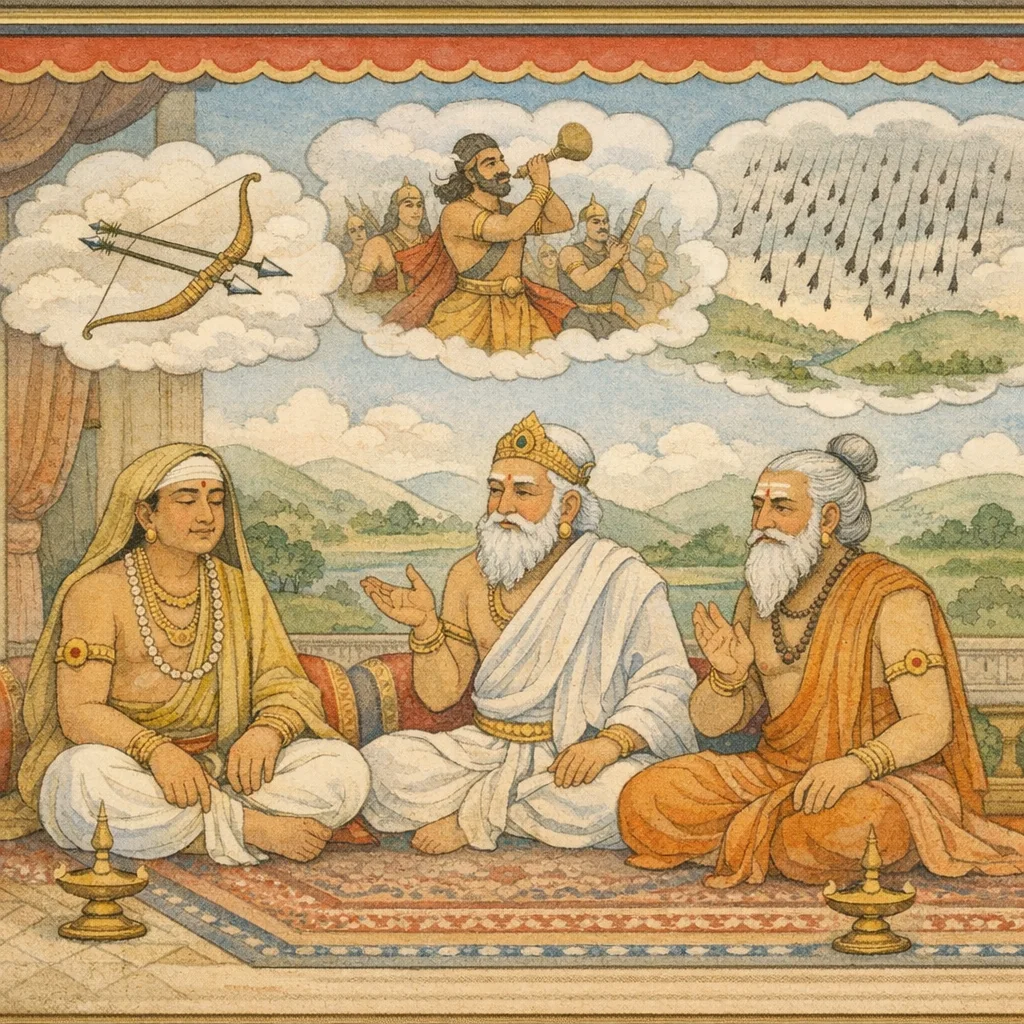
Chapter Arc: धृतराष्ट्र के वचनों को सुनकर भीष्म और द्रोण—जो आने वाले जनसंहार की आशंका से भीतर-ही-भीतर समान दुःख से दग्ध हैं—राजसभा में गुरुजनों की भाँति गंभीर, हितकारी वाणी उठाते हैं। → वे युद्ध को ‘वैशसम्’ (महाविनाश) कहकर बार-बार टालने की प्रार्थना करते हैं और ‘यावत्… तावत् श्याम्यतु वैशसम्’ की ध्वनि में पाण्डव-सेना के क्रमशः उभरते चित्र खींचते हैं—कृष्ण-अर्जुन के कवचधारी होने तक, गाण्डीव के उठने तक, धौम्य के यज्ञाग्नि में शत्रुबल के विनाश हेतु आहुति देने तक, युधिष्ठिर के क्रुद्ध होकर सेना देखने तक, भीम के अग्रभाग में खड़े होने तक, और नकुल-सहदेव, धृष्टद्युम्न, विराट, शिखण्डी आदि के समुद्र में ‘मकर/नक्र’ की तरह प्रवेश करने तक। → वाणी का शिखर उस भयावह भविष्यचित्र में आता है जहाँ भीम की गदा से गजारोही योद्धा ‘काल से परिपक्व फलों’ की तरह धराशायी होंगे और ‘गार्ध्रपत्र’ (गीध-पंखों जैसे) उग्र बाण कोमल देहों पर बरसेंगे—युद्ध का सौंदर्य नहीं, उसका नृशंस सत्य सामने रखकर वे धृतराष्ट्र को झकझोरते हैं। → भीष्म-द्रोण का निष्कर्ष स्पष्ट है: अभी, जब तक ये संकेत घटित नहीं हुए, विनाश को शांत किया जा सकता है; अतः संधि, संयम और नीति से युद्ध रोका जाए—क्योंकि एक बार कृष्ण-अर्जुन और पाण्डव-वीर पूर्णतः उद्यत हो गए तो रोकना असंभव होगा। → धृतराष्ट्र इस गुरु-वाणी को स्वीकार कर युद्ध-निवारण की ओर मुड़ेंगे, या पुत्रमोह/दुर्योधन-आश्रय में विनाश की ओर ही बढ़ेंगे?
Shlokas
Verse 1
वैशम्पायनजी कहते हैं--जनमेजय! धृतराष्ट्रका कथन सुनकर युद्धमें जनसंहारकी सम्भावनासे समान-रूपसे दुःखका अनुभव करनेवाले भीष्म और द्रोणाचार्यने गुरुजनोंकी आज्ञाका उल्लंघन करनेवाले दुर्योधनसे इस प्रकार कहा--
Vaiśampāyana said: “O Janamejaya, after hearing Dhṛtarāṣṭra’s words, Bhīṣma and Droṇa—equally pained by the prospect of mass slaughter in war—addressed Duryodhana, who was acting in defiance of the elders’ command, and spoke to him as follows.”
Verse 2
यावत् कृष्णावसंनद्धौ यावत् तिष्ठति गाण्डिवम् | यावद् धौम्यो न मेधाग्नौ जुहोतीह द्विषद्बलम्,“वत्स! जबतक श्रीकृष्ण और अर्जुन कवच धारण करके युद्धके लिये उद्यत नहीं होते हैं, जबतक गाण्डीव धनुष घरमें रखा हुआ है, जबतक धौम्य मुनि यज्ञाग्निमें शत्रुओंकी सेनाके विनाशके लिये आहुति नहीं डालते हैं और जबतक लज्जाशील महाथनुर्धर युधिष्ठिर तुम्हारी सेनापर क्रोधपूर्ण दृष्टि नहीं डालते हैं, तभीतक यह भावी जनसंहार शान्त हो जाना चाहिये
Vaiśampāyana said: “So long as Kṛṣṇa and Arjuna have not yet girded on their armor, so long as the Gāṇḍīva bow still rests at home, and so long as the sage Dhaumya has not begun to pour oblations into the sacrificial fire here for the destruction of the enemy’s forces—until then, this impending slaughter ought to be averted and brought to peace.”
Verse 3
यावन्न प्रेक्षते क्ुद्ध: सेनां तव युधिष्ठिर: । ह्वीनिषेवो महेष्वासस्तावच्छाम्यतु वैशसम्,“वत्स! जबतक श्रीकृष्ण और अर्जुन कवच धारण करके युद्धके लिये उद्यत नहीं होते हैं, जबतक गाण्डीव धनुष घरमें रखा हुआ है, जबतक धौम्य मुनि यज्ञाग्निमें शत्रुओंकी सेनाके विनाशके लिये आहुति नहीं डालते हैं और जबतक लज्जाशील महाथनुर्धर युधिष्ठिर तुम्हारी सेनापर क्रोधपूर्ण दृष्टि नहीं डालते हैं, तभीतक यह भावी जनसंहार शान्त हो जाना चाहिये
Vaiśampāyana said: “So long as the great archer Yudhiṣṭhira—modest by nature—has not yet cast his wrathful gaze upon your army, let this impending slaughter be calmed and brought to rest.”
Verse 4
यावन्न दृश्यते पार्थ: स्वेडप्यनीके व्यवस्थित: । भीमसेनो महेष्वासस्तावच्छाम्यतु वैशसम्,“जबतक कुन्तीपुत्र महाधनुर्धर भीमसेन अपनी सेनाके अग्रभागमें खड़े नहीं दिखायी देते हैं, तभीतक यह मार-काटका संकल्प शान्त हो जाना चाहिये
Vaiśampāyana said: “So long as the son of Kuntī—Bhīmasena, the great archer—does not appear standing at the very front of the battle-array, let this resolve for slaughter be calmed. Until he is seen in position, the impulse toward bloodshed should subside.”
Verse 5
यावन्न चरते मार्गान् पृतनामभि थधर्षयन् । भीमसेनो गदापाणिस्तावत् संशाम्य पाण्डवै:,“दुर्योधन! जबतक हाथमें गदा लिये भीमसेन तुम्हारी सेनाका संहार करते हुए युद्धके विभिन्न मार्गोमें विचरण नहीं कर रहे हैं, तभीतक तुम पाण्डवोंके साथ संधि कर लो
Vaiśaṃpāyana said: “So long as Bhīmasena, mace in hand, has not begun to range through the battle-lines, crushing the host, make peace with the Pāṇḍavas. Once his onslaught is unleashed, reconciliation will be too late and the cost of adharma will be paid in irrevocable ruin.”
Verse 6
यावन्न शातयत्याजी शिरांसि गजयोधिनाम् | गदया वीरघातिन्या फलानीव वनस्पते:
Vaiśampāyana said: “So long as, on the battlefield, he does not shatter the heads of the elephant-warriors with his mace—deadly to heroes—like fruits falling from a tree.”
Verse 7
नकुल: सहदेवश्व धृष्टद्युम्नश्व॒ पार्षत:
Vaiśampāyana said: Nakula and Sahadeva, and Dhṛṣṭadyumna—the son of Pārṣata (Drupada)—were also present and arrayed there, named among the leading figures in the unfolding preparations.
Verse 8
विराटश्न शिखण्डी च शैशुपालिश्न दंशिता: । यावन्न प्रविशन्त्येते नक्रा इव महार्णवम्
Vaiśaṃpāyana said: “Virāṭa and Śikhaṇḍī, and the scion of Śaiśupāla as well—armed and ready—will not enter the fray until the appointed moment, like crocodiles that do not plunge into the vast ocean before their time.”
Verse 9
कृतास्त्रा: क्षिप्रमस्यन्तस्तावच्छाम्यतु वैशसम् । “नकुल, सहदेव, द्रुपदपुत्र धृष्टद्युम्न, विराट, शिखण्डी तथा शिशुपालपुत्र धृष्टकेतु--ये अस्त्रविद्यामें निपुण महान् वीर कवच धारण करके महासागरमें घुसे हुए ग्राहोंकी भाँति तुम्हारी सेनाके भीतर जबतक प्रवेश नहीं करते हैं, तभीतक यह जनसंहारका संकल्प शान्त हो जाना चाहिये ।। ७-८ ह ।। यावन्न सुकुमारेषु शरीरेषु महीक्षिताम्
Vaiśampāyana said: “Let this frenzy of slaughter be calmed for now, while warriors perfected in weapon-lore swiftly loose their missiles. Nakula, Sahadeva, Dhṛṣṭadyumna the son of Drupada, Virāṭa, Śikhaṇḍin, and Dhṛṣṭaketu the son of Śiśupāla—these great heroes, skilled in the science of weapons and clad in armor—will plunge into your host like crocodiles entering the ocean. Until they have broken into your ranks, this resolve for mass-killing should subside—before the tender bodies of kings are struck down.”
Verse 10
चन्दनागुरुदिग्धेषु हारनिष्कधरेषु च | नोर:सु यावद् योधानां महेष्वासैर्महेषव:,“सामने आते ही लक्ष्यको मार गिरानेवाले, शीघ्रतापूर्वक बाण चलाने और दूरतकका लक्ष्य बींधनेवाले, अस्त्रविद्याके पारंगत महाधनुर्धर विपक्षी वीर जबतक तुम्हारे योद्धाओंके चन्दन और अगुरुसे चर्चित तथा हार और निष्क धारण करनेवाले वक्ष:स्थलोंपर विशाल बाणोंकी वर्षा नहीं करते, तभीतक तुम्हें युद्धका विचार त्याग देना चाहिये
Vaiśampāyana said: “So long as the mighty archers of the opposing side—masters of weaponry, swift in loosing arrows, and unfailing even against distant marks—do not shower their great shafts upon the chests of your warriors, anointed with sandal and agaru and adorned with necklaces and golden ornaments, until then you should abandon the very thought of war.”
Verse 11
कृतास्त्रै: क्षिप्रमस्यद्धिर्दूरपातिभिरायसा: । अभिल क्ष्यै्निपात्यन्ते तावच्छाम्यतु वैशसम्,“सामने आते ही लक्ष्यको मार गिरानेवाले, शीघ्रतापूर्वक बाण चलाने और दूरतकका लक्ष्य बींधनेवाले, अस्त्रविद्याके पारंगत महाधनुर्धर विपक्षी वीर जबतक तुम्हारे योद्धाओंके चन्दन और अगुरुसे चर्चित तथा हार और निष्क धारण करनेवाले वक्ष:स्थलोंपर विशाल बाणोंकी वर्षा नहीं करते, तभीतक तुम्हें युद्धका विचार त्याग देना चाहिये
Vaiśampāyana said: “So long as the iron shafts—shot swiftly by warriors perfected in weapon-lore and able to strike far—have not yet begun to fell their targets, let this violent enterprise be restrained. Until the moment when expert bowmen bring down men as soon as they come within sight, it is fitting to abandon the very thought of war.”
Verse 12
अभिवादयमानं त्वां शिरसा राजकुञ्जर: । पाणिश्यां प्रतिगृह्नातु धर्मराजो युधिछिर:,“हम चाहते हैं कि नृपश्रेष्ठ धर्मराज युधिष्ठिर तुम्हें मस्तक झुकाकर प्रणाम करते देख दोनों हाथोंसे पकड़ (कर हृदयसे लगा) लें
Vaiśampāyana said: “May Dharmarāja Yudhiṣṭhira—the kingly elephant among rulers—receive you with both hands and draw you close to his heart, as he bows his head in reverent salutation to you.”
Verse 13
ध्वजाडुकुशपताकाडू-क॑ दक्षिणं ते सुदक्षिण: । स्कन्धे निक्षिपतां बाहुं शान्तये भरतर्षभ,“भरतश्रेष्ठ! उत्तम दक्षिणा देनेवाले युधिष्ठिर ध्वजा, अंकुश और पताकाओंके चिह्नसे सुशोभित अपनी दाहिनी भुजाको जगत्में शान्ति स्थापित करनेके लिये तुम्हारे कंधेपर रखें
O best of the Bharatas! Let Yudhiṣṭhira—giver of the finest dakṣiṇā—whose right arm is adorned with the marks of banner, goad, and pennon, lay that right arm upon your shoulder, to establish peace in the world.
Verse 14
रत्नौषधिसमेतेन रक्ताड्गुलितलेन च । उपविष्टस्य पृष्ठ ते पाणिना परिमार्जतु
Vaiśaṃpāyana said: “With a palm furnished with jewels and healing herbs, and with fingers reddened as if stained, let him gently rub your back as you sit.”
Verse 15
“तथा तुम्हें पास बिठाकर रत्न एवं ओषधियोंसे युक्त लाल हथेलीवाले हाथसे तुम्हारी पीठको धीरे-धीरे सहलायें ।। शालस्कन्धो महाबाहुस्त्वां स््वजानो वृकोदर: । साम्नाभिवदतां चापि शान्तये भरतर्षभ,'भरतभूषण! शालवृक्षके तनेके समान ऊँचे डील-डौलवाले महाबाहु भीमसेन भी शान्तिके लिये तुम्हें हृदयसे लगाकर तुमसे मीठी-मीठी बातें करें
Vaiśaṃpāyana said: “Thus, seating him close by you, let him slowly stroke your back with that reddened palm furnished with jewels and healing herbs. And Bhīma—broad-shouldered like the trunk of a śāla tree, mighty-armed, your own kinsman known as Vṛkodara—will also, for the sake of peace, draw you to his breast and speak to you in gentle, conciliatory words, O bull among the Bharatas.”
Verse 16
अर्जुनेन यमाभ्यां च त्रिभिस्तैरभिवादित: । मूर्थ्नि तान् समुपाप्राय प्रेम्णाभिवद पार्थिव,“राजन! अर्जुन और नकुल-सहदेव--ये तीनों भाई तुम्हें प्रणाम करें और तुम उनके मस्तक सूँघकर उनके साथ प्रेमपूर्वक वार्तालाप करो
Vaiśaṃpāyana said: “O king, Arjuna together with the twin brothers, Nakula and Sahadeva—all three—have bowed to you. Go up to them, smell their heads in affectionate acceptance, and greet them warmly, speaking with them in love.”
Verse 17
दृष्टवा त्वां पाण्डवैरवरिभ्रातृभि: सह संगतम् | यावदानन्दजाश्रूणि प्रमुड्चन्तु नराधिपा:,“तुम्हें अपने वीर भाई पाण्डवोंके साथ मिला हुआ देख ये सब नरेश अपने नेत्रोंसे आनन्दके आँसू बहायें
Seeing you reunited with your heroic brothers, the Pāṇḍavas, let these kings shed tears born of joy from their eyes.
Verse 18
घुष्यतां राजधानीषु सर्वसम्पन्महीक्षिताम् । पृथिवी भ्रातृभावेन भुज्यतां विज्वरो भव,“राजाओंकी सभी राजधानियोंमें यह घोषणा करा दी जाय कि कौरव-पाण्डवोंका सारा झगड़ा समाप्त होकर परस्पर प्रेमपूर्वक उनका समस्त कार्य सम्पन्न हो गया। फिर तुम और युधिष्ठिर परस्पर भ्रातृभाव रखते हुए इस राज्यका समानरूपसे उपभोग करो, तुम्हारी सारी चिन्ताएँ दूर हो जायँ
Vaiśampāyana said: “Let it be proclaimed in the capitals of all prosperous kings: the quarrel between the Kauravas and the Pāṇḍavas has ended, and their affairs have been settled in mutual goodwill. Then you and Yudhiṣṭhira, maintaining a brotherly spirit, should enjoy and administer this kingdom equally—be free from feverish anxiety.”
Verse 66
कालेन परिपक्वानि तावच्छाम्यतु वैशसम् । “जबतक भीमसेन अपनी वीरघातिनी गदाके द्वारा समयानुसार पके हुए वृक्षके फलोंकी भाँति संग्राम-भूमिमें गजारोही योद्धाओंके मस्तकोंको काट-काटकर नहीं गिरा रहे हैं, तभीतक तुम्हारा युद्धवेषयक संकल्प शान्त हो जाना चाहिये
Let the resolve for war be stilled—at least so long as Bhīmasena has not yet, with his hero-slaying mace, begun to hew down on the battlefield the heads of elephant-mounted warriors, making them fall like fruits ripened in season from the tree.
Verse 96
गार्ध्रपत्रा: पतन्त्युग्रास्तावच्छाम्यतु वैशसम् । “जबतक इन भूमिपालोंके सुकुमार शरीरोंपर गीधकी पाँखोंसे युक्त भयंकर बाण नहीं गिर रहे हैं, तभीतक युद्धका संकल्प शान्त हो जाय
Vaiśampāyana said: “Let the resolve for slaughter be calmed—at least until those dreadful arrows, feathered with vulture-plumes, begin to fall upon the tender bodies of these kings. While such violence has not yet commenced, let restraint prevail.”
Verse 126
इति श्रीमहाभारते उद्योगपर्वणि भगवद्यानपर्वणि भीष्मद्रोणवाक्ये षड्विंशत्यधिकशततमो<ध्याय:
Thus, in the Śrī Mahābhārata, within the Udyoga Parva—specifically in the section concerning the Lord’s embassy—ends the one-hundred-and-twenty-sixth chapter, in the episode of the words spoken by Bhīṣma and Droṇa.
Frequently Asked Questions
Whether the outcomes of the dice match and subsequent exile constitute legitimate, consent-based political results or represent a moral and legal wrong requiring restitution; Duryodhana argues legitimacy and denies culpability.
A maximalist interpretation of kṣātra identity: steadfastness, refusal to submit from fear, and acceptance of battle-death as svadharma—used here to justify political intransigence rather than reconciliation.
No explicit phalaśruti appears in the provided passage; the chapter functions as character-positioning and causal scaffolding, clarifying why diplomatic settlement fails within the epic’s broader ethical architecture.