Adhyaya 106
Udyoga Parva, Adhyāya 106: Pūrva-Diśa Praśaṃsā (Praise and Primacy of the Eastern Quarter)
Upa-parva: Gālava–Suparṇa Saṃvāda (Directional Discourse within Udyoga Parva)
Suparṇa states he has been instructed by a deity of unknown origin and asks Gālava to indicate which direction he should first pursue (east, south, west, or north). The response centers on the eastern quarter as ritually and cosmologically primary: it is where the sun rises, where sandhyā-related austerities are situated, and where dharma’s ‘eyes’ and establishment are poetically located. The chapter frames the east as the ‘doorway’ of day and the path along which offerings are understood to spread. It associates the east with primordial events and authoritative transmissions—Vedic chanting, the Sāvitrī, yajus-gifts attributed to the sun, divine ritual consumption (soma), and mythic attainments (e.g., Varuṇa’s prosperity). Additional cataloging links the region to origins and destinies of revered lineages (e.g., Vasiṣṭha) and to a broader metaphysics of auspicious beginnings. The discourse culminates by naming the east as a gateway to the three worlds and to heaven’s felicity, after which Suparṇa reiterates his duty to comply and requests further instruction about other directions.
Chapter Arc: नारद गालव की दारुण दशा का चित्र खींचते हैं—प्रतिज्ञा के बोझ से दबा वह न बैठ पाता है, न सो पाता; चिंता-शोक में गलता हुआ मानो त्वचा और अस्थि मात्र रह गया है। → गालव अपने ही मन से प्रश्न करता है: ‘ऐसे मित्र कहाँ जो धन से पुष्ट हों? आठ सौ चन्द्र-शुभ्र घोड़े कहाँ से आएँ? भोजन में रुचि, सुख में श्रद्धा—सब कट गई; ऐसे जीवन का क्या अर्थ?’ प्रतिज्ञा-भंग का भय उसे भीतर ही भीतर जलाता है, क्योंकि ‘करूँगा’ कहकर न करने वाले की इष्ट-पूर्त नष्ट होती है—यह स्मृति उसे और कठोर बनाती है। → गालव की आत्मग्लानि अपने चरम पर पहुँचती है—निर्धनता और पाप का संबंध, मिथ्यावचन का दाह, और प्रतिज्ञा-पालन की अनिवार्यता एक साथ उसे घेर लेती है; वह विलाप करता है कि प्रतिज्ञा पूरी किए बिना उसका जीवन ही व्यर्थ है। → उसी संकट में गरुड़ का आगमन होता है। वह गालव को ‘सुहृद’ कहकर आश्वस्त करता है और सहायता का वचन देता है—साथ चलने को कहता है, ताकि उसे ऐसे देश तक पहुँचा दे जो पृथ्वी के भीतर/समुद्र के पार है, जहाँ समाधान का मार्ग खुल सकता है। → गरुड़ का प्रस्ताव—‘चलो, विलम्ब न करो; मैं तुम्हें उस पार ले चलूँगा’—यात्रा के रहस्य और आगे मिलने वाले उपाय को अगले अध्याय के लिए छोड़ देता है।
Shlokas
Verse 1
भीकम (2 अमान सप्ताधिकशततमोड< ध्याय: गालवकी चिन्ता और गरुड़का आकर उन्हें आश्वासन देना नारद उवाच एवमुक्तस्तदा तेन विश्वामित्रेण धीमता । नास्ते न शेते नाहारं कुरुते गालवस्तदा,नारदजीने कहा--राजन्! उस समय परम बुद्धिमान विश्वामित्रके ऐसा कहनेपर गालव मुनि तबसे न कहीं बैठते, न सोते और न भोजन ही करते थे
Narada said: “O King, when the wise Viśvāmitra had spoken to him in this way, the sage Gālava thereafter neither sat down nor lay to sleep, nor did he take any food.”
Verse 2
त्वगस्थिभूतो हरिणश्विन्ताशोकपरायण: । शोचमानो>तिमात्र॑ स दहामानश्व मन्युना । गालवो दु:ःखितो दुःखादू विललाप सुयोधन,वे चिन्ता और शोकमें डूबे रहनेके कारण पाण्डुवर्णके हो गये। उनके शरीरमें अस्थि- चर्ममात्र ही शेष रह गये थे। सुयोधन! अत्यन्त शोक करते और चिन्ताकी आगमें दग्ध होते हुए दुःखी गालव मुनि दुःखसे विलाप करने लगे--
Nārada said: Absorbed in anxiety and grief, Galava had become as though only skin and bone remained. Overwhelmed by excessive sorrow and burning inwardly with anger, the afflicted sage Galava began to lament in his distress before Suyodhana.
Verse 3
कुत: पुष्टानि मित्राणि कुतोर्डर्था: संचय: कुतः । हयानां चन्द्रशु भ्राणां शतान्यष्टौ कुतो मम,“मेरे ऐसे मित्र कहाँ, जो धनसे पुष्ट हों? मुझे कहाँसे धन प्राप्त होगा? कहाँ मेरे लिये धन संग्रह करके रखा हुआ है? और कहाँसे मुझे चन्द्रमाके समान श्वेतवर्णवाले आठ सौ घोड़े प्राप्त होंगे?
Nārada said: “From where will I obtain friends strengthened by wealth? From where will resources come to me, and from where will there be any store of accumulated riches? And from where, for my sake, will I obtain eight hundred horses, white and radiant like the moon?”
Verse 4
कुतो मे भोज ने श्रद्धा सुखश्रद्धा कुतश्च मे । श्रद्धा मे जीवितस्यापि छिन्ना कि जीवितेन मे,“ऐसी दशामें मुझे भोजनकी रुचि कहाँसे हो? सुख भोगनेकी इच्छा कहाँसे हो? और इस जीवनसे भी मुझे क्या प्रयोजन है? इस जीवनको सुरक्षित रखनेके लिये मेरा जो उत्साह था, वह भी नष्ट हो गया
Nārada said: “In such a state, where would I find any taste for food? From where would the desire to enjoy happiness arise? And what use is this life to me at all? Even my resolve to preserve my life has been cut off.”
Verse 5
अहं पारे समुद्रस्य पृथिव्या वा परम्परात् गत्वा55त्मानं विमुज्चामि कि फलं जीवितेन मे,“मैं समुद्रके उस पार अथवा पृथ्वीसे बहुत दूर जाकर इस शरीरको त्याग दूँगा। अब मेरे जीवित रहनेसे क्या लाभ है?
Nārada said: “Crossing to the far shore of the ocean—or going far away beyond the bounds of the earth—I will cast off this body. What benefit is there in my continuing to live?”
Verse 6
अधनस्याकृतार्थस्य त्यक्तस्य विविधै: फलै: । ऋणं धारयमाणस्य कुत: सुखमनीहया,“जो निर्धन है, जिसके अभीष्ट मनोरथकी सिद्धि नहीं हुई है तथा जो नाना प्रकारके शुभ कर्मफलोंसे वंचित होकर केवल ऋणका बोझ ढो रहा है, ऐसे मनुष्यको बिना उद्यमके जीवन धारण करनेसे क्या सुख होगा?
Nārada said: “For one who is poor, whose aims have not been fulfilled, who has been deprived of the many fruits of meritorious deeds, and who is merely carrying the burden of debt—how could there be any happiness in sustaining life without effort?”
Verse 7
सुह्ृदां हि धनं भुक्त्वा कृत्वा प्रणयमीप्सितम् । प्रतिकर्तुमशक्तस्य जीवितान्मरणं वरम्,“जो इच्छानुसार प्रेम-सम्बन्ध स्थापित करके सुहृदोंका धन भोगकर उनका प्रत्युपकार करनेमें असमर्थ हो, उसके जीनेसे मर जाना ही अच्छा है
Nārada said: “If a man, having formed the bond of affection he desired, enjoys the wealth of his well-wishers yet cannot repay their kindness, then death is better for him than such a life.”
Verse 8
प्रतिश्रुत्य करिष्येति कर्तव्यं तदकुर्वत: । मिथ्यावचनदग्धस्य इष्टापूर्त प्रणश्यति,“जो “करूँगा” ऐसा कहकर किसी कार्यको पूर्ण करनेकी प्रतिज्ञा कर ले, परंतु आगे चलकर उस कर्तव्यका पालन न कर सके, उस असत्यभाषणसे दग्ध हुए पुरुषके “इष्ट"' और 'आपूर्त' सभी नष्ट हो जाते हैं
Nārada said: “He who vows, ‘I will do it,’ yet fails to perform the duty he has undertaken, is scorched by false speech; and all his iṣṭa and āpūrta—merit from sacrifice and from public beneficence—perish.”
Verse 9
न रूपमनृतस्यास्ति नानृतस्यास्ति संतति: । नानृतस्याधिपत्यं च कुत एव गति: शुभा,'सत्यसे शून्य मनुष्यका जीवन नहींके बराबर है। मिथ्यावादीको संतति नहीं प्राप्त होती। झूठेको प्रभुत्व नहीं मिलता, फिर उसे शुभ गति कैसे प्राप्त हो सकती है?
Nārada said: “Falsehood has no true form or footing; from falsehood no enduring lineage or worthy issue arises. Nor does sovereignty last for one who is untruthful—how then could he attain an auspicious destiny?”
Verse 10
कुतः कृतघ्नस्य यश: कुतः स्थान कुत: सुखम् | अश्रद्धेय: कृतघ्नो हि कृतघ्ने नास्ति निष्कृति:,“कृतघ्न मनुष्यको सुयश कहाँ? स्थान या प्रतिष्ठा कहाँ और सुख भी कहाँ है? कृतघ्न मानव अविश्वसनीय होता है, उसका कभी उद्धार नहीं होता है
Nārada said: “How can a thankless person gain true fame? How can he attain standing and honor, and how can he find happiness? The ungrateful are not worthy of trust; and for one who is ungrateful, there is no expiation—no real redemption.”
Verse 11
न जीवत्यधन: पाप: कुतः पापस्य तन्त्रणम् | पापो ध्रुवमवाप्नोति विनाशं नाशयन् कृतम्,“निर्धन एवं पापी मनुष्यका जीवन वास्तवमें जीवन नहीं है। पापी मनुष्य अपने कुटुम्बका पोषण भी कैसे कर सकता है? पापात्मा (निर्धन) पुरुष अपने पुण्य कर्मोका नाश करता हुआ स्वयं भी निश्चय ही नष्ट हो जाता है
Nārada said: “A sinful man who is without wealth does not truly live; how could such a sinner even maintain his household? By destroying the merit he has earned, the sinful man surely brings about his own ruin.”
Verse 12
सो<हं पाप: कृतघ्नश्न कृपणश्चानृतोडपि च | गुरोर्य: कृतकार्य: संस्तत् करोमि न भाषितम्,“मैं पापी, कृतघ्न, कृपण और मिथ्यावादी हूँ, जिसने गुरुसे तो अपना काम करा लिया, परंतु स्वयं जो उन्हें देनेकी प्रतिज्ञा की है, उसकी पूर्ति नहीं कर पा रहा हूँ
Nārada said: “I am sinful—ungrateful, miserly, and even a speaker of falsehood. Having had my own purpose accomplished through my teacher, I still fail to do what I had promised to him.”
Verse 13
सो हं प्राणान् विमोक्ष्यामि कृत्वा यत्नमनुत्तमम् | अर्थिता न मया काचित् कृतपूर्वा दिवौकसाम् | मानयन्ति च मां सर्वे त्रिदशा यज्ञसंस्तरे,“अतः मैं कोई उत्तम प्रयत्न करके अपने प्राणोंका परित्याग कर दूँगा। मैंने आजसे पहले देवताओंसे भी कभी कोई याचना नहीं की है। सब देवता यज्ञमें मेरा समादर करते हैं
Nārada said: “I will, after making the utmost effort, relinquish my very life. Never before have I made any request of the gods. Yet all the deities honor me upon the sacred ground of sacrifice.”
Verse 14
अहं तु विबुधश्रेष्ठं देवं त्रिभुवनेश्वरम् । विष्णुं गच्छाम्यहं कृष्णं गतिं गतिमतां वरम्,“अब मैं त्रिभुवनके स्वामी एवं जंगम जीवोंके सर्वश्रेष्ठ आश्रय सुरश्रेष्ठ सच्चिदानन्दघन भगवान् विष्णुकी शरणमें जाता हूँ
Narada said: “I, for my part, now go for refuge to Vishnu—Kṛṣṇa—who is the foremost among the gods, the Lord of the three worlds, and the supreme goal of all who seek the highest path.”
Verse 15
भोगा यस्मात् प्रतिष्ठन्ते व्याप्य सर्वान् सुरासुरान् । प्रणतो द्रष्टमिच्छामि कृष्णं योगिनमव्ययम्,“जिनकी कृपासे समस्त देवताओं और असुरोंको भी यशथेष्ट भोग प्राप्त होते हैं, उन्हीं अविनाशी योगी भगवान् विष्णुका मैं प्रणतभावसे दर्शन करना चाहता हूँ
Nārada said: “From him arise the enjoyments that pervade and sustain all beings—gods and asuras alike. Bowing in reverence, I wish to behold Kṛṣṇa, the imperishable Yogin.”
Verse 16
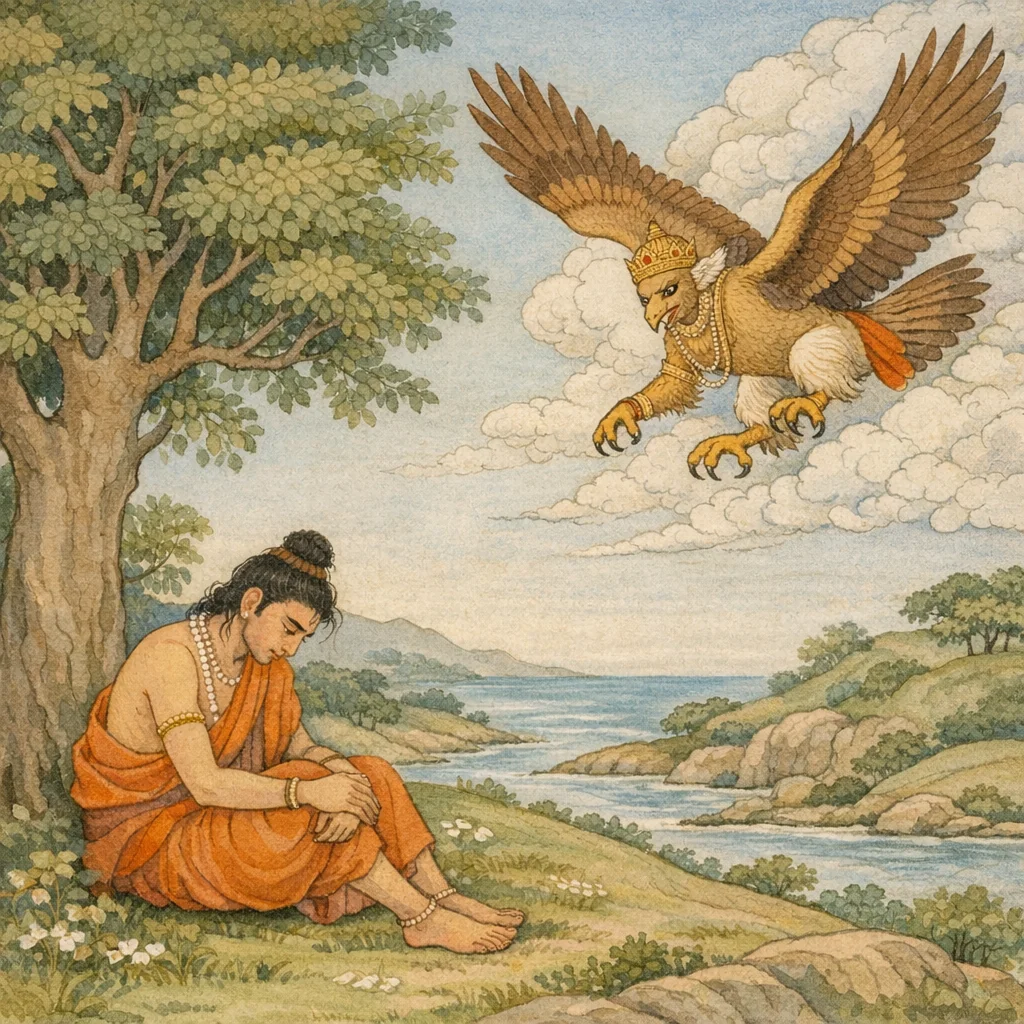
एवमुक्ते सखा तस्य गरुडो विनतात्मज: । दर्शयामास त॑ प्राह संदहृष्ट: प्रियकाम्यया,गालवके इस प्रकार कहनेपर उनके सखा विनतानन्दन गरुड़ने अत्यन्त प्रसन्न होकर उनका प्रिय करनेकी इच्छासे उन्हें दर्शन दिया और इस प्रकार कहा--
When this was said, his friend Garuḍa—the son of Vinatā—appeared before him. Greatly delighted and wishing to do what was dear to him, Garuḍa revealed himself and spoke thus—.
Verse 17
सुहृद् भवान् मम मतः सुहृदां च मत: सुहृत् । ईप्सितेनाभिलाषेण योक्तव्यो विभवे सति,“गालव! तुम मेरे प्रिय सुहद् हो और मेरे सुहृदोंके भी प्रिय सुहृद् हो। सुहदोंका यह कर्तव्य है कि यदि उनके पास धन-वैभव हो तो वे उसका अपने सुहृदका अभीष्ट मनोरथ पूर्ण करनेके लिये उपयोग करें
Nārada said: “You are held by me to be a true friend, and by my friends as well you are held to be a true friend. This is the duty of friends: when one has means and prosperity, one should use them to fulfill the cherished wish and desired aim of one’s friend.”
Verse 18
विभवश्चास्ति मे विप्र वासवावरजो द्विज । पूर्वमुक्तस्त्वदर्थ च कृत: कामश्न तेन मे,“ब्रह्मन्! मेरे सबसे बड़े वैभव हैं इन्द्रके छोटे भाई भगवान् विष्णु। मैंने पहले तुम्हारे लिये उनसे निवेदन किया था और उन्होंने मेरी इस प्रार्थनाको स्वीकार करके मेरा मनोरथ पूर्ण किया था
Nārada said: “O brāhmaṇa, I too have means and splendor. My greatest treasure is the Lord Viṣṇu, the younger brother of Vāsava (Indra). Earlier I petitioned him on your behalf, and he accepted my prayer and brought my wish to fulfillment.”
Verse 19
स भवानेतु गच्छाव नयिष्ये त्वां यथासुखम् । देशं पारं पृथिव्या वा गच्छ गालव मा चिरम्
Nārada said: “Come then—let us go. I shall lead you in comfort, as you wish, to whatever land you desire, even to the farthest shore of the earth. Go, O Gālava; do not delay.”
Verse 106
इस प्रकार श्रीमहाभारत उद्योगपर्वके अन्तर्गत भगवद्यानपर्वमें गालवचरित्रविषयक एक सौ छठाँ अध्याय पूरा हुआ
Thus ends the one hundred and sixth chapter of the Udyoga Parva of the Śrī Mahābhārata, within the section known as the Bhagavad-yāna Parva, dealing with the narrative of Gālava.
Verse 107
“अत: आओ' हम दोनों चलें। गालव! मैं तुम्हें सुखपूर्वक ऐसे देशमें पहुँचा दूँगा, जो पृथ्वीके अन्तर्गत तथा समुद्रके उस पार है। चलो, विलम्ब न करो” ।। इति श्रीमहाभारते उद्योगपर्वणि भगवद्यानपर्वणि गालवचरिते सप्ताधिकशततमो<ध्याय:
Nārada said: “Come then—let us both set out. Gālava, I will convey you safely and with ease to a land that lies beneath the earth and beyond the ocean. Come; do not delay.”
Frequently Asked Questions
The dilemma is one of right action under instruction: Suparṇa must choose a direction to travel, but seeks a dharma-aligned criterion for priority rather than relying on personal preference.
The chapter teaches that correct action is coordinated with cosmic and ritual order—beginnings are ideally aligned with the east as a symbol of emergence, clarity, and normative precedence.
No explicit phalaśruti is stated in the provided verses; instead, the text implies benefit through symbolic claims that the east functions as a ‘gateway’ to well-being (svarga/sukha) and orderly conduct.