Adhyaya 103
Udyoga Parva Adhyāya 103: Garuḍa’s Protest, Viṣṇu’s Demonstration, and Counsel Toward Śama
Upa-parva: Garuḍa–Indra–Viṣṇu Bala-Parīkṣā Episode (Embedded Exemplum within Udyoga Parva)
Kaṇva narrates that Garuḍa learns Indra has granted longevity to a nāga, obstructs the worlds with his wing-wind, and confronts Indra, alleging disrespect and interference with his ordained sustenance. Garuḍa asserts lineage, prior feats against daityas, and claims of unmatched burden-bearing, interpreting his service at the banner-station as a cause of being slighted. Kaṇva then describes a corrective intervention: Viṣṇu (rathacakrabhṛt) challenges Garuḍa’s self-praise and proposes a test—Garuḍa should bear a single arm. When the arm is placed upon Garuḍa’s shoulder, he collapses under the weight, shedding feathers, losing composure, and acknowledging he misjudged Viṣṇu’s supreme strength. Viṣṇu grants reassurance and redirects the lesson into policy counsel addressed to a royal figure: desist from hostility, seek śama, and recognize the formidable coalition associated with the Pāṇḍavas. Vaiśaṃpāyana closes with Duryodhana hearing Kaṇva’s words, reacting with derision and fatalistic self-justification rather than adopting restraint.
Chapter Arc: देवराज इन्द्र के सारथि और मन्त्री-तुल्य मित्र मातलि का परिचय—जिसका रथ सहस्र हरियों से युक्त होकर देवासुर-संग्रामों में मनोबल से ही नियंत्रित होता है—और उसी मातलि का पृथ्वी पर ‘वर’ खोजने का असाधारण प्रयोजन। → मातलि योग्य वर की खोज में मानवीय कुलों और ऋषि-आश्रमों के मानदण्डों को टटोलता है; कण्व-मुनि के आश्रम में आर्यक के पुत्र सुमुख के गुण (शील, शौच, दम आदि) सामने आते हैं, पर ‘जामातृ’ के रूप में स्वीकार्यता, कुल-प्रतिष्ठा और देव-मानव मर्यादा का प्रश्न तनाव बढ़ाता है। → दैवयोग से चतुर्भुज भगवान विष्णु की उपस्थिति में नारद द्वारा समस्त वृत्तान्त का उद्घाटन; इन्द्र गरुड़ (वैनतेय) के पराक्रम का स्मरण कर विष्णु से निवेदन करता है—‘आप ही इसे प्रदान करें’—और वर-निर्णय देव-आज्ञा के स्तर पर प्रतिष्ठित हो जाता है। → सुमुख की योग्यता और मर्यादा मान्य होती है; मातलि स्वयं कन्यादान हेतु उद्यत होकर आर्यक/कण्व-पक्ष से सम्मान और स्वीकृति की अपेक्षा करता है—सम्बन्ध की विधिवत स्थापना की दिशा स्पष्ट हो जाती है। → देव-समर्थन से वर निश्चित तो होता है, पर विवाह-सम्पादन और दोनों कुलों/लोकों के बीच इस सम्बन्ध के दूरगामी परिणाम अगले प्रसंग की ओर संकेत करते हैं।
Shlokas
Verse 1
इस प्रकार श्रीमहाभारत उद्योगपर्वके अन्तर्गत भगवद्यानपर्वमें मातलिके द्वारा वरका खोजविषयक एक सौ तीनवाँ अध्याय पूरा हुआ ॥/ १०३ ॥। ऑपन-माज बछ। अकाल चतुर्राधिकशततमो< ध्याय: नारदजीका नागराज आर्यकके सम्मुख सुमुखके साथ मातलिकी कन्याके विवाहका प्रस्ताव एवं मातलिका नारदजी, सुमुख एवं आर्यकके साथ इन्द्रके पास आकर उनके द्वारा सुमुखको दीर्घायु प्रदान कराना तथा सुमुख- गुणकेशी-विवाह (कण्व उवाच माललेव॑चन श्रुत्वा नारदो मुनिसत्तम: । अब्रवीन्नागराजानमार्यक॑ कुरुनन्दन ।।) कण्व मुनि कहते हैं--कुरुनन्दन! मातलिकी बात सुनकर मुनिश्रेष्ठ नारदने नागराज आर्यकसे कहा। नारद उवाच सूतो5यं मातलिननम शक्रस्य दयित: सुहृत् । शुचि: शीलगुणोपेतस्तेजस्वी वीर्यवान् बली,नारदजी बोले--नागराज! ये इन्द्रके प्रिय सखा और सारथि मातलि हैं। इनमें पवित्रता, सुशीलता और समस्त सदगुण भरे हुए हैं। ये तेजस्वी होनेके साथ ही बल- पराक्रमसे सम्पन्न हैं
Nārada said: “O king of the Nāgas, this is Mātali by name—the charioteer of Śakra (Indra), dear to him and his trusted friend. He is pure, endowed with good conduct and virtues; radiant in presence, possessed of valor, and strong.”
Verse 2
शक्रस्थायं सखा चैव मन्त्री सारथिरेव च । अल्पान्तरप्रभावश्नल वासवेन रणे रणे,इन्द्रके मित्र, मन्त्री और सारथि सब कुछ यही हैं। प्रत्येक युद्धमें ये इन्द्रके साथ रहते हैं। इनका प्रभाव इन्द्रसे कुछ ही कम है
Nārada said: “This one is indeed Śakra’s intimate friend—his counsellor and even his charioteer. In every battle he stands beside Vāsava; his power falls only a little short of Indra’s.”
Verse 3
अयं हरिसहस्रेण युक्त जैत्र॑ रथोत्तमम् । देवासुरेषु युद्धेषु मनसैव नियच्छति,ये देवासुर-संग्राममें सहस्न घोड़ोंसे जुते हुए देवराजके विजयशील श्रेष्ठ रथका अपने मानसिक संकल्पसे ही (संचालन और) नियन्त्रण करते हैं
Nārada said: “This supreme chariot of victory, yoked with a thousand steeds, is restrained and guided by mere mental resolve in the wars between gods and demons.”
Verse 4
अनेन विजितानबश्नैर्दोर्भ्यां जयति वासव: । अनेन बलभित् पूर्व प्रह्ते प्रहरत्युत,ये अपने अभश्वोंद्वारा जिन शत्रुओंको जीत लेते हैं, उन्हींको देवराज इन्द्र अपने बाहुबलसे पराजित करते हैं। पहले इनके द्वारा प्रहार हो जानेपर ही बलनाशक इन्द्र शत्रुओंपर प्रहार करते हैं
Through him, Vāsava (Indra) conquers with the strength of his arms those foes whom this one has first subdued. Only after he has struck the opening blow does “Balabhit”—Indra, the breaker of the enemy’s might—deal his blows upon the adversaries.
Verse 5
अस्य कन्या वरारोहा रूपेणासदृशी भुवि । सत्यशीलगुणोपेता गुणकेशीति विश्रुता
He has a daughter, a noble maiden, whose beauty is unmatched on earth. Endowed with truthfulness, good conduct, and excellent qualities, she is renowned by the name Guṇakeśī.
Verse 6
इनके एक सुन्दरी कन्या है, जिसके रूपकी समानता भूमण्डलमें कहीं नहीं है। उसका नाम है गुणकेशी। वह सत्य, शील और सदगुणोंसे सम्पन्न है ।। तस्यास्य यत्नाच्चरतस्त्रैलोक्यममरथ़ुते । सुमुखो भवतः: पौत्रो रोचते दुहितुः पति:,देवोपम कान्तिवाले नागराज! ये मातलि बड़े प्रयत्नसे कनन््याके लिये वर ढूँढ़नेके निमित्त तीनों लोकोंमें विचरते हुए यहाँ आये हैं। आपका पौत्र सुमुख इन्हें अपनी कन्याका पति होनेयोग्य प्रतीत हुआ है; उसीको इन्होंने पसंद किया है
Narada said: “While he was diligently roaming through the three worlds in search of a suitable bridegroom, Mātali has come here for this very purpose. O king of serpents, your grandson Sumukha appears to him as the fitting husband for his daughter. His radiance is like that of the gods, and Mātali has chosen him.”
Verse 7
यदि ते रोचते सम्यग् भुजगोत्तम मा चिरम् | क्रियतामार्यक क्षिप्रं बुद्धि: कन्यापरिग्रहे,नागप्रवर आर्यक! यदि आपको भी यह सम्बन्ध भलीभाँति रुचिकर जान पड़े तो शीघ्र ही इनकी पुत्रीको ब्याह लानेका निश्चय कीजिये
Narada said: “If this proposal truly pleases you, O best of serpents, then do not delay. O noble Aryaka, promptly resolve your intention to accept the maiden in marriage.”
Verse 8
यथा विष्णुकुले लक्ष्मीर्यथा स्वाहा विभावसो: । कुले तव तथैवास्तु गुणकेशी सुमध्यमा,जैसे भगवान् विष्णुके घरमें लक्ष्मी और अग्निके घरमें स्वाहा शोभा पाती हैं, उसी प्रकार सुन्दरी गुणकेशी तुम्हारे कुलमें प्रतिष्ठित हो
Nārada said: “Just as Lakṣmī shines in the household of Viṣṇu, and just as Svāhā is honored in the domain of Agni, so too may the beautiful Guṇakeśī, slender-waisted, be firmly established and esteemed in your lineage.”
Verse 9
पौत्रस्यार्थे भवांस्तस्माद् गुणकेशीं प्रतीच्छतु । सदृशीं प्रतिरूपस्य वासवस्य शचीमिव,अतः आप अपने पौत्रके लिये गुणकेशीको स्वीकार करें। जैसे इन्द्रके अनुरूप शची हैं, उसी प्रकार आपके सुयोग्य पौत्रके योग्य गुणकेशी है
Nārada said: “Therefore, for the sake of your grandson, accept Guṇakeśī. Just as Śacī is a fitting match for Vāsava (Indra), so Guṇakeśī is a suitable and worthy bride for your deserving grandson.”
Verse 10
पितृहीनमपि होनं गुणतो वरयामहे । बहुमानाच्च भवतस्तथैवैरावतस्य च
Nārada said: “Even one who lacks paternal lineage and is deemed ‘low’ by the world may be chosen by virtue alone. And so it is also out of respect—both for you and likewise for Airāvata.”
Verse 11
अभिगम्य स्वयं कन्यामयं दातुं समुद्यत:
Having gone in person, he himself stood ready to give the maiden—acting directly and decisively, as one who takes responsibility for a promised gift rather than delegating it to others.
Verse 12
कण्व उवाच स तु दीन: प्रद्ृष्ट श्न प्राह नारदमार्यक:,कण्व मुनि कहते हैं--कुरुनन्दन! तब नागराज आर्यक प्रसन्न होकर दीनभावसे बोले --
Kaṇva said: Then Āryaka, the lord of the Nāgas, though humbled in spirit, looked upon Nārada with composure and spoke. The scene frames a moral contrast: even one of great power, when placed under pressure or seeking aid, adopts humility and measured speech—an ethical posture that prepares the ground for counsel, reconciliation, or righteous action.
Verse 13
आर्यक उवाच व्रियमाणे तथा पौत्रे पुत्रे च निधनं गते । कथमिच्छामि देवर्षे गुणकेशीं स्नुषां प्रति,आर्यक पुनः बोले--'देवर्षे! मेरा पुत्र मारा गया और पौत्रका भी उसी प्रकार मृत्युने वरण किया है; अतः मैं गुणकेशीको बहू बनानेकी इच्छा कैसे करूँ?
Āryaka said: “O divine seer, when my grandson is dying and my son too has met his end, how can I, in such a time of bereavement, desire Guṇakeśī as a daughter-in-law?”
Verse 14
न मे नैतद् बहुमतं महर्षे वचनं तव । सखा शक्रस्य संयुक्त: कस्यायं नेप्सितो भवेत्
O great seer, I do not find your statement convincing. For one who is allied with Indra and is his companion—how could such a person fail to be sought after (or desired) by someone?
Verse 15
महर्षे! मेरी दृष्टिमें आपके इस वचनका कम आदर नहीं है और ये मातलि तो इन्द्रके साथ रहनेवाले उनके सखा हैं; अत: ये किसको प्रिय नहीं लगेंगे? ।। कारणस्य तु दौर्बल्याच्चिन्तयामि महामुने । अस्य देहकरस्तात मम पुत्रो महाद्युते,परंतु माननीय महामुने! कारणकी दुर्बलतासे मैं चिन्तामें पड़ा रहता हूँ। महाद्युते! इस बालकका पिता, जो मेरा पुत्र था, गरुड़का भोजन बन गया। इस दुःखसे हमलोग पीड़ित हैं। प्रभो! जब गरुड़ यहाँसे जाने लगे, तब पुनः यह कहते गये कि दूसरे महीनेमें मैं सुमुखको भी खा जाऊँगा। अवश्य ही ऐसा ही होगा; क्योंकि हम गरुड़के निश्चयको जानते हैं। गरुड़के उस कथनसे मेरी हँसी-खुशी नष्ट हो गयी है
Āryaka said: “O great seer, I do not hold your words in any lesser respect. And this Mātali is a companion of Indra, dwelling with him—so who would not find him dear? Yet, venerable sage, I am troubled because the very cause is weak and uncertain. O illustrious one, this boy’s father—my own son—was made food for Garuḍa. We are tormented by that grief. And when Garuḍa departed from here, he said again: ‘In the second month I shall also eat Sumukha.’ Surely it will be so, for we know Garuḍa’s resolve. By that utterance of Garuḍa, my joy and laughter have been destroyed.”
Verse 16
भक्षितो वैनतेयेन दुःखातास्तेन वै वयम् । पुनरेव च तेनोक्तं वैनतेयेन गच्छता । मासेनान्येन सुमुखं भक्षयिष्य इति प्रभो,परंतु माननीय महामुने! कारणकी दुर्बलतासे मैं चिन्तामें पड़ा रहता हूँ। महाद्युते! इस बालकका पिता, जो मेरा पुत्र था, गरुड़का भोजन बन गया। इस दुःखसे हमलोग पीड़ित हैं। प्रभो! जब गरुड़ यहाँसे जाने लगे, तब पुनः यह कहते गये कि दूसरे महीनेमें मैं सुमुखको भी खा जाऊँगा। अवश्य ही ऐसा ही होगा; क्योंकि हम गरुड़के निश्चयको जानते हैं। गरुड़के उस कथनसे मेरी हँसी-खुशी नष्ट हो गयी है
Āryaka said: “My son—this boy’s father—was devoured by Vainateya (Garuḍa). Because of that we are afflicted with grief. And as Garuḍa was departing from here, he said again: ‘In another month, O lord, I shall also eat Sumukha.’ That will surely come to pass, for we know the firmness of Garuḍa’s resolve. From that declaration of Garuḍa, my joy and ease have been destroyed, and I remain anxious, weakened by the cause of this fear.”
Verse 17
ध्रुवं तथा तद् भविता जानीमस्तस्यथ निश्चयम् । तेन हर्ष: प्रणष्टो मे सुपर्णवचनेन वै,परंतु माननीय महामुने! कारणकी दुर्बलतासे मैं चिन्तामें पड़ा रहता हूँ। महाद्युते! इस बालकका पिता, जो मेरा पुत्र था, गरुड़का भोजन बन गया। इस दुःखसे हमलोग पीड़ित हैं। प्रभो! जब गरुड़ यहाँसे जाने लगे, तब पुनः यह कहते गये कि दूसरे महीनेमें मैं सुमुखको भी खा जाऊँगा। अवश्य ही ऐसा ही होगा; क्योंकि हम गरुड़के निश्चयको जानते हैं। गरुड़के उस कथनसे मेरी हँसी-खुशी नष्ट हो गयी है
“Surely it will happen exactly so; we know well the certainty of his resolve. Therefore my joy has been destroyed by Suparṇa’s (Garuḍa’s) words.”
Verse 18
कण्व उवाच मातलिस्त्वब्रवीदेनं बुद्धिरत्र कृता मया । जामातृभावेन वृतः सुमुखस्तव पुत्रज:,कण्व मुनि कहते हैं--राजन! तब मातलिने आर्यकसे कहा--“मैंने इस विषयमें एक विचार किया है। यह तो निश्चय ही है कि मैंने आपके पौत्रको जामाताके पदपर वरण कर लिया
Kaṇva said: “O King, then Mātali said to him, ‘I have formed a considered plan in this matter. Your grandson, the handsome Sumukha, has been chosen by me in the role of son-in-law.’”
Verse 19
सो<5यं मया च सहितो नारदेन च पन्नग: । त्रिलोकेशं सुरपतिं गत्वा पश्यतु वासवम्,“अतः यह नागकुमार मेरे और नारदजीके साथ त्रिलोकीनाथ देवराज इन्द्रके पास चलकर उनका दर्शन करे
Kaṇva said: “Let this serpent-prince, accompanied by me and by Nārada, go to the Lord of the three worlds—the king of the gods—and behold Vāsava (Indra).”
Verse 20
शेषेणैवास्य कार्येण प्रज्ञास्याम्पहमायुष: । सुपर्णस्य विघाते च प्रयतिष्यामि सत्तम,'साधुशिरोमणे! तदनन्तर मैं अवशिष्ट कार्यद्वारा इसकी आयुके विषयमें जानकारी प्राप्त करूँगा और इस बातकी भी चेष्टा करूँगा कि गरुड़ इसे न मार सकें
Kaṇva said: “By completing what remains to be done in this matter, I shall ascertain the measure of his lifespan; and I will also strive to prevent Suparṇa (Garuḍa) from striking him down, O best of the good.”
Verse 21
सुमुखश्न॒ मया सार्ध देवेशमभिगच्छतु । कार्यसंसाधनार्थाय स्वस्ति ते5स्तु भुजंगम,“नागराज! आपका कल्याण हो। सुमुख अपने अभीष्ट कार्यकी सिद्धिके लिये मेरे साथ देवराज इन्द्रके पास चले”
Kaṇva said: “Let Sumukha go together with me to the Lord of the gods (Indra), for the purpose of accomplishing the required task. O serpent, may well-being be yours.”
Verse 22
ततस्ते सुमुखं गृह सर्व एव महौजस: । ददृशु: शक्रमासीनं देवराज॑ महाद्युतिम्,तदनन्तर उन सभी महातेजस्वी सज्जनोंने सुमुखको साथ लेकर परम कान्तिमान् देवराज इन्द्रका दर्शन किया, जो स्वर्गके सिंहासनपर विराजमान थे
Then all those mighty and radiant men, taking Sumukha with them, beheld Śakra—Indra, king of the gods—seated upon his heavenly throne, blazing with supreme splendor.
Verse 23
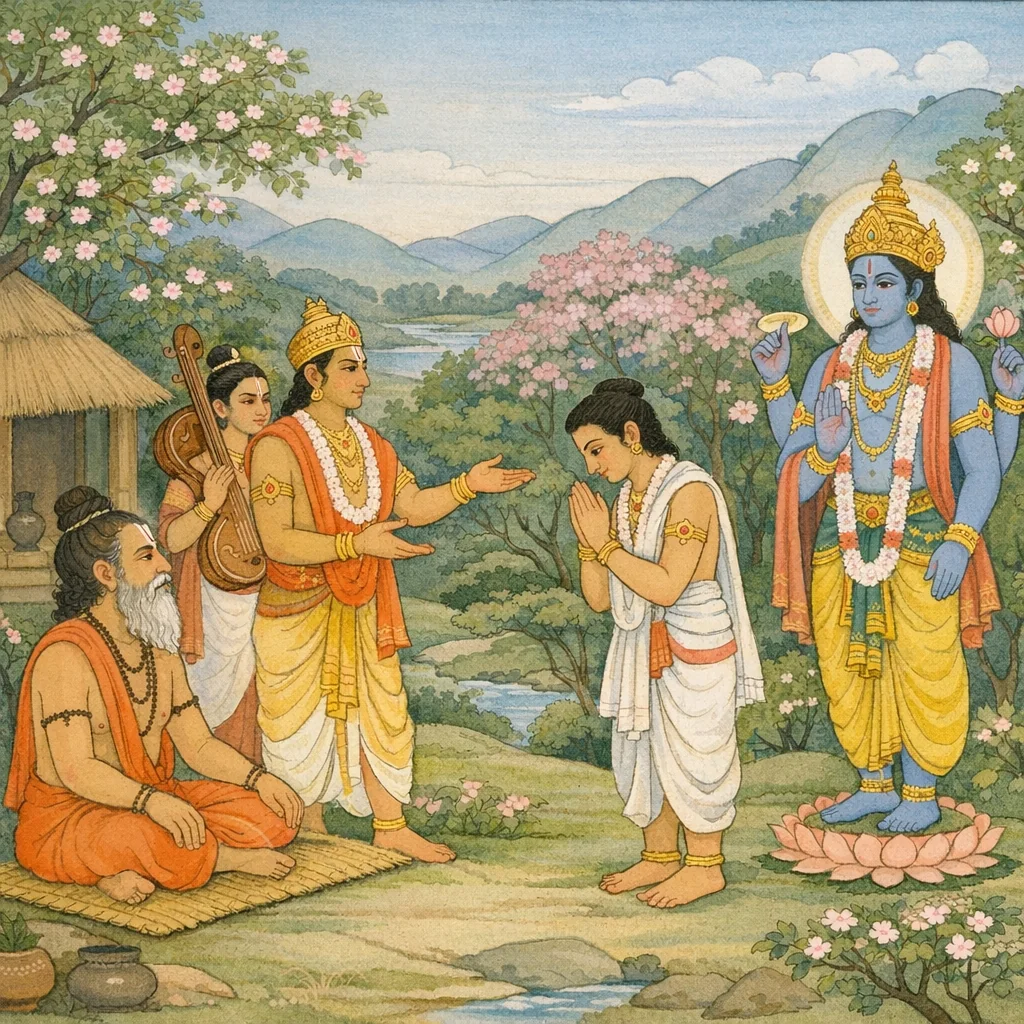
संगत्या तत्र भगवान् विष्णुरासीच्चतुर्भुज: । ततस्तत् सर्वमाचख्यौ नारदो मातलिं प्रति,दैवयोगसे वहाँ चतुर्भुज भगवान् विष्णु भी उपस्थित थे। तदनन्तर देवर्षि नारदने मातलिसे सम्बन्ध रखनेवाला सारा वृत्तान्त कह सुनाया
By a providential convergence, the four-armed Lord Viṣṇu was present there. Thereafter the divine seer Nārada related to Mātali the entire account connected with him, setting forth the circumstances as they had occurred.
Verse 24
वैशम्पायन उवाच ततः पुरंदरं विष्णुरुवाच भुवनेश्वरम् । अमृतं दीयतामस्मै क्रियताममरै: सम:
Vaiśampāyana said: Then Viṣṇu addressed Purandara, the lord of the worlds: “Let ambrosia be given to him; let him be made equal to the immortals.”
Verse 25
वैशम्पायनजी कहते हैं--जनमेजय! तत्पश्चात् भगवान् विष्णुने लोकेश्वर इन्द्रसे कहा --'देवराज! तुम सुमुखको अमृत दे दो और इसे देवताओंके समान बना दो ।। मातलिननरिदश्वैव सुमुखश्वैव वासव । लभन्तां भवत: कामात् काममेत॑ यथेप्सितम्,“वासव! इस प्रकार मातलि, नारद और सुमुख--ये सभी तुमसे इच्छानुसार अमृतका दान पाकर अपना यह अभीष्ट मनोरथ पूर्ण कर लें!
Vaiśaṃpāyana said: “O Janamejaya, thereafter the blessed Viṣṇu spoke to Indra, lord of the worlds: ‘O king of the gods, grant Sumukha the amṛta, the nectar of immortality, and make him equal to the gods. And, O Vāsava, let Mātali, Nārada, and Sumukha—each according to his wish—receive from you the boon they desire, and by the gift of amṛta attain their sought-for aim.’”
Verse 26
पुरंदरो5थ संचिन्त्य वैनतेयपराक्रमम् । विष्णुमेवाब्रवीदेनं भवानेव ददात्विति,तब देवराज इन्द्रने गरुड़के पराक्रमका विचार करके भगवान् विष्णुसे कहा--“आप ही इसे उत्तम आयु प्रदान कीजिये”
Then Purandara (Indra), reflecting on the mighty prowess of Vainateya (Garuḍa), addressed Viṣṇu alone and said, “You yourself should grant him (the boon).”
Verse 27
विष्णुरुवाच ईशस्त्वं सर्वलोकानां चराणामचराश्ष ये । त्वया दत्तमदत्तं कः कर्तुमुत्सहते विभो,भगवान् विष्णु बोले--प्रभो! तुम सम्पूर्ण जगत्में जितने भी चराचर प्राणी हैं, उन सबके ईश्वर हो। तुम्हारी दी हुई आयुको बिना दी हुई करने (मिटाने)-का साहस कौन कर सकता है?
Viṣṇu said: “O mighty lord, you are the ruler of all beings in the world, both moving and unmoving. Who, O puissant one, would dare to undo the span of life you have bestowed, making it as though it had not been given?”
Verse 28
प्रादाच्छक्रस्ततस्तस्मै पन्नगायायुरुत्तमम् । न त्वेनममृतप्राशं चकार बलवृत्रहा,तब इन्द्रने उस नागको अच्छी आयु प्रदान की, परंतु बलासुर और वृत्रासुरका विनाश करनेवाले इन्द्रने उसे अमृतभोजी नहीं बनाया
Vaiśaṃpāyana said: Then Śakra (Indra) granted that serpent an excellent span of life; yet Indra, the slayer of Bala and Vṛtra, did not make him an eater of amṛta (and thus not truly immortal).
Verse 29
लब्ध्वा वरं तु सुमुख: सुमुख: सम्बभूव ह । कृतदारो यथाकामं॑ जगाम च गृहान् प्रति,इन्द्रका वर पाकर सुमुखका मुख प्रसन्नतासे खिल उठा। वह विवाह करके इच्छानुसार अपने घरको चला गया
Vaiśaṃpāyana said: Having obtained the boon, Sumukha became radiant with joy. Taking a wife, he returned to his home as he wished, his desire fulfilled.
Verse 30
नारदस्त्वार्यकश्चैव कृतकार्यो मुदा युतौ । अभिमजम्मतुरभ्यर्च्य देवराजं महाद्युतिम्ू,नारद और आर्यक दोनों ही कृतकृत्य हो महातेजस्वी देवराजकी अर्चना करके प्रसन्नतापूर्वक अपने-अपने स्थानको चले गये
Vaiśampāyana said: Nārada and Āryaka, their purpose fulfilled and their hearts filled with joy, offered reverent worship to the radiant king of the gods. Having thus honored him, they departed contentedly, each returning to his own abode—signaling the completion of their mission and the fitting close of action with gratitude and devotion.
Verse 104
इति श्रीमहा भारते उद्योगपर्वणि भगवद्यानपर्वणि मातलिवरान्वेषणे चतुरधिकशततमो<ध्याय:
Thus ends the one-hundred-and-fourth chapter (with four added) in the Udyoga Parva of the Śrī Mahābhārata, within the section concerning the divine mission, specifically the episode of searching for the excellent Mātali.
Verse 106
सुमुखस्य गुणैश्नैव शीलशौचदमादिभि: | आपके और ऐरावतके प्रति हमारे हृदयमें विशेष सम्मान है और यह सुमुख भी शील, शौच और इन्द्रियसंयम आदि गुणोंसे सम्पन्न है, इसलिये इसके पितृहीन होनेपर भी हम गुणोंके कारण इसका वरण करते हैं
Nārada said: “It is not merely by lineage, but by virtues—good conduct, purity, self-restraint, and the like—that Sumukha is to be chosen. Therefore, even though he is without a father’s protection, we accept him on account of his qualities, holding him in special regard (as we do you and Airāvata).”
Verse 116
मातलिस्तस्य सम्मान कर्तुमहों भवानपि । ये मातलि स्वयं चलकर कन्यादान करनेको उद्यत हैं। आपको भी इनका सम्मान करना चाहिये
Nārada said: “Mātali deserves to be honored by him—and indeed by you as well. For Mātali himself has set out, ready to perform the gift of a maiden in marriage. Therefore you too should show him due respect.”
Frequently Asked Questions
The dilemma is the conflict between perceived entitlement to one’s ordained role (Garuḍa’s sustenance and status) and the ethical requirement to recognize higher order, accept correction, and prevent pride from driving destructive escalation.
The episode teaches that self-estimation is unreliable without calibrated comparison; genuine strength includes discernment and restraint, and recognition of superior order should redirect action from confrontation to prudent policy.
Yes. The narrative explicitly pivots into counsel urging cessation of hostility and acceptance of śama, and it is immediately contrasted with Duryodhana’s dismissive reaction, underscoring how ignored counsel accelerates systemic breakdown.