Adhyaya 27
Gaṅgā-tīra Udaka-kriyā and Kuntī’s Disclosure of Karṇa’s Maternity (Strī-parva, Adhyāya 27)
Upa-parva: Udaka-kriyā at Gaṅgā (Salila-kriyā / Pretakṛtya episode)
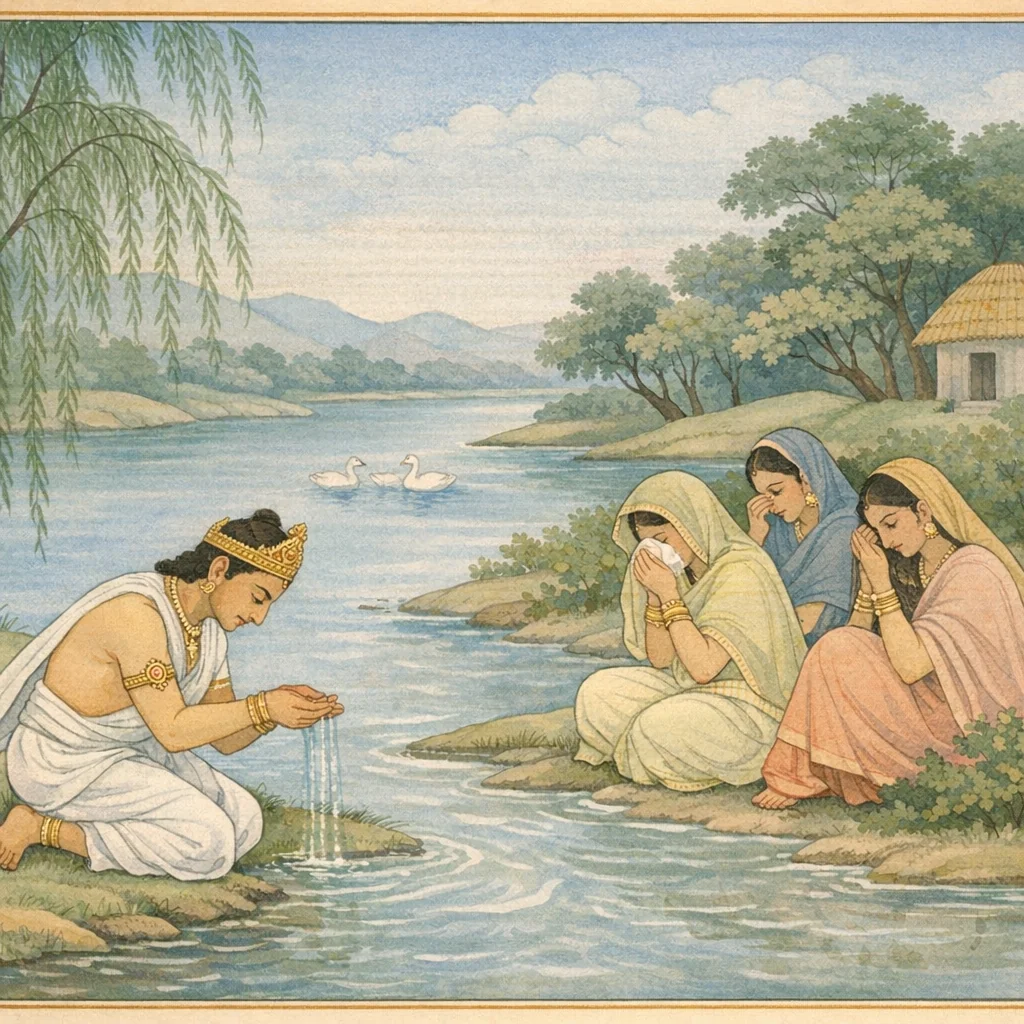
Vaiśaṃpāyana narrates how the mourners arrive at the Gaṅgā, characterized as auspicious and appropriate for sacred persons. The Kuru women remove ornaments and outer wrappings in a visible sign of bereavement and perform udaka offerings and water-rites for deceased kin—fathers, sons, grandsons, brothers, and companions—while weeping intensely. The riverbank is portrayed as crowded with widows and devoid of festivity, underscoring the inversion of royal prosperity into collective mourning. Kuntī, overwhelmed by grief, addresses her sons and identifies the slain hero Karṇa—previously regarded as Rādheya, the sūta’s son—as their elder brother, born to her through a divine circumstance. This disclosure triggers renewed anguish among the Pāṇḍavas, especially Yudhiṣṭhira, who laments the concealed truth and links it to cascading losses (including Abhimanyu and the Draupadeyas), interpreting the concealment as a factor that intensified the catastrophe. Despite emotional turmoil, Yudhiṣṭhira completes the water-libation for Karṇa, orders the bringing of Karṇa’s funerary requisites, and, after performing the immediate rites (pretakṛtya), emerges from the Gaṅgā mentally unsettled.
Chapter Arc: युद्ध-भूमि की राख पर अब शस्त्र नहीं, आँसू बोलते हैं—कुरु-स्त्रियाँ और बचे हुए स्वजन अपने-अपने मृतकों के लिये वस्त्र-आभूषण उतारकर जलांजलि की तैयारी करते हैं। → विलाप के बीच कर्मकाण्ड का अनुशासन चलता है: पिता, भाई, पुत्र, पौत्र—सबके लिये उदक-क्रिया; और युधिष्ठिर के भीतर एक अलग ही ज्वाला उठती जाती है, क्योंकि कर्ण का शोक उसे भीतर से तोड़ रहा है। → युधिष्ठिर कर्ण के लिये विधिवत् उदक-कर्म करता है, कर्ण की पत्नियों को परिवार सहित बुलवाकर उनका सत्कार/संरक्षण सुनिश्चित करता है—और फिर गंगा-तट पर फूट-फूटकर रो पड़ता है, यह स्वीकारते हुए कि वह कर्ण-शोक में ऐसे जल रहा है मानो किसी ने आग में रख दिया हो। → धर्मज्ञ जन और शोकाकुल स्त्रियाँ अपने हितैषी स्वजनों के लिये भी जलांजलि पूर्ण करते हैं; शोक का वेग धीरे-धीरे कर्म के ढाँचे में ढलता है—विलाप के साथ भी ‘विधि’ निभाई जाती है। → कर्ण-शोक की यह अग्नि युधिष्ठिर के मन में एक बड़े रहस्योद्घाटन की ओर संकेत करती है—जिससे शोक का कारण केवल ‘भाई’ नहीं, ‘पहचान’ बन जाता है।
Shlokas
Verse 1
है अर ० छा | क्र सप्तविशो<्ध्याय: सभी स्त्री-पुरुषोंका अपने मरे हुए सम्बन्धियोंको जलांजलि देना, कुन्तीका अपने गर्भसे कर्णके जन्म होनेका रहस्य प्रकट करना तथा युधिष्ठिरका कर्णके लिये शोक प्रकट करते हुए उनका प्रेतकृत्य सम्पन्न करना और स्त्रियोंके मनमें रहस्यकी बात न छिपनेका शाप देना वैशम्पायन उवाच ते समासाद्य गड़्ां तु शिवां पुण्यजलोचिताम् । हृदिनीं च प्रसन्नां च महारूपां महावनाम्
Vaiśampāyana said: Having reached the river Gaṅgā—auspicious, fit for sacred rites with its holy waters—serene and clear, broad in form and bordered by great forests, they arrived there to perform the water-offerings and funerary observances for their slain kin. The scene frames grief within dharma: even amid the devastation of war, the living must honor the dead through prescribed rites and remembrance.
Verse 2
भूषणान्युत्तरीयाणि वेष्टनान्यवमुच्य च | ततः पितृणां भ्रातृणां पौत्राणां स्वजनस्य च
Vaiśampāyana said: Having cast off their ornaments, upper garments, and wrappings, they then turned their attention to their fathers, brothers, grandsons, and other kinsmen—overwhelmed by the duty of mourning and the shock of war’s devastation.
Verse 3
पुत्राणामार्यकाणां च पतीनां च कुरुस्त्रिय: । उदकं चक्रिरे सर्वा रुदत्यो भृशदु:खिता:
Vaiśampāyana said: The women of the Kurus, weeping and overwhelmed by intense sorrow, all performed the water-offering rites for their sons, their elders, and their husbands—fulfilling the mournful duties owed to the dead after the devastation of war.
Verse 4
वैशम्पायनजी कहते हैं--राजन! वे युधिष्ठिर आदि सब लोग कल्याणमयी, पुण्यसलिला, अनेक जलकुण्डोंसे सुशोभित, स्वच्छ, विशाल रूपधारिणी तथा तटप्रदेशमें महान् वनवाली गंगाजीके तटपर आकर अपने सारे आभूषण, दुपट्टे तथा पगड़ी आदि उतार डाले और पिताओं, भाइयों, पुत्रों, पौत्रों, स््वजनों तथा आर्य वीरोंके लिये जलांजलि प्रदान की। अत्यन्त दुःखसे रोती हुई कुरुकुलकी सभी स्त्रियोंने भी अपने पिता आदिके साथ-साथ पतियोंके लिये जल अर्पण किये ।। सुहृदां चापि धर्मज्ञा: प्रचक्कु: सलिलक्रिया: । उदके क्रियमाणे तु वीराणां वीरपत्निभि:
Vaiśampāyana said: O king, Yudhiṣṭhira and all the others came to the bank of the Gaṅgā—blessed, filled with meritorious holy waters, adorned with many pools, clear and vast, and lined with great forests. There they removed their ornaments, veils, and head-wrappings, and offered jalāñjali for fathers, brothers, sons, grandsons, kinsmen, and noble warriors. All the women of the Kuru house too, weeping in extreme grief, offered water for their fathers and likewise for their husbands. The dharma-knowing relatives and well-wishers also performed the water-rites. And as the heroes’ wives poured the libations for the fallen heroes, the whole scene became one of solemn mourning—duty and remembrance carried out amid overwhelming sorrow.
Verse 5
तनन््महोदधिसंकाशं निरानन्दमनुत्सवम्
Vaiśampāyana said: “It was like a vast ocean—yet devoid of joy, without any gladness, and without celebration.”
Verse 6
ततः कुन्ती महाराज सहसा शोककर्शिता
Then Kuntī, O great king, suddenly—overwhelmed and worn down by grief—was seized by sorrow in the aftermath of the calamity, as the narrative turns to the human cost of the war and the moral weight borne by the elders.
Verse 7
यः स वीरो महेष्वासो रथयूथपयूथप:
Vaiśampāyana said: “That very hero—mighty with the great bow—was a foremost leader among the leaders of chariot-warrior companies.”
Verse 8
अर्जुनेन जित: संख्ये वीरलक्षणलक्षित: । यं सूतपुत्र॑ मन्यध्वं राधेयमिति पाण्डवा:
Vaiśampāyana said: In the battle, he—marked by the signs of a true hero—was defeated by Arjuna: the very one whom you Pāṇḍavas had regarded as a charioteer’s son, known as Rādheya (Karna). The line underscores how war overturns reputations and how judgments based on birth are exposed amid the moral reckoning of the battlefield.
Verse 9
यो व्यराजच्च भूमध्ये दिवाकर इव प्रभु: । प्रत्ययुध्यत व: सर्वान् पुरा य:ः सपदानुगान्
Vaiśampāyana said: “He—the mighty lord—who once shone in the midst of the earth like the sun, and who formerly fought against all of you, even when you were supported by your followers and attendants.”
Verse 10
दुर्योधनबलं सर्व यः प्रकर्षन् व्यरोचत । यस्य नास्ति समो वीर्ये पृथिव्यामपि पार्थिव:
Vaiśampāyana said: “He who, by drawing forth and rallying the entire strength of Duryodhana’s host, shone forth in battle—there is no king on earth who is his equal in valor.”
Verse 11
योडवृणीत यश: शूर: प्राणैरपि सदा भुवि | कर्णस्य सत्यसंधस्य संग्रामेष्वपलायिन:
Vaiśaṃpāyana said: He was a hero who always chose glory on earth even at the cost of his very life—Karṇa, steadfast in truth and never one to flee in battles.
Verse 12
कुरुध्वमुदकं तस्य भ्रातुरक्लिष्टकर्मण: । स हि व: पूर्वजो भ्राता भास्करान्मय्यजायत
Vaiśampāyana said: “Offer the water-oblation for that brother of yours, whose deeds were untroubled and blameless. For he was your elder brother—born to me from Bhāskara (the Sun).”
Verse 13
कुण्डली कवची शूरो दिवाकरसमप्रभ: । 'पाण्डवो! जो महाधनुर्धर वीर रथ-यूथपतियोंका भी यूथपति तथा वीरोचित शुभ लक्षणोंसे सम्पन्न था, जिसे युद्धमें अर्जुनने परास्त किया है तथा जिसे तुमलोग सूतपुत्र एवं राधापुत्रके रूपमें मानते-जानते हो, जो सेनाके मध्यभागमें भगवान् सूर्यके समान प्रकाशित होता था, जिसने पहले सेवकोंसहित तुम सब लोगोंका अच्छी तरह सामना किया था, जो दुर्योधनकी सारी सेनाको अपने पीछे खींचता हुआ बड़ी शोभा पाता था, बल और पराक्रममें जिसकी समानता करनेवाला इस भूतलपर दूसरा कोई राजा नहीं है, जिस शूरवीरने अपने प्राणोंकी बाजी लगाकर भी भूमण्डलमें सदा यशका ही उपार्जन किया है, संग्राममें कभी पीठ न दिखानेवाले और अनायास ही महान् कर्म करनेवाले अपने उस सत्यप्रतिज्ञ भ्राता कर्णके लिये भी तुमलोग जल-दान करो। वह तुमलोगोंका बड़ा भाई था। भगवान् सूर्यके अंशसे वह वीर मेरे ही गर्भसे उत्पन्न हुआ था। जन्मके साथ ही उस शूरवीरके शरीरमें कवच-कुंडल शोभा पाते थे। वह सूर्यदेवके समान ही तेजस्वी था | ७-- १२३ || श्रुत्वा तु पाण्डवा: सर्वे मातुर्वचनमप्रियम्
Vaiśampāyana said: “That hero—wearing earrings and natural armor, radiant like the sun—was the one you know as the Sūta’s son, as Rādhā’s son: Karṇa, your elder brother. He was a leader among chariot-warriors, marked by auspicious signs befitting a warrior, shining in the midst of the army like the Sun-god himself. He once faced you all, together with his attendants, and drew Duryodhana’s entire host after him, adding splendor to the battlefield. No other king on earth matched him in strength and valor. Even at the risk of his life, he sought only lasting fame; he never turned his back in combat and accomplished great deeds with ease. For that truth-bound brother Karṇa, you too should offer the water-oblation. He was born from my womb as a portion of the Sun, and from birth his body bore the shining armor and earrings.” Hearing their mother’s painful words, all the Pāṇḍavas…
Verse 14
कर्णमेवानुशोचन्तो भूय: क्लान्ततराभवन् | माताका यह अप्रिय वचन सुनकर समस्त पाण्डव कर्णके लिये ही बारंबार शोक करते हुए अत्यन्त कष्टमें पड़ गये ।। १३ $ ।। ततः स पुरुषव्यात्र: कुन्तीपुत्रो युधिष्ठिर:
Grieving again and again for Karṇa alone, they became ever more exhausted and afflicted. Then that tiger among men—Yudhiṣṭhira, the son of Kuntī—(spoke/acted further).
Verse 15
उवाच मातरं वीरो नि:श्वसन्निव पन्नग: । तदनन्तर पुरुषसिंह वीर कुन्तीपुत्र युधिष्ठिर सर्पके समान लंबी साँस खींचते हुए अपनी मातासे बोले-- ।। य: शरोर्मिर्ध्वजावर्तो महाभुजमहाग्रह:
Vaiśampāyana said: The hero spoke to his mother, breathing heavily like a serpent. Then the lion among men—valiant Yudhiṣṭhira, Kuntī’s son—drawing long, snake-like breaths, addressed his mother. (He began to describe:) “That arrow—its surge like a wave, its whirling like a banner’s spiral, seized by a mighty-armed, formidable force …”
Verse 16
तलशब्दानुनदितो महारथमहाह्द: । यस्येषुपातमासाद्य नान्यस्तिष्ठेद् धनंजयात्
Vaiśampāyana said: “He was like a vast lake set ringing by the sharp clatter of the tala (the clap of the palm)—a great chariot-warrior of immense depth. Once one came within the fall of his arrows, no other fighter could stand firm against Dhanañjaya (Arjuna).”
Verse 17
कथं पुत्रो भवत्या: स देवगर्भ: पुराभवत् । माँ! जो बड़े-बड़े महारथियोंको डुबो देनेके लिये अत्यन्त गहरे जलाशयके समान थे बाण ही जिनकी लहर, ध्वजा भँवर, बड़ी-बड़ी भुजाएँ महान् ग्राह और हथेलीका शब्द ही गम्भीर गर्जन था, जिनके बाणोंके गिरनेकी सीमामें आकर अर्जुनके सिवा दूसरा कोई वीर नहीं टिक सकता था, वे सूर्यकुमार तेजस्वी कर्ण पूर्वकालमें आपके पुत्र कैसे हुए? ।। १५-१६$ ।। यस्य बाहुप्रतापेन तापिता: सर्वतो वयम्
Vaiśampāyana said: “How did that one—born of a divine conception—come to be your son in former times? By the might of his arms we were scorched on every side.”
Verse 18
यस्य बाहुबल नित्य धार्तराष्ट्ररुपासितम्
Vaiśampāyana said: “He whose mighty arm-strength was continually relied upon and served by the sons of Dhṛtarāṣṭra.”
Verse 19
भूमिपानां च सर्वेषां बलं बलवतां वर:
Vaiśampāyana said: “Among all the rulers of the earth, he was the very strength of the strong—the foremost among the mighty.”
Verse 20
स न: प्रथमजो भ्राता सर्वशस्त्रभृतां वर:
Vaiśampāyana said: “He is our eldest brother, the foremost among all who bear weapons.”
Verse 21
अहो भवत्या मन्त्रस्य गूहनेन वयं हता:
Alas! By your concealment of the sacred counsel, we have been ruined.
Verse 22
अभिमन्योर्विनाशेन द्रौपदेयवधेन च,“अभिमन्यु, द्रौपदीके पुत्र और पांचालोंके विनाशसे तथा कुरुकुलके इस पतनसे हमें जितना दुःख हुआ था, उससे सौ गुना यह दुःख इस समय मुझे अत्यन्त व्यथित कर रहा है
Vaiśampāyana said: “By the destruction of Abhimanyu and by the slaughter of Draupadī’s sons—by the ruin of Abhimanyu, the sons of Draupadī, and the Pāñcālas, and by this collapse of the Kuru line—the sorrow we once felt has now returned a hundredfold. At this moment it torments me intensely.”
Verse 23
पञ्चालानां विनाशेन कुरूणां पतनेन च | तत: शतगुणं दुःखमिदं मामस्पृशद् भूशम्,“अभिमन्यु, द्रौपदीके पुत्र और पांचालोंके विनाशसे तथा कुरुकुलके इस पतनसे हमें जितना दुःख हुआ था, उससे सौ गुना यह दुःख इस समय मुझे अत्यन्त व्यथित कर रहा है
Vaiśampāyana said: “From the destruction of the Pāñcālas and the downfall of the Kurus we had already suffered grief; yet this present sorrow has struck me a hundredfold more, piercing me to the very depths.”
Verse 24
कर्णमेवानुशोचामि दह्दाम्यग्नाविवाहित: । नेह सम किंचिदप्राप्यं भवेदपि दिवि स्थितम्
Vaiśampāyana said: “It is Karṇa alone whom I grieve for; I burn like one placed in fire. Here, there is nothing comparable to him—no such man could be found, even if one searched among those who dwell in heaven.”
Verse 25
एवं विलप्य बहुलं धर्मराजो युधिष्ठिर:,अभितो या: स्थितास्तत्र तस्मिन्नुदककर्मणि । राजन! इस प्रकार बहुत विलाप करके धर्मराज युधिष्ठिर फ़ूट-फूटकर रोने लगे। रोते- ही-रोते उन्होंने धीरे-धीरे कर्णके लिये जलदान किया। यह सब सुनकर वहाँ एकत्र हुई सारी स्त्रियाँ, जो वहाँ जलांजलि देनेके लिये सब ओर खड़ी थीं, सहसा जोर-जोरसे रोने लगीं
Having lamented at length, Dharmarāja Yudhiṣṭhira broke down in grief during the rite of water-offering. As he proceeded with the udaka-karman, the women standing all around for the same funerary observance were moved at once and began to weep aloud.
Verse 26
व्यरुदच्छनकै राजंश्नकारास्योदकं प्रभु: । ततो विनेदु: सहसा स्त्रियस्ता: खलु सर्वश:
Vaiśampāyana said: The mighty lord began to weep softly, his face wet with tears. Then all those women suddenly broke into loud lamentation together.
Verse 27
तत आनाययामास कर्णस्य सपरिच्छदा:,चकार विधिवद् धीमान् धर्मराजो युधिष्ठिर: । तदनन्तर बुद्धिमान् कुरुराज युधिष्ठिरने भाईके प्रेमसे कर्णकी स्त्रियोंको परिवारसहित बुलवा लिया और उन सबके साथ रहकर उन धर्मात्मा बुद्धिमान् धर्मराज युधिष्ठिरने विधिपूर्वक कर्णका प्रेतकृत्य सम्पन्न किया इति श्रीमहाभारते स्त्रीपर्वणि श्राद्धपर्वणि कर्णगयूढजत्वकथने सप्तविंशो5ध्याय: ।। २७ || इस प्रकार श्रीमह्याभारत स्त्रीपर्वके अन्तर्गत श्राद्धपर्वमें कर्णके जन्मके गूढ़ रहस्यका कथनविषयक सत्ताईसवाँ अध्याय पूरा हुआ
Then the wise Dharmarāja Yudhiṣṭhira had Karṇa’s wives, together with their attendants and household, brought before him; and, abiding with them, he duly performed—according to prescribed rites—the funerary ceremonies for Karṇa. In this way, in the Mahābhārata’s Strī-parvan, within the Śrāddha-parvan, the account concerning the hidden truth of Karṇa’s birth is concluded in the twenty-seventh chapter.
Verse 28
स्त्रिय: कुरुपतिर्धीमान् भ्रातुः प्रेमणा युधिष्ठिर: । स ताभि: सह धर्मात्मा प्रेतकृत्यमनन्तरम्
Vaiśampāyana said: The wise lord of the Kurus, Yudhiṣṭhira, moved by love for his brother, then—together with those women—performed the funeral rites immediately thereafter.
Verse 29
पापेनासौ मया श्रेष्ठो भ्राता ज्ञातिर्निपातित: । अतो मनसि यद् गुहां स्त्रीणां तन्न भविष्यति,तदनन्तर वे बोले--“मुझ पापीने इस रहस्यको न जाननेके कारण अपने बड़े भाईको मरवा दिया; अत: आजसे स्त्रियोंके मनमें कोई गुप्त रहस्य नहीं छिपा रह सकेगा”
Vaiśampāyana said: “Through my own sin, my noble elder brother—my kinsman—has been brought down. Therefore, from this day onward, whatever secret lies hidden in the mind of women shall no longer remain concealed.”
Verse 30
इत्युक्त्वा स तु गड़ाया उत्तताराकुलेन्द्रिय: । भ्रातृभि: सहित: सर्वर्गज्रातीरमुपेयिवान्,ऐसा कहकर व्याकुल इन्द्रियोंवाले राजा युधिष्ठिर गंगाजीके जलसे निकले और समस्त भाइयोंके साथ तटपर आये
Vaiśampāyana said: Having spoken thus, King Yudhiṣṭhira—his senses agitated by grief and turmoil—came up out of the waters of the Gaṅgā. Accompanied by all his brothers, he then went to the riverbank, continuing the solemn course of post-war rites and reflection.
Verse 53
वीरपत्नीभिराकीर्ण गज़ातीरमशो भत । महासागरके समान विशाल वह गंगातट आनन्द और उत्सवसे शून्य होनेपर भी उन वीर-पत्नियोंसे व्याप्त होनेके कारण बड़ी शोभा पाने लगा
Vaiśampāyana said: The bank of the Gaṅgā, crowded with the wives of fallen heroes, appeared striking. Vast like the great ocean, that broad riverbank—though emptied of joy and festivity—still gained a grave splendor because it was filled with those heroic women, whose presence turned mourning itself into a solemn testimony to the cost of war.
Verse 66
रुदती मन्दया वाचा पुत्रान् वचनमत्रवीत् । महाराज! तदनन्तर कुन्तीदेवी सहसा शोकसे कातर हो रोती हुई मन्द वाणीमें अपने पुत्रोंसे बोलीं--
Vaiśampāyana said: Weeping and speaking in a faint, subdued voice, she addressed her sons. “O great king! Thereafter Kuntī-devī, suddenly overwhelmed and made helpless by grief, spoke to her sons in a low, trembling tone.”
Verse 173
तमग्निमिव वस्त्रेण कथं छादितवत्यसि । जिनकी भुजाओंके प्रतापसे हम सब ओरसे संतप्त रहते थे, कपड़ेमें ढकी हुई आगके समान उन्हें अबतक आपने कैसे छिपा रखा था?
Vaiśampāyana said: “How could you have kept him concealed so long—like fire covered by a cloth? By the might of whose arms we were scorched from every side, how did you hide him until now, as though he were a flame wrapped up in fabric?”
Verse 183
उपासितं यथास्माभिरबलं गाण्डीवधन्चन: । “धृतराष्ट्रके पुत्रोंने सदा उन्हींके बाहुबलका भरोसा कर रखा था, जैसे कि हमलोगोंने गाण्डीवधारी अर्जुनके बलका आश्रय लिया था
Vaiśaṃpāyana said: “Just as we relied upon the might of Arjuna, the wielder of the Gāṇḍīva, so too did Dhṛtarāṣṭra’s sons continually place their trust in the strength of their own arms.” The line underscores how dependence on sheer force—rather than on dharma and wise counsel—shapes choices and leads to ruin in the aftermath of war.
Verse 193
नान्य: कुन्तीसुतात् कर्णादगृह्नाद् रथिनां रथी | “कुन्तीपुत्र कर्णके सिवा दूसरा कोई रथी ऐसा बड़ा बलवान् नहीं हुआ है, जिसने समस्त राजाओंकी सेनाको रोक दिया हो
Vaiśaṃpāyana said: No other great chariot-warrior among chariot-fighters, apart from Karṇa—the son of Kuntī—was capable of checking and holding back the onrush of the chariot-hosts. The statement underscores Karṇa’s singular martial prowess and the tragic irony that such power was spent in a fratricidal war.
Verse 203
असूत त॑ भवत्यग्रे कथमद्भुतविक्रमम् । “वे समस्त शस्त्रधारियोंमें श्रेष्ठ कर्ण क्या सचमुच हमारे बड़े भाई थे? आपने पहले उन अद्भुत पराक्रमी वीरको कैसे उत्पन्न किया था?
Vaiśampāyana said: “How, in former times, did you give birth to that man of wondrous prowess? Was Karṇa—foremost among all who bear weapons—truly our elder brother? Tell us: how did you first bring forth that hero of extraordinary valor?”
Verse 216
निधनेन हि कर्णस्य पीडितास्तु सबान्धवा: । “अहो! आपने इस गूढ़ रहस्यको छिपाकर हमलोगोंको मार डाला। कर्णकी मृत्युसे भाइयोंसहित हमें बड़ी पीड़ा हो रही है
Vaiśampāyana said: Stricken with anguish at Karṇa’s death, they—together with their kinsmen—lamented: “Alas! By concealing this profound secret, you have brought about our destruction. Karṇa’s death has caused us intense suffering, along with our brothers.”
Verse 246
न चेदं वैशसं घोरं कौरवान्तकरं भवेत् । “अब तो मैं केवल कर्णके ही शोकमें डूब गया हूँ और इस तरह जल रहा हूँ, मानो मुझे किसीने जलती आगमें रख दिया हो। यदि पहले ही यह बात मुझे मालूम हो गयी होती तो कर्णको पाकर हमारे लिये इस जगतमें कोई स्वर्गीय वस्तु भी अलभ्य नहीं होती तथा कुरुकुलका अन्त कर देनेवाला यह घोर संग्राम भी नहीं हुआ होता'
Vaiśampāyana said: “Then this dreadful, sinful calamity—bringing the Kauravas to their end—would not have come to pass. For now I am sunk only in grief for Karṇa, burning as though someone had placed me in a blazing fire. Had I known this earlier, then with Karṇa on our side nothing in this world—even what is thought of as heavenly—would have been unattainable for us; and this terrible war that has brought the Kuru line to ruin would not have happened.”
Verse 263
अभितो या: स्थितास्तत्र तस्मिन्नुदककर्मणि । राजन! इस प्रकार बहुत विलाप करके धर्मराज युधिष्ठिर फ़ूट-फूटकर रोने लगे। रोते- ही-रोते उन्होंने धीरे-धीरे कर्णके लिये जलदान किया। यह सब सुनकर वहाँ एकत्र हुई सारी स्त्रियाँ, जो वहाँ जलांजलि देनेके लिये सब ओर खड़ी थीं, सहसा जोर-जोरसे रोने लगीं
Vaiśampāyana said: Around that place, at the rite of offering water for the dead, the women stood on every side. O King, after lamenting at length, Dharmarāja Yudhiṣṭhira broke down and wept uncontrollably. Even as he wept, he slowly performed the water-offering for Karṇa. Hearing this, all the women gathered there—standing all around to offer water with joined palms—suddenly began to cry aloud.
Verse 283
चकार विधिवद् धीमान् धर्मराजो युधिष्ठिर: । तदनन्तर बुद्धिमान् कुरुराज युधिष्ठिरने भाईके प्रेमसे कर्णकी स्त्रियोंको परिवारसहित बुलवा लिया और उन सबके साथ रहकर उन धर्मात्मा बुद्धिमान् धर्मराज युधिष्ठिरने विधिपूर्वक कर्णका प्रेतकृत्य सम्पन्न किया
Wise Dharmarāja Yudhiṣṭhira performed the rites in due form. Thereafter, the prudent Kuru king Yudhiṣṭhira, out of brotherly love, summoned Karṇa’s wives together with their households; and dwelling with them all, that righteous and discerning Dharmarāja Yudhiṣṭhira duly completed Karṇa’s funerary rites (pretakṛtya).
Verse 463
सूपतीर्था भवद्गड़ा भूयो विप्रससार च । धर्मज्ञ पुरुषोंने अपने हितैषी सुहृदोंके लिये भी जलांजलि देनेका कार्य सम्पन्न किया। वीरोंकी पत्नियोंद्वारा जब उन वीरोंके लिये जलांजलि दी जा रही थी, उस समय गंगाजीके जलमें उतरनेके लिये बड़ा सुन्दर मार्ग बन गया और गंगाका पाट अधिक चौड़ा हो गया
Vaiśampāyana said: The Gaṅgā became furnished with excellent fords, and her stream spread out again. The men who understood dharma completed the rite of offering water (jalāñjali) even for their well-wishing friends. And as the wives of the fallen heroes offered water for those heroes, a beautiful, easy descent into the Gaṅgā’s waters appeared, and the river’s channel grew broader—an auspicious facilitation of the funeral duty and a sign of reverent compassion amid the aftermath of war.
Frequently Asked Questions
The chapter foregrounds the conflict between protective secrecy and truthful disclosure: Kuntī’s delayed truth about Karṇa is experienced as ethically consequential, intensifying guilt and reinterpreting the war’s fratricidal dimension.
Ritual duty persists even amid moral shock: the narrative implies that social repair requires completing obligations to the dead while simultaneously confronting the ethical meaning of actions and concealed relationships.
No explicit phalaśruti is presented here; the chapter’s function is archival and ethical—embedding mourning rites and disclosure within the epic’s broader transition from narrative consequence to later reflective instruction.