Adhyaya 10
Chapter 10: Survivors Console the Royal Couple and Disperse (धृतराष्ट्र–गान्धारी प्रति निवेदनम्)
Upa-parva: Dhṛtarāṣṭra–Gāndhārī Saṃvāda: Survivors’ Report and Dispersal (Strī-parva Context Unit)
Vaiśaṃpāyana narrates that, after traveling a short distance, the party encounters the remaining great chariot-warriors: Kṛpa, Aśvatthāman, and Kṛtavarman. Upon seeing Dhṛtarāṣṭra, they speak while grieving and explain that the king’s son (Duryodhana) has completed a difficult deed and has gone, with attendants, to Śakra’s world; they state that only the three of them remain and the rest of the army has perished. Kṛpa then addresses Gāndhārī, presenting a doctrinal consolation: the sons fought fearlessly, performed heroic acts, and have reached pure, weapon-won worlds with radiant bodies; death by weapon in battle is asserted as the ancient “highest path” for kṣatriyas, and thus she should not grieve in that register. Kṛpa further reports that, having heard Duryodhana was slain unlawfully by Bhīmasena, they entered the sleeping camp and carried out a destructive retaliation, killing the Pāñcālas led by Dhṛṣṭadyumna, Drupada’s sons, and the Draupadeyas. Recognizing they cannot stand against the soon-arriving Pāṇḍavas, they request permission to depart and urge the royal couple toward steadiness. After circumambulation and farewell, they hasten along the Gaṅgā and separate: Kṛpa to Hāstinapura, Kṛtavarman to his own realm, and Aśvatthāman to Vyāsa’s hermitage—leaving in fear after committing an offense against the Pāṇḍavas.
Chapter Arc: कुरुवंश के संहार का समाचार नगर की नसों में फैल चुका है; शोक से जर्जर धृतराष्ट्र विदुर को आदेश देते हैं कि गान्धारी और समस्त भरत-स्त्रियों को शीघ्र बुलाया जाए, और कुन्ती सहित सबको साथ लेकर रणभूमि की ओर चला जाए। → राजमहल से लेकर समूचे कुरुनगर तक करुण-ध्वनि उठती है—हर गृह में आर्तनाद, बालक से वृद्ध तक शोकाक्रान्त। स्त्रियों के समूह आँगनों में उमड़ते हैं; वे बाहु उठाकर पुत्र, भ्राता, पिता को पुकारती हैं, मानो युगान्त-प्रलय का दृश्य नगर में उतर आया हो। → स्त्रियों के विलाप का ‘महाशब्द’ प्रकट होता है—ऐसा कि भुवनों को व्यथित कर दे; प्रलयकाल में दग्ध प्राणियों की चीखों-सा, और लोगों को क्षणभर को यह भ्रम हो कि लोक-क्षय उपस्थित हो गया है। → धृतराष्ट्र शोक से ज्ञान-शक्ति क्षीण होने पर भी यान पर आरूढ़ होते हैं; नगर की स्त्रियाँ और प्रजा शोक में डूबी हुई, परन्तु एक ही दिशा में—रणभूमि—की ओर प्रवृत्त होती है। → नगर का यह करुण-प्रस्थान अब उस भूमि की ओर बढ़ता है जहाँ शव, विजयी-पराजित, और प्रतिशोध की अग्नि एक साथ पड़े हैं—वहाँ पहुँचकर कौन किससे मिलेगा, और शोक किस रूप में फूटेगा?
Shlokas
Verse 1
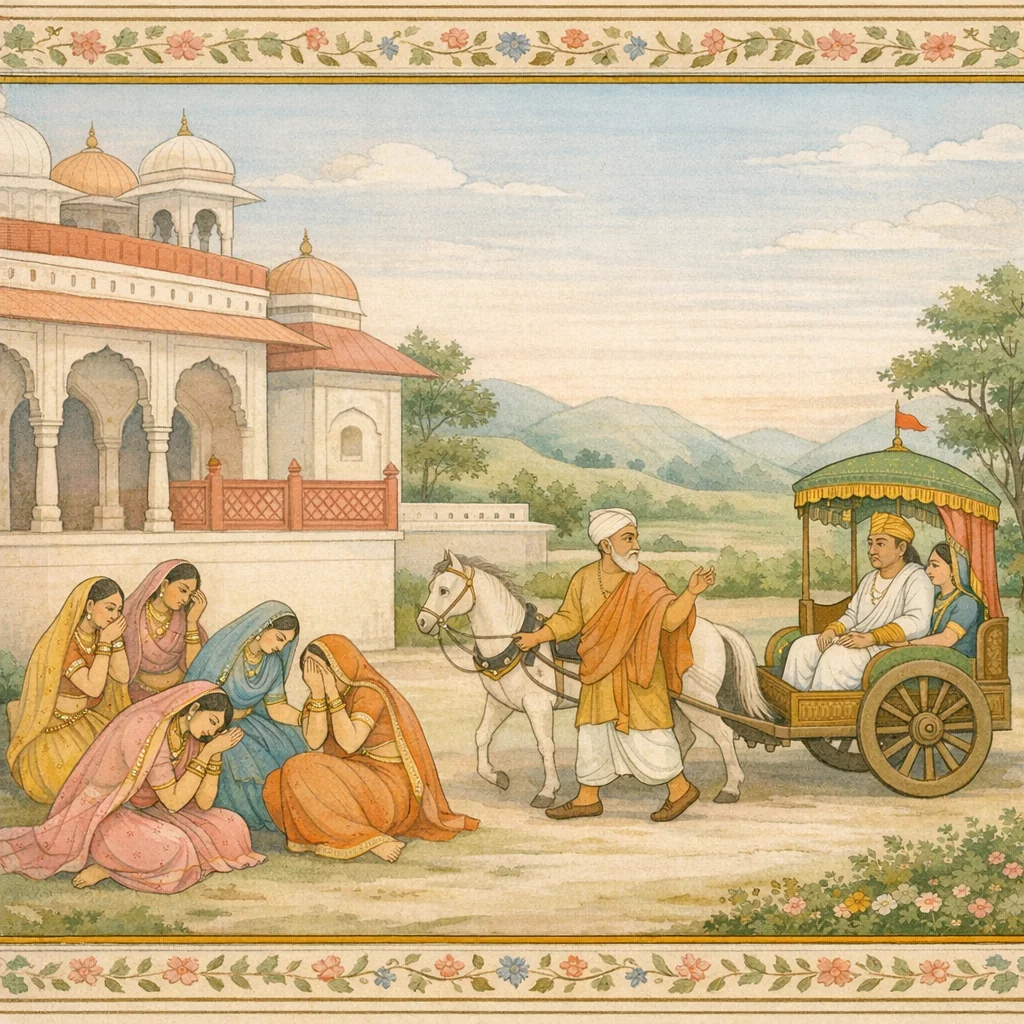
अपन बक। है २ >> दशमो< ध्याय: स्त्रियों और प्रजाके लोगोंके सहित राजा धुृतराष्ट्रका रणभूमिमें जानेके लिये नगरसे बाहर निकलना वैशम्पायन उवाच विदुरस्य तु तद् वाक्यं श्रुत्वा तु पुरुषर्षभ:ः । युज्यतां यानमित्युक्त्वा पुनर्वचनमब्रवीत्,वैशम्पायनजी कहते हैं--राजन्! विदुरकी यह बात सुनकर पुरुषश्रेष्ठ राजा धृतराष्ट्रने रथ जोतनेकी आज्ञा देकर पुन: इस प्रकार कहा
Vaiśampāyana said: Hearing those words of Vidura, King Dhṛtarāṣṭra—foremost among men—ordered that the conveyance be made ready, and then spoke again.
Verse 2
धृतराष्ट्र रवाच शीघ्रमानय गान्धारीं सर्वाश्न भरतस्त्रिय: । वधू कुन्तीमुपादाय याश्चान्यास्तत्र योषित:,धृतराष्ट्र बोले--गान्धारीको तथा भरतवंशी अन्य सब स्त्रियोंको शीघ्र ले आओ तथा वधू कुन्तीको साथ लेकर वहाँ जो दूसरी स्त्रियाँ हों, उन्हें भी बुला लो
Dhṛtarāṣṭra said: “Quickly bring Gāndhārī, and all the women of the Bharata line. Bring the bride Kuntī as well, and summon whatever other women are there.”
Verse 3
एवमुकक््त्वा स धर्मात्मा विदुरं धर्मवित्तमम् । शोकविप्रहतज्ञानो यानमेवान्वपद्यत,परम धर्मज्ञ विदुरजीसे ऐसा कहकर शोकसे जिनकी ज्ञानशक्ति नष्ट-सी हो गयी थी, वे धर्मात्मा राजा धृतराष्ट्र रथपर सवार हुए
Vaiśampāyana said: Having spoken thus to Vidura—foremost among those who know dharma—the righteous Dhṛtarāṣṭra, his discernment as though shattered by grief, at once mounted his conveyance.
Verse 4
गान्धारी पुत्रशोकार्ता भर्तुर्वचननोदिता । सह कुन्त्या यतो राजा सह स्त्रीभिरुपाद्रवत्,गान्धारी पुत्रशोकसे पीड़ित हो रही थीं, पतिकी आज्ञा पाकर वे कुन्ती तथा अन्य स्त्रियोंके साथ जहाँ राजा धृतराष्ट्र थे, वहाँ आयीं
Vaiśampāyana said: Gandhārī, overwhelmed by grief for her sons and urged on by her husband’s command, hurried—together with Kuntī and the other women—to the place where the king was.
Verse 5
ता: समासाद्य राजानं भृशं॑ शोकसमन्विता: । आमन्त्रयान्योन्यमीयु: सम भृशमुच्चुक्रुशुस्तत:
Overwhelmed by intense grief, they approached the king. After addressing one another, they moved together, and then they cried out loudly—an outpouring of sorrow.
Verse 6
वहाँ राजाके पास पहुँचकर अत्यन्त शोकमें डूबी हुई वे सारी स्त्रियाँ एक-दूसरीको पुकार-पुकारकर परस्पर गलेसे लग गयीं और जोर-जोरसे फूट-फ़ूटकर रोने लगीं ।। ता: समाश्वासयत क्षत्ता ताभ्यश्षार्ततर: स्वयम् । अश्रुकण्ठी: समारोप्य ततो5सौ निर्ययौ पुरात्,विदुरजीने उन सब स्त्रियोंको आश्वासन दिया। वे स्वयं भी उनसे अधिक आर्त हो गये थे। आँसुओंसे गदगद कण्ठ हुई उन सबको रथपर चढ़ाकर वे नगरसे बाहर निकले
Vaiśampāyana said: Vidura, the chamberlain, tried to console those women; yet he himself was even more afflicted than they. When their throats were choked with tears, he helped them up onto the chariot, and then he led them out from the city.
Verse 7
ततः प्रणाद: संजज्ञे सर्वेषु कुरुवेश्मसु । आकुमारं पुरं सर्वमभवच्छोककर्षितम्,तदनन्तर कौरवोंके सभी घरोंमें बड़ा भारी आर्तनाद होने लगा। बूढ़ोंसे लेकर बच्चोंतक सारा नगर शोकसे व्याकुल हो उठा
Then a great wail arose in all the houses of the Kurus. From the very young up to the elders, the entire city was seized and dragged down by grief.
Verse 8
अदृष्टपूर्वा या नार्य: पुरा देवगणैरपि । पृथग्जनेन दृश्यन्ते तास्तदा निहतेश्वरा:,जिन स्त्रियोंको पहले कभी देवताओंने भी नहीं देखा था, उनन््हींको उस समय पतियोंके मारे जानेपर साधारण लोग देख रहे थे
Vaiśampāyana said: Those women who in former times had never been seen even by the hosts of gods were, at that moment—when their lords had been slain—being seen by ordinary people.
Verse 9
इस प्रकार श्रीमह्ाभारत स्त्रीपर्वके अन्तर्गत जलप्रदानिकपर्वमें विदुरजीका वाक्यविषयक नवाँ अध्याय पूरा हुआ,प्रकीर्य केशान् सुशुभान् भूषणान्यवमुच्य च । एकवस्त्रधरा नार्य: परिपेतुरनाथवत् वे नारियाँ अपने सुन्दर केश बिखराये सारे आभूषण उतारकर एक ही वस्त्र धारण किये अनाथकी भाँति रणभूमिकी ओर जा रही थीं
Having loosened and scattered their beautiful hair and casting off their ornaments, the women—clad in a single garment—wandered about like the helpless, moving toward the battlefield.
Verse 10
श्वेतपर्वतरूपे भ्यो गृहेभ्यस्तास्त्वपाक्रमन् | गुहाभ्य इव शैलानां पृषत्यो हतयूथपा:,कौरवोंके घर श्वेत पर्वतके समान जान पड़ते थे। उनसे जब वे स्त्रियाँ बाहर निकलीं, उस समय जिनका यूथपति मारा गया हो, पर्वतोंकी गुफासे निकली हुई उन चितकबरी हरिणियोंके समान दिखायी देने लगीं इति श्रीमहाभारते स्त्रीपर्वणि जलप्रदानिकपर्वणि धृतराष्ट्रनिर्गमने दशमो<5ध्याय: ।। १० || इस प्रकार श्रीमह्ाभारत स्त्रीपर्वके अन्तर्गत जलप्रदानिकपर्वनें धृतराष्ट्रका नगरसे निकलनाविषयक दसवाँ अध्याय पूरा हुआ
Vaiśaṃpāyana said: From those houses that looked like white mountains, the women came out. As they emerged, they appeared like speckled does coming forth from the caves of hills—herd-leaders slain—bereft of protection and stricken by grief.
Verse 11
तान्युदीर्णानि नारीणां तदा वृन्दान्यनेकश: । शोकार्तनन्यद्रवन् राजन् किशोरीणामिवाड़ने,राजन्! राजभवनके विशाल आँगनमें एकत्र हुई उन किशोरी स्त्रियोंके अनेक समुदाय शोकसे पीड़ित होकर रणभूमिकी ओर उसी प्रकार चले, जैसे बछेड़ियाँ शिक्षाभूमिपर लायी जाती हैं
O king, then many companies of women, gathered in the palace’s vast courtyard, driven by grief, moved toward the battlefield like young fillies led to the training ground.
Verse 12
प्रगृह्म बाहून् क्रोशन्त्यः पुत्रान् भ्रातृन् पितृनपि । दर्शयन्तीव ता ह सम युगान्ते लोकसंक्षयम्,एक-दूसरीके हाथ पकड़कर पुत्रों, भाइयों और पिताओंके नाम ले-लेकर रोती हुई वे कुरुकुलकी नारियाँ प्रलयकालमें लोक-संहारका दृश्य दिखाती हुई-सी जान पड़ती थीं
Clasping one another’s hands, crying out the names of their sons, their brothers, and even their fathers, those women of the Kuru line seemed as though they were displaying the vision of the world’s destruction at the end of an age.
Verse 13
विलपन्त्यो रुदत्यक्ष धावमानास्ततस्तत:ः । शोकेनोपहतत्ञाना: कर्तव्यं न प्रजज्ञिरे,शोकसे उनकी ज्ञानशक्ति लुप्त-सी हो गयी थी। वे रोती और विलाप करती हुई इधर- उधर दौड़ रही थीं। उन्हें कोई कर्तव्य नहीं सूझ रहा था
Vaiśampāyana said: The women, wailing and weeping, ran here and there. Overwhelmed by grief, their discernment was shattered, and they could no longer recognize what ought to be done—duty and right action disappeared from their minds in the shock of loss.
Verse 14
व्रीडां जग्मु: पुरा या: सम सखीनामपि योषित: । ता एकवस्त्रा निर्लज्जा: श्वश्रूणां पुरतो5भवन्,जो युवतियाँ पहले सखियोंके सामने आनेमें भी लजाती थीं, वे ही उस दिन लाज छोड़कर एक वस्त्र धारण किये अपनी सासुओंके सामने उपस्थित हो गयी थीं
Vaiśampāyana said: Those women who earlier would feel modesty even before their own close friends, on that day cast aside shame and appeared before their mothers-in-law wearing only a single garment—an image of how grief and catastrophe can strip away ordinary social restraints.
Verse 15
परस्पर सुसूक्ष्मेषु शोकेष्वाश्वासयंस्तदा । ता: शोकविद्धदला राजन्नवैक्षन्त परस्परम्
Vaiśampāyana said: Then, as they tried to console one another amid grief so subtle and inward, those women—whose hearts were pierced by sorrow—could not even look at each other, O King.
Verse 16
राजन! जो नारियाँ छोटे-से-छोटे शोकमें भी एक दूसरीके पास जाकर आश्वासन दिया करती थीं, वे ही शोकसे व्याकुल हो परस्पर दृष्टिपातमात्र कर रही थीं ।। ताभि: परिवृतो राजा रुदतीभि: सहस्रश: । निर्ययौ नगराद् दीनस्तूर्णमायोधन प्रति,उन रोती हुई सहसों स्त्रियोंसे घिरे हुए दुःखी राजा धृतराष्ट्र नगरसे युद्धस्थलमें जानेके लिये तुरंत निकल पड़े
Vaiśampāyana said: Those women who once, even in the smallest sorrow, would go to one another with words of comfort were now so shaken by grief that they could only cast glances at each other. Then the king Dhṛtarāṣṭra, utterly desolate, surrounded by thousands of weeping women, quickly departed from the city toward the battlefield.
Verse 17
शिल्पिनो वणिजो वैश्या: सर्वकर्मोपजीविन: । ते पार्थिवं पुरस्कृत्य निर्ययुर्नगराद् बहि:,कारीगर, व्यापारी वैश्य तथा सब प्रकारके कर्मोंसे जीवन-निर्वाह करनेवाले लोग राजाको आगे करके नगरसे बाहर निकले
Vaiśampāyana said: The artisans, the merchants, the Vaiśyas, and all those who earned their livelihood by every kind of work went out beyond the city, placing the king at their head.
Verse 18
तासां विक्रोशमानानामार्तानां कुरुसंक्षये । प्रादुरासीन्महान् शब्दो व्यथयन् भुवनान्युत,कौरवोंका संहार हो जानेपर आर्तभावसे रोती और विलपती हुई उन नारियोंका महान् आर्तनाद सम्पूर्ण लोकोंको व्यथित करता हुआ प्रकट होने लगा
Vaiśampāyana said: As those women, stricken with grief, cried out and wailed over the destruction of the Kurus, a great, piercing clamour arose—so intense that it seemed to shake and distress the worlds themselves.
Verse 19
युगान्तकाले सम्प्राप्ते भूतानां दह्युतामिव । अभाव: स्यादयं प्राप्त इति भूतानि मेनिरे,प्रलयकाल आनेपर दग्ध होते हुए प्राणियोंके चीखने-चिल्लानेके समान उन स्त्रियोंके रोनेका वह महान् शब्द गूँज रहा था। सब प्राणी ऐसा समझने लगे कि यह संहारकाल आ पहुँचा है
Vaiśampāyana said: When the end of an age seemed to have arrived, the lamentation resounded like the cries of living beings being burned at the time of cosmic dissolution. Hearing it, creatures everywhere imagined, “This must be the hour of annihilation that has come upon us.”
Verse 20
भृशमुद्विग्नमनसस्ते पौरा: कुरुसंक्षये । प्राक्रोशन््त महाराज स्वनुरक्तास्तदा भृूशम्,महाराज! कुरुकुलका संहार हो जानेसे अत्यन्त उद्विग्नचित्त हुए पुरवासी जो राजवंशके साथ पूर्ण अनुराग रखते थे, जोर-जोरसे रोने लगे
Vaiśampāyana said: O King, when the Kuru line was brought to ruin, the citizens—deeply attached to their own royal house—became intensely distressed at heart and cried out loudly in grief.
Frequently Asked Questions
The dilemma is whether the dharmic idealization of a warrior’s death in battle can ethically resolve or meaningfully address a mother’s and a kingdom’s grief, especially when the broader conflict produced catastrophic and morally ambiguous outcomes.
The chapter communicates a normative kṣatriya framework: fearlessness in battle and death by weapons are portrayed as conduits to exalted posthumous states, encouraging emotional steadiness (dhairya) and acceptance of a duty-bound end.
No explicit phalaśruti is presented here; the chapter functions primarily as situational reporting and ethical framing within the narrative, contributing to the epic’s broader inquiry into grief, duty, and consequence rather than offering a stated recitational merit.