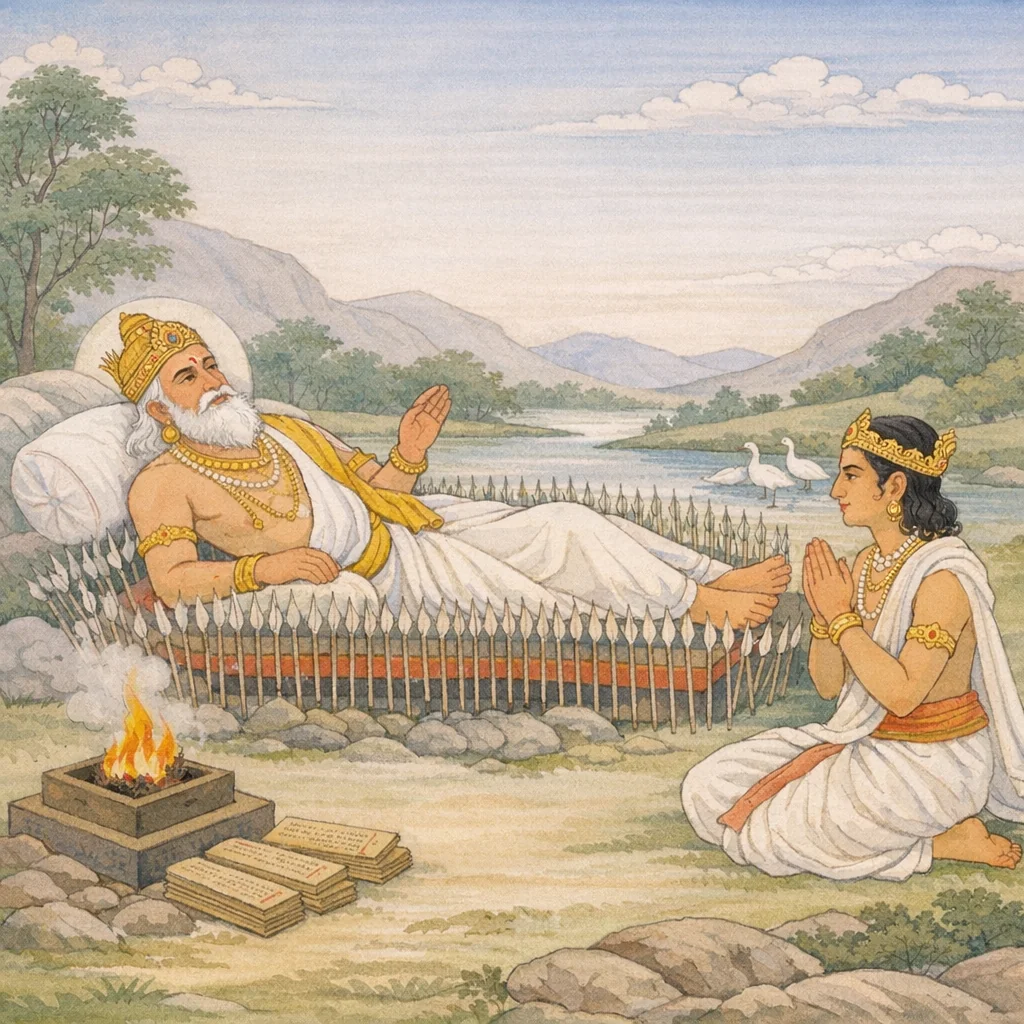
Adhyaya 80
ऋत्विग्धर्मः, दक्षिणा-न्यायः, तपसः परमार्थः (Ritvij-Dharma, the Norm of Dakṣiṇā, and the Higher Meaning of Tapas)
Upa-parva: Rājadharmānuśāsana Parva (राजधर्मानुशासन पर्व) — Priestly qualifications and yajña-economy discourse
Yudhiṣṭhira asks Bhīṣma about the provenance (kva-samutthāḥ), disposition, and proper characteristics of ṛtvij. Bhīṣma replies by outlining a normative profile: priests should be steady, non-abusive in speech, mutually well-disposed, and impartial; they embody anṛśaṃsya (non-cruelty), satya, ahiṃsā, tapas, ārjava, non-hostility, humility, modesty, forbearance, self-control, and tranquility. He asserts that one who is non-violent and satisfied through knowledge is fit for the ‘brahmāsana’ (a seat of spiritual authority), and such great ṛtvij are to be honored. Yudhiṣṭhira then raises a policy concern: Vedic injunctions about dakṣiṇā appear unbounded (‘this must be given, that must be given’), potentially disregarding a patron’s means, and he questions how śāstra can impose severe commands without assessing capacity. Bhīṣma rejects any approach that undermines the Vedas through contempt, deceit, or manipulation, stating that yajña requires dakṣiṇā as an integral limb; mantras without dakṣiṇā do not ‘carry across’ the rite. He introduces proportionality by asserting that the minimum should be measured by one’s śakti (capacity), while maintaining that the three varṇas should perform sacrifice according to rule. The chapter also touches on the economy and legitimacy of ritual exchange (including the contested motif of ‘Soma as king of the Brāhmaṇas’ and concerns about improper transaction), emphasizing nyāya-vṛtti (just livelihood) over unjust conduct. Bhīṣma then pivots to a doctrinal clarification: a śruti states that ‘tapas is superior even to yajña,’ and he defines true tapas as ethical virtues—ahiṃsā, truthful speech, non-cruelty, restraint, and compassion—rather than mere bodily emaciation. Finally, he warns that rejecting Vedic authority, transgressing śāstra, and creating disorder lead to self-destruction, and he closes with a symbolic internalization of yajña elements (e.g., citi, sruk, ājya, pavitra) into cognitive-ethical categories, culminating in the maxim that crookedness leads to death while straightforwardness is aligned with brahman.
Chapter Arc: युधिष्ठिर पितामह भीष्म से पूछते हैं—ऋत्विज (याजक ब्राह्मण) किन स्रोतों से उत्पन्न माने जाएँ, उनका स्वभाव कैसा हो, और यज्ञ-व्यवस्था में उनकी वास्तविक पहचान क्या है। → भीष्म वेद-विद्या (छन्द, ऋक्-साम आदि), आचार-शुद्धि और यजमान-हित की कसौटियों पर ऋत्विजों का वर्गीकरण करते हैं; फिर श्रद्धा-रहित यज्ञ की निष्फलता और दक्षिणा के बिना यज्ञ के ‘अधूरे’ होने की बात रखकर प्रश्न को केवल कर्मकाण्ड नहीं, नैतिकता और सत्यता की परीक्षा बना देते हैं। → भीष्म निर्णायक रूप से तप की परिभाषा को ‘शरीर-शोषण’ से हटाकर अहिंसा, सत्य, दया/अनृशंस्य, दम (इन्द्रिय-निग्रह) और घृणा-त्याग में स्थापित करते हैं—और बताते हैं कि कुटिलता मृत्यु-पद है, जबकि आर्जव (सरलता) ब्रह्म-पद की ओर ले जाता है। → अध्याय का निष्कर्ष यह बनता है कि सच्चा पुरोहित वही है जिसमें क्रूरता का अभाव, सत्य-भाषण, सरलता, द्रोह-रहितता और लोभ-रहित आचरण हो; यज्ञ श्रद्धा और उचित दक्षिणा से पूर्ण होता है, पर उससे भी ऊँचा वह तप है जो नैतिक गुणों में प्रकट हो।
Shlokas
Verse 1
अर एकोनाशीतितमो< ध्याय: ऋषच्विजोंके लक्षण, यज्ञ और दक्षिणाका महत्त्व तथा तपकी श्रेष्ठता युधिछिर उवाच क्वसमुत्था: कथंशीला ऋत्विज: स्यु: पितामह । कथंविधाश्र राजेन्द्र तद् ब्रूहि वदतां वर,युधिष्ठिरने पूछा--राजेन्द्र! वक्ताओंमें श्रेष्ठ पितामह! ऋत्विजोंकी उत्पत्ति किस निमित्तसे हुई है? उनके स्वभाव कैसे होने चाहिये? तथा वे किस-किस प्रकारके होते हैं? मुझे ये सब बातें बताइये
Yudhiṣṭhira said: “Grandfather, from what source do the officiating priests arise, and what should their character be? O king among men, in what forms and classifications do they exist? O best of speakers, tell me this.”
Verse 2
भीष्म उवाच प्रतिकर्म पराचार ऋत्विजां सम विधीयते । छन््द: सामादि विज्ञाय द्विजानां श्रुतमेव च,भीष्मजीने कहा--राजन्! जो ब्राह्मण छन््द:शास्त्र, “ऋक्, 'साम” और “यजु:' नामक तीनों वेद तथा ऋषियोंके रचे हुए स्मृति और दर्शनशास्त्रोंका ज्ञान प्राप्त कर चुके हैं, वे ही ऋत्विज' होने योग्य हैं, उन ऋत्विजोंका मुख्य आचार है--राजाके लिये “शान्ति” 'पौष्टिक' आदि कर्मोंका अनुष्ठान
Bhishma said: “O king, the proper duties and disciplined conduct of the officiating priests are to be duly established. Only those twice-born who have understood the Vedic metres and the Vedas beginning with the Sāman, and who are grounded in sacred learning (śruti), are fit to serve as ṛtviks. Such priests, by their foremost rule of conduct, should perform for the king rites that secure peace and prosperity.”
Verse 3
ये त्वेकरतयो नित्यं धीराशक्ष प्रियवादिन: । परस्परस्य सुहृद: समन्तात् समदर्शिन:,जो सदा एकमात्र यजमानके ही हित-साधनमें तत्पर रहनेवाले, धीर, प्रियवादी, एक- दूसरेके सुहृद् तथा सब ओर समान दृष्टि रखनेवाले हैं, वे ही ऋत्विज् होनेके योग्य हैं
Bhishma said: Those who are ever single-minded in their service, steady and self-controlled, gentle in speech, mutually well-wishers to one another, and impartial in their outlook on all sides—such persons alone are fit to serve as ṛtvij priests (officiants) for a sacrifice.
Verse 4
अनुशंसा: सत्यवाक्या अकुसीदा अथर्जव: । अद्रोहो5नभिमानश्च ह्ीस्तितिक्षा दम: शम:
Bhīṣma said: “These are the commendable virtues: speaking truthfully; being free from usury and exploitative gain; straightforwardness; non-malice; absence of pride; a sense of moral shame and modest restraint; forbearance; self-control over the senses; and inner calm.”
Verse 5
धीमान् सत्यधृतिर्दान्तो भूतानामविहिंसक: । अकामद्देषसंयुक्तस्त्रिभि: शुक्लै: समन्वित:,इसी तरह जो बुद्धिमान, सत्यको धारण करने-वाला, इन्द्रिय संयमी, किसी भी प्राणीकी हिंसा न करनेवाला तथा राग-द्वेष आदि दोषोंसे दूर रहनेवाला है, जिसके शास्त्रज्ञान, सदाचार और कुल--ये तीनों अत्यन्त शुद्ध एवं निर्दोष हैं; जो अहिंसक और ज्ञान-विज्ञानसे तृप्त है, वही ब्रह्मेके आसनपर बैठनेका अधिकारी है। तात! ये सभी महान् ऋत्विज् यथायोग्य सम्मानके पात्र हैं
Bhishma said: “He who is wise, steadfast in truth, self-restrained, and harmless toward all beings; who is free from desire and hatred, and who is endowed with the three pure qualities—such a person is fit to occupy the seat of Brahman. Dear one, these great officiating priests (ṛtvijas) are all worthy of honor, each according to his due.”
Verse 6
अहिंसको ज्ञानतृप्त: स ब्रह्मासनमर्हति । एते महर्त्विजस्तात सर्वे मान्या यथाहत:,इसी तरह जो बुद्धिमान, सत्यको धारण करने-वाला, इन्द्रिय संयमी, किसी भी प्राणीकी हिंसा न करनेवाला तथा राग-द्वेष आदि दोषोंसे दूर रहनेवाला है, जिसके शास्त्रज्ञान, सदाचार और कुल--ये तीनों अत्यन्त शुद्ध एवं निर्दोष हैं; जो अहिंसक और ज्ञान-विज्ञानसे तृप्त है, वही ब्रह्मेके आसनपर बैठनेका अधिकारी है। तात! ये सभी महान् ऋत्विज् यथायोग्य सम्मानके पात्र हैं
Bhishma said: “He who is non-violent and satisfied through true knowledge is fit to occupy the seat of Brahmā. And, dear one, all these great officiating priests are worthy of honor, each in accordance with his due merit.”
Verse 7
युधिछिर उवाच यदिदं वेदवचनं दक्षिणासु विधीयते । इदं देयमिदं देयं न क्वचिद् व्यवतिष्ठते,युधिष्ठिरने पूछा--भारत! यह जो यज्ञसम्बन्धी दक्षिणाके विषयमें वेदवाक्य उपलब्ध होता है कि “यह भी देना चाहिये, यह भी देना चाहिये” यह वाक्य किसी सीमित वस्तुपर अवलम्बित नहीं है
Yudhiṣṭhira said: “This Vedic injunction concerning sacrificial fees (dakṣiṇā) keeps declaring, ‘This should be given, this should be given,’ yet it does not settle upon any fixed limit. In matters of giving, the command seems boundless—how, then, is one to understand its proper measure and rule?”
Verse 8
नेदं प्रतिधनं शास्त्रमापद्धर्मानुशास्त्रत: । आज्ञा शास्त्रस्य घोरेयं न शक्ति समवेक्षते,अतः दक्षिणामें दिये जानेवाले धनके विषयमें जो यह शास्त्र-वचन है, यह आपत्कालिक धर्मशास्त्रके अनुसार नहीं है। मेरी समझमें तो यह शास्त्रकी आज्ञा भयंकर है; क्योंकि यह इस बातकी ओर नहीं देखती कि दातामें कितने दानकी शक्ति है
Yudhiṣṭhira said: “This scriptural rule about ‘repaying with wealth’ does not accord with the teachings on dharma in times of distress. To my mind, this command of the śāstra is harsh, for it does not take into account the donor’s actual capacity—how much he is truly able to give.”
Verse 9
श्रद्धावता च यष्टव्यमित्येषा वैदिकी श्रुति: । मिथ्योपेतस्य यज्ञस्य किमु श्रद्धा करिष्यति,दूसरी ओर वेदकी यह आज्ञा भी सुनी जाती है कि प्रत्येक श्रद्धालु पुरुषको यज्ञ करना चाहिये। यदि दरिद्र श्रद्धांके बलपर यज्ञमें प्रवृत्त हो और उचित दक्षिणा न दे सके तो वह यज्ञ मिथ्या भावसे युक्त होगा; उस दशामें उसकी न्यूनताकी पूर्ति श्रद्धा कैसे कर सकेगी?
Yudhiṣṭhira said: “And yet the Vedic revelation also declares: ‘A man who has faith should perform sacrifice.’ But if a sacrifice is tainted by falsity—because one undertakes it without the proper means and cannot provide the due sacrificial fees—what can faith alone accomplish for such a sacrifice?”
Verse 10
भीष्म उवाच न वेदानां परिभवाजन्न शाठ्येन न मायया । कश्चिन्महदवाप्रोति मा ते5भूद् बुद्धिरीदूशी,भीष्मजीने कहा--युधिष्ठिर! वेदोंकी निन्दा करनेसे, शठतापूर्ण बर्तावसे तथा छल- कपटसे कोई भी महान् पद नहीं पाता है; अतः तुम्हारी बुद्धि ऐसी न हो
Bhishma said: “No one attains true greatness by scorning the Vedas, nor by deceitful conduct, nor by trickery. Let not your understanding turn in that direction, O Yudhishthira.”
Verse 11
तात! दक्षिणा यज्ञोंका अड़ है। वही वेदोक्त यज्ञोंका विस्तार एवं उनमें न्यूनताकी पूर्ति करनेवाली है। दक्षिणाहीन यज्ञ किसी प्रकार भी यजमानका उद्धार नहीं कर सकते
Bhishma said: “Dear child, the sacrificial fee (dakṣiṇā) is an essential limb of a sacrifice. It is precisely what expands the Veda-prescribed rites and makes good whatever is lacking in them. Sacrifices performed without dakṣiṇā cannot, in any manner, bring about the spiritual uplift of the patron who sponsors them.”
Verse 12
शक्तिस्तु पूर्णपात्रेण सम्मिता न समाभवत् | अवश्यं तात यष्ट व्यं त्रिभिर्वर्गर्यथाविधि,जहाँ धनी और दरिद्रकी शक्तिका प्रश्न है, उधर भी शास्त्रकी दृष्टि है ही। दोनोंके लिये समान दक्षिणा नहीं रखी गयी है। (दरिद्रकी) शक्तिको पूर्णपात्रसे मापा गया है। अर्थात् जहाँ धनीके लिये बहुत धन देनेका विधान है, वहाँ दरिद्रके लिये एक पूर्णपात्र ही दक्षिणामें देनेका विधान कर दिया है; अतः तात! ब्राह्मण आदि तीनों वर्णोंके लोगोंको अवश्य ही विधिपूर्वक यज्ञोंका अनुष्ठान करना चाहिये
Bhīṣma said: “Capacity to give is not to be measured by the same full measure for everyone. Therefore, dear one, sacrifice must certainly be performed according to rule by the three social orders. Where the question is of a wealthy man and a poor man, the śāstra itself takes account of their differing means: the rich are enjoined to give much, while for the poor a single ‘full vessel’ is prescribed as the sacrificial fee (dakṣiṇā). Thus, no one is exempt from righteous ritual on the pretext of poverty; duty is adjusted to ability.”
Verse 13
यज्ञाज़ूं दक्षिणा तात वेदानां परिबृंहणम् । न यज्ञा दक्षिणाहीनास्तारयन्ति कथंचन,सोमो राजा ब्राह्मणानामित्येषा वैदिकी स्थिति: । तं च विक्रेतुमिच्छन्ति न वृथा वृत्तिरिष्यते वेदोंका यह सिद्धान्त है कि सोम ब्राह्मणोंका राजा है; परंतु यज्ञके लिये ब्राह्मणलोग उसे भी बेच देनेकी इच्छा रखते हैं। जहाँ यज्ञ आदि कोई अनिवार्य कारण उपस्थित न हो वहाँ व्यर्थ ही उदरपूर्तिके लिये सोमरसका विक्रय अभीष्ट नहीं है
Bhishma said: “O dear one, the sacrificial fee (dakṣiṇā) is a true support and enrichment of the Vedas. Sacrifices that are without dakṣiṇā do not lead anyone across (to merit) in any way. The Vedic rule is this: Soma is the king of the Brahmins. Yet they even wish to sell him. Still, mere livelihood pursued in vain is not approved—selling Soma simply to fill the belly, when no unavoidable sacrificial necessity is present, is not considered proper.”
Verse 14
तेन क्रीतेन यज्ञेन ततो यज्ञ: प्रतायते । इत्येवं धर्मतो ध्यातमृषिभिर्थर्मचारिभि:,दक्षिणाद्वारा उस सोमरसके साथ खरीद किये हुए यज्ञ-साधनोंसे यजमानके यज्ञका विस्तार होता है। धर्मका आचरण करनेवाले ऋषियोंने इस विषयमें धर्मके अनुसार ऐसा ही विचार व्यक्त किया है
By the sacrifice performed with Soma that has been purchased (through dakṣiṇā) and with the sacrificial implements thus obtained, the sacrificer’s yajña is thereby extended and made more complete. The ṛṣis who walk in dharma have reflected on this matter in accordance with dharma and have declared it to be so.
Verse 15
पुमान् यज्ञश्न सोमश्च न्यायवृत्तो यदा भवेत् | अन्यायवृत्त: पुरुषो न परस्य न चात्मन:,यज्ञकर्ता पुरुष, यज्ञ और सोमरस--ये तीनों जब न्याय-सम्पन्न होते हैं तब यज्ञका यथार्थरूपसे सम्पादन होता है। अन्यायपरायण पुरुष न दूसरेका भला कर सकता है, न अपना ही
Bhishma said: “When the man who partakes of the sacrifice, the Soma, and the sacrificer himself are all established in justice and right conduct, then the sacrifice is truly accomplished in its proper form. But a man devoted to unrighteous ways can bring benefit neither to another nor even to himself.”
Verse 16
शरीरवृत्तमास्थाय इत्येषा श्रूयते श्रुति: । नातिसम्यक् प्रणीतानि ब्राह्मणानां महात्मनाम्
Bhīṣma said: “There is a Vedic saying heard in this form: ‘Having taken up the mode of living that sustains the body…’—yet the ordinances laid down by great-souled Brāhmaṇas are not to be followed in a merely literal or half-understood way. One should grasp their true intent, so that bodily maintenance does not become an excuse for slipping from dharma.”
Verse 17
शरीर-निर्वाहमात्रके लिये धन प्राप्त करके यज्ञमें प्रवृत्त हुए महामनस्वी ब्राह्मणोंद्वारा जो यज्ञ सम्पादित होते हैं, वे भी हिंसा आदि दोषोंसे युक्त होनेपर उत्तम फल नहीं देते हैं, ऐसा श्रुतिका सिद्धान्त सुननेमें आता है ।। तपो यज्ञादपि श्रेष्ठमित्येषा परमा श्रुति: । तत् ते तप: प्रवक्ष्यामि विद्वंस्तदपि मे शूणु,अत: यज्ञकी अपेक्षा भी तप श्रेष्ठ है, यह वेदका परम उत्तम वचन है। विद्वान् युधिष्ठिर! मैं तुम्हें तपका स्वरूप बताता हूँ, तुम मुझसे उसके विषयमें सुनो
Bhishma said: “The highest teaching of the Vedas declares that austerity (tapas) is superior even to sacrifice (yajña). Therefore, O wise Yudhishthira, I shall explain to you the true nature of tapas—listen to me.” In the ethical frame, Bhishma stresses that ritual acts, even when performed by well-meaning Brahmins merely for livelihood, may be tainted by violence and other faults; thus inner discipline and moral restraint are held forth as the surer path to the highest good.
Verse 18
अहिंसा सत्यवचनमानृशंस्यं दमो घृणा । एतत् तपो विदुर्धीरा न शरीरस्य शोषणम्,किसी भी प्राणीकी हिंसा न करना, सत्य बोलना, क्रूरताको त्याग देना, मन और इन्द्रियोंको संयममें रखना तथा सबके प्रति दयाभाव बनाये रखना--इन्हींको धीर पुरुषोंने तप माना है। केवल शरीरको सुखाना ही तप नहीं है
Bhishma said: “Non-violence, truthfulness, freedom from cruelty, self-restraint of mind and senses, and compassion toward all beings—these the wise know as true tapas. Mere emaciation or torment of the body is not tapas.”
Verse 19
अप्रामाण्यं च वेदानां शास्त्राणां चाभिलड्घनम् । अव्यवस्था च सर्वत्र तद् वै नाशनमात्मन:,वेदको अप्रामाणिक बताना, शास्त्रोंकी आज्ञाका उललड्घन करना तथा सर्वत्र अव्यवस्था पैदा करना--ये सब दुर्गुण अपना ही नाश करनेवाले हैं
Bhishma said: “To declare the Vedas without authority, to transgress the injunctions of the śāstras, and to spread disorder everywhere—these vices indeed bring about one’s own ruin.”
Verse 20
निबोध देवहोतृणां विधान पार्थ यादृशम् । चित्ति: ख्रुक् चित्तमाज्यं च पवित्र ज्ञानमुत्तमम्,कुन्तीनन्दन! दैवी सम्पदायुक्त होताओंके यज्ञ-सम्बन्धी उपकरण जिस प्रकारके होते हैं, उन्हें सुनो। उनके सहायक चित्ति ही खुक् है, चित्त ही आज्य (घी) है और उत्तम ज्ञान ही पवित्री है
Bhishma said: “Understand, O Partha, what the ordinance is for the divine priests. Hear of the sacrificial implements belonging to such priests endowed with divine wealth: their assisting ‘citti’ itself is the ladle; the mind itself is the clarified butter offered; and supreme knowledge is the purifier. Thus the true sacrifice is internal—performed through disciplined mind and insight rather than mere external ritual.”
Verse 21
सर्व जिद्ठां मृत्युपदमार्जवं ब्रह्मण: पदम् । एतावान् ज्ञानविषय: कि प्रलाप: करिष्यति,सारी कुटिलता मृत्युका स्थान है और सरलता परब्रह्मकी प्राप्तिका स्थान है। इतना ही ज्ञानका विषय है और सब प्रलापमात्र है, वह किस काम आयेगा?
Bhishma said: “All crookedness is a station on the road to death; straightforwardness is the station that leads to Brahman. This much alone is the proper domain of true knowledge—what use is any further idle talk?”
Verse 43
यस्मिन्नेतानि दृश्यन्ते स पुरोहित उच्यते । जिनमें क्रूरताका सर्वथा अभाव है, जो सत्यभाषण करनेवाले और सरल हैं, जो व्याज नहीं लेते तथा जिनमें द्रोह और अभिमानका अभाव है, जिनमें लज्जा, सहनशीलता, इन्द्रियसंयम और मनोनिग्रह आदि गुण देखे जाते हैं, वे ही पुरोहित कहलाते हैं
He in whom these qualities are seen is called a purohita (royal priest): one wholly devoid of cruelty, truthful of speech and straightforward, who takes no usury, and in whom there is neither treachery nor pride; in whom are found modesty, forbearance, restraint of the senses, and mastery of the mind—such alone are called purohitas.
Verse 79
इति श्रीमहाभारते शान्तिपर्वणि राजधर्मानुशासनपर्वणि एकोनाशीतितमो<ध्याय: ।। ७९ || इस प्रकार श्रीमह्याभारत शान्तिपर्वके अन्तर्गत राजधमनिशासनपर्वमें उन्यासीवाँ अध्याय पूरा हुआ
Thus, in the Śrī Mahābhārata, within the Śānti Parva, in the section on the instruction regarding the duties of kings (Rājadharmānuśāsana Parva), the seventy-ninth chapter (i.e., the eighty-first less one) comes to an end. This is the formal colophon marking the completion of the chapter in Bhīṣma’s discourse on royal dharma.
Frequently Asked Questions
Bhīṣma lists steadiness, non-harsh speech, mutual goodwill, impartiality, non-cruelty, truthfulness, non-violence, straightforwardness, humility, modesty, forbearance, self-control, and tranquility as core traits.
It maintains dakṣiṇā as integral to yajña while introducing śakti (capacity) as the measure for the minimum appropriate offering, discouraging deceitful shortcuts and emphasizing proportional, rule-governed practice.
Tapas is presented as primarily ethical—ahiṃsā, truthful speech, compassion, restraint, and non-cruelty—rather than bodily self-harm, thereby internalizing religious merit in moral discipline.