Adhyaya 64
Kṣātra-dharma as the Public Foundation of Dharma (क्षात्रधर्म-प्रशंसा)
Upa-parva: Rājadharmānuśāsana Upa-Parva (Instruction on the Duties of Kings)
Bhīṣma argues to Yudhiṣṭhira that multiple dharmic systems—cāturāśramya duties, jāti-based norms, and divine-guardian frameworks—are functionally anchored in kṣātra-dharma when it is properly established. He contrasts the indirect, multi-path character of āśrama-dharma (often articulated through āgama and disputation) with the more publicly verifiable orientation of kṣatriya duty, described as welfare-producing, self-witnessing (ātma-sākṣika), and oriented to the good of all beings. To illustrate, Bhīṣma introduces an exemplum involving King Māndhātṛ, who performs a sacrifice seeking Nārāyaṇa; a dialogue unfolds with Indra, who stresses that the cosmic order and subsequent dharmas depend upon the primordial operation of kṣātra-dharma. The chapter culminates in claims that protection, relief of the afflicted, compassion, and social restraint arise through righteous kingship: fear of just authority curbs transgression, while the well-governed live by good conduct. The king is instructed to protect beings like children, presenting governance as a moral infrastructure enabling all other disciplines.
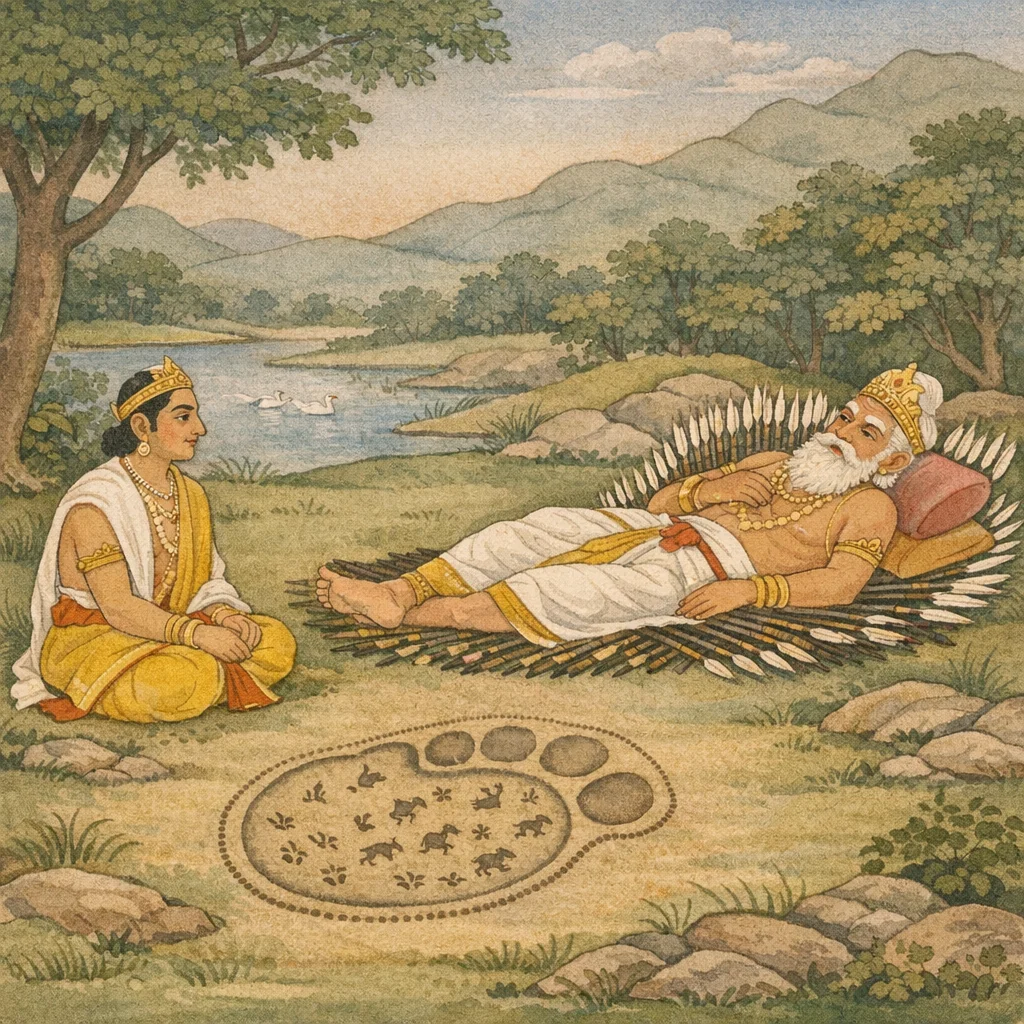
Chapter Arc: शरशय्या पर लेटे भीष्म युधिष्ठिर से कहते हैं कि धर्म केवल त्याग या तप का नाम नहीं—जीवन-यापन के साधन, सेवा, और वर्णाश्रम के कर्तव्य भी धर्म के ही अंग हैं। → भीष्म गृहस्थ ब्राह्मण के लिए ‘षट्कर्म’ (वेदाध्ययन-अध्यापन, यजन-याजन, दान-प्रतिग्रह) का विधान रखते हुए यह भी बताते हैं कि कुछ आजीविकाएँ—राजसेवा, कृषि-धन, वाणिज्य-पथ—सीमित रूप से स्वीकार्य हैं, पर कपट, व्यभिचारजन्य वृत्ति, और सूद (कुसीद) जैसे मार्ग वर्जित हैं; यहीं से ‘धर्मसम्मत जीविका’ बनाम ‘लोभजन्य उपाय’ का तनाव उभरता है। → भीष्म राजधर्म की सर्वग्राहिता का महावाक्य देते हैं—जैसे हाथी के पदचिह्न में अन्य सब प्राणियों के पदचिह्न समा जाते हैं, वैसे ही समस्त धर्म राजधर्म में समाहित हैं; त्याग, दीक्षा, विद्या, और लोक-व्यवस्था—सबका आश्रय राजा का धर्म है। → वर्णाश्रम-धर्म की मर्यादा स्पष्ट होती है: ब्राह्मण के लिए दम, शौच, आर्जव और आश्रम-व्यवस्था; वैश्य के लिए परिश्रमपूर्वक स्वधर्म निभाकर कृतकृत्य होने पर आश्रम-आश्रय की अनुमति; और राजा के लिए वेद-राजशास्त्र का धर्मपूर्वक अध्ययन, प्रजा-पालन हेतु अनुशासन—जिससे अन्य सभी धर्म सुरक्षित रहते हैं।
Shlokas
Verse 1
भीष्मजी कहते हैं--राजन्! धनुषकी डोरी खींचना, शत्रुओंको उखाड़ फेंकना, खेती, व्यापार और पशुपालन करना अथवा धनके उद्देश्यसे दूसरोंकी सेवा करना--ये ब्राह्मणके लिये अत्यन्त निषिद्ध कर्म हैं
Bhishma said: “O King, for a Brahmin, actions such as drawing the bowstring, violently uprooting enemies, engaging in agriculture, trade, or cattle-rearing, or serving others with the aim of earning wealth—these are strictly forbidden duties.”
Verse 2
सेव्यं तु ब्रह्म षट््कर्म गृहस्थेन मनीषिणा । कृतकृत्यस्य चारण्ये वासो विप्रस्य शस्यते,मनीषी ब्राह्मण यदि गृहस्थ हो तो उसके लिये वेदोंका अभ्यास और यजन-याजन आदि छ:कर्म ही सेवन करने योग्य हैं। गृहस्थ आश्रमका उद्देश्य पूर्ण कर लेनेपर ब्राह्मणके लिये (वानप्रस्थी होकर) वनमें निवास करना उत्तम माना गया है
Bhīṣma said: For a discerning householder, what should be pursued is sacred Vedic learning together with the six duties—such as performing sacrifice and officiating for others. And when the aims of the householder stage have been fulfilled, it is praised for a brāhmaṇa to dwell in the forest, adopting the life of withdrawal and discipline.
Verse 3
राजप्रेष्यं कृषिधनं जीवनं च वणिक्पथा । कौटिल्यं कौलटेयं च कुसीदं च विवर्जयेत्
Bhīṣma said: One should avoid making a living by serving as a royal hireling, by wealth gained through agriculture as a sole pursuit, and by the trader’s road of commerce; likewise one should shun crooked dealing, living by a courtesan’s trade, and usury.
Verse 4
गृहस्थ ब्राह्मण राजाकी दासता, खेतीके द्वारा धनका उपार्जन, व्यापारसे जीवन- निर्वाह, कुटिलता, व्यभिचारिणी स्त्रियोंके साथ व्यभिचारकर्म तथा सूदखोरी छोड़ है॥॥73 7 शूद्रो राजन भवति ब्रह्मबन्धु- दुश्चारित्रो यश्न धर्मादपेत: | वृषलीपति: पिशुनो नर्तनश्न राजप्रेष्यो यश्व भवेद् विकर्मा,राजन! जो ब्राह्मण दुश्चरित्र, धर्महीन, शूद्रजातीय कुलटा स्त्रीसे सम्बन्ध रखनेवाला, चुगलखोर, नाचनेवाला, राजसेवक तथा दूसरे-दूसरे विपरीत कर्म करनेवाला होता है, वह ब्राह्मणत्वसे गिरकर शूद्र हो जाता है
Bhishma said: “O King, a ‘brahmabandhu’—one who bears the name of a Brahmin but not the conduct—becomes like a Shudra when he is of corrupt character and has fallen away from dharma: when he keeps a low-born woman as his partner, becomes a slanderer and informer, takes to dancing as a livelihood, lives as a royal hireling, and engages in other forbidden or perverse acts. Such conduct causes a fall from Brahminhood in the ethical sense.”
Verse 5
जपन् वेदानजपंश्नचापि राजन् सम: शूट्रेर्दसवच्चापि भोज्य: । एते सर्वे शूद्रसमा भवन्ति राजन्नेतान् वर्जयेद् देवकृत्ये,नरेश्वर! उपर्युक्त दुर्गुणोंसे युक्त ब्राह्मण वेदोंका स्वाध्याय करता हो या न करता हो, शूद्रोंक ही समान है। उसे दासकी भाँति पंक्तिसे बाहर भोजन कराना चाहिये। ये राज-सेवक आदि सभी अधम ब्राह्मण शूद्रोंके ही तुल्य हैं। राजन्! देवकार्यमें इनका परित्याग कर देना चाहिये
Bhīṣma said: “O King, whether such a man recites the Vedas or does not recite them, he is to be regarded as equal to a Śūdra. He should be fed apart, like a servant, outside the common dining line. All these base Brahmins—those who have fallen into such faults and live by royal service and the like—become comparable to Śūdras. Therefore, O lord of men, one should exclude them from rites performed for the gods.”
Verse 6
निर्मयदि चाशुचौ क्रूरवृत्तौ हिंसात्मके त्यक्तधर्मस्ववृत्ते । हव्यं कव्यं यानि चान्यानि राजन् देयान्यदेयानि भवन्ति चास्मै,राजन! जो ब्राह्मण मर्यादाशून्य, अपवित्र, क्रूर स््वभाववाला, हिंसापरायण तथा अपने धर्म और सदाचारका परित्याग करनेवाला है, उसे हव्य-कव्य तथा दूसरे दान देना न देनेके ही बराबर है
Bhīṣma said: “O King, when a brāhmaṇa is without self-restraint, impure, cruel in conduct, devoted to violence, and has abandoned his own dharma and right livelihood, then offerings—whether havya (for the gods), kavya (for the ancestors), or any other gifts—become for him as though they were not to be given at all. Giving to such a person yields no true religious fruit.”
Verse 7
तस्माद् धर्मो विहितो ब्राह्मणस्य दम: शौचमार्जवं चापि राजन् । तथा विप्रस्याश्रमा: सर्व एव पुरा राजन् ब्राह्मणा वै निसृष्टा:,अत: नरेश्वर! ब्राह्मणके लिये इन्द्रियसंयम, बाहर-भीतरकी शुद्धि और सरलताके साथ- साथ धर्माचरणका ही विधान है। राजन्! सभी आश्रम ब्राह्मणोंके लिये ही हैं क्योंकि सबसे पहले ब्राह्मणोंकी ही सृष्टि हुई है
Therefore, O king, the prescribed dharma for a brāhmaṇa is self-restraint (dama), purity—outer and inner—and straightforwardness. And, O king, all the āśramas are indeed for the brāhmaṇa, for in ancient times the brāhmaṇas were said to have been created first.
Verse 8
यः स्याद् दान्त: सोमपश्चार्यशील: सानुक्रोश: सर्वसहो निराशी: । ऋजुर्मदुरनृशंस: क्षमावान् स वै विप्रो नेतर: पापकर्मा,जो मन और इन्द्रियोंको संयममें रखनेवाला, सोमयाग करके सोमरस पीनेवाला, सदाचारी, दयालु, सब कुछ सहन करनेवाला, निष्काम, सरल, मृदु, क्रूरतारहित और क्षमाशील हो, वही ब्राह्मण कहलाने योग्य है। उससे भिन्न जो पापाचारी है, उसे ब्राह्मण नहीं समझना चाहिये
Bhīṣma said: He alone deserves to be called a brāhmaṇa who is self-controlled, a performer of Soma-sacrifice and a drinker of Soma, steadfast in right conduct, compassionate, able to endure all, free from craving, straightforward, gentle, non-cruel, and forgiving. One who is otherwise—whose actions are sinful—should not be regarded as a brāhmaṇa.
Verse 9
शूद्रं वैश्यं राजपुत्रं च राजन्- लोका: सर्वे संश्रिता धर्मकामा: । तस्माद् वर्णात् शान्तिधर्मेष्वसक्तान् मत्वा विष्णुनेच्छति पाण्डुपुत्र,राजन! पाण्डुनन्दन! धर्मपालनकी इच्छा रखनेवाले सभी लोग, सहायताके लिये शाद्र, वैश्य तथा क्षत्रियकी शरण लेते हैं। अतः जो वर्ण शान्तिधर्म (मोक्ष-साधन)में असमर्थ माने गये हैं, उनको भगवान् विष्णु शान्तिपरक-धर्मका उपदेश करना नहीं चाहते
Bhīṣma said: “O King, all people who desire to uphold dharma seek support and protection from the Śūdra, the Vaiśya, and the king’s son (the Kṣatriya). Therefore, O son of Pāṇḍu—O King, O delight of Pāṇḍu—Vişṇu, considering that social order to be not engaged or not competent in the disciplines of the Dharma of Peace (the path leading toward liberation), does not wish to teach them that peace-centered dharma.”
Verse 10
लोके चेदं सर्वलोकस्य न स्या- च्चातुर्वर्ण्य वेदवादाश्व न स्यु: । सर्वाक्षैज्या: सर्वलोकक्रिया श्र सद्यः सर्वे चाश्रमस्था न वै स्यु:,यदि भगवान् विष्णु यथायोग्य विधान न करें तो लोकमें जो सब लोगोंको यह सुख आदि उपलब्ध है, वह न रह जाय। चारों वर्ण तथा वेदोंके सिद्धान्त टिक न सकें। सम्पूर्ण यज्ञ तथा समस्त लोककी क्रियाएँ बंद हो जायूँ तथा आश्रमोंमें रहनेवाले सब लोग तत्काल विनष्ट हो जायूँ
Bhīṣma said: “If this ordering were not upheld in the world, the welfare of all people would not endure. The four social orders and the authority of the Vedic teachings would not stand. All sacrifices and the customary works by which society functions would cease, and those established in the disciplines of the āśramas would quickly fall into ruin.”
Verse 11
यश्न त्रयाणां वर्णानामिच्छेदाश्रमसेवनम् । चातुराश्रम्यदृष्टांश्न॒ धर्मास्तान् शृणु पाण्डव,पाण्डुनन्दन! जो राजा अपने राज्यमें तीनों वर्णों (ब्राह्मण, क्षत्रिय, वैश्य) के द्वारा शास्त्रोक्त रूपसे आश्रम-धर्मका सेवन कराना चाहता हो, उसके लिये जानने योग्य जो चारों आश्रमोंके लिये उपयोगी धर्म हैं, उनका वर्णन करता हूँ, सुनो
Bhishma said: O Pandava, if a king wishes that the three social orders—Brahmin, Kshatriya, and Vaishya—should duly practice the disciplines of the āśramas as taught in the scriptures, then listen: I shall describe those duties that are beneficial with reference to the system of the four āśramas.
Verse 12
शुश्रूषाकृतकार्यस्य कृतसंतानकर्मण: । अभ्यनुज्ञातराजस्य शूद्रस्य जगतीपते,पृथ्वीनाथ! जो शूद्र तीनों वर्णोकी सेवा करके कृतार्थ हो गया है, जिसने पुत्र उत्पन्न कर लिया है, शौच और सदाचारकी दृष्टिसे जिसमें अन्य त्रैवर्णिकोंकी अपेक्षा बहुत कम अन्तर रह गया है अथवा जो मनुप्रोक्त दस धर्मोके पालनमें तत्पर रहा हैः, वह शूद्र यदि राजाकी अनुमति प्राप्त कर ले तो उसके लिये संन्यासको छोड़कर शेष सभी आश्रम विहित हैं
Bhishma said: O lord of the world, O protector of the earth—when a Shudra has fulfilled his duty through devoted service, has established a family line by begetting offspring, and has become nearly indistinguishable from the twice-born in purity and good conduct (or is diligently devoted to the tenfold dharmas taught by Manu), then—if he has obtained the king’s permission—every stage of life except renunciation is prescribed as lawful for him.
Verse 13
अल्पान्तरगतस्यापि दशधर्मगतस्य वा । आश्रमा विहिता: सर्वे वर्जयित्वा निराशिषम्,पृथ्वीनाथ! जो शूद्र तीनों वर्णोकी सेवा करके कृतार्थ हो गया है, जिसने पुत्र उत्पन्न कर लिया है, शौच और सदाचारकी दृष्टिसे जिसमें अन्य त्रैवर्णिकोंकी अपेक्षा बहुत कम अन्तर रह गया है अथवा जो मनुप्रोक्त दस धर्मोके पालनमें तत्पर रहा हैः, वह शूद्र यदि राजाकी अनुमति प्राप्त कर ले तो उसके लिये संन्यासको छोड़कर शेष सभी आश्रम विहित हैं
Bhīṣma said: “O lord of the earth, even for a Śūdra who has come to have only a small remaining gap (in purity and conduct) compared with the twice-born, or who is devoted to the practice of the ten dharmas, all the āśramas are prescribed—except the ‘nirāśiṣa’ state (renunciation).”
Verse 14
भेक्ष्यचर्या ततः प्राहुस्तस्य तद्धर्मचारिण: । तथा वैश्यस्य राजेन्द्र राजपुत्रस्य चैव हि,राजेन्द्र! पूर्वोक्त धर्मोॉका आचरण करनेवाले शूद्रके लिये तथा वैश्य और क्षत्रियके लिये भी भिक्षा माँगकर निर्वाह करनेका विधान है
Bhishma said: “Thereafter, for one who follows that prescribed discipline, they declare a livelihood by seeking alms. In the same way, O king, this rule is stated also for the Vaiśya and likewise for the Kṣatriya prince.”
Verse 15
कृतकृत्यो वयो5तीतो राज्ञ: कृतपरिश्रम: । वैश्यो गच्छेदनुज्ञातो नृपेणाश्रमसंश्रयम्,अपने वर्णधर्मका परिश्रमपूर्वक पालन करके कृतकृत्य हुआ वैश्य अधिक अवस्था व्यतीत हो जानेपर राजाकी आज्ञा लेकर क्षत्रियोचित वानप्रस्थ आश्रमोंका ग्रहण करे
Bhishma said: When a Vaiśya has fulfilled his duties and, having grown old, has completed the labors required by his station, he should—after obtaining the king’s permission—withdraw from active worldly life and take refuge in an āśrama (a disciplined stage of life), adopting the forest-dweller’s mode of renunciation appropriate to his transition from household responsibilities.
Verse 16
वेदानधीत्य धर्मेण राजशास्त्राणि चानघ । संतानादीनि कर्माणि कृत्वा सोम॑ निषेव्य च,निष्पाप नरेश! राजाको चाहिये कि पहले धर्माचरण-पूर्वक वेदों तथा राजशास्त्रोंका अध्ययन करे। फिर संतानोत्पादन आदि कर्म करके यज्ञमें सोमरसका सेवन करे। समस्त प्रजाओंका धर्मके अनुसार पालन करके राजसूय, अश्वमेध तथा दूसरे-दूसरे यज्ञोंका अनुष्ठान करे। शास्त्रोंकी आज्ञाके अनुसार सब सामग्री एकत्र करके ब्राह्मणोंको दक्षिणा दे। संग्राममें अल्प या महान् विजय पाकर राज्यपर प्रजाकी रक्षाके लिये अपने पुत्रको स्थापित कर दे। पुत्र न हो तो दूसरे गोत्रके किसी श्रेष्ठ क्षत्रियको राज्यसिंहासनपर अभिषिक्त कर दे। वक्ताओंमें श्रेष्ठ क्षत्रियशिरोमणि पाण्डुनन्दन! पितृयज्ञों-द्वारा विधिपूर्वक पितरोंका, देवयज्ञोंद्वारा देवताओंका तथा वेदोंके स्वाध्यायद्वारा ऋषियोंका यत्नपूर्वक भली-भाँति पूजन करके अन्तकाल आनेपर जो क्षत्रिय दूसरे आश्रमोंको ग्रहण करनेकी इच्छा करता है, वह क्रमश: आश्रमोंको अपनाकर परम सिद्धिको प्राप्त होता है
Bhishma said: “O sinless king, a ruler should first study the Vedas and the science of kingship in a spirit of dharma. Thereafter, having performed the duties beginning with begetting offspring, he should partake of Soma in sacrifice. Thus grounded in sacred learning and lawful conduct, he becomes fit to uphold his people and pursue the royal path of righteous prosperity.”
Verse 17
पालयित्वा प्रजा: सर्वा धर्मेण वदतां वर । राजसूयाश्बदमेधादीन् मखानन्यांस्तथैव च,निष्पाप नरेश! राजाको चाहिये कि पहले धर्माचरण-पूर्वक वेदों तथा राजशास्त्रोंका अध्ययन करे। फिर संतानोत्पादन आदि कर्म करके यज्ञमें सोमरसका सेवन करे। समस्त प्रजाओंका धर्मके अनुसार पालन करके राजसूय, अश्वमेध तथा दूसरे-दूसरे यज्ञोंका अनुष्ठान करे। शास्त्रोंकी आज्ञाके अनुसार सब सामग्री एकत्र करके ब्राह्मणोंको दक्षिणा दे। संग्राममें अल्प या महान् विजय पाकर राज्यपर प्रजाकी रक्षाके लिये अपने पुत्रको स्थापित कर दे। पुत्र न हो तो दूसरे गोत्रके किसी श्रेष्ठ क्षत्रियको राज्यसिंहासनपर अभिषिक्त कर दे। वक्ताओंमें श्रेष्ठ क्षत्रियशिरोमणि पाण्डुनन्दन! पितृयज्ञों-द्वारा विधिपूर्वक पितरोंका, देवयज्ञोंद्वारा देवताओंका तथा वेदोंके स्वाध्यायद्वारा ऋषियोंका यत्नपूर्वक भली-भाँति पूजन करके अन्तकाल आनेपर जो क्षत्रिय दूसरे आश्रमोंको ग्रहण करनेकी इच्छा करता है, वह क्रमश: आश्रमोंको अपनाकर परम सिद्धिको प्राप्त होता है
Bhishma said: “O best of speakers, having protected all subjects in accordance with dharma, a king should also perform the great sacrificial rites—such as the Rājasūya and the Aśvamedha, and other sacrifices as well. The ethical point is that royal power is justified not by conquest alone, but by disciplined rule: safeguarding the people through righteousness and then consecrating that rule through Vedic rites that affirm responsibility, generosity, and public order.”
Verse 18
आनयित्वा यथापाठं विप्रेभ्यो दत्तदक्षिण: । संग्रामे विजयं प्राप्य तथाल्पं यदि वा बहु,निष्पाप नरेश! राजाको चाहिये कि पहले धर्माचरण-पूर्वक वेदों तथा राजशास्त्रोंका अध्ययन करे। फिर संतानोत्पादन आदि कर्म करके यज्ञमें सोमरसका सेवन करे। समस्त प्रजाओंका धर्मके अनुसार पालन करके राजसूय, अश्वमेध तथा दूसरे-दूसरे यज्ञोंका अनुष्ठान करे। शास्त्रोंकी आज्ञाके अनुसार सब सामग्री एकत्र करके ब्राह्मणोंको दक्षिणा दे। संग्राममें अल्प या महान् विजय पाकर राज्यपर प्रजाकी रक्षाके लिये अपने पुत्रको स्थापित कर दे। पुत्र न हो तो दूसरे गोत्रके किसी श्रेष्ठ क्षत्रियको राज्यसिंहासनपर अभिषिक्त कर दे। वक्ताओंमें श्रेष्ठ क्षत्रियशिरोमणि पाण्डुनन्दन! पितृयज्ञों-द्वारा विधिपूर्वक पितरोंका, देवयज्ञोंद्वारा देवताओंका तथा वेदोंके स्वाध्यायद्वारा ऋषियोंका यत्नपूर्वक भली-भाँति पूजन करके अन्तकाल आनेपर जो क्षत्रिय दूसरे आश्रमोंको ग्रहण करनेकी इच्छा करता है, वह क्रमश: आश्रमोंको अपनाकर परम सिद्धिको प्राप्त होता है
Bhishma said: “Having had the Vedic recitation performed exactly as prescribed and having given the due honorarium to the Brahmins, and then—whether the victory gained in battle be small or great—(the king should proceed in a dharmic manner).” In context, Bhishma is outlining the king’s ethical life-cycle: disciplined study and ritual responsibility, generous support of the priestly order, protection of subjects, and restrained use of military success as a means to uphold order rather than personal indulgence.
Verse 19
स्थापयित्वा प्रजापाल पुत्र राज्ये च पाण्डव । अन्यगोत्रं प्रशस्तं वा क्षत्रियं क्षत्रियर्षभ,निष्पाप नरेश! राजाको चाहिये कि पहले धर्माचरण-पूर्वक वेदों तथा राजशास्त्रोंका अध्ययन करे। फिर संतानोत्पादन आदि कर्म करके यज्ञमें सोमरसका सेवन करे। समस्त प्रजाओंका धर्मके अनुसार पालन करके राजसूय, अश्वमेध तथा दूसरे-दूसरे यज्ञोंका अनुष्ठान करे। शास्त्रोंकी आज्ञाके अनुसार सब सामग्री एकत्र करके ब्राह्मणोंको दक्षिणा दे। संग्राममें अल्प या महान् विजय पाकर राज्यपर प्रजाकी रक्षाके लिये अपने पुत्रको स्थापित कर दे। पुत्र न हो तो दूसरे गोत्रके किसी श्रेष्ठ क्षत्रियको राज्यसिंहासनपर अभिषिक्त कर दे। वक्ताओंमें श्रेष्ठ क्षत्रियशिरोमणि पाण्डुनन्दन! पितृयज्ञों-द्वारा विधिपूर्वक पितरोंका, देवयज्ञोंद्वारा देवताओंका तथा वेदोंके स्वाध्यायद्वारा ऋषियोंका यत्नपूर्वक भली-भाँति पूजन करके अन्तकाल आनेपर जो क्षत्रिय दूसरे आश्रमोंको ग्रहण करनेकी इच्छा करता है, वह क्रमश: आश्रमोंको अपनाकर परम सिद्धिको प्राप्त होता है
Bhīṣma said: “O Pāṇḍava, protector of the people—O bull among kṣatriyas—having secured the kingdom by installing one’s son upon the throne for the protection of the subjects, a king should hand over rule in due course. If there is no son, then he should consecrate and establish upon the royal seat a worthy kṣatriya from another lineage. The ethical thrust is that kingship is a trust for safeguarding the people and upholding dharma, not a possession to be clung to; succession must be arranged responsibly so that righteous governance continues without disruption.”
Verse 20
अर्चयित्वा पितृन् सम्यक् पितृयजैर्यथाविधि । देवान् यज्ैर््रषीन् वेदैरर्चयित्वा तु यत्नतः,निष्पाप नरेश! राजाको चाहिये कि पहले धर्माचरण-पूर्वक वेदों तथा राजशास्त्रोंका अध्ययन करे। फिर संतानोत्पादन आदि कर्म करके यज्ञमें सोमरसका सेवन करे। समस्त प्रजाओंका धर्मके अनुसार पालन करके राजसूय, अश्वमेध तथा दूसरे-दूसरे यज्ञोंका अनुष्ठान करे। शास्त्रोंकी आज्ञाके अनुसार सब सामग्री एकत्र करके ब्राह्मणोंको दक्षिणा दे। संग्राममें अल्प या महान् विजय पाकर राज्यपर प्रजाकी रक्षाके लिये अपने पुत्रको स्थापित कर दे। पुत्र न हो तो दूसरे गोत्रके किसी श्रेष्ठ क्षत्रियको राज्यसिंहासनपर अभिषिक्त कर दे। वक्ताओंमें श्रेष्ठ क्षत्रियशिरोमणि पाण्डुनन्दन! पितृयज्ञों-द्वारा विधिपूर्वक पितरोंका, देवयज्ञोंद्वारा देवताओंका तथा वेदोंके स्वाध्यायद्वारा ऋषियोंका यत्नपूर्वक भली-भाँति पूजन करके अन्तकाल आनेपर जो क्षत्रिय दूसरे आश्रमोंको ग्रहण करनेकी इच्छा करता है, वह क्रमश: आश्रमोंको अपनाकर परम सिद्धिको प्राप्त होता है
Bhīṣma said: “Having duly honored the ancestors in the proper manner through the rites of the Pitṛ-yajña, and having also worshiped the gods through sacrificial acts and the seers through devoted study of the Vedas, a kṣatriya—when the end of life draws near—who wishes to undertake the disciplines of the other āśramas, proceeds step by step through them and thereby attains the highest fulfillment.”
Verse 21
अन्तकाले च सम्प्राप्ते य इच्छेदा श्रमान्तरम् । सोशनुपूर्व्याश्रमान् राजन् गत्वा सिद्धिमवाप्रुयात्,निष्पाप नरेश! राजाको चाहिये कि पहले धर्माचरण-पूर्वक वेदों तथा राजशास्त्रोंका अध्ययन करे। फिर संतानोत्पादन आदि कर्म करके यज्ञमें सोमरसका सेवन करे। समस्त प्रजाओंका धर्मके अनुसार पालन करके राजसूय, अश्वमेध तथा दूसरे-दूसरे यज्ञोंका अनुष्ठान करे। शास्त्रोंकी आज्ञाके अनुसार सब सामग्री एकत्र करके ब्राह्मणोंको दक्षिणा दे। संग्राममें अल्प या महान् विजय पाकर राज्यपर प्रजाकी रक्षाके लिये अपने पुत्रको स्थापित कर दे। पुत्र न हो तो दूसरे गोत्रके किसी श्रेष्ठ क्षत्रियको राज्यसिंहासनपर अभिषिक्त कर दे। वक्ताओंमें श्रेष्ठ क्षत्रियशिरोमणि पाण्डुनन्दन! पितृयज्ञों-द्वारा विधिपूर्वक पितरोंका, देवयज्ञोंद्वारा देवताओंका तथा वेदोंके स्वाध्यायद्वारा ऋषियोंका यत्नपूर्वक भली-भाँति पूजन करके अन्तकाल आनेपर जो क्षत्रिय दूसरे आश्रमोंको ग्रहण करनेकी इच्छा करता है, वह क्रमश: आश्रमोंको अपनाकर परम सिद्धिको प्राप्त होता है
Bhīṣma said: “When the final time draws near, if a man wishes to enter another stage of life, then, O King, by proceeding through the āśramas in their proper sequence he may attain spiritual perfection. For a kṣatriya-ruler this means: first grounding himself in dharma through study of the Vedas and the science of kingship; then fulfilling the householder’s duties—marriage, progeny, and sacrificial life—protecting subjects according to righteousness and performing great royal sacrifices with due gifts to Brahmins; then, having secured the realm by installing a worthy successor, he may withdraw step by step into the later āśramas, and thus reach the highest goal.”
Verse 22
राजर्षित्वेन राजेन्द्र भैक्ष्यचर्या न सेवया । अपेतगृहधर्मोडपि चरेज्जीवितकाम्यया,गृहस्थ-धर्मोका त्याग कर देनेपर भी क्षत्रियको ऋषिभावसे वेदान्तश्रवण आदि संन्यास-धर्मका पालन करते हुए जीवनरक्षाके लिये ही भिक्षाका आश्रय लेना चाहिये, सेवा करानेके लिये नहीं
Bhishma said: O king of kings, one who lives as a royal sage should sustain himself by mendicancy, not by serving others for livelihood. Even after renouncing the duties of household life, he should continue on—seeking alms only to preserve life, while observing the disciplines of renunciation and the pursuit of spiritual hearing and reflection.
Verse 23
न चैतन्नैष्ठिकं कर्म त्रयाणां भूरिदक्षिण । चतुर्णा राजशार्दूल प्राहुराश्रमवासिनाम्,पर्याप्त दक्षिणा देनेवाले राजसिंह! यह भैक्ष्यचर्या क्षत्रिय आदि तीन वर्णोके लिये नित्य या अनिवार्य कर्म नहीं है। चारों आश्रमवासियोंका कर्म उनके लिये ऐच्छिक ही बताया गया है
Bhishma said: “O lion among kings, you who bestow abundant dakṣiṇā, this practice of living by alms is not a perpetual or compulsory duty for the three varṇas, kṣatriyas included. And for those who dwell in any of the four āśramas, their prescribed works are likewise said to be optional, according to fitness and resolve.”
Verse 24
बाह्वायत्तं क्षत्रियैमनिवानां लोकश्रेष्ठ धर्ममासेवमानै: । सर्वे धर्मा: सोपधर्मस्त्रियाणां राज्ञो धर्मादिति वेदाच्छूणोमि,राजन! राजधर्म बाहुबलके अधीन होता है। वह क्षत्रियके लिये जगतका श्रेष्ठतम धर्म है, उसका सेवन करनेवाले क्षत्रिय मानवमात्रकी रक्षा करते हैं। अतः तीनों वर्णोंके उपधर्मोंसहित जो अन्यान्य समस्त धर्म हैं। वे राजधर्मसे ही सुरक्षित रह सकते हैं, यह मैंने वेद-शास्त्रसे सुना है
Bhishma said: “O King, I have heard from the Veda and the śāstras that the king’s dharma rests upon the strength of his arms. For kṣatriyas, this is the highest dharma in the world: by practicing it, they protect all human beings. Therefore, all other forms of dharma—together with the subsidiary duties of the three social orders—remain secure only under the protection of royal duty.”
Verse 25
यथा राजन हस्तिपदे पदानि संलीयन्ते सर्वसत्त्वोदूभवानि । एवं धर्मान् राजधर्मेषु सर्वान् सर्वावस्थान् सम्प्रलीनान् निबोध,नरेश्वर! जैसे हाथीके पदचिह्ममें सभी प्राणियोंके पदचिह्न विलीन हो जाते हैं, उसी प्रकार सब धर्मोको सभी अवस्थाओंमें राजधर्मके भीतर ही समाविष्ट हुआ समझो
Bhishma said: “O king, just as the footprints of all creatures are gathered and lost within the footprint of an elephant, so too understand this, O lord of men: all forms of dharma, in every condition of life, are comprehended within rājadharma (the king’s duty).”
Verse 26
अल्पाश्रयानल्पफलान् वदन्ति धर्मानन्यान् धर्मविदो मनुष्या: । महाश्रयं बहुकल्याणरूपं क्षात्रं धर्म नेतरं प्राहुरार्या:,धर्मके ज्ञाता आर्य पुरुषोंका कथन है कि अन्य समस्त धर्मोंका आश्रय तो अल्प है ही, फल भी अल्प ही है। परंतु क्षात्रधर्मका आश्रय भी महान् है और उसके फल भी बहुसंख्यक एवं परमकल्याणरूप हैं, अत: इसके समान दूसरा कोई धर्म नहीं है
Bhishma said: Those who truly understand dharma declare that other forms of dharma rest on a limited foundation and yield only limited results. But the kshatriya’s dharma stands upon a great support and bears many fruits that are auspicious and conducive to the highest welfare; therefore the noble regard no other dharma as equal to it.
Verse 27
सर्वे धर्मा राजधर्मप्रधाना: सर्वे वर्णा: पाल्यमाना भवन्ति । सर्वस्त्यागो राजधर्मेषु राजं- स्त्यागं धर्म चाहुरग्र्यं पुराणम्,सभी धर्मोमें राजधर्म ही प्रधान है; क्योंकि उसके द्वारा सभी वर्णोका पालन होता है। राजन! राजधर्मोमें सभी प्रकारके त्यागका समावेश है और ऋषिगण त्यागको सर्वश्रेष्ठ एवं प्राचीन धर्म बताते हैं
Bhishma said: All forms of dharma are, in truth, grounded in the king’s dharma, for through it all the social orders are protected and sustained. O King, within the duties of rulership every kind of renunciation is included; and the sages declare renunciation to be the highest and most ancient dharma.
Verse 28
मज्जेत् त्रयी दण्डनीतौ हतायां सर्वे धर्मा: प्रक्षयेयुर्विबुद्धा: । सर्वे धर्माश्चाश्रमाणां हताः स्युः क्षात्रे त्यक्ते राजधर्मे पुराणे,यदि दण्डनीति नष्ट हो जाय तो तीनों वेद रसातलको चले जायेँ और वेदोंके नष्ट होनेसे समाजमें प्रचलित हुए सारे धर्मोका नाश हो जाय। पुरातन राजधर्म जिसे क्षात्रधर्म भी कहते हैं, यदि लुप्त हो जाय तो आश्रमोंके सम्पूर्ण धर्मोका ही लोप हो जायगा
Bhishma said: “If the science of punishment and governance (daṇḍanīti) is destroyed, the three Vedas would sink into oblivion; and when the Vedas perish, all the established forms of dharma recognized by the wise would also decay. And if the ancient royal duty—called kṣātra-dharma—is abandoned, then the dharmas of all the āśramas (stages of life) would be ruined as well.”
Verse 29
सर्वे त्यागा राजधर्मेषु दृष्टा: सर्वा दीक्षा राजधर्मेषु चोक्ता: । सर्वा विद्या राजधर्मेषु युक्ता: सर्वे लोका राजधर्मे प्रविष्टा:,राजाके धर्मामें सारे त्यागोंका दर्शन होता है, राजधर्मोमें सारी दीक्षाओंका प्रतिपादन हो जाता है, राजधर्ममें सम्पूर्ण विद्याओंका संयोग सुलभ है तथा राजधर्ममें सम्पूर्ण लोकोंका समावेश हो जाता है
Bhishma said: “In the duties of kingship one sees every form of renunciation; within royal duty every discipline and initiation is also taught. All branches of knowledge find their proper application in the king’s dharma, and all the worlds—every sphere of life—are gathered and contained within it.”
Verse 30
यथा जीवा: प्राकृतैर्वध्यमाना धर्मश्रुतानामुपपीडनाय । एवं धर्मा राजधर्मरवियुक्ता: संचिन्वन्तो नाद्वियन्ते स्वधर्मम्,व्याध आदि नीच प्रकृतिके मनुष्योंद्वारा मारे जाते हुए पशु-पक्षी आदि जीव जिस प्रकार घातकके धर्मका विनाश करनेवाले होते हैं, उसी प्रकार धर्मात्मा पुरुष यदि राजधर्मसे रहित हो जायाँ तो धर्मका अनुसंधान करते हुए भी वे चोर-डाकुओंके उत्पातसे स्वधर्मके प्रति आदरका भाव नहीं रख पाते हैं और इस प्रकार जगत्की हानिमें कारण बन जाते हैं (अत: राजधर्म सबसे श्रेष्ठ है)
Bhishma said: “Just as living creatures—beasts and birds—when slain by men of base nature become, in effect, a cause for the ruin of the killer’s righteousness and sacred repute, so too do righteous practices, when deprived of the king’s duty (rājadharma), fail to protect one’s own dharma. Even while people strive to gather and uphold dharma, they do not remain steadfast in reverence for their proper duty when harassed by thieves and violent men; thus disorder spreads and the world is harmed. Therefore, rājadharma is paramount.”
Verse 63
इति श्रीमहाभारते शान्तिपर्वणि राजधर्मानुशासनपर्वणि वर्णाश्रमधर्मकथने त्रिषप्टितमो5ध्याय:
Thus ends the sixty-third chapter in the Śānti Parva of the Śrī Mahābhārata, within the section that instructs on royal duty (rāja-dharma), in the discourse on the duties of the social orders (varṇa) and the stages of life (āśrama). This is the formal colophon marking the close of the teaching in this chapter.
Frequently Asked Questions
How to justify the ruler’s coercive capacity ethically: the chapter frames daṇḍa and protection as prerequisites for the functioning of all other dharmas and for preventing social harm.
Kṣātra-dharma is validated as a welfare-oriented, publicly accountable duty: the king must protect impartially, relieve suffering, and maintain order so that higher aims (including mokṣa-oriented disciplines) remain viable.
No explicit phalaśruti formula appears in the provided passage; the chapter’s meta-claim is structural—understanding righteous kingship is presented as essential to sustaining dharma and social flourishing.