Adhyaya 253
Jājali’s Austerities and the Summons to Tulādhāra (जाजलि–तुलाधार-इतिहासः)
Upa-parva: Mokṣa-dharma / Itihāsa of Jājali and Tulādhāra (Asceticism, Pride, and Ethical Insight)
Bhīṣma introduces an ancient exemplum concerning Jājali, a Brahmin ascetic practicing severe restraints in a forest and near the seashore. He lives with regulated diet, matted hair, and prolonged immobility, later adopting extreme practices (standing motionless, enduring seasons, subsisting on air). Birds (kuliṅga) build a nest in his hair, lay eggs, and raise chicks upon his head; Jājali remains still to protect them, taking satisfaction in his perceived attainment. When the fledglings eventually depart, he concludes he has ‘obtained dharma’ and expresses this with self-congratulation. A disembodied voice and earlier admonitions by beings (rakṣas/piśāca) redirect him: he is told he is not equal in dharma to Tulādhāra, a wise merchant in Vārāṇasī. Jājali, stirred by resentment and curiosity, travels and meets Tulādhāra selling goods. Tulādhāra welcomes him, claims foreknowledge of his arrival, and begins a critique: Jājali performed great tapas yet previously lacked true comprehension of dharma; the birds incident became a basis for pride rather than ethical maturity. The chapter ends with Tulādhāra offering to do what is pleasing for Jājali and inviting him to state his purpose, setting up the forthcoming instruction on dharma grounded in lived conduct rather than austerity alone.
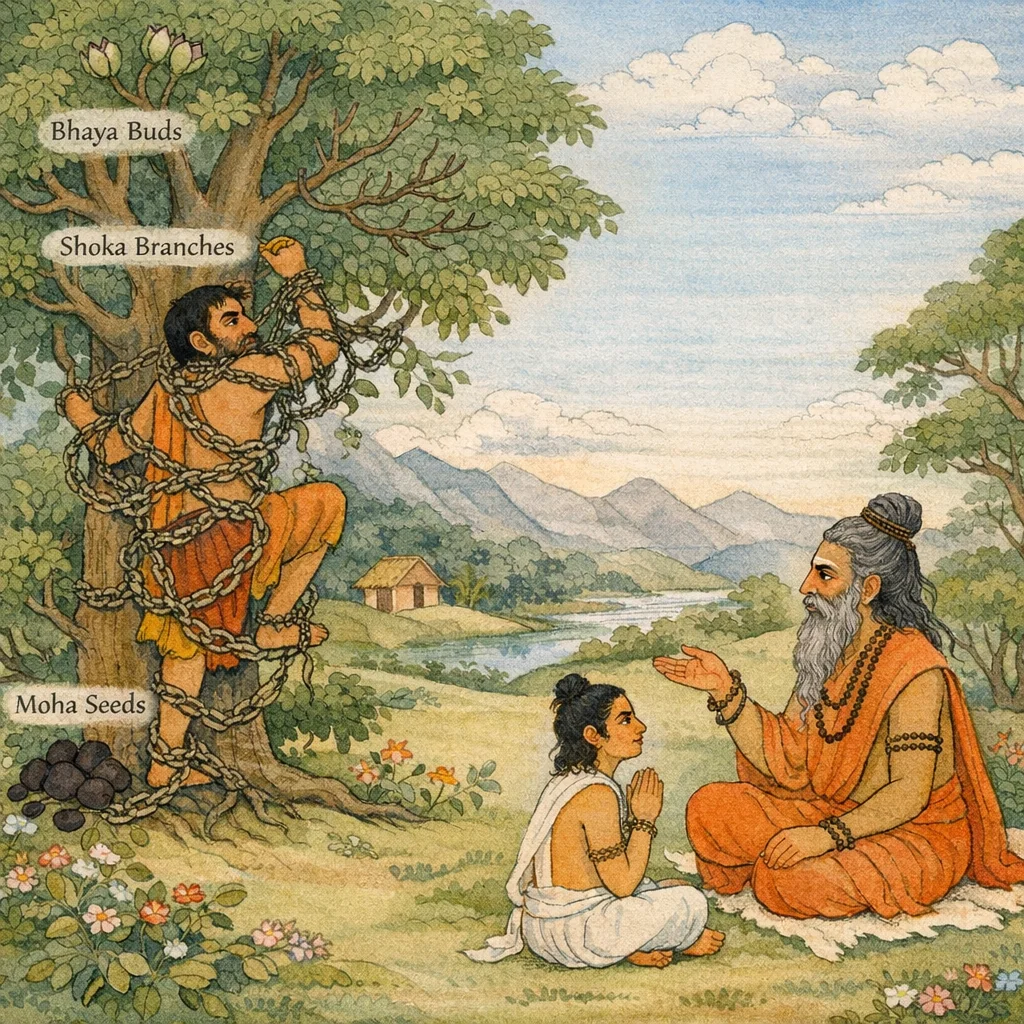
Chapter Arc: व्यास शुक से कहते हैं—हृदय-भूमि में मोह का बीज पड़ते ही एक विचित्र वृक्ष उगता है: उसका नाम ‘काम’ है; और उसी की छाया में मनुष्य अपना ही बंधन रचता है। → काम-वृक्ष का रूप विस्तार पाता है—क्रोध और अभिमान उसके स्कन्ध, अज्ञान उसका आधार, प्रमाद उसका सिंचन; शोक शाखा बनता है, मोह-चिन्ता डालियाँ, भय अंकुर; और तृष्णा की लताएँ उसे चारों ओर से जकड़ लेती हैं। लोभी जन फल की चाह में लोहे की जंजीरों-से वासना-पाशों से बँधकर उसी वृक्ष की उपासना करते हैं। → व्यास निर्णायक उपमा देते हैं—जो मूर्ख फल-लोभ में बार-बार उस वृक्ष पर चढ़ता है, वही वृक्ष उसे मार डालता है; जैसे विष की गोली रोगी को मार देती है। फिर मन-नगर का रहस्य खुलता है: इन्द्रियाँ नगरवासी हैं, मन उनका पुर-स्वामी; और तम-रज के दारुण दोष मन को रजोगुण (काम) से संधि करा कर उसे विषयों की ओर घसीटते हैं। → उपाय स्पष्ट होता है—जो ‘केवल काम’ के निवर्तन (कामना-निवृत्ति) का उपाय जान लेता है और भोग-विधि के बंधन को पहचान लेता है, वह दुःखों को पार कर जाता है। बुद्धि जिस विषय का आश्रय लेती है, मन उसी ओर झुकता है; अतः बुद्धि को विवेक में स्थिर कर मन को एकाग्र/शून्य-विषय बनाना ही रज के आक्रमण से रक्षा है।
Shlokas
Verse 1
व्यासजी कहते हैं--बेटा! मनुष्यकी हृदयभूमिमें मोहरूपी बीजसे उत्पन्न हुआ एक विचित्र वृक्ष है, जिसका नाम है काम। क्रोध और अभिमान उसके महान् स्कन्ध हैं। कुछ करनेकी इच्छा उसमें जल सींचनेका पात्र है। अज्ञान उसकी जड़ है। प्रमाद ही उसे सींचनेवाला जल है। दूसरोंके दोष देखना उस वृक्षका पत्ता है तथा पूर्व जन्ममें किये हुए पाप उसके सारभाग हैं
Vyāsa said: “My son, in the heart-ground of a human being there grows a strange tree, sprung from the seed called delusion; its name is Desire. Anger and pride are its great trunks. The urge to act is like the vessel by which it is watered. Ignorance is its root, and heedlessness is the water that nourishes it. Noticing the faults of others is its foliage, and the sins committed in former births are its inner pith. Thus does desire take firm hold and spread within a person.”
Verse 2
तस्य चाज्ञानमाधार: प्रमाद: परिषेचनम् । सो<भ्यसूयापलाशो हि पुरा दुष्कृतसारवान्,व्यासजी कहते हैं--बेटा! मनुष्यकी हृदयभूमिमें मोहरूपी बीजसे उत्पन्न हुआ एक विचित्र वृक्ष है, जिसका नाम है काम। क्रोध और अभिमान उसके महान् स्कन्ध हैं। कुछ करनेकी इच्छा उसमें जल सींचनेका पात्र है। अज्ञान उसकी जड़ है। प्रमाद ही उसे सींचनेवाला जल है। दूसरोंके दोष देखना उस वृक्षका पत्ता है तथा पूर्व जन्ममें किये हुए पाप उसके सारभाग हैं
Vyāsa said: “For that (tree of desire), ignorance is the very support and root; heedlessness is the watering that nourishes it. Its leaves are fault-finding and envy toward others, and its inner substance is the residue of past misdeeds.”
Verse 3
सम्मोहचिन्ताविटप: शोकशाखो भयाड्कुर: । मोहनीभि: पिपासाभिललताभिरनुवेष्टित:,शोक उसकी शाखा, मोह और चिन्ता डालियाँ एवं भय उसके अंकुर हैं। मोहमें डालनेवाली तृष्णारूपी लताएँ उसमें लिपटी हुई हैं
Vyāsa said: “Delusion and anxious brooding form its spreading boughs; sorrow is its branch, and fear its sprout. It is tightly entwined by the creepers of thirst—cravings that bewitch and bind the mind.”
Verse 4
उपासते महावृक्ष॑ सुलुब्धास्तत्फलेप्सव: । आयसै: संयुता: पाशै: फलदं परिवेष्ट्य तम्,लोभी मनुष्य लोहेकी जंजीरोंके समान वासनाके बन्धनोंमें बँधकर उस फलदायक महान् वृक्षको चारों ओरसे घेरकर आस-पास बैठे हैं और उसके फलको प्राप्त करना चाहते हैं
Vyāsa said: Greedy men, longing for its fruit, sit around and worship a great fruit-bearing tree; bound by iron-like nooses, they encircle that giver of fruits, driven by craving and the hope of gain. The image exposes how desire turns reverence into possession and bondage, and how attachment to results traps the seeker in self-made restraints.
Verse 5
यस्तान् पाशान् वशे कृत्वा त॑ वृक्षमपकर्षति । गत: स दुःखयोरन्तं जरामरणयोर्द्धयो:,जो उन वासनाके बन्धनोंको वशमें करके वैराग्यरूप शस्त्रद्वारा उस काम-वृक्षको काट डालता है, वह मनुष्य जरा और मृत्युजनित दोनों प्रकारके दुःखोंसे पार हो जाता है
Vyāsa said: Whoever brings those bonds under control and cuts down that tree (of desire) with the weapon of dispassion, that person passes beyond the twofold suffering born of old age and death.
Verse 6
संरोहत्यकृतप्रज्ञ: सदा येन हि पादपम् | स तमेव ततो हन्ति विषग्रन्थिरिवातुरम्
Vyāsa said: A man of unformed understanding nurtures the very tree by which he always lives and thrives; yet later he himself strikes down that same source—like a poisonous swelling that destroys the body it has arisen within. The verse warns that folly and ingratitude turn one against one’s own support, making self-harm appear as action against an ‘other.’
Verse 7
परंतु जो मूर्ख फलके लोभसे सदा उस वृक्षपर चढ़ता है, उसे वह वृक्ष ही मार डालता है; ठीक वैसे ही, जैसे खायी हुई विषकी गोली रोगीको मार डालती है ।। तस्यानुगतमूलस्य मूलमुद्ध्रियते बलात् | योगप्रसादात् कृतिना साम्येन परमासिना,उस काम-वृक्षकी जड़ें बहुत दूरतक फैली हुई हैं। कोई विद्वान् पुरुष ही ज्ञानयोगके प्रसादसे समतारूप उत्तम खड्गके द्वारा बलपूर्वक उस वृक्षका मूलोच्छेद कर डालता है
But the fool, greedy for the fruit, keeps climbing that tree, and that very tree destroys him—like a swallowed pellet of poison that kills the sick. The root of that tree—whose roots spread far and follow on endlessly—is forcibly torn out by a capable, discerning person, through the grace born of yoga, using the supreme sword of equanimity.
Verse 8
एवं यो वेद कामस्य केवलस्य निवर्तनम् | बन्धं वै कामशास्त्रस्य स दुःखान्यतिवर्तते,इस प्रकार जो केवल कामनाओंको निवृत्त करनेका उपाय जानता है तथा भोगविधायक शास्त्र बन्धनकारक है--इस बातको समझता है, वह सम्पूर्ण दुःखोंको लाँघ जाता है
One who truly understands how to bring mere desire to cessation—and who recognizes that the pleasure-promising teachings of desire are in fact a bondage—such a person passes beyond all sufferings.
Verse 9
शरीर पुरमित्याहुः स्वामिनी बुद्धिरिष्यते । तत्त्वबुद्धे:ः शरीरस्थं मनो नामार्थचिन्तकम्,इस शरीरको पुर या नगर कहते हैं। बुद्धि इस नगरकी रानी मानी गयी है और शरीरके भीतर रहनेवाला मन निनश्चयात्मिका बुद्धिरूप रानीके अर्थकी सिद्धिका विचार करनेवाला मन्त्री है
This body is spoken of as a citadel, a city. The intellect (buddhi) is held to be the queen of that city; and the mind (manas), dwelling within the body, is the minister who reflects upon meanings and brings to fulfillment the purposes of that queenly intellect.
Verse 10
इन्द्रियाणि मन:पौरास्तदर्थ तु पराकृति: । तत्र द्वौं दारुणौ दोषौ तमो नाम रजस्तथा | तदर्थमुपजीवन्ति पौरा: सह पुरेश्वरै:,इन्द्रियाँ इस नगरमें निवास करनेवाली प्रजा हैं। वे मनरूपी मन्त्रीकी आज्ञाके अधीन रहती हैं। उन प्रजाओंकी रक्षाके लिये मनको बड़े-बड़े कार्य करने पड़ते हैं। वहाँ दो दारुण दोष हैं, जो रज और तमके नामसे प्रसिद्ध हैं। नगरके शासक मन, बुद्धि और जीव इन तीनोंके साथ समस्त पुरवासीरूप इन्द्रियगण मनके द्वारा प्रस्तुत किये हुए शब्द आदि विषयोंका उपभोग करते हैं
Vyāsa said: The senses are like the citizens of the city, and the mind (manas) is their minister; they act under that minister’s command. To guard and sustain those citizens, the mind is driven to mighty exertions. Yet within that city dwell two dreadful faults, called tamas and rajas. Leaning on these, the citizens (the senses), together with the rulers of the city, live by enjoying the objects—sound and the rest—set forth by the mind.
Verse 11
अद्वारेण तमेवार्थ द्वौ दोषावुपजीवत: । तत्र बुद्धिहहिं दुर्धर्षा मन: सामान्यमश्लुते,रजोगुण और तमोगुण--ये दो दोष निषिद्धमार्गके द्वारा उस विषय-सुखका आश्रय लेते हैं। वहाँ बुद्धि दुर्धर्ष होनेपर भी मनके साथ रहनेसे उसीके समान हो जाती है
Vyāsa said: Two faults—rajas and tamas—live upon that very object, approaching it through an improper “door”, a forbidden way. There, even the intellect (buddhi), though naturally hard to overpower, becomes like the mind when it keeps company with it.
Verse 12
पौराक्षापि मनस्त्रस्तास्तेषामपि चला स्थिति: । तदर्थ बुद्धिरध्यास्ते सोडनर्थ: परिषीदति,उस समय इन्द्रियरूपी पुरवासीजन मनके भयसे त्रस्त हो जाते हैं, अतः उनकी स्थिति भी चंचल ही रहती है। बुद्धि भी उस अनर्थका ही निश्चय करती है। इसलिये वह अनर्थ आ बसता है
Vyāsa said: When the mind is frightened, the city’s citizens—the sense-faculties—are shaken as well; therefore their condition remains unsteady. The intellect then fastens upon that very harmful course as though it were the aim. Thus mischief settles in, and the person sinks into distress.
Verse 13
यदर्थ पृथगध्यास्ते मनस्तत्परिषीदति । पृथग्भूतं मनो बुद्धया मनो भवति केवलम्,बुद्धि जिस विषयका अवलम्बन करती है, मन भी उसीका आश्रय लेता है। मन जब बुद्धिसे पृथक् होता है, तब केवल मन रह जाता है
Vyāsa said: Whatever object the intellect takes up as its separate support, the mind too leans upon that same object and is cast down by that dependence. But when the mind is set apart from the intellect, it remains as mind alone.
Verse 14
तत्रैनं विधृतं शून्यं रज: पर्यवतिष्ठते । तनमन: कुरुते सख्यं रजसा सह सड्भतम् | त॑ं चादाय जन॑ पौरं रजसे सम्प्रयच्छति,उस समय रजोगुणजनित काम मनको आत्माके बलसे युक्त होनेपर भी विवेकसे रहित होनेके कारण सब ओरसे घेर लेता है। तब वह कामसे घिरा हुआ मन उस रजोगुणरूप कामके साथ मित्रता स्थापित कर लेता है। उसके बाद वह मन ही उस इन्द्रियरूप पुरवासीजनको रजोगुणजनित कामके हाथमें समर्पित कर देता है (जैसे राजाका विरोधी मन्त्री राज्य और प्रजाको शत्रुके हाथमें सौंप देता है)
There, when the mind—though upheld by the strength of the Self—stands empty of discernment, the quality of passion (rajas) surrounds it and takes possession. Ensnared by desire born of rajas, that mind then makes an alliance with passion itself. Thereafter the mind, taking along the “citizens of the city”—the senses—hands them over to rajas, as though a treacherous minister were to deliver a kingdom and its people into the enemy’s hands. The moral warning is plain: when discrimination fails, desire captures the mind, and the senses become instruments of passion rather than servants of dharma.
Verse 254
इति श्रीमहाभारते शान्तिपर्वणि मोक्षधर्मपर्वणि शुकानुप्रश्ने चतुष्पठ्चाशदधिकद्विशततमो<ध्याय:
Thus ends, in the Śrī Mahābhārata, within the Śānti Parva—specifically the Mokṣa-dharma section—the chapter entitled “Śuka’s Inquiry,” being the 254th chapter.
Frequently Asked Questions
The dilemma is whether ascetic hardship and self-imposed suffering constitute dharma by themselves, especially when they generate self-praise; the narrative tests if compassion and restraint can coexist with humility rather than becoming grounds for moral vanity.
The takeaway is that dharma is measured by ethically lucid conduct and inner disposition, not by austerity alone; tapas lacking correct understanding can culminate in māna, whereas practical righteousness may be embodied by a socially active householder.
A formal phalaśruti is not presented here; instead, the chapter uses meta-commentary through the ‘voice in the sky’ and Tulādhāra’s diagnosis to position the episode as a corrective lens within mokṣa-dharma discourse, preparing the listener for subsequent instruction.