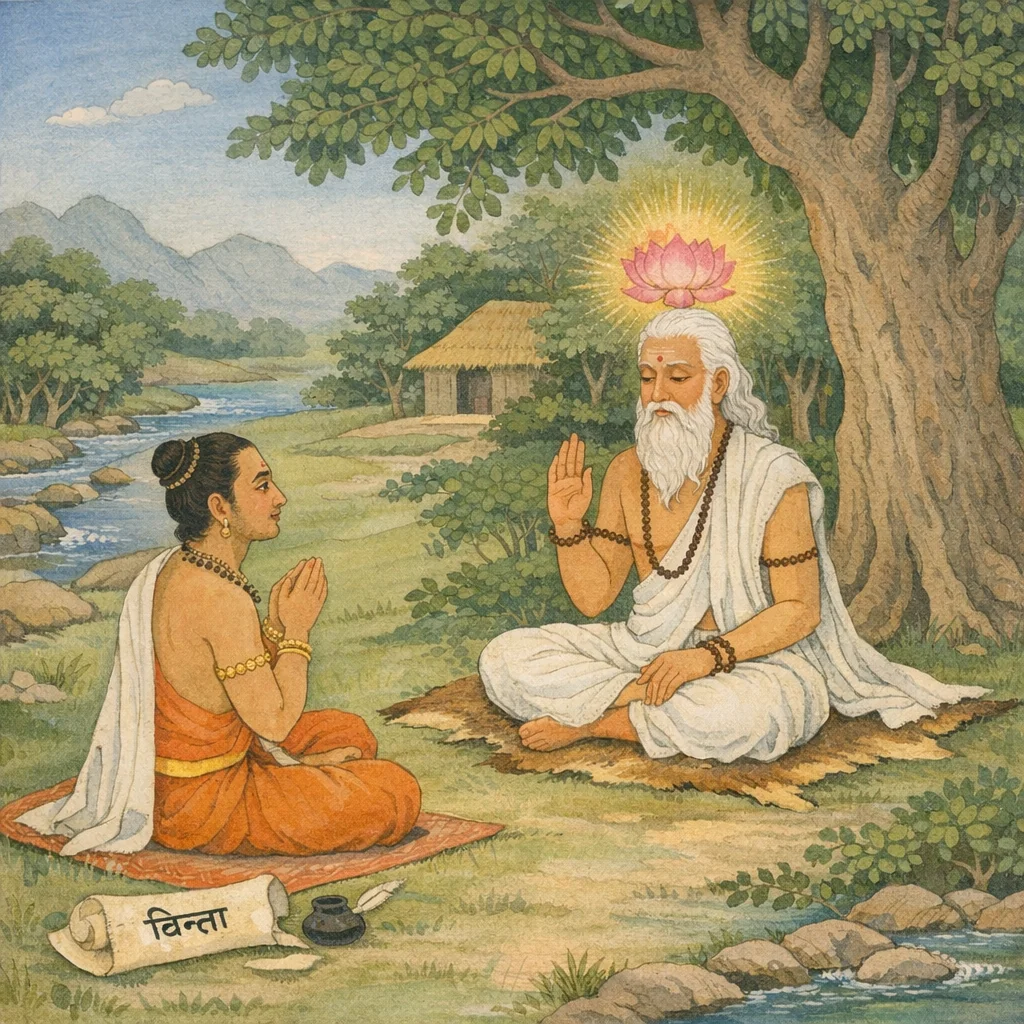
Adhyaya 205
Doṣa-Parīkṣā and Guṇa-Viveka (Examination of Faults and Discernment of the Guṇas)
Upa-parva: Mokṣa-dharma (Liberation Teachings) — Guṇa-doṣa Parīkṣā Discourse (Teacher–Student Dialogue)
The chapter opens with the guru defining dharma in terms of pravṛtti (regulated engagement in action) and noting that those grounded in higher knowledge (vijñāna-niṣṭhā) do not relish alternative ‘tattvas’ that distract from discernment (1). It observes the rarity of true Veda-knowers who are stably aligned with Vedic injunctions and who seek a praised path with clear purpose (2), affirming that established conduct practiced by the good is blameless and conduces to the highest end (3). The discourse then diagnoses bondage: an embodied person, deluded, accumulates possessions and becomes driven by rājasika and tāmasika affects such as desire and anger (4). Therefore one should not practice impurity; creating ‘gaps’ in conduct prevents attainment of wholesome states (5). Knowledge fails to shine when mixed with ‘impurities,’ like gold alloyed with iron (6). One who follows adharma under delusion, even while outwardly treading a righteous path, perishes along with consequences (7). The teacher advises non-attachment to sense-objects; anger, elation, and dejection arise in mutual dependence (8). Reflecting on the body as a compound of five elements and three guṇas, the chapter questions who truly praises or blames whom—undermining reactive identification (9). The ignorant cling to touch, form, and taste, not recognizing the ‘earthly’ (pārthiva) qualities arising from embodiment (10). The body is likened to an earthen structure plastered with earth-products; foods and consumables are also earth-transformations with water (11–12). In the ‘forest’ of saṃsāra, one should take food without craving, as mere maintenance; likewise, eat for travel through life as medicine is taken by the ill (13–14). A catalog of virtues is introduced—truth, purity, straightforwardness, generosity, forbearance, steadiness, intelligence, mental discipline, and tapas—paired with progressive regulation of states and the restraint of the senses for one who seeks peace (15–16). Beings revolve like a wheel under delusion by the guṇas (17), so one must examine faults born of ignorance and abandon egoism as ignorance-produced (18). The chapter then frames a metaphysical-psychological map: elements, senses, guṇas, and even the cosmos with its theistic order are said to be established in ahaṃkāra (19); ego is identified as a driver of activity among beings, analogous to time manifesting seasonal qualities (20). Tamas is defined as delusive, dark, and ignorance-born, and the three guṇas are linked to pleasure and pain (21). Sattva’s features—clarity, joy-born contentment, confidence, steadiness, and memory—are listed (22), while rajas/tamas-associated faults include desire, anger, negligence, greed, delusion, fear, fatigue, depression, grief, arrogance, pride, and ignoble conduct (23). The aspirant is instructed to weigh these faults (heavy/light) and repeatedly reflect on their presence in oneself (24). The student then asks which faults are abandoned by mind, weakened by intellect, and which return repeatedly, and how a wise person should assess their relative strength through reasoning (25–26). The guru replies that one is liberated when faults are cut off at the root; as a formed iron object can be destroyed, so an undisciplined person is ruined by innate rājasika faults (27). Rajas and tamas are described as karmically generated seeds in embodied beings (28); therefore the self-possessed should avoid rajas and tamas, and when freed from them, sattva attains purity (29). A brief note touches on Vedic rationales sometimes used for meat-eating, but emphasizes that abstention supports pure dharma (30). The chapter distinguishes guṇa-driven conduct: rajas can accomplish duty-colored works yet intensifies pursuit of objects and desires (31); tamas fuels greed, anger, harmful amusements, lethargy, and sleep (32). By contrast, one established in sattva perceives pure states; such a person is described as stainless, prosperous, purified, and endowed with knowledge (33).
Chapter Arc: मनु दुःख के आघात से घिरे मनुष्य के सामने एक कठोर औषधि रखते हैं—जिस दुःख को बदला नहीं जा सकता, उसका अनावश्यक चिन्तन ही उसे बार-बार जन्म देता है। → विचार-प्रवाह की जिद सामने आती है: मन दुःख को पकड़कर रखता है, स्मृति उसे पोषित करती है, और चिन्तन उसे फिर-फिर उपस्थित कर देता है। मनु उपाय बताते हैं—मानसिक दुःख को प्रज्ञा से काटो, शारीरिक कष्ट को औषध से; पर यह भेद-विवेक बालबुद्धि के वश का नहीं। → ज्ञान-यात्रा का शिखर: मनु मन, बुद्धि और प्रज्ञा की उत्पत्ति-गति समझाते हुए कहते हैं कि जब बुद्धि कर्म-गुणों से रहित होकर मन में स्थिर होती है, तब ध्यान-योग-समाधि से ब्रह्म का साक्षात्कार होता है—दुःख-चिन्तन का मूल वहीं गलता है। → तप, अनुमान, शम-दम आदि गुण, जातिगत/आश्रमधर्म का शुद्ध पालन और अंतःकरण की निर्मलता—इनसे परम ब्रह्म की ओर आरोहण संभव है। धर्म से श्रेय बढ़ता है, अधर्म से अश्रेय; राग प्रकृति में बाँधता है, वैराग्य ज्ञान की ओर ले जाता है।
Shlokas
Verse 1
ऑपन-आक्राा बा 2 पज्चाधिकद्विशततमो< ध्याय: परब्रह्म॒की प्राप्तिका उपाय मनुर्वाच दुःखोपघाते शारीरे मानसे चाप्युपस्थिते | यस्मिन् न शक््यते कर्तु यत्नस्तं नानुचिन्तयेत्,मनुजी कहते हैं--बृहस्पते! जब मनुष्यपर कोई ऐसा शारीरिक या मानसिक दुःख आ पड़े, जिसके रहते हुए साधन करना अशक्य हो जाय, तब उस दुःखका चिन्तन करना छोड़ दे
Bhishma said: Manu declared—“O Bṛhaspati, when a blow of suffering arises—whether in the body or in the mind—such that one is no longer able to make any effective effort, one should stop brooding over that suffering.”
Verse 2
भैषज्यमेतद् दुःखस्य यदेतन्नानुचिन्तयेत् । चिन्त्यमानं हि चाभ्येति भूयश्चापि प्रवर्तते,दुःखको दूर करनेके लिये सबसे अच्छी दवा यही है कि उसका चिन्तन छोड़ दिया जाय; क्योंकि चिन्तन करनेसे वह सामने आता है और अधिकाधिक बढ़ता रहता है
Bhishma said: “This is the remedy for sorrow: that one should not keep brooding over it. For when sorrow is dwelt upon, it comes right before one’s mind, and it grows and sets itself in motion all the more.”
Verse 3
प्रज्ञया मानसं दु:खं हन्याच्छारीरमौषधै: । एतद् विज्ञानसामर्थ्य न बालै: समतामियात्,अतः मानसिक दुः:खको बुद्धि एवं विचारद्वारा तथा शारीरिक कष्टको ओषधियोंद्वारा दूर करे, यही विज्ञानकी सामर्थ्य है, जिससे मनुष्य दुःखमें पड़नेपर बच्चोंके समान बैठकर रोये नहीं
With wisdom one should strike down the sorrow of the mind, and with medicines cure the afflictions of the body. This is the power of true knowledge, which children cannot match; therefore, when distress arises, one should not sit and weep like a child, but dispel mental anguish through understanding and reflection, and remove bodily pain through remedies.
Verse 4
अनित्यं यौवन रूप॑ं जीवित द्रव्यसंचय: । आरोग्यं प्रियसंवासो गृध्येत् तत्र न पण्डित:,यौवन, रूप, जीवन, धन-संग्रह, आरोग्य और प्रियजनोंका समागम--ये सब अनित्य हैं। विवेकशील पुरुषोंको इनमें आसक्त नहीं होना चाहिये
Youth and beauty, life itself and the hoarding of wealth, health and the company of those one loves—all these are impermanent. Therefore, a discerning person should not cling to them.
Verse 5
न जानपदिकं दुःखमेक: शोचितुमहति । अशोचन् प्रतिकुर्वीत यदि पश्येदुपक्रमम्,जो दुःख सारे देशपर है, उसके लिये किसी एक व्यक्तिको शोक नहीं करना चाहिये। यदि उसे टालनेका कोई उपाय दिखायी दे तो शोक न करके उस दुःखके निवारणका प्रयत्न करना चाहिये
When suffering has fallen upon an entire realm, no one should grieve as though it were his alone. If one can see a practical means to counter it, one should set aside lamentation and strive to remove that distress.
Verse 6
सुखाद् बहुतरं दुःखं जीविते नास्ति संशय: । स्निग्धस्य चेन्द्रियार्थेषु मोहान्मरणमप्रियम्,इसमें संदेह नहीं कि जीवनमें सुखकी अपेक्षा दुःख ही अधिक है। जो पुरुष विषयोंमें अधिक आसक्त होता है, वह मोहवश मरणरूप अप्रिय कष्ट भोगता है
There is no doubt that in embodied life sorrow outweighs pleasure. And for one who is overly attached—clinging with fondness to the objects of the senses—death becomes an unwelcome torment, for delusion makes him unable to let go.
Verse 7
परित्यजति यो दु:खं सुखं वाप्युभयं नर: । अभ्येति ब्रह्म सो>त्यन्तं न ते शोचन्ति पण्डिता:,जो मनुष्य सुख और दु:ख दोनोंको छोड़ देता है, वह अक्षय ब्रह्मको प्राप्त होता है, अतः: वे ज्ञानी पुरुष कभी शोक नहीं करते हैं
Whoever casts off both sorrow and pleasure—refusing to be ruled by either—attains the supreme, imperishable Brahman. Therefore, the wise do not sink into grief.
Verse 8
दुःखमर्था हि युज्यन्ते पालनेन च ते सुखम् । दुःखेन चाधिगम्यन्ते नाशमेषां न चिन्तयेत्,विषयोंके उपार्जनमें दुःख है। उनकी रक्षामें भी तुम्हें सुख नहीं मिल सकता। दुःखसे ही उनकी उपलब्धि होती है; अतः उनका नाश हो जाय तो चिन्ता नहीं करनी चाहिये
Bhishma said: Worldly possessions are indeed acquired through hardship, and even in guarding them there is no real happiness. Since they are obtained only by suffering, one should not grieve if they are lost; their destruction is not worth anxious thought.
Verse 9
ज्ञानं ज्ञेयाभिनिर्वत्तं विद्धि ज्ञानगुणं मनः । प्रज्ञाकरणसंयुक्तं ततो बुद्धि: प्रवर्तते,बृहस्पते! तुम्हें ज्ञात होना चाहिये कि ज्ञेयरूपमें परमात्मासे ज्ञान प्रकट होता है और मन ज्ञानका गुण (कार्य) है। जब वह ज्ञानेन्द्रियोंसे युक्त होता है, तब बुद्धि कर्मोमें प्रवृत्त होती है
Bhishma said: Understand that knowledge arises with reference to the knowable (the Supreme Self as the ultimate object of knowing), and that the mind is a product and instrument of knowledge. When that mind is joined to the faculties of discernment and the sense-organs, the intellect then turns outward into action and becomes engaged in works—O Brihaspati.
Verse 10
यदा कर्मगुणैहीना बुद्धिर्मनसि वर्तते । तदा प्रज्ञायते ब्रह्म ध्यानयोगसमाधिना
Bhīṣma said: When the intellect, free from the qualities that bind action, abides steadily within the mind, then Brahman is realized—through the deep collectedness of meditation, yoga, and samādhi.
Verse 11
जिस समय बुद्धि कर्म-संस्कारोंसे रहित होकर हृदयमें स्थित हो जाती है, उसी समय ध्यानयोगजनित समाधिके द्वारा ब्रह्मका भलीभाँति ज्ञान हो जाता है ।। सेयं गुणवती बुद्धिर्गुणेष्वेवाभिवर्तते । अपरादभिनि:सृत्य गिरे: शुद्भादिवोदकम्,अन्यथा जैसे जलकी धारा पर्वतके शिखरसे निकलकर ढालकी ओर बहती है, उसी प्रकार यह गुणवती बुद्धि अज्ञानके कारण परमात्मासे नियुक्त होकर रूप आदि गुणोंकी ओर बहने लग जाती है
Bhishma said: When the intellect, freed from the residual impressions of action, becomes steadily established in the heart, then—through the absorption born of the yoga of meditation—true knowledge of Brahman arises. Yet this very intellect, so long as it remains conditioned by the guṇas, turns toward the guṇas alone: as a stream of pure water issues from a mountain peak and runs down the slope, so the guṇa-bound mind, diverted by ignorance from the Supreme Self, flows toward qualities such as form and the rest, fastening itself to the world of appearances.
Verse 12
यदा निर्गुणमाप्रोति ध्यानं मनसि पूर्वजम् । तदा प्रज्ञायते ब्रह्म निकषं निकषे यथा,परंतु जब साधक सबके आदिकारण निर्गुण ध्येयतत्त्वको ध्यानद्वारा अन्त:ःकरणमें प्राप्त कर लेता है, तब कसौटीपर कसे हुए सुवर्णके समान ब्रह्मके यथार्थ स्वरूपका ज्ञान होता है
Bhishma said: When the primordial meditation within the mind attains the nirguṇa—beyond all qualities—then Brahman is realized in its true nature, like gold tested upon the touchstone.
Verse 13
मनस्त्वपद्ठतं पूर्वमिन्द्रियार्थनिदर्शकम् । न समक्षगुणापेक्षि निर्गुणस्य निदर्शकम्,परंतु इन्द्रियोंके विषयोंको दिखानेवाला मन जब पहलेसे ही विषयोंकी ओर अपहृत हो जाता है, तब वह विषयरूप गुणोंकी अपेक्षा रखनेवाला मन निर्गुण तत्त्वका दर्शन करानेमें समर्थ नहीं होता
Bhishma said: The mind, whose office is to point out the objects of the senses, if it has already been drawn away beforehand toward those objects, cannot then reveal the attributeless Reality (Nirguṇa). For a mind that depends upon the qualities of sense-objects is not capable of giving direct vision of the Nirguṇa principle.
Verse 14
सर्वाण्येतानि संवार्य द्वाराणि मनसि स्थित: । मनस्येकाग्रतां कृत्वा तत्परं प्रतिपद्यते,समस्त इन्द्रियोंको रोककर संकल्पमात्रसे मनमें स्थित हो उन सबको हृदयमें एकत्र करके साधक उससे भी परे विद्यमान परमात्माको प्राप्त कर लेता है
Bhishma said: Having restrained all these gateways (the senses) and abiding within the mind, one should gather the mind into single-pointed concentration. When the faculties are thus collected in the heart and the seeker becomes wholly intent on That, he attains the Supreme Self that lies beyond them all.
Verse 15
यथा महान्ति भूतानि निवर्तन्ते गुणक्षये । तथेन्द्रियाण्युपादाय बुद्धिर्मनसि वर्तते,जिस प्रकार गुणोंका क्षय होनेपर पठचमहाभूत निवृत्त हो जाते हैं, उसी प्रकार बुद्धि समस्त इन्द्रियोंको लेकर हृदयमें स्थित हो जाती है
Bhishma said: Just as the great elements withdraw when their sustaining qualities are exhausted, so too the intellect (buddhi), gathering up the senses, comes to rest within the mind.
Verse 16
यदा मनसि सा बुद्धिर्वर्तते5न्तरचारिणी । व्यवसायगुणोपेता तदा सम्पद्यते मन:,जब निश्चयात्मिका बुद्धि अन्तर्मुखी होकर हृदयमें स्थित होती है, तब मन विशुद्ध हो जाता है
Bhishma said: When that inward-moving, inner-directed intellect (buddhi) arises and abides within the mind—endowed with the quality of firm resolve—then the mind becomes properly composed and purified.
Verse 17
गुणवद्धिर्गुणोपेतं यदा ध्यानगुणं मन: । तदा सर्वान् गुणान् हित्वा निर्गुणं प्रतिपद्यते,शब्दादि गुणोंसे युक्त इन्द्रियोंके सम्बन्धसे उन गुणोंसे घिरा हुआ मन जब ध्यानजनित गुणोंसे सम्पन्न होता है, तब उन समस्त गुणोंको त्यागकर निर्गुण ब्रह्मको प्राप्त हो जाता है
Bhishma said: The mind, hemmed in by qualities through its connection with the senses—endowed with qualities such as sound and the rest—when it becomes perfected by the qualities born of meditation (dhyāna), then, abandoning all qualities, it attains the attributeless Brahman (Nirguṇa).
Verse 18
अव्यक्तस्येह विज्ञाने नास्ति तुल्यं निदर्शनम् । यत्र नास्ति पदन््यास: कस्तं विषयमाप्नुयात्,उस अव्यक्त ब्रह्मका बोध करानेके लिये इस संसारमें कोई योग्य दृष्टान्त नहीं है। जहाँ वाणीका व्यापार ही नहीं है, उस वस्तुको कौन वर्णनका विषय बना सकता है
Bhīṣma said: “In this world, when one seeks to understand the Unmanifest, there is no comparable illustration. Where even speech finds no footing, who could make that reality an object of description?”
Verse 19
तपसा चानुमानेन गुणैर्जात्या श्रुतेन च निनीषेत् परमं ब्रह्म विशुद्धेनान्तरात्मना,इसलिये तपसे, अनुमानसे, शम आदि गुणोंसे, जातिगत धर्मोंके पालनसे तथा शास््त्रोंके स्वाध्यायसे अन्तःकरणको विशुद्ध करके उसके द्वारा परब्रह्मको प्राप्त करनेकी इच्छा करे
Bhishma said: One should aspire to attain the Supreme Brahman by first purifying the inner self—through austerity, through disciplined reasoning and inference, through virtues such as self-restraint, through faithful observance of one’s duties according to one’s station in life, and through study of the sacred teachings. With an inward being made clear and stainless, let one seek the highest Reality.
Verse 20
गुणहीनो हि त॑ मार्ग बहि: समनुवर्तते । गुणाभावात् प्रकृत्या वा निस्तर्क्य ज्ञेयसम्मितम्,उक्त तपस्या आदि गुणोंसे रहित मनुष्य बाहर रहकर बाह्य मार्गका ही अनुसरण करता है। वह ज्ञेयस्वरूप परमात्मा गुणोंसे अतीत होनेके कारण स्वभावसे ही तर्कका विषय नहीं है
Bhishma said: A person devoid of virtues follows only the outward path, remaining on the outside. But the Supreme Self—known as the ultimate object of knowledge—lies beyond the qualities; therefore, by Its very nature, It cannot be reached or measured by mere reasoning.
Verse 21
नैर्गुण्याद् ब्रह्म चाप्रोति सगुणत्वान्निवर्तते । गुणप्रचारिणी बुद्धिहुताशन इवेन्धने,जैसे अग्नि सूखे काठमें विचरण करती है, उसी प्रकार बुद्धि भी शब्द, स्पर्श आदि गुणोंमें विचरती रहती है। जब वह उन गुणोंका सम्बन्ध छोड़ देती है, तब निर्गुण होनेके कारण ब्रह्मको प्राप्त होती है और जबतक गुणोंमें आसक्त रहती है, तबतक गुणोंसे सम्बन्धित होनेके कारण ब्रह्मको न पाकर लौट आती है
Bhishma said: When the intellect becomes free of qualities, it attains Brahman; but when it remains qualified—bound to the play of qualities—it turns back and fails to reach Brahman. Just as fire moves about in dry fuel, so the intellect ranges among the sense-qualities such as sound and touch. When it abandons its connection with those qualities, it becomes qualityless and reaches Brahman; as long as it clings to them, it returns, still tied to the realm of qualities.
Verse 22
यथा पज्च विमुक्तानि इन्द्रियाणि स्वकर्मभि: । तथा हि परमं ब्रह्म विमुक्तं प्रकृते: परम्,जैसे पाँचों इन्द्रियाँ अपने कार्यरूप शब्द आदि गुणोंसे भिन्न हैं, उसी प्रकार परब्रह्म परमात्मा भी प्रकृतिसे सर्वथा परे है
Bhishma said: “Just as the five sense-faculties are distinct from their own operations—such as sound and the other sense-objects—so too the Supreme Brahman, the highest Self, is utterly free from and beyond Prakriti (material nature).”
Verse 23
एवं प्रकृतित: सर्वे प्रवर्तन्ते शरीरिण: । निवर्तन्ते निवृत्तौ च स्वर्ग चैवोपयान्ति च,इस प्रकार समस्त प्राणी प्रकृतिसे उत्पन्न होते और यथासमय उसीमें लयको प्राप्त होते हैं। उस लय अथवा मृत्युके पश्चात् वे पुण्य और पापके फलस्वरूप स्वर्ग और नरकमें जाते हैं
Bhīṣma said: Thus, all embodied beings arise and set forth from Prakṛti (material nature). In due course, at dissolution (death), they withdraw back into that very source. Thereafter, according to the fruits of their merit and demerit, they attain the worlds of heaven and hell.
Verse 24
पुरुष: प्रकृतिर्बुद्धि्विषयाश्रेन्द्रियाणि च । अहंकारो5भिमानश्व समूहो भूतसंज्ञक:,पुरुष, प्रकृति, बुद्धि, पाँच विषय, दस इन्द्रियाँ, अहंकार, मन और पंच महाभूत--इन पचीस तत्त्वोंका समूह ही प्राणी नामसे कहा जाता है
Bhīṣma said: The living being is spoken of as a composite of twenty-five principles—spirit (puruṣa), nature (prakṛti), intellect (buddhi), the five sense-objects, the ten sense-faculties, egoity (ahaṅkāra), and the aggregate of elements known as the great beings (mahābhūta). By discerning this constitution, one sees the self beyond bodily and mental identifications, supporting steadiness, restraint, and right conduct.
Verse 25
एतस्याद्या प्रवृत्तिस्तु प्रधानात् सम्प्रवर्तते । द्वितीया मिथुनव्यक्तिमविशेषान्नियच्छति,बुद्धि आदि तत्त्वसमूहकी प्रथम सृष्टि प्रकृतिसे ही हुई है। तदनन्तर दूसरी बारसे उनकी सामान्यतः मैथून-धर्मसे नियमपूर्वक अभिव्यक्ति होने लगी है
Bhīṣma said: “The first unfolding of this aggregate of principles proceeds from Pradhāna (primordial Nature). Thereafter, in a second phase, their manifestation is regulated—emerging from the undifferentiated state into paired (male–female) expression according to the law of generation.”
Verse 26
धर्मादुत्कृष्यते श्रेयस्तथाश्रेयोडप्यधर्मत: । रागवान् प्रकृतिं होति विरक्तो ज्ञानवान् भवेत्,धर्म करनेसे श्रेयकी वृद्धि होती है और अधर्म करनेसे मनुष्यका अकल्याण होता है। विषयासक्त पुरुष प्रकृतिको प्राप्त होता है और विरक्त आत्मज्ञान प्राप्त करके मुक्त हो जाता है
Bhīṣma said: From dharma, one’s true good is elevated; from adharma, even well-being turns into harm. A person driven by attachment falls back into the sway of nature and its impulses, whereas one who is detached becomes endowed with true knowledge and thereby moves toward liberation.
Verse 204
इस प्रकार श्रीमह्याभारत शान्तिपर्वके अन्तर्गत मोक्षधर्मपर्वमें मनु और बृहस्पतिका संवादविषयक दो सौ चारवाँ अध्याय पूरा हुआ
Thus, in the Śrī Mahābhārata, within the Śānti Parva—specifically in the Mokṣa-dharma section—the two-hundred-and-fourth chapter, dealing with the dialogue between Manu and Bṛhaspati, comes to its conclusion.
Verse 205
इति श्रीमहाभारते शान्तिपर्वणि मोक्षधर्मपर्वणि मनुबृहस्पतिसंवादे पज्चाधिकद्विशततमो<ध्याय:
Thus, in the Śrī Mahābhārata, within the Śānti Parva—specifically the Mokṣa-dharma section—ends the dialogue between Manu and Bṛhaspati: the two-hundred-and-fifth chapter. This closing colophon marks the completion of a unit of instruction on dharma and liberation, handed down through revered authorities.
Frequently Asked Questions
The problem is how an embodied person can pursue dharma while being pulled by rajas and tamas—desire, anger, greed, and delusion—so that outwardly ‘righteous’ action does not become internally compromised.
Practice sustained self-examination, reduce attachment to sense-objects, treat food as maintenance, and deliberately weaken rajas/tamas so that sattva becomes clear and knowledge (vijñāna) can ‘shine.’
No explicit phalaśruti formula appears in the provided verses; instead, the chapter implies the ‘fruit’ as purification and liberation through uprooting faults at the root and stabilizing sattva.