Adhyaya 201
प्रजापतयः देवगणाश्च दिशि-दिशि स्थिताः ऋषयः (Prajāpatis, Deva-Groups, and the Ṛṣis Assigned to the Directions)
Upa-parva: Rājadharmānuśāsana Parva (Instruction on Kingly Dharma)
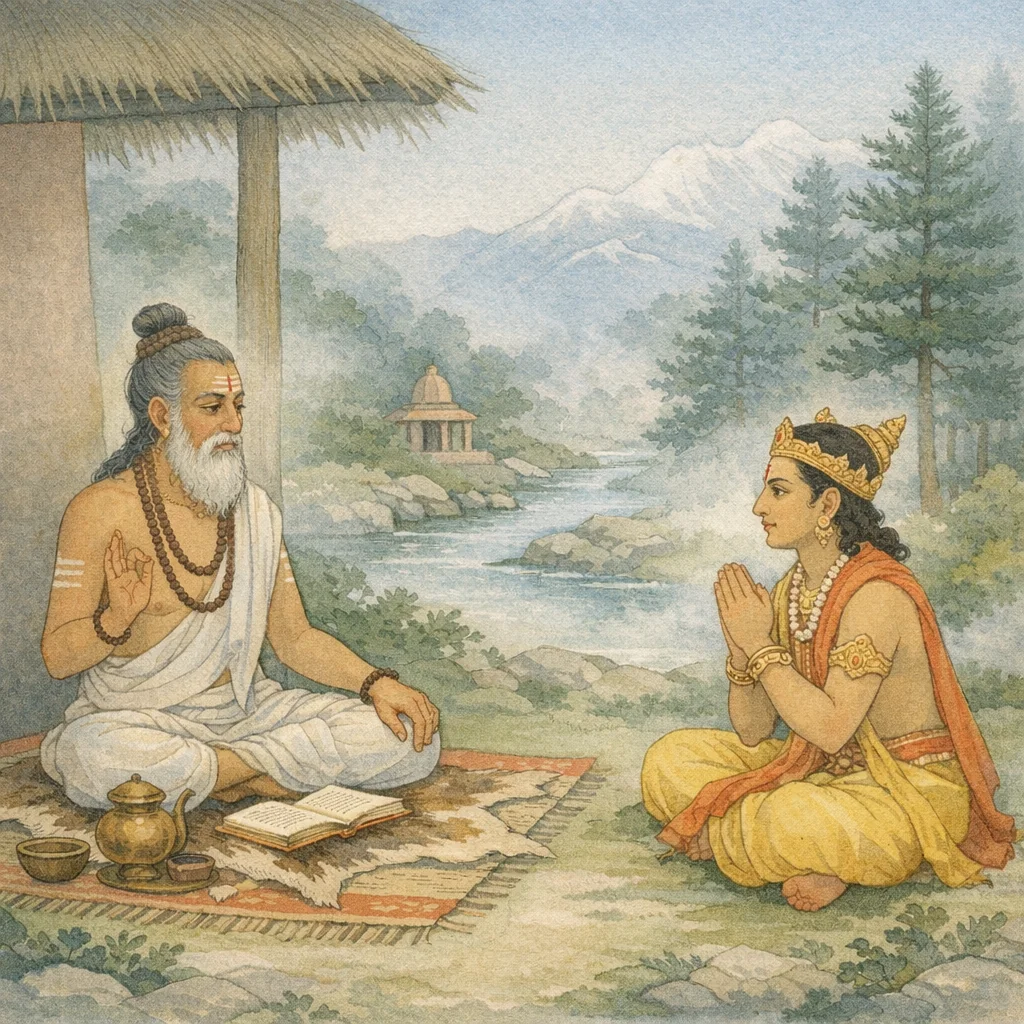
Yudhiṣṭhira asks Bhīṣma to identify the ancient “lords of creatures” (prajānāṃ patayaḥ) and the eminent ṛṣis remembered as stationed in each direction. Bhīṣma begins from the cosmogonic point: the self-born Brahmā and the seven mind-born sons (Marīci, Atri, Aṅgiras, Pulastya, Pulaha, Kratu, Vasiṣṭha), described as foundational progenitors. He then continues with further Prajāpati lineages (including Dakṣa and Kaśyapa with alternate names noted), and transitions to deva-taxonomies—especially the twelve Ādityas (with Viṣṇu named as the twelfth), the two Aśvins, and additional deva groups (e.g., Viśvedevas, Maruts, Vasus), including a classificatory statement associating deva-groups with varṇa-like categories as a traditional schema. The chapter also provides a directional mapping of sages: sets of ṛṣis are assigned to the east, south (notably Agastya), west, and north, presented as “witnesses” stabilizing the worlds. A phalaśruti-style claim concludes the unit: recitation/remembering of these names upon rising and taking refuge in the appropriate direction is said to free one from sins and return one safely home, marking the passage as both cosmological index and ritual-ethical mnemonic.
Chapter Arc: भीष्म युधिष्ठिर से कहते हैं कि इस विषय में एक प्राचीन संवाद प्रसिद्ध है—प्रजापति मनु और देवगुरु बृहस्पति का—जहाँ कामनाओं के त्याग और ज्ञान की महिमा उद्घाटित होती है। → शिष्य-भाव से प्रणाम कर बृहस्पति मनु से पूछते हैं कि मनुष्य कर्मों के द्वारा इष्ट-अनिष्ट, सुख-दुःख के जाल में क्यों बँधता है, और ‘ज्ञान’ का फल क्या है—सामान्य और विशेष दोनों रूपों में स्पष्ट किया जाए। इन्द्रियों के विषय (शब्द, रूप, रस, स्पर्श, गन्ध) आकर्षक प्रतीत होते हैं; फिर भी वे बन्धन का कारण बनते हैं—यही तनाव का केन्द्र है। → मनु ज्ञान-दृष्टि का निर्णायक स्वरूप बताते हैं: जैसे रात्रि का अन्धकार हटने पर नेत्र वस्तुओं को स्पष्ट देखता है, वैसे ही विज्ञान-युक्त ज्ञान से साधक अशुभ कर्म को ‘वर्जनीय’ रूप में पहचान लेता है। फिर वे ब्रह्म-तत्त्व का संकेत करते हैं—जो न स्त्री है, न पुरुष, न नपुंसक; न सत्, न असत्; जिसे ब्रह्मविद् देखते हैं—वही अक्षर है जो क्षरित नहीं होता। → मनु का निष्कर्ष यह है कि इन्द्रिय-विषयों की उपलब्धि कर्म-लोक का फल है, पर मोक्ष-मार्ग का फल वैराग्य और ज्ञान है। कामनाओं का त्याग, विवेक-दृष्टि, और अक्षर ब्रह्म की ओर उन्मुखता ही दुःख-सुख के द्वन्द्व से परे ले जाती है। → बृहस्पति की जिज्ञासा (इष्ट-अनिष्ट, सुख-दुःख और कर्म-प्रेरणा) आगे और सूक्ष्म प्रश्नों की भूमि बनाती है—ज्ञान के साधन और त्याग की व्यावहारिक विधि पर संवाद आगे बढ़ने का संकेत देता है।
Shlokas
Verse 1
/ ऑपनआक्रात बछ। ््ज्स::ः:, एकाधिकंद्विशततमो<्ध्याय: बृहस्पतिके प्रश्नके उत्तरमें मनुद्वारा कामनाओंके त्यागकी एवं ज्ञानकी प्रशंसा तथा परमात्मतत्त्वका निरूपण युधिछिर उवाच कि फल ज्ञानयोगस्य वेदानां नियमस्य च । भूतात्मा च कथं ज्ञेयस्तन्मे ब्रूहि पितामह,युधिष्ठिरने पूछा--पितामह! ज्ञानयोगका, वेदोंका तथा वेदोक्त नियम (अग्निहोत्र आदि) का क्या फल है? समस्त प्राणियोंके भीतर रहनेवाले परमात्माका ज्ञान कैसे हो सकता है? यह मुझे बताइये
Yudhiṣṭhira said: “Grandfather, what is the fruit of the discipline of knowledge, of the Vedas, and of the Vedic observances such as the agnihotra? And how is the Inner Self that abides within all beings to be truly known? Please tell me.”
Verse 2
भीष्म उवाच अत्राप्युदाहरन्तीममितिहासं पुरातनम् । मनो: प्रजापतेर्वाद महर्षेश्व॒ बृहस्पते:,भीष्मजीने कहा--राजन्! इस विषयमें प्रजापति मनु तथा महर्षि बृहस्पतिके संवादरूप प्राचीन इतिहासका उदाहरण दिया जाता है
Bhishma said: “Here too, an ancient precedent is cited. It is the old narrative in the form of a dialogue between Prajapati Manu and the great sage Brihaspati.”
Verse 3
प्रजापति श्रेष्ठतमं प्रजानां देवर्षिसंघप्रवरो महर्षि: । बृहस्पति: प्रश्नमिमं पुराणं पप्रच्छ शिष्यो5थ गुरुं प्रणम्य,एक समयकी बात है, देवता और ऋषियोंकी मण्डलीमें प्रधान महर्षि बृहस्पतिने प्रजाओंके श्रेष्ठतम प्रजापति गुरु मनुको शिष्यभावसे प्रणाम करके यह प्राचीन प्रश्न पूछा --
Bhishma said: Once, in the august assembly of gods and seers, the great sage Brihaspati—foremost among the divine rishis—bowed in the manner of a disciple to Manu, the Prajapati regarded as the best guardian of creatures. Having paid reverence to his teacher, he asked him an ancient question, seeking guidance for the right ordering of life and the welfare of beings.
Verse 4
यत्कारणं यत्र विधि: प्रवृत्तो ज्ञाने फलं यत्प्रवदन्ति विप्रा: । यन्मन्त्रशब्दैरकृतप्रकाशं तदुच्यतां मे भगवन् यथावत्,भगवन्! जो इस जगत्का कारण है, जिसके लिये वैदिक कर्मोंका अनुष्ठान किया जाता है, ब्राह्मण लोग जिसे ही ज्ञान होनेपर प्राप्त होनेवाला फल (परब्रह्म परमात्मा) बताते हैं तथा वेदके मन्त्र-वाक्योंद्वारा जिसका तत्त्व पूर्णरूपसे प्रकाशमें नहीं आता, उस नित्य वस्तुका मेरे लिये यथावद्रूपसे वर्णन कीजिये
Bhishma said: “O Blessed One, please explain to me correctly and in full that eternal Reality which is the cause of this world; for whose sake Vedic rites and ordinances are undertaken; which the learned Brahmins declare to be the fruit attained through true knowledge; and whose essence is not completely brought to light merely by the words of Vedic mantras.”
Verse 5
यच्चार्थशास्त्रागममन्त्रविद्धि- यज्ञैरनेकैरथ गोप्रदानै: । फलं महद्विर्यदुपास्थते च कि तत्कथं वा भविता क्व वा तत्,अर्थशास्त्र, आगम (वेद) और मन्त्रको जाननेवाले विद्वान् पुरुष अनेकानेक महान यज्ञों और गोदानोंद्वारा जिस सुखमय फलकी उपासना करते हैं, वह क्या है, किस प्रकार प्राप्त होता है और कहाँ उसकी स्थिति है?
Bhishma said: The great and blissful fruit that learned men—versed in statecraft, the Vedic tradition, and sacred mantras—seek to attain through many grand sacrifices and through gifts of cows: what indeed is that fruit? By what means is it obtained, and where does it abide?
Verse 6
मही महीजा: पवनो<न््तरिक्ष॑ जलौकसश्लैव जलं दिवं च । दिवौकसश्चापि यतः प्रसूता- स्तदुच्यतां मे भगवन् पुराणम्,भगवन्! पृथ्वी, पार्थिव पदार्थ, वायु, आकाश, जलजन्तु, जल, द्युलोक और देवता जिससे उत्पन्न होते हैं, वह पुरातन वस्तु क्या है? यह मुझे बताइये
Bhishma said: “O venerable one, from which primeval reality do the earth and all earthly things arise—wind, the mid-region (sky), the creatures that live in water, water itself, the heavenly world, and even the gods who dwell in heaven? Tell me, O Lord, what that ancient source is.”
Verse 7
ज्ञानं यतः प्रार्थयते नरो वै ततस्तदर्था भवति प्रवृत्ति: । न चाप्यहं वेद परं पुराणं मिथ्याप्रवृत्ति च कथं नु कुर्याम्,मनुष्यको जिस वस्तुका ज्ञान होता है, उसीको वह पाना चाहता है और पानेकी इच्छा उत्पन्न होनेपर उसके लिये वह प्रयत्न आरम्भ करता है; परंतु मैं तो उस पुरातन परमोत्कृष्ट वस्तुके विषयमें कुछ जानता ही नहीं हूँ; फिर उसे पानेके लिये झूठा प्रयत्न कैसे करूँ?
Bhishma said: A man seeks precisely that which he knows; and once the desire to obtain it arises, his effort naturally turns toward that goal. But I do not truly know that ancient, supreme Reality—so how could I undertake a pursuit that would be mere false striving?
Verse 8
ऋषक््सामसंघांश्व यजूंषि चापि च्छन्दांसि नक्षत्रगतिं निरुक्तम् | अधीत्य च व्याकरणं सकल्पं शिक्षां च भूतप्रकृतिं न वेझि,मैंने ऋक्, साम और यजुर्वेदका तथा छन््दका अर्थात् अथर्ववेदका एवं नक्षत्रोंकी गति, निरुक्त, व्याकरण, कल्प और शिक्षाका भी अध्ययन किया है तो भी मैं आकाश आदि पाँचों महाभूतोंके उपादान कारणको न जान सका
Bhishma said: “I have studied the collections of the Ṛg- and Sāma-hymns, the Yajus formulas as well, and the Chandas (the Vedic metres/also the Atharva tradition); I have also learned the courses of the stars, Nirukta (etymology), and grammar; along with Kalpa and Śikṣā. Yet even after all this learning, I have not truly known the primal material cause of the elements (such as space and the rest).”
Verse 9
स मे भवान् शंसतु सर्वमेतत् सामान्यशब्दैश्व विशेषणैश्न । स मे भवान् शंसतु तावदेत- ज्ज्ञाने फलं कर्मणि वा यदस्ति
Bhīṣma said: “May you explain all this to me—both in general terms and with precise distinctions. Tell me, then, what fruit truly belongs to knowledge, or what fruit belongs to action, if such a difference exists.”
Verse 10
प्रजापति मनु एवं महर्षि बृहस्पतिका संवाद मनुर॒ुवाच यद् यत्प्रियं यस्य सुखं तदाहु- स्तदेव दु:खं प्रवदन्त्यनिष्टम्,मनुने कहा--जिसको जो-जो विषय प्रिय होता है, वही उसके लिये सुखरूप बताया गया है और जो अप्रिय होता है, उसे ही दुःखरूप कहा गया है। मुझे इष्ट (प्रिय) की प्राप्ति हो और अनिष्टका निवारण हो जाय, इसीके लिये कर्मोंका अनुष्ठान आरम्भ किया गया है तथा इष्ट और अनिष्ट दोनों ही मुझे प्राप्त न हों, इसके लिये ज्ञानयोगका उपदेश किया गया है
Bhishma said: In the dialogue of Prajapati Manu and the great sage Brihaspati, Manu declares: “Whatever a person finds pleasing is called happiness for that person; and what is displeasing is described as suffering. With the aim, ‘May I obtain what I desire and may what I do not desire be removed,’ people begin the performance of actions (karma). But with the aim, ‘May neither the desired nor the undesired come to me at all,’ the discipline of the yoga of knowledge is taught.”
Verse 11
इष्टं च मे स्यादितरच्च न स्या- देतत्कृते कर्मविधि: प्रवृत्त: । इष्ट त्वनिष्टं च न मां भजेते- त्येतत्कृते ज्ञानविधि: प्रवृत्त:,मनुने कहा--जिसको जो-जो विषय प्रिय होता है, वही उसके लिये सुखरूप बताया गया है और जो अप्रिय होता है, उसे ही दुःखरूप कहा गया है। मुझे इष्ट (प्रिय) की प्राप्ति हो और अनिष्टका निवारण हो जाय, इसीके लिये कर्मोंका अनुष्ठान आरम्भ किया गया है तथा इष्ट और अनिष्ट दोनों ही मुझे प्राप्त न हों, इसके लिये ज्ञानयोगका उपदेश किया गया है
Bhishma said: ‘May what is desired come to me, and may what is other than that (the undesired) not come—toward this end the discipline of ritual action has been set in motion. But so that neither the desired nor the undesired may attach itself to me—toward this end the discipline of knowledge has been set in motion.’
Verse 12
कामात्मकाश्छन्दसि कर्मयोगा एभिविंमुक्त: परमश्नुवीत | नानाविधे कर्मपथे सुखार्थी नर: प्रवृत्तो न परं प्रयाति,वेदमें जो कर्मोंके प्रयोग बताये गये हैं, वे प्रायः सकामभावसे युक्त हैं। जो इन कामनाओंसे मुक्त होता है, वही परमात्माको पा सकता है। नाना प्रकारके कर्ममार्गमें सुखकी इच्छा रखकर प्रवृत्त होनेवाला मनुष्य परमात्माको प्राप्त नहीं होता
Bhishma said: The ritual disciplines taught in the Vedas are, for the most part, driven by desire for results. Only one who becomes free from such cravings can attain the Supreme. A person who busies himself on the many paths of action, seeking pleasure and reward, does not reach the Highest Reality.
Verse 13
मनुर॒ुवाच एभिवेिंमुक्त: परमाविवेश एतत् कृते कर्मविधि: प्रवृत्त: कामात्मकांश्छन्दति कर्मयोग एभिविंमुक्त: परमाददीत,मनुने कहा--मनुष्य इन कामनाओंसे मुक्त हो निष्काम-भावसे कर्मोंका अनुष्ठान करके परब्रह्म परमात्माको प्राप्त करे, इसी उद्देश्यसे कर्मोंका विधान किया है, वेदमें स्वर्ग आदिकी कामनासे जो योगादि कर्मोका विधान किया गया है, वह उन्हीं मनुष्योंको अपने जालमें फँसाता है, जिनका मन भोगोंमें आसक्त है। वास्तवमें इन कामनाओंसे दूर रहकर परमात्माको ही प्राप्त करनेका प्रयत्न करे (भगवत्प्राप्तिके लिये ही कर्म करे, क्षुद्र भोगोंके लिये नहीं)
Bhishma said: Manu declared that one who is freed from these desires enters the Supreme. For this very purpose the ordinance of action was set in motion. The discipline of action, when driven by desire, entices and binds the desire-minded; but the person released from such cravings attains the Highest. Therefore, one should perform works without attachment, aiming at realization of the Supreme Self rather than at petty enjoyments such as heaven and sense-pleasures.
Verse 14
आत्मादिश्नि: कर्मभिरिध्यमानो धर्मे प्रवृत्तो द्युतिमान् सुखार्थी | परं हि तत् कर्मपथादपेत॑ निराशिषं ब्रह्मपरं हावैति,जब मन नित्य कर्मोंके अनुष्ठानसे राग आदि दोषोंको दूर करके दर्पणकी भाँति स्वच्छ एवं दीप्तिमान् हो जाता है, तब वह द्युतिमान् (सदसदू-विवेकके प्रकाशसे युक्त) और नित्य सुखका अभिलाषी (मुमुक्षु) होकर निर्वाणभावसे धर्ममें प्रवृत्त होता है एवं कर्ममार्गसे अतीत तथा कामनाओंसे रहित परब्रह्म परमात्माका साक्षात्कार कर लेता है
Bhishma said: When the inner self, like a sacred fire, is kindled and made bright by the steady performance of prescribed duties, a person becomes radiant with discernment and seeks the highest, lasting happiness. Then, established in dharma with a spirit of release, one goes beyond the path of action, becomes free from desires, and realizes the Supreme Brahman.
Verse 15
प्रजा: सृष्टा मनसा कर्मणा च द्वावेवैती सत्पथौ लोकजुष्टौ । दृष्ट कर्म शाश्वतं चान्तवच्च मनस्त्याग: कारणं नान्यदस्ति,ब्रह्माजीनी मन और कर्म--इन दोनोंके सहित प्रजाकी सृष्टि की है; अतः ये दोनों लोकसेवित सन्मार्गरूप हैं। कर्म दो प्रकारका देखा गया है--एक सनातन और दूसरा विनाशशील, (मोक्षका हेतुभूत कर्म सनातन है और नश्वर भोगोंकी प्राप्ति करानेवाला नाशवान है) मनके द्वारा किये जानेवाले फलकी इच्छाका त्याग ही कर्मोंको सनातन बनाने और उनके द्वारा परब्रह्मकी प्राप्ति करानेमें कारण है, दूसरा कुछ नहीं
Bhishma said: Brahmā created living beings together with mind and action; therefore these two are the well-trodden, world-approved paths of right conduct. Action is seen to be of two kinds—one eternal and one perishable. The action that leads toward liberation is called eternal, while the action that yields transient enjoyments is perishable. The decisive cause that makes action ‘eternal’ and capable of leading to the Supreme is the renunciation, within the mind, of desire for the fruits of action—there is no other cause.
Verse 16
स्वेनात्मना चक्षुरिव प्रणेता निशात्यये तमसा संवृतात्मा । ज्ञानं तु विज्ञानगुणेन युक्त कर्माशुभं पश्यति वर्जनीयम्,जब रात बीत जाती है और अन्धकारका आवरण हट जाता है, उस समय जैसे चलनेमें प्रवृत्त करनेवाला नेत्र अपने तैजस् स्वरूपसे युक्त हो रास्तेमें पड़े हुए त्यागने योग्य काँटे आदिको देखते हैं, उसी प्रकार बुद्धि भी मोहका पर्दा हट जानेपर ज्ञानके प्रकाशसे युक्त हो त्यागने योग्य अशुभ कर्मको देखती है
Bhishma said: When the night has ended and the self is no longer wrapped in darkness, the inner guide—like the eye empowered by its own light—discerns what lies on the path and recognizes what must be avoided, such as thorns. In the same way, when delusion’s veil is lifted, the intellect, illumined by true knowledge joined with discriminative understanding, perceives unwholesome actions as things to be renounced.
Verse 17
सर्पान् कुशाग्राणि तथोदपानं ज्ञात्वा मनुष्या: परिवर्जयन्ति | अज्ञानतस्तत्र पतन्ति केचि- ज्ज्ञाने फलं पश्य यथा विशिष्टम्,मनुष्य जब जान लेते हैं कि रास्तेमें सर्प है, कुशोंके काँटे हैं और कुएँ हैं, तब उनसे बचकर निकलते हैं। जो नहीं जानते हैं, ऐसे कितने ही पुरुष उन्हींपर गिर पड़ते हैं। अतः ज्ञानका जो विशिष्ट फल है, उसे तुम प्रत्यक्ष देख लो
Bhishma said: “When people recognize that there are snakes on the path, sharp tips of kuśa grass, and a well, they avoid them and pass safely. But through ignorance some fall into those very dangers. See, therefore, how exceptional and evident is the fruit of knowledge.”
Verse 18
कृत्स्नस्तु मन्त्रो विधिवत प्रयुक्तो यथा यथोक्तास्त्विह दक्षिणाश्र । अन्नप्रदानं मनस: समाधि: पज्चात्मकं कर्मफलं वदन्ति,विधिपूर्वक सम्पूर्ण मन्त्रोंका उच्चारण, वेदोक्त विधानके अनुसार यज्ञोंका अनुष्ठान, यथायोग्य दक्षिणा, अन्नका दान और मनकी एकाग्रता--इन पाँच अंगोंसे सम्पन्न होनेपर ही यज्ञ-कर्मका पूरा-पूरा फल प्राप्त होता है, ऐसा विद्वान् पुरुष कहते हैं
Bhīṣma said: “Only when the entire mantra is recited and applied in the proper ritual manner, when the sacrifice is performed according to Vedic injunctions, when the appropriate priestly fees (dakṣiṇā) are given, when food is donated, and when the mind is held in steady concentration—only when these five limbs are present—do the wise declare that the sacrificial act yields its complete fruit.”
Verse 19
गुणात्मकं कर्म वदन्ति वेदा- स्तस्मान्मन्त्रो मन्त्रपूर्व हि कर्म । विधिरविधियं मनसोपपत्ति: फलस्य भोक्ता तु तथा शरीरी,वेदोंका कहना है कि कर्म त्रिगुणात्मक होते हैं अर्थात् सात्विक, राजस और तामस भेदसे तीन प्रकारके होते हैं; इसीलिये मन्त्र भी सात्त्विक आदि भेदसे तीन प्रकारके ही होते हैं; क्योंकि मन्त्रोच्चारणपूर्वक ही कर्मका अनुष्ठान किया जाता है। इसी तरह उन कर्मोंकी विधि, विधेय (उनके लिये किया जानेवाला कार्य), मनके द्वारा अभीष्ट फलकी सिद्धि और उसका भोक्ता देहाभिमानी जीव--ये सभी तीन-तीन प्रकारके होते हैं
Bhishma said: The Vedas declare that action is constituted of the three guṇas. Therefore the mantra, too, is of corresponding kinds, for ritual action is undertaken only after the utterance of mantra. Likewise, the rule and the non-rule (proper and improper procedure), the mind’s resolve that leads toward the desired result, and the embodied self who experiences the fruit—all these are also threefold in accordance with the guṇas.
Verse 20
शब्दाश्न॒ रूपाणि रसाश्न पुण्या: स्पर्शाश्व गन्धाश्व शुभास्तथैव । नरो न संस्थानगत: प्रभु: स्या- देतत् फलं सिद्धाति कर्मलोके,शब्द, रूप, पवित्र रस, सुखद स्पर्श और सुन्दर गन्ध--ये ही कर्मोके फल हैं; किंतु इस शरीरमें स्थित हुआ मनुष्य इन फलोंको प्राप्त करनेमें समर्थ नहीं है। कर्मोके फलकी प्राप्ति जो उनका फल भोगमनेके लिये प्राप्त शरीरमें होती है, वह दैवाधीन है
Bhīṣma said: “Sound, form, pure tastes, pleasing touch, and delightful fragrance—these are the fruits that actions yield. Yet a human being, though dwelling within a bodily frame, is not fully sovereign in obtaining them. The actual attainment of such results in the world of action—especially the embodiment through which one experiences them—depends upon destiny (daiva).”
Verse 21
यद् यच्छरीरेण करोति कर्म शरीरयुक्त: समुपाश्चुते तत् शरीरमेवायतनं सुखस्य दुःखस्य चाप्यायतनं शरीरम्,जीव शरीरसे जो-जो अशुभ या शुभ कर्म करता है, शरीरसे युक्त हुआ ही उसके फलोंको भोगता है; क्योंकि शरीर ही सुख और दुःख भोगनेका स्थान है
Bhishma said: Whatever action a person performs through the body, while embodied he experiences its results. For the body itself is the locus where pleasure and pain are undergone.
Verse 22
वाचा तु यत् कर्म करोति किंचिद् वाचैव सर्व समुपाश्चुते तत् । मनस्तु यत् कर्म करोति किज्चि- न््मनःस्थ एवायमुपाश्चुते तत्,मनुष्य वाणीद्वारा जो कोई कर्म करता है, उसका सारा फल वह वाणीद्वारा ही भोगता है और मनसे जो कुछ कर्म करता है, उसका फल यह जीवात्मा मनके साथ हुआ मनसे ही भोगता है
Bhishma said: Whatever act a person performs through speech, he experiences its entire result through speech itself. And whatever act he performs through the mind, this embodied self experiences that result while remaining within the mind—through the mind alone. Thus, the fruits of action follow the very instrument by which one acts, making restraint of speech and mastery of mind essential to dharma.
Verse 23
यथा यथा कर्मगुणं फलार्थी करोत्ययं कर्मफले निविष्ट: । तथा तथायं गुणसम्प्रयुक्त: शुभाशुभं॑ कर्मफलं भुनक्ति,फलकी इच्छा रखनेवाला मनुष्य कर्मके फलमें आसक्त हो जैसे-जैसे गुणवाला-- सात््विक, राजस या तामस कर्म करता है, वैसे-ही-वैसे गुणोंसे प्रेरित होकर इसे उस कर्मका शुभाशुभ फल भोगना पड़ता है
Bhishma says: As a person who seeks results performs actions of a particular quality—being absorbed in the expectation of their fruits—so, driven by those very qualities, he inevitably experiences the corresponding fruit of his deeds, whether auspicious or inauspicious.
Verse 24
मत्स्यो यथा स्रोत इवाभिपाती तथा कृतं पूर्वमुपैति कर्म । शुभे त्वसौ तुष्यति दुष्कृते तु नतुष्यते वै परम: शरीरी,जैसे मछली जलके बहावके साथ बह जाती है, उसी प्रकार मनुष्य पहिलेके किये हुए कर्मका अनुसरण करता है। उसे उस कर्मप्रवाहमें बहना पड़ता है; परंतु उस दशामें वह श्रेष्ठ देहधारी जीव शुभ फल मिलनेपर तो संतुष्ट होता है और अशुभ फल प्राप्त होनेपर दुखी हो जाता है (यह उसकी मूढता ही तो है)
Bhishma said: “Just as a fish is carried along by the current of a stream, so a person is borne onward by the force of deeds done before. Yet, while being swept along in that flow of karma, the embodied self—though in truth supreme—becomes pleased when a favorable result arrives and becomes distressed when an unfavorable result is met. This reaction is precisely the mark of delusion.”
Verse 25
यतो जगत सर्वमिदं प्रसूतं ज्ञात्वा$5त्मवन्तो व्यतियान्ति यत् तत् । यन्मन्त्रशब्दैरकृतप्रकाशं तदुच्यमानं शृणु मे परं॑ यत्,जिससे इस सम्पूर्ण जगत्की उत्पत्ति हुई है, जिसे जानकर मनको वशमें रखनेवाले ज्ञानी पुरुष इस संसारको लाँधकर परमपद प्राप्त कर लेते हैं तथा वेदके मन्त्रवाक्योंद्वारा जिसका तात्विक स्वरूप पूर्णतः प्रकाशमें नहीं आता, उस सर्वोत्कृष्ट वस्तुका मैं वर्णन करता हूँ, सुनो
Bhishma said: “That from which this entire universe has arisen—knowing that, the self-possessed and discerning pass beyond this worldly round and attain the highest state. And that whose true nature is not fully brought to light merely by the sound of Vedic mantras—listen as I describe to you that supreme Reality.”
Verse 26
रसैविंमुक्तं विविधैश्व गन्धै- रशब्दमस्पर्शमरूपवच्च । अग्राह्मुमव्यक्तमवर्णमेक॑ पज्चप्रकारान् ससृजे प्रजानाम्,वह अनिर्वचनीय वस्तु नाना प्रकारके रस और भाँति-भाँतिके गन्धोंसे रहित है। शब्द, स्पर्श एवं रूपसे भी शून्य है। मन, बुद्धि और वाणीद्वारा भी उसका ग्रहण नहीं हो सकता। वह अव्यक्त, अद्वितीय तथा रूप-रंगसे रहित है तथापि उसीने प्रजाओंके लिये रूप, रस आदि पाँचों विषयोंकी सृष्टि की है
Bhishma said: “That Reality is free from all tastes and from every kind of fragrance. It is without sound, without touch, and without form. It cannot be grasped by mind, intellect, or speech; it is unmanifest, one without a second, and beyond color and description. Yet from that very indescribable source, for the sake of beings, the fivefold objects of experience—form, taste, smell, touch, and sound—are brought forth.”
Verse 27
न स्त्री पुमान् नापि नपुंसकं च न सन्न चासत् सदसच्च तन्न । पश्यन्ति यद् ब्रह्मविदो मनुष्या- स्तदक्षरं न क्षरतीति विद्धि,वह न तो स्त्री है, न पुरुष है और न नपुंसक ही है। न सत् है, न असत् है और न सदसत् उभयरूप ही है। ब्रह्मज्ञानी पुरुष ही उसका साक्षात्कार करते हैं। उसका कभी क्षय नहीं होता; इसलिये वह अविनाशी परब्रह्म परमात्मा अक्षर कहलाता है, इस बातको अच्छी तरह समझ लो
Bhishma teaches that the supreme Brahman is beyond all limiting categories: it is neither woman, nor man, nor neuter; neither being nor non-being, nor a mixture of both. Only those who truly know Brahman directly behold it. Because it never diminishes or perishes, understand that it is called the Imperishable (Akṣara).
Verse 96
यथा च देहाच्च्यवते शरीरी पुन: शरीरं च यथाभ्युपैति । अतः आप सामान्य और विशेष शब्दोंद्वारा इस सम्पूर्ण विषयका मेरे निकट वर्णन कीजिये। तत्त्वज्ञान होनेपर कौन-सा फल प्राप्त होता है? कर्म करनेपर किस फलकी उपलब्धि होती है? देहाभिमानी जीव देहसे किस प्रकार निकलता है और फिर दूसरे शरीरमें कैसे प्रवेश करता है?--ये सारी बातें भी आप मुझे बताइये
Bhishma said: “Explain to me in full—using both general and specific terms—how the embodied self departs from a body and how it takes up another body again. What fruit is attained when true knowledge of reality arises? What fruit is obtained through the performance of action? And how does the soul, identifying itself with the body, leave the body and then enter a different one? Tell me all of this.”
Verse 123
ब॒हस्पतिरुवाच इष्टं त्वनिष्टं च सुखासुखे च साशीस्त्ववच्छन्दति कर्मभिश्न | बृहस्पतिने कहा--भगवन्! सुख सबको अभीष्ट होता है और दुःख किसीको भी प्रिय नहीं होता। इष्टकी प्राप्ति और अनिष्टके निवारणके लिये जो कामना होती है, वही मनुष्योंसे कर्म करवाती है और उन कर्मोद्वारा उनका मनोरथ पूर्ण करती है; अत: कामनाको आप त्याज्य कैसे बताते हैं?
Bṛhaspati said: ‘O revered one, happiness is desired by all, and no one finds sorrow dear. The longing to obtain what is wished for and to ward off what is unwished for impels human beings into action, and through those actions their aims are fulfilled. How, then, do you declare desire to be something that should be abandoned?’
Verse 200
इस प्रकार श्रीमहाभारत शान्तिपर्वके अन्तर्गत मोक्षधर्मपर्वमें जापकका उपाख्यानविषयक दो सौवाँ अध्याय पूरा हुआ
Thus ends the two-hundredth chapter of the Mokṣadharma section within the Śānti Parva of the Śrī Mahābhārata, concerning the episode (upākhyāna) of Jāpaka. This closing colophon marks the completion of that instructional narrative, set within Bhīṣma’s discourse on dharma directed toward liberation.
Verse 2031
इति श्रीमहाभारते शान्तिपर्वणि मोक्षधर्मपर्वणि मनुबृहस्पतिसंवादे एकाधिकद्विशततमो<ध्याय:
Thus, in the Śrī Mahābhārata, within the Śānti Parva—specifically the Mokṣa-dharma section—ends the dialogue between Manu and Bṛhaspati: the two-hundred-and-first chapter. (This is a concluding colophon marking the close of the chapter, not a new doctrinal verse.)
Frequently Asked Questions
Yudhiṣṭhira asks who the primordial Prajāpatis are and which great ṛṣis are remembered in each direction; Bhīṣma answers with genealogical-cosmological catalogues and a directional sage-map.
It implies that stable rule and social order are grounded in recognized taxonomies—lineage, cosmic administration, and ritual memory—so authority is framed as accountable to inherited structures rather than personal will.
Yes. The chapter states that remembering/reciting these deities and sages—especially upon rising—can free one from sins and that taking refuge in the direction associated with the sages leads to safe return, marking the list as a ritual mnemonic with stated merit.