Adhyaya 176
प्रजाविसर्ग-तत्त्वनिर्णयः | Cosmogony of Elemental Emergence (Bharadvāja–Bhṛgu Dialogue)
Upa-parva: Mokṣa-dharma (Cosmological Instruction Sub-unit)
Bharadvāja asks how the Lord (with Brahmā situated at Meru) produces diverse creation and how water, fire, wind, and earth arise. Bhṛgu explains that in an ancient Brahmā-kalpa, Brahmā first produces creation mentally (mānasa-sṛṣṭi) and that water is created first for the consolidation and sustaining of beings; it pervades all and is the basis upon which embodied forms are stabilized. The discourse then describes a primordial stillness—an inert, silent expanse lacking luminaries and motion—followed by the arising of water, then wind generated from pressure or agitation within the waters, illustrated by the sound produced when air moves through a vessel being filled. From the friction of wind and water, fire manifests, dispelling darkness; through further condensation, a ‘snehā’ (unctuous/condensing principle) forms solidity and becomes earth. Earth is finally characterized as the womb (yoni) of tastes, fragrances, unctions, and living beings, from which multiplicity is produced.
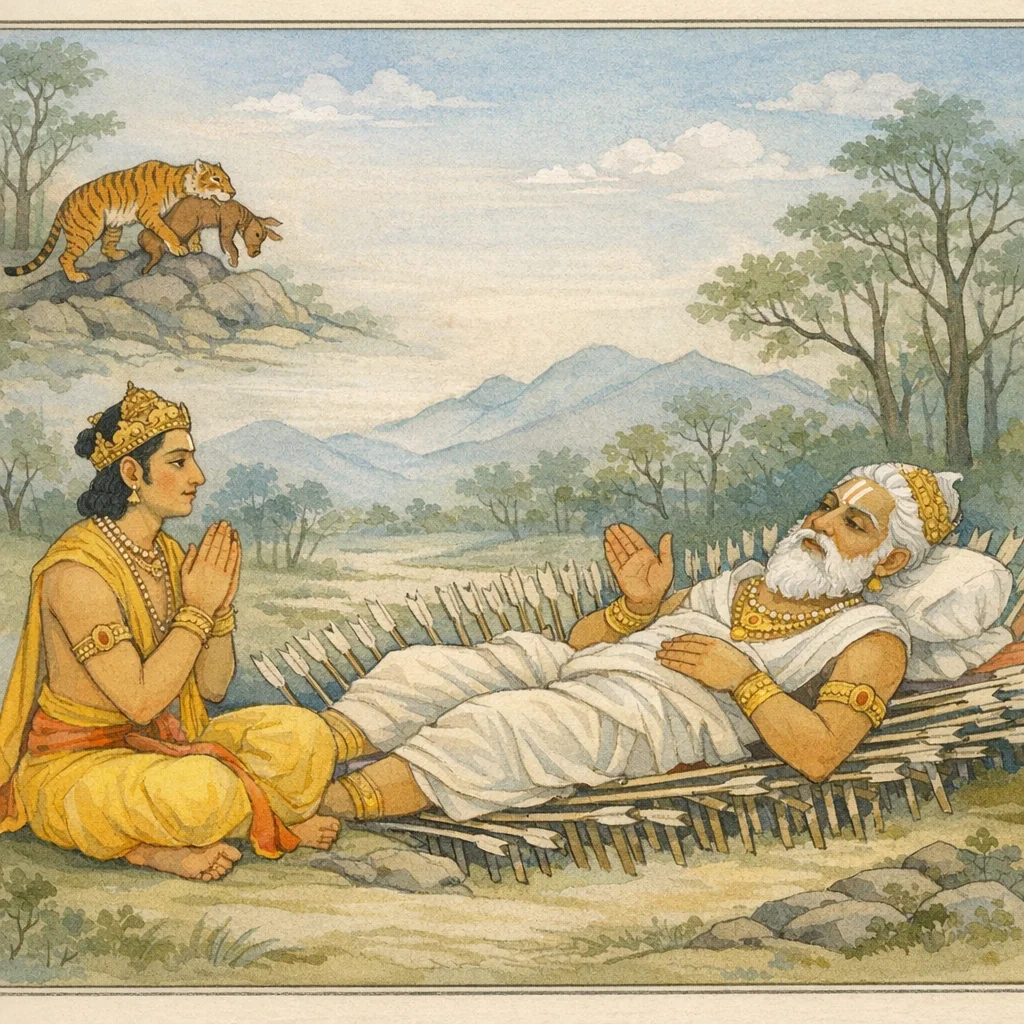
Chapter Arc: शरशय्या पर स्थित भीष्म युधिष्ठिर से कहते हैं कि ‘कल्याण चाहने वाले पुरुष’ को जीवन की क्षणभंगुरता देखकर किस प्रकार जीना चाहिए—और इसी हेतु वे एक प्राचीन पिता–पुत्र संवाद का उपाख्यान आरम्भ करते हैं। → एक वेदाध्ययन-निरत ब्राह्मण का मेधावी पुत्र संसार-आसक्ति पर तीखे प्रश्न उठाता है: हर बीती रात के साथ आयु घटती है; फिर भी मनुष्य सुख की खोज में क्यों भटकता है? पुत्र-पशु-धन में लिप्त व्यक्ति को मृत्यु सोए मृग की तरह उठा ले जाती है; ग्राम-रति मृत्यु का मुख है, जबकि अरण्य-निवास देवताओं का गोष्ठ कहा गया है। → पुत्र का निर्णायक उपदेश: ‘मैं आत्मा में ही आत्मा द्वारा उत्पन्न हूँ; प्रजा मुझे नहीं तारती’—अर्थात मोक्ष का आश्रय बाह्य संबंध नहीं, आत्मनिष्ठा है; आसक्ति ही बंधन है और वैराग्य ही सुरक्षा। → भीष्म बताते हैं कि पुत्र की वाणी सुनकर पिता ने वैसा ही आचरण किया—आसक्ति त्यागकर सत्य-धर्म और आत्मनिष्ठ मार्ग अपनाया; और युधिष्ठिर को भी उसी सत्यधर्मपरायण जीवन-रीति का अनुसरण करने का निर्देश देते हैं।
Shlokas
Verse 1
(दाक्षिणात्य अधिक पाठके ३ श्लोक मिलाकर कुल ६६ श्लोक हैं) अपने-आप बछ। सं: पजञज्चसप्तत्याधेकशततमो< ध्याय: अपने कल्याणकी इच्छा रखनेवाले पुरुषका क्या कर्तव्य है, इस विषयमें पिताके प्रति पुत्रद्वारा ज्ञानका उपदेश युधिछिर उवाच अतिक्रामति काले<स्मिन् सर्वभूतक्षयावहे । कि श्रेय: प्रतिपद्येत तन्मे ब्रूहि पितामह,राजा युधिष्ठिरने पूछा--पितामह! समस्त भूतोंका संहार करनेवाला यह काल बराबर बीता जा रहा है, ऐसी अवस्थामें मनुष्य क्या करनेसे कल्याणका भागी हो सकता है? यह मुझे बताइये
Yudhiṣṭhira said: “Grandfather, this Time—bringing the destruction of all beings—keeps passing on without pause. In such a condition, what course should a person adopt so as to attain the highest good? Tell me that.”
Verse 2
भीष्म उवाच अत्राप्युदाहरन्तीममितिहासं पुरातनम् । पितुः पुत्रेण संवाद तं निबोध युधिष्ठिर,भीष्मजीने कहा--युधिष्ठटिर! इस विषयमें ज्ञानी पुरुष पिता और पुत्रके संवादरूप इस प्राचीन इतिहासका उदाहरण दिया करते हैं। तुम उस संवादको ध्यान देकर सुनो
Bhishma said: “Here too, they cite an ancient precedent as an illustration—a dialogue between a father and his son. Understand that conversation attentively, O Yudhishthira.”
Verse 3
द्विजाते: कस्यचित् पार्थ स्वाध्यायनिरतस्य वै । बभूव पुत्रो मेधावी मेधावी नाम नामतः,कुन्तीकुमार! प्राचीन कालमें एक ब्राह्मण थे, जो सदा वेद-शास्त्रोंके स्वाध्यायमें तत्पर रहते थे। उनके एक पुत्र हुआ, जो गुणसे तो मेधावी था ही नामसे भी मेधावी था
Bhishma said: O Partha, in ancient times there lived a certain twice-born Brahmin, ever devoted to the disciplined study and recitation of the Vedas and sacred teachings. To him was born a son of keen intelligence—wise in qualities, and even by name called ‘Medhāvī’ (the Intelligent).
Verse 4
सोअब्रवीत् पितरं पुत्र: स्वाध्यायकरणे रतम् | मोक्षधर्मार्थकुशलो लोकतत्त्वविचक्षण:,वह मोक्ष, धर्म और अर्थमें कुशल तथा लोकतत्त्वका अच्छा ज्ञाता था। एक दिन उस पुत्रने अपने स्वाध्याय-परायण पितासे कहा यस्य वाड्मनसी स्यातां सम्यक् प्रणिहिते सदा । तपस्त्यागश्न सत्यं च स वै सर्वमवाप्तुयात्
Bhishma said: A son, skilled in the aims of life—liberation, dharma, and material well-being—and discerning in the true nature of the world, addressed his father who was devoted to the practice of Vedic study. He said: “One whose speech and mind are always rightly directed—who possesses austerity, renunciation, and truthfulness—such a person indeed attains everything.”
Verse 5
पुत्र बवाच धीर: किंस्वित् तात कुर्यात् प्रजानन् क्षिप्रं ह्मायुर्श्श्यते मानवानाम् । पितस्तदाचक्ष्व यथार्थयोगं ममानुपूर्व्या येन धर्म चरेयम्,पुत्र बोला-पिताजी! मनुष्योंकी आयु तीव्र गतिसे बीती जा रही है। यह जानते हुए धीर पुरुषको क्या करना चाहिये? तात! आप मुझे उस यथार्थ उपायका उपदेश कीजिये, जिसके अनुसार मैं धर्मका आचरण कर सकूँ
The son said: “Father, knowing that the lifespan of human beings is swiftly being consumed, what should a steadfast and discerning person do? Tell me, dear father, the true and fitting method—step by step—by which I may live in accordance with dharma.”
Verse 6
पितोवाच वेदानधीत्य ब्रह्मचर्येण पुत्र पुत्रानिच्छेत् पावनार्थ पितृणाम् । अग्नीनाधाय विधिवच्चेष्टयज्ञो वन॑ प्रविश्याथ मुनिर्बुभूषेत्,पिताने कहा--बेटा! द्विजको चाहिये कि वह पहले ब्रह्मचर्य-व्रतका पालन करते हुए सम्पूर्ण वेदोंका अध्ययन करे; फिर गृहस्थाश्रममें प्रवेश करके पितरोंकी सद्गतिके लिये पुत्र पैदा करनेकी इच्छा करे। विधिपूर्वक त्रिविध अग्नियोंकी स्थापना करके यज्ञोंका अनुष्ठान करे। तत्पश्चात् वानप्रस्थ-आश्रममें प्रवेश करे। उसके बाद मौनभावसे रहते हुए संन्यासी होनेकी इच्छा करे
Bhishma said: “The father said—Having studied the Vedas while observing the discipline of brahmacarya, a man should, upon entering the householder stage, desire sons for the purification and onward welfare of the ancestors. Having duly established the sacred fires and performed the prescribed sacrifices, he should then enter the forest-dweller’s life; thereafter, living in silence and restraint, he should aspire to become a renunciant.”
Verse 7
पुत्र बवाच एवमभ्याहते लोके समन्तात् परिवारिते । अमोघासु पतन्तीषु कि धीर इव भाषसे,पुत्रने कहा--पिताजी! यह लोक जब इस प्रकारसे मृत्युद्वारा मारा जा रहा है, जरा- अवस्थाद्वारा चारों ओरसे घेर लिया गया है, दिन और रात सफलतापूर्वक आयुक्षयरूप काम करके बीत रहे हैं--ऐसी दशामें भी आप धीरकी भाँति कैसी बात कर रहे हैं
The son said: “Father, when this world is thus struck down, hemmed in on every side—when the unfailing forces (of time) keep descending—how is it that you still speak as though you were calm and steadfast?”
Verse 8
पितोवाच कथमभ्याहतो लोक: केन वा परिवारित: । अमोघा: का: पतन्तीह कि नु भीषयसीव माम्,पिताने पूछा--बेटा! तुम मुझे भयभीत-सा क्यों कर रहे हो। बताओ तो सही, यह लोक किससे मारा जा रहा है, किसने इसे घेर रखा है और यहाँ कौन-से ऐसे व्यक्ति हैं जो सफलतापूर्वक अपना काम करके व्यतीत हो रहे हैं
The father said: “My son, why do you speak as though to frighten me? Tell me—by what is this world struck down, by what is it hemmed in, and what are these ‘unfailing’ forces that descend here?”
Verse 9
पुत्र बवाच मृत्युनाभ्याहतो लोको जरया परिवारित: । अहोरात्रा: पतन्त्येते ननु कस्मान्न बुध्यसे,पुत्रने कहा--पिताजी! देखिये, यह सम्पूर्ण जगत् मृत्युके द्वारा मारा जा रहा है। बुढ़ापेने इसे चारों ओरसे घेर लिया है और ये दिन-रात ही वे व्यक्ति हैं जो सफलतापूर्वक प्राणियोंकी आयुका अपहरणस्वरूप अपना काम करके व्यतीत हो रहे हैं, इस बातको आप समझते क्यों नहीं हैं?
The son said: “Father, look—this whole world is being struck down by Death; old age has hemmed it in on every side. And these days and nights keep falling away, steadily carrying off the span of living beings. Why do you not awaken to this truth?”
Verse 10
अमोघा रात्रयक्षापि नित्यमायान्ति यान्ति च । यदाहमेतज्जानामि न मृत्युस्तिष्ठतीति ह । सो<हं कथं प्रतीक्षिष्ये जालेनापिहितश्चरन्,ये अमोघ रात्रियाँ नित्य आती हैं और चली जाती हैं। जब मैं इस बातको जानता हूँ कि मृत्यु क्षणभरके लिये भी रुक नहीं सकती और मैं उसके जालमें फँसकर ही विचर रहा हूँ, तब मैं थोड़ी देर भी प्रतीक्षा कैसे कर सकता हूँ?
Bhishma said: “Unfailing nights—the dark span of each day—continually come and go. Since I know this truth, that Death does not pause even for an instant, and that I move about already covered by its net, how could I possibly wait even a little?”
Verse 11
रात्र्यां रात्र्यां व्यतीतायामायुरल्पतरं यदा । गाधोदके मत्स्य इव सुखं विन्देत कस्तदा
Bhishma said: “As each night passes, life grows ever shorter. When one’s lifespan is thus steadily diminished, who could truly find happiness—like a fish struggling in deep water?”
Verse 12
जब-जब एक-एक रात बीतनेके साथ ही आयु बहुत कम होती चली जा रही है, तब छिछले जलमें रहनेवाली मछलीके समान कौन सुख पा सकता है? ।। (यस्यां रात्र्यां व्यतीतायां न किंचिच्छुभमाचरेत् ।) तदैव वन्ध्यं दिवसमिति विद्याद् विचक्षण: । अनवाप्तेषु कामेषु मृत्युरभ्येति मानवम्,जिस रातके बीतनेपर मनुष्य कोई शुभ कर्म न करे, उस दिनको दिद्वान् पुरुष “व्यर्थ ही गया” समझे। मनुष्यकी कामनाएँ पूरी भी नहीं होने पातीं कि मौत उसके पास आ पहुँचती है
Bhishma said: “When a night passes and a person has not performed any auspicious or wholesome deed, the discerning should know that day to have been barren—wasted. For death advances upon a human being while desires still remain unfulfilled. As life diminishes night by night, who can truly find happiness, like a fish confined to shallow water?”
Verse 13
शष्पाणीव विचिन्वन्तमन्यत्रगतमानसम् | वृकीवोरणमासाद्य मृत्युरादाय गच्छति,जैसे घास चरते हुए भेंड़ेके पास अचानक व्याप्री पहुँच जाती है और उसे दबोचकर चल देती है, उसी प्रकार मनुष्यका मन जब दूसरी ओर लगा होता है, उसी समय सहसा मृत्यु आ जाती है और उसे लेकर चल देती है
“As a she-wolf, coming upon a flock of sheep grazing on grass, suddenly seizes one and carries it off, so too—when a person’s mind is turned elsewhere—death arrives all at once and takes him away.”
Verse 14
अद्यैव कुरु यच्छेयो मा त्वां कालो5त्यगादयम् । अकृतेष्वेव कार्येषु मृत्युर्वैं सम्प्रकर्षति,इसलिये जो कल्याणकारी कार्य हो, उसे आज ही कर डालिये। आपका यह समय हाथसे निकल न जाय; क्योंकि सारे काम अधूरे ही पड़े रह जायँगे और मौत आपको खींच ले जायगी
Bhishma said: “Do today itself whatever is truly for your good. Do not let this present time slip past you; for while tasks still remain unfinished, death indeed drags a person away.”
Verse 15
श्वः कार्यमद्य कुर्वीत पूर्वाह्ने चापराह्निकम् | न हि प्रतीक्षते मृत्यु: कृतमस्य न वा कृतम्,कल किया जानेवाला काम आज ही पूरा कर लेना चाहिये। जिसे सायंकालमें करना है उसे प्रातः:कालमें ही कर लेना चाहिये; क्योंकि मौत यह नहीं देखती कि इसका काम अभी पूरा हुआ या नहीं
What is to be done tomorrow, do today; and what is meant for the afternoon, finish in the forenoon. For death does not wait—it does not consider whether the task is done or undone.
Verse 16
को हि जानाति कस्याद्य मृत्युकालो भविष्यति । (न मृत्युरामन्त्रयते हर्तुकामो जगत्प्रभु: । अबुद्ध एवाक्रमते मीनान् मीनग्रहो यथा ।।) कौन जानता है कि किसका मृत्युकाल आज ही उपस्थित होगा? सम्पूर्ण जगत्पर प्रभुत्व रखनेवाली मृत्यु जब किसीको हरकर ले जाना चाहती है तो उसे पहलेसे निमन्त्रण नहीं भेजती है। जैसे मछुवारे चुपकेसे आकर मछलियोंको पकड़ लेते हैं, उसी प्रकार मृत्यु भी अज्ञात रहकर ही आक्रमण करती है ।। युवैव धर्मशील: स्यादनित्यं खलु जीवितम् । कृते धर्मे भवेत् कीर्तिरिह प्रेत्य च वै सुखम्
Bhīṣma said: “Who can know whose time of death will come even today? Death, sovereign over the whole world, sends no invitation beforehand when it means to carry someone away. It strikes unseen—like a fisherman who suddenly seizes fish. Therefore one should be devoted to dharma while still young, for life is truly impermanent. When dharma is practiced, it brings good fame here in this world, and happiness after death as well.”
Verse 17
अतः युवावस्थामें ही सबको धर्मका आचरण करना चाहिये; क्योंकि जीवन निःसंदेह अनित्य है। धर्माचरण करनेसे इस लोकमें मनुष्यकी कीर्तिका विस्तार होता है और परलोकमें भी उसे सुख मिलता है ।। मोहेन हि समाविष्ट: पुत्रदारार्थमुद्यत: । कृत्वा कार्यमकार्य वा पुष्टिमेषां प्रयच्छति,जो मनुष्य मोहमें डूबा हुआ है, वही पुत्र और स्त्रीके लिये उद्योग करने लगता है, और करने तथा न करने योग्य काम करके इन सबका पालन-पोषण करता है
Therefore one should practice dharma already in youth, for life is certainly impermanent. By living according to dharma, a person’s fame spreads in this world, and in the next world he attains happiness as well. But the man who is overwhelmed by delusion becomes absorbed in striving for the sake of son and wife; doing what ought to be done—and even what ought not—he busies himself with providing for and maintaining them.
Verse 18
त॑ पुत्रपशुसम्पन्नं व्यासक्तमनसं नरम् । सुप्तं व्याप्रो मृगमिव मृत्युरादाय गच्छति,जैसे सोये हुए मृगको बाघ उठा ले जाता है, उसी प्रकार पुत्र और पशुओंसे सम्पन्न एवं उन्हींमें मनको फँसाये रखनेवाले मनुष्यको एक दिन मृत्यु आकर उठा ले जाती है
Death carries off that man—rich in sons and cattle, yet with his mind tightly attached to them—just as a tiger carries away a sleeping deer.
Verse 19
संचिन्वानकमेवैनं कामानामवितृप्तकम् । व्यात्र: पशुमिवादाय मृत्युरादाय गच्छति
Death carries away that very person who keeps hoarding, who remains unsated in desires—just as a tiger seizes and carries off an animal.
Verse 20
जबतक मनुष्य भोगोंसे तृप्त नहीं होता, संग्रह ही करता रहता है, तभीतक ही उसे मौत आकर ले जाती है। ठीक वैसे ही, जैसे व्याप्र किसी पशुको ले जाता है ।। इदं कृतमिदं कार्यमिदमन्यत् कृताकृतम् । एवमीहासुखासक्तं कृतान्त: कुरुते वशे,मनुष्य सोचता है कि यह काम पूरा हो गया, यह अभी करना है और यह अधूरा ही पड़ा है--इस प्रकार चेष्टाजनित सुखमें आसक्त हुए मानवको काल अपने वशमें कर लेता है
Bhishma said: As long as a man is not satisfied by enjoyments, he keeps on accumulating; and while he is still so engaged, Death comes and carries him away—just as a tiger carries off an animal. Thinking, “This has been done; this remains to be done; this other is half-done and half-undone,” and clinging to the pleasure born of ceaseless striving, a person is brought under the power of Time (Death).
Verse 21
कृतानां फलमप्राप्तं कर्मणां कर्मसंज्ञितम् । क्षेत्रापणगृहासक्तं मृत्युरादाय गच्छति,मनुष्य अपने खेत, दूकान और घरमें ही फँसा रहता है, उसके किये हुए उन कर्मोंका फल मिलने भी नहीं पाता, उसके पहले ही उस कर्मासक्त मनुष्यको मृत्यु उठा ले जाती है
Bhishma said: The fruit of deeds already done often remains unreaped; while a man is still engrossed in what he calls ‘work’—clinging to his field, his shop, and his home—Death comes and carries him away.
Verse 22
दुर्बलं बलवन्तं च शूरं भीरुं जडं कविम् । अप्राप्तं सर्वकामार्थान् मृत्युरादाय गच्छति,कोई दुर्बल हो या बलवान, शूरवीर हो या डरपोक तथा मूर्ख हो या विद्वान, मृत्यु उसकी समस्त कामनाओंके पूर्ण होनेसे पहले ही उसे उठा ले जाती है
Bhishma said: Whether one is weak or strong, brave or fearful, dull-witted or learned, Death carries him away before he has attained the full range of his desired aims.
Verse 23
मृत्युर्जरा च व्याधिश्व दु:खं चानेककारणम् | अनुषक्तं यदा देहे किं स्वस्थ इव तिष्ठसि,पिताजी! जब इस शरीरमें मृत्यु, जरा, व्याधि और अनेक कारणोंसे होनेवाले दुःखोंका आक्रमण होता ही रहता है, तब आप स्वस्थ-से होकर क्यों बैठे हैं?
Bhishma said: “When death, old age, disease, and suffering born of many causes remain ever fastened to the body, why do you sit as though you were well, O revered father?”
Verse 24
जातमेवान्तको<न्ताय जरा चान्वेति देहिनम् । अनुषक्ता द्वयेनैते भावा: स्थावरजड्रमा:,देहधारी जीवके जन्म लेते ही अन्त करनेके लिये मौत और बुढ़ापा उसके पीछे लग जाते हैं। ये समस्त चराचर प्राणी इन दोनोंसे बँधे हुए हैं
Bhishma said: From the very moment a being is born, death is already set as its end, and old age follows close behind the embodied self. All states of existence—whether immobile or moving—remain bound to this pair.
Verse 25
मृत्योर्वा मुखमेतद् वै या ग्रामे वसतो रति: । देवानामेष वै गोष्ठो यदरण्यमिति श्रुति:
Bhīṣma said: “Truly, this fondness for living in a village is as it were the very mouth of Death. For the tradition (śruti) declares that the forest is indeed the gathering-place of the gods.”
Verse 26
ग्राम या नगरमें रहकर जो स्त्री-पुत्र आदिमें आसक्ति बढ़ायी जाती है, यह मृत्युका मुख ही है और जो वनका आश्रय लेता है, यह इन्द्रियरूपी गौओंको बाँधनेके लिये गोशालाके समान है, यह श्रुतिका कथन है ।। निबन्धनी रज्जुरेषा या ग्रामे वसतो रति: । छित्त्वैतां सुकृतो यान्ति नैनां छिन्दन्ति दुष्कृत:,ग्राममें रहनेपर वहाँके स्त्री-पुत्र आदि विषयोंमें जो आसक्ति होती है, यह जीवको बाँधनेवाली रस्सीके समान है। पुण्यात्मा पुरुष ही इसे काटकर निकल पाते हैं। पापी पुरुष इसे नहीं काट पाते हैं
Bhishma said: The attachment that arises for one who lives in a village—delighting in household objects such as wife, children, and the like—is a binding rope. The virtuous cut this rope and go free; the wicked do not cut it. Thus, remaining in worldly settlements strengthens the very bond that leads a being toward death, whereas taking refuge in the forest is spoken of in the tradition (śruti) as a place of restraint, like a cowshed that keeps the ‘cows’ of the senses tethered.
Verse 27
न हिंसयति यो जन्तून् मनोवाक्कायहेतुभि: । जीवितार्थापनयनै: प्राणिभिर्न स हिंस्यते,जो मनुष्य मन, वाणी और शरीररूपी साधनोंद्वारा प्राणियोंकी हिंसा नहीं करता, उसकी भी जीवन और अर्थका नाश करनेवाले हिंसक प्राणी हिंसा नहीं करते हैं
Bhishma said: One who does not injure living beings through the instruments of mind, speech, and body is not injured even by violent creatures who would otherwise deprive beings of life and livelihood. Such non-harming becomes a protective ethical force, restraining hostility and reducing the causes that invite harm.
Verse 28
न मृत्युसेनामायान्तीं जातु कश्रित् प्रबाधते । ऋते सत्यमसत् त्याज्यं सत्ये हामृतमाश्रितम्,सत्यके बिना कोई भी मनुष्य सामने आते हुए मृत्युकी सेनाका कभी सामना नहीं कर सकता; इसलिये असत्यको त्याग देना चाहिये। क्योंकि अमृतत्व सत्यमें ही स्थित है
Bhishma said: No one can ever withstand the oncoming army of Death. Therefore falsehood must be abandoned; for immortality is grounded only in truth.
Verse 29
तस्मात् सत्यव्रताचार: सत्ययोगपरायण: । सत्यागम: सदा दान्तः सत्येनैवान्तकं॑ जयेत्,अतः मनुष्यको सत्यव्रतवका आचरण करना चाहिये। सत्ययोगमें तत्पर रहना और शास्त्रकी बातोंको सत्य मानकर श्रद्धापूर्वक सदा मन और इन्द्रियोंका संयम करना चाहिये। इस प्रकार सत्यके द्वारा ही मनुष्य मृत्युपर विजय पा सकता है
Therefore, one should live by the vow and conduct of truth, devoted to the discipline of truth. Holding the teachings of the śāstras as true, one should remain ever self-restrained, with mind and senses under control. In this way, by truth alone a person can conquer Antaka—Death.
Verse 30
अमृतं चैव मृत्युश्न द्वयं देहे प्रतिष्ठितम् । मृत्युमापद्यते मोहात् सत्येनापद्यतेडमृतम्,अमृत और मृत्यु दोनों इस शरीरमें ही स्थित हैं। मनुष्य मोहसे मृत्युको और सत्यसे अमृतको प्राप्त होता है
Bhishma said: “Both immortality and death are established within this very body. Through delusion a person falls into death, but through truthfulness one attains immortality.”
Verse 31
सो5हं हाहिंस्र: सत्यार्थी कामक्रोधबहिष्कृत: । समदुःखसुख: क्षेमी मृत्युं हास्याम्यमर्त्यवत्,अतः अब मैं हिंसासे दूर रहकर सत्यकी खोज करूँगा, काम और क्रोधको हृदयसे निकालकर दुःख और सुखमें समान भाव रखूँगा तथा सबके लिये कल्याणकारी बनकर देवताओंके समान मृत्युके भयसे मुक्त हो जाऊँगा
Bhīṣma said: “Therefore I shall live free from violence, seeking truth; casting desire and anger out of my heart; remaining even-minded in sorrow and joy; and becoming a source of welfare for all. Thus, like the immortals, I shall rise beyond the fear of death.”
Verse 32
शान्तियज्ञरतो दान्तो ब्रह्मयज्ञे स्थितो मुनि: । वाड्मन:कर्मयज्ञश्च भविष्याम्युदगायने,मैं निवृत्तिपरयण होकर शान्तिमय यज्ञमें तत्पर रहूँगा, मन और इन्द्रियोंको वशमें रखकर ब्रह्मयज्ञ (वेद-शास्त्रोंके स्वाध्याय)-में लग जाऊँगा और मुनिवृत्तिसे रहूँगा। उत्तरायणके मार्गसे जानेके लिये मैं जप और स्वाध्यायरूप वाग्यज्ञ, ध्यानरूप मनोयज्ञ और अन्निहोत्र एवं गुरुशुश्रूषादिरूप कर्मयज्ञका अनुष्ठान करूँगा
Bhishma said: “Devoted to the sacrifice of peace and self-restraint, I shall remain established in the Brahma-yajña—the study and recitation of the Veda and śāstras—living with the discipline of a sage. And when the northward course (uttarāyaṇa) arrives, I shall undertake the threefold sacrifice through speech, mind, and action: japa and scriptural study as the sacrifice of speech, meditation as the sacrifice of mind, and works such as agnihotra and service to the teacher as the sacrifice of action—so that I may depart by the auspicious northern path.”
Verse 33
पशुयज्ञै: कथं हिंसैमादृशो यट्टमरहति । अन्तवद्धिरिव प्राज्ञ: क्षेत्रयज्जै: पिशाचवत्,मेरे-जैसा विद्वान् पुरुष नश्वर फल देनेवाले हिंसायुक्त पशुयज्ञ और पिशाचोंके समान अपने शरीरके ही रक्त-मांसद्वारा किये जानेवाले तामस यज्ञोंका अनुष्ठान कैसे कर सकता है?
Bhishma said: “How could a man of understanding like me ever approve of or undertake animal-sacrifices that are bound up with violence and yield only perishable results? And how could a wise person perform those dark rites in which one offers, like a ghoul, one’s own flesh and blood as the oblation?”
Verse 34
जिसकी वाणी और मन दोनों सदा भलीभाँति एकाग्र रहते हैं तथा जो त्याग, तपस्या और सत्यसे सम्पन्न होता है, वह निश्चय ही सब कुछ प्राप्त कर सकता है
Bhīṣma said: “One whose speech and mind remain steadily and well-collected in single-pointed concentration, and who is endowed with renunciation, austerity, and truthfulness—such a person can, without doubt, attain whatever is to be attained.”
Verse 35
नास्ति विद्यासमं चक्षुर्नास्ति सत्यसमं तपः । नास्ति रागसमं दुःखं नास्ति त्यागसमं सुखम्,संसारमें विद्या (ज्ञान)-के समान कोई नेत्र नहीं है, सत्यके समान कोई तप नहीं है, आसक्ति एवं क्रोधके समान कोई दुःख नहीं है और त्यागके समान कोई सुख नहीं है
Bhīṣma said: “There is no eye like knowledge; no austerity like truth. There is no sorrow like attachment, and no happiness like renunciation.”
Verse 36
आत्मन्येवात्मना जात आत्मनिष्ठो5प्रजोडपि वा । आत्मन्येव भविष्यामि न मां तारयति प्रजा,मैं संतानरहित होनेपर भी परमात्मामें ही परमात्मा-द्वारा उत्पन्न हुआ हूँ, परमात्मामें ही स्थित हूँ। आगे भी आत्मामें ही लीन होऊँगा। संतान मुझे पार नहीं उतारेगी
Bhīṣma said: “Born within the Self by the Self, established in the Self—even if one is without offspring or worldly attainments—I shall remain in the Self alone and, in the end, merge into the Self. It is not progeny that carries me across (the ocean of saṃsāra).”
Verse 37
नैतादशं ब्राह्मणस्यास्ति वित्त यथैकता समता सत्यता च | शीलं स्थितिर्दण्डनिधानमार्जवं ततस्ततश्षोपरम: क्रियाभ्य:
Bhīṣma said: “A brāhmaṇa has no wealth equal to this—oneness of purpose, even-mindedness, and truthfulness; good conduct, steadiness, laying aside the rod (renouncing violence and coercion), and straightforwardness; and, again and again, withdrawal from worldly actions. These are the true riches that uphold his dharma.”
Verse 38
परमात्माके साथ एकता तथा समता, सत्यभाषण, सदाचार, ब्रह्मनिष्ठा, दण्डका परित्याग (अहिंसा), सरलता तथा सब प्रकारके सकाम कर्मोंसे उपरति--इनके समान ब्राह्मणके लिये दूसरा कोई धन नहीं है ।। कि ते धनैर्बान्धवैर्वापि कि ते किं ते दारैब्राह्मण यो मरिष्यसि । आत्मानमन्विच्छ गुहां प्रविष्टं पितामहास्ते क्व गता: पिता च,ब्राह्मणदेव पिताजी! जब आप एक दिन मर ही जायूँगे तो आपको इस धनसे क्या लेना है अथवा भाई-बन्धुओंसे आपका क्या काम है तथा स्त्री आदिसे आपका कौन-सा प्रयोजन सिद्ध होनेवाला है? आप अपने हृदयरूपी गुफामें स्थित हुए परमात्माको खोजिये। सोचिये तो सही, आपके पिता और पितामह कहाँ चले गये?
Bhishma said: For a brahmin there is no wealth equal to these: oneness and even-mindedness with the Supreme Self, truthfulness in speech, good conduct, steadfastness in Brahman, renunciation of punishment—non-violence, simplicity, and withdrawal from every kind of desire-driven action. What use will riches be to you, or even kinsmen? What use will a wife and household be to you, O brahmin, since you must die? Seek the Self that has entered the cave of the heart. Reflect: where have your father and grandfathers gone?
Verse 39
भीष्म उवाच पुत्रस्यैतद् वच: श्रुत्वा यथाकार्षीत् पिता नूप । तथा त्वमपि वर्तस्व सत्यधर्मपरायण:,भीष्मजी कहते हैं--नरेश्वर! पुत्रका यह वचन सुनकर पिताने जैसे सत्य-धर्मका अनुष्ठान किया था, उसी प्रकार तुम भी सत्य-धर्ममें तत्पर रहकर यथायोग्य बर्ताव करो
Bhishma said: “O king, having heard these words of the son, the father acted in accordance with truth and dharma. In the same way, you too should conduct yourself—steadfastly devoted to truth and righteousness—and behave as is fitting.”
Verse 174
इस प्रकार प्रीमहाभारत थान्तिपर्वके अन्तर्गत मोक्षधर्मपर्वमें ब्राह्मण और सेनजित्के संवादका कथनविषयक एक सौ चौहत्तरवाँ अध्याय पूरा हुआ
Thus, in the Śrī Mahābhārata, within the Śānti Parva—specifically in the Mokṣadharma section—the one hundred and seventy-fourth chapter, whose subject is the narration of the dialogue between a Brahmin and King Senajit, comes to an end.
Verse 175
इति श्रीमहाभारते शान्तिपर्वणि मोक्षधर्मपर्वणि पितापुत्रसंवादक थने पडज्चसप्तत्यधिकशततमो< ध्याय:,इस प्रकार श्रीमहाभारत शान्तिपर्वके अन्तर्गत गोक्षधर्मपर्वमें पिता और पुत्रके संवादका कथनविषयक एक सौ पचहत्तरवाँ अध्याय पूरा हुआ
Thus, in the Śrī Mahābhārata, within the Śānti Parva—specifically the Mokṣadharma section—the one hundred and seventy-fifth chapter, whose subject is the dialogue between a father and a son, comes to its conclusion.
Frequently Asked Questions
The chapter addresses an epistemic doubt about origins: how diverse beings and the primary elements—water, wind, fire, and earth—are said to arise in a coherent causal sequence.
Cosmic order is presented as intelligible and sequential: life depends on pervasive sustaining conditions (water), dynamic motion (wind), transformative energy (fire), and consolidated stability (earth), supporting a worldview where ethical and contemplative disciplines align with an ordered cosmos.
No explicit phalaśruti is stated in these verses; the chapter functions primarily as doctrinal exposition within the larger Śānti-parva pedagogical framework.