Adhyaya 119
Bhṛtya-niyoga: Role-appropriate appointment of servants and protection of the royal treasury (भृत्यनियोगः कोशरक्षणं च)
Upa-parva: Rājadharmānuśāsana (Instruction on Kingship and Governance)
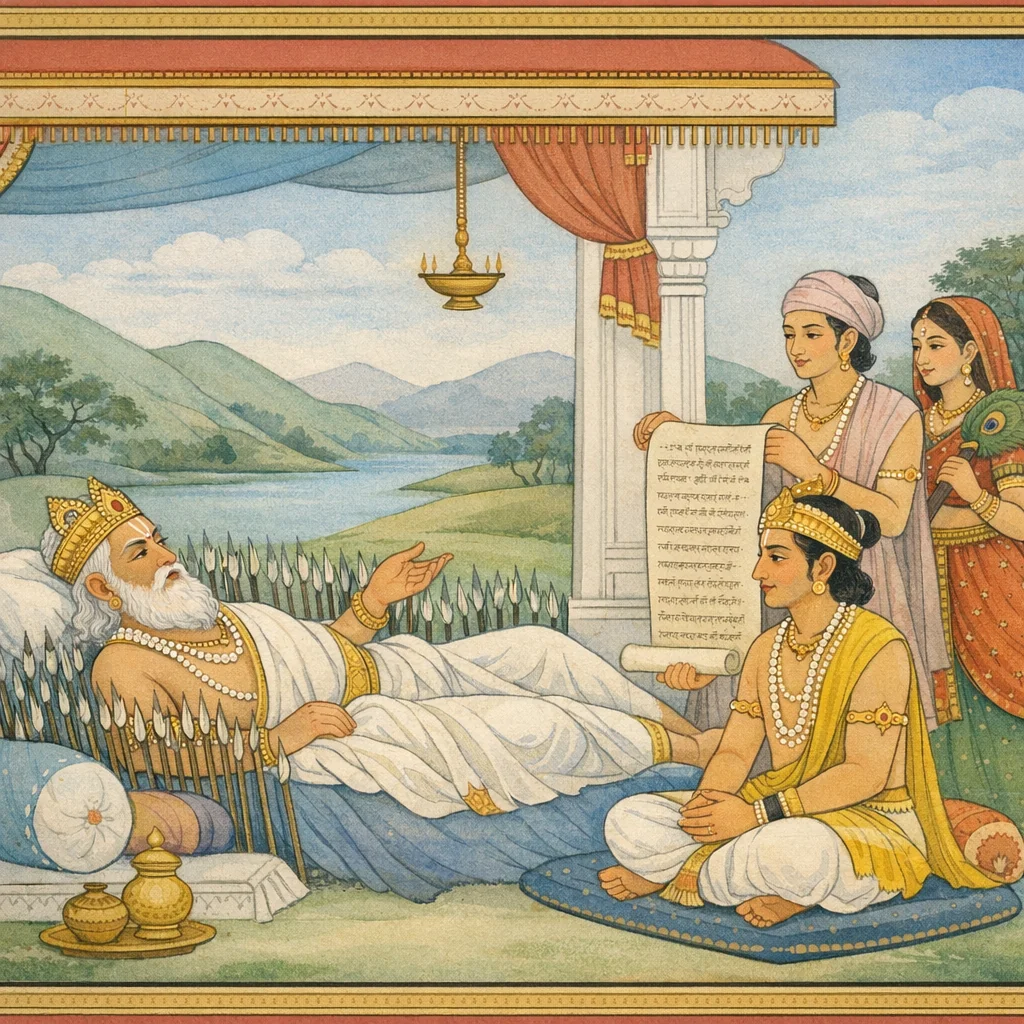
Bhīṣma instructs the king that administrative success depends on appointing subordinates in roles suited to their nature, training, and demonstrated capacity. Through repeated analogies—especially the impropriety of elevating a dog beyond its station and the need to place lion, tiger, and other creatures in their proper domains—he argues that misassignment (pratiloma, ‘inversion’) leads to failure in pleasing and protecting the subjects. The chapter outlines criteria for close attendants: they should not be foolish, petty, uncontrolled, or of questionable background; rather, they should be virtuous, skilled, courageous, knowledgeable, non-envious, clean, and efficient. Bhīṣma further recommends maintaining loyal and battle-competent personnel, cultivating expertise in cavalry operations, and surrounding the ruler with supportive kin, allies, and civic-welfare-oriented advisors. A central administrative pillar is fiscal security: the treasury must be continuously protected, and granaries should remain well-stocked and properly entrusted. The discourse closes with Bhīṣma stating that the ‘dog’ analogy is the illustrative example and invites further questions.
Chapter Arc: भीष्म युधिष्ठिर से कहते हैं कि राज्य-धर्म का मूल ‘योग्य जनों की पहचान’ है—सेवक, सचिव और सेनापति जैसे स्तम्भों के बिना राजसुख टिकता नहीं। → कुत्ते-ऋषि संवाद की पूर्व कथा-छाया के बाद उपदेश कठोर व्यावहारिकता में उतरता है: बिना परीक्षा मंत्री बनाना राज्य के लिए विष है; अकुलीन/अयोग्य जनों से घिरा राजा सुख नहीं पाता। → भीष्म निर्णायक रूप से मंत्री-चयन का मानदण्ड गिनाते हैं—कुलीन, सुशिक्षित, विद्वान, व्यूह-तत्त्वज्ञ, सेना-हर्षण में कुशल, यात्रा/अभियान-ज्ञान में निपुण; और आदेश देते हैं कि भृत्यों को उनकी योग्यता के अनुसार स्थान देकर सुरक्षित रखा जाए। → राजा यदि योग्य सचिव को नियुक्त कर उसका अनादर न करे तो राज्य चन्द्रमा की ज्योत्स्ना की भाँति फैलता है; दान-परम्परा न टूटे, श्रद्धा रहे, पीड़ितों को सहायता मिले, नीति-रत ‘आप्त’ अमात्य साथ हों—यही उत्तम राजगुण हैं।
Shlokas
Verse 1
(दाक्षिणात्य अधिक पाठके ७ श्लोक मिलाकर कुल ३० श्लोक हैं।) अष्टादशाधिकशततमोब<् ध्याय: राजाके सेवक, सचिव तथा सेनापति आदि और राजाके उत्तम गुणोंका वर्णन एवं उनसे लाभ भीष्म उवाच स श्वा प्रकृतिमापन्न: परं दैन्यमुपागत: । ऋषिणा हुड्कृत: पापस्तपोवनबहिष्कृत:
Bhishma said: That sinner, having fallen into the condition of a dog, sank into extreme misery. Rebuked by a sage with a sharp cry of disapproval, he was driven out from the hermitage-grove of ascetic practice.
Verse 2
भीष्मजी कहते हैं--राजन्! इस प्रकार अपनी योनिमें आकर वह कुत्ता अत्यन्त दीनदशाको पहुँच गया। ऋषिने हुंकार करके उस पापीको तपोवनसे बाहर निकाल दिया ।। एवं राज्ञा मतिमता विदित्वा सत्यशौचताम् । आर्ज॑वं प्रकृति सत्यं श्रुतं वृत्तं कुलं दमम्,इसी प्रकार बुद्धिमान् राजाको चाहिये कि वह पहले अपने सेवकोंकी सच्चाई, शुद्धता, सरलता, स्वभाव, शास्त्रज्ञान, सदाचार, कुलीनता, जितेन्द्रियता, दया, बल, पराक्रम, प्रभाव, विनय तथा क्षमा आदिका पता लगाकर जो सेवक जिस कार्यके योग्य जान पड़ें, उन्हें उसीमें लगावे और उनकी रक्षाका पूरा-पूरा प्रबन्ध कर दे
Bhishma said: O King, thus, returning to its own birth, that dog fell into extreme misery. The sage, with a stern cry of “hūṃ”, drove that sinner out of the hermitage-grove. In the same way, a wise king should first ascertain in his servants truthfulness and purity, straightforwardness, natural disposition, fidelity, learning of sacred lore, good conduct, noble lineage, and self-control—along with compassion, strength, valor, influence, humility, and forbearance—and then assign each servant to the task for which he is fit, while making complete arrangements for their protection.
Verse 3
अनुक्रोशं बल वीर्य प्रभावं प्रश्नयं क्षमाम् । भृत्या ये यत्र योग्या: स्युस्तत्र स्थाप्या: सुरक्षिता:,इसी प्रकार बुद्धिमान् राजाको चाहिये कि वह पहले अपने सेवकोंकी सच्चाई, शुद्धता, सरलता, स्वभाव, शास्त्रज्ञान, सदाचार, कुलीनता, जितेन्द्रियता, दया, बल, पराक्रम, प्रभाव, विनय तथा क्षमा आदिका पता लगाकर जो सेवक जिस कार्यके योग्य जान पड़ें, उन्हें उसीमें लगावे और उनकी रक्षाका पूरा-पूरा प्रबन्ध कर दे
Bhishma said: A wise king should first ascertain in his servants compassion, strength, valor, influence, humility, and forbearance. Then, recognizing who is fit for which duty, he should appoint each person to the task suited to them and ensure their full protection and security. Thus governance becomes both effective and righteous—placing people according to merit and safeguarding those who serve.
Verse 4
नापरीक्ष्य महीपाल: सचिवं कर्तुमर्हति । अकुलीननराकीर्णो न राजा सुखमेधते,राजा परीक्षा लिये बिना किसीको भी अपना मन्त्री न बनावे; क्योंकि नीच कुलके मनुष्यका साथ पाकर राजाको न तो सुख मिलता है और न उसकी उन्नति ही होती है
Bhīṣma said: “A king should not appoint a minister without first testing him. When a ruler is surrounded by men of ignoble conduct and poor lineage, he neither attains happiness nor prospers; his governance declines through unworthy counsel.”
Verse 5
कुलज: प्राकृतो राज्ञा स्वकुलीनतया सदा । न पापे कुरुते बुद्धि भिद्यमानो5प्यनागसि,कुलीन पुरुष यदि कभी राजाके द्वारा बिना अपराधके ही तिरस्कृत हो जाय और लोग उसे फोड़ें या उभाड़ें तो भी वह अपनी कुलीनताके कारण राजाका अनिष्ट करनेकी बात कभी मनमें नहीं लाता है
Bhishma said: A man of noble birth, even if he is treated harshly by the king without any fault of his own and is broken or humiliated by others, does not turn his mind toward wrongdoing. Because of his innate nobility and loyalty to his lineage, he never entertains the thought of harming the king in return.
Verse 6
अकुलीनस्तु पुरुष: प्राकृत: साधुसंश्रयात् । दुर्लभैश्वर्यतां प्राप्तो निन्दित: शत्रुतां ब्रजेत्,किंतु नीच कुलका मनुष्य साधुस्वभावके राजाका आश्रय पाकर यद्यपि दुर्लभ ऐश्वर्यका भोग करता है तथापि यदि राजाने एक बार भी उसकी निन्दा कर दी तो वह उसका शत्रु बन जाता है
Bhishma said: Even a low-born, ordinary man, by taking refuge with the virtuous, may attain a rare kind of prosperity; yet if he is once censured, he turns to enmity—showing how unstable and resentful such a nature can be when elevated beyond its character.
Verse 7
कुलीनं शिक्षितं प्राज्ञ ज्ञानविज्ञानपारगम् । सर्वशान्त्रार्थतत्त्वज्ञं सहिष्णुं देशजं तथा,अतः राजा उसीको मन्त्री बनावे, जो कुलीन, सुशिक्षित, विद्वान, ज्ञान-विज्ञानमें पारंगत, सब शास्त्रोंका तत्त्व जाननेवाला, सहनशील, अपने देशका निवासी, कृतज्ञ, बलवान्, क्षमाशील, मनका दमन करनेवाला, जितेन्द्रिय, निर्लोभ, जो मिल जाय उसीसे संतोष करनेवाला, स्वामी और उसके मित्रकी उन्नति चाहनेवाला, देश-कालका ज्ञाता, आवश्यक वस्तुओंके संग्रहमें तत्पर, सदा मनको वशमें रखनेवाला, स्वामीका हितैषी, आलस्य-रहित, अपने राज्यमें गुप्तचर लगाये रखनेवाला, संधि और विग्रहके अवसरको समझनेमें कुशल, राजाके धर्म, अर्थ और कामकी उन्नतिका उपाय जाननेवाला, नगर और ग्रामवासी लोगोंका प्रिय, खाईं और सुरंग खुदवाने तथा व्यूह निर्माण करानेकी कलामें कुशल, अपनी सेनाका उत्साह बढ़ानेमें प्रवीण, शकल-सूरत और चेष्टा देखकर ही मनके यथार्थ भावको समझ लेनेवाला, शत्रुओंपर चढ़ाई करनेके अवसरको समझनेमें विशेष चतुर, हाथीकी शिक्षाके यथार्थ तत्त्वको जाननेवाला, अहंकाररहित, निर्भीक, उदार, संयमी, बलवान, उचित कार्य करनेवाला, शुद्ध, शुद्ध पुरुषोंसे युक्त, प्रसन्नमुख, प्रियदर्शन, नेता, नीतिकुशल, श्रेष्ठ गुण और उत्तम चेष्टाओंसे सम्पन्न उद्ण्डतारहित, विनयशील, स्नेही, मृदुभाषी, धीर, शूरवीर, महान ऐश्वर्यसे सम्पन्न तथा देश और कालके अनुसार कार्य करनेवाला हो
Bhīṣma said: A king should appoint as minister one who is of noble lineage, well educated, wise, accomplished in both knowledge and practical discernment, who understands the true purport of all the śāstras, who is patient and forbearing, and who is a native of the land. The counsel of such a person steadies the kingdom, aligns policy with dharma, and restrains rashness through learning, character, and endurance.
Verse 8
कृतज्ञं बलवन्तं च क्षान्तं दान्तं जितेन्द्रियम् । अलुब्धं लब्धसंतुष्टं स्वामिमित्रबु भूषकम्,अतः राजा उसीको मन्त्री बनावे, जो कुलीन, सुशिक्षित, विद्वान, ज्ञान-विज्ञानमें पारंगत, सब शास्त्रोंका तत्त्व जाननेवाला, सहनशील, अपने देशका निवासी, कृतज्ञ, बलवान्, क्षमाशील, मनका दमन करनेवाला, जितेन्द्रिय, निर्लोभ, जो मिल जाय उसीसे संतोष करनेवाला, स्वामी और उसके मित्रकी उन्नति चाहनेवाला, देश-कालका ज्ञाता, आवश्यक वस्तुओंके संग्रहमें तत्पर, सदा मनको वशमें रखनेवाला, स्वामीका हितैषी, आलस्य-रहित, अपने राज्यमें गुप्तचर लगाये रखनेवाला, संधि और विग्रहके अवसरको समझनेमें कुशल, राजाके धर्म, अर्थ और कामकी उन्नतिका उपाय जाननेवाला, नगर और ग्रामवासी लोगोंका प्रिय, खाईं और सुरंग खुदवाने तथा व्यूह निर्माण करानेकी कलामें कुशल, अपनी सेनाका उत्साह बढ़ानेमें प्रवीण, शकल-सूरत और चेष्टा देखकर ही मनके यथार्थ भावको समझ लेनेवाला, शत्रुओंपर चढ़ाई करनेके अवसरको समझनेमें विशेष चतुर, हाथीकी शिक्षाके यथार्थ तत्त्वको जाननेवाला, अहंकाररहित, निर्भीक, उदार, संयमी, बलवान, उचित कार्य करनेवाला, शुद्ध, शुद्ध पुरुषोंसे युक्त, प्रसन्नमुख, प्रियदर्शन, नेता, नीतिकुशल, श्रेष्ठ गुण और उत्तम चेष्टाओंसे सम्पन्न उद्ण्डतारहित, विनयशील, स्नेही, मृदुभाषी, धीर, शूरवीर, महान ऐश्वर्यसे सम्पन्न तथा देश और कालके अनुसार कार्य करनेवाला हो
Bhīṣma said: “Let the king appoint as minister one who is grateful and strong; patient and self-restrained; master of the senses; free from greed; content with whatever is obtained; and devoted to promoting the welfare and prosperity of his lord and the lord’s friends.”
Verse 9
सचिवं देशकालज्ञं सत्त्वसंग्रहणे रतम् । सततं युक्तमनसं हितैषिणमतन्द्रितम्,अतः राजा उसीको मन्त्री बनावे, जो कुलीन, सुशिक्षित, विद्वान, ज्ञान-विज्ञानमें पारंगत, सब शास्त्रोंका तत्त्व जाननेवाला, सहनशील, अपने देशका निवासी, कृतज्ञ, बलवान्, क्षमाशील, मनका दमन करनेवाला, जितेन्द्रिय, निर्लोभ, जो मिल जाय उसीसे संतोष करनेवाला, स्वामी और उसके मित्रकी उन्नति चाहनेवाला, देश-कालका ज्ञाता, आवश्यक वस्तुओंके संग्रहमें तत्पर, सदा मनको वशमें रखनेवाला, स्वामीका हितैषी, आलस्य-रहित, अपने राज्यमें गुप्तचर लगाये रखनेवाला, संधि और विग्रहके अवसरको समझनेमें कुशल, राजाके धर्म, अर्थ और कामकी उन्नतिका उपाय जाननेवाला, नगर और ग्रामवासी लोगोंका प्रिय, खाईं और सुरंग खुदवाने तथा व्यूह निर्माण करानेकी कलामें कुशल, अपनी सेनाका उत्साह बढ़ानेमें प्रवीण, शकल-सूरत और चेष्टा देखकर ही मनके यथार्थ भावको समझ लेनेवाला, शत्रुओंपर चढ़ाई करनेके अवसरको समझनेमें विशेष चतुर, हाथीकी शिक्षाके यथार्थ तत्त्वको जाननेवाला, अहंकाररहित, निर्भीक, उदार, संयमी, बलवान, उचित कार्य करनेवाला, शुद्ध, शुद्ध पुरुषोंसे युक्त, प्रसन्नमुख, प्रियदर्शन, नेता, नीतिकुशल, श्रेष्ठ गुण और उत्तम चेष्टाओंसे सम्पन्न उद्ण्डतारहित, विनयशील, स्नेही, मृदुभाषी, धीर, शूरवीर, महान ऐश्वर्यसे सम्पन्न तथा देश और कालके अनुसार कार्य करनेवाला हो
Bhishma said: The king should appoint as his minister one who understands place and time, who is devoted to gathering and sustaining the kingdom’s resources and strength, whose mind is constantly disciplined and attentive, who seeks the ruler’s welfare, and who is free from sloth.
Verse 10
युक्तचारं स्वविषये संधिविग्रहकोविदम् । राज्स्त्रिवर्गवेत्तारं पौरजानपदप्रियम्,अतः राजा उसीको मन्त्री बनावे, जो कुलीन, सुशिक्षित, विद्वान, ज्ञान-विज्ञानमें पारंगत, सब शास्त्रोंका तत्त्व जाननेवाला, सहनशील, अपने देशका निवासी, कृतज्ञ, बलवान्, क्षमाशील, मनका दमन करनेवाला, जितेन्द्रिय, निर्लोभ, जो मिल जाय उसीसे संतोष करनेवाला, स्वामी और उसके मित्रकी उन्नति चाहनेवाला, देश-कालका ज्ञाता, आवश्यक वस्तुओंके संग्रहमें तत्पर, सदा मनको वशमें रखनेवाला, स्वामीका हितैषी, आलस्य-रहित, अपने राज्यमें गुप्तचर लगाये रखनेवाला, संधि और विग्रहके अवसरको समझनेमें कुशल, राजाके धर्म, अर्थ और कामकी उन्नतिका उपाय जाननेवाला, नगर और ग्रामवासी लोगोंका प्रिय, खाईं और सुरंग खुदवाने तथा व्यूह निर्माण करानेकी कलामें कुशल, अपनी सेनाका उत्साह बढ़ानेमें प्रवीण, शकल-सूरत और चेष्टा देखकर ही मनके यथार्थ भावको समझ लेनेवाला, शत्रुओंपर चढ़ाई करनेके अवसरको समझनेमें विशेष चतुर, हाथीकी शिक्षाके यथार्थ तत्त्वको जाननेवाला, अहंकाररहित, निर्भीक, उदार, संयमी, बलवान, उचित कार्य करनेवाला, शुद्ध, शुद्ध पुरुषोंसे युक्त, प्रसन्नमुख, प्रियदर्शन, नेता, नीतिकुशल, श्रेष्ठ गुण और उत्तम चेष्टाओंसे सम्पन्न उद्ण्डतारहित, विनयशील, स्नेही, मृदुभाषी, धीर, शूरवीर, महान ऐश्वर्यसे सम्पन्न तथा देश और कालके अनुसार कार्य करनेवाला हो
Bhishma said: “Let the king appoint as his minister one whose conduct is disciplined in his own sphere of duty, who is skilled in discerning when to make peace and when to wage hostility, who understands the king’s three aims of life—dharma, artha, and kāma—and who is beloved of both the townspeople and the rural populace.”
Verse 11
खातकव्यूहतत्त्वज्ञं बलहर्षणकोविदम् | इड्धिताकारतत्त्वज्ञं यात्राज्ञानविशारदम्,अतः राजा उसीको मन्त्री बनावे, जो कुलीन, सुशिक्षित, विद्वान, ज्ञान-विज्ञानमें पारंगत, सब शास्त्रोंका तत्त्व जाननेवाला, सहनशील, अपने देशका निवासी, कृतज्ञ, बलवान्, क्षमाशील, मनका दमन करनेवाला, जितेन्द्रिय, निर्लोभ, जो मिल जाय उसीसे संतोष करनेवाला, स्वामी और उसके मित्रकी उन्नति चाहनेवाला, देश-कालका ज्ञाता, आवश्यक वस्तुओंके संग्रहमें तत्पर, सदा मनको वशमें रखनेवाला, स्वामीका हितैषी, आलस्य-रहित, अपने राज्यमें गुप्तचर लगाये रखनेवाला, संधि और विग्रहके अवसरको समझनेमें कुशल, राजाके धर्म, अर्थ और कामकी उन्नतिका उपाय जाननेवाला, नगर और ग्रामवासी लोगोंका प्रिय, खाईं और सुरंग खुदवाने तथा व्यूह निर्माण करानेकी कलामें कुशल, अपनी सेनाका उत्साह बढ़ानेमें प्रवीण, शकल-सूरत और चेष्टा देखकर ही मनके यथार्थ भावको समझ लेनेवाला, शत्रुओंपर चढ़ाई करनेके अवसरको समझनेमें विशेष चतुर, हाथीकी शिक्षाके यथार्थ तत्त्वको जाननेवाला, अहंकाररहित, निर्भीक, उदार, संयमी, बलवान, उचित कार्य करनेवाला, शुद्ध, शुद्ध पुरुषोंसे युक्त, प्रसन्नमुख, प्रियदर्शन, नेता, नीतिकुशल, श्रेष्ठ गुण और उत्तम चेष्टाओंसे सम्पन्न उद्ण्डतारहित, विनयशील, स्नेही, मृदुभाषी, धीर, शूरवीर, महान ऐश्वर्यसे सम्पन्न तथा देश और कालके अनुसार कार्य करनेवाला हो
Bhishma said: “Let the king appoint as minister one who understands the true principles of digging moats and constructing battle-formations; who is skilled in inspiring and heartening the army’s strength; who knows the realities of fortification and defensive works; and who is thoroughly expert in the science of military expeditions and marches.”
Verse 12
हस्तिशिक्षासु तत्त्वज्ञमहंकारविवर्जितम् । प्रगल्भं दक्षिणं दानन््तं बलिन॑ युक्तकारिणम्,अतः राजा उसीको मन्त्री बनावे, जो कुलीन, सुशिक्षित, विद्वान, ज्ञान-विज्ञानमें पारंगत, सब शास्त्रोंका तत्त्व जाननेवाला, सहनशील, अपने देशका निवासी, कृतज्ञ, बलवान्, क्षमाशील, मनका दमन करनेवाला, जितेन्द्रिय, निर्लोभ, जो मिल जाय उसीसे संतोष करनेवाला, स्वामी और उसके मित्रकी उन्नति चाहनेवाला, देश-कालका ज्ञाता, आवश्यक वस्तुओंके संग्रहमें तत्पर, सदा मनको वशमें रखनेवाला, स्वामीका हितैषी, आलस्य-रहित, अपने राज्यमें गुप्तचर लगाये रखनेवाला, संधि और विग्रहके अवसरको समझनेमें कुशल, राजाके धर्म, अर्थ और कामकी उन्नतिका उपाय जाननेवाला, नगर और ग्रामवासी लोगोंका प्रिय, खाईं और सुरंग खुदवाने तथा व्यूह निर्माण करानेकी कलामें कुशल, अपनी सेनाका उत्साह बढ़ानेमें प्रवीण, शकल-सूरत और चेष्टा देखकर ही मनके यथार्थ भावको समझ लेनेवाला, शत्रुओंपर चढ़ाई करनेके अवसरको समझनेमें विशेष चतुर, हाथीकी शिक्षाके यथार्थ तत्त्वको जाननेवाला, अहंकाररहित, निर्भीक, उदार, संयमी, बलवान, उचित कार्य करनेवाला, शुद्ध, शुद्ध पुरुषोंसे युक्त, प्रसन्नमुख, प्रियदर्शन, नेता, नीतिकुशल, श्रेष्ठ गुण और उत्तम चेष्टाओंसे सम्पन्न उद्ण्डतारहित, विनयशील, स्नेही, मृदुभाषी, धीर, शूरवीर, महान ऐश्वर्यसे सम्पन्न तथा देश और कालके अनुसार कार्य करनेवाला हो
Bhīṣma said: “Let the king appoint as minister one who truly understands the discipline of training elephants, who is free from ego, confident and capable, tactful and courteous, self-controlled, strong, and one who acts with sound judgment.”
Verse 13
चौक्ष॑ं चौक्षजनाकीर्ण सुमुखं सुखदर्शनम् । नायकं॑ नीतिकुशलं गुणचेष्टासमन्वितम्,अतः राजा उसीको मन्त्री बनावे, जो कुलीन, सुशिक्षित, विद्वान, ज्ञान-विज्ञानमें पारंगत, सब शास्त्रोंका तत्त्व जाननेवाला, सहनशील, अपने देशका निवासी, कृतज्ञ, बलवान्, क्षमाशील, मनका दमन करनेवाला, जितेन्द्रिय, निर्लोभ, जो मिल जाय उसीसे संतोष करनेवाला, स्वामी और उसके मित्रकी उन्नति चाहनेवाला, देश-कालका ज्ञाता, आवश्यक वस्तुओंके संग्रहमें तत्पर, सदा मनको वशमें रखनेवाला, स्वामीका हितैषी, आलस्य-रहित, अपने राज्यमें गुप्तचर लगाये रखनेवाला, संधि और विग्रहके अवसरको समझनेमें कुशल, राजाके धर्म, अर्थ और कामकी उन्नतिका उपाय जाननेवाला, नगर और ग्रामवासी लोगोंका प्रिय, खाईं और सुरंग खुदवाने तथा व्यूह निर्माण करानेकी कलामें कुशल, अपनी सेनाका उत्साह बढ़ानेमें प्रवीण, शकल-सूरत और चेष्टा देखकर ही मनके यथार्थ भावको समझ लेनेवाला, शत्रुओंपर चढ़ाई करनेके अवसरको समझनेमें विशेष चतुर, हाथीकी शिक्षाके यथार्थ तत्त्वको जाननेवाला, अहंकाररहित, निर्भीक, उदार, संयमी, बलवान, उचित कार्य करनेवाला, शुद्ध, शुद्ध पुरुषोंसे युक्त, प्रसन्नमुख, प्रियदर्शन, नेता, नीतिकुशल, श्रेष्ठ गुण और उत्तम चेष्टाओंसे सम्पन्न उद्ण्डतारहित, विनयशील, स्नेही, मृदुभाषी, धीर, शूरवीर, महान ऐश्वर्यसे सम्पन्न तथा देश और कालके अनुसार कार्य करनेवाला हो
Bhishma said: “Let the king appoint as minister one who is clear-sighted and discerning, surrounded by discerning men; whose face is gracious and whose presence is pleasing to behold; who is fit to lead, skilled in statecraft, and endowed with noble qualities and disciplined conduct.”
Verse 14
अस्तब्धं प्रश्मितं श्लक्ष्णं मृुदुवादिनमेव च । धीरं शूरं महर्द्धि च देशकालोपपादकम्,अतः राजा उसीको मन्त्री बनावे, जो कुलीन, सुशिक्षित, विद्वान, ज्ञान-विज्ञानमें पारंगत, सब शास्त्रोंका तत्त्व जाननेवाला, सहनशील, अपने देशका निवासी, कृतज्ञ, बलवान्, क्षमाशील, मनका दमन करनेवाला, जितेन्द्रिय, निर्लोभ, जो मिल जाय उसीसे संतोष करनेवाला, स्वामी और उसके मित्रकी उन्नति चाहनेवाला, देश-कालका ज्ञाता, आवश्यक वस्तुओंके संग्रहमें तत्पर, सदा मनको वशमें रखनेवाला, स्वामीका हितैषी, आलस्य-रहित, अपने राज्यमें गुप्तचर लगाये रखनेवाला, संधि और विग्रहके अवसरको समझनेमें कुशल, राजाके धर्म, अर्थ और कामकी उन्नतिका उपाय जाननेवाला, नगर और ग्रामवासी लोगोंका प्रिय, खाईं और सुरंग खुदवाने तथा व्यूह निर्माण करानेकी कलामें कुशल, अपनी सेनाका उत्साह बढ़ानेमें प्रवीण, शकल-सूरत और चेष्टा देखकर ही मनके यथार्थ भावको समझ लेनेवाला, शत्रुओंपर चढ़ाई करनेके अवसरको समझनेमें विशेष चतुर, हाथीकी शिक्षाके यथार्थ तत्त्वको जाननेवाला, अहंकाररहित, निर्भीक, उदार, संयमी, बलवान, उचित कार्य करनेवाला, शुद्ध, शुद्ध पुरुषोंसे युक्त, प्रसन्नमुख, प्रियदर्शन, नेता, नीतिकुशल, श्रेष्ठ गुण और उत्तम चेष्टाओंसे सम्पन्न उद्ण्डतारहित, विनयशील, स्नेही, मृदुभाषी, धीर, शूरवीर, महान ऐश्वर्यसे सम्पन्न तथा देश और कालके अनुसार कार्य करनेवाला हो
Bhishma said: “A king should appoint as minister one who is not arrogant, who is gently smiling, refined and polished in conduct, and soft-spoken; who is steady-minded and courageous; who possesses great resources and capability; and who can act appropriately with due regard to place and time.”
Verse 15
सचिवं य: प्रकुरुते न चैनमवमन्यते । तस्य विस्तीर्यते राज्यं ज्योत्स्ना ग्रहपतेरिव,जो राजा ऐसे योग्य पुरुषको सचिव (मन्त्री) बनाता है और उसका कभी अनादर नहीं करता है, उसका राज्य चन्द्रमाकी चाँदनीके समान चारों ओर फैल जाता है
Bhishma said: The king who appoints a worthy person as his minister and never treats him with contempt finds his sovereignty spreading in all directions—like the moonlight of the lord of the planets (the Moon) that diffuses everywhere.
Verse 16
एतैरेव गुणैर्युक्तो राजा शास्त्रविशारद: । एष्टव्यो धर्मपरम: प्रजापालनतत्पर:,राजाको भी ऐसे ही गुणोंसे युक्त होना चाहिये। साथ ही उसमें शास्त्रज्ञान, धर्मपरायणता तथा प्रजापालनकी लगन भी होनी चाहिये; ऐसा ही राजा प्रजाजनोंके लिये वांछनीय होता है
Bhīṣma said: A king should be endowed with these very qualities; he should be well-versed in the śāstras, devoted to dharma above all, and intent on protecting and nurturing his subjects. Such a ruler alone is truly desirable for the people.
Verse 17
धीरो मर्षी शुचिस्तीक्षण: काले पुरुषकारवित् । शुश्रूषु: श्रुववान् श्रोता ऊहापोहविशारद:,राजा धीर, क्षमाशील, पवित्र, समय-समयपर तीक्ष्ण, पुरुषार्थको जाननेवाला, सुननेके लिये उत्सुक, वेदज्ञ, श्रवणपरायण तथा तर्क-वितर्कमें कुशल हो
Bhīṣma said: “A king should be steady-minded and forbearing, inwardly pure, and—when the time demands—firm and incisive. He should understand true human effort and initiative, be eager to listen and serve the wise, be learned from what he has heard, attentive as a listener, and skilled in discerning reasoning—able to weigh alternatives and separate what is sound from what is unsound.”
Verse 18
मेधावी धारणायुक्तो यथान्यायोपपादक: । दान्त: सदा प्रियाभाषी क्षमावांक्ष विपर्यये,मेधावी, धारणाशक्तिसे सम्पन्न, यथोचित कार्य करनेवाला, इन्ट्रियसंयमी, प्रिय वचन बोलनेवाला, तथा शत्रुको भी क्षमा प्रदान करनेवाला हो
Bhishma said: “A worthy person should be intelligent and endowed with steadiness of mind; able to act and reason in accordance with what is right; self-controlled; always gentle and pleasing in speech; and, even when faced with opposition or provocation, possessed of forgiveness.”
Verse 19
दानाच्छेदे स्वयंकारी श्रद्धालु: सुखदर्शन: । आर्तहस्तप्रदो नित्यमाप्तामात्यो नये रत:,राजाको दानकी परम्पराका कभी उच्छेद न करनेवाला, श्रद्धालु, दर्शनमात्रसे सुख देनेवाला, दीन-दु:खियोंको सदा हाथका सहारा देनेवाला, विश्वसनीय मन्त्रियोंसे युक्त तथा नीतिपरायण होना चाहिये
Bhīṣma said: A king should never allow the tradition of giving to be cut off; he should be personally committed to generosity, endowed with faith, and so pleasing that even his mere appearance brings comfort. He should constantly extend a helping hand to the distressed, be supported by trustworthy ministers, and remain devoted to sound policy and right governance.
Verse 20
नाहंवादी न निर्द॑न्द्धो न यर्किंचनकारक: । कृते कर्मण्यमात्यानां कर्ता भृत्यजनप्रिय:,वह अहंकार छोड़ दे, द्वन्धोंसे प्रभावित न हो, जो ही मनमें आवे वही न करने लगे, मन्त्रियोंके किये हुए कर्मका अनुमोदन करे और सेवकोंपर प्रेम रखे
Bhīṣma said: “One should not be quarrelsome, nor tossed about by the pairs of opposites. One should not become a doer of whatever impulse arises. Rather, one should approve and uphold the actions properly carried out by one’s ministers, and maintain affectionate goodwill toward one’s servants and dependents.”
Verse 21
संगृहीतजनो<स्तब्ध: प्रसन्नचदन: सदा । सदा भृत्यजनापेक्षी न क्रोधी सुमहामना:,अच्छे मनुष्योंका संग्रह करे, जडताको त्याग दे, सदा प्रसन्नमुख रहे, सेवकोंका सदा ख्याल रखे, किसीपर क्रोध न करे, अपना हृदय विशाल बनाये रखे
Bhishma teaches that a leader should gather and retain good people, abandon dull rigidity, and keep a consistently pleasant countenance. He should remain attentive to the needs of his servants and dependents, not give way to anger toward anyone, and maintain a broad, generous heart—thus sustaining harmony and righteous governance.
Verse 22
युक्तदण्डो न निर्दण्डो धर्मकार्यानुशासन: । चारनेत्र: प्रजावेक्षी धर्मार्थक़ुशल: सदा,न्यायोचित दण्ड दे, दण्डका कभी त्याग न करे, धर्मकार्यका उपदेश दे, गुप्तचररूपी नेत्रोंद्रारा राज्यकी देखभाल करे, प्रजापर कृपादृष्टि रखे तथा सदा ही धर्म और अर्थके उपार्जनमें कुशलतापूर्वक लगा रहे
Bhishma said: A king should wield punishment in a measured and appropriate way, never abandoning it altogether. He should instruct and uphold the duties of dharma, keep watch over the realm through the ‘eyes’ of trusted spies, look after the people with vigilant care, and remain constantly skilled in securing both righteousness (dharma) and prosperity (artha).
Verse 23
राजा गुणशताकीर्ण एष्टव्यस्तादृशो भवेत् | योधाश्रैव मनुष्येन्द्र सर्वे गुणगणैर्वृता:,ऐसे सैकड़ों गुणोंसे सम्पन्न राजा ही प्रजाके लिये वांछनीय होता है। नरेन्द्र! राज्यकी रक्षामें सहायता देनेवाले समस्त सैनिक भी इसी प्रकार श्रेष्ठ गुण-समूहोंसे सम्पन्न होने चाहिये, इस कार्यके लिये अच्छे पुरुषोंकी ही खोज करनी चाहिये तथा अपनी उन्नतिकी इच्छा रखनेवाले राजाको कभी अपने सैनिकोंका अपमान नहीं करना चाहिये
Bhishma said: “A king adorned with hundreds of virtues is the ruler to be desired and chosen for the people’s welfare. And, O lord of men, the warriors who aid him in guarding the kingdom should likewise be endowed with excellent clusters of qualities. Therefore one should seek out good men for this duty, and a king who seeks his own advancement should never demean his soldiers.”
Verse 24
अन्वेष्टव्या: सुपुरुषा: सहाया राज्यधारणे । न विमानयिततव्यास्ते राज्ञा वृद्धिमभीप्सता,ऐसे सैकड़ों गुणोंसे सम्पन्न राजा ही प्रजाके लिये वांछनीय होता है। नरेन्द्र! राज्यकी रक्षामें सहायता देनेवाले समस्त सैनिक भी इसी प्रकार श्रेष्ठ गुण-समूहोंसे सम्पन्न होने चाहिये, इस कार्यके लिये अच्छे पुरुषोंकी ही खोज करनी चाहिये तथा अपनी उन्नतिकी इच्छा रखनेवाले राजाको कभी अपने सैनिकोंका अपमान नहीं करना चाहिये
Bhishma said: “In upholding the kingdom, a ruler must seek out excellent men as allies. A king who desires the growth and prosperity of his realm should never demean those supporters.”
Verse 25
योधा: समरशौटीरा: कृतज्ञा: शस्त्रकोविदा: | धर्मशास्त्रसमायुक्ता: पदातिजनसंवृता:,जिसके योद्धा युद्धमें वीरता दिखानेवाले, कृतज्ञ, शस्त्र चलानेकी कलामें कुशल, धर्मशास्त्रके ज्ञानसे सम्पन्न, पैदल सैनिकोंसे घिरे हुए, निर्भय, हाथीकी पीठपर बैठकर युद्ध करनेमें समर्थ, रथचर्यामें निपुण तथा थरनुर्विद्यामें प्रवीण होते हैं, उसी राजाके अधीन इस भूमण्डलका राज्य होता है
Bhishma said: “That king truly holds sovereignty over the earth whose warriors are proven heroes in battle, grateful and loyal in spirit, skilled in the use of weapons, grounded in the teachings of dharma, and surrounded by well-supported infantry.”
Verse 26
अभया गजपृष्ठस्था रथचर्याविशारदा: । इष्वस्त्रकुशला यस्य तस्येयं नृपतेर्मही,जिसके योद्धा युद्धमें वीरता दिखानेवाले, कृतज्ञ, शस्त्र चलानेकी कलामें कुशल, धर्मशास्त्रके ज्ञानसे सम्पन्न, पैदल सैनिकोंसे घिरे हुए, निर्भय, हाथीकी पीठपर बैठकर युद्ध करनेमें समर्थ, रथचर्यामें निपुण तथा थरनुर्विद्यामें प्रवीण होते हैं, उसी राजाके अधीन इस भूमण्डलका राज्य होता है
Bhishma said: “That king truly possesses this earth whose warriors are fearless—able to fight from the backs of elephants, expert in chariot-manoeuvre, and skilled in the use of bows and weapons.”
Verse 27
(ज्ञातीनामनवज्ञानं भृत्येष्वशठता सदा | नैपुण्यं चार्थचर्यासु यस्यैते तस्थ सा मही ।। जो जातिभाइयोंका अपमान तथा सेवकोंके प्रति शठता कभी नहीं करता और कार्यसाधनमें कुशल है, उसी राजाके अधिकारमें यह पृथ्वी रहती है ।। आललस्यं चैव निद्रा च व्यसनान्यतिहास्यता । यस्यैतानि न विद्यान्ते तस्यैव सुचिरं मही ।। जिस राजामें आलस्य, निद्रा, दुर्व्यसन तथा अत्यन्त हास्यप्रियता--ये दुर्गुण नहीं हैं, उसीके अधिकारमें यह पृथ्वी दीर्घकालतक रहती है ।। वृद्धसेवी महोत्साहो वर्णानां चैव रक्षिता | धर्मचर्या: सदा यस्य तस्येयं सुचिरं मही ।। जो बड़े-बूढ़ोंको सेवा करनेवाला, महान् उत्साही, चारों वर्णोंका रक्षक तथा सदा धर्माचरणमें तत्पर रहता है, उसीके पास यह पृथ्वी चिरकालतक स्थिर रहती है ।। नीतिमार्गानुसरणं नित्यमुत्थानमेव च । रिपूणामनवज्ञानं तस्येयं सुचिरं मही ।। जो राजा नीतिमार्गका अनुसरण करता, सदा ही उद्योगमें तत्पर रहता और शत्रुओंकी अवहेलना नहीं करता, उसके अधिकारमें दीर्घकालतक इस पृथ्वीका राज्य बना रहता है ।। उत्थानं चैव दैवं च तयोनननात्वमेव च । मनुना वर्णित पूर्व वक्ष्ये शूणु तदेव हि ।। पूर्वकालमें मनुजीने पुरुषार्थ, दैव तथा उन दोनोंके अनेक भेदोंका वर्णन किया था। वह बताता हूँ, सुनो ।। उत्थान हि नरेन्द्राणां बृहस्पतिरभाषत । नयानयविधानज्ञ: सदा भव कुरूद्वह ।। कुरुश्रेष्ठस बृहस्पतिजीने नरेशोंके लिये सदा ही उद्योगशील बने रहनेका उपदेश दिया है। तुम सदा नीति और अनीतिके विधानको जानो ।। दुर्हदां छिद्रदर्शी यः: सुहृदामुपकारवान् । विशेषविच्च भृत्यानां स राज्यफलमश्षुते ।।) जो शत्रुओंके छिद्र देखे, सुहदोंका उपकार करे और सेवकोंकी विशेषताको समझे, वह राज्यके फलका भागी होता है ।। सर्वसंग्रहणे युक्तो नूपो भवति य: सदा । उत्थानशीलो मित्राढ्य: स राजा राजसत्तम:
Bhishma said: “The earth remains firmly under the rule of that king who does not slight his kinsmen, is never deceitful toward his servants, and is skilled in the practical management of wealth and affairs. The earth stays long with that ruler in whom laziness, excessive sleep, addictions, and frivolous buffoonery are not found. It endures with the king who serves the elders, is greatly energetic, protects the four social orders, and is always devoted to righteous conduct. It remains long with him who follows the path of sound policy, is constantly industrious, and does not underestimate his enemies. Manu of old described human effort, fate, and their many distinctions; I shall state that—listen. For Brihaspati instructed kings that sustained effort is essential; O best of the Kurus, be ever one who knows the ordinances of right policy and its opposite. He who detects the vulnerabilities of ill-wishers, repays the kindness of friends, and understands the particular capacities of servants—he enjoys the fruits of sovereignty. The king who is always engaged in holding his realm together, who is energetic and rich in allies—he is the best of kings.”
Verse 28
जो राजा सदा सबके संग्रहमें संलग्न, उद्योगशील और मित्रोंसे सम्पन्न होता है, वही सब राजाओंमें श्रेष्ठ है ।। शकक््या चाश्व॒सहस्रेण वीरारोहेण भारत । संगृहीतमनुष्येण कृत्स्ना जेतुं वसुन्धरा,भारत! जो उपर्युक्त मनुष्योंका संग्रह करता है, वह केवल एक सहस्र अश्वारोही वीरोंके द्वारा सारी पृथ्वीको जीत सकता है
Bhishma said: The king who is ever devoted to gathering men and holding them in unity, who is vigorous in action, and who abounds in allies and friends—he alone is the best among kings. And, O Bharata, a ruler who has thus secured the loyalty and cohesion of his men can conquer the whole earth with merely a thousand heroic horsemen.
Verse 117
इस प्रकार श्रीमहाभारत शान्तिपर्वके अन्तर्गत राजधर्मानुशासनपर्वनें कुत्ता तथा ऋषिका संवादविषयक एक सौ सत्रहवाँ अध्याय पूरा हुआ
Thus ends the one hundred and seventeenth chapter of the Śānti Parva of the Śrī Mahābhārata, within the section on the instruction of royal duties, dealing with the dialogue between a dog and a female ascetic. This closing colophon signals the completion of that ethical narrative unit within Bhīṣma’s discourse on righteous kingship.
Verse 118
इति श्रीमहा भारते शान्तिपर्वणि राजधर्मानुशासनपर्वणि श्रवर्षिसंवादे अष्टादशाधिकशततमो< ध्याय:,इस प्रकार श्रीमह्याभारत शान्तिपर्वके अन्तर्गत राजधमानुशासनपर्वमें कुत्ता और ऋषिका संवादविषयक एक सौ अठारहवाँ अध्याय पूरा हुआ
Thus, in the holy Mahābhārata, within the Śānti Parva—specifically in the section on the instruction of royal dharma—ends the one-hundred-and-eighteenth chapter, the dialogue involving Śrava Ṛṣi. In other words, this concludes Chapter 118 of the Rājadharmānuśāsana portion of the Śānti Parva, whose subject is the dialogue between a dog and a female ascetic, underscoring ethical reflection within the framework of kingship and righteous conduct.
Frequently Asked Questions
The dilemma is whether a ruler should elevate or assign individuals beyond their proven capacity; Bhīṣma argues that mismatched delegation (pratiloma) undermines governance, harms outcomes, and fails to secure public confidence.
Assign duties according to aptitude and training; select disciplined, competent, non-envious aides for proximity roles; maintain loyal operational staff; and treat treasury and grain reserves as continuously protected institutional foundations.
Yes. Bhīṣma explicitly notes that the ‘dog’ (śvā) functions as the illustrative nidarśana (example) for the principle of role-appropriate placement, signaling a didactic method grounded in analogy rather than ritual prescription.