Adhyaya 34
Śalya-parva Adhyāya 34: Balarāma’s Withdrawal, Sarasvatī Pilgrimage Logistics, and Prabhāsa as Soma’s Renewal Tīrtha
Upa-parva: Sarasvatī-tīrtha-yātrā (Balarāma’s Pilgrimage Interlude)
Janamejaya queries how Rāma (Balarāma) departed after addressing Keśava, stating he would not provide assistance to the Dhārtarāṣṭras nor proceed with the Pāṇḍu sons as initially approached. Vaiśaṃpāyana backfills diplomatic context: Kṛṣṇa’s mission to Dhṛtarāṣṭra for reconciliation fails, after which mobilization proceeds. Balarāma, angered and resolute, chooses a Sarasvatī tīrtha-yātrā, issuing detailed instructions for supplies, priests, vehicles, and hospitality—depicting a fully organized pilgrimage economy. The route is portrayed as comfort-oriented and abundant, with systematic feeding, lodging, and gifting. The narrative then transitions into tīrtha-māhātmya: Janamejaya requests the order and fruits of Sarasvatī tīrthas. Vaiśaṃpāyana begins with Prabhāsa, explaining why Soma (Candra) suffered yakṣmā due to Dakṣa’s displeasure over partiality toward Rohiṇī, and how Soma’s periodic waning and waxing is ritually anchored by bathing at Prabhāsa on amāvāsyā. The chapter closes by extending the tīrtha itinerary toward Camasodbheda and noting signs by which Siddhas recognize the (even hidden) Sarasvatī through the land’s and herbs’ qualities.
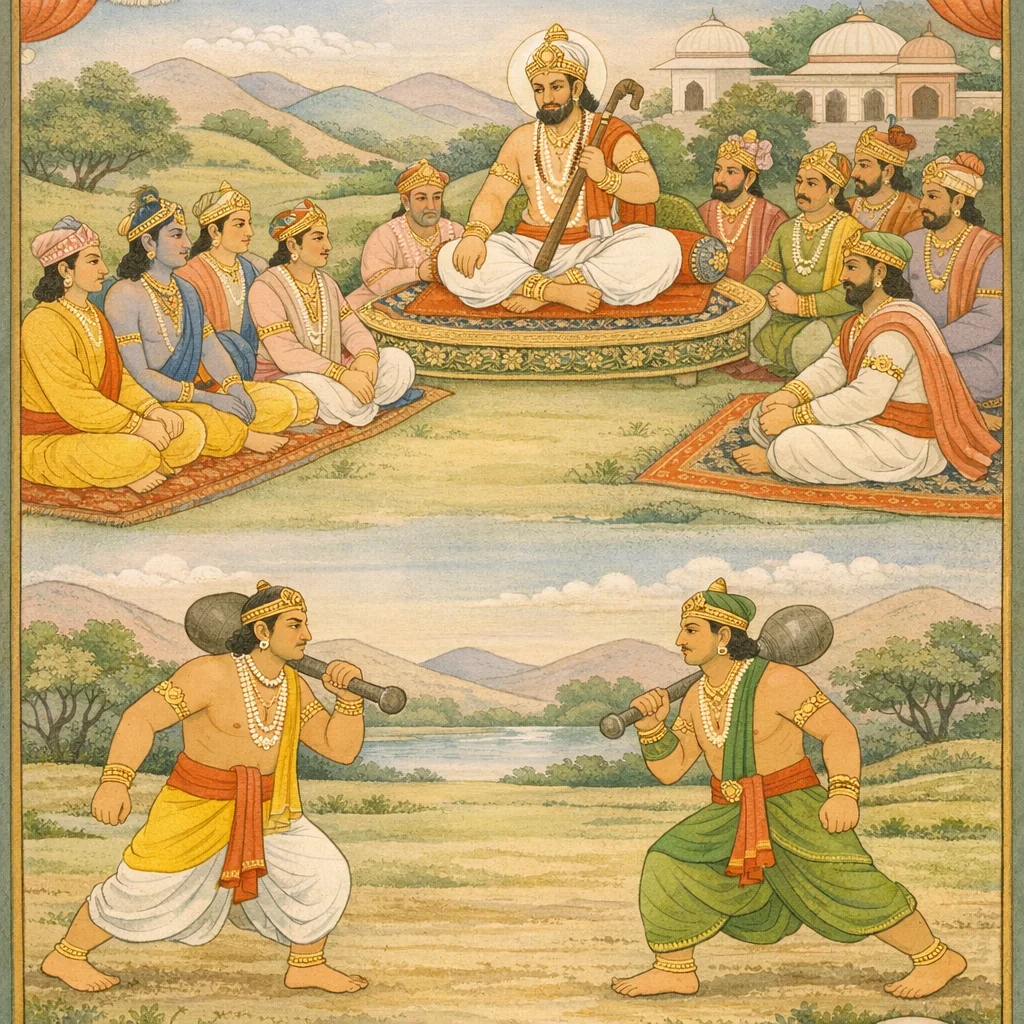
Chapter Arc: संजय धृतराष्ट्र से कहता है—जब वह अत्यन्त दारुण युद्ध आरम्भ होने को था, तभी शिष्य-भाइयों (भीम और दुर्योधन) के गदा-युद्ध का समाचार सुनकर तालध्वज, हलायुध बलराम वहाँ आ पहुँचे। → कृष्ण सहित पाण्डव बलराम को देखकर हर्षित होते हैं, विधिवत् स्वागत-सत्कार करते हैं; युधिष्ठिर रोहिणीनन्दन से निवेदन करता है कि वे इस महायुद्ध के साक्षी बनें। बलराम राजाओं-महारथियों के मध्य पूजित होकर विराजते हैं—और सभा-सा वातावरण रणभूमि के किनारे बन जाता है, जहाँ अब निर्णायक द्वंद्व देखने को है। → दोनों वीर—भीमसेन और दुर्योधन—गदा हाथ में लेकर युद्धभूमि में उतरते हैं और एक-दूसरे के सम्मुख शोभायमान होते हैं; बलराम, गुरु और साक्षी के रूप में, इस ‘भ्रात्रोर्महायुद्ध’ को देखने बैठते हैं। → अध्याय का समापन इस स्थापना पर होता है कि बलराम का आगमन, उनका सम्मान, और उनका आसन-ग्रहण हो चुका है—अब गदा-युद्ध विधिवत् आरम्भ की देहरी पर खड़ा है। → बलराम की उपस्थिति में भीम और दुर्योधन का निर्णायक गदा-युद्ध आगे कैसे मुड़ेगा—यह अगले अध्यायों के लिए छोड़ दिया जाता है।
Shlokas
Verse 1
भीकम (2 अमान चतुस्त्रिंशो 5 ध्याय: बलरामजीका आगमन और स्वागत तथा भीमसेन और दुर्योधनके युद्धका आरम्भ संजय उवाच तस्मिन् युद्धे महाराज सुसंवृत्ते सुदारुणे । उपविष्टेषु सर्वेषु पाण्डवेषु महात्मसु,संजय कहते हैं--महाराज! वह अत्यन्त भयंकर युद्ध जब आरम्भ होने लगा और समस्त महात्मा पाण्डव उसे देखनेके लिये बैठ गये, उस समय अपने दोनों शिष्योंका संग्राम उपस्थित होनेपर उसका समाचार सुन तालचिह्वित ध्वजवाले हलधारी बलरामजी वहाँ आ पहुँचे
Sañjaya said: O King, when that battle—fully set in motion and exceedingly dreadful—was about to commence, and all the great-souled Pāṇḍavas had taken their seats to witness it, the scene was poised for the fateful contest that would test resolve, discipline, and the limits of dharma amid war.
Verse 2
ततस्तालध्वजो रामस्तयोर्युद्ध उपस्थिते । श्रुत्वा तच्छिष्ययो राजन्नाजगाम हलायुध:,संजय कहते हैं--महाराज! वह अत्यन्त भयंकर युद्ध जब आरम्भ होने लगा और समस्त महात्मा पाण्डव उसे देखनेके लिये बैठ गये, उस समय अपने दोनों शिष्योंका संग्राम उपस्थित होनेपर उसका समाचार सुन तालचिह्वित ध्वजवाले हलधारी बलरामजी वहाँ आ पहुँचे
Sañjaya said: “O King, when the dreadful battle between those two was about to begin, Rāma—whose banner bore the emblem of the palm tree—hearing that his two disciples had come face to face in combat, arrived there bearing the plough-weapon (halāyudha).”
Verse 3
त॑ दृष्टवा परमप्रीता: पाण्डवा: सहकेशवा: । उपगम्योपसंगृहा विधिवत् प्रत्यपूजयन्,उन्हें देखकर श्रीकृष्णसहित पाण्डव बड़े प्रसन्न हुए। उन्होंने निकट जाकर उनका चरणस्पर्श किया और विधिपूर्वक उनकी पूजा की
Sañjaya said: “Seeing him, the Pāṇḍavas—together with Keśava (Kṛṣṇa)—were filled with great joy. Approaching him, they respectfully received him, touched his feet, and honored him in due ceremonial manner.”
Verse 4
पूजयित्वा तत: पश्चादिदं वचनमन्रुवन् । शिष्ययो: कौशल युद्धे पश्य रामेति पार्थिव
Sañjaya said: “After honoring him, the king then spoke these words: ‘O Pārthiva, behold Rāma—see the skill of the two disciples in battle.’”
Verse 5
राजन! पूजनके पश्चात् उन्होंने इस प्रकार कहा--“बलरामजी! अपने दोनों शिष्योंका युद्धकौशल देखिये" ।। अब्रवीच्च तदा रामो दृष्टवा कृष्णं सपाण्डवम् | दुर्योधनं च कौरव्यं गदापाणिमवस्थितम्,शिष्ययोर्व गदायुद्धं द्रष्ठकामो5स्मि माधव । उस समय बलरामजीने श्रीकृष्ण, पाण्डव तथा हाथमें गदा लेकर खड़े हुए कुरुवंशी दुर्योधनकी ओर देखकर कहा--“माधव! तीर्थयात्राके लिये निकले हुए आज मुझे बयालीस दिन हो गये। पुष्य नक्षत्रमें चला था और श्रवण नक्षत्रमें पुन: वापस आया हूँ। मैं अपने दोनों शिष्योंका गदायुद्ध देखना चाहता हूँ!
Sañjaya said: “After the rites of honoring were completed, they spoke in this way: ‘O Balarāma, behold the martial skill of your two disciples.’ Then Balarāma, looking toward Kṛṣṇa along with the Pāṇḍavas, and toward Duryodhana of the Kuru line standing with mace in hand, said: ‘O Mādhava, I desire to witness the mace-fight between my two pupils. It has now been forty-two days since I set out on pilgrimage; I departed under Puṣya and have returned under Śravaṇa. I wish to see the contest of my two disciples.’”
Verse 6
चत्वारिंशदहान्यद्य द्वे च मे निःसृतस्य वै । पुष्येण सम्प्रयातो5स्मि श्रवणे पुनरागत:
Sañjaya said: “Today it has been forty days—and two more—since I departed. I set out under the lunar mansion Puṣya, and I have returned again under Śravaṇa.”
Verse 7
ततस्तदा गदाहस्तौ दुर्योधनवृकोदरौ
Sañjaya said: Then, at that moment, Duryodhana and Vṛkodara—both gripping their maces—stood poised for the decisive clash, the war’s grim culmination, where personal prowess and resolve are tested amid the moral ruin of fratricidal conflict.
Verse 8
ततो युधिषिरो राजा परिष्वज्य हलायुधम्
Sañjaya said: Then King Yudhiṣṭhira, embracing Halāyudha (Balarāma), voiced reverence and reconciliation amid the war’s moral strain—honouring an elder whose presence could steady dharma even when the battlefield had unsettled all certainties.
Verse 9
कृष्णौ चापि महेष्वासावभिवाद्य हलायुधम्
Sañjaya said: The two Kṛṣṇas as well—those mighty archers—paid their respectful salutations to Halāyudha (Balarāma). The moment underscores the epic’s ethic of honoring elders and revered kin even amid the pressures and divisions of war.
Verse 10
माद्रीपुत्रौ तथा शूरौ द्रौपद्या: पजच चात्मजा:
Sañjaya said: “And the two heroic sons of Mādrī, along with the five sons of Draupadī.” In the grim accounting of war, the verse gathers the foremost heirs of the Pāṇḍava house—bound by duty and kinship—underscoring how the conflict consumes even the noblest lineages.
Verse 11
अभिवाद्य स्थिता राजन् राहिणेयं महाबलम् । राजन! माद्रीके दोनों शूरवीर पुत्र नकुल-सहदेव और द्रौपदीके पाँचों पुत्र भी रोहिणीनन्दन महाबली बलरामजीको प्रणाम करके उनके पास विनीतभावसे खड़े हो गये ।। भीमसेनो5थ बलवान पुत्रस्तव जनाधिप
Sañjaya said: O King, having paid their respects, they stood before the mighty son of Rohiṇī. The two heroic sons of Mādrī—Nakula and Sahadeva—and also the five sons of Draupadī bowed to the powerful Balarāma, Rohiṇī’s beloved son, and remained near him with humble, disciplined bearing. Then Bhīmasena too—your strong son, O lord of men—(approached/was present).
Verse 12
स्वागतेन च ते तत्र प्रतिपूज्य समन््तत:,वे सब नरेश सब ओरसे स्वागतपूर्वक समादर करके वहाँ महात्मा रोहिणीपुत्र बलरामजीसे बोले--“महाबाहो! युद्ध देखिये”
Sañjaya said: There they welcomed him and honored him on every side. All the kings, having offered respectful greetings and due reverence, addressed the great-souled Balarāma, son of Rohiṇī: “O mighty-armed one, behold the battle.”
Verse 13
पश्य युद्ध महाबाहो इति ते राममत्रुवन् । एवमूचुर्महात्मानं रौहिणेयं नराधिपा:,वे सब नरेश सब ओरसे स्वागतपूर्वक समादर करके वहाँ महात्मा रोहिणीपुत्र बलरामजीसे बोले--“महाबाहो! युद्ध देखिये”
Sañjaya said: The kings addressed the great-souled Rauhiṇeya (Balarāma): “O mighty-armed one, behold the battle.” Thus did the lords of men speak to him.
Verse 14
परिष्वज्य तदा राम: पाण्डवान् सहसृज्जयान् | अपृच्छत् कुशल सर्वान् पार्थिवांशक्षामितौजस:,उस समय बलरामजीने पाण्डवों, सुंजयों तथा अमित बलशाली सम्पूर्ण भूपालोंको हृदयसे लगाकर उनका कुशल-मंगल पूछा
Sañjaya said: Then Rāma (Balarāma), of restrained yet mighty energy, embraced the Pāṇḍavas and the victorious Saṃjayas, and inquired after the welfare of all the kings.
Verse 15
तथैव ते समासाद्य पप्रच्छुस्तमनामयम् | प्रत्यभ्यर्च्य हली सर्वान् क्षत्रियांश्व॒ महात्मन:
Sañjaya said: In the same manner, they approached that blameless one and inquired after his welfare. Having duly honored Hali (Balarāma), those great-souled men also paid respectful homage to all the kṣatriyas present.
Verse 16
कृत्वा कुशलसंयुक्तां संविदं च यथावय: । जनार्दनं सात्यकिं च प्रेम्णा स परिषस्वजे
Sañjaya said: Having exchanged courteous words of well-being, as was fitting, he then embraced Janārdana (Kṛṣṇa) and Sātyaki with affection.
Verse 17
उसी प्रकार वे राजा भी उनसे मिलकर उनके आरोग्यका समाचार पूछने लगे। हलधरने सम्पूर्ण महामनस्वी क्षत्रियोंका समादर करके अवस्थाके अनुसार क्रमश: उनसे कुशल- मंगलकी जिज्ञासा की और श्रीकृष्ण तथा सात्यकिको प्रेमपूर्वक छातीसे लगा लिया ।। मूर्थ्नि चैतावुपाप्राय कुशलं पर्यपृच्छत । तौच तं विधिवद् राजन् पूजयामासतुर्गुरुम्
Sañjaya said: Approaching them and bowing his head in reverence, he inquired after their welfare. And those two, O King, duly honored him as their revered elder and teacher—observing the etiquette of respect and affectionate regard even amid the pressures of war.
Verse 18
ततोअब्रवीद् धर्मसुतो रोहिणेयमरिंदमम्
Sañjaya said: Then the son of Dharma (Yudhiṣṭhira) spoke to Rohiṇeya (Balarāma), the subduer of foes—amid the war’s grave moral pressure, seeking counsel and direction as calamity unfolded.
Verse 19
तेषां मध्ये महाबाहु: श्रीमान् केशवपूर्वज:
Sañjaya said: Among them stood the mighty-armed, illustrious elder brother of Keśava—distinguished in presence and power amid the assembled warriors.
Verse 20
स बभौ राजमध्यस्थो नीलवासा: सितप्रभ:
Sañjaya said: Standing in the midst of the kings, he shone forth—clad in blue garments and radiant with a white brilliance—his presence marking him out amid the assembled rulers in the charged atmosphere of war-counsel and conflict.
Verse 21
ततस्तयो: संनिपातस्तुमुलो लोमहर्षण:,राजन्! तदनन्तर आपके उन दोनों पुत्रोंमें वैरका अन्त कर देनेवाला भयंकर एवं रोमांचकारी संग्राम होने लगा
Sañjaya said: “Then, O King, their encounter became tumultuous and hair-raising. Immediately thereafter, a dreadful and thrilling battle began between your two sons—one that was destined to bring their mutual enmity to its end.”
Verse 22
आसीदनन््तकरो राजन् वैरस्य तव पुत्रयो:,राजन्! तदनन्तर आपके उन दोनों पुत्रोंमें वैरका अन्त कर देनेवाला भयंकर एवं रोमांचकारी संग्राम होने लगा
Sañjaya said: O King, there arose a dreadful and hair-raising battle between your two sons—one that would bring their mutual enmity to its final end. Thereafter, the conflict intensified, moving inexorably toward a decisive and ruinous conclusion.
Verse 34
इति श्रीमहा भारते शल्यपर्वणि गदापर्वणि बलदेवागमने चतुस्त्रिंशो5ध्याय:
Thus ends the thirty-fourth chapter in the Śalya Parva of the Śrī Mahābhārata, within the section concerning the mace-fight, describing the arrival of Baladeva. This closing colophon signals a transition in the war narrative, marking the formal completion of a unit of teaching and events, and highlighting Baladeva’s presence as ethically significant—an elder figure associated with strength, restraint, and the norms governing combat.
Verse 63
शिष्ययोर्व गदायुद्धं द्रष्ठकामो5स्मि माधव । उस समय बलरामजीने श्रीकृष्ण, पाण्डव तथा हाथमें गदा लेकर खड़े हुए कुरुवंशी दुर्योधनकी ओर देखकर कहा--“माधव! तीर्थयात्राके लिये निकले हुए आज मुझे बयालीस दिन हो गये। पुष्य नक्षत्रमें चला था और श्रवण नक्षत्रमें पुन: वापस आया हूँ। मैं अपने दोनों शिष्योंका गदायुद्ध देखना चाहता हूँ!
Sanjaya said: Desiring to witness the club-duel between his two disciples, Balarama looked toward Madhava (Krishna), the Pandavas, and Duryodhana of the Kuru line standing with mace in hand, and spoke: “Madhava, it has now been forty-two days since I set out on pilgrimage. I departed under the Pushya constellation and have returned under Shravana. I wish to see the mace-fight between my two pupils.”
Verse 73
युद्धभूमिं गती वीरावुभावेव रराजतु: । तदनन्तर गदा हाथमें लेकर दुर्योधन और भीमसेन युद्ध-भूमिमें उतरे। वे दोनों ही वीर वहाँ बड़ी शोभा पा रहे थे
Sañjaya said: The two heroes, having come onto the battlefield, shone resplendently. Thereafter Duryodhana and Bhīmasena, taking up their maces in hand, descended into the arena of war. Both warriors stood there in striking splendor—an ominous prelude to a duel where personal enmity and royal duty collide under the harsh demands of kṣatriya-dharma.
Verse 86
स्वागतं कुशल चास्मै पर्यपृच्छद् यथातथम् | उस समय राजा युधिष्ठिरने बलरामजीको हृदयसे लगाकर उनका स्वागत किया और यथोचितरूपसे उनका कुशल-समाचार पूछा
Sañjaya said: King Yudhiṣṭhira welcomed him and, in a fitting manner, inquired after his welfare—honoring him with due courtesy and concern, as dharma requires toward an honored elder and guest.
Verse 93
सस्वजाते परिप्रीतौ प्रीयमाणौ यशस्विनौ । यशस्वी महाधनुर्धर श्रीकृष्ण और अर्जुन भी बलरामजीको प्रणाम करके अत्यन्त प्रसन्न हो प्रेमपूर्वक उनके हृदयसे लग गये
Sañjaya said: Delighted to meet their own elder, the two illustrious heroes—Śrī Kṛṣṇa, famed and a mighty wielder of the bow, and Arjuna—first bowed to Balarāma. Then, filled with deep joy, they embraced him with heartfelt affection.
Verse 116
तथैव चोद्यतगदौ पूजयामासतुर्बलम् | नरेश्वरर! भीमसेन और आपका बलवान पुत्र दुर्योधन इन दोनोंने गदाको ऊँचे उठाकर बलरामजीके प्रति सम्मान प्रदर्शित किया
Sañjaya said: “In the same manner, with their maces raised aloft, Bhīmasena and your mighty son Duryodhana paid homage to Balarāma.”
Verse 173
ब्रह्माणमिव देवेशमिन्द्रोपेन्द्री मुदान्वितौ । राजन! इन दोनोंका मस्तक सूँघकर उन्होंने कुशल-समाचार पूछा और उन दोनोंने भी अपने गुरुजन बलरामजीका विधिपूर्वक पूजन किया। ठीक उसी तरह, जैसे इन्द्र और उपेन्द्रने प्रसन्नतापूर्वक देवेश्वर ब्रह्माजीकी पूजा की थी
Sañjaya said: O King, he affectionately smelled the heads of those two and asked after their welfare; and they, in turn, duly honored their revered elder and teacher, Balarāma. It was like Indra and Upendra, filled with joy, paying worship to Brahmā, the lord of the gods.
Verse 183
इदं भ्रात्रोर्महायुद्धं पश्य रामेति भारत । भारत! तत्पश्चात् धर्मपुत्र युधिष्ठिरने शत्रुदमन रोहिणीकुमारसे कहा--“बलरामजी! दोनों भाइयोंका यह महान् युद्ध देखिये”
Sañjaya said: “O Bharata (Dhritarashtra), ‘Look, Rama, at this great battle between the two brothers.’” Thereafter, Yudhishthira—the son of Dharma, the tamer of foes—addressed Rohini’s son and said: “Balarama, behold this mighty combat of the two brothers.”
Verse 196
न्यविशत् परमप्रीत: पूज्यमानो महारथै: । उनके ऐसा कहनेपर श्रीकृष्णके बड़े भ्राता महाबाहु बलवान् श्रीबलरामजी उन महारथियोंसे पूजित हो उनके बीचमें अत्यन्त प्रसन्न होकर बैठे
Sañjaya said: Delighted at heart, Balarāma—honoured and reverently received by the great chariot-warriors—took his seat among them.
Verse 203
दिवीव नक्षत्रगणै: परिकीर्णो निशाकर: । राजाओंके मध्यभागमें बैठे हुए नीलाम्बरधारी गौरकान्ति बलरामजी आकाशमें नक्षत्रोंसे घिरे हुए चन्द्रमाके समान शोभा पा रहे थे
Sañjaya said: As the moon shines in the sky surrounded by clusters of stars, so did Baladeva (Balarāma)—fair in radiance and clad in blue garments—sit amid the assembled kings, resplendent like the moon encircled by stars.
Frequently Asked Questions
Balarāma’s stance frames a dilemma between partisan obligation and impartial dharma: he rejects assisting either coalition, choosing a vow-governed pilgrimage rather than validating contested political ends through force.
The Soma episode formalizes a principle of balance and periodicity: partiality generates disorder, while regulated practice and corrective ritual restore stability—mirroring ethical equilibrium in social life.
Yes, in functional form: it attributes “mahat phala” to specific tīrthas (e.g., svastyayana at an udapāna) and describes Prabhāsa as a premier tīrtha where Soma regains radiance, implying merit through proper observance.