Adhyaya 17
Yudhiṣṭhira’s Lament and Kṛṣṇa’s Rudra-Cosmogony Explanation (सौप्तिक पर्व, अध्याय १७)
Upa-parva: Sauptika-upākhyāna (Aftermath Discourse on the Night Raid and Rudra’s Agency)
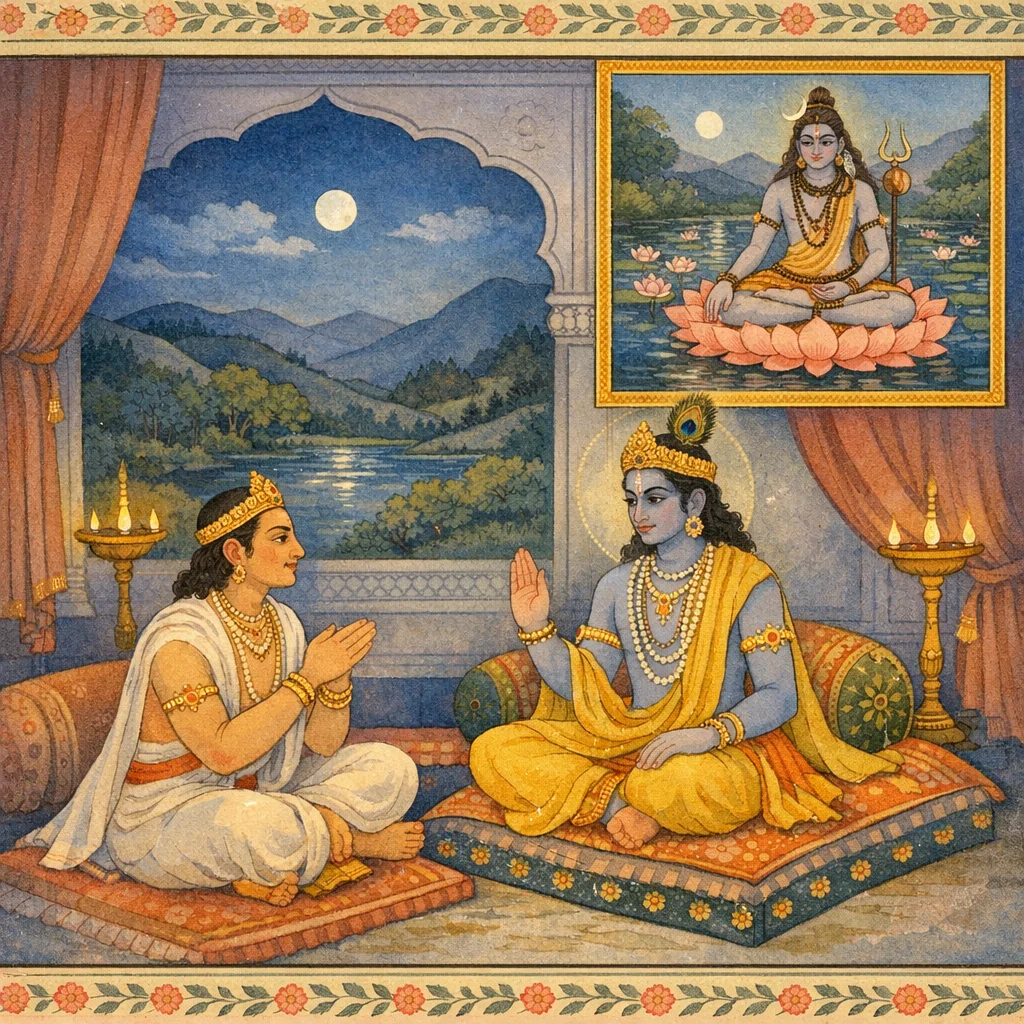
Vaiśaṃpāyana reports that, after the night raid has annihilated the remaining forces, King Yudhiṣṭhira—overcome by grief—questions Vāsudeva Kṛṣṇa about the apparent impossibility that Droṇa’s son (Drauṇi) could single-handedly devastate the entire camp and fell highly trained warriors, including Drupada’s sons and Dhṛṣṭadyumna. Kṛṣṇa answers by positing that Drauṇi sought refuge in Mahādeva (Rudra), whose favor can grant even immortality and a potency capable of subduing Indra. To substantiate Rudra’s supremacy, Kṛṣṇa narrates a compact purāṇic cosmogony: Rudra’s prolonged tapas while immersed in waters; Brahmā’s impatience and creation of a secondary creator; the creation of Prajāpatis and beings; the immediate hunger of newly created populations and the establishment of sustenance through plants and a hierarchy wherein weaker beings become food for stronger ones; the resulting proliferation of life; Rudra’s anger upon witnessing the abundant forms and his act of casting down his liṅga; Brahmā’s pacifying inquiry; Rudra’s complaint that another has created the beings and that his tapas-earned provisions are being diverted; and Rudra’s withdrawal to Muñjavat for further austerity. The chapter thus links post-war catastrophe to a broader metaphysical frame about divine agency, creation, and the regulation of life through ordained limits.
Chapter Arc: रात्रि-वध की धूल अभी बैठी भी नहीं कि युधिष्ठिर का हृदय फट पड़ता है—वे श्रीकृष्ण से पूछते हैं: द्रोणपुत्र अश्वत्थामा, ‘क्षुद्र’ और ‘पापात्मा’ होकर भी, मेरे समस्त पुत्रों और द्रुपद-पुत्रों जैसे महावीरों को अकेला कैसे मार गया? → युधिष्ठिर का प्रश्न केवल शोक नहीं, न्याय का भी है—‘उसने कौन-सा कर्म किया, कौन-सी सिद्धि पाई?’ उत्तर में कथा का प्रवाह युद्ध-भूमि से हटकर देव-तत्त्व की ओर मुड़ता है: महादेव की उपासना, तप, और वह शक्ति जो प्रसन्न होने पर अमरत्व तक दे सकती है—ऐसी शक्ति जो इन्द्र-संहार तक समर्थ कर दे। → शिव-तत्त्व का महिमामय प्रसंग उभरता है—हरिकेश (शिव) का दीर्घ तप, जल में लीन साधना, और ब्रह्मा के साथ संवाद; लिंग का भूमौ प्रतिष्ठित होना और लोकगुरु शिव का प्रजासृष्टि/प्रजापालन के प्रयोजन पर तीव्र प्रश्न—यहाँ स्पष्ट होता है कि अश्वत्थामा की ‘असाध्य’ क्षमता का मूल किसी मानवीय पराक्रम में नहीं, देव-प्रसाद/वर-प्रभाव में है। → ब्रह्मा-शिव संवाद से प्रजाओं के पोषण का विधान सामने आता है—तप से अन्न/ओषधियों का प्रादुर्भाव और उनका निरन्तर रूपान्तरण; संकेत यह कि जगत का क्रम (सृष्टि-पालन) देव-तप और देव-नियम से चलता है, और उसी देव-शक्ति का अंश/आश्रय लेकर अश्वत्थामा ने रात्रि-वध किया। युधिष्ठिर के प्रश्न को श्रीकृष्ण ‘कारण’ की दिशा में मोड़ते हैं—घटना का रहस्य शिव-प्रभाव में है, केवल रण-कौशल में नहीं। → देव-वर से समर्थ होकर भी अधर्म-कर्म करने वाले का फल क्या होगा—और पाण्डव उस ‘वर-समर्थ’ अपराधी से कैसे निपटेंगे?
Shlokas
Verse 1
/ ऑपन-माज बक। डे सप्तदशो< ध्याय: अपने समस्त पुत्रों और सैनिकोंके मारे जानेके विषयमें युधिष्ठिरका और उत्तरमें श्रीकृष्णके द्वारा जी हित प्रतिपादन वैशम्पायन उवाच हतेषु सर्वसैन्येषु सौप्तिके तै रथैस्त्रिभि: | शोचन् युधिष्ठटिरो राजा दाशाहमिदमब्रवीत्,वैशम्पायनजी कहते हैं--राजन्! रातको सोते समय उन तीन महारथियोंने पाण्डवोंकी सारी सेनाओंका जो संहार कर डाला था, उसके लिये शोक करते हुए राजा युधिष्ठिरने दशा्ईनन्दन भगवान् श्रीकृष्णसे इस प्रकार कहा--
Vaiśampāyana said: When all the armies had been slain in the night-raid by those three great chariot-warriors, King Yudhiṣṭhira—grieving over the destruction—addressed Dāśārha (Śrī Kṛṣṇa) in these words. The verse sets a moral frame: the aftermath of a treacherous nocturnal massacre becomes the occasion for reflection on righteous conduct and the proper response to grief and outrage.
Verse 2
कथं नु कृष्ण पापेन क्षुद्रेणाकृतकर्मणा । द्रौणिना निहता: सर्वे मम पुत्रा महारथा:,“श्रीकृष्ण! नीच एवं पापात्मा द्रोणकुमारने कोई विशेष तप या पुण्यकर्म भी तो नहीं किया था, जिससे उसमें अलौकिक शक्ति आ जाती। फिर उसने मेरे सभी महारथी पुत्रोंका वध कैसे कर डाला?
“How, O Kṛṣṇa, did the sinful, petty Drauṇi—who has performed no worthy deed—slay all my sons, those great chariot-warriors?”
Verse 3
तथा कृतास्त्रविक्रान्ता: सहस्रशतयोधिन: । द्रुपदस्यात्मजाश्वैव द्रोणपुत्रेण पातिता:,“ट्रुपदके पुत्र तो अस्त्र-विद्याके पूरे पण्डित, पराक्रमी तथा लाखों योद्धाओंके साथ युद्ध करनेमें समर्थ थे तो भी द्रोणपुत्रने उन्हें मार गिराया, यह कितने आश्वर्यकी बात है?
“Drupada’s sons were masters of weapon-craft, famed for valor, able to face hundreds and thousands of fighters—yet Droṇa’s son struck them down. How astonishing!”
Verse 4
यस्य द्रोणो महेष्वासो न प्रादादाहवे मुखम् । निजषघ्ने रथिनां श्रेष्ठ धृष्टद्युम्न॑ कथं नु सः,“महाथनुर्धर द्रोणाचार्य युद्धमें जिसके सामने मुँह नहीं दिखाते थे, उसी रथियोंमें श्रेष्ठ धष्टद्युम्नको अश्वत्थामाने कैसे मार डाला?
“How, indeed, did Aśvatthāman manage to slay Dhṛṣṭadyumna—foremost among chariot-warriors—when even the great archer Droṇa would not face him in battle?”
Verse 5
कि नु तेन कृतं कर्म तथायुक्तं नरर्षभ । यदेक: समरे सर्वानिवधीजन्नो गुरो: सुत:,“नरश्रेष्ठ) आचार्यपुत्रने ऐसा कौन-सा उपयुक्त कर्म किया था, जिससे उसने अकेले ही समरांगणमें हमारे सभी सैनिकोंका वध कर डाला'
“O bull among men, what fitting deed—by what means—did the preceptor’s son perform, that all alone in battle he slew all our troops?”
Verse 6
श्रीभगवानुवाच नूनं स देवदेवानामीश्ररेश्वरमव्ययम् । जगाम शरण द्रौणिरेकस्तेनावधीद् बहूनू,श्रीभगवान् बोले--राजन्! निश्चय ही अभश्रवत्थामाने ईश्वरोंके भी ईश्वर देवाधिदेव अविनाशी भगवान् शिवकी शरण ली थी, इसीलिये उसने अकेले ही बहुत-से वीरोंका विनाश कर डाला
The Blessed Lord said: “Surely Drauṇi (Aśvatthāmā) sought refuge in Śiva—the God of gods, the Lord of lords, imperishable and unchanging. Therefore, he alone was able to destroy many heroes.”
Verse 7
प्रसन्नो हि महादेवो दद्यादमरतामपि । वीर्य च गिरिशो दद्याद् येनेन्द्रमपि शातयेत्
Vaiśampāyana said: “When Mahādeva is pleased, he can grant even immortality. And Giriśa can bestow such might that, by it, one could even strike down Indra.”
Verse 8
पर्ववपर शयन करनेवाले महादेवजी तो प्रसन्न होनेपर अमरत्व भी दे सकते हैं। वे उपासकको इतनी शक्ति दे देते हैं, जिससे वह इन्द्रको भी नष्ट कर सकता है ।। वेदाहं हि महादेवं तत्त्वेन भरतर्षभ । यानि चास्य पुराणानि कर्माणि विविधानि च,भरतश्रेष्ठ! मैं महादेवजीको यथार्थरूपसे जानता हूँ। उनके जो नाना प्रकारके प्राचीन कर्म हैं, उनसे भी मैं पूर्ण परिचित हूँ
Vaiśampāyana said: “Mahādeva, who makes the mountain his couch, when pleased can grant even immortality. He bestows upon his devotee such power that the devotee could destroy even Indra. O bull among the Bhāratas, I truly know Mahādeva as he is; and, O best of the Bhāratas, I am fully acquainted as well with his many ancient and varied deeds.”
Verse 9
आदिरेष हि भूतानां मध्यमन्तश्न॒ भारत । विचेष्टते जगच्चेदं सर्वमस्यैव कर्मणा,भरतनन्दन! ये भगवान् शिव सम्पूर्ण भूतोंके आदि, मध्य और अन्त हैं। उन्हींके प्रभावसे यह सारा जगत् भाँति-भाँतिकी चेष्टाएँ करता है
Vaiśampāyana said: “O Bhārata, he is indeed the beginning of all beings, their middle, and their end. By his very power and activity this entire world moves and acts in manifold ways.”
Verse 10
एवं सिसक्षुर्भूतानि ददर्श प्रथमं विभु: । पितामहो<ब्रवीच्चैनं भूतानि सृज मा चिरम्,प्रभावशाली ब्रह्माजीने प्राणियोंकी सृष्टि करनेकी इच्छासे सबसे पहले महादेवजीको ही देखा था। तब पितामह ब्रह्माने उनसे कहा--'प्रभो! आप अविलम्ब सम्पूर्ण भूतोंकी सृष्टि कीजिये'
Vaiśampāyana said: “Brahmā, mighty in splendor, desiring to create living beings, first beheld Mahādeva. Then Pitāmaha Brahmā said to him: ‘O Lord, without delay create all creatures.’”
Verse 11
यह सुन महादेवजी “तथास्तु” कहकर भूतगणोंके नाना प्रकारके दोष देख जलमें मग्न हो गये और महान् तपका आश्रय ले दीर्घकालतक तपस्या करते रहे
Hearing this, Mahādeva replied, “So be it.” Then, seeing the many kinds of faults among the hosts of beings, he immersed himself in the waters and, taking refuge in profound austerity (tapas), continued his penance for a long time.
Verse 12
सुमहान्तं ततः काल प्रतीक्ष्यैनं पितामह: । स्रष्टारं सर्वभूतानां ससर्ज मनसा परम्,इधर पितामह ब्रह्माने सुदीर्घकालतक उनकी प्रतीक्षा करके अपने मानसिक संकल्पसे दूसरे सर्वभूतस्रष्टाको उत्पन्न किया
Then, after waiting for a very long span of time, the Grandsire (Brahmā) brought forth—by mere mental resolve (saṅkalpa)—a supreme creator, the progenitor of all beings.
Verse 13
हरिकेशस्तथेत्युक्त्वा भूतानां दोषदर्शिवान् | दीर्घकालं तपस्तेपे मग्नो5म्भसि महातपा:,सो<ब्रवीत् पितरं दृष्टवा गिरिशं सुप्तमम्भसि । यदि मे नाग्रजो<स्त्यन्यस्ततः स्रक्ष्याम्यहं प्रजा: उस विराट पुरुष या स्रष्टाने महादेवजीको जलमें सोया देख अपने पिता ब्रह्माजीसे कहा--“यदि दूसरा कोई मुझसे ज्येष्ठ न हो तो मैं प्रजाकी सृष्टि करूँगा”
Vaiśampāyana said: “Harikeśa, having assented thus and being one who discerned the faults of beings, performed austerities for a long time while immersed in the waters, a great ascetic. Then, seeing his father and beholding Giriśa (Śiva) asleep in the waters, he said: ‘If there is no other elder than I, then I shall create the creatures.’”
Verse 14
तमब्रवीत् पिता नास्ति त्वदन्य: पुरुषो5ग्रज: । स्थाणुरेष जले मग्नो विस्रब्ध: कुरु वैकृतम्,यह सुनकर पिता ब्रह्माने स्रष्टासे कहा--*तुम्हारे सिवा दूसरा कोई अग्रज पुरुष नहीं है। ये स्थाणु (शिव) हैं भी तो पानीमें डूबे हुए हैं; अतः तुम निश्चिन्त होकर सृष्टिका कार्य आरम्भ करो'
Vaiśampāyana said: The Father (Brahmā) said to the Creator: “Other than you there is no elder male. And this Sthāṇu (Śiva) is submerged in the waters; therefore, act without fear and begin the work of creation.”
Verse 15
भूतान्यन्वसृजत् सप्त दक्षादींस्तु प्रजापतीन् । यैरिमं व्यकरोत् सर्व भूतग्रामं चतुर्विधम्,तब स्रष्टाने सात प्रकारके प्राणियों और दक्ष आदि प्रजापतियोंको उत्पन्न किया, जिनके द्वारा उन्होंने इस चार प्रकारके समस्त प्राणिसमुदायका विस्तार किया
Vaiśampāyana said: He then brought forth the seven classes of beings, and also the Prajāpatis beginning with Dakṣa. Through them he expanded this entire multitude of creatures in its fourfold division.
Verse 16
ता: सृष्टमात्रा: क्षुधिता: प्रजा: सर्वा: प्रजापतिम् । बिभक्षयिषवो राजन् सहसा प्राद्रवंस्तदा,राजन! सृष्टि होते ही समस्त प्रजा भूखसे पीड़ित हो प्रजापतिको ही खा जानेकी इच्छासे सहसा उनके पास दौड़ी गयी
Vaiśampāyana said: No sooner were they created than all those beings, tormented by hunger, rushed at once toward Prajāpati, O king, driven by the desire to devour even their own creator.
Verse 17
स भक्ष्यमाणस्त्राणार्थी पितामहमुपाद्रवत् । आशभ्यो मां भगवांस्त्रातु वृत्तिरासां विधीयताम्,जब प्रजा प्रजापतिको अपना आहार बनानेके लिये उद्यत हुई, तब वे आत्मरक्षाके लिये बड़े वेगसे भागकर पितामह ब्रह्माजीकी सेवामें उपस्थित हुए और बोले--'भगवन्! आप मुझे इन प्रजाओंसे बचाइये और इनके लिये कोई जीविका-वृत्ति नियत कर दीजिये” इति श्रीमहाभारते सौप्तिकपर्वणि ऐषीकपर्वणि युधिष्ठिरकृष्णसंवादे सप्तदशो<ड्ध्याय:
As he was about to be consumed, seeking protection, he rushed to the Grandfather, Brahmā. He pleaded, “O Blessed Lord, save me from these creatures, and prescribe for them a proper means of livelihood.”
Verse 18
ततस्ताभ्यो ददावन्नमोषधी: स्थावराणि च । जज़मानि च भूतानि दुर्बलानि बलीयसाम्,तब ब्रह्माजीने उन प्रजाओंको अन्न और ओषधि आदि स्थावर वस्तुएँ जीवन-निर्वाहके लिये दीं और अत्यन्त बलवान् हिंसक जन्तुओंके लिये दुर्बल जंगम प्राणियोंको ही आहार निश्चित कर दिया
Then Brahmā granted them food—grains and herbs and other immobile things—for their sustenance; and for the fiercest and strongest beings he ordained that weaker, moving creatures should be their appointed fare.
Verse 19
विह्तितान्ना: प्रजास्तास्तु जग्मु: सृष्टा यथागतम् | ततो ववृधिरे राजन् प्रीतिमत्य: स्वयोनिषु,जिनकी सृष्टि हुई थी, उनके लिये जब भोजनकी व्यवस्था कर दी गयी, तब वे प्रजावर्गके लोग जैसे आये थे, वैसे लौट गये। राजन्! तदनन्तर सारी प्रजा अपनी ही योनियोंमें प्रसन्नतापूर्वक रहती हुई उत्तरोत्तर बढ़ने लगी
Vaiśampāyana said: When provisions of food had been arranged for those beings who had been created, they departed, returning just as they had come. Then, O king, the whole populace—content within their own respective species—began to flourish and multiply ever more.
Verse 20
भूतग्रामे विवृद्धे तु तुष्टे लोकगुरावपि । उदतिष्ठज्जलाज्ज्येष्ठ: प्रजाश्लेमा ददर्श सः,जब प्राणिसमुदायकी भलीभाँति वृद्धि हो गयी और लोकगुरु ब्रह्मा भी संतुष्ट हो गये, तब वे ज्येष्ठ पुरुष शिव जलसे बाहर निकले। निकलनेपर उन्होंने इन समस्त प्रजाओंको देखा
When the host of beings had duly increased and the World-Teacher Brahmā too was satisfied, then the Eldest, Śiva, rose up from the waters. As he emerged, he beheld all those creatures.
Verse 21
बहुरूपा: प्रजा: सृष्टा विवृद्धाश्व स्वतेजसा | चुक्रोध भगवान् रुद्रो लिड़ं स्वं चाप्यविध्यत,अनेक रूपवाली प्रजाकी सृष्टि हो गयी और वह अपने ही तेजसे भलीभाँति बढ़ भी गयी। यह देखकर भगवान् रुद्र कुपित हो उठे और उन्होंने अपना लिंग काटकर फेंक दिया
Many diverse beings were created, and by their own innate radiance they flourished greatly. Seeing this, the blessed Rudra became enraged and cast away his own liṅga—an act that signals a fierce, disruptive withdrawal of generative power when cosmic order is perceived to be disturbed.
Verse 22
तत् प्रविद्धं तथा भूमौ तथैव प्रत्यतिष्ठत । तमुवाचाव्ययो ब्रह्मा वचोभि: शमयन्निव,इस प्रकार भूमिपर डाला गया वह लिंग उसी रूपमें प्रतिष्ठित हो गया। तब अविनाशी ब्रह्माने अपने वचनोंद्वारा उन्हें शान्त करते हुए-से कहा--
Thus, when it was hurled onto the ground, that emblem became established there in the very same form. Then the imperishable Brahmā addressed them, as though calming them with his words—setting the scene for restraint after a surge of violent intent.
Verse 23
कि कृतं सलिले शर्व चिरकालस्थितेन ते । किमर्थ चेदमुत्पाद्य लिड्ढ भूमौ प्रवेशितम्,“रुद्रदेव! आपने दीर्घकालतक जलमें स्थित रहकर कौन-सा कार्य किया है? और इस लिंगको उत्पन्न करके किसलिये पृथ्वीपर डाल दिया है?”
Vaiśampāyana said: “O Śarva (Rudra), what deed have you accomplished by remaining in the waters for so long? And for what purpose, after bringing forth this liṅga, have you cast it down and caused it to enter the earth?”
Verse 24
सो<ब्रवीज्जातसंरम्भस्तथा लोकगुरुर्गुरुम् । प्रजा: सृष्टा: परेणेमा: कि करिष्याम्यनेन वै,यह प्रश्न सुनकर कुपित हुए जगदगुरु शिवने ब्रह्माजीसे कहा--'प्रजाकी सृष्टि तो दूसरेने कर डाली; फिर इस लिंगको रखकर मैं क्या करूँगा
Vaiśampāyana said: Then the Lord of the worlds, seized by sudden anger, spoke to the Guru (Brahmā): “These creatures have already been created by another; what indeed shall I do by keeping this liṅga?”
Verse 25
तपसाधिगतं चाजन्न॑ प्रजार्थ मे पितामह । ओषध्य: परिवर्तेरन् यथैवं सततं प्रजा:
Vaiśampāyana said: “O revered Grandfather, this command has been obtained through austerity for the welfare of my subjects. Let the medicinal herbs renew themselves again and again, so that in this way the people may continually thrive.”
Verse 26
'पितामह! मैंने जलमें तपस्या करके प्रजाके लिये अन्न प्राप्त किया है; वे अन्नरूप ओषधियाँ प्रजाओंके ही समान निरन्तर विभिन्न अवस्थाओंमें परिणत होती रहेंगी” ।। एवमुक््त्वा स सक्रोधो जगाम विमना भव: । गिरेमुज्जवत: पादं तपस्तप्तुं महातपा:,ऐसा कहकर क्रोधमें भरे हुए महातपस्वी महादेवजी उदास मनसे मुंजवान् पर्वतकी घाटीपर तपस्या करनेके लिये चले गये
‘O Grandsire! By performing austerity in the waters I have obtained food for the sake of living beings. Those herbs, taking the form of nourishment, will continually transform into diverse conditions, just as creatures themselves do.’ Having spoken thus, Bhava (Śiva)—his anger aroused and his mind cast down—departed. That great ascetic went to the foothills of Mount Muñjavat to undertake further austerities.
Frequently Asked Questions
Yudhiṣṭhira confronts the ethical and causal problem of disproportionate harm: how an act executed by a limited group can extinguish many elite warriors, raising questions about justice, responsibility, and the legitimacy of means used in conflict.
The chapter teaches a layered causality model: outcomes in history may combine human intention with supra-human enabling conditions; interpreting calamity requires accounting for both agency and the metaphysical frameworks by which actors seek empowerment.
No explicit phalaśruti is stated in the provided passage; the meta-function is implicit—positioning the listener to read post-war events through theological and cosmological exempla rather than purely tactical narration.