Adhyaya 69
सभा-पर्यवसान-प्रस्थानवचनम् | Counsel at the Point of Departure
Upa-parva: Prasthāna–Āśvāsana (Departure and Counsel) Episode
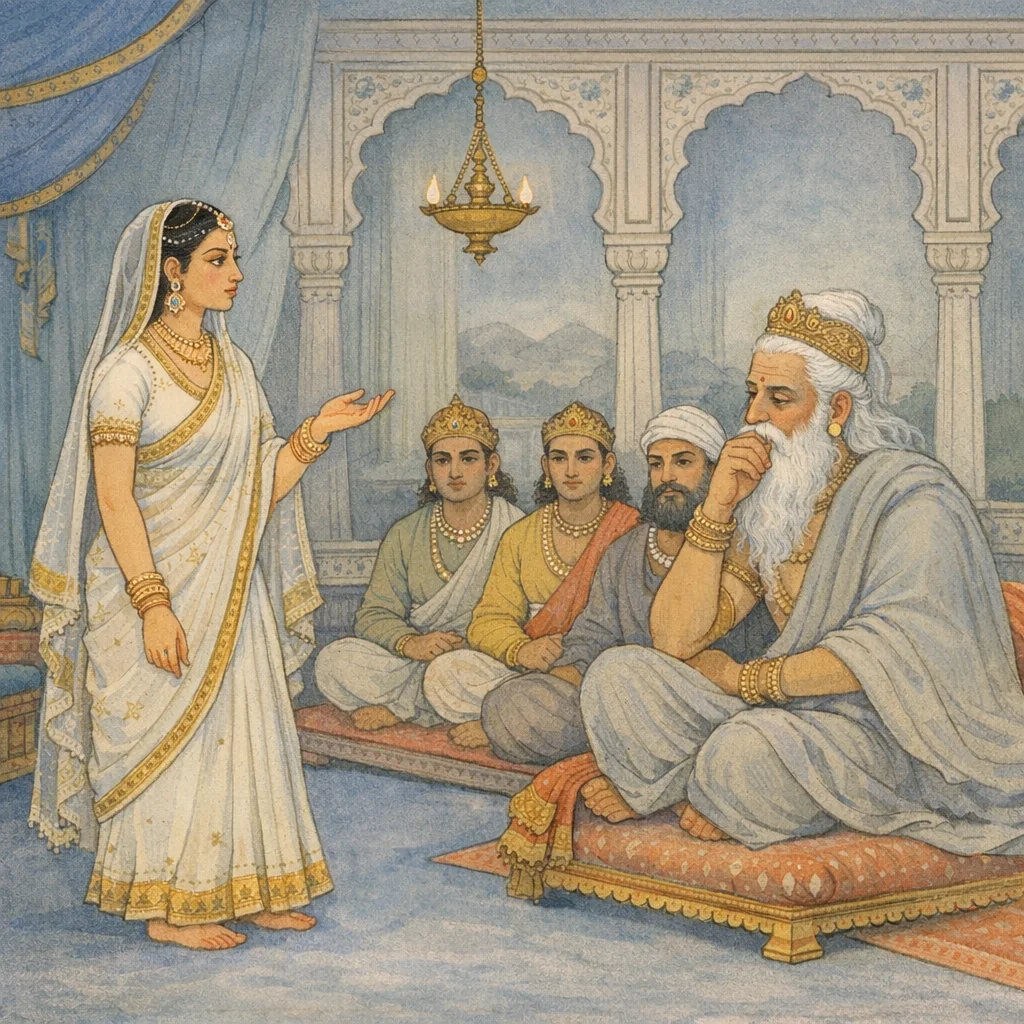
Yudhiṣṭhira addresses and takes leave of leading Kuru authorities and sabhā members—Bhīṣma, Somadatta, Bāhlika, Droṇa, Kṛpa, Aśvatthāman, Vidura, Dhṛtarāṣṭra, the Dhārtarāṣṭras, Sañjaya, Yuyutsu, and others—stating his intention to depart and return to see them again. Vaiśaṃpāyana notes the assembly’s silence, attributed to modesty and moral discomfort, while their inward thought wishes him well. Vidura then offers practical and ethical counsel: Pṛthā (Kuntī), described as noble, delicate, and accustomed to comfort, should not go to the forest; she will be honored and protected in Vidura’s home. Vidura further reframes defeat without adharma as non-ruinous, enumerates the Pāṇḍavas’ complementary competencies (Yudhiṣṭhira’s dharma-knowledge, Arjuna’s martial expertise, Bhīma’s force, Nakula’s resource stewardship, Sahadeva’s restraint and management), and praises Draupadī and Dhaumya as ethically skilled supports. He strengthens Yudhiṣṭhira’s resolve by recalling prior instruction by revered sages and by articulating a schematic of virtues aligned with cosmic domains (self-giving, gentleness, restraint, forbearance, and strength). The chapter closes with auspicious benedictions and Yudhiṣṭhira’s respectful departure after saluting Bhīṣma and Droṇa.
Chapter Arc: द्यूतसभा के अपमान-तूफ़ान के बीच द्रौपदी का विलाप और प्रश्न सभा के हृदय में कील की तरह धँसता है—“मैं दासी हूँ या स्वामिनी?” → द्रौपदी अपने पूर्व-जीवन की मर्यादा (जिसे सूर्य-वायु भी न देख पाते) और आज की सार्वजनिक घसीट-अपमान की विडम्बना रखती है; वह कुरुसभा के महात्माओं को प्रणाम कर के भी उन्हें उनके कर्तव्य की याद दिलाती है। सभा में मौन, भय, लोभ और राजधर्म का संघर्ष बढ़ता है—कौन बोले, किसके विरुद्ध बोले? → भीष्म का ‘धर्म-संकट’ वचन: वह द्रौपदी के प्रश्न का निर्णायक उत्तर देने में असमर्थता प्रकट करता है—स्त्री की स्थिति, युधिष्ठिर के पहले स्वयं हारने/फिर द्रौपदी को दाँव पर लगाने की वैधता, और जुए की अधर्म-प्रकृति—इन सबके बीच धर्म का निर्णय ‘सूक्ष्म’ होकर फिसल जाता है। → भीष्म का कथन सभा को एक कठोर दर्पण दिखाता है: जब बल/सत्ता धर्म को दबा देती है, तब ‘धर्म-वेला’ में भी धर्म आहत हो जाता है। यह उत्तर समाधान कम, चेतावनी अधिक बनता है—सभा की नैतिक पराजय स्पष्ट होती है। → भीष्म के असमर्थ-परंतु-भयावह संकेत के बाद प्रश्न हवा में लटकता है: क्या कोई वरिष्ठ (द्रोण, कृप, विदुर) निर्णायक रूप से अधर्म रोकेंगे, या अपमान की धारा और उग्र होगी?
Shlokas
Verse 1
(दाक्षिणात्य अधिक पाठके ४ ३ श्लोक मिलाकर कुल ९४३ “लोक हैं) न२्च्स्स्त््साि्स्सि ह्य ४: एकोनसप्ततितमो<ध्याय: द्रौोपदीका चेतावनीयुक्त विलाप एवं भीष्मका वचन द्रौपहुवाच पुरस्तात् करणीयं मे न कृतं कार्यमुत्तरम् । विह्वलास्मि कृतानेन कर्षता बलिना बलातू,द्रौपदी बोली--हाय! मेरा जो कार्य सबसे पहले करनेका था, वह अभीतक नहीं हुआ। मुझे अब वह कार्य कर लेना चाहिये। इस बलवान दुरात्मा दुःशासनने मुझे बलपूर्वक घसीटकर व्याकुल कर दिया है
Draupadī said: “Alas, what I ought to have done first has not yet been done; now I must do what remains to be done. I am distraught, for this powerful man has dragged me here by sheer force.”
Verse 2
अभिवादं करोम्येषां कुरूणां कुरुसंसदि । न मे स्थादपराधो<यं यदिदं न कृतं मया,कौरवोंकी सभामें मैं समस्त कुरुवंशी महात्माओंको प्रणाम करती हूँ। मैंने घबराहटके कारण पहले प्रणाम नहीं किया; अतः यह मेरा अपराध न माना जाय
I now offer my respectful salutations to these Kurus in the assembly of the Kurus. Let this not be counted as an offence on my part, that I did not do so earlier.
Verse 3
वैशम्पायन उवाच सा तेन च समाधूता दुःखेन च तपस्विनी । पतिता विललापेदं सभायामतथोचिता,वैशम्पायनजी कहते हैं--जनमेजय! दुशासनके बार-बार खींचनेसे तपस्विनी द्रौपदी पृथ्वीपर गिर पड़ी और उस सभामें अत्यन्त दु:खित हो विलाप करने लगी। वह जिस दुरवस्थामें पड़ी थी, उसके योग्य कदापि न थी
Vaiśampāyana said: Repeatedly dragged by him, the ascetic-minded Draupadī—overwhelmed by grief—fell to the ground. In that royal assembly, though such a condition was utterly unbefitting of her, she began to lament in anguish.
Verse 4
द्रौपहयुवाच स्वयंवरे यास्मि नृपैर्दृष्टा रड़े समागतै: । न दृष्टपूर्वा चान्यत्र साहमद्य सभां गता,द्रौपदीने कहा--हा! मैं स्वयंवरके समय सभामें आयी थी और उस समय रंगभूमिमें पधारे हुए राजाओंने मुझे देखा था। उसके सिवा, अन्य अवसरोंपर कहीं भी आजसे पहले किसीने मुझे नहीं देखा। वही मैं आज सभामें बलपूर्वक लायी गयी हूँ
Draupadī said: “At my svayaṃvara I was seen by kings who had assembled in the arena. Apart from that occasion, I had never been seen anywhere else before. Yet today I have been brought into the royal court.”
Verse 5
यां न वायुर्न चादित्यो दृष्टवन्तौ पुरा गृहे । साहमद्य सभामध्ये दृश्यास्मि जनसंसदि
Vaiśampāyana said: “She whom neither the Wind nor the Sun had ever seen before within the house—she, I say, is today being made to appear in the very midst of the royal assembly, before a gathering of men.”
Verse 6
पहले राजभवनमें रहते हुए जिसे वायु तथा सूर्य भी नहीं देख पाते थे, वही मैं आज इस सभाके भीतर महान् जनसमुदायमें आकर सबके नेत्रोंकी लक्ष्य बन गयी हूँ ।। यां न मृष्यन्ति वातेन स्पृश्यमानां गृहे पुरा । स्पृश्यमानां सहन्तेड्द्य पाण्डवास्तां दुरात्मना,पहले अपने महलमें रहते समय जिसका वायुद्वारा स्पर्श भी पाण्डवोंको सहन नहीं होता था, उसी मुझ द्रौपदीका यह दुरात्मा दुःशासन भरी सभामें स्पर्श कर रहा है, तो भी आज ये पाण्डुकुमार सह रहे हैं
She who, while dwelling formerly within the royal palace, the Pāṇḍavas could not bear to have even the wind touch—today, in this very assembly, that same woman is being handled by a wicked man, and yet the sons of Pāṇḍu endure it. The scene exposes a collapse of royal duty and protection: a public violation is occurring before elders and kings, while those bound to defend her are constrained into silence.
Verse 7
मृष्यन्ति कुरवश्लेमे मनन््ये कालस्य पर्ययम् । स््नुषां दुहितरं चैव क्लिश्यमानामनर्हतीम्,मैं कुरुकुलकी पुत्रवधू एवं पुत्रीतुल्य हूँ। सताये जानेके योग्य नहीं हूँ, फिर भी मुझे यह दारुण क्लेश दिया जा रहा है और ये समस्त कुरुवंशी इसे सहन करते हैं। मैं समझती हूँ, बड़ा विपरीत समय आ गया है
Vaiśampāyana said: “The Kurus endure it in silence; I think this is a cruel turning of Time. For here a daughter-in-law—indeed like a daughter—who does not deserve it is being tormented, and yet the whole Kuru line bears it.”
Verse 8
कि नवतः कृपणं भूयो यदहं स्त्री सती शुभा । सभामध्यं विगाहेउद्य क्व नु धर्मो महीक्षिताम्,इससे बढ़कर दयनीय दशा और क्या हो सकती है कि मुझ-जैसी शुभकर्मपरायणा सती-साध्वी स्त्री भरी सभामें विवश करके लायी गयी है। आज राजाओंका धर्म कहाँ चला गया?
“What misery could be more pitiable than this—that I, a virtuous and auspicious woman, a faithful wife, am being forced into the midst of the royal assembly? Where, indeed, has the dharma of kings gone today?”
Verse 9
धर्म्या स्त्रियं सभां पूर्वे न नयन्तीति न: श्रुतम् । स नष्ट: कौरवेयेषु पूर्वो धर्म: सनातन:,मैंने सुना है, पहले लोग धर्मपरायणा स्त्रीको कभी सभामें नहीं लाते थे, किंतु इन कौरवोंके समाजमें वह प्राचीन सनातनधर्म नष्ट हो गया है
Vaiśampāyana said: “We have heard that in earlier times people did not bring a righteous woman into the royal assembly. Yet among the Kauravas that ancient, eternal standard of dharma has been destroyed.”
Verse 10
कथं हि भार्या पाण्डूनां पार्षतस्य स्वसा सती । वासुदेवस्य च सखी पार्थिवानां सभामियाम्,अन्यथा मैं पाण्डवोंकी पत्नी, धृष्टद्युम्नकी सुशीला बहन और भगवान् श्रीकृष्णकी सखी होकर राजाओंकी इस सभामें कैसे लायी जा सकती थी?
Vaiśampāyana said: “How indeed could the wife of the Pāṇḍavas—virtuous, the sister of the son of Pṛṣata (Dhṛṣṭadyumna), and also a close friend of Vāsudeva—be brought here into this assembly of kings in such a manner?”
Verse 11
तामिमां धर्मराजस्य भारया सदृशवर्णजाम् | ब्रूत दासीमदासीं वा तत् करिष्यामि कौरवा:,कौरवो! मैं धर्मराज युधिष्ठिरकी धर्मपत्नी तथा उनके समान वर्णकी कन्या हूँ। आपलोग बतावें, मैं दासी हूँ या अदासी? आप जैसा कहेंगे मैं वैसा ही करूँगी
Vaiśampāyana said: “I am this woman—Dharmarāja’s lawful wife, born of the same social order as he. Tell me plainly, O Kauravas: am I to be treated as a slave-woman or as one who is not a slave? Whatever you declare, that I shall do.”
Verse 12
अयं मां सुद॒ढं क्षुद्र: कौरवाणां यशोहर: । क्लिश्राति नाहं तत् सोढुं चिरं शक्ष्यामि कौरवा:,कुरुवंशी क्षत्रियो! यह कुरुकुलकी कीर्तिमें कलंक लगानेवाला नीच दुःशासन मुझे बहुत कष्ट दे रहा है। मैं इस क्लेशको देरतक नहीं सह सकूँगी
Vaiśampāyana said: “This vile man, who brings disgrace upon the Kauravas’ fame, is tormenting me relentlessly. O Kauravas, I will not be able to endure this suffering for long.”
Verse 13
जितां वाप्यजितां वापि मन्यध्वं मां यथा नृपा: । तथा प्रत्युक्तमिच्छामि तत् करिष्यामि कौरवा:,कुरुवंशियो! आप क्या मानते हैं? मैं जीती गयी हूँ या नहीं। मैं आपके मुँहसे इसका ठीक-ठीक उत्तर सुनना चाहती हूँ। फिर उसीके अनुसार कार्य करूँगी
Vaiśampāyana said: “O kings of the Kuru line, tell me plainly what you judge—whether I have been won or not won. I wish to hear your definite reply from your own mouths; then, in accordance with that answer, I shall act.”
Verse 14
भीष्म उवाच उक्तवानस्मि कल्याणि धर्मस्य परमा गति: । लोके न शक््यते ज्ञातुमपि विज्ञैर्महात्मभि:,भीष्मजीने कहा--कल्याणि! मैं पहले ही कह चुका हूँ कि धर्मकी गति बड़ी सूक्ष्म है। लोकमें विज्ञ महात्मा भी उसे ठीक-ठीक नहीं जान सकते
Bhishma said: “O noble lady, I have already told you that the course of dharma is exceedingly subtle. In this world it cannot be fully known—indeed, even by wise and great-souled persons.”
Verse 16
संसारमें बलवान् मनुष्य जिसको धर्म समझता है, धर्मविचारके समय लोग उसीको धर्म मान लेते हैं और बलहीन पुरुष जो धर्म बतलाता है, वह बलवान पुरुषके बताये धर्मसे दब जाता है (अत: इस समय कर्ण और दुर्योधनका बताया हुआ धर्म ही सर्वोपरि हो रहा है।) ।। नविवेक्तुं च ते प्रश्रमिमं शकनोमि निश्चयात् । सूक्ष्मत्वाद् गहनत्वाच्च कार्यस्यास्य च गौरवात्
Bhīṣma said: “I cannot, with certainty, decide this question for you. The matter is subtle, deeply entangled, and weighty in its consequences.”
Verse 17
मैं तो धर्मका स्वरूप सूक्ष्म और गहन होनेके कारण तथा इस धर्मनिर्णयके कार्यके अत्यन्त गुरुतर होनेसे तुम्हारे इस प्रश्नका निश्चितरूपसे यथार्थ विवेचन नहीं कर सकता ।। नूनमन्त: कुलस्यायं भविता नचिरादिव । तथा हि कुरव: सर्वे लोभमोहपरायणा:,अवश्य ही बहुत शीघ्र इस कुलका नाश होनेवाला है; क्योंकि समस्त कौरव लोभ और मोहके वशीभूत हो गये हैं
Bhishma said: “Because the true nature of dharma is subtle and profound, and because deciding this matter of dharma is an exceedingly weighty task, I cannot give a definitive and fully accurate analysis of your question. Yet it seems certain that the end of this lineage will come very soon—for all the Kurus have become driven by greed and delusion.”
Verse 18
कुलेषु जाता: कल्याणि व्यसनैराहता भृशम् | धर्म्यान्मार्गान्नि च्यवन्ते येषां नस्त्वं वधू: स्थिता,कल्याणि! तुम जिनकी पत्नी हो, वे पाण्डव हमारे उत्तम कुलमें उत्पन्न हैं और भारी- से-भारी संकटमें पड़कर भी धर्मके मार्गसे विचलित नहीं होते हैं
Bhīṣma said: “O noble lady, those in whose house you stand as daughter-in-law—the Pāṇḍavas—are born in an excellent lineage. Even when struck hard by calamities, they do not swerve from the righteous path.”
Verse 19
उपपन्नं च पाज्चालि तवेदं वृत्तमीदृशम् । यत् कृच्छूमपि सम्प्राप्ता धर्ममेवान्ववेक्षसे,पांचालराजकुमारी! तुम्हारा यह आचार-व्यवहार तुम्हारे योग्य ही है; क्योंकि भारी संकटमें पड़कर भी तुम धर्मकी ओर ही देख रही हो
Bhīṣma said: “O Pāñcālī, this conduct of yours is wholly fitting for you. For even when you have fallen into severe distress, you still keep your gaze fixed upon dharma.”
Verse 20
एते द्रोणादयश्नैव वृद्धा धर्मविदो जना: । शून्यै: शरीरैस्तिष्ठन्ति गतासव इवानता:,ये द्रोणाचार्य आदि वृद्ध एवं धर्मज्ञ पुरुष भी सिर लटकाये शून्य शरीरसे इस प्रकार बैठे हैं; मानो निष्प्राण हो गये हों। मेरी राय यह है कि इस प्रश्नका निर्णय करनेके लिये धर्मराज युधिष्ठिर ही सबसे प्रामाणिक व्यक्ति हैं। तुम जीती गयी हो या नहीं? यह बात स्वयं इन्हें बतलानी चाहिये
Bhīṣma said: “These elders—Droṇa and the others—men who know dharma, sit here with their bodies as if emptied, their heads bowed down, like people whose life-breath has departed. In my judgment, for deciding this question the most authoritative person is Dharmarāja Yudhiṣṭhira himself: whether you have been won or not—he alone should declare it.”
Verse 21
युधिष्ठिरस्तु प्रश्नेडस्मिन् प्रमाणमिति मे मतिः । अजितां वा जितां वेति स्वयं व्याहर्तुमहति,ये द्रोणाचार्य आदि वृद्ध एवं धर्मज्ञ पुरुष भी सिर लटकाये शून्य शरीरसे इस प्रकार बैठे हैं; मानो निष्प्राण हो गये हों। मेरी राय यह है कि इस प्रश्नका निर्णय करनेके लिये धर्मराज युधिष्ठिर ही सबसे प्रामाणिक व्यक्ति हैं। तुम जीती गयी हो या नहीं? यह बात स्वयं इन्हें बतलानी चाहिये
Bhīṣma said: “In this matter of dispute, my judgment is that Yudhiṣṭhira is the decisive authority. Whether she has not been won or has been won—he himself is the one fit to declare it.”
Verse 68
इस प्रकार श्रीमह्याभारत सभापरववके अन्तर्गत झ्टूतपर्वमें द्रौपदीको भरी सभागें खींचना' इस विषयसे सम्बन्ध रखनेवाला अड़सठवाँ अध्याय पूरा हुआ
Thus, in the Śrī Mahābhārata, within the Sabhā Parva—specifically in the Dyūta (Gambling) section—the sixty-eighth chapter, dealing with the subject of Draupadī being dragged into the full royal assembly, comes to an end. The closing note underscores the ethical rupture at court: public humiliation and coercion are presented as a grave violation of dharma, foreshadowing the moral and political collapse that drives the epic toward war.
Verse 69
इति श्रीमहाभारते सभापर्वणि द्यूतपर्वणि भीष्मवाक्ये एकोनसप्ततितमो<थध्याय: ।। ६९ || इस प्रकार श्रीमह्ाभारत सभापरववके अन्तर्गत झ्टूतपर्वमें भीष्मवाक्यविषयक उनहत्तरवाँ अध्याय पूरा हुआ
Thus, in the Śrī Mahābhārata, within the Sabhā Parva—specifically the Dyūta Parva—ends the sixty-ninth chapter, consisting of Bhīṣma’s discourse. This closing colophon marks the completion of the chapter and frames the preceding speech as authoritative counsel within the moral crisis of the dice-game narrative.
Verse 215
बलवांश्व यथा धर्म लोके पश्यति पूरुष: । स धर्मों धर्मवेलायां भवत्यभिहत: पर:
Bhīṣma said: “Just as a powerful man views ‘dharma’ in this world, so that very dharma, when the decisive moment for righteousness arrives, is struck down and overpowered by others.”
Frequently Asked Questions
The tension lies in responding to an adverse court outcome with procedural dignity and moral steadiness—preserving duty, relationships, and dependents’ welfare without escalating disorder within the sabhā framework.
Vidura teaches that a loss incurred without adharma need not destabilize the virtuous; one should protect the vulnerable (notably Kuntī), maintain composure, and rely on disciplined, complementary capacities within the group.
No formal phalaśruti is stated; the closest meta-layer is the benedictory framing (svasti/agada) and the narrator’s note on the assembly’s inward well-wishing, which positions the counsel as ethically authoritative within the epic’s didactic texture.