Adhyaya 23
अर्जुनस्य दिग्विजयारम्भः — Arjuna Initiates the Northern Campaign and Secures Bhagadattta’s Tribute
Upa-parva: Digvijaya Parva (Directional Conquests and Tribute Collection)
This chapter opens with Vaiśaṃpāyana describing Arjuna (Pārtha) reporting to Yudhiṣṭhira after receiving superior weaponry (notably the best bow and inexhaustible quivers), along with a chariot, banner, and the assembly infrastructure. Arjuna frames the immediate state objective as kośa-vivardhana—expanding the treasury—through systematic collection of kara (tribute/tax) from rulers. He proposes departing for the northern direction associated with Kubera (Dhanada), explicitly noting auspicious calendrical conditions (tithi, muhūrta, nakṣatra). Yudhiṣṭhira responds with a formal benediction, wishing success that both discourages adversaries and gladdens allies. The narrative then broadens: Bhīma and the twins also depart with forces, each assigned a cardinal direction, while Yudhiṣṭhira remains at Khāṇḍavaprastha. Janamejaya requests a detailed account of these directional conquests; Vaiśaṃpāyana begins with Arjuna’s campaign: subduing regions such as Kuṇinda and others with measured exertion, assembling allied contingents, and advancing to Prāgjyotiṣa. There, King Bhagadatta—supported by Kirātas, Cīnas, and coastal/marshland fighters—engages Arjuna for eight days. After sustained combat, Bhagadatta acknowledges Arjuna’s prowess and seeks terms. Arjuna requests that Bhagadatta provide tribute to Yudhiṣṭhira, appealing to prior friendship lines and voluntary compliance. Bhagadatta agrees, affirming goodwill and readiness to fulfill the request.
Chapter Arc: राजसूय-यज्ञ की दिशा में बढ़ते पाण्डवों के सामने मगध-सम्राट जरासंध की अजेयता एक दीवार बनकर खड़ी होती है—और श्रीकृष्ण स्वयं पूछते हैं: हम तीनों में से किसके साथ युद्ध करने का साहस वह करेगा? → श्रीकृष्ण के प्रश्न पर जरासंध का अहंकार और क्षत्रिय-धर्म जाग उठता है; वह भीमसेन को चुनता है। दोनों महाबली निकट-युद्ध में उतरते हैं—घूरती दृष्टियाँ, सिंहों-सा क्रोध, पकड़-पकड़कर घसीटना, कमर-बगल-गर्दन पर दाँव, और पत्थर-प्रहार जैसे घूंसे; गर्जना-तर्जना के साथ दिन-पर-दिन युद्ध खिंचता जाता है। → त्रयोदशी तक युद्ध चलता है; चतुर्दशी की रात मगधराज थककर विराम लेता है। निर्णायक क्षण तब आता है जब श्रीकृष्ण भीम को संकेत देते हैं कि इस प्रतिद्वन्द्वी को ‘अधिक पीड़ा’ देकर नहीं, उसकी प्रकृति/रहस्य को समझकर समता से भिड़ना चाहिए—यहीं वध-नीति का द्वार खुलता है। → कृष्ण-वचन सुनकर परवीरहा भीम जरासंध के स्वरूप/रहस्य को पहचानकर वध का निश्चय करता है; अपराजित-से दिखने वाले शत्रु को जीतने हेतु वह अपनी शक्ति और रणनीति को एकाग्र करता है। → भीम ने वध-मत बना ली—पर जरासंध का ‘अजेय’ रहस्य क्या है, और किस उपाय से उसका अंत होगा?
Shlokas
Verse 1
(दाक्षिणात्य अधिक पाठके ३९ श्लोक मिलाकर कुल ७५ श्लोक हैं) प्याज (_) अऑपि्-छऋाज त्रयोविशो<् ध्याय: जरासंधका भीमसेनके साथ युद्ध करनेका निश्चय, भीम और जरासंधका भयानक युद्ध तथा जरासंधकी थकावट वैशम्पायन उवाच ततस्तं निश्चितात्मानं युद्धाय यदुनन्दन: । उवाच वाग्मी राजानं जरासंधमधोक्षज:,वैशम्पायनजी कहते हैं--जनमेजय! राजा जरासंधने अपने मनमें युद्धका निश्चय कर लिया है, यह देख बोलनेमें कुशल यदुनन्दन भगवान् श्रीकृष्णने उससे कहा
Vaiśampāyana said: Then, seeing King Jarāsandha resolute in his mind and determined to fight, the eloquent Yadunandana—Śrī Kṛṣṇa, the transcendent Lord—addressed him. The scene frames a moral tension: once a ruler fixes his will on war, wise counsel must meet that resolve with measured speech, not mere provocation.
Verse 2
श्रीकृष्ण उवाच त्रयाणां केन ते राजन् योद्धुमुत्सहते मन: । अस्मदन्यतमेनेह सज्जीभवतु को युधि,श्रीकृष्णने पूछा--राजन्! हम तीनोंमेंसे किस एक व्यक्तिके साथ युद्ध करनेके लिये तुम्हारे मनमें उत्साह हो रहा है? हममेंसे कौन तुम्हारे साथ युद्धके लिये तैयार हो?
Śrī Kṛṣṇa said: “O King, with which one of us three does your mind feel eager to fight? Let whichever of us you choose here make ready for battle against you.”
Verse 3
एवमुक्त: स नृपतिर्युद्ध वव्रे महाद्युति: । जरासंधस्ततो राजा भीमसेनेन मागध:,उनके इस प्रकार पूछनेपर महातेजस्वी मगधनरेश राजा जरासंधने भीमसेनके साथ युद्ध करना स्वीकार किया
Thus addressed, the illustrious king accepted the challenge of battle. Thereupon Jarāsandha, the Magadhan ruler, agreed to fight with Bhīmasena—signaling a decisive turn from words to a trial of strength governed by the warrior code.
Verse 4
आदाय रोचनां माल्यं मड़ल्यान्यपराणि च । धारयन्नगदान् मुख्यान् निर्वतीर्वेदनानि च । उपतस्थे जरासंध॑ युयुत्सुं वै पुरोहित:,जरासंधको युद्ध करनेके लिये उत्सुक देख उसके पुरोहित गोरोचन, माला, अन्यान्य मांगलिक वस्तुएँ तथा उत्तम-उत्तम ओषधियाँ, जो पीड़ाके समय भी सुख देनेवाली और मूर्च्छॉाकालमें भी होश बनाये रखनेवाली थीं, लेकर उसके पास आये
Seeing Jarāsandha eager to engage in battle, his family priest approached him carrying gorocanā, a garland, and other auspicious items, along with choice medicinal preparations—remedies meant to soothe pain and to keep one’s senses steady even in moments of fainting—so that the king might be strengthened and ritually readied for the coming fight.
Verse 5
कृतस्वस्त्ययनो राजा ब्राह्मणेन यशस्विना । समनहाज्जरासंध: क्षात्रं धर्ममनुस्मरन्,यशस्वी ब्राह्मणके द्वारा स्वस्तिवाचन सम्पन्न हो जानेपर जरासंध क्षत्रियधर्मका स्मरण करके युद्धके लिये कमर कसकर तैयार हो गया
After the auspicious benedictions had been duly performed by a renowned brāhmaṇa, King Jarāsandha—remembering the warrior’s code of kṣatriya-dharma—girded himself and made ready for battle. The verse frames his preparation not as mere aggression, but as an act he justifies through ritual sanction and the ethical ideal of royal duty.
Verse 6
अवमुच्य किरीटं स केशान् समनुगृहा[ च । उदतिष्ठज्जरासंधो वेलातिग इवार्णव:,जरासंधने किरीट उतारकर केशोंको कसकर बाँध लिया। तत्पश्चात् वह युद्धके लिये उठकर खड़ा हो गया; मानो महासागर अपनी मर्यादा--तटवर्तिनी भूमिको लाँघ जानेको उद्यत हो गया हो
Casting off his crown and tightening his hair, Jarāsandha rose to fight—like the ocean swelling to overstep its shoreline limits.
Verse 7
उवाच मतिमान् राजा भीम॑ भीमपराक्रम: । भीम योत्स्ये त्वया सार्ध श्रेयसा निर्जितं वरम्,उस समय भयानक पराक्रम करनेवाले बुद्धिमान् राजा जरासंधने भीमसेनसे कहा --'भीम! आओ, मैं तुमसे युद्ध करूँगा; क्योंकि श्रेष्ठ पुरुषसे लड़कर हारना भी अच्छा है!
Then the wise king Jarāsandha, famed for his fearsome prowess, addressed Bhīmasena: “Bhīma, come—let me fight with you. For to be defeated by a noble and superior man is itself a better fate.”
Verse 8
एवमुक्त्वा जरासंधो भीमसेनमरिंदम: । प्रत्युध्ययौ महातेजा: शक्रं बल इवासुर:,ऐसा कहकर महातेजस्वी शत्रुदमन जरासंध भीमसेनकी ओर बढ़ा; मानो बल नामक असुर इन्द्रसे भिड़नेके लिये बढ़ा जा रहा हो
Having spoken thus, Jarāsandha—mighty in splendor and a subduer of foes—advanced toward Bhīmasena to engage him, like the asura Bali moving forward to confront Śakra (Indra).
Verse 9
ततः सम्मन्त्रय कृष्णेन कृतस्वस्त्ययनो बली । भीमसेनो जरासंधमाससाद युयुत्सया,तदनन्तर बलवान भीमसेन भी श्रीकृष्णसे सलाह लेकर स्वस्तिवाचनके अनन्तर युद्धकी इच्छासे जरासंधके पास आ धमके
Then, after taking counsel with Kṛṣṇa and having the auspicious rites and benedictions performed, the mighty Bhīmasena approached Jarāsandha with the resolve to fight.
Verse 10
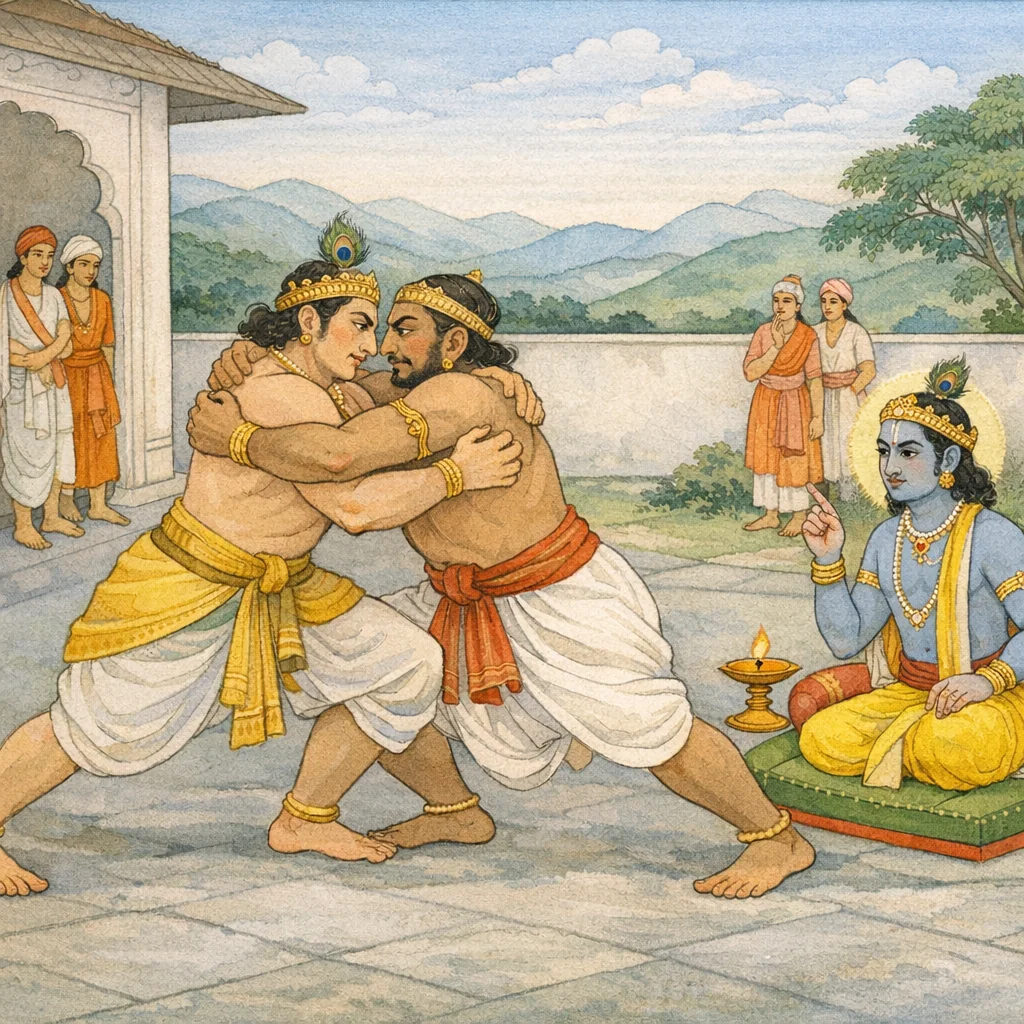
ततस्तौ नरशार्दूलौ बाहुशस्त्रौ समीयतु: । वीरौ परमसंहृष्टावन्योन्यजयकड्क्षिणौ,फिर तो मनुष्योंमें सिंहके समान पराक्रमी वे दोनों वीर अत्यन्त हर्ष और उत्साहमें भरकर एक-दूसरेको जीतनेकी इच्छासे अपनी भुजाओंसे ही आयुधका काम लेते हुए परस्पर भिड़ गये
Then those two heroes, lion-like among men, closed in upon each other, using their own arms as weapons. Exultant and fiercely eager for victory over one another, they grappled in combat.
Verse 11
करग्रहणपूर्व तु कृत्वा पादाभिवन्दनम् | कक्षै: कक्षां विधुन्वानावास्फोर्ट तत्र चक्रतु:ः,पहले उन दोनोंने हाथ मिलाये। फिर एक-दूसरेके चरणोंका अभिवन्दन किया। तत्पश्चात् भुजाओंके मूलभागके संचालनसे वहाँ बँधे हुए बाजूबंदकी डोरको हिलाते हुए वे दोनों वीर वहीं ताल ठोंकने लगे
After first clasping hands, they paid obeisance at one another’s feet. Then, shaking their upper arms so that the cords of their armlets quivered, the two heroes began to slap their arms and stamp in challenge on the spot—an outward display of martial resolve, framed by the etiquette of mutual respect before contest.
Verse 12
स्कन्धे दोर्भ्या समाहत्य निहत्य च मुहुर्मुहु: । अड्मज्जैः समाश्लिष्य पुनरास्फालनं विभो,राजन! फिर वे दोनों हाथोंसे एक-दूसरेके कंधे-पर बार-बार चोट करते हुए अंग-अंगसे भिड़कर आपसमें गुँथ गये तथा एक-दूसरेको बार-बार रगड़ने लगे
O King, O mighty one, they struck each other again and again upon the shoulders with their arms; then, closing in and locking limb to limb, they grappled tightly and repeatedly ground and shook one another in the press of the contest.
Verse 13
चित्रहस्तादिकं कृत्वा कक्षाबन्धं च चक्रतुः । गलगण्डाभिघातेन सस्फुलिड्रेन चाशनिम्,वे कभी हाथोंको बड़े वेगसे सिकोड़ लेते, कभी फैला देते, कभी ऊपर-नीचे चलाते और कभी मुट्ठी बाँध लेते। इस प्रकार चित्रहस्त आदि दाँव दिखाकर उन दोनोंने कक्षाबन्धका प्रयोग किया अर्थात् एक-दूसरेकी काख या कमरमें दोनों हाथ डालकर प्रतिद्वद्दीको बाँध लेनेकी चेष्टा की। फिर गलेमें और गालमें ऐसे-ऐसे हाथ मारने लगे कि आगकी चिनगारी-सी निकलने लगी और वज्रपातका-सा शब्द होने लगा
Displaying a variety of wrestling feints such as the ‘citra-hasta’ (deceptive hand-movements), the two grappled and attempted the kakṣābandha hold—thrusting both arms into the opponent’s armpit/waist to bind and control him. Then they struck at neck and cheek with such force that sparks seemed to fly, and the blows resounded like a thunderbolt.
Verse 14
बाहुपाशादिकं कृत्वा पादाहतशिरावुभौ । उरोहस्तं ततश्नक्रे पूर्णकुम्भौ प्रयुज्य तो,तत्पश्चात् वे 'बाहुपाश!श और “चरणपाश' आदि दाँव-पेंचोंसे काम लेते हुए एक-दूसरेपर पैरोंसे ऐसा भीषण प्रहार करने लगे कि शरीरकी नस-नाड़ियाँतक पीड़ित हो उठीं। तदनन्तर दोनोंने दोनोंपर 'पूर्णकुम्भ” नामक दाँव लगाया (दोनों हाथोंकी अंगुलियोंको परस्पर गूँथकर उन हाथोंकी हथेलियोंसे शत्रुके सिरको दबाया)। इसके बाद “उरोहस्त” का प्रयोग किया (छातीपर थप्पड़ मारना शुरू कर दिया)
Having first employed holds such as the “arm-noose,” the two then struck one another with their feet so fiercely that even the head was battered. Thereafter, both applied the maneuver called “pūrṇakumbha,” interlacing the fingers and pressing down upon the opponent’s head with the joined palms; and then they used “urohasta,” beginning to slap and strike upon the chest.
Verse 15
करसम्पीडनं कृत्वा गर्जन्ती वारणाविव । नर्दन्तौ मेघसंकाशौ बाहुप्रहरणावुभौ,फिर एक-दूसरेके हाथ दबाकर वे दोनों दो गजराजोंकी भाँति गर्जने लगे। दोनों ही भुजाओंसे प्रहार करते हुए मेघके समान गम्भीर स्वरसे सिंहनाद करने लगे
After gripping and pressing each other’s hands, the two began to roar like a pair of lordly elephants. Both, striking with their arms, bellowed with a deep, cloud-like resonance—each displaying fearless strength and unyielding resolve in the contest.
Verse 16
तलेनाहन्यमानौ तु अन्योन्यं कृतवीक्षणौ । सिंहाविव सुसंक्रुद्धावाकृष्याकृष्य युध्यताम्,थप्पड़ोंकी मार खाकर वे परस्पर घूर-घूरकर देखते और अत्यन्त क्रोधमें भरे हुए दो सिंहोंके समान एक-दूसरेको खींच-खींचकर लड़ने लगे
Though struck with the palms, they fixed their gaze on one another; and, like two lions inflamed with fierce anger, they grappled—dragging each other back and forth—and fought on.
Verse 17
अज्ञेनाज़ं समापीड्य बाहुभ्यामुभयोरपि । आवृत्य बाहुभिश्चापि उदरं च प्रचक्रतु:,उस समय दोनों अपने अंगों और भुजाओंसे प्रतिद्वन्द्ीके शरीरको दबाकर शत्रुकी पीठमें अपने गलेकी हँसली भिड़ाकर उसके पेटको दोनों बाँहोंसे कस लेते और उठाकर दूर फेंकते थे
In the heat of unskilled grappling, each pressed the other hard with both arms; then, locking him in an embrace, he constricted the opponent’s belly with his arms—wrenching and twisting him in the struggle.
Verse 18
उभौ कट्यां सुपाश्चे तु तक्षवन्तौ च शिक्षितौ । अधोहस्तं स्वकण्ठे तूदरस्योरसि चाक्षिपत्,इसी प्रकार कमरमें और बगलमें भी हाथ लगाकर दोनों प्रतिद्वन्द्ीको पछाड़नेकी चेष्टा करते थे। अपने शरीरको सिकोड़कर शत्रुकी पकड़से छूट जानेकी कला दोनों जानते थे। दोनों ही मल्लयुद्धकी शिक्षामें प्रवीण थे। वे उदरके नीचे हाथ लगाकर दोनों हाथोंसे पेटको लपेट लेते और विपक्षीको कण्ठ एवं छातीतक ऊँचे उठाकर धरतीपर दे मारते थे
Śrī Kṛṣṇa said: Both combatants were well-trained and skilled in wrestling holds—gripping at the waist and the flanks, slipping free by contracting the body, and applying forceful clinches. They would drive their hands beneath the opponent’s belly, lock the midsection with both arms, and then hoist the adversary up toward the throat and chest before hurling him down to the ground.
Verse 19
सर्वातिक्रान्तमर्याद पृष्ठभज़ च चक्रतुः । सम्पूर्णमूर्च्छा बाहुभ्यां पूर्णकुम्भं प्रचक्रतु:,फिर वे सारी मर्यादाओंसे ऊँचे उठे हुए 'पृष्ठभंग” नामक दाँव-पेंचसे काम लेने लगे (अर्थात् एक-दूसरेकी पीठको धरतीसे लगा देनेकी चेष्टामें लग गये)। दोनों भुजाओंसे सम्पूर्ण मूर्च्छा (उदर आदिमें आघात करके मूच्छित करनेका प्रयत्न) तथा पूर्वोक्त पूर्णकुम्भका प्रयोग करने लगे
They then overstepped all customary limits and resorted to the wrestling maneuver called “back-breaking,” striving to force each other’s back to the ground. With both arms they also attempted the technique of complete stunning—striking the vital regions to induce faintness—and employed the hold known as “the full pitcher,” intensifying the contest beyond ordinary restraint.
Verse 20
तृणपीडं यथाकामं पूर्णयोगं समुष्टिकम् । एवमादीनि युद्धानि प्रकुर्वन्ती परस्परम्,तदनन्तर वे अपनी इच्छाके अनुसार “तृणपीड” (रस्सी बनानेके लिये बटे जानेवाले तिनकोंकी भाँति हाथ-पैर आदिको ऐंठना) तथा मुष्टिकाघातसहित पूर्णयोग (मुक्केकी एक अंगमें मारनेकी चेष्टा दिखाकर दूसरे अंगमें आघात करना) आदि युद्धके दाँव-पेंचोंका प्रयोग एक-दूसरेपर करने लगे
Then, as they pleased, they began to employ against one another the wrestling holds and combat maneuvers such as tṛṇapīḍa—twisting and wrenching the limbs like strands of grass being braided for a rope—and pūrṇayoga with blows of the fist, using feints and sudden strikes. Thus they engaged each other in close combat, testing strength and skill in a contest governed by the harsh logic of the arena rather than by compassion.
Verse 21
तयोरयुद्ध॑ ततो द्रष्ट॑ समेता: पुरवासिन: । ब्राह्मणा वणिजल्चैव क्षत्रियाश्षन सहस्रश:,जनमेजय! उस समय उनका मल्लयुद्ध देखनेके लिये हजारों पुरवासी ब्राह्मण, क्षत्रिय, वैश्य, शूद्र, स्त्रियाँ एवं वृद्ध इकट्ठे हो गये। मनुष्योंकी अपार भीड़से वह स्थान ठसाठस भर गया
Then, to behold the unarmed wrestlers’ combat of those two, the townspeople gathered together. Brahmins, merchants, and Kshatriyas by the thousand—along with Vaishyas, Shudras, women, and the aged—assembled there. With that boundless press of men, the place was packed tight to overflowing.
Verse 22
इस प्रकार श्रीमह्याभारत सभापव॑के अन्तर्गत जरासंधवधपर्वमें जरासंधका युद्धके लिये उद्योगविषयक बाईसवाँ अध्याय पूरा हुआ,शूद्राश्न नरशार्दूल स्त्रियो वृद्धाश्व सर्वशः । निरन्तरम भूत् तत्र जनौघैरभिसंवृतम् जनमेजय! उस समय उनका मल्लयुद्ध देखनेके लिये हजारों पुरवासी ब्राह्मण, क्षत्रिय, वैश्य, शूद्र, स्त्रियाँ एवं वृद्ध इकट्ठे हो गये। मनुष्योंकी अपार भीड़से वह स्थान ठसाठस भर गया
Vaiśampāyana said: “O tiger among men, Janamejaya, people of every sort—Śūdras, women, and the aged as well—gathered there without exception. That place became continuously packed and completely enclosed by surging crowds of people, eager to witness the wrestlers’ combat.”
Verse 23
तयोरथ भुजाघातान्निग्रहप्रग्रहात् तथा । आसीत् सुभीमसम्पातो वज्रपर्वतयोरिव,उन दोनोंकी भुजाओंके आघातसे तथा एक-दूसरेके निग्रह-प्रग्रहसे- ऐसा भयंकर चटचट शब्द होता था, मानो वज्र और पर्वत परस्पर टकरा रहे हों इति श्रीमहाभारते सभापर्वणि जरासंधवधपर्वणि जरासंधक्लान्तौ त्रयोविंशो5 ध्याय: इस प्रकार श्रीमहाभारत सभापववके अन्तर्गत जरायंधवधपर्वमें जरायंधकी थकावटसे सम्बन्ध रखनेवाला तेईसवाँ अध्याय पूरा हुआ
Then, from the crashing blows of their arms and from the seizing and counter-seizing of each other, there arose a truly dreadful, repeated clattering—like a thunderbolt and a mountain colliding.
Verse 24
उभौ परमसंदहृष्टौ बलेन बलिनां वरौ | अन्योन्यस्यान्तरं प्रेप्सू परस्परजयैषिणौ,बलवानोंमें श्रेष्ठ वे दोनों वीर अत्यन्त हर्ष एवं उत्साहमें भरे हुए थे और एक-दूसरेकी दुर्बलता या असावधानीपर दृष्टि रखते हुए परस्पर बलपूर्वक विजय पानेकी इच्छा रखते थे
Both of those foremost among the strong were exceedingly exhilarated by their own might. Each watched for the other’s opening—seeking a lapse or weakness—and each strove to win victory over the other by sheer force.
Verse 25
तद् भीममुत्सार्यजनं युद्धमासीदुपप्लवे । बलिनो: संयुगे राजन् वृत्रवासवयोरिव,राजन्! उस समरभूमिमें जहाँ वृत्रासुर और इन्द्रकी भाँति उन दोनों बलवान वीरोंमें संघर्ष छिड़ा था, ऐसा भयंकर युद्ध हुआ कि दर्शकलोग दूर भाग खड़े हुए
Then, as the onlookers were driven away in fear, a dreadful battle erupted at Upaplava. O King, in the clash of those two mighty warriors it was like the combat of Vṛtra and Vāsava (Indra)—so fierce that spectators fled from the field.
Verse 26
प्रकर्षणाकर्षणा भ्यामनुकर्षविकर्षणै: । आचर्कर्षतुरन्योन्यं जानुभिश्वावजघ्नतु:,वे एक-दूसरेको पीछे ढकेलते और आगे खींचते थे। बार-बार खींचतान और छीना- झपटी करते थे। दोनोंने अपने प्रहारोंसे एक-दूसरेके शरीरमें खरौंच एवं घाव पैदा कर दिये और दोनों दोनोंको पटककर घुटनोंसे मारने तथा रगड़ने लगे
With forceful pushing and pulling—dragging and wrenching each other again and again—they grappled in close combat. Each inflicted abrasions and wounds upon the other with repeated blows; and after throwing one another down, they struck and ground each other with their knees, driven by the heat of rivalry rather than restraint.
Verse 27
ततः शब्देन महता भर्त्सयन्तौ परस्परम् | पाषाणसंघातनिभै: प्रहारैरभिजघ्नतु:,फिर बड़े भारी गर्जन-तर्जनके द्वारा आपसमें डाँट बताते हुए एक-दूसरेपर ऐसे प्रहार करने लगे मानो पत्थरोंकी वर्षा कर रहे हों
Then, raising a great uproar and hurling taunts at one another, the two struck each other with blows that seemed like a shower of stones—an escalation from harsh words to violent assault, showing how unchecked anger quickly turns speech into harm.
Verse 28
व्यूढोरस्कौ दीर्घभुजौ नियुद्धकुशलावुभौ । बाहुभि: समसज्जेतामायसै: परिघैरिव,दोनोंकी छाती चौड़ी और भुजाएँ बड़ी-बड़ी थीं। दोनों ही मल्लयुद्धमें कुशल थे और लोहेकी परिघ-जैसी मोटी भुजाओंको भिड़ाकर आपसमें गुँथ जाते थे
Both had broad, well-built chests and long, powerful arms. Skilled in close combat and wrestling, they locked onto each other, their arms clashing and entwining like iron clubs—an image that underscores the raw force and disciplined training driving the contest.
Verse 29
कार्तिकस्य तु मासस्य प्रवृत्तं प्रथमेडहनि । अनाहार दिवारात्रमविश्रान्तमवर्तत,कार्तिक मासके पहले दिन उन दोनोंका युद्ध प्रारम्भ हुआ और दिन-रात बिना खाये- पिये अविरामगतिसे चलता रहा
On the very first day of the month of Kārtika, their combat began; and it continued unbroken—day and night—without food or drink, without respite. The narration underscores the fierce resolve and relentless exertion that can drive warriors beyond ordinary human limits, while implicitly raising the ethical question of how far endurance and obsession may carry one in the pursuit of victory.
Verse 30
तद् वृत्तं तु त्रयोदश्यां समवेतं महात्मनो: । चतुर्दश्यां निशायां तु निवृत्तो मागध: क्लमातू्,उन महात्माओंका वह युद्ध इसी रूपमें त्रयोदशी-तक होता रहा। चतुर्दशीकी रातमें मगधनरेश जरासंध क्लेशसे थककर युद्धसे निवृत्त-सा होने लगा
Thus the encounter between the two great-souled warriors continued in that same manner up to the thirteenth lunar day. But on the night of the fourteenth, the Magadhan king—Jarāsandha—worn down by exertion, began to withdraw from the fight, as if turning back from battle out of fatigue.
Verse 31
त॑ राजानं तथा क्लान्तं दृष्टवा राजज्जनार्दन: । उवाच भीमकर्माणं भीम॑ सम्बोधयन्निव,राजन! उसे इस प्रकार थका देख भगवान् श्रीकृष्ण भयानक कर्म करनेवाले भीमसेनको समझाते हुए-से बोले--
Seeing the king utterly wearied, Janārdana (Śrī Kṛṣṇa) spoke to Bhīma, doer of dreadful deeds, as though gently rousing and instructing him.
Verse 32
क्लान्त:ः शत्रुर्न कौन्तेय लभ्य: पीडयितुं रणे । पीड्यमानो हि कार्त्स्येन जह्माज्जीवितमात्मन:,“कुन्तीनन्दन! शत्रु थक गया हो तो युद्धमें उसे अधिक पीड़ा देना उचित नहीं है। यदि उसे पूर्णतः: पीड़ा दी जाय तो वह अपने प्राण त्याग देगा
Kṛṣṇa said: “O son of Kuntī, when an enemy has become exhausted, it is not proper to press him with further torment in battle. For if he is harried to the utmost, he may, in desperation, abandon his own life.”
Verse 33
तस्मात् ते नैव कौन्तेय पीडनीयो जनाधिप: । सममेतेन युध्यस्व बाहुभ्यां भरतर्षभ,“अतः पार्थ! तुम्हें राजा जरासंधको अधिक पीड़ा नहीं देनी चाहिये। भरतश्रेष्ठ! तुम अपनी भुजाओंद्वारा इनके साथ समभावसे ही युद्ध करो”
Therefore, O son of Kuntī, this king should not be further harassed by you. O bull among the Bharatas, engage him in combat on equal terms, relying on your own arms.
Verse 34
एवमुक्त: स कृष्णेन पाण्डव: परवीरहा । जरासंधस्य तद् रूपं ज्ञात्वा चक्रे मतिं वधे,भगवान् श्रीकृष्णके ऐसा कहनेपर शत्रुवीरोंका नाश करनेवाले पाण्डुकुमार भीमसेनने जरासंधको थका हुआ जानकर उसके वधका विचार किया
Thus addressed by Kṛṣṇa, Bhīmasena—the Pāṇḍava, slayer of enemy heroes—perceived Jarāsandha’s fatigue and weakening, and resolved in his mind to bring about Jarāsandha’s death.
Verse 35
ततस्तमजितं जेतुं जरासंधं वृकोदर: । संरम्भं बलिनां श्रेष्ठो जग्राह कुरुनन्दन:,तदनन्तर कुरुकुलको आनन्दित करनेवाले बलवानोंमें श्रेष्ठ वकोदरने उस अपराजित शत्रु जरासंधको जीतनेके लिये भारी क्रोध धारण किया
Then, to conquer Jarāsandha—hitherto unconquered—Vṛkodara (Bhīma), the foremost among the strong, O delight of the Kurus, took up a fierce surge of wrath and resolve.
Frequently Asked Questions
The chapter balances coercive capacity with claims of legitimacy: tribute is sought to consolidate Yudhiṣṭhira’s sovereignty, yet the narrative stresses auspicious protocol, measured force, and voluntary compliance to frame expansion as orderly governance rather than mere predation.
Political power is portrayed as accountable to procedure and purpose: martial success is subordinated to state-building aims (kośa, stability, recognition) and ideally moderated by restraint, diplomacy, and respect-based persuasion.
No explicit phalaśruti is presented here; the meta-layer instead appears through Janamejaya’s request for expanded narration, signaling that the ethical and historical significance lies in careful hearing and contextual understanding of statecraft episodes.