Adhyaya 66
Droṇānīka-praveśa: Arjuna’s respectful appeal to Droṇa and renewed advance toward Jayadratha (द्रोणानीकप्रवेशः)
Upa-parva: Jayadratha-vadha-prayāṇa (Arjuna’s advance toward Jayadratha through Droṇa’s host)
Saṃjaya reports that after neutralizing Duḥśāsana’s supporting force, Arjuna advances toward the Droṇa-led front to reach Jayadratha. Approaching Droṇa at the head of the formation, Arjuna—by Kṛṣṇa’s assent—offers a deferential request: he asks Droṇa to confer auspiciousness and permit passage into the difficult-to-penetrate host so that Arjuna may fulfill his vow to defeat Jayadratha. Droṇa replies with restrained irony, asserting that Jayadratha cannot be overcome without first overcoming Droṇa, and then initiates a high-intensity exchange of arrows. The duel escalates into dense projectile barrages; Droṇa temporarily obscures Arjuna through continuous volleys, while Arjuna answers with large-scale counter-fire that disrupts the surrounding ranks. Observing the time-cost of this engagement, Kṛṣṇa advises Arjuna to disengage because a greater task remains; Arjuna agrees, circumambulates Droṇa as a gesture of respect, and resumes forward movement. Droṇa questions the withdrawal, and Arjuna clarifies the ethical distinction: Droṇa is guru, not enemy, and is not to be treated as a conventional opponent. Arjuna then presses on toward Jayadratha, with allied protectors (notably Yudhāmanyu and Uttamaujas) following, while multiple Kaurava contingents attempt to block his advance, intensifying the broader engagement.
Chapter Arc: नारद सृंजय से कहते हैं कि अमूर्तरय-पुत्र राजा गय की मृत्यु भी सुनी गई है—और उसी के साथ उनके अद्भुत यज्ञ-जीवन की कथा का द्वार खुलता है। → गय का कठोर नियम-पालन उभरता है: सौ वर्षों तक अग्निहोत्र, होमावशिष्ट अन्न का ही सेवन, तप, ब्रह्मचर्य, व्रत और संयम। उनकी साधना से प्रसन्न होकर अग्निदेव वर देने को उद्यत होते हैं; अब प्रश्न यह बनता है कि राजा क्या माँगेगा—भोग या धर्म-समृद्धि। → गय का वर-चयन: वे गुरु-कृपा से वेद-ज्ञान, स्वधर्म से किसी को अहिंसा पहुँचाए बिना अक्षय धन, ब्राह्मणों को दान देते समय नित्य श्रद्धा, और अनन्या सवर्णा पत्नी से पुत्र-जन्म की कामना करते हैं। अग्निदेव ‘तथा भविष्यति’ कहकर वरदान सिद्ध करते हैं। → वर-प्राप्ति के बाद गय धर्मपूर्वक शत्रुओं को जीतते हैं और यज्ञ-सम्पदा से समस्त भूतग्राम को तृप्त करते हैं। उनके यज्ञ की कीर्ति तीनों लोकों में फैलती है; ‘अक्षयवट’ और ‘ब्रह्मसर’ जैसे पुण्य-स्थल उनके प्रभाव से प्रसिद्ध बताए जाते हैं।
Shlokas
Verse 1
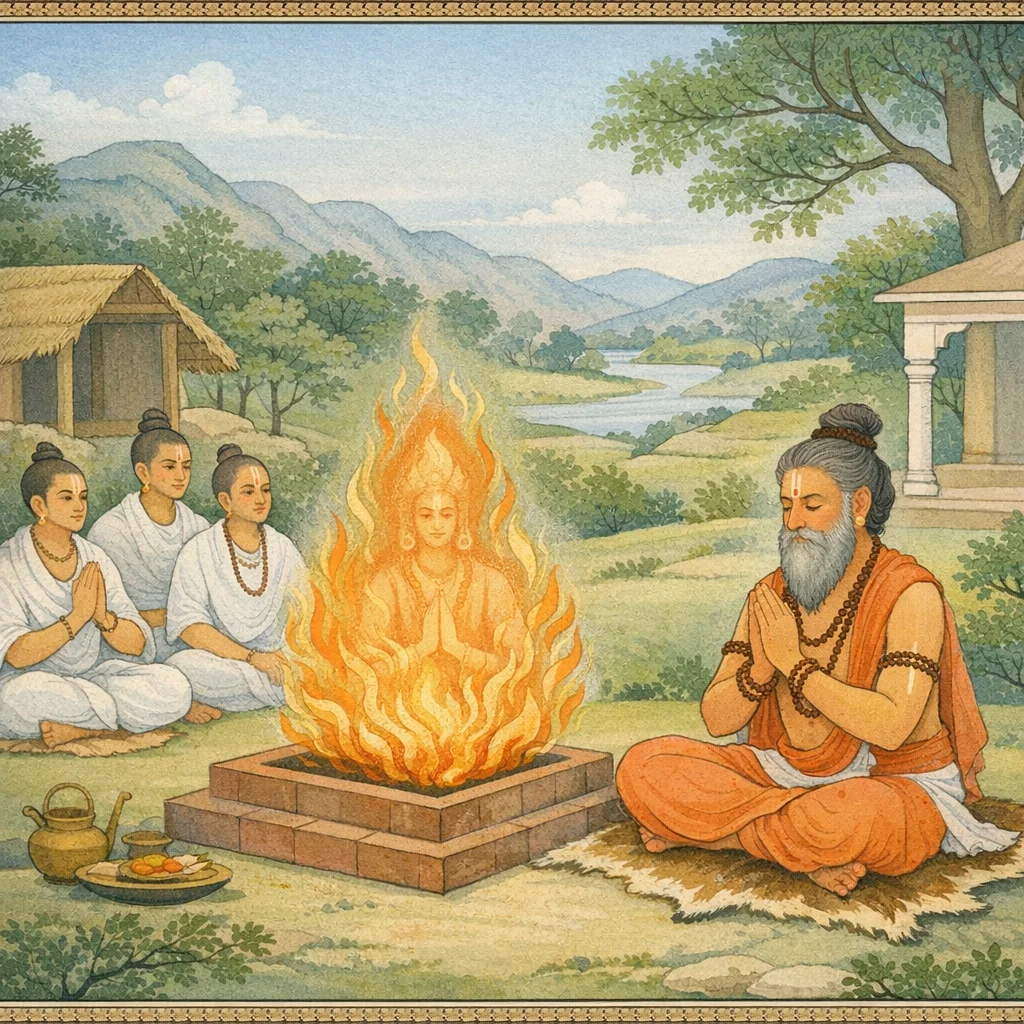
नारदजी कहते हैं--सृंजय! राजा अमूर्तरयके पुत्र गयकी भी मृत्यु सुनी गयी है। राजा गयने सौ वर्षोतक नियमपूर्वक अग्निहोत्र करके होमावशिष्ट अन्नका ही भोजन किया
Narada said: “O Sṛñjaya, it is also heard that King Gaya, the son of Amūrtaraya, met his death. King Gaya, for a full hundred years, maintained the Agnihotra with strict discipline, and sustained himself only on the food that remained after the sacrificial oblations.”
Verse 2
तस्मै हान्निर्वरं प्रादात् ततो वत्रे वरं गय: । तपसा ब्रह्मचर्येण व्रतेन नियमेन च,इससे प्रसन्न होकर अग्निदेवने उन्हें वर देनेकी इच्छा प्रकट की। (अग्निदेवकी आज्ञासे) गयने उनसे यह वरदान माँगा--“मैं तप, ब्रह्मचर्य, व्रत, नियम और गुरुजनोंकी कृपासे वेदोंका ज्ञान प्राप्त करना चाहता हूँ। दूसरोंको कष्ट पहुँचाये बिना अपने धर्मके अनुसार चलकर अक्षय धन पाना चाहता हूँ। ब्राह्मणोंको दान देता रहूँ और इस कार्यमें प्रतिदिन मेरी अधिकाधिक श्रद्धा बढ़ती रहे। अपने ही वर्णकी पतिव्रता कन्याओंसे मेरा विवाह हो और उन्हींके गर्भसे मेरे पुत्र उत्पन्न हों। अन्नदानमें मेरी श्रद्धा बढ़े तथा धर्ममें ही मेरा मन लगा रहे। अग्निदेव! मेरे धर्मसम्बन्धी कार्योमें कभी कोई विघ्न न आवे”
Nārada said: Pleased with him, Agni granted him a boon. Then Gaya chose his boon—seeking, through austerity, celibate discipline (brahmacarya), vows, and self-restraint, to attain Vedic knowledge by the grace of his teachers; to gain inexhaustible wealth while living according to dharma without causing harm to others; to continue giving gifts to brāhmaṇas with ever-increasing daily faith; to marry chaste maidens of his own varṇa and beget sons through them; to grow in devotion to the gift of food and remain steadfastly devoted to dharma; and to have no obstacles arise in his religious undertakings.
Verse 3
गुरूणां च प्रसादेन वेदानिच्छामि वेदितुम् | स्वधर्मेणाविहिंस्यान्यान् धनमिच्छामि चाक्षयम्,इससे प्रसन्न होकर अग्निदेवने उन्हें वर देनेकी इच्छा प्रकट की। (अग्निदेवकी आज्ञासे) गयने उनसे यह वरदान माँगा--“मैं तप, ब्रह्मचर्य, व्रत, नियम और गुरुजनोंकी कृपासे वेदोंका ज्ञान प्राप्त करना चाहता हूँ। दूसरोंको कष्ट पहुँचाये बिना अपने धर्मके अनुसार चलकर अक्षय धन पाना चाहता हूँ। ब्राह्मणोंको दान देता रहूँ और इस कार्यमें प्रतिदिन मेरी अधिकाधिक श्रद्धा बढ़ती रहे। अपने ही वर्णकी पतिव्रता कन्याओंसे मेरा विवाह हो और उन्हींके गर्भसे मेरे पुत्र उत्पन्न हों। अन्नदानमें मेरी श्रद्धा बढ़े तथा धर्ममें ही मेरा मन लगा रहे। अग्निदेव! मेरे धर्मसम्बन्धी कार्योमें कभी कोई विघ्न न आवे”
Nārada said: “By the grace of my teachers, I wish to come to know the Vedas. And, without harming others, living in accordance with my own dharma, I desire wealth that does not perish.”
Verse 4
विप्रेषु ददतश्चैव श्रद्धा भवतु नित्यश: । अनन्यासु सवर्णासु पुत्रजन्म च मे भवेत्,इससे प्रसन्न होकर अग्निदेवने उन्हें वर देनेकी इच्छा प्रकट की। (अग्निदेवकी आज्ञासे) गयने उनसे यह वरदान माँगा--“मैं तप, ब्रह्मचर्य, व्रत, नियम और गुरुजनोंकी कृपासे वेदोंका ज्ञान प्राप्त करना चाहता हूँ। दूसरोंको कष्ट पहुँचाये बिना अपने धर्मके अनुसार चलकर अक्षय धन पाना चाहता हूँ। ब्राह्मणोंको दान देता रहूँ और इस कार्यमें प्रतिदिन मेरी अधिकाधिक श्रद्धा बढ़ती रहे। अपने ही वर्णकी पतिव्रता कन्याओंसे मेरा विवाह हो और उन्हींके गर्भसे मेरे पुत्र उत्पन्न हों। अन्नदानमें मेरी श्रद्धा बढ़े तथा धर्ममें ही मेरा मन लगा रहे। अग्निदेव! मेरे धर्मसम्बन्धी कार्योमें कभी कोई विघ्न न आवे”
Nārada said: “May my faith be constant, day after day, in giving gifts to the Brahmins. And may sons be born to me only through wives of my own varṇa, faithful and devoted.”
Verse 5
अन्न मे ददत: श्रद्धा धर्मे मे रमतां मन: । अविष्नं चास्तु मे नित्यं धर्मकार्येषु पावक,इससे प्रसन्न होकर अग्निदेवने उन्हें वर देनेकी इच्छा प्रकट की। (अग्निदेवकी आज्ञासे) गयने उनसे यह वरदान माँगा--“मैं तप, ब्रह्मचर्य, व्रत, नियम और गुरुजनोंकी कृपासे वेदोंका ज्ञान प्राप्त करना चाहता हूँ। दूसरोंको कष्ट पहुँचाये बिना अपने धर्मके अनुसार चलकर अक्षय धन पाना चाहता हूँ। ब्राह्मणोंको दान देता रहूँ और इस कार्यमें प्रतिदिन मेरी अधिकाधिक श्रद्धा बढ़ती रहे। अपने ही वर्णकी पतिव्रता कन्याओंसे मेरा विवाह हो और उन्हींके गर्भसे मेरे पुत्र उत्पन्न हों। अन्नदानमें मेरी श्रद्धा बढ़े तथा धर्ममें ही मेरा मन लगा रहे। अग्निदेव! मेरे धर्मसम्बन्धी कार्योमें कभी कोई विघ्न न आवे”
“May my faith increase as I give food in charity; may my mind delight in dharma. And, O Pāvaka (Agni), may there always be no obstacle for me in works of righteousness.”
Verse 6
तथा भविष्यतीत्युक्त्वा तत्रैवान्तरधीयत । गयो ह्ाावाप्य तत् सर्व धर्मेणारीनजीजयत्,'ऐसा ही होगा” यों कहकर अग्निदेव वहीं अन्तर्धान हो गये। राजा गयने वह सब कुछ पाकर धर्मसे ही शत्रुओंपर विजय पायी
Saying, “So it shall be,” the divine one vanished on the very spot. King Gaya, having obtained all that, went on to conquer his enemies by the path of dharma—through righteous conduct rather than unrighteous means.
Verse 7
स दर्शपौर्णमासाभ्यां कालेष्वाग्रयणेन च । चातुर्मास्यैश्न विविधैर्यज्नैशज्ञावाप्तदक्षिणै:
Nārada said: “He duly performed the Darśa and Paurṇamāsa rites at their proper times, and also the Āgrayaṇa offering. Further, he carried out the various Cāturmāsya sacrifices—rites that are to be done in their seasons—completing them with the prescribed sacrificial fees.”
Verse 8
गवां शतसहस्राणि शतमश्चशतानि च,वे सौ वर्षोतक प्रतिदिन प्रातःकाल उठकर एक लाख साठ हजार गौ, दस हजार अभ्व तथा एक लाख स्वर्णमुद्रा दान करते थे
Nārada said: “In the course of his vowed practice, he would rise each day at dawn and give away vast gifts—hundreds of thousands of cows, many hundreds of horses, and a great store of gold coins. Such daily generosity, performed regularly and without delay, is presented as a mark of disciplined dharma: wealth is treated not as possession to hoard, but as a trust to be redistributed through righteous giving.”
Verse 9
शतं निष्कसहस्राणि गवां चाप्ययुतानि षट् । उत्थायोत्थाय स प्रादात् परिसंवत्सरान् शतम्,वे सौ वर्षोतक प्रतिदिन प्रातःकाल उठकर एक लाख साठ हजार गौ, दस हजार अभ्व तथा एक लाख स्वर्णमुद्रा दान करते थे
Nārada said: “Rising again and again each morning, he gave in charity—over a full hundred years—hundreds of thousands of niṣkas (gold pieces), and also sixty thousand cows.” The verse highlights sustained, disciplined generosity performed daily over a long span of time, presenting dāna (charitable giving) as a steady ethical practice rather than a single display.
Verse 10
नक्षत्रेषु च सर्वेषु ददन्नक्षत्रदक्षिणा: | ईजे च विविधीैर्यज्ञैर्यथा सोमो5ज्रिरा यथा,वे सोम और अंगिराकी भाँति सम्पूर्ण नक्षत्रोंमें नक्षत्र-दक्षिणा देते हुए नाना प्रकारके यज्ञोंद्वारा भगवानका यजन करते थे
Nārada said: “And in all the lunar mansions, they offered the prescribed ‘nakṣatra-fees’ as sacrificial gifts; and, like Soma and like Aṅgirā, they worshipped the Lord through many kinds of sacrifices—performing rites with disciplined generosity and reverence.”
Verse 11
सौवर्णा पृथिवीं कृत्वा य इमां मणिशर्कराम् | विप्रेभ्य: प्राददद् राजा सो<श्चवमेथे महामखे
Nārada said: “That king who, as it were, turned the earth into gold and made it like gravel of jewels—he bestowed this wealth upon the brāhmaṇas at the great sacrifice of the Aśvamedha. The verse highlights royal generosity directed toward the learned and the sacred, presenting lavish giving as a dharmic act when performed in a solemn rite.”
Verse 12
राजा गयने अश्वमेध नामक महायज्ञमें मणिमय रेतवाली सोनेकी पृथ्वी बनवाकर ब्राह्मणोंको दान की थी ।। जाम्बूनदमया यूपा: सर्वे रत्नपरिच्छदा: । गयस्यासन् समृद्धास्तु सर्वभूतमनोहरा:
Nārada said: In King Gaya’s great Aśvamedha sacrifice, the sacrificial posts were all made of pure Jāmbūnada gold and were adorned with jewels. They stood in splendid abundance, captivating the hearts of all beings—an image of royal prosperity directed toward sacred giving and the honoring of Brahmins.
Verse 13
गयके यज्ञमें सम्पूर्ण यूप जाम्बूनद नामक सुवर्णके बने हुए थे। उन्हें रत्नोंसे विभूषित किया गया था। वे समृद्धिशाली यूप सम्पूर्ण प्राणियोंके मनको हर लेते थे ।। सर्वकामसमृद्धं च प्रादादन्न॑ गयस्तदा । ब्राह्मणेभ्य: प्रहष्टेभ्य: सर्वभूतेभ्य एव च,राजा गयने यज्ञ करते समय हर्षसे उललसित हुए ब्राह्मणों तथा अन्य समस्त प्राणियोंको सम्पूर्ण कामनाओंसे सम्पन्न उत्तम अन्न दिया था
Nārada said: At that time King Gaya, while performing his sacrifice, joyfully bestowed excellent food—complete with every desired provision—upon the delighted Brāhmaṇas and, indeed, upon all living beings.
Verse 14
स समुद्रवनद्वीपनदीनदवनेषु च । नगरेषु च राष्ट्रेषु दिवि व्योम्नि च येडवसन्
Nārada said: “Those who dwelt across the oceans, forests, islands, rivers, streams, and woodlands—indeed in cities and kingdoms as well—whether on earth or even in the heavens and the open sky.”
Verse 15
भूतग्रामाश्न विविधा: संतृप्ता यज्ञसम्पदा | गयस्य सदृशो यज्ञो नास्त्यन्य इति तेडब्रुवन्
Nārada said: “Many kinds of living beings, satisfied and fully nourished by the abundance of that sacrifice, declared: ‘There is no other sacrifice equal to that of Gaya.’”
Verse 16
समुद्र, वन, द्वीप, नदी, नद, कानन, नगर, राष्ट्र आकाश तथा स्वर्गमें जो नाना प्रकारके प्राणिसमुदाय रहते थे, वे उस यज्ञकी सम्पत्तिसे तृप्त होकर कहने लगे, राजा गयके समान दूसरे किसीका यज्ञ नहीं हुआ है ।। षट्त्रिंशद् योजनायामा त्रिंशदू योजनमायता । पश्चात् पुरश्नतुर्विशद् वेदी ह्यासीद्धिरण्मयी,यथोक्ता दक्षिणाश्षान्या विप्रेभ्यो भूरिदक्षिण: । यजमान गयके यज्ञमें छत्तीस योजन लम्बी, तीस योजन चौड़ी और आगे-पीछे (अर्थात् नीचेसे ऊपरको) चौबीस योजन ऊँची सुवर्णमयी वेदी बनवायी गयी थी-। उसके ऊपर हीरे- मोती एवं मणिरत्न बिछाये गये थे। प्रचुर दक्षिणा देनेवाले गयने ब्राह्मणोंको वस्त्र, आभूषण तथा अन्य शास्त्रोक्त दक्षिणाएँ दी थीं
Narada said: Across the ocean, forests, islands, rivers and streams, groves, cities and kingdoms, and even in the sky and heaven, the many communities of living beings were satisfied by the abundance of that sacrifice and began to declare: “No sacrifice has ever been performed like King Gaya’s.” In Gaya’s rite a golden altar was constructed—thirty-six yojanas in length, thirty yojanas in breadth, and twenty-four yojanas in height. Upon it were spread jewels such as diamonds, pearls, and precious gems. Gaya, famed for lavish giving, bestowed upon the Brahmins garments, ornaments, and other scripturally prescribed gifts (dakṣiṇā) in great measure.
Verse 17
गयस्य यजमानस्य मुक्तावज्मणिस्तृता । प्रादात् स ब्राह्मणेभ्यो5थ वासांस्याभरणानि च
Nārada said: “When Gaya was performing a sacrifice as the patron, he had a spread of pearls and precious gems laid out, and then he bestowed them upon the brāhmaṇas—along with garments and ornaments.”
Verse 18
यत्र भोजनशिष्टस्य पर्वता: पञज्चविंशति:,उस यज्ञमें खाने-पीनेसे बचे हुए अन्नके पचीस पर्वत शेष थे। रसोंको कौशलपूर्वक प्रवाहित करनेवाली कितनी ही छोटी-छोटी नदियाँ तथा वस्त्र, आभूषण और सुगन्धित पदार्थोंकी विभिन्न राशियाँ भी उस समय शेष रह गयी थीं
Nārada said: In that sacrifice, there remained twenty-five mountain-like heaps of food left over after the feasting. Many small channels—skillfully made to carry streams of various juices and flavors—also remained, along with assorted stores of garments, ornaments, and fragrant substances.
Verse 19
कुल्या: कुशलवाहिन्यो रसानाम भवंस्तदा । वस्त्राभरणगन्धानां राशयश्च पृथग्विधा:,उस यज्ञमें खाने-पीनेसे बचे हुए अन्नके पचीस पर्वत शेष थे। रसोंको कौशलपूर्वक प्रवाहित करनेवाली कितनी ही छोटी-छोटी नदियाँ तथा वस्त्र, आभूषण और सुगन्धित पदार्थोंकी विभिन्न राशियाँ भी उस समय शेष रह गयी थीं
Narada said: “At that time, there remained many small channels that skillfully carried streams of savory liquids, and there also remained separate heaps of various kinds of garments, ornaments, and fragrant substances.”
Verse 20
यस्य प्रभावाच्च गयस्त्रिषु लोकेषु विश्रुत: । वटश्चाक्षय्यकरण: पुण्य॑ ब्रह्मसरश्ष॒ तत्,उस यज्ञके प्रभावसे राजा गय तीनों लोकोंमें विख्यात हो गये। साथ ही पुण्यको अक्षय करनेवाला अक्षयवट तथा पवित्र तीर्थ ब्रह्ममसरोवर भी उनके कारण प्रसिद्ध हो गये
By the power of whose merit, King Gaya became renowned throughout the three worlds; and through him the sacred Akṣaya-vaṭa—said to make religious merit inexhaustible—and that holy Brahma-saras (Brahmā’s lake) also became celebrated.
Verse 21
स चेन्ममार सृञ्जय चतुर्भद्रतरस्त्वया । पुत्रात् पुण्यतरस्तुभ्यं मा पुत्रमनुतप्यथा: । अयज्वानमदाक्षिण्यमश्रि श्रैत्येत्युदाहरत्,वैत्य सृंजय! वे धर्म-ज्ञानादि चारों कल्याणकारी गुणोंमें तुमसे बहुत बढ़े-चढ़े थे और तुम्हारे पुत्रसे भी अधिक पुण्यात्मा थे। जब वे भी मर गये, तब दूसरोंके लिये क्या कहना है? अतः तुम यज्ञानुष्ठान और दान-दक्षिणासे रहित अपने पुत्रके लिये अनुताप न करो। ऐसा नारदजीने कहा
Nārada said: “O Sṛñjaya, if even one who was fourfold more fortunate and excellent than you—indeed, more meritorious than your own son—has died, what need is there to speak of others? Therefore do not grieve for your son, who was devoid of sacrifice and lacking in gifts and priestly fees.”
Verse 66
इति श्रीमहा भारते द्रोणपर्वणि अभिमन्युवधपर्वणि षोडशराजकीये षट्षष्टितमो5ध्याय:
Thus ends the sixty-sixth chapter in the Droṇa Parva of the Śrī Mahābhārata, within the section narrating the slaying of Abhimanyu, in the sub-division known as the “Sixteen Kings”.
Verse 73
अयजच्छुद्धया राजा परिसंवत्सरान् शतम् । राजाने यथासमय सौ वर्षोतक बड़ी श्रद्धाके साथ दर्श, पौर्णमास, आग्रयण और चातुर्मास्य आदि नाना प्रकारके यज्ञ किये तथा उनमें प्रचुर दक्षिणा दी
Nārada said: “With purified intent, the king performed sacrifices unceasingly for a full hundred years. In their proper seasons he duly observed many rites—such as the new-moon and full-moon offerings, the first-fruits sacrifice, and the four-monthly ceremonies—and in all of them he bestowed abundant priestly gifts (dakṣiṇā).”
Verse 173
यथोक्ता दक्षिणाश्षान्या विप्रेभ्यो भूरिदक्षिण: । यजमान गयके यज्ञमें छत्तीस योजन लम्बी, तीस योजन चौड़ी और आगे-पीछे (अर्थात् नीचेसे ऊपरको) चौबीस योजन ऊँची सुवर्णमयी वेदी बनवायी गयी थी-। उसके ऊपर हीरे- मोती एवं मणिरत्न बिछाये गये थे। प्रचुर दक्षिणा देनेवाले गयने ब्राह्मणोंको वस्त्र, आभूषण तथा अन्य शास्त्रोक्त दक्षिणाएँ दी थीं
Narada said: “Beyond the prescribed gifts, that lavish patron of priests bestowed many other donations upon the brahmins. At the Gaya sacrifice, the sacrificer had a golden altar constructed—thirty-six yojanas long, thirty yojanas wide, and twenty-four yojanas high from base to summit. Upon it were spread diamonds, pearls, and precious gems. Thus Gaya, famed for abundant giving, presented the brahmins with garments, ornaments, and other scripturally sanctioned fees (dakṣiṇā).”
Frequently Asked Questions
Arjuna must reconcile mission-driven combat (fulfilling a public vow against Jayadratha) with the ethical limits of opposing a revered teacher, maintaining respect and restraint even while engaged in forceful tactical exchange.
The episode models hierarchy of duties: when multiple obligations compete, one should prioritize the duty that best preserves pledged responsibility and collective purpose, while still honoring relational ethics through disciplined conduct.
No explicit phalaśruti appears here; the chapter’s meta-function is structural—demonstrating how dharma is negotiated under time pressure and how narrative momentum is preserved by strategic disengagement rather than total victory in every encounter.