Adhyaya 47
Droṇa-parva Adhyāya 47 — Abhimanyu’s rapid exchanges, counsel to disable his chariot-system
Upa-parva: Abhimanyu-vadha / Cakravyūha-anuśaṅga (Strategic engagements around Abhimanyu’s isolation)
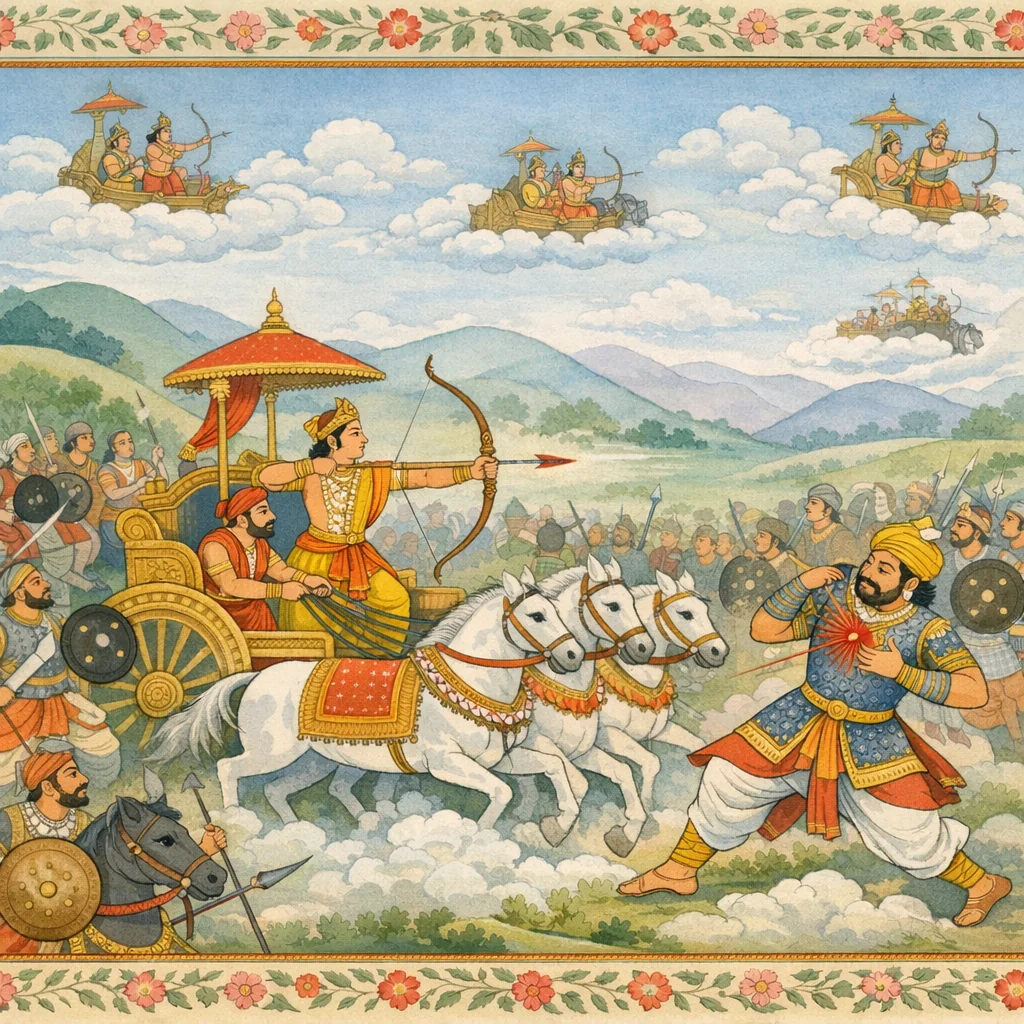
Saṃjaya reports a sequence of high-intensity exchanges: Arjuna (Phālguni) and Karṇa (Rādheya/Vaikartana) trade volleys, both becoming bloodied yet visually likened to flowering kiṃśuka trees. The focus then shifts to Abhimanyu (Saubhadra/Arjunātmaja), who strikes down Karṇa’s attendants and multiple notable fighters with precise, repeated counters, creating alarm among Kaurava commanders. Duḥśāsana’s son (Dauḥśāsani) wounds Abhimanyu’s horses and charioteer and pierces Abhimanyu; Abhimanyu responds with sharp verbal reproach and renewed assault. Śakuni urges Duryodhana that collective action is necessary, while Karṇa requests Droṇa’s instruction for Abhimanyu’s neutralization. Droṇa analyzes Abhimanyu’s ‘openings’ and recommends disabling tactics—cutting bow and bowstring, attacking reins, horses, and charioteers—because Abhimanyu is near-unconquerable while fully armed and mounted. Acting on this counsel, Karṇa severs Abhimanyu’s bow; allied warriors kill his horses; multiple mahārathas shower the now chariotless youth with arrows. Abhimanyu, maintaining kṣātra resolve, leaps with sword and shield, is disarmed by Droṇa and Karṇa, then lifts a wheel (chakra) and charges, depicted with a heightened, almost iconographic radiance amid blood and dust.
Chapter Arc: धृतराष्ट्र की जिज्ञासा—अजेय-सा प्रतीत होने वाला, पीठ न दिखाने वाला तरुण अभिमन्यु जब जयद्रथ की सेना में घुस पड़ा, तब क्या हुआ? → त्रिहायन, सुबल आजानेय अश्वों से युक्त रथों पर सवार अनेक शूरवीर आकाश में तैरते-से रथों के साथ उसे रोकते हैं; सैन्धव-पक्ष पर भार बढ़ता देख पाण्डव-सेना भी उथल-पुथल में युधिष्ठिर की ओर खिंचती है। अभिमन्यु चारों ओर से बाण-वर्षा में घिरकर भी प्रत्युत्तर देता है और एक-एक कर रथ, घोड़े, पार्श्वरक्षक गिराता चलता है। → अभिमन्यु कोसल-राजपुत्र बृहद्धल के हृदय में एक तीक्ष्ण बाण मारता है; बृहद्धल भिन्नहृदय होकर गिर पड़ता है—युद्धभूमि में यह वध अभिमन्यु के पराक्रम का शिखर बनता है। → बृहद्धल-वध के बाद महाधनुर्धर सौभद्र अपने शरों की ‘अम्बु’ से कौरव-योद्धाओं को स्तम्भित-सा कर रण में विचरता है; क्षणिक रूप से पाण्डव-पक्ष का उत्साह और दबाव बढ़ता है। → पराक्रम के इस उत्कर्ष के बीच संकेत मिलता है कि अभिमन्यु अभी भी बहु-महारथियों के घेरे में है—आगे यह घेरा किस प्रकार घातक रूप लेगा?
Shlokas
Verse 1
/ नी ्राय्ण ह्यु # 5: सप्तचत्वारिशो<्ध्याय: अभिमन्युका पराक्रम, छ: महारथियोंके साथ घोर युद्ध और उसके द्वारा वन्दारक तथा दस हजार अन्य राजाओंके सहित कोसलनरेश बृहद्धलका वध धृतराष्ट्र रवाच तथा प्रविष्टं तरुणं सौभद्रमपराजितम् । कुलानुरूपं कुर्वाणं संग्रामेष्वपलायिनम्
Dhṛtarāṣṭra said: Sañjaya, that young Abhimanyu—Subhadrā’s son, never defeated and never showing his back in battle—has entered the host and is displaying valor worthy of his lineage, one who does not flee from war.
Verse 2
आजानेयै: सुबलिभिरययन्तमश्रैस्त्रिहायनै: । प्लवमानमिवाकाशे के शूरा: समवारयन्
Sañjaya said: “Which heroes checked him as he advanced—his chariot drawn by powerful, well-bred three-year-old horses—so that he seemed to be gliding through the sky?”
Verse 3
धृतराष्ट्र बोले--संजय! कभी पराजित न होनेवाला तथा युद्धमें पीठ न दिखानेवाला तरुण, सुभद्राकुमार अभिमन्यु जब इस प्रकार जयद्रथकी सेनामें प्रवेश करके अपने कुलके अनुरूप पराक्रम प्रकट कर रहा था और तीन वर्षकी अवस्थावाले अच्छी जातिके बलवान् घोड़ोंद्वारा मानो आकाशमें तैरता हुआ आक्रमण करता था, उस समय किन शूरवीरोंने उसे रोका था? ।। संजय उवाच अभिमन्यु: प्रविश्यैतांस्तावकान् निशितै: शरै: । अकरोत् पार्थिवान् सर्वान् विमुखान् पाण्डुनन्दन:,संजयने कहा--राजन्! पाण्डुकुलनन्दन अभिमन्युने उस सेनामें प्रविष्ट होकर आपके इन सभी राजाओंको अपने तीखे बाणोंद्वारा युद्धसे विमुख कर दिया
Dhṛtarāṣṭra said: Sañjaya, when the young Abhimanyu—Subhadrā’s son, never defeated and never showing his back in battle—entered Jayadratha’s host and displayed valor worthy of his lineage, attacking as if he were floating through the sky on a chariot drawn by powerful, well-bred three-year-old horses, which heroes held him back? Sañjaya said: O King, Abhimanyu, Pāṇḍu’s descendant, having entered that army, with his razor-sharp arrows turned all those kings of yours away from the fight—driving them back and breaking their resolve.
Verse 4
तं तु द्रोण: कृप: कर्णो द्रौणिश्व स बृहद्धलः । कृतवर्मा च हार्दिक्य: षड् रथा: पर्यवारयन्,तब द्रोणाचार्य, कृपाचार्य, कर्ण, अश्वत्थामा, बृहद्बल और हृदिकपुत्र कृतवर्मा--इन छ: महारथियोंने उसे चारों ओरसे घेर लिया
Sañjaya said: But him—Droṇa, Kṛpa, Karṇa, Droṇa’s son Aśvatthāmā, that mighty Bṛhaddhala, and Kṛtavarmā the son of Hṛdīka—those six chariot-warriors surrounded on every side.
Verse 5
दृष्टवा तु सैन्धवे भारमतिमात्रं समाहितम् । सैन्यं तव महाराज युधिष्ठिरमुपाद्रवत्,महाराज! सिंधुराज जयद्रथपर बहुत भार आया देख आपकी सेनाने राजा युधिष्ठिरपर धावा किया
Sañjaya said: Seeing that the Sindhu-king (Jayadratha) had gathered an excessive resolve and force, your army, O great king, surged forward to assail Yudhiṣṭhira.
Verse 6
सौभद्रमितरे वीरमभ्यवर्षन् शराम्बुभि: । तालमात्राणि चापानि विकर्षन्तो महाबला:,तथा कुछ अन्य महाबली योद्धाओंने अपने चार हाथके धनुष खींचते हुए वहाँ सुभद्राकुमार वीर अभिमन्युपर बाणरूपी जलकी वर्षा प्रारम्भ कर दी
Sañjaya said: Then the other mighty warriors, drawing their bows to the full span, began to shower the heroic son of Subhadrā—Abhimanyu—with a rain of arrows, as if with torrents of water.
Verse 7
तांस्तु सर्वान् महेष्वासान् सर्वविद्यासु निष्ठितान् व्यष्टम्भयद् रणे बाणै: सौभद्र: परवीरहा,परंतु शत्रुवीरोंका संहार करनेवाले अभिमन्युने सम्पूर्ण विद्याओंमें प्रवीण उन समस्त महाधनुर्धरोंको रणक्षेत्रमें अपने बाणोंद्वारा स्तब्ध कर दिया
Sañjaya said: Abhimanyu, the son of Subhadrā—renowned as a slayer of enemy champions—checked and stunned in battle all those great bowmen, men firmly trained in every martial discipline, by means of his arrows.
Verse 8
द्रोणं पजचाशताविध्यद् विंशत्या च बृहद्धलम् । अशीत्या कृतवर्माणं कृप॑ षष्ट्या शिलीमुखै:
Sañjaya said: He struck Droṇa with fifty arrows, and Bṛhaddhala with twenty; Kṛtavarmā with eighty; and Kṛpa with sixty sharp shafts.
Verse 9
रुक्मपुड्खैर्महावेगैराकर्णसमचोदितै: । अविध्यद् दशभिर्बाणैरश्वत्थामानमार्जुनि:
Sañjaya said: Arjuna, drawing his bowstring back to the ear, drove forth ten swift arrows with golden fletching and struck Aśvatthāmā.
Verse 10
अर्जुनकुमार अभिमन्युने द्रोणको पचास, बृहद्धलको बीस, कृतवर्माको अस्सी, कृपाचार्यको साठ और अअभश्वत्थामाको कानतक खींचकर छोड़े हुए स्वर्णमय पंखयुक्त, महावेगशाली दस बाणोंद्वारा घायल कर दिया ।। स कर्ण कर्णिना कर्णे पीतेन च शितेन च । फाल्गुनिर्दविषतां मध्ये विव्याध परमेषुणा,अर्जुनकुमारने शत्रुओंके मध्यमें खड़े हुए कर्णके कानमें पानीदार पैने और उत्तम बाणद्वारा गहरी चोट पहुँचायी
Sañjaya said: Abhimanyu, Arjuna’s son, drew his bow and loosed ten golden, winged arrows of tremendous speed, wounding Droṇa with fifty, Bṛhaddhala with twenty, Kṛtavarmā with eighty, and Kṛpācārya with sixty. And amid the enemy host, Karṇa, standing in their midst, was pierced in the ear by Phālguni’s supreme arrow—brightly gleaming and razor-sharp—so that the wound ran deep.
Verse 11
पातयित्वा कृपस्याशभ्चांस्तथो भौ पार्ष्णिसारथी । अथैनं दशभिर्बाणै: प्रत्यविध्यत् स्तनान्तरे
Sañjaya said: Having first brought down Kṛpa’s horses, Pārṣṇi’s charioteer struck back and pierced him in the chest with ten arrows.
Verse 12
कृपाचार्यके चारों घोड़ों तथा उनके दो पार्श्वरक्षकोंको धराशायी करके छातीमें दस बाणोंद्वारा प्रहार किया ।। ततो वृन्दारकं वीरं कुरूणां कीर्तिवर्धनम् । पुत्राणां तव वीराणां पश्यतामवधीद् बली,तदनन्तर बलवान् अभिमन्युने कुरुकुलकी कीर्ति बढ़ानेवाले वीर वृन्दारकको आपके वीर पुत्रोंके देखते-देखते मार डाला
Sañjaya said: Abhimanyu felled Kṛpācārya’s four horses and his two flank-guards, and then struck him in the chest with ten arrows. Thereafter the mighty Abhimanyu slew the heroic Vrindaraka, an enhancer of Kuru fame, while your valiant sons looked on.
Verse 13
त॑ द्रौणि: पञ्चविंशत्या क्षुद्रकाणां समार्पयत् । वरं वरममित्राणामारुजन्तमभीतवत्
Sañjaya said: Aśvatthāmā, Droṇa’s son, handed him over to twenty-five lesser warriors, even as he—fearless—kept breaking through the enemy ranks again and again.
Verse 14
तब शत्रुदलके प्रधान-प्रधान वीरोंका बेखटके वध करते हुए अभिमन्युको अश्वत्थामाने पचीस बाण मारे ।। सतु बाणै: शितैस्तूर्ण प्रत्यविध्यत मारिष । पश्यतां धार्तराष्ट्राणाम श्वत्थामानमार्जुनि:
Sañjaya said: As Abhimanyu cut down the foremost warriors of the enemy host without pause, Aśvatthāmā shot him with twenty-five arrows. But Arjunī (Abhimanyu) swiftly answered with sharp shafts, striking Aśvatthāmā in return before the eyes of the Dhārtarāṣṭra warriors.
Verse 15
आर्य! अर्जुनकुमारने भी आपके पुत्रोंके देखते-देखते तुरंत ही अश्व॒त्थामाको पैने बाणोंद्वारा बींध डाला ।। षष्ट्या शराणां त॑ द्रौणिस्तिग्मधारै: सुतेजनै: । उग्रै्नाकम्पयद् विद्ध्वा मैनाकमिव पर्वतम्,तब द्रोणपुत्रने तीखी धारवाले तेज और भयंकर साठ बाणोंद्वारा अभिमन्युको बींध डाला; परंतु बींधकर भी वह मैनाक पर्वतके समान स्थित अभिमन्युको कम्पित न कर सका
Sañjaya said: Then Aśvatthāmā, Droṇa’s son, pierced Abhimanyu with sixty arrows—keen-edged, brilliantly sharp, and fierce. Yet even after being struck, Abhimanyu did not waver; he stood unmoved like Mount Maināka.
Verse 16
स तु द्रौणिं त्रिसप्तत्या हेमपुड्खैरजिद्ागै: । प्रत्यविध्यन्महातेजा बलवानपकारिणम्,महातेजस्वी बलवान् अभिमन्युने सुवर्णमय पंखसे युक्त तिहत्तर बाणोंद्वारा अपने अपकारी अभश्र॒ृत्थामाको पुन: घायल कर दिया
Sañjaya said: Then Abhimanyu, mighty and radiant with power, pierced Droṇa’s son again with seventy-three arrows whose shafts were fitted with golden feathers, striking the offender who had harmed him.
Verse 17
तस्मिन् द्रोणो बाणशतं पुत्रगृद्धी न्यपातयत् | अश्वत्थामा तथाष्टौ च परीप्सन् पितरं रणे,तब अपने पुत्रके प्रति स्नेह रखनेवाले द्रोणाचार्यने अभिमन्युको सौ बाण मारे। साथ ही अश्वत्थामाने भी अपने पिताकी रक्षा करते हुए रणक्षेत्रमें उसपर आठ बाण चलाये
Sañjaya said: At that moment Droṇa, driven by intense attachment to his son, showered Abhimanyu with a hundred arrows. Aśvatthāmā too, seeking to protect his father in the battle, struck him with eight arrows.
Verse 18
कर्णो द्वाविंशतिं भल्लान् कृतवर्मा च विंशतिम् । बृहद्बलस्तु पञ्चाशत् कृप: शारद्वतो दश,तत्पश्चात् कर्णने बाईस, कृतवर्मने बीस, बृहदबलने पचास तथा शरद्वानके पुत्र कृपाचार्यने अभिमन्युको दस भल्ल मारे
Sañjaya said: Karṇa struck him with twenty-two sharp arrows; Kṛtavarmā with twenty; Bṛhadbala with fifty; and Kṛpa, the son of Śaradvat, with ten. Thus, in the press of battle, Abhimanyu was assailed by many warriors at once.
Verse 19
तांस्तु प्रत्यवधीत् सर्वान् दशभिर्दशभि: शरै: । तैर््मान: सौभद्र: सर्वतो निशितै: शरै:,उन सबके चलाये हुए तीखे बाणोंद्वारा सब ओरसे पीड़ित हुए सुभद्राकुमारने उन सभीको दस-दस बाणोंसे घायल कर दिया
Sañjaya said: Though assailed on every side by their sharp arrows, the son of Subhadrā struck them all in return, wounding each with ten arrows.
Verse 20
त॑ं कोसलानामधिप: कर्णिनाताडयद्धुदि । स तस्याश्चान् ध्वजं चाप॑ सूतं चापातयत् क्षितौ,तत्पश्चात् कोसलनरेश बृहदबलने एक बाणद्वारा अभिमन्युकी छातीमें चोट पहुँचायी। यह देख अभिमन्युने उनके चारों घोड़ों तथा ध्वज, धनुष एवं सारथिको भी पृथ्वीपर मार गिराया
Sañjaya said: In the thick of battle, the lord of the Kośalas struck Abhimanyu with an arrow. Abhimanyu answered at once, felling that king’s horses, his banner, his bow, and even his charioteer to the ground. Then the Kośala ruler, mighty in strength, pierced Abhimanyu’s chest with a single shaft. Seeing this, Abhimanyu again brought down his opponent’s four steeds, along with the banner, the bow, and the driver—revealing the relentless kṣatriya code in which prowess is met immediately by counter‑prowess, even as the violence mounts.
Verse 21
अथ कोसलराजस्तु विरथ: खड्गचर्मभृत् । इयेष फाल्गुने: कायाच्छिरो हर्तु सकुण्डलम्,रथहीन होनेपर कोसलनरेशने हाथमें ढाल और तलवार ले ली तथा अभिमन्युके शरीरसे उसके कुण्डलयुक्त मस्तकको काट लेनेका विचार किया
Sañjaya said: Then the king of Kośala, Viratha, bereft of his chariot, took up sword and shield and resolved to sever from the son of Phalguna the head adorned with earrings—an intent born of battlefield fury and the grim pursuit of a warrior’s trophy, not of any higher restraint.
Verse 22
स कोसलानामधिपं राजपुत्र बृहद्धलम् । हृदि विव्याध बाणेन स भिन्नहृदयो5पतत्,इतनेहीमें अभिमन्युने एक बाणद्वारा कोसलनरेश राजपुत्र बृहद्धलके हृदयमें गहरी चोट पहुँचायी। इससे उनका वक्ष:स्थल विदीर्ण हो गया और वे गिर पड़े
Sañjaya said: Abhimanyu pierced Bṛhaddhala, the royal prince and lord of the Kośalas, straight in the heart with an arrow. His chest was torn open; his heart shattered, he fell to the ground—showing how, in the fury of war, even the high-born are brought down in an instant by decisive skill and fate.
Verse 23
बभज्ज च सहस्राणि दश राज्ञां महात्मनाम् | सृजतामशिवा वाच: खड्गकार्मुकधारिणाम्,इसके बाद अशुभ वचन बोलनेवाले तथा खड्ग एवं धनुष धारण करनेवाले दस हजार महामनस्वी राजाओंका भी उसने संहार कर डाला
Sañjaya said: He shattered and slew ten thousand high-souled kings as well—warriors bearing swords and bows—who were hurling inauspicious, cruel cries. The passage underscores how, in the frenzy of battle, harsh speech and violent intent accompany armed aggression, and how mass slaughter becomes the grim consequence of adharma-driven hostility on the battlefield.
Verse 24
तथा बृहद्बलं हत्वा सौभद्रो व्यचरद् रणे । व्यष्टम्भयन्महेष्वासो योधांस्तव शराम्बुभि:,इस प्रकार महाधनुर्धर अभिमन्यु बृहदबलका वध करके आपके योद्धाओंको अपने बाणरूपी जलकी वर्षसे स्तब्ध करता हुआ रणक्षेत्रमें विचरने लगा
Sañjaya said: Having slain Bṛhadbala, Saubhadra (Abhimanyu), the great archer, moved about the battlefield, checking and stunning your warriors with showers of arrows like torrents of water—an image of youthful valor turned into relentless, disciplined force amid the harsh ethics of war.
Verse 46
इस प्रकार श्रीमहाभारत द्रोणपर्वके अन्तर्गत अभिमन्युवधपर्वमें लक्ष्मणवधविषयक छियालीसवाँ अध्याय पूरा हुआ
Thus, in the Śrī Mahābhārata, within the Droṇa Parva—specifically in the Abhimanyu-vadha section—the forty-sixth chapter, dealing with the slaying of Lakṣmaṇa, comes to its conclusion. The closing formula marks a narrative milestone in the war account, underscoring the relentless chain of retaliatory deaths and the moral weight of violence that accumulates as the conflict advances.
Verse 47
इति श्रीमहाभारते द्रोणपर्वणि अभिमन्युवधपर्वणि बृहद्धलवधे सप्तचत्वारिंशो5ध्याय:
Sañjaya said: Thus, in the sacred Mahābhārata, within the Droṇa Parva—specifically in the section concerning the slaying of Abhimanyu—ends the forty-seventh chapter, dealing with the killing of Bṛhaddhala. The narration marks a formal closure, underscoring how the war’s unfolding is recorded as a moral history: each victory and death is framed as a consequential act within the larger reckoning of dharma and adharma.
Frequently Asked Questions
The chapter frames an ethical tension between heroic single-combat expectations and coordinated disabling tactics: leaders seek ‘antara’ (an opening) not by outshooting Abhimanyu, but by dismantling the material supports that make fair contest possible.
Excellence can be countered by systems-thinking: when direct confrontation fails, adversaries target enabling conditions (tools, mobility, support roles). The narrative simultaneously valorizes steadfastness—Abhimanyu persists in duty even after successive losses of equipment and platform.
No explicit phalaśruti is stated in these verses; the meta-commentary is implicit through Saṃjaya’s descriptive framing and Droṇa’s doctrinal counsel, which position the episode as a case study in war-nīti and the limits of individual prowess.