Adhyaya 43
अभिमन्योर् दारुणः संमर्दः (Abhimanyu’s fierce melee amid chariot formations)
Upa-parva: Saindhava-niruddha–Saubhadra-raṇa (Episode: Abhimanyu presses the Kaurava host after the Pandavas are checked by Jayadratha)
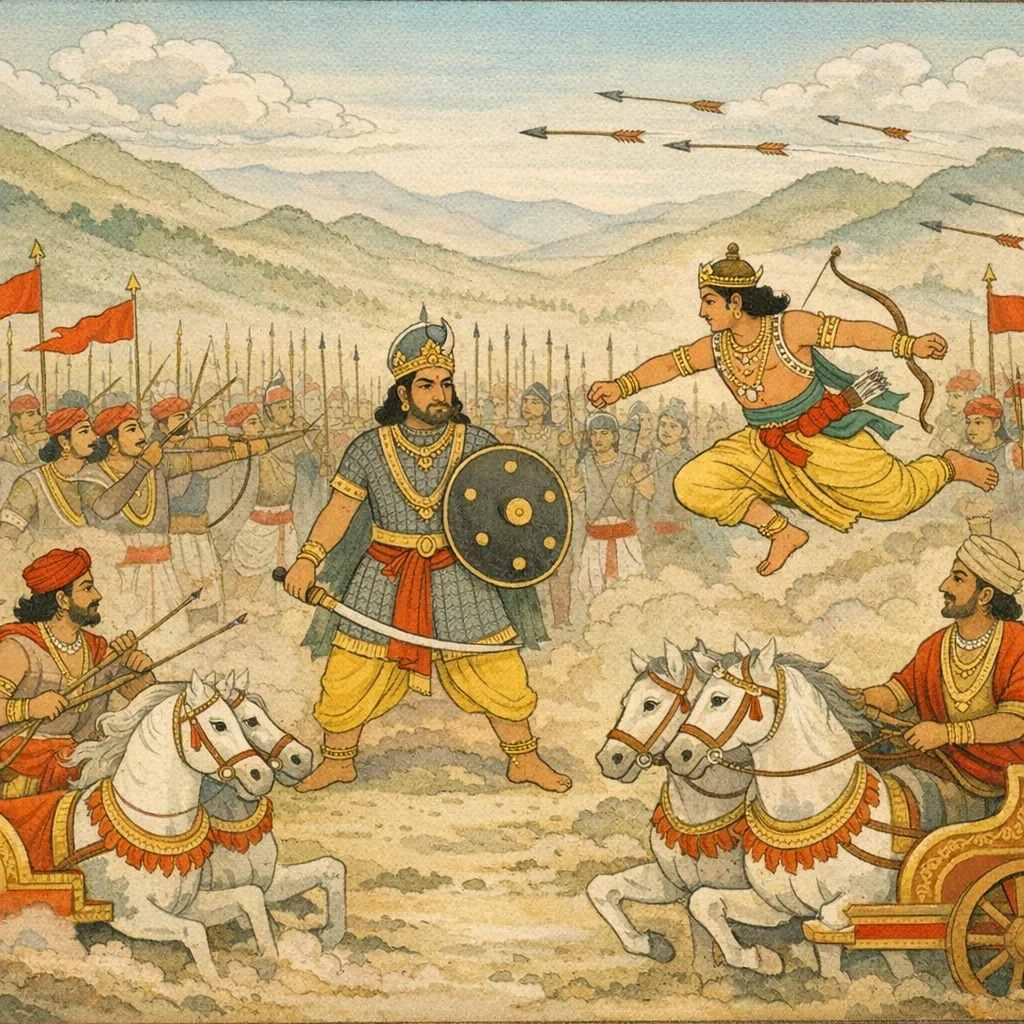
Saṃjaya reports that, with the Pandavas’ advance checked by Saindhava (Jayadratha), the engagement intensifies into a severe clash between the Kaurava forces and their opponents. Abhimanyu (Saubhadra), described as truthful in resolve and difficult to assail, enters the hostile host and agitates it like a sea-creature churning the ocean. Kuru warriors converge upon him with dense arrow volleys, producing a sustained, close-quarters mêlée. In the exchange, Abhimanyu disables Vṛṣasena’s chariot capability by killing the charioteer and cutting the bow; he is then struck, and his horses carry the chariot away from the immediate press. As the chariot withdraws, opponents acclaim the tactical displacement. A warrior identified as Vasātīya charges and showers Abhimanyu with arrows while issuing a threat; Abhimanyu responds with a swift shot that pierces the attacker’s heart, causing him to fall. Angered Kṣatriya leaders then surround Abhimanyu with intensified combat. The narration shifts to battlefield effects: severed arms with weapons, fallen ornaments, broken standards, damaged chariots, dead elephants, and scattered equipment cover the ground. Abhimanyu’s movement becomes hard to perceive amid the chaos; only flashes of gold and weaponry are visible, and he is likened to the sun standing in the middle, taking down fighters with arrows.
Chapter Arc: द्रोण के व्यूह-द्वार पर एक ही नाम बिजली-सा चमकता है—सैन्धव जयद्रथ। पाण्डवों के लिए मार्ग खुला है, पर हर कदम पर वही द्वारपाल बनकर खड़ा है; और उसके रथ-घोड़े, ध्वजा और साज-सज्जा युद्धभूमि को भी ‘गन्धर्वनगर’ जैसा मायावी वैभव दे देते हैं। → पाण्डव-पक्ष के योद्धा—द्रुपद, शिखण्डी, केकय, द्रौपदेय—अलग-अलग दिशाओं से दबाव बनाते हैं, पर जयद्रथ हर उस वीर को चुन-चुनकर रोकता है जो द्रोण-नीक को भेदने का यत्न करता है। व्यूह का द्वार जैसे एक ही देह में सिमट गया हो। → भीषण धक्कामुक्की के बीच सात्यकि का धनुष कटता है; वह रथ से कूदकर दूसरे रथ पर चढ़ता है—युद्ध की धूल में सिंह-सा उछलता हुआ। उसी क्षण जयद्रथ का ‘अश्रद्धेय’ पराक्रम सब देखते हैं: वह एक-एक करके आने वाले भेदकों को रोककर पाण्डवों का मार्ग बंद कर देता है। → अध्याय का निष्कर्ष यह है कि सौभद्र (अभिमन्यु) द्वारा पहले दिखाया गया पथ अब जयद्रथ द्वारा निवारित हो गया है; द्रोण-व्यूह का द्वार सुरक्षित है और पाण्डवों की गति थम जाती है। → व्यूह-द्वार बंद है, पर पाण्डवों का संकल्प नहीं—अब प्रश्न यह है कि इस ‘द्वारपाल’ को कौन और कैसे हटाएगा, ताकि भीतर फँसे अभिमन्यु तक सहायता पहुँच सके?
Shlokas
Verse 1
(दाक्षिणात्य अधिक पाठके २ श्लोक मिलाकर कुल २४ श्लोक हैं।) ऑपन-आ प्रात | अर: त्रिचत्वारिशो<्ध्याय: पाण्डवोंके साथ जयद्रथका युद्ध और व्यूहद्वारको रोक रखना संजय उवाच यन्मां पृच्छसि राजेन्द्र सिन्धुराजस्य विक्रमम् । शृणु तत् सर्वमाख्यास्थे यथा पाण्डूनयोधयत्,संजय कहते हैं--राजेन्द्र! आप मुझसे जो सिंधुराज जयद्रथके पराक्रमका समाचार पूछ रहे हैं, वह सब सुनिये। उसने जिस प्रकार पाण्डवोंके साथ युद्ध किया था, वह सारा वृत्तान्त बताऊँगा
Sañjaya said: O best of kings, since you ask me about the prowess of Jayadratha, the lord of Sindhu, listen. I shall recount it all—how he fought against the Pāṇḍavas—so that the course of that battle may be clearly known.
Verse 2
तमूहुवाजिनो वश्या: सैन्धवा: साधुवाहिन: । विकुर्वाणा बृहन्तो5श्वा: श्वसनोपमरंहस:,सारथिके वशमें रहकर अच्छी तरह सवारीका काम देनेवाले, वायुके समान वेगशाली तथा नाना प्रकारकी चाल दिखाते हुए चलनेवाले सिंधुदेशीय विशाल अश्व जयद्रथको वहन करते थे
Sañjaya said: Those great Sindhu-bred horses—well-trained, obedient to the reins, and excellent in bearing a charioteer’s command—carried him along. Displaying varied gaits and moving with wind-like speed, they bore Jayadratha forward in the press of war, showing how disciplined power becomes a decisive instrument when yoked to a warrior’s intent.
Verse 3
गन्धर्वनगराकारं विधिवत्कल्पितं रथम् । तस्याभ्यशो भयत् केतुर्वाराहो राजतो महान्,विधिपूर्वक सजाया हुआ उसका रथ गन्धर्वनगरके समान जान पड़ता था। उसका रजतनिर्मित एवं वाराह-चिह्नसे युक्त महान् ध्वज उसके रथकी शोभा बढ़ा रहा था
Sañjaya said: “That chariot, duly fashioned according to rule, looked like a celestial city of the Gandharvas. Close by it, a great silver standard bearing the emblem of a boar rose up, enhancing the chariot’s splendor.”
Verse 4
श्वैतच्छत्रपताकाभि क्षामरव्यजनेन च । स बभौ राजलिजड्लैस्तैस्तारापतिरिवाम्बरे,श्वेत छत्र, पताका, चँवर और व्यजन--इन राजचिह्वोंसे वह आकाशकमें चन्द्रमाकी भाँति सुशोभित हो रहा था
Sañjaya said: Adorned with a white royal parasol and banners, and attended by pale-hued chowries and fans—those emblems of sovereignty—he shone like the lord of the stars, the Moon, in the sky.
Verse 5
मुक्तावज़मणिस्वर्णर्भूषितं तदयस्मयम् । वरूथं विबभौ तस्य ज्योतिर्भि: खमिवावृतम्,उसके रथका मुक्ता, मणि, सुवर्ण तथा हीरोंसे विभूषित लोहमय आवरण नक्षत्रोंसे व्याप्त हुए आकाशके समान सुशोभित होता था
Sañjaya said: The iron protective casing (varūtha) of his chariot, adorned with pearls, diamonds, gems, and gold, shone brilliantly—like the sky spread over with lights, the stars.
Verse 6
स विस्फार्य महच्चापं किरजन्निषुगणान् बहून् । तत् खण्डं पूरयामास यद् व्यदारयदार्जुनि:
Sañjaya said: Having fully drawn his great bow and showering many clusters of arrows, he filled that very gap which Arjuna had torn open—pressing the attack so that the breach would not stand and the battle-order would not falter.
Verse 7
उसने अपना विशाल धनुष फैलाकर बहुत-से बाणसमूहोंकी वर्षा करते हुए व्यूहके उस भागको योद्धाओंद्वारा भर दिया, जिसे अभिमन्युने तोड़ डाला था ।। स सात्यकिं त्रिभिबाणिरष्टभिश्न वृकोदरम् । धृष्टय्युम्नं तथा षष्ट्या विराट दशभि: शरै:
Sañjaya said: He then struck Sātyaki with three arrows, Vṛkodara (Bhīma) with eight, Dhṛṣṭadyumna with sixty, and Virāṭa with ten shafts. Thus, by a calculated shower of missiles, he reasserted control over the battle-line at the very point where Abhimanyu had earlier shattered the formation, turning that breach into a fiercely contested front.
Verse 8
द्रुपदं पज्चभिस्ती3्ष्णै: सप्तभिश्न शिखण्डिनम् | केकयान् पज्चविंशत्या द्रौपदेयांस्त्रिभिस्त्रिभि:
Sañjaya said: With five sharp arrows he struck Drupada; with seven he struck Śikhaṇḍin. He also struck the Kekayas with twenty-five arrows, and the sons of Draupadī with three arrows each—showing the relentless, methodical precision of battle.
Verse 9
युधिष्टिरं तु सप्तत्या तत: शेषानपानुदत् । इषुजालेन महता तदद्धभुतमिवाभवत्
Sañjaya said: Then, with seventy arrows, he checked Yudhiṣṭhira; thereafter he drove back the rest. With that vast net of arrows, the scene appeared almost wondrous—an awe-inspiring display of martial power amid the grim demands of war.
Verse 10
उसने सात्यकिको तीन, भीमसेनको आठ, धृष्टद्युम्नको साठ, विराटको दस, ट्रुपदको पाँच, शिखण्डीको सात, केकयराजकुमारोंको पचीस, द्रौपदीपुत्रोंकी तीन-तीन तथा युधिष्ठिरको सत्तर तीखे बाणोंद्वारा घायल कर दिया। तत्पश्चात् बाणोंका बड़ा भारी जाल-सा बिछाकर उसने शेष सैनिकोंकों भी पीछे हटा दिया। यह एक अद्भुत-सी बात थी | ७-- ९ || अथास्य शितपीतेन भल्लेनादिश्य कार्मुकम् चिच्छेद प्रहसन् राजा धर्मपुत्र: प्रतापवान्,तब प्रतापी राजा धर्मपुत्र युधिष्ठिने एक तीखे और पानीदार भल्लके द्वारा उसके धनुषको काटनेकी घोषणा करके हँसते-हँसते काट डाला
Sañjaya said: He struck Sātyaki with three sharp arrows, Bhīmasena with eight, Dhṛṣṭadyumna with sixty, Virāṭa with ten, Drupada with five, Śikhaṇḍin with seven, the princes of Kekaya with twenty-five, each of Draupadī’s sons with three, and Yudhiṣṭhira with seventy—wounding them with keen shafts. Then, spreading a vast net-like shower of arrows, he forced even the remaining troops to recoil. It was a sight of astonishing prowess. Thereafter the valiant king Dharmaputra (Yudhiṣṭhira), laughing, announced his aim and with a bright, razor-edged bhalla cut down his opponent’s bow.
Verse 11
अक्ष्णोनिमिषमात्रेण सो5न्यदादाय कार्मुकम् | विव्याध दशभि: पार्थ तांश्षैवान्यांस्त्रिभिस्त्रिभि:,न"पैपपपपमपपभै।शणजजज-ज- कई प"+/फ/त7एक्शन्क। - पा: ल््ः ना श्र नह रा ः उस समय जयद्रथने पलक मारते-मारते दूसरा धनुष हाथमें लेकर युधिष्ठिरको दस तथा अन्य वीरोंको तीन-तीन बाणोंसे बींध डाला
Sañjaya said: In the mere time it takes to blink an eye, he seized another bow and swiftly pierced Yudhiṣṭhira with ten arrows, and the other warriors as well with three arrows each.
Verse 12
तत् तस्य लाघवं ज्ञात्वा भीमो भल्लैस्त्रिभिस्त्रिभि: | धनुर्ध्वजं च च्छत्र॑ च क्षितौ क्षिप्रमपातयत्,उसकी इस फुर्तीको देख और समझकर भीमसेनने तीन-तीन भल्लोंद्वारा उसके धनुष, ध्वज और छत्रको शीघ्र ही पृथ्वीपर काट गिराया
Sañjaya said: Recognizing the swiftness and agility of his opponent, Bhīma swiftly struck with sets of three bhalla-arrows, cutting down his bow, his banner, and his parasol, and made them fall to the ground.
Verse 13
सोडन्यदादाय बलवान् सज्यं कृत्वा च कार्मुकम् । भीमस्यापातयत् केतु धनुरश्चांश्ष मारिष,आर्य! तब उस बलवान वीरने दूसरा धनुष ले उसपर प्रत्यंचा चढ़ाकर भीमके धनुष, ध्वज और घोड़ोंको धराशायी कर दिया
Sañjaya said: Taking up another bow, that mighty warrior strung it and, with swift force, brought down Bhīma’s banner, shattered his bow, and felled his horses.
Verse 14
स हताश्चादवप्लुत्य च्छिन्नधन्वा रथोत्तमात् | सात्यकेराप्लुतो यान गिर्यग्रमिव केसरी,धनुष कट जानेपर अपने अश्वहीन उत्तम रथसे कूदकर भीमसेन सात्यकिके रथपर जा बैठे, मानो कोई सिंह पर्वतके शिखरपर जा चढ़ा हो
Sañjaya said: Though his spirit was struck down and his bow cut, he leapt from his excellent chariot and sprang onto Sātyaki’s vehicle—like a lion mounting a mountain’s peak. The image shows a warrior who refuses to yield in crisis, choosing swift refuge and renewed battle rather than collapse or despair.
Verse 15
ततस्त्वदीया: संहृष्टा: साधु साध्विति वादिन: । सिन्धुराजस्य तत् कर्म प्रेक्ष्याश्रद्धेयमद्भुतम्,सिंधुराजके उस अद्भुत पराक्रमको, जो सुननेपर विश्वास करनेयोग्य नहीं था, प्रत्यक्ष देख आपके सभी सैनिक अत्यन्त हर्षमें भरकर उसे साधुवाद देने लगे
Sañjaya said: Then your troops, filled with delight, cried, “Well done! Well done!”—for they had witnessed the Sindhu king’s deed, wondrous and almost beyond belief. The verse shows how visible prowess in war can swiftly win acclaim, even before the deeper rightness of the act is weighed.
Verse 16
संक्रुद्धान् पाण्डवानेको यद् दधारास्त्रतेजसा । तत् तस्य कर्म भूतानि सर्वाण्येवाभ्यपूजयन्,जयद्रथने अकेले ही अपने अस्त्रोंके तेजसे जो क्रोधमें भरे हुए पाण्डवोंको रोक लिया, उसके उस पराक्रमकी सभी प्राणी प्रशंसा करने लगे
Sañjaya said: When Jayadratha, alone, checked the enraged Pāṇḍavas by the blazing power of his weapons, all beings began to acclaim that deed of his. In war, prowess that restrains many through martial skill wins public praise—though such praise may stand apart from the deeper question of whether the cause served is righteous.
Verse 17
सौभद्रेण हतै: पूर्व सोत्तरायोधिभिर्दिपै: । पाण्डूनां दर्शित: पन्था: सैन्धवेन निवारित:
Sañjaya said: Earlier, by the elephants slain by Saubhadra (Abhimanyu)—together with their drivers—the Pāṇḍavas had a passage made visible, a way opened through the press of battle. But that very route was blocked again by the Sindhu prince (Jayadratha), who stood as an obstruction to their advance.
Verse 18
सुभद्राकुमार अभिमन्युने पहले गजारोहियोंसहित बहुत-से गजराजोंको मारकर व्यूहमें प्रवेश करनेके लिये जो पाण्डवोंको मार्ग दिखा दिया था, उसे जयद्रथने बंद कर दिया ।। यतमानास्तु ते वीरा मत्स्यपञ्चालकेकया: । पाण्डवाश्नान्वपद्यन्त प्रतिशेकुर्न सैन्धवम्,वे वीर मत्स्य, पांचाल, केकय तथा पाण्डव बारंबार प्रयत्न करके व्यूहपर आक्रमण करते थे; परंतु सिंधुराजके सामने टिक नहीं पाते थे
Sañjaya said: Abhimanyu, Subhadrā’s son, had earlier slain many lordly elephants with their drivers and shown the Pāṇḍavas a way to enter the battle-array; but Jayadratha blocked that passage. Those valiant warriors—the Matsyas, the Pañcālas, the Kekayas, and the Pāṇḍavas—strove again and again to break the formation and press on; yet before the king of Sindhu (Jayadratha) they could not stand firm nor force a way through. The scene shows how one resolute defender at a crucial choke-point can thwart even righteous resolve when strategy and circumstance turn against it.
Verse 19
यो यो हि यतते भेत्तुं द्रोणानीकं तवाहितः । त॑ तमेव वर प्राप्य सैन्धव: प्रत्यवारयत्,आपका जो-जो शत्रु द्रोणाचार्यके व्यूहको तोड़नेका प्रयत्न करता, उसी-उसी श्रेष्ठ वीरके पास पहुँचकर जयद्रथ उसे रोक देता था
Sañjaya said: Whoever among your foes strove to break through Droṇa’s battle-array, Jayadratha of Sindhu would reach that very foremost warrior and turn him back, denying him passage.
Verse 42
इस प्रकार श्रीमह्ाभारत द्रोणपर्वके अन्तर्गत अभिमन्युवधपर्वमें जयद्रथयुद्धविषयक बयालीसवाँ अध्याय पूरा हुआ
Thus ends the forty-second chapter on the battle with Jayadratha, within the Abhimanyu-slaying section of the Droṇa Parva of the Śrī Mahābhārata.
Verse 43
इति श्रीमहाभारते द्रोणपर्वणि अभिमन्युवधपर्वणि जयद्रथयुद्धे त्रिचत्वारिंशो 5 ध्याय:,इस प्रकार श्रीमहाभारत द्रोणपर्वके अन्तर्गत अभिमन्युवधपर्वरमें जयद्रथका युद्धविषयक तैतालीसवाँ अध्याय पूरा हुआ
Sañjaya said: Thus, in the Śrī Mahābhārata, within the Droṇa Parva, in the sub-section concerning the slaying of Abhimanyu, the forty-third chapter—describing the battle with Jayadratha—comes to an end.
Frequently Asked Questions
The ethical tension is implicit rather than debated: whether extreme, concentrated force used to regain momentum under strategic obstruction remains within kṣātra-dharma, especially when engagements become crowded, perception is degraded, and decisions must be made without full situational clarity.
The chapter underscores that agency operates within constraint: when broader strategy is impeded, disciplined initiative and clarity of resolve can restore local advantage, yet the same intensity amplifies systemic destruction—highlighting the dual-edge of heroic action in contested dharma.
No explicit phalaśruti appears in this unit; its meta-commentary is conveyed through Saṃjaya’s descriptive framing—visibility loss, the sun-simile, and the inventory of shattered matériel—positioning the episode as a study in the costs and opacity of large-scale conflict.