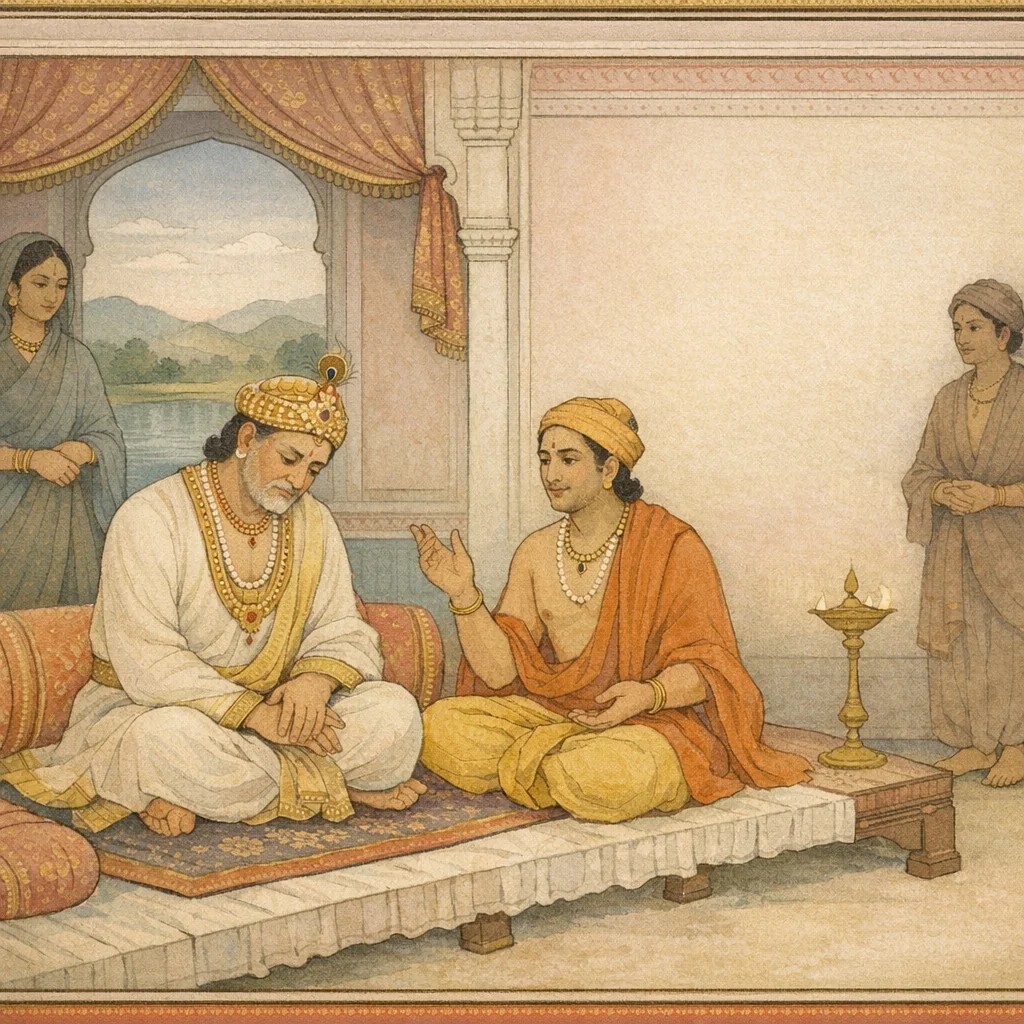
Adhyaya 24
द्रोणाभिमुखानां निवारण-युद्धम् / Interceptions on the Droṇa-front
Upa-parva: Droṇa-abhimukha-yuddha (Interceptions of the Droṇa-front)
Saṃjaya reports that a sudden battlefield panic arises when the Pāṇḍava forces appear to close upon Droṇa, obscuring him like clouds covering the sun; dust and disrupted sightlines lead some to believe Droṇa has fallen. Duryodhana responds with a command directive urging his leaders to resist the Pāṇḍava host according to strength and discipline. The chapter then unfolds as a catalog of rapid interceptions: Durmarṣaṇa engages Bhīma; Kṛtavarmā checks Śaineya; Jayadratha confronts Kṣatradharmā; Subāhu intercepts Yuyutsu; the Madra ruler contests Yudhiṣṭhira; Bāhlīka meets Drupada; Vindānuvinda press Virāṭa; Bhūtakarman blocks Śatānīka (Nakulī), but is beheaded; Viviṃśati holds back Sutasoma; other pairings include Prativindhya vs Aśvatthāman, Vikarṇa vs Śikhaṇḍin, Aṅgada vs Uttamaujas, Durmukha vs Purujit (with a notable arrow to the brow), Karṇa vs the five Kekaya brothers, and additional duels involving Kṛpa, the Cedi king, and others. The chapter culminates in the arrival of Ghaṭotkaca in a disruptive assault mode, countered by the rākṣasa Alambusa, while Saṃjaya remarks on the unprecedented density and variety of engagements focused on Droṇa’s presence/absence as the operational pivot.
Chapter Arc: धृतराष्ट्र, भीष्म और द्रोण के विषय में अशुभ समाचार सुनकर मोहग्रस्त हो उठता है—जीवन से विरक्ति और राज्य-भय एक साथ उसे घेर लेते हैं। → वह संजय से पूछता है कि जिन दो ‘धुरंधरों’ के सहारे वे जीते थे, उनके बाद अब शेष सेना का क्या होगा; और फिर युद्ध का क्रम—कौन किसे परास्त करता रहा—सब स्पष्ट सुनाने की जिद करता है। → धृतराष्ट्र का तीखा, व्याकुल प्रश्न-प्रहार: पाण्डवों के लौट आने पर ‘मेरी शेष सेना’ का जो ‘सुदारुण संनिपात’ हुआ, वह कैसे हुआ—और उस घड़ी कौरव-शूरों का मनोबल किसने, कैसे थामा? → संजय को आदेश मिलता है कि युद्ध-वृत्तांत क्रमशः, बिना छिपाए सुनाए; अध्याय का अंत प्रश्नों की गांठ बाँधकर अगले वर्णन के लिए मंच तैयार करता है। → पाण्डवों के पुनः लौटने पर कौरव-शेषबल की भीषण भिड़ंत का वास्तविक दृश्य और परिणाम क्या रहा—यह अगले अध्याय में खुलता है।
Shlokas
Verse 1
#फ्सपान () आकजअा+- ३. नीलकण्ठी टीकामें अश्व-शास्त्रके अनुसार घोड़ोंके रंग और लक्षण आदिका परिचय दिया गया है। उसमेंसे कुछ आवश्यक बातें यहाँ यथास्थान उद्धृत की जाती हैं। सारंगका रंग सूचित करनेवाला रंग इस प्रकार है-- सितनीलारुणो वर्ण: सारंगसदृशश्व सः । २. कबूतरका रंग बतानेवाला वचन यों मिलता है-- पारावतकपोताभ: सितनीलसमन्वयात् | 3. काम्बोज (काबुल)-के घोड़ोंका लक्षण-- महाललाटजघनस्कन्धवक्षोजवा हया: । दीर्घग्रीवायता हस्वमुष्का: काम्बोजका: स्मृता: ।। जिनके ललाट, जाँघें, कंधे, छाती और वेग महान् होते हैं, गर्दन लम्बी और चौड़ी होती है तथा अण्डकोष बहुत छोटे होते हैं, वे काबुली घोड़े माने गये हैं। $. जिस घोड़ेके ललाटके मध्यभागमें ताराके समान श्वेत चिह्न हो, उसके उस चिह्लका नाम ललाम है। उससे युक्त अश्व भी ललाम ही कहलाता है। यथा-- श्वेत ललाटमध्यस्थं तारारूपं हयस्य यत् | ललाम॑ चापि तत्प्राहुर्ललामो<श्वस्तदन्वित: ।। २. हरि” का लक्षण इस प्रकार दिया गया है-- सकेशराणि रोमाणि सुवर्णाभानि यस्य तु । हरि: स वर्णतो<श्वस्तु पीतकौशेयसंनिभ: ।। जिसकी गर्दनके बड़े-बड़े बाल और शरीरके रोएँ सुनहरे रंगके हों, जो रंगमें रेशमी पीताम्बरके समान जान पड़ता हो, वह घोड़ा “हरि' कहलाता है। ३. सिंधु देशके घोड़ोंकी गर्दन लम्बी, मूत्रेन्द्रिय मुँहउतक पहुँचनेवाली, आँखे बड़ी-बड़ी, कद ऊँचा तथा रोएँ सूक्ष्म होते हैं। सिंधी घोड़े बड़े बलिष्ठ होते हैं, जैसा कि बताया गया है-- दीर्घग्रीवा मुखालम्बमेहना: पृथुलोचना: । महान्तस्तनुरोमाणो बलिन: सैन्धवा हया: ।। २. पद्मवर्णका परिचय इस प्रकार दिया गया है-- सितरक्तसमायोगात् पद्मवर्ण: प्रकीर्त्यते । सफेद और लाल रंगोंके सम्मिश्रणसे जो रंग होता है, वह पद्मवर्ण कहलाता है। 3. बाह्लिक देशके घोड़े भी प्राय: काबुली घोड़ोंके समान ही होते हैं। उनमें विशेषता इतनी ही है कि उनका पीठभाग काम्बोजदेशीय घोड़ोंकी अपेक्षा बड़ा होता है। जैसा कि निम्नांकित वचनसे स्पष्ट है-- काम्बोजसमसंस्थाना बाह्ठविजाताश्न वाजिन: । विशेष: पुनरेतेषां दीर्घपृष्ठाड्गतोच्यते ।। ४. जिनके रोएँ तथा केसर (गर्दनके बाल) सफेद होते हैं, त्वचा, गुह्म॒भाग, नेत्र, ओठ और खुर काले होते हैं, ऐसे घोड़ोंको महर्षियोंने क्रौंचवर्णका बताया है। यथा-- सितलोमकेसराढ्या: कृष्णत्वग्गुह्दलोचनोष्ठखुरा: । ये स्युर्मुनिभिर्वाहा निर्दिष्टा: क्रौज्चवर्णास्ति ।। > ये वसुदान २१।५५ में मारे गये वसुदानसे भिय्न हैं। इन्हें कहीं-कहीं “काश्य'बताया गया है। सम्भाव है, ये ही काशिराज हों। > यद्यपि सिंहसेन और व्याप्रदत्तके मारे जानेका वर्णन (१६।३७ में) आ चुका है। तथापि यहाँ घोड़ोंके वर्णनके प्रसंगमें संजयने सामान्यतः सबके घोड़ोंका उल्लेख कर दिया है। मृत्युसे पहले वे दोनों वैसे ही घोड़ोंपर आरूढ हो रणभूमिमें पधारे थे। - इन्हींका वर्णन पहले श्लोक ५६ में भी आ चुका है। चतुर्विशो$ध्याय: धृतराष्ट्रका अपना खेद प्रकाशित करते हुए युद्धके समाचार पूछना धृतराष्ट उवाच व्यथयेयुरिमे सेनां देवानामपि संजय । आहवे ये न्यवर्तन्त वृकोदरमुखा नृपा:,धृतराष्ट्रने कहा--संजय! भीमसेन आदि जो-जो नरेश युद्धमें लौटकर आये थे, ये तो देवताओंकी सेनाको भी पीड़ित कर सकते हैं
Dhṛtarāṣṭra said: “Sañjaya, these kings—led by Vṛkodara (Bhīma)—who have returned from the battle could shake and distress even the armies of the gods. Tell me what has happened.”
Verse 2
सम्प्रयुक्त: किलैवायं दिष्टर्भवति पूरुष: । तस्मिन्नेव च सर्वार्था: प्रदृश्यन्ते पृथग्विधा:,निश्चय ही यह मनुष्य दैवसे प्रेरित होता है। सबके पृथक्-पृथक् सम्पूर्ण मनोरथ दैवपर ही अवलम्बित दिखायी देते हैं
Dhṛtarāṣṭra said: Truly, this human being is set in motion by destiny alone. In that very destiny, all aims and outcomes—each in its own distinct form—are seen to rest, as though every separate desire depends upon the unseen ordinance that drives events.
Verse 3
दीर्घ विप्रोषित: कालमरण्ये जटिलो5जिनी । अज्ञातश्वैव लोकस्य विजहार युधिष्िर:
Dhṛtarāṣṭra said: “For a long time Yudhiṣṭhira lived away from his people, dwelling in the forest—his hair matted, clad in a deerskin—remaining unknown to the world, and passing his days in concealment.”
Verse 4
स एव महतीं सेनां समावर्तयदाहवे । किमन्यद् दैवसंयोगान्मम पुत्रस्य चाभवत्
Dhṛtarāṣṭra said: “He alone brought that vast army back into order in the midst of battle. What else could have happened for my son, except through the conjunction of fate?”
Verse 5
जो राजा युधिष्छिर दीर्घकालतक जटा और मृगचर्म धारण करके वनमें रहे और कुछ कालतक लोगोंसे अज्ञात रहकर भी विचरे हैं, वे ही आज रणभूमिमें विशाल सेना जुटाकर चढ़ आये हैं, इसमें मेरे तथा पुत्रोंके दैवयोगके सिवा दूसरा क्या कारण हो सकता है? ।। युक्त एव हि भाग्येन ध्रुवमुत्पद्यते नर: । स तथा<55कृष्यते तेन न यथा स्वयमिच्छति,निश्चय ही मनुष्य भाग्यसे युक्त होकर ही जन्म ग्रहण करता है। भाग्य उसे उस अवस्थामें भी खींच ले जाता है, जिसमें वह स्वयं नहीं जाना चाहता
Dhṛtarāṣṭra said: “That very king Yudhiṣṭhira—who for a long time lived in the forest wearing matted hair and a deer-skin, and who even wandered for some time unknown to people—has now come to the battlefield after mustering a vast army. What other cause can there be for this, for me and for my sons, except the working of fate? For a man is surely born bound to destiny; and by that destiny he is dragged into a condition he himself would not choose.”
Verse 6
द्यूतव्यसनमासाद्य क्लेशितो हि युधिष्ठिर: । स पुनर्भागधेयेन सहायानुपलब्धवान्,हमने द्यूतके संकटमें डालकर युधिष्ठिरको भारी क्लेश पहुँचाया था, परंतु उन्होंने भाग्यसे पुनः बहुतेरे सहायकोंको प्राप्त कर लिया है
Dhṛtarāṣṭra said: “When Yudhiṣṭhira fell into the ruinous addiction of gambling, he was indeed made to suffer grievously. Yet, by the turn of fortune, he has again obtained many allies.”
Verse 7
अद्य मे केकया लब्धा: काशिका: कोसलाश्ष ये । चेदयश्नापरे वड़ा मामेव समुपाश्रिता:,सूत संजय! आजसे बहुत पहलेकी बात है, मूर्ख दुर्योधनने मुझसे कहा था कि “पिताजी! इस समय केकय, काशी, कोसल तथा चेदिदेशके लोग मेरी सहायताके लिये आ गये हैं। दूसरे वंगवासियोंने भी मेरा ही आश्रय लिया है। तात! इस भूमण्डलका बहुत बड़ा भाग मेरे साथ है, अर्जुनके साथ नहीं है”
Dhṛtarāṣṭra said: “O Sūta Sañjaya, today the Kekayas have been secured for my side, as well as the men of Kāśī and Kosala. The Cedis too, and other Vaṅgas, have taken refuge in me alone.”
Verse 8
पृथिवी भूयसी तात मम पार्थस्य नो तथा । इति मामब्रवीत् सूत मन्दो दुर्योधन: पुरा,सूत संजय! आजसे बहुत पहलेकी बात है, मूर्ख दुर्योधनने मुझसे कहा था कि “पिताजी! इस समय केकय, काशी, कोसल तथा चेदिदेशके लोग मेरी सहायताके लिये आ गये हैं। दूसरे वंगवासियोंने भी मेरा ही आश्रय लिया है। तात! इस भूमण्डलका बहुत बड़ा भाग मेरे साथ है, अर्जुनके साथ नहीं है”
Dhṛtarāṣṭra said: “O charioteer, long ago that foolish Duryodhana said to me: ‘Father, at this time the people of Kekaya, Kāśī, Kosala, and the land of Cedi have come to support me. Others—those of Vanga as well—have taken refuge with me alone. Dear father, a far greater portion of this earth stands with me, not with Pārtha (Arjuna).’”
Verse 9
तस्य सेनासमूहस्य मध्ये द्रोण: सुरक्षित: । निहतः पार्षतेनाजी किमन्यद् भागधेयत:,उसी विशाल सेनासमूहके मध्य सुरक्षित हुए द्रोणाचार्यको युद्धस्थलमें धृष्टद्युम्नने मार डाला, इसमें भाग्यके सिवा दूसरा क्या कारण हो सकता है?
Dhṛtarāṣṭra said: “In the very midst of that vast host, Droṇa—well-guarded—was slain on the battlefield by the son of Pṛṣat. What cause can there be other than destiny?”
Verse 10
मध्ये राज्ञां महाबाहुं सदा युद्धाभिनन्दिनम् । सर्वस्त्रिपारगं द्रोणं कथं मृत्युरुपेयिवान्,राजाओंके बीचमें सदा युद्धका अभिनन्दन करनेवाले सम्पूर्ण अस्त्र-विद्याके पारंगत विद्वान् महाबाहु द्रोणाचार्यको कैसे मृत्यु प्राप्त हुई?
Dhṛtarāṣṭra said: “In the midst of kings stood Droṇa—mighty-armed, ever rejoicing in battle, and fully accomplished in every weapon and martial science. How did such a man come to meet his death?”
Verse 11
समनुप्राप्तकृच्छोी 5हं मोहं परममागत: । भीष्मद्रोणौ हतीौ श्रुत्वा नाहं जीवितुमुत्सहे,मुझपर महान् संकट आ पहुँचा है। मेरी बुद्धिपर अत्यन्त मोह छा गया है। मैं भीष्म और द्रोणाचार्यको मारा गया सुनकर जीवित नहीं रह सकता
Dhṛtarāṣṭra said: “A grievous calamity has overtaken me, and I have fallen into the deepest delusion. Hearing that Bhīṣma and Droṇa have been slain, I no longer have the will to go on living.”
Verse 12
यन्मां क्षत्ताब्रवीत् तात प्रपश्यन् पुत्रगृद्धिनम् । दुर्योधनेन तत् सर्व प्राप्त सूत मया सह,तात! मुझे अपने पुत्रोंके प्रति अत्यन्त आसक्त देखकर विदुरने मुझसे जो कुछ कहा था, मेरे साथ दुर्योधनको वह सब प्राप्त हो रहा है
Dhṛtarāṣṭra said: “O dear one, seeing me consumed by craving for my sons, whatever the chamberlain Vidura once told me—now all of that has come upon Duryodhana as well, together with me, O Sūta.”
Verse 13
नृशंसं तु परं नु स्यात् त्यक्त्वा दुर्योधनं यदि । पुत्रशेषं चिकीर्षेयं कृत्स्नं न मरणं व्रजेत्,यदि मैं दुर्योधनको त्यागकर शेष पुत्रोंकी रक्षा करना चाहूँ तो यह अत्यन्त निष्ठरताका कार्य अवश्य होगा, परंतु मेरे सारे पुत्रोंकी तथा अन्य सब लोगोंकी भी मृत्यु नहीं होगी
Dhṛtarāṣṭra said: “Would it not be the height of cruelty if, abandoning Duryodhana, I sought to preserve only the remnant of my sons? Yet if I were to do so, perhaps total destruction—death for all—might not come to pass.”
Verse 14
यो हि धर्म परित्यज्य भवत्यर्थपरो नर: । सोअस्माच्च हीयते लोकात् क्षुद्रभावं च गच्छति,जो मनुष्य धर्मका परित्याग करके अर्थपरायण हो जाता है, वह इस लोकसे (लौकिक स्वार्थसे) भ्रष्ट हो जाता है और नीच गतिको प्राप्त होता है
Dhṛtarāṣṭra said: “For the man who abandons dharma and becomes devoted solely to material gain—he falls away even from this world’s true welfare and sinks into a petty, ignoble condition.”
Verse 15
अद्य चाप्यस्य राष्ट्रस्य हतोत्साहस्य संजय । अवशेषं न पश्यामि ककुदे मृदिते सति,संजय! आज इस राष्ट्रका उत्साह भंग हो गया। प्रधानके मारे जानेसे अब मुझे किसीका जीवन शेष रहता नहीं दिखायी देता
Dhṛtarāṣṭra said: “Even today, Sañjaya, the spirit of this kingdom has been shattered. With its chief pillar struck down, I can no longer see any remnant of life or hope left for us.”
Verse 16
कथं स्यादवशेषो हि धुर्ययोरभ्यतीतयो: । यौ नित्यमुपजीवाम: क्षमिणौ पुरुषर्षभौ,हमलोग सदा जिन सर्वसमर्थ पुरुषसिंहोंका आश्रय लेकर जीवन धारण करते थे, उन धुरंधर वीरोंके इस लोकसे चले जानेपर अब हमारी सेनाका कोई भी सैनिक कैसे जीवित बच सकता है
Dhṛtarāṣṭra said: “How could there be any survivors at all, now that those two foremost champions have passed away? We have always sustained ourselves by taking refuge in those patient, bull-like heroes among men. With such pillars gone from this world, how could any soldier of our army remain alive?”
Verse 17
व्यक्तमेव च मे शंस यथा युद्धमवर्तत । के<्युध्यन् के व्यपाकुर्वन् के क्षुद्रा: प्राद्रवन् भयात्
Dhṛtarāṣṭra said: “Tell me plainly how the battle unfolded. Who fought on, who turned back and withdrew, and who—base and faint-hearted—fled in fear?”
Verse 18
संजय! वह युद्ध जिस प्रकार हुआ था, सब साफ-साफ मुझसे बताओ। कौन-कौन वीर युद्ध करते थे, कौन किसको परास्त करते थे और कौन-कौन-से क्षुद्र सैनिक भयके कारण युद्धके मैदानसे भाग गये थे ।। धनंजयं च मे शंस यद् यच्चक्रे रथर्षभ: । तस्माद् भयं नो भूयिष्ठं भ्रातृव्याच्च वृकोदरात्,धनंजय अर्जुनके विषयमें भी मुझे बताओ। रथियोंमें श्रेष्ठ अर्जुनने क्या-क्या किया था। मुझे उनसे तथा शत्रुस्वरूप भीमसेनसे अधिक भय लगता है
Dhṛtarāṣṭra said: “Sañjaya, tell me clearly and in full how that battle unfolded. Which heroes fought, who overcame whom, and which petty soldiers—out of fear—fled the field. And also report to me about Dhanañjaya (Arjuna): what deeds the bull among charioteers performed. For it is from him, and from Vṛkodara (Bhīma)—who stands to us as an enemy kinsman—that our greatest fear arises.”
Verse 19
यथा<<सीच्च निवृत्तेषु पाण्डवेयेषु संजय । मम सैन्यावशेषस्य संनिपात: सुदारुण:,संजय! पाण्डव-सैनिकोंके पुनः युद्धभूमिमें लौट आनेपर मेरी शेष सेनाके साथ जिस प्रकार उनका अत्यन्त भयंकर संग्राम हुआ था, वह कहो
Dhṛtarāṣṭra said: “O Sañjaya, tell me how—when the sons of Pāṇḍu returned again to the battlefield—there occurred a most dreadful clash between them and what remained of my army.”
Verse 20
कथं च वो मनस्तात निवृत्तेष्वडभवत् तदा । मामकानां च ये शूरा: के कांस्तत्र न्यवारयन्,तात! पाण्डव-सैनिकोंके लौटनेपर तुमलोगोंके मनकी कैसी दशा हुई? मेरे पुत्रोंकी सेनामें जो शूरवीर थे, उनमेंसे किन लोगोंने शत्रुपक्षके किन वीरोंको रोका था?
Dhṛtarāṣṭra said: “And, dear son, when the Pāṇḍava troops had turned back, what state was your mind in then? And among my own side’s valiant warriors—who, there, held back which heroes of the enemy?”
Verse 24
इति श्रीमहाभारते द्रोणपर्वणि संशप्तकवधपर्वणि धृतराष्ट्रवाक्ये चतुर्विशो5ध्याय: ।। २४ ।। इस प्रकार श्रीमह्ाभारत द्रोणपर्वके अन्तर्गत संशप्तकवधपर्वमें धृतराष्ट्रवाक्यविषयक चौबीसवाँ अध्याय पूरा हुआ
Thus, in the Śrī Mahābhārata, within the Droṇa Parva—specifically in the section concerning the slaying of the Saṁśaptakas—ends the twenty-fourth chapter, presented as Dhṛtarāṣṭra’s discourse. This closing colophon marks the completion of the chapter’s narrative unit, situating the events within the moral gravity of the war and the king’s ongoing inquiry into the unfolding destruction.
Frequently Asked Questions
The dilemma concerns whether warriors should prioritize personal valor and independent targets or subordinate themselves to a containment mission—accepting delaying action and risk—when the commander’s safety becomes the overriding strategic good.
Operational cohesion under uncertainty: the text illustrates how perception failures (dust, occlusion, rumor of a fall) can destabilize an army, and how command clarity and distributed responsibility can restore functional order.
No formal phalaśruti is presented; the closest meta-commentary is Saṃjaya’s evaluative note that such a battle—so densely driven by Droṇa’s perceived presence or absence—was unprecedented in memory and report, emphasizing its narrative and strategic exceptionalism.