Adhyaya 102
भीष्मस्य शरवर्षः — Bhīṣma’s Arrow-Storm and Kṛṣṇa’s Impulse to Intervene
Upa-parva: Bhīṣma-vadha-prasaṅga (Prefiguration of Bhīṣma’s Fall) — Battlefield Escalation and Kṛṣṇa’s Intervention
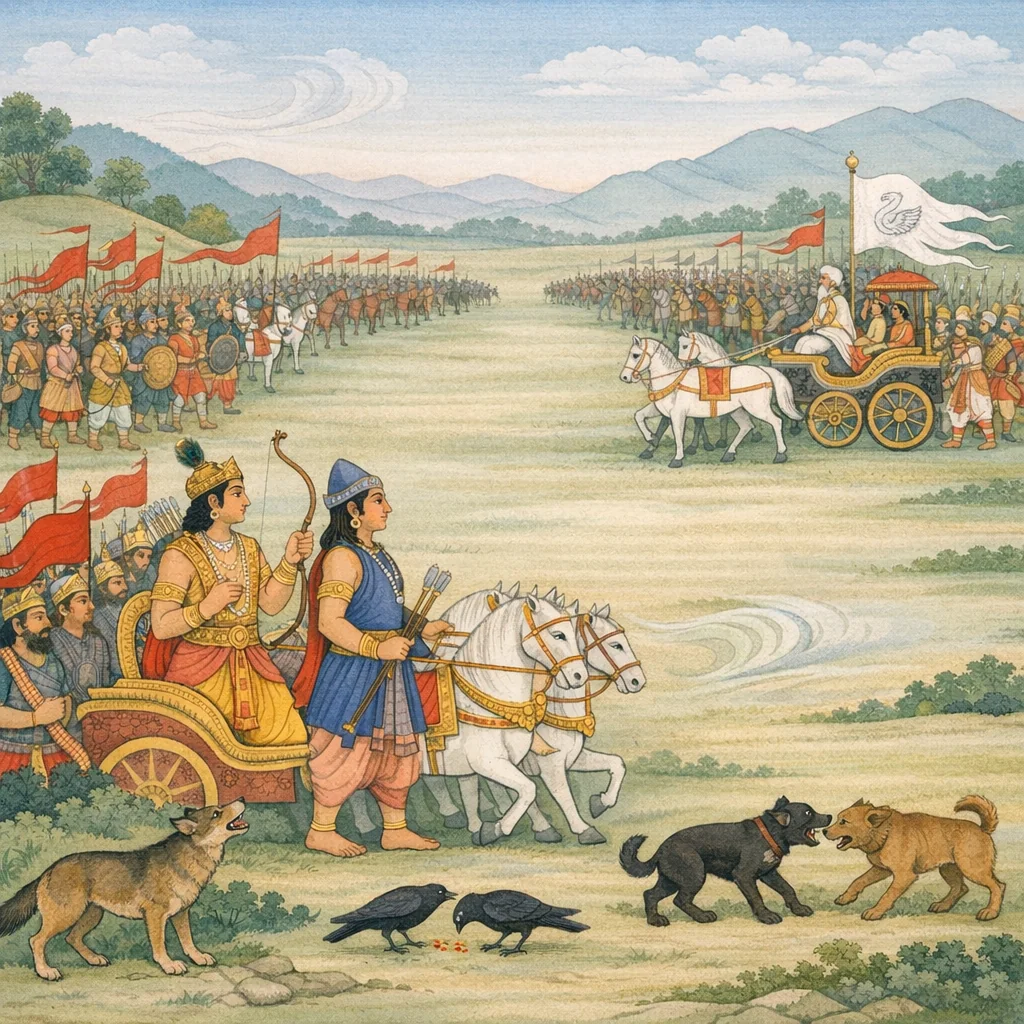
Sañjaya reports Bhīṣma’s intensified engagement: he strikes multiple Pāṇḍava leaders and allied champions with precise volleys, while allied regional troops continue to press despite losses. Bhīṣma is depicted through sustained fire imagery—an advancing conflagration fueled by weapons, burning through chariots, standards, and formations—creating a battlefield environment marked by fragmentation, rout, and psychological collapse. As casualties mount, Kṛṣṇa observes Arjuna’s comparatively gentle engagement and Bhīṣma’s relentless output; Kṛṣṇa’s intolerance of the imbalance culminates in a decisive emotional surge, leaping from the chariot and rushing Bhīṣma with whip in hand. This triggers alarm within the Kaurava ranks and a countervailing act of restraint: Arjuna pursues and physically holds Kṛṣṇa back, arguing for vow-consistency and reputational integrity. Arjuna then commits to redirecting the chariot toward Bhīṣma and intensifies his own action: he repeatedly severs Bhīṣma’s bow(s), demonstrating technical superiority while Bhīṣma rapidly re-arms, praises Arjuna’s skill, and resumes the exchange. The chapter ends with Bhīṣma continuing to break Pāṇḍava forces, while the armies, exhausted and shaken, seek relief as the day wanes—underscoring the tension between strategic necessity, ethical self-binding, and the management of collective fear.
Chapter Arc: संजय धृतराष्ट्र को नवें दिन के युद्ध के लिए दोनों पक्षों की विशाल सेनाओं की व्यूह-रचना का दृश्य सुनाते हैं—मानो पृथ्वी स्वयं शस्त्रों के भार से कराह उठी हो। → कौरव-पक्ष में भीष्म के अग्रभाग में कृपाचार्य, कृतवर्मा, शैब्य, शकुनि, जयद्रथ और काम्बोज-सुदक्षिण जैसे महारथी व्यूह के मुख पर स्थित होते हैं; उधर पाण्डव-पक्ष में शिखण्डी, अर्जुन, घटोत्कच, चेकितान, कुन्तिभोज, धृष्टद्युम्न, विराट और सात्यकि आदि अपने-अपने स्थानों पर शत्रु-विनाश के संकल्प से जमते हैं। → युद्ध आरम्भ से पहले ही प्रकृति और पशु-पक्षियों के अपशकुन उग्र हो उठते हैं—तुमुल वायु, घोर ध्वनियाँ, शिवाओं का रुदन, रक्त-मिश्रित दृश्य-कल्पना, वाहनों की आँखों से जल, और राक्षसी गर्जनाओं से भय का चरम संकेत; यह सब नवें दिन के महासंहार का पूर्वाभास बन जाता है। → अध्याय का अंत वास्तविक टक्कर से पहले ‘तैयारी की पूर्णता’ पर ठहरता है—दोनों सेनाएँ कवच बाँध, व्यूह में दृढ़ होकर, अपने-अपने नायकों के पीछे युद्ध के लिए प्रस्तुत हैं। → अपशकुनों की छाया में प्रश्न लटकता है—नवें दिन किसका व्यूह टूटेगा, और किसके रथों पर विनाश की पहली छाया उतरेगी?
Shlokas
Verse 1
[दाक्षिणात्य अधिक पाठका ह श्लोक मिलाकर कुल ५१ ६ “लोक हैं।] #द१-3८5>> | मु । बी आस एकोनशततमो<ध्याय: नवें दिनके युद्धके लिये उभयपक्षकी सेनाओंकी व्यूह-रचना और उनके घमासान युद्धका आरम्भ तथा विनाशसूचक उत्पातोंका वर्णन संजय उवाच तत: शान्तनवो भीष्मो निर्ययाँ सह सेनया । व्यूहं चाव्यूहत महत् सर्वतोभद्रमात्मन:,संजय कहते हैं--महाराज! तदनन्तर शान्तनु-नन्दन भीष्म सेनाके साथ शिविरसे बाहर निकले। उन्होंने अपनी सेनाको सर्वतोभद्र नामक महान व्यूहके रूपमें संगठित किया
Sañjaya said: Then Bhīṣma, the son of Śāntanu, marched out with his army. With deliberate command he arranged his forces into the great formation called Sarvatobhadra—an all-protective battle array—signaling disciplined readiness for the fierce engagement of the ninth day.
Verse 2
कृपश्च कृतवर्मा च शैब्यश्वैव महारथ: । शकुनि: सैन्धवश्वैव काम्बोजश्न सुदक्षिण:,भारत! कृपाचार्य, कृतवर्मा, महारथी शैब्य, शकुनि, सिन्धुराज जयद्रथ तथा काम्बोजराज सुदक्षिण--ये सब नरेश भीष्म तथा आपके पुत्रोंके साथ सम्पूर्ण सेनाके आगे तथा व्यूहके प्रमुख भागमें खड़े हुए थे
Kripa and Kritavarman, and the great chariot-warrior Shaibya; Shakuni, Jayadratha the king of Sindhu, and Sudakshina the king of Kamboja—all these rulers stood before the whole army, in the foremost and principal part of the formation.
Verse 3
भीष्मेण सहिता: सर्वे पुत्रैश्न॒ तव भारत । अग्रतः सर्वसैन्यानां व्यूहस्य प्रमुखे स्थिता:,भारत! कृपाचार्य, कृतवर्मा, महारथी शैब्य, शकुनि, सिन्धुराज जयद्रथ तथा काम्बोजराज सुदक्षिण--ये सब नरेश भीष्म तथा आपके पुत्रोंके साथ सम्पूर्ण सेनाके आगे तथा व्यूहके प्रमुख भागमें खड़े हुए थे
Sañjaya said: “O Bharata, all of your sons, together with Bhīṣma, stood at the very front of the entire army, in the foremost part of the battle-formation. There too were Kripa the preceptor, Kritavarman, the great chariot-warrior Shaibya, Shakuni, Jayadratha the king of Sindhu, and Sudakshina the king of Kamboja—aligned with Bhīṣma and your sons at the head of the host, where leadership and the burden of the coming violence are borne most directly.”
Verse 4
द्रोणो भूरिश्रवा: शल्यो भगदत्तश्न मारिष । दक्षिणं पक्षमाश्रित्य स्थिता व्यूहस्य दंशिता:,आर्य! द्रोणाचार्य, भूरिश्रवा, शल्य तथा भगदत्त--ये कवच बाँधकर व्यूहके दाहिने पक्षका आश्रय लेकर खड़े थे
Sañjaya said: “O revered one, Droṇa, Bhūriśravā, Śalya, and Bhagadatta—armoured and resolute—took their stand on the right wing of the battle-array.”
Verse 5
अश्वृत्थामा सोमदत्तश्नावन्त्यौ च महारथौ । महत्या सेनया युक्ता वाम॑ पक्षमपालयन्
Sañjaya said: Aśvatthāmā, Somadatta, and Nāvantya—each a great chariot-warrior—together with a large force, took charge of guarding the left wing.
Verse 6
अश्वत्थामा, सोमदत्त तथा अवन्तीके दोनों राजकुमार महारथी विन्द और अनुविन्द-- ये विशाल सेनाके साथ व्यूहके वाम पक्षका संरक्षण कर रहे थे ।। दुर्योधनो महाराज त्रिगर्ते: सर्वतो वृत: । व्यूहमध्ये स्थितो राजन् पाण्डवान् प्रति भारत,महाराज! भरतवंशी नरेश! त्रिगर्तदेशीय सैनिकोंके द्वारा सब ओरसे घिरा हुआ दुर्योधन पाण्डवोंका सामना करनेके लिये व्यूहके मध्यभागमें खड़ा हुआ
Sañjaya said: Aśvatthāmā, Somadatta, and the two princes of Avanti—Vinda and Anuvinda, all great chariot-warriors—were guarding the left wing of the battle-array with a vast force. And King Duryodhana, O great king, scion of Bharata, surrounded on all sides by the Trigarta troops, stood in the very center of the formation, facing the Pāṇḍavas.
Verse 7
अलनम्बुषो रथश्रेष्ठ: श्रुतायुश्न महारथ: । पृष्ठत: सर्वसैन्यानां स्थितौ व्यूहस्य दंशितौ,रथियोंमें श्रेष्ठ अलम्बुष और महारथी श्रुतायु--ये दोनों कवच धारण करके सम्पूर्ण सेनाओं तथा व्यूहके पृष्ठभागमें खड़े थे
Sañjaya said: Alambūṣa, foremost among charioteers, and Śrutāyu, the great chariot-warrior—both fully armoured—took their stand at the rear of the entire host, behind the battle-array, ready to support and defend it.
Verse 8
एवं च तं तदा व्यूहं कृत्वा भारत तावका: | संनद्धा: समदृश्यन्त प्रतपन्त इवाग्नय:,भारत! इस प्रकार व्यूहरचना करके उस समय आपके पुत्र कवच आदिसे सुसज्जित हो प्रजजलित अग्नियोंके समान दृष्टिगोचर हो रहे थे
Sañjaya said: “O Bhārata, having thus arranged that battle-formation at that time, your warriors—fully armed and armoured—appeared like blazing fires, radiant with martial heat and resolve.”
Verse 9
ततो युधिषिरो राजा भीमसेनश्व पाण्डव: । नकुल: सहदेवश्न माद्रीपुत्रावुभावपि
Sañjaya said: Then King Yudhiṣṭhira, and Bhīmasena the Pāṇḍava, and also Nakula and Sahadeva—both sons of Mādrī—(came forward/assembled), as the events of the battle unfolded.
Verse 10
धृष्टय्युम्नो विराटश्न सात्यकिश्व महारथ:
Sañjaya said: “Dhṛṣṭadyumna, Virāṭa, and Sātyaki—each a great chariot-warrior (mahāratha)—were present/advanced within the battle array.”
Verse 11
शिखण्डी विजयश्नैव राक्षसश्ष घटोत्कच:,महाराज! शिखण्डी, अर्जुन, राक्षस घटोत्कच, महाबाहु चेकितान तथा पराक्रमी कुन्तिभोज--ये विशाल सेनासे घिरे हुए वीर युद्धभूमिमें यथायोग्य स्थानपर खड़े थे
Sañjaya said: “O King, Śikhaṇḍī, Vijaya, the rākṣasa Ghaṭotkaca, Arjuna, the mighty-armed Cekitāna, and the valiant Kuntibhoja—these heroes, surrounded by a vast host, stood on the battlefield each in his proper station.”
Verse 12
चेकितानो महाबाहु: कुन्तिभोजश्न वीर्यवान् । स्थिता रणे महाराज महत्या सेनया वृता:,महाराज! शिखण्डी, अर्जुन, राक्षस घटोत्कच, महाबाहु चेकितान तथा पराक्रमी कुन्तिभोज--ये विशाल सेनासे घिरे हुए वीर युद्धभूमिमें यथायोग्य स्थानपर खड़े थे
Sañjaya said: “O great king, the mighty-armed Cekitāna and the valiant Kuntibhoja stood firm in the battle, surrounded by a great host.”
Verse 13
अभिमन्युर्महेष्वासो द्रुपदश्च महाबल: । युयुधानो महेष्वासो युधामन्युश्न वीर्यवान्
Sañjaya said: “Abhimanyu, a great archer; Drupada, mighty in strength; Yuyudhāna (Sātyaki), a great archer; and Yudhāmanyu, renowned for his valor.”
Verse 14
केकया भ्रातरश्रैव स्थिता युद्धाय दंशिता: । महाधनुर्धर अभिमन्यु, महाबली ट्रुपद, विशाल धनुष धारण करनेवाले युयुधान, पराक्रमी युधामन्यु और पाँचों भाई केकयराजकुमार--ये कवच धारण करके युद्धके लिये तैयार खड़े थे || १३ है ।। एवं तेडपि महाव्यूहं प्रतिव्यूह्द सुदुर्जयम्
Sañjaya said: “The brothers of Kekaya too stood ready for war, fully armed. Abhimanyu, the great bowman; Drupada, mighty in strength; Yuyudhāna, bearer of a vast bow; the valiant Yudhāmanyu; and the five princes of Kekaya—clad in armor, all stood prepared for battle.”
Verse 15
तावकास्तु रणे यत्ता: सहसेना नराधिपा:,राजन्! आपकी सेनाके नरेश अपनी-अपनी सेनाओंके साथ युद्धके लिये उद्यत हो भीष्मको आगे करके पाण्डवोंपर चढ़ आये। नरेश्वर! उसी प्रकार भीमसेन आदि पाण्डवोंने भी आपकी सेनापर आक्रमण किया
Sañjaya said: O King, your rulers, each with his own contingent, readied for battle and, placing Bhīṣma at their head, surged against the Pāṇḍavas. O best of kings, in the same manner Bhīmasena and the other Pāṇḍavas also launched their assault upon your army.
Verse 16
अभ्युद्ययू रणे पार्थान् भीष्म कृत्वाग्रतो नूप । तथैव पाण्डवा राजन् भीमसेनपुरोगमा:,राजन्! आपकी सेनाके नरेश अपनी-अपनी सेनाओंके साथ युद्धके लिये उद्यत हो भीष्मको आगे करके पाण्डवोंपर चढ़ आये। नरेश्वर! उसी प्रकार भीमसेन आदि पाण्डवोंने भी आपकी सेनापर आक्रमण किया
O King, they advanced into battle with Bhīṣma set in the van and charged upon the Pāṇḍavas; and the Pāṇḍavas too, O King, with Bhīmasena in the forefront, likewise surged forward to attack.
Verse 17
भीष्म योद्धुमभीप्सन्त: संग्रामे विजयैषिण: । क्ष्वेडा: किलकिला: शड्खान् क्रकचान् गोविषाणिका:,संग्राममें भीष्मके साथ युद्धकी इच्छा रखनेवाले विजयाभिलाषी पाण्डव सिंहनाद, किल-किल शब्द, शंखध्वनि, क्रकच, गोशूंग, भेरी, मृदंग, पणव तथा पुष्कर आदि बाजोंको बजाते तथा भैरव-गर्जना करते हुए कौरव-सेनापर चढ़ आये
Sañjaya said: Eager to fight Bhīṣma and intent on victory in the battle, the Pāṇḍavas advanced against the Kaurava host, raising lion-roars and shrill battle-cries, and sounding conches and other war-instruments—creating a fearsome, rallying tumult that proclaimed their resolve and challenged the opposing army.
Verse 18
भेरीमृदड़पणवान् नादयन्तश्न पुष्करान् । पाण्डवा अभ्यवर्तन्त नदन्तो भैरवान् रवान्,संग्राममें भीष्मके साथ युद्धकी इच्छा रखनेवाले विजयाभिलाषी पाण्डव सिंहनाद, किल-किल शब्द, शंखध्वनि, क्रकच, गोशूंग, भेरी, मृदंग, पणव तथा पुष्कर आदि बाजोंको बजाते तथा भैरव-गर्जना करते हुए कौरव-सेनापर चढ़ आये
Sañjaya said: Sounding the kettledrums, drums, paṇava-drums, and puṣkara-drums, the Pāṇḍavas advanced, roaring with fearsome cries. Eager to meet Bhīṣma in battle and intent on victory, they surged toward the Kaurava host amid a tumult of war-instruments and lion-like shouts.
Verse 19
भेरीमृदड़शड्खानां दुन्दुभीनां च निःस्वनै: | उत्कृष्टसिंहनादैश्व वल्गितैश्व पृथग्विधै:,भेरी, मृदंग, शंख और दुन्दुभियोंकी ध्वनि एवं उच्चस्वरसे सिंहनाद करते तथा अनेक प्रकारसे अपनी शेखी बघारते हुए हमलोगोंने भी बड़ी उतावलीके साथ अत्यन्त क्कुद्ध हो सहसा उनपर आक्रमण किया और उनकी गर्जनाका उत्तर हम भी अपनी गर्जनाद्वारा ही देने लगे। उस समय उभय पक्षके सैनिकोंमें महान् युद्ध होने लगा
Sañjaya said: Amid the resounding blasts of kettledrums, drums, conches, and war-drums—together with loud lion-roars and many kinds of boastful cries—we too, in sudden fury and eager haste, rushed to attack them. We answered their roaring with our own roar; and at that moment a great battle arose among the soldiers of both sides.
Verse 20
वयं प्रतिनदन्तस्तानगच्छाम त्वरान्विता: । सहसैवाभिसंक्रुद्धास्तदा55सीत् तुमुलं महत्,भेरी, मृदंग, शंख और दुन्दुभियोंकी ध्वनि एवं उच्चस्वरसे सिंहनाद करते तथा अनेक प्रकारसे अपनी शेखी बघारते हुए हमलोगोंने भी बड़ी उतावलीके साथ अत्यन्त क्कुद्ध हो सहसा उनपर आक्रमण किया और उनकी गर्जनाका उत्तर हम भी अपनी गर्जनाद्वारा ही देने लगे। उस समय उभय पक्षके सैनिकोंमें महान् युद्ध होने लगा
Sañjaya said: “Raising a counter-roar, we rushed toward them in great haste. In an instant, inflamed with fury, a vast and tumultuous clash arose.”
Verse 21
ततोडन्न्योन्यं प्रधावन्तः सम्प्रहारं प्रचक्रिरे । ततः: शब्देन महता प्रचकम्पे वसुन्धरा,दोनों पक्षके योद्धा एक-दूसरेपर धावा करते हुए अस्त्र-शस्त्रोंका प्रहार करने लगे। उस समय जो महान् कोलाहल हुआ, उससे सारी पृथ्वी काँपने लगी
Sañjaya said: Then, charging at one another, the warriors began a fierce exchange of blows with their weapons. From the tremendous roar that arose, the very earth seemed to tremble.
Verse 22
पक्षिणश्न महाघोरें व्याहरन्तो विब भ्रमु: । सप्रभश्नोदित: सूर्यो निष्प्रभ: समपद्यत,पक्षी अत्यन्त घोर शब्द करते हुए आकाशमें चक्कर काटने लगे। सूर्य यद्यपि तेजस्वी रूपमें उदित हुआ था, तथापि उस समय निस्तेज हो गया
Sañjaya said: “Birds, uttering exceedingly dreadful cries, began to wheel about in confusion. And the sun—though it rose with brilliance—seemed at that time to lose its radiance.”
Verse 23
ववुश्न वातास्तुमुला: शंसन्त: सुमहद् भयम् । घोराश्न घोरनिर्ह्नादा: शिवास्तत्र ववाशिरे,महान् भयकी सूचना देनेवाली भयंकर वायु बड़े वेगसे बहने लगी। घोर वज्रपातके-से भयानक शब्द सुनायी देने लगे। सियारिनें अशुभ बोली बोलने लगीं
Sañjaya said: Fierce, tumultuous winds began to blow, foretelling a very great danger. Terrifying, thunderbolt-like crashes resounded, and jackals there cried out with ominous calls.
Verse 24
वेदयन्त्यो महाराज महद् वैशसमागतम् । दिश: प्रज्वलिता राजन् पांसुवर्ष पपात च,महाराज! वे गीदड़ियाँ सिरपर आये हुए विकट विनाशकी सूचना दे रही थीं। राजन! दिशाएँ जलती प्रतीत होने लगीं। सब ओर धूलकी वर्षा होने लगी। रक्तमिश्रित हड्डियाँ बरसने लगीं। रोते हुए वाहनोंके नेत्रोंसे आँसू गिरने लगे
Sañjaya said: “O great king, ominous portents were proclaiming that a vast calamity had arrived. O ruler, the quarters of the sky seemed to blaze, and a rain of dust fell everywhere.”
Verse 25
रुधिरेण समुन्मिश्रमस्थिवर्ष तथैव च । रुदतां वाहनानां च नेत्रेभ्य: प्रापतज्जलम्,महाराज! वे गीदड़ियाँ सिरपर आये हुए विकट विनाशकी सूचना दे रही थीं। राजन! दिशाएँ जलती प्रतीत होने लगीं। सब ओर धूलकी वर्षा होने लगी। रक्तमिश्रित हड्डियाँ बरसने लगीं। रोते हुए वाहनोंके नेत्रोंसे आँसू गिरने लगे
Sañjaya said: “O great king, there was a rain of bones mingled with blood; and from the eyes of the weeping steeds and other mounts, tears fell down.”
Verse 26
सुखुवुश्व शकृन्मूत्रं प्रध्यायन्तो विशाम्पते । अन्तर्हिता महानादा: श्रूयन्ते भरतर्षभ
Sañjaya said: “O lord of the people, they voided excrement and urine, sunk in anxious brooding. Yet, O bull among the Bharatas, great roars were heard as though from hidden sources.”
Verse 27
सम्पतन्तश्न दृश्यन्ते गोमायुबलवायसा:
Sañjaya reports that jackals and powerful crows are seen swooping down together—an ominous sign in the war narrative, suggesting the nearness of slaughter and the moral darkness that gathers when dharma is strained by violence.
Verse 28
ज्वलिताश्न महोल्का वै समाहत्य दिवाकरम् | निपेतु: सहसा भूमौ वेदयन्त्यो महद् भयम्,बड़ी-बड़ी प्रज्वलित उल्काएँ सूर्यदेवसे टकरा-कर महान् भयकी सूचना देती हुई सहसा पृथ्वीपर गिर रही थीं
Sañjaya said: Great blazing meteors struck against the sun and then suddenly fell to the earth, as though proclaiming a mighty terror.
Verse 29
महान्त्यनीकानि महासमुच्छूये ततस्तयो: पाण्डवर्धार्तराष्ट्रयो: । चकम्पिरे शड्खमृदड़निःस्वनै: प्रकम्पितानीव वनानि वायुना,उस महान संग्राममें पाण्डव तथा कौरवपक्षकी विशाल सेनाएँ शंख और मृदंगकी ध्वनियोंसे उसी प्रकार काँप रही थीं, जैसे वायुके वेगसे समूचा वन-प्रान्त हिलने लगता है। उस अमंगलजनक मुहूर्तमें नरेशों, हाथियों और अश्वोंसे परिपूर्ण हो परस्पर आक्रमण करती हुई उभय पक्षकी उन विशाल सेनाओंका भयंकर शब्द वायुसे विक्षुब्ध हुए समुद्रोंकी गर्जनाके समान जान पड़ता था
Sañjaya said: Then, as the vast battle-formations of the Pāṇḍavas and the Dhārtarāṣṭras surged up in that great clash, they seemed to tremble with the blare of conches and the booming of drums—like forests quivering when struck by a powerful wind. In that ominous moment, the dreadful roar of both armies, filled with kings, elephants, and horses and rushing upon one another, seemed like the thunder of oceans churned by the wind.
Verse 30
नरेन्द्रनागाश्वसमाकुलाना- मभ्यायतीनामशिवे मुहूर्ते । बभूव घोषस्तुमुल श्चमूनां वातोद्धुतानामिव सागराणाम्,उस महान संग्राममें पाण्डव तथा कौरवपक्षकी विशाल सेनाएँ शंख और मृदंगकी ध्वनियोंसे उसी प्रकार काँप रही थीं, जैसे वायुके वेगसे समूचा वन-प्रान्त हिलने लगता है। उस अमंगलजनक मुहूर्तमें नरेशों, हाथियों और अश्वोंसे परिपूर्ण हो परस्पर आक्रमण करती हुई उभय पक्षकी उन विशाल सेनाओंका भयंकर शब्द वायुसे विक्षुब्ध हुए समुद्रोंकी गर्जनाके समान जान पड़ता था
Sañjaya said: At that inauspicious moment, as the armies—thronged with kings, elephants, and horses—surged forward to strike, a terrifying, tumultuous roar arose. The din of those advancing hosts seemed like the thunder of oceans whipped into fury by the wind, signaling the moral darkness and inevitable devastation that war unleashes when power and pride eclipse restraint.
Verse 96
अग्रतः सर्वसैन्यानां स्थिता व्यूहस्य दंशिता: । उधर राजा युधिष्ठिर, पाण्डुकुमार भीमसेन, माद्रीके दोनों पुत्र नकुल और सहदेव सब सेनाओं तथा व्यूहके अग्र भागमें कवच बाँधकर खड़े हुए
Sañjaya said: At the very front of all the armies, at the head of the battle-formation, stood the leaders fully armed. There were King Yudhiṣṭhira, the Pāṇḍava Bhīmasena, and Mādrī’s two sons, Nakula and Sahadeva—having fastened their armor and taking their place at the foremost edge of the array, ready to uphold their duty in the coming clash.
Verse 98
इस प्रकार श्रीमह्याभारत भीष्मपर्वके अन्तर्गत भीष्मवधपर्वमें भीष्य-दुर्योधनसंवादविषयक अद्वानबेवाँ अध्याय पूरा हुआ
Sanjaya said: Thus ends the ninety-second chapter of the Bhīṣma Parva of the revered Mahābhārata, within the section concerning the slaying of Bhīṣma, dealing with the dialogue between Bhīṣma and Duryodhana. This colophon marks the close of that narrative unit, underscoring the war’s moral gravity as counsel and duty are weighed amid impending catastrophe.
Verse 99
इति श्रीमहा भारते भीष्मपर्वणि भीष्मवधपर्वणि परस्परव्यूहरचनायामुत्पातदर्शने एकोनशततमो<ध्याय:
Thus, in the revered Mahābhārata, within the Bhīṣma Parva—specifically in the section concerning the slaying of Bhīṣma—ends the one-hundred-and-first chapter, describing the mutual arrangement of battle-formations and the sighting of ominous portents. The colophon frames the narrative as a morally charged turning-point: strategic human action (vyūha) unfolds under the shadow of cosmic signs (utpāta), foreshadowing the grave ethical cost of war.
Verse 103
स्थिता: सैन्येन महता परानीकविनाशना: । धृष्टद्युम्न, राजा विराट और महारथी सात्यकि--ये शत्रुसेनाका विनाश करनेवाले वीर भी विशाल सेनाके साथ व्यूहमें य थास्थान स्थित थे
Sañjaya said: Arrayed with a vast host, those heroes who were capable of destroying the enemy’s divisions—Dhrishtadyumna, King Virata, and the great chariot-warrior Satyaki—stood in their assigned positions within the battle formation. The verse underscores disciplined placement and coordinated strength, where personal valor is ethically bound to order, duty, and the collective conduct of war.
Verse 146
पाण्डवा: समरे शूरा: स्थिता युद्धाय दंशिता: । इस प्रकार शूरवीर पाण्डव भी समरांगणमें अत्यन्त दुर्जय महाव्यूहकी रचना करके कवच बाँध युद्धके लिये तैयार थे
Sañjaya said: The Pāṇḍavas—valiant in battle—stood firm on the field, fully armed and resolved for war. Having arranged a formidable great battle-formation and fastening on their armor, they made themselves ready to fight, embodying disciplined preparedness amid the grave demands of dharma in conflict.
Verse 266
रक्षसां पुरुषादानां नदतां भैरवान् रवान् | प्रजानाथ! वे सारे वाहन भारी चिन्तामें पड़कर मल-मूत्र करने लगे। भरतश्रेष्ठ) भयंकर गर्जना करनेवाले नरभक्षी राक्षसोंके महान् शब्द सुनायी पड़ते थे; परंतु उनके बोलनेवाले अदृश्य थे
Sañjaya said: “O lord of men! The dreadful roars of man-eating Rākṣasas, bellowing terribly, were heard. Struck by overwhelming fear, all the beasts of burden fell into anxious distress and voided urine and feces. O best of the Bharatas! Those mighty, terrifying sounds of flesh-eating demons were audible—yet the speakers themselves could not be seen.”
Verse 276
ध्वानश्ष विविधैनदिर्वाशन्तस्तत्र मारिष | चारों ओरसे गीदड़ और बलशाली कौए वहाँ टूटे पड़ते थे। आर्य! वहाँ कुत्ते भी नाना प्रकारकी आवाजमें भूँकते देखे जाते थे
Sañjaya said: “O venerable one, there were many kinds of ominous cries and howls there. On every side jackals and powerful crows swooped down, and dogs too were seen barking in varied tones. Such portents, arising amid the field of slaughter, signal the moral darkness and impending ruin that accompany adharma in war.”
Frequently Asked Questions
The tension is between urgent intervention to prevent strategic collapse and adherence to self-imposed limits (vows and role-constraints): Kṛṣṇa’s impulse to act directly clashes with the reputational and ethical cost of violating prior commitments.
Crisis leadership requires both decisive protection of the collective and disciplined self-restraint; credibility (satya) and responsibility-taking can stabilize a failing system more effectively than impulsive escalation.
No explicit phalaśruti appears here; the meta-commentary is implicit in Sañjaya’s framing and imagery, which interpret battlefield outcomes as consequences of resolve, vow, and command ethics within the epic’s broader dharma–karma lens.