Adhyaya 84
अश्वमेधीयस्य हयस्य दक्षिणापश्चिमगमनम् — The Sacrificial Horse’s Southern and Western Circuit
Upa-parva: Aśvamedha-Haya-Cāraṇa (Horse-Wandering Campaign Episodes)
Vaiśaṃpāyana reports the Aśvamedha horse’s itinerary and the escorting enforcement undertaken by Arjuna (Kaunteya, Kirīṭin). The horse first moves south under royal authorization and is honored by Magadha. It returns and reaches Śukti, a Cedi city, where it is received with pre-battle honor by Śarabha, son of Śiśupāla. The horse then proceeds through multiple regions (including Kāśī, Andhra, Kosala, Kirāta, and Taṅgaṇa), after which Arjuna accepts due honors and reorients toward Daśārṇa. There, a ruler named Citrāṅgada offers resistance, leading to a severe contest that ends in Arjuna’s victory and subjugation of the opponent. Arjuna next enters the territory associated with the Niṣāda king Ekalavya; Ekalavya’s son confronts him with Niṣāda forces, framed as an attempt to obstruct the sacrifice, and is defeated. Continuing along the southern sea, Arjuna faces further engagements involving Draviḍa, Andhra, Raudra, Māhiṣaka, and Kollagireya groups. Following the horse’s direction, he traverses Saurāṣṭra, reaches Gokarṇa and Prabhāsa, and the horse arrives at Dvāravatī guarded by Vṛṣṇi warriors. Yādava youths attempt to seize the horse but are restrained by Ugrasena; the Vṛṣṇy-Andhaka leader (Kṛṣṇa) and Vasudeva meet Arjuna, honor him, and permit him to continue. The horse then moves west along the sea, reaches Pañcanada, and enters Gandhāra, where a formidable battle arises with the Gandhāra king—identified as Śakuni’s son—motivated by prior enmity.
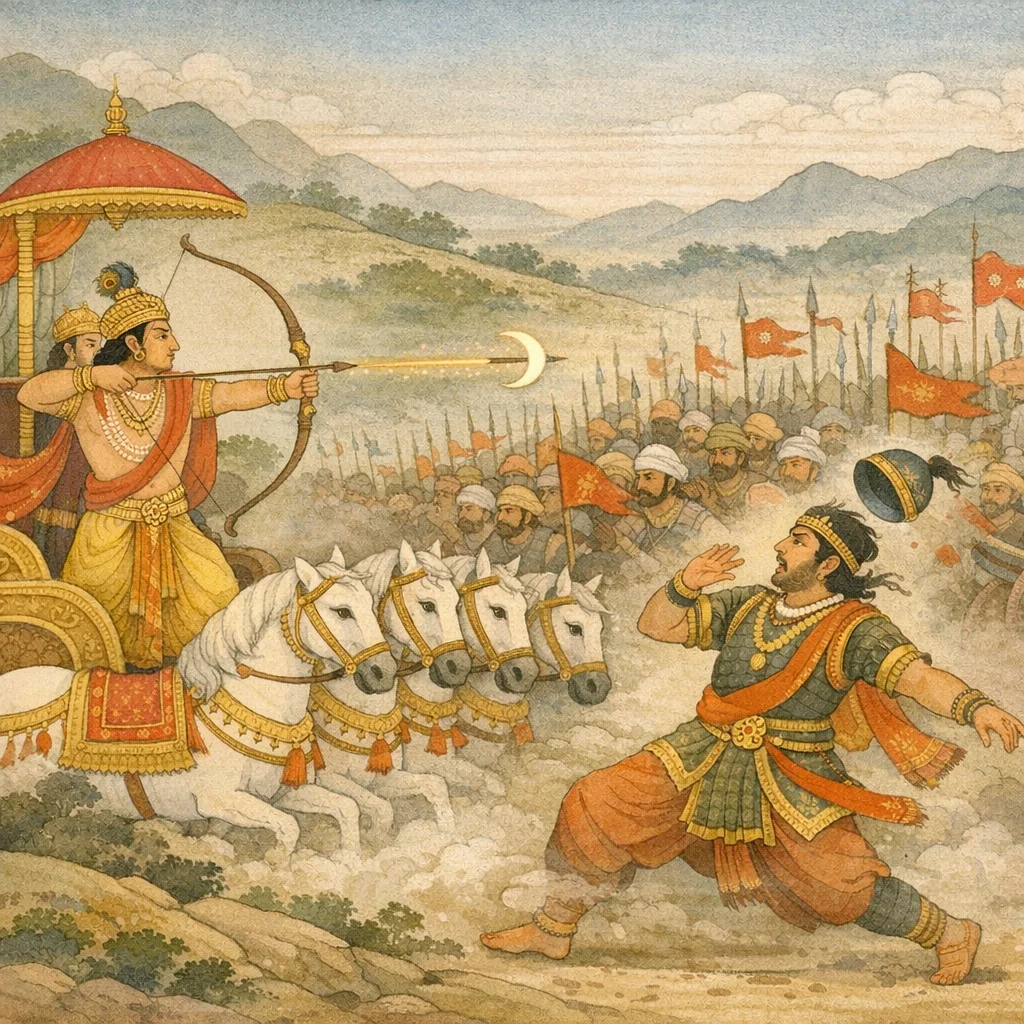
Chapter Arc: अश्वमेध के अश्व का अनुसरण करते हुए अर्जुन के सामने शकुनि-पुत्र (गान्धारों का महारथ) विशाल सेना सहित प्रत्युद्यत होता है—ध्वज-पताकाओं से सजी हस्ति-अश्व-रथ-युक्त वाहिनी के साथ। → गान्धार-योद्धा अपने कुल-अपमान और शकुनि-वध की स्मृति से क्रुद्ध होकर युद्ध के लिए उकसते हैं; अर्जुन धर्मात्मा होकर भी रण-आवश्यकता से पीछे नहीं हटता और विरोधी को संयमित वाणी से समझाने का प्रयत्न करता है, पर सेना का आवेग बढ़ता जाता है। → अर्जुन अर्धचन्द्राकार बाण से शकुनि-पुत्र का शिरस्त्राण वैसे ही उड़ा देता है जैसे कभी जयद्रथ के प्रसंग में निर्णायक प्रहार किया था; तत्पश्चात गान्धारों के रोके जाने पर भी वह नाम ले-लेकर उनके मस्तक काट गिराता है—रण का चरम उन्माद यहीं फूटता है। → विजयी अर्जुन मामी (गान्धारी) का स्मरण कर शत्रु-पक्ष के प्रति मर्यादा रखता है; वह शकुनि-पुत्र को सान्त्वना देकर कहता है कि गान्धारी-माता और धृतराष्ट्र के सम्बन्ध के कारण ही वह जीवित छोड़ा जा रहा है—अर्थात् पराजय के साथ जीवनदान। → अश्वानुसरण का अभियान आगे बढ़ता है—अश्व के मार्ग में अगले राज्य/वीर का प्रतिरोध अभी शेष है।
Shlokas
Verse 1
अपर बक। ] अत काड< चतुरशीतितमो< ध्याय: शकुनिपुत्रकी पराजय वैशम्पायन उवाच शकुनेस्तनयो वीरो गान्धाराणां महारथ: । प्रत्युद्ययौ गुडाकेशं सैन्येन महता वृतः,वैशम्पायनजी कहते हैं--जनमेजय! शकुनिका पुत्र गान्धारोंमें सबसे बड़ा वीर और महारथी था। वह विशाल सेनासे घिरकर निद्राविजयी अर्जुनका सामना करनेके लिये चला
Vaiśampāyana said: The heroic son of Śakuni, a great chariot-warrior among the Gāndhāras, advanced to confront Arjuna (Guḍākeśa), surrounded by a vast army. The narrative frames the momentum of battle—valor and martial duty driving a challenger forward—while implicitly contrasting outward military strength with the inner mastery suggested by Arjuna’s epithet, “conqueror of sleep.”
Verse 2
हस्त्यश्वरथयुक्तेन पताकाध्वजमालिना । अमृष्यमाणास्ते योधा तृपस्य शकुनेर्वधम्
Vaiśaṃpāyana said: Harnessed with elephants, horses, and chariots, and adorned with banners and standards, those warriors—unable to endure it—took satisfaction in the slaying of Śakuni. The verse underscores how, in the aftermath of grievous wrongs, martial zeal can turn into a grim sense of relief at an enemy’s fall, raising an ethical tension between righteous retribution and the hardening of the heart in war.
Verse 3
स तानुवाच धर्मात्मा बीभत्सुरपराजित:
Then the righteous-souled Bībhatsu, unconquered, addressed them—speaking from a stance of dharma and steadfast resolve.
Verse 4
युधिष्ठिरस्यथ वचन न च ते जगृहुर्हितम् । किसीसे परास्त न होनेवाले धर्मात्मा अर्जुनने उन्हें राजा युधिष्ठिरकी बात सुनायी; परंतु उस हितकर वचनको भी वे ग्रहण न कर सके ।। ३ $ ।। वार्यमाणा5पि पार्थेन सान्त्वपूर्वममर्षिता:
Vaiśampāyana said: Even after hearing Yudhiṣṭhira’s words, they did not accept what was truly beneficial. Though Pārtha (Arjuna) tried to restrain them with conciliatory counsel, they remained unyielding and resentful, unable to take in advice meant for their welfare.
Verse 5
ततः शिरांसि दीप्ताग्रैस्तेषां चिच्छेद पाण्डव:
Then the Pāṇḍava, with weapons whose points blazed, severed their heads—an act of swift, decisive violence within the unfolding conflict, underscoring the grim ethical tension between necessary force and the horror of slaughter.
Verse 6
ते वध्यमाना: पार्थेन हयमुत्सृज्य सम्भ्रमात्
Vaiśampāyana said: Struck down by Pārtha (Arjuna), they—overcome by panic—abandoned the Aśvamedha sacrificial horse and fled in confusion. Thus is it seen how fear and disorder arise when aggression meets rightful resistance, and how the consecrated horse stands as the emblem of sovereignty that challengers cannot seize.
Verse 7
निरुध्यमानस्तैश्लापि गान्धारै: पाण्डुनन्दन:
Vaiśampāyana said: Even as the men of Gandhāra hemmed him in and sought to restrain him, the son of Pāṇḍu held his ground—his rightful resolve tested by hostile opposition.
Verse 8
वध्यमानेषु तेष्वाजौ गान्धारेषु समन््तत:
Vaiśampāyana said: As those Gandhāra warriors were cut down in battle on every side, the field became a scene of relentless slaughter—war’s harsh momentum, where the duty of combat unfolds amid widespread suffering.
Verse 9
त॑ युध्यमान राजान क्षत्रधर्मे व्यवस्थितम्,क्षत्रियधर्ममें स्थित होकर युद्ध करनेवाले उस राजासे अर्जुनने इस प्रकार कहा--“वीर! तुम्हें युद्ध करनेसे कोई लाभ नहीं है। महाराज युधिष्ठिरकी यह आज्ञा है कि मैं राजाओंका वध न करूँ। अतः तुम युद्धसे निवृत्त हो जाओ जिससे आज तुम्हारी पराजय न हो'
Vaiśampāyana said: Seeing that king, steadfast in the kṣatriya code and intent on fighting, Arjuna addressed him thus: “Hero, there is no gain for you in this battle. King Yudhiṣṭhira has commanded me not to slay kings. Therefore withdraw from combat, so that you do not suffer defeat today.”
Verse 10
पार्थोउब्रवीज्न मे वध्या राजानो राजशासनात् | अलं युद्धेन ते वीर न ते5स्त्वद्य पराजय:,क्षत्रियधर्ममें स्थित होकर युद्ध करनेवाले उस राजासे अर्जुनने इस प्रकार कहा--“वीर! तुम्हें युद्ध करनेसे कोई लाभ नहीं है। महाराज युधिष्ठिरकी यह आज्ञा है कि मैं राजाओंका वध न करूँ। अतः तुम युद्धसे निवृत्त हो जाओ जिससे आज तुम्हारी पराजय न हो'
Vaiśampāyana said: Pārtha (Arjuna) spoke: “These kings are not to be slain by me, for such is the command of the king. Enough of fighting, O hero; withdraw from battle, so that you do not suffer defeat today.”
Verse 11
इत्युक्तस्तदनादृत्य वाक्यमज्ञानमोहित: । स शक्रसमकर्माणं समवाकिरदाशुगै:,उनके ऐसा कहनेपर भी वह अज्ञानसे मोहित होनेके कारण उनकी बातकी अवहेलना करके इन्द्रके समान पराक्रमी अर्जुनपर शीघ्रगामी बाणोंकी वर्षा करने लगा
Vaiśampāyana said: Though thus addressed, he—deluded by ignorance—disregarded their counsel and instead showered swift-flying arrows upon Arjuna, whose prowess in action was equal to Indra’s.
Verse 12
तस्य पार्थ: शिरस्त्राणमर्धचन्द्रेण पत्रिणा । अपाहरदमेयात्मा जयद्रथशिरो यथा,तब अमेय आत्मबलसे सम्पन्न अर्जुनने जिस प्रकार जयद्रथका सिर उड़ाया था, उसी प्रकार शकुनि-पुत्रके शिरस्त्राणः (टोप)-को एक अर्धचन्द्राकार बाणसे काट गिराया
Vaiśampāyana said: Then Pārtha (Arjuna), whose spirit and prowess were beyond measure, struck off his opponent’s helmet with a feathered, crescent-shaped arrow—just as he had once severed Jayadratha’s head.
Verse 13
त॑ दृष्टवा विस्मयं जम्मुर्गान्धारा: सर्व एव ते । इच्छता तेन न हतो राजेत्यसि च त॑ विदु:,यह देखकर समस्त गान्धारोंको बड़ा विस्मय हुआ और वे सब-के-सब यह समझ गये कि अर्जुनने जान-बूझकर गान्धारराजको जीवित छोड़ दिया
Seeing this, all the Gandhāras were struck with astonishment. They understood that the king had not been slain because Arjuna deliberately wished to spare him.
Verse 14
गान्धारराजपुत्रस्तु पलायनकृतक्षण: । ययौ तैरेव सहितत्त्रस्तै: क्षुद्रमूगैरिव,उस समय गान्धारराज शकुनिका पुत्र भागनेका अवसर देखने लगा। जैसे सिंहसे डरे हुए छोटे-छोटे मृग भाग जाते हैं, उसी प्रकार अर्जुनसे भयभीत हुए सैनिकोंके साथ वह स्वयं भी भाग निकला
Vaiśaṃpāyana said: The son of the king of Gāndhāra, seizing the moment to flee, ran off together with those same terrified men—like small deer scattering in fear (before a lion).
Verse 15
तेषां तु तरसा पार्थस्तत्रैव परिधावताम् | प्रजहारोत्तमाड़्ानि भल््लै: संनतपर्वभि:,वहीं चक्कर काटनेवाले बहुत-से सैनिकोंके मस्तक अर्जुनने झुकी हुई गाँठवाले भल्लोंद्वारा वेगपूर्वक काट लिया
Vaiśaṃpāyana said: As those warriors wheeled about and rushed here and there on the field, Pārtha (Arjuna), with swift force, struck them down on the spot—severing their heads with bhalla-arrows whose joints were bent.
Verse 16
उच्छितांस्तु भुजान् केचिन्नाबुध्यन्त शरैह्वतान् । शरैर्गाण्डीवनिर्मुक्ति: पृथुभि: पार्थचोदितै:,अर्जुनद्वारा चलाये और गाण्डीव धनुषसे छूटे हुए बहुसंख्यक बाणोंसे कितने ही योद्धाओंकी ऊँची उठी हुई भुजाएँ कटकर गिर गयीं और उन्हें इस बातका पतातक न लगा
From the Gāṇḍīva bow, urged on by Arjuna, countless broad-shafted arrows flew; many warriors’ arms, raised high, were severed and fell, and yet they did not even realize they had been struck by the shafts.
Verse 17
सम्भ्रान्तनरनागाश्वमपतद् विद्रुतं बलम् । हतविध्वस्तभूयिष्ठमावर्तत मुहुर्मुहु:
Vaiśampāyana said: The army, thrown into panic—its men, elephants, and horses in confusion—broke and fled. Largely slain and shattered, it kept wheeling back again and again, unable to hold its ground or find a steady course amid the ruin.
Verse 18
सम्पूर्ण सेनाके मनुष्य, हाथी और घोड़े घबराकर इधर-उधर भटकने लगे। सारी सेना गिरती-पड़ती भागने लगी। उनके अधिकांश सिपाही युद्धमें मारे गये या नष्ट हो गये और वह बार-बार युद्धभूमिमें ही चक्कर काटने लगी ।। नाभ्यदृश्यन्त वीरस्य केचिदग्रेग्रयकर्मण: । रिपव: पात्यमाना वै ये सहेयुर्धन॑जयम्,श्रेष्ठ कर्म करनेवाले वीर अर्जुनके सामने कोई भी शत्रु खड़े नहीं दिखायी देते थे, जो अर्जुनकी मार पड़नेपर उनका वेग सहन कर सके
The men, elephants, and horses of the whole host, seized by terror, wandered in confusion. The entire army fled, stumbling and falling. Most of its soldiers were slain or destroyed in the fight, and it kept circling again and again upon the battlefield itself. Before the heroic Arjuna—the peerless doer of foremost deeds—no enemy could be seen standing firm; those struck down could not endure the force of Dhanañjaya.
Verse 19
ततो गान्धारराजस्यथ मन्त्रिवृद्धपुर:सरा । जननी निर्ययौ भीता पुरस्कृत्यार्घ्यमुत्तमम्,तदनन्तर गान्धारराजकी माता अत्यन्त भयभीत होकर बूढ़े मन्त्रियोंको आगे करके उत्तम अर्घ्य ले नगरसे बाहर निकली और रणभूमिमें उपस्थित हुई
Then the mother of the king of Gāndhāra, frightened at heart, went out from the city, placing the aged ministers in front as her escort, and carrying a most excellent arghya—an honor-offering—as she approached the field of battle.
Verse 20
सा न्यवारयदव्यग्रं त॑ पुत्र युद्धदुर्मदम् । प्रसादयामास च तं जिष्णुमक्लिष्टकारिणम्,आते ही उसने अपने व्यग्रतारहित एवं रणोन्मत्त पुत्रको युद्ध करनेसे रोका और अनायास ही महान् कर्म करनेवाले विजयशील अर्जुनको प्रिय वचनोंद्वारा प्रसन्न किया
She restrained her son—calm in mind yet intoxicated with the pride of battle—from rushing into combat; and with gentle, pleasing words she soothed and won over Arjuna, the ever-victorious doer of tireless deeds.
Verse 21
तां पूजयित्वा बीभत्सु: प्रसादमकरोत् प्रभु: । शकुनेश्चापि तनयं सान्त्वयन्निदमब्रवीत्,सामर्थ्यशाली अर्जुनने भी मामीका सम्मान करके उन्हें प्रसन्न किया और स्वयं उनपर कृपादृष्टि की। फिर शकुनिके पुत्रको भी सान्त्वना प्रदान करते हुए वे इस प्रकार बोले --
Having honored her with due respect, the mighty Bībhatsu (Arjuna) showed gracious favor. Then, consoling even the son of Śakuni, he spoke these words—setting a tone of restraint and humane conduct amid the aftermath of conflict.
Verse 22
न मे प्रियं महाबाहो यत्ते बुद्धिरियं कृता । प्रतियोद्धुममित्रघ्न भ्रातैव त्वं ममानघ,'शत्रुसूदन! महाबाहु वीर! तुमने जो मुझसे युद्ध करनेका विचार किया, यह मुझे प्रिय नहीं लगा; क्योंकि अनघ। तुम तो मेरे भाई ही हो
“O mighty-armed one, it does not please me that you have formed this resolve—to fight against me. O slayer of foes, O sinless one, you are truly like a brother to me.”
Verse 23
गान्धारीं मातरं स्मृत्वा धृतराष्ट्रकृतेन च । तेन जीवसि राजंस्त्वं निहतास्त्वनुगास्तव,“राजन! मैंने माता गान्धारीको याद करके पिता धृतराष्ट्रके सम्बन्धसे युद्धमें तुम्हारी उपेक्षा की है; इसीलिये तुम अभीतक जीवित हो। केवल तुम्हारे अनुगामी सैनिक ही मारे गये हैं
“O King! Remembering mother Gāndhārī, and out of regard for Dhṛtarāṣṭra as a father, I spared you in the war and did not strike you down. Therefore you are alive even now; only your followers and soldiers have been slain.”
Verse 24
मैवं भू: शाम्यतां वैरं मा ते भूद् बुद्धिरीदृशी । गच्छेथथास्त्वं परां चैत्रीमश्वमेधे नूपस्य न:,“अब हमलोगोंमें ऐसा बर्ताव नहीं होना चाहिये। आपसका वैर शान्त हो जाय। अब तुम कभी इस प्रकार हमलोगोंके विरुद्ध युद्ध ठाननेका विचार न करना। “आगामी चैत्रमासकी पूर्णिमाको महाराज युधिष्ठिरका अश्वमेध यज्ञ होनेवाला है। उसमें तुम अवश्य आना”
“Do not act in this way. Let the hostility be pacified; do not let such a resolve arise in you again—never again think of taking up war against us. On the coming full-moon of the month of Caitra, King Yudhiṣṭhira’s Aśvamedha sacrifice is to be performed; you must certainly come there.”
Verse 46
परिवार्य हयं जग्मुस्ततश्लुक्रोध पाण्डव: । यद्यपि पार्थने सान्त्वनापूर्वक समझा-बुझाकर उन सबको युद्धसे रोका, तथापि वे अमर्षशील योद्धा उस घोड़ेको चारों ओरसे घेरकर उसे पकड़नेके लिये आगे बढ़े। यह देख पाण्जुपुत्र अर्जुनको बड़ा क्रोध हुआ
Vaiśampāyana said: The Pāṇḍava warriors, inflamed with anger, moved forward and surrounded the sacrificial horse. Although Arjuna, son of Pṛthā, tried to restrain them from battle by calming words and reasoned persuasion, those proud, intolerant fighters still pressed on, encircling the horse from all sides to seize it. Seeing this, Pāṇḍu’s son Arjuna was overcome by great wrath.
Verse 56
क्षुरैगाण्डीवनिर्मुक्ति्नातियत्नादिवार्जुन: । वे गाण्डीव धनुषसे छूटे हुए तेज धारवाले धुरोंसे बिना परिश्रमके ही उनके मस्तक काटने लगे
Vaiśampāyana said: With razor-sharp missiles loosed from the Gāṇḍīva, Arjuna—almost without exertion—began to sever their heads. The telling reveals the overwhelming, disciplined force of a master archer: when power is joined to skill, violence becomes effortless, and an unspoken ethical tension arises over how easily life may be taken after war.
Verse 63
न्यवर्तन्त महाराज शरवर्षार्जिता भृशम् | महाराज! अर्जुनकी मार खाकर उनके बाणोंकी वर्षसे पीड़ित हुए गान्धार सैनिक उस घोड़ेको छोड़कर बड़े वेगसे पीछे लौट गये
Vaiśampāyana said: O King, grievously struck and overwhelmed by the fierce shower of arrows, the Gāndhāra soldiers—having suffered Arjuna’s blows—abandoned the sacrificial horse and retreated swiftly. The scene shows how force wielded in the service of a vowed rite can compel even proud warriors to withdraw when their aggression is checked.
Verse 76
आदिश्यादिश्य तेजस्वी शिरांस्येषां न्यपातयत् | गान्धारोंके द्वारा रोके जानेपर भी तेजस्वी वीर पाण्डुनन्दन अर्जुन उनके नाम ले-लेकर मस्तक काटने और गिराने लगे
Vaiśampāyana said: The radiant hero kept pointing them out one by one and struck down their heads. Even when restrained by the Gāndhāra prince, the mighty Pāṇḍu’s son Arjuna continued to call out their names and sever their heads, letting them fall—an image of relentless martial resolve that also raises the ethical tension between righteous punishment and uncontrolled fury in the aftermath of war.
Verse 83
इस प्रकार श्रीमह्याभारत आश्वमेधिकपर्वके अन्तर्गत अनुगीतापर्वनें यज्ञसग्बन्धी अश्चका अनुसरणविषयक तिरासीवाँ अध्याय पूरा हुआ,स राजा शकुने: पुत्र: पाण्डवं प्रत्यवारयत् । जब चारों ओर युद्धमें गान्धारोंका संहार आरम्भ हो गया, तब राजा शकुनि-पुत्रने पाण्डुकुमार अर्जुनको रोका
Vaiśaṃpāyana said: Then the king—Śakuni’s son—checked the Pāṇḍava. When, on every side, the slaughter of the Gāndhāras in battle had begun, Śakuni’s son restrained Arjuna, the son of Pāṇḍu. The moment shows how, amid the chaos of war, individual confrontations arise that both intensify violence and test the warrior’s resolve and discernment in action.
Verse 84
इति श्रीमहा भारते आश्वमेधिके पर्वणि अनुगीतापर्वणि अश्वानुसरणे शकुनिपुत्रपराजये चतुरशीतितमो<ध्याय:
Thus, in the revered Mahābhārata, within the Āśvamedhika Parva—specifically in the Anugītā section—ends the eighty-fourth chapter, concerning the pursuit of the sacrificial horse and the defeat of Śakuni’s son. This is a colophon marking the close of the chapter and indicating its narrative focus: the continuation of Yudhiṣṭhira’s Aśvamedha rite and the ethical-political consolidation that follows the great war.
Verse 213
अभ्ययु: सहिता: पार्थ प्रगृहीतशरासना: । उसकी सेनामें हाथी, घोड़े और रथ सभी सम्मिलित थे। वह सेना ध्वजा-पताकाओंकी मालासे मण्डित थी। गान्धारदेशके योद्धा राजा शकुनिके वधका समाचार सुनकर अमर्षमें भरे हुए थे; अतः हाथमें धनुष-बाण ले उन्होंने एक साथ होकर अर्जुनपर धावा बोल दिया
Vaiśaṃpāyana said: United together, with bows and arrows readied, the warriors charged at Arjuna. Their force—filled with elephants, horses, and chariots—was adorned with garlands of banners and flags. Hearing of King Śakuni’s death, the fighters of the Gandhāra land burned with indignation; therefore, taking up their weapons, they surged forward in a single mass to assail Arjuna.
Frequently Asked Questions
The episode balances ritual authority with political autonomy: when local powers challenge the horse, Arjuna must decide how to uphold the sacrifice’s legitimacy while limiting escalation, treating resistance as a test of sovereignty rather than an occasion for indiscriminate violence.
Legitimate rule is depicted as a synthesis of honor and restraint: acceptance of pūjā and tribute is paired with disciplined enforcement when the yajña is threatened, implying that stability after catastrophe requires both recognition rituals and accountable power.
No explicit phalaśruti is stated in the provided passage; the chapter’s meta-function is archival and cartographic—documenting how the Aśvamedha’s progress converts contested spaces into ritually acknowledged order within the epic’s post-war reconstruction.