Adhyaya 165
वसिष्ठ–विश्वामित्रवैरकारणम् (Vasiṣṭha–Viśvāmitra: Origin of Hostility and Nandinī Episode)
Upa-parva: Sambhava Parva (Origins Episode: Vasiṣṭha–Viśvāmitra Narrative)
Arjuna questions the Gandharva narrator about the cause of enmity between Viśvāmitra and Vasiṣṭha. The account begins with King Gādhi of Kānyakubja and his son Viśvāmitra, who arrives at Vasiṣṭha’s sacred hermitage after hunting, fatigued and thirsty. Vasiṣṭha receives him with formal hospitality and, through the wish-fulfilling cow Nandinī (kāmadhenu), provides abundant food, drink, and medicinal substances. Impressed, Viśvāmitra attempts to purchase Nandinī with vast cattle or even his kingdom; Vasiṣṭha refuses, stating her indispensability for offerings to deities, guests, and ancestors. Viśvāmitra asserts kṣatriya prerogative and resolves to take her by force; Nandinī resists and returns toward Vasiṣṭha. Vasiṣṭha articulates the doctrine that kṣatriya strength is tejas while brāhmaṇa strength is kṣamā (forbearance). When told to stand firm, Nandinī manifests terrifying power and generates diverse warrior groups who rout Viśvāmitra’s army without widespread fatalities. Witnessing brahmatejas surpassing royal force, Viśvāmitra condemns mere kṣatriya-bala, renounces sovereignty, and turns toward tapas, ultimately attaining brāhmaṇatva and ritual parity (including soma-drinking with Indra).
Chapter Arc: बकासुर-वध के बाद पाण्डव कुन्ती सहित उसी ब्राह्मण के गृह में ठहरते हैं; वहीं एक कठोर-व्रती ब्राह्मण अतिथि बनकर आता है और शुभ कथाओं का प्रवाह आरम्भ होता है। → वह ब्राह्मण देशों, तीर्थों, नदियों, राजाओं और अद्भुत घटनाओं का वर्णन करते-करते पंचाल में घटे एक ‘अद्भुताकार’ स्वयंवर की ओर संकेत करता है—जहाँ याज्ञसेनी (कृष्णा) का भाग्य और राजधर्म की प्रतिष्ठा दाँव पर है। → कथान्त में ब्राह्मण द्रुपद के महायज्ञ से धृष्टद्युम्न, शिखण्डी और अयोनिजा कृष्णा की उत्पत्ति तथा याज्ञसेनी-स्वयंवर का रहस्य खोलता है; पाण्डवों की जिज्ञासा तीव्र होकर प्रश्न बनती है—धृष्टद्युम्न ने द्रोण से अस्त्र-शिक्षा कैसे पाई और वे दोनों मित्र क्यों भिन्न हुए? → पाण्डवों के पूछने पर (वैशम्पायन के कथनानुसार) वह ब्राह्मण द्रौपदी-सम्भव और पंचाल-प्रसंग का क्रमबद्ध वृत्तान्त सुनाने को प्रस्तुत होता है—कथा का द्वार खुलता है, पर पूरा विवरण अगले प्रवाह में जाएगा। → द्रौपदी-सम्भव का वृत्तान्त आरम्भ होने ही वाला है—द्रुपद-द्रोण वैर, यज्ञ-उत्पत्ति और स्वयंवर की निर्णायक शर्तें आगे क्या रूप लेंगी?
Shlokas
Verse 1
ऑपन- मा बछ। अि<--छऋा (चैत्ररथपर्व) चतुःषष्ट्यधिकशततमो< ध्याय: पाण्डवोंका एक ब्राह्मणसे विचित्र कथाएँ सुनना जनमेजय उवाच ते तथा पुरुषव्याप्रा निहत्य बकराक्षसम् | अत ऊर्ध्व॑ ततो ब्रह्मन् किमकुर्वत पाण्डवा:,जनमेजयने पूछा--ब्रह्मन्! पुरुषसिंह पाण्डवोंने उस प्रकार बकासुरका वध करनेके पश्चात् कौन-सा कार्य किया?
Janamejaya said: “O Brahmin, after those mighty and energetic men—the Pāṇḍavas—had slain the rākṣasa Baka in that manner, what did they do thereafter?”
Verse 2
वैशम्पायन उवाच तत्रैव न्न्यवसन् राजन् निहत्य बकराक्षसम् | अधीयाना: पर ब्रद्द॒ ब्राह्मणस्य निवेशने,वैशम्पायनजीने कहा--राजन्! बकासुरका वध करनेके पश्चात् पाण्डवलोग ब्रह्मतत््वका प्रतिपादन करनेवाले उपनिषदोंका स्वाध्याय करते हुए वहीं ब्राह्मणके घरमें रहने लगे
Vaiśampāyana said: O King, after slaying the rākṣasa Baka, the Pāṇḍavas stayed right there, residing in the house of the brāhmaṇa, engaged in recitation and study of teachings that expound the Supreme Brahman.
Verse 3
ततः कतिपयाहस्य ब्राह्मण: संशितव्रत: । प्रतिश्रयार्थी तद् वेश्म ब्राह्मणस्य जगाम ह,तदनन्तर कुछ दिनोंके बाद एक कठोर नियमोंका पालन करनेवाला ब्राह्मण ठहरनेके लिये उन ब्राह्मणदेवताके घरपर आया
Then, after a few days had passed, a Brahmin of well-disciplined vows came seeking shelter and lodging; he went to the house of that Brahmin.
Verse 4
स सम्यक् पूजयित्वा तं॑ विप्रं विप्र्षभस्तदा । ददौ प्रतिश्रयं तस्मै सदा सर्वातिथिव्रतः,उन विप्रवरका सदा घरपर आये हुए सभी अतिथियोंकी सेवा करनेका व्रत था। उन्होंने आगन्तुक ब्राह्मणकी भलीभाँति पूजा करके उसे ठहरनेके लिये स्थान दिया
Having duly honored that brāhmaṇa, the foremost among brāhmaṇas then granted him lodging. For he was ever vowed to the service of all guests—one who regarded hospitality as a constant duty.
Verse 5
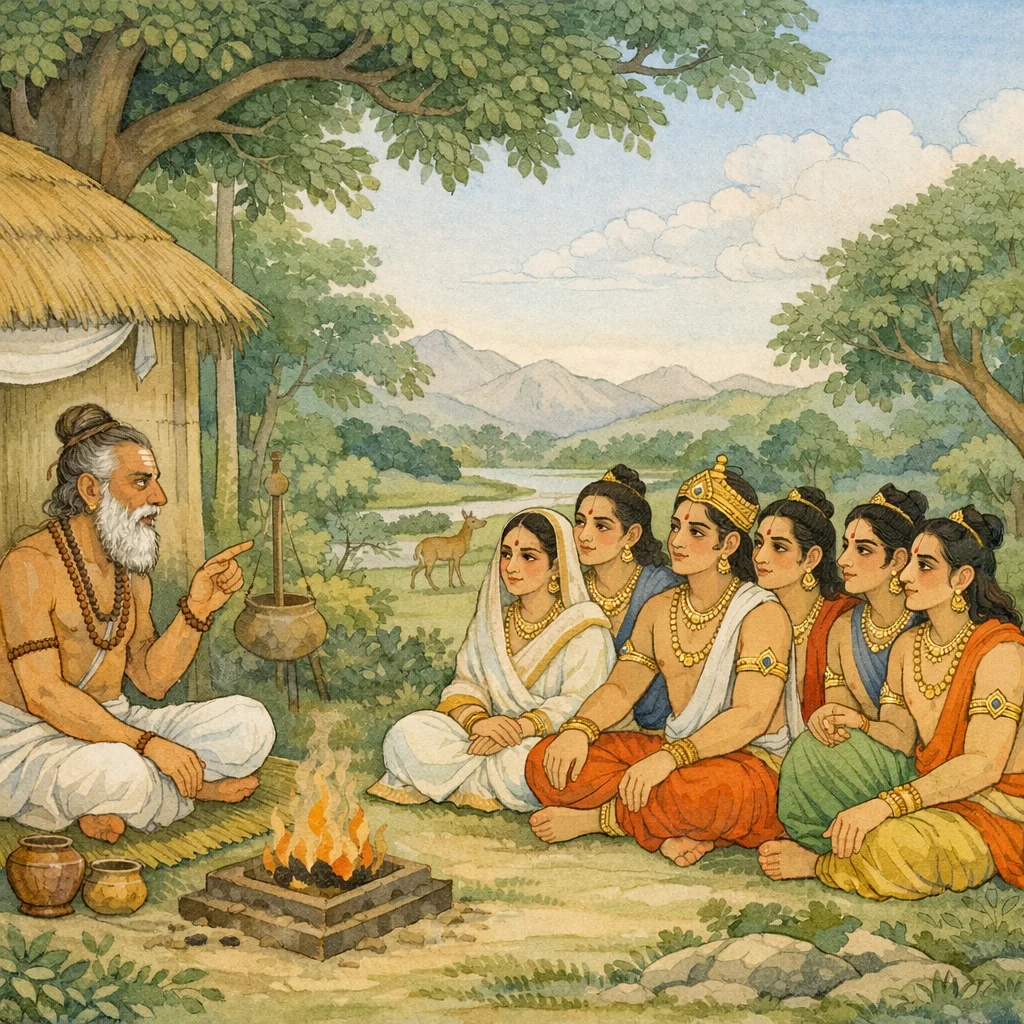
ततस्ते पाण्डवा: सर्वे सह कुन्त्या नरर्षभा: । उपासांचक्रिरे विप्रं कथयन्तं कथा: शुभा:,वह ब्राह्मण बड़ी सुन्दर एवं कल्याणमयी कथाएँ कह रहा था, (अतः उन्हें सुननेके लिये) सभी नरश्रेष्ठ पाण्डव माता कुन्तीके साथ उसके निकट जा बैठे
Then all the Pāṇḍavas—those best of men—together with Kuntī, drew near and sat in attendance upon the brāhmaṇa, who was recounting auspicious and uplifting tales.
Verse 6
कथयामास देशांक्ष॒ तीर्थानि सरितस्तथा । राज्ञश्न विविधाश्चर्यान देशांश्वैव पुराणि च,उसने अनेक देशों, तीर्थों, नदियों, राजाओं, नाना प्रकारके आश्वर्यजनक स्थानों तथा नगरोंका वर्णन किया
Vaiśampāyana said: He went on to describe many regions—along with their sacred fords and rivers—and also the kings, the various wondrous places found in those lands, and the ancient cities as well.
Verse 7
स तत्राकथयद् विप्र: कथान्ते जनमेजय । पज्चालेष्वद्धुताकारं याज्ञसेन्या: स्वयंवरम्,जनमेजय! बातचीतके अन्तमें उस ब्राह्मणने वहाँ यह भी बताया कि पंचालदेशमें यज्ञसेनकुमारी द्रौपदीका अद्भुत स्वयंवर होने जा रहा है
Vaiśampāyana said: Then, at the close of his account, the brāhmaṇa also related there to King Janamejaya that in the land of the Pāñcālas an extraordinary svayaṃvara of Yājñasenī (Draupadī), the daughter of King Yajñasena, was about to take place.
Verse 8
धृष्टद्युम्नस्य चोत्पत्तिमुत्पत्ति च शिखण्डिन: । अयोनिजत्वं कृष्णाया द्रुपदस्य महामखे,धृष्टद्यम्म और शिखण्डीकी उत्पत्ति तथा द्रुपदके महायज्ञमें कृष्णा (द्रौपदी)-का बिना माताके गर्भके ही (यज्ञकी वेदीसे) जन्म होना आदि बातें भी उसने कहीं
Vaiśampāyana said: He also recounted the birth of Dhṛṣṭadyumna and the birth of Śikhaṇḍin, and how Kṛṣṇā (Draupadī) was not born from a mother’s womb but arose directly from the sacrificial altar during King Drupada’s great rite—marvelous events that frame the later war as the outgrowth of divinely sanctioned destinies and the moral consequences of royal vows and enmities.
Verse 9
तदद्भुततमं श्रुत्वा लोके तस्य महात्मनः । विस्तरेणैव पप्रच्छु: कथान्ते पुरुषर्षभा:,उस महात्मा ब्राह्मणका इस लोकमें अत्यन्त अद्भुत प्रतीत होनेवाला यह वचन सुनकर कथाके अन्तमें पुरुषशिरोमणि पाण्डवोंने विस्तारपूर्वक जाननेके लिये पूछा
Hearing those words—deemed in the world to be most wondrous, spoken by that great-souled Brahmin—at the close of the narrative the bull-like best of men (the Pāṇḍavas) questioned him further, seeking a fuller and more detailed account.
Verse 10
पाण्डवा ऊचु. कथं ट्रुपदपुत्रस्य धृष्टद्युम्नस्प पावकात् । वेदीमध्याच्च कृष्णाया: सम्भव: क हक,पाण्डव बोले--द्रुपदपुत्र धृष्टद्युम्नका और कृष्णाका यज्ञवेदीके मध्यभागसे अद्भुत जन्म किस प्रकार हुआ?
The Pāṇḍavas asked: “How did Drupada’s son Dhṛṣṭadyumna arise from the sacrificial fire, and how did Kṛṣṇā (Draupadī) come into being from the very middle of the altar?”
Verse 11
कथं द्रोणान्महेष्वासात् सर्वाण्यस्त्राण्यशिक्षत | कथं विप्र सखायौ तौ भिन्नौ कस्य कृतेन वा,धष्टद्युम्नने महाधनुर्थर द्रोणसे सब अस्त्रोंकी शिक्षा किस प्रकार प्राप्त की? ब्रह्मन! ट्रपद और द्रोणमें किस प्रकार मैत्री हुई? और किस कारणसे उनमें वैर पड़ गया?
“And how did Dhṛṣṭadyumna learn all weapons from Droṇa, the great archer? O Brahmin, how did Drupada and Droṇa become friends, and for what reason did that friendship break apart and turn into enmity?”
Verse 12
वैशम्पायन उवाच एवं तैश्वोदितो राजन् स विप्र: पुरुषर्षभै: । कथयामास तत् सर्व द्रौपदीसम्भवं तदा,वैशम्पायनजी कहते हैं--राजन्! पुरुषशिरोमणि पाण्डवोंके इस प्रकार पूछनेपर आगन्तुक ब्राह्मणने उस समय द्रौपदीकी उत्पत्तिका सारा वृत्तान्त सुनाना आरम्भ किया
Vaiśampāyana said: “O King, thus questioned by those bull-like men among persons (the foremost heroes), that Brahmin then began to recount in full the entire account of Draupadī’s origin.”
Verse 164
इति श्रीमहाभारते आदिपर्वणि चैत्ररथपर्वणि द्रौपदीसम्भवे चतुःषष्ट्यधिकशततमो<ध्याय:
Thus ends the one-hundred-and-sixty-fourth chapter of the Ādi Parva of the Śrī Mahābhārata, within the Caitraratha section, in the episode concerning the birth (and emergence into the narrative) of Draupadī. This closing colophon marks the completion of the chapter and situates the account within its larger ethical and narrative frame.
Frequently Asked Questions
Whether a ruler’s coercive capacity legitimizes taking a sacred hermitage resource: Viśvāmitra frames acquisition as kṣatriya entitlement, while Vasiṣṭha treats Nandinī as non-alienable due to ritual and hospitality obligations.
The chapter contrasts external force with inner discipline: brahmatejas grounded in kṣamā and tapas can exceed military strength, and ethical authority is shown as a distinct modality of power.
No explicit phalaśruti is stated here; the meta-commentary is narrative: understanding the episode explains the etiological basis of the Viśvāmitra–Vasiṣṭha rivalry and models tapas as a pathway to transformed status and authority.