Adhyaya 161
Saṃvaraṇa’s Petition and Tapatī’s Conditioned Consent (सम्वरण-तपती संवादः)
Upa-parva: Saṃvaraṇa–Tapatī Upākhyāna (Episode of King Saṃvaraṇa and Tapatī)
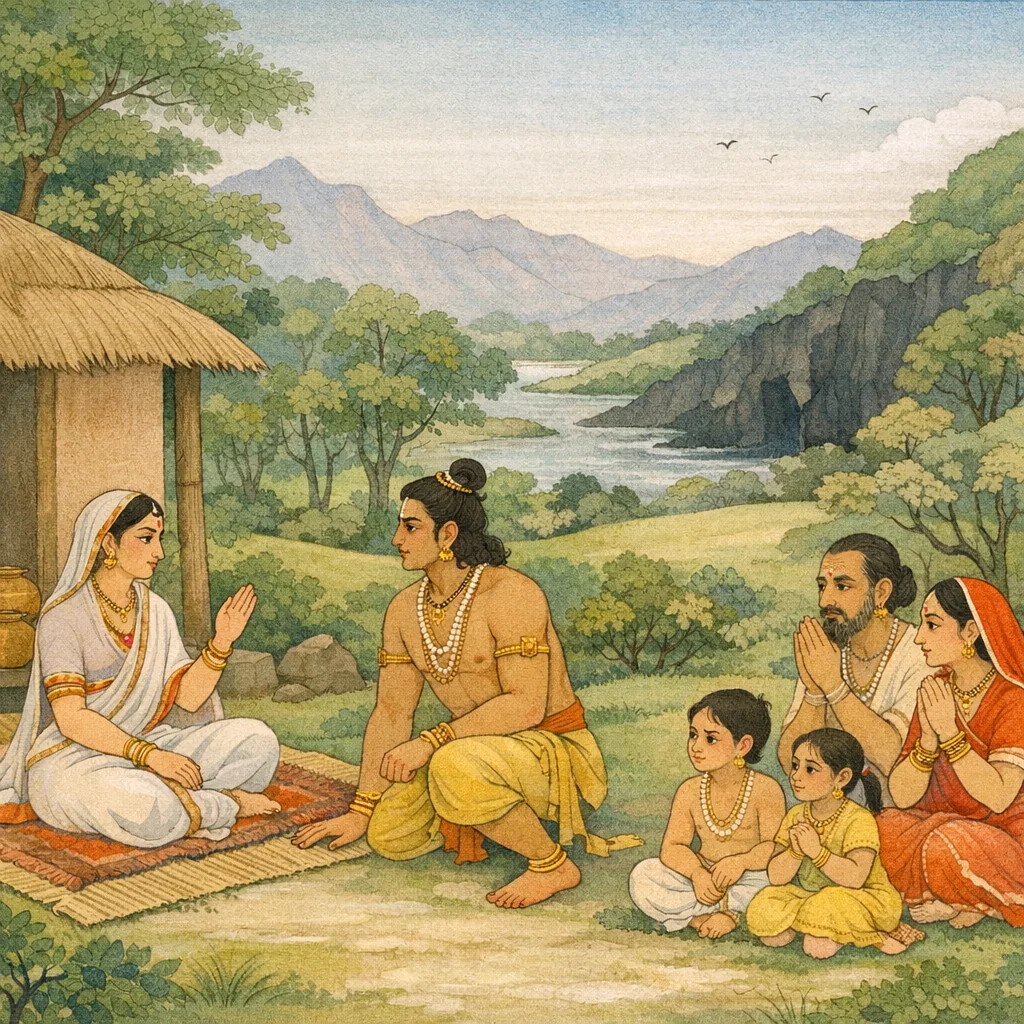
A Gandharva narrator describes King Saṃvaraṇa collapsing to the ground when Tapatī becomes momentarily unseen, portraying desire as a destabilizing force even for a capable ruler. Tapatī reappears, addresses the king with composed speech, and urges him to rise, rejecting public loss of self-command. Saṃvaraṇa, depicted as afflicted by Manmatha’s ‘fire,’ pleads for acceptance, proposes immediate union, and explicitly recommends the gāndharva form of marriage as superior. Tapatī responds with a normative constraint: she is a maiden under her father’s authority and not independent in bodily or social matters; if the king’s affection is genuine, he should petition her father, Savitṛ (Āditya), through reverence, austerity, and disciplined conduct. She affirms reciprocal attraction yet anchors legitimacy in paternal consent, thereby converting a private impulse into a socially validated alliance. The chapter closes with her self-identification as Tapatī, daughter of Savitṛ, clarifying divine lineage and the political-theological weight of the match for Kuru genealogy.
Chapter Arc: एक ब्राह्मण-गृहस्थ की विवश करुण पुकार—बकासुर को बलि देने की बारी फिर आ पहुँची है, और इस बार घर का एकमात्र बालक या तपस्विनी कन्या में से किसी को भेजना पड़ेगा। → कुन्ती ब्राह्मण से कहती है कि उसके पास तो केवल एक पुत्र और एक कन्या हैं; ऐसे में उनका जाना उचित नहीं। वह अपने पाँच पुत्रों का प्रस्ताव रखती है—उनमें से एक राक्षस के लिए बलि-रूप अन्न लेकर जाएगा। ब्राह्मण भय और पाप-बोध से काँप उठता है: ‘यदि मेरे कारण किसी ब्राह्मण का वध हुआ तो प्रायश्चित्त कहाँ?’ वह आत्मवध तक को श्रेयस्कर मानने लगता है, पर यह भी स्वीकारता है कि दूसरों के हाथों अनजाने में हुई मृत्यु का पाप अपने ऊपर नहीं लेना चाहता। → कुन्ती दृढ़ होकर आश्वासन देती है कि उसके पुत्रों ने पहले भी अनेक बलवान, महाकाय राक्षसों का संहार किया है; यह कार्य वे कर सकते हैं। अंततः कुन्ती और ब्राह्मण मिलकर वायुनन्दन भीमसेन से कहते हैं—‘तुम यह कार्य करो।’ भीम का ‘तथेत्य’ स्वीकार ही अध्याय का निर्णायक क्षण बनता है। → ब्राह्मण-परिवार की असहायता को कुन्ती की नीति, करुणा और आत्मविश्वास सहारा देता है; बलि का भार अब पाण्डव-गृह पर, विशेषतः भीम पर, स्थानांतरित हो जाता है। → भीम बकासुर के लिए नियत अन्न-बलि लेकर निकलने को तैयार है—अब सामना होगा राक्षस से, और निर्णय होगा कि भय का चक्र टूटेगा या नहीं।
Shlokas
Verse 1
(दाक्षिणात्य अधिक पाठके २ श्लोक मिलाकर कुल १९ श्लोक हैं) ऑपनआक्रात बछ। अर: अं षष्टर्याधेिकशततमो< ध्याय: कुन्ती और ब्राह्णकी बातचीत कुन्त्युवाच न विषादस्त्वया कार्यो भयादस्मात् कथंचन । उपाय: परिदृष्टो5त्र तस्मान्मोक्षाय रक्षस:,कुन्ती बोली--ब्रह्म! आपको अपने ऊपर आये हुए इस भयसे किसी प्रकार विषाद नहीं करना चाहिये। इस परिस्थितिमें उस राक्षससे छूटनेका उपाय मेरी समझमें आ गया
Kuntī said: “O Brahmin, you should not give way to despair on account of this fear in any manner. Here I have discerned a means by which you may be delivered from that rākṣasa.”
Verse 2
एकस्तव सुतो बाल: कन्या चैका तपस्विनी । न चैतयोस्तथा पत्न्या गमनं तव रोचये,आपके तो एक ही नन््हा-सा पुत्र और एक ही तपस्विनी कन्या है, अतः इन दोनोंका तथा आपकी पत्नीका भी वहाँ जाना मुझे अच्छा नहीं लगता
The brāhmaṇa said: “You have only one little son and only one daughter, a young ascetic. Therefore I do not approve of your going there—nor of taking these two children, nor your wife.”
Verse 3
मम पज्च सुता ब्रह्मंस्तेषामेको गमिष्यति । त्वदर्थ बलिमादाय तस्य पापस्य रक्षस:,कुन्तीद्वारा ब्राह्म॒ण-दम्पतिको सान्त्वना बकासुरपर भीमका प्रहार विप्रवर! मेरे पाँच पुत्र हैं, उनमेंसे एक आपके लिये उस पापी राक्षसकी बलि-सामग्री लेकर चला जायगा
The brāhmaṇa said: “O Brahmin, I have five sons; one of them will go. Carrying the offering meant for you, he will go to that sinful rākṣasa.”
Verse 4
ब्राह्मण उवाच नाहमेतत करिष्यामि जीवितार्थी कथंचन । ब्राह्मणस्यातिथेश्रैव स्वार्थ प्राणान् वियोजयन्,ब्राह्मणने कहा--मैं अपने जीवनकी रक्षाके लिये किसी तरह ऐसा नहीं करूँगा। एक तो ब्राह्मण, दूसरे अतिथिके प्राणोंका नाश मैं अपने तुच्छ स्वार्थके लिये कराऊँ! यह कदापि सम्भव नहीं है
The Brahmin said: “I will not do this in any way, even for the sake of saving my own life. For my petty self-interest, how could I cause the loss of life of a Brahmin—and moreover of a guest? That would be utterly impossible.”
Verse 5
न त्वेतदकुलीनासु नाथर्मिष्ठासु विद्यते । यद् ब्राह्मणार्थ विसृजेदात्मानमपि चात्मजम्,ऐसा निन्दनीय कार्य नीच और अधर्मी जनतामें भी नहीं देखा जाता। उचित तो यह है कि ब्राह्मणके लिये स्वयं अपनेको और अपने पुत्रको भी निछावर कर दे
The brāhmaṇa said: “Such conduct is not found even among the low-born, nor among the most unrighteous—that a person would abandon even his own life, and even his son, for the sake of a brāhmaṇa. To do so is blameworthy.”
Verse 6
आत्मनस्तु मया श्रेयो बोद्धव्यमिति रोचते । ब्रह्मवध्या55त्मवध्या वा श्रेयानात्मवधो मम,इसीमें मुझे अपना कल्याण समझना चाहिये तथा यही मुझे अच्छा लगता है। ब्रह्महत्या और आत्महत्यामें मुझे आत्महत्या ही श्रेष्ठ जान पड़ती है। ब्रह्महत्या बहुत बड़ा पाप है। इस जगत्में उससे छूटनेका कोई उपाय नहीं है। अनजानमें भी ब्रह्महत्या करनेकी अपेक्षा मेरी दृष्टिमें आत्महत्या कर लेना अच्छा है
The Brahmin said: “It seems to me that I should discern what is truly best for myself. Between the killing of a Brahmin and the killing of myself, I judge self-destruction to be the lesser course. Brahmin-slaying is a grievous sin, and in this world there is no easy release from it; therefore, even if the act were unintentional, I consider taking my own life preferable to incurring the guilt of Brahmin-murder.”
Verse 7
ब्रह्मवध्या परं पापं निष्कृतिनात्र विद्यते अबुद्धिपूर्व कृत्वापि वरमात्मवधो मम,इसीमें मुझे अपना कल्याण समझना चाहिये तथा यही मुझे अच्छा लगता है। ब्रह्महत्या और आत्महत्यामें मुझे आत्महत्या ही श्रेष्ठ जान पड़ती है। ब्रह्महत्या बहुत बड़ा पाप है। इस जगत्में उससे छूटनेका कोई उपाय नहीं है। अनजानमें भी ब्रह्महत्या करनेकी अपेक्षा मेरी दृष्टिमें आत्महत्या कर लेना अच्छा है
The Brahmin said: “The slaying of a Brahmin is the highest sin; in this world there is no expiation for it. Even if it were done without intent, I consider it better for me to take my own life. In my judgment, self-destruction is preferable to the burden of Brahmin-slaying, for Brahmin-murder is a grievous evil from which there is no release.”
Verse 8
न त्वहं वधमाकाडुक्षे स्वयमेवात्मन: शुभे | परै: कृते वधे पापं न किंचिन्मयि विद्यते,कल्याणि! मैं स्वयं तो आत्महत्याकी इच्छा करता नहीं; परंतु यदि दूसरोंने मेरा वध कर दिया तो उसके लिये मुझे कोई पाप नहीं लगेगा
The brāhmaṇa said: “O auspicious lady, I do not myself desire death—least of all self-destruction. But if others were to kill me, no sin would attach to me for that act.”
Verse 9
अभिसंधिकृते तस्मिन् ब्राह्मणस्य वधे मया । निष्कृतिं न प्रपश्यामि नृशंसं क्षुद्रमेव च,यदि मैंने जान-बूझकर ब्राह्मणका वध करा दिया तो वह बड़ा ही नीच और क्रूरतापूर्ण कर्म होगा। उससे छुटकारा पानेका कोई उपाय मुझे नहीं सूझता। घरपर आये हुए तथा शरणार्थीका त्याग और अपनी रक्षाके लिये याचना करनेवालेका वध--यह विद्दानोंकी रायमें अत्यन्त क्रूर एवं निन्दित कर्म है
The Brahmin said: “If I have deliberately contrived the killing of a Brahmin, it would be a base and brutally cruel deed. I can see no expiation for it. To abandon one who has come to one’s home, to forsake a person seeking refuge, and to kill one who begs for protection—such acts, in the judgment of the learned, are exceedingly cruel and blameworthy.”
Verse 10
आगततस्य गृहं त्यागस्तथैव शरणार्थिन: । याचमानस्य च वधो नृशंसो गर्हितो बुधै:,यदि मैंने जान-बूझकर ब्राह्मणका वध करा दिया तो वह बड़ा ही नीच और क्रूरतापूर्ण कर्म होगा। उससे छुटकारा पानेका कोई उपाय मुझे नहीं सूझता। घरपर आये हुए तथा शरणार्थीका त्याग और अपनी रक्षाके लिये याचना करनेवालेका वध--यह विद्दानोंकी रायमें अत्यन्त क्रूर एवं निन्दित कर्म है
The brāhmaṇa said: “To turn away one who has come to one’s house, and likewise to abandon a person seeking refuge; and to kill one who begs for protection—such acts are cruel and condemned by the wise.”
Verse 11
कुर्यान्न निन्दितं कर्म न नृशंसं कथंचन । इति पूर्वे महात्मान आपद्धर्मविदो विदु:,आपद्धर्मके ज्ञाता प्राचीन महात्माओंने कहा है कि किसी प्रकार भी क्रूर एवं निन्दित कर्म नहीं करना चाहिये। अतः आज अपनी पत्नीके साथ स्वयं मेरा विनाश हो जाय, यह श्रेष्ठ है; किंतु ब्राह्यणवधकी अनुमति मैं कदापि नहीं दे सकता
The brāhmaṇa said: “One should never perform a blameworthy deed, nor any cruel act, under any circumstances. Thus have the ancient great-souled ones—knowers of dharma in times of calamity—declared. Therefore, even if I perish today together with my wife, that is better; but I can never give consent to the killing of a brāhmaṇa.”
Verse 12
श्रेयांस्तु सहदारस्य विनाशो5द्य मम स्वयम् । ब्राह्मणस्य वधं नाहमनुमंस्थे कदाचन,आपद्धर्मके ज्ञाता प्राचीन महात्माओंने कहा है कि किसी प्रकार भी क्रूर एवं निन्दित कर्म नहीं करना चाहिये। अतः आज अपनी पत्नीके साथ स्वयं मेरा विनाश हो जाय, यह श्रेष्ठ है; किंतु ब्राह्यणवधकी अनुमति मैं कदापि नहीं दे सकता
The Brahmin said: “Better, indeed, that I myself perish today together with my wife; for I can never, under any circumstance, consent to the killing of a Brahmin. The ancient great-souled authorities, who knew the dharma for times of distress, have declared that one should not commit cruel and blameworthy acts in any way.”
Verse 13
कुन्त्युवाच ममाप्येषा मतिर्ब्रह्मन् विप्रा रक्ष्या इति स्थिरा | न चाप्यनिष्ट: पुत्रो मे यदि पुत्रशतं भवेत्,कुन्ती बोली--ब्रह्मन! मेरा भी यह स्थिर विचार है कि ब्राह्मणोंकी रक्षा करनी चाहिये। यों तो मुझे भी अपना कोई पुत्र अप्रिय नहीं है, चाहे मेरे सौ पुत्र ही क्यों न हों। किंतु वह राक्षस मेरे पुत्रका विनाश करनेमें समर्थ नहीं है; क्योंकि मेरा पुत्र पराक्रमी, मन्त्रसिद्ध और तेजस्वी है
Kuntī said: “O Brahmin, I too hold this firm conviction: the Brahmins must be protected. Nor is any son of mine unwelcome to me, even if I were to have a hundred sons.”
Verse 14
न चासौ राक्षस: शक्तो मम पुत्रविनाशने । वीर्यवान् मन्त्रसिद्धश्न तेजस्वी च सुतो मम,कुन्ती बोली--ब्रह्मन! मेरा भी यह स्थिर विचार है कि ब्राह्मणोंकी रक्षा करनी चाहिये। यों तो मुझे भी अपना कोई पुत्र अप्रिय नहीं है, चाहे मेरे सौ पुत्र ही क्यों न हों। किंतु वह राक्षस मेरे पुत्रका विनाश करनेमें समर्थ नहीं है; क्योंकि मेरा पुत्र पराक्रमी, मन्त्रसिद्ध और तेजस्वी है
The brāhmaṇa said: “That rākṣasa is not capable of destroying my son. My son is a man of valor, accomplished through mantras, and radiant in power.” In context, the statement affirms that protecting the vulnerable—especially brāhmaṇas—is dharma; righteous guardianship need not collapse into fear, for spiritual discipline and heroic strength together can withstand violent threat.
Verse 15
राक्षसाय च ततू सर्व प्रापयिष्यति भोजनम् | मोक्षयिष्यति चात्मानमिति मे निश्चिता मति:,मेरा यह निश्चित विश्वास है कि वह सारा भोजन राक्षसके पास पहुँचा देगा और उससे अपने-आपको भी छुड़ा लेगा
I am firmly convinced that he will deliver all this food to the rākṣasa, and by doing so he will also secure his own release.
Verse 16
समागताश्च वीरेण दृष्टपूर्वाश्व॒ राक्षसा: | बलवन्तो महाकाया निहताश्षाप्पनेकश:,मैंने पहले भी बहुत-से बलवान् और विशालकाय राक्षस देखे हैं, जो मेरे वीर पुत्रसे भिड़कर अपने प्राणोंसे हाथ धो बैठे हैं
I have already seen many rākṣasas—mighty and huge of body—who came forward to confront that hero; time and again they were struck down, meeting their end when they clashed with him.
Verse 17
न त्विदं केषुचिद् ब्रह्मन् व्याहर्तव्यं कथंचन । विद्यार्थिनो हि मे पुत्रान् विप्रकुर्य: कुतूहलात्,परंतु ब्रह्म] आपको किसीसे भी किसी तरह यह बात कहनी नहीं चाहिये। नहीं तो लोग मन्त्र सीखनेके लोभसे कौतूहलवश मेरे पुत्रोंको तंग करेंगे
But, O Brahmin, this matter should not be spoken of to anyone in any way. Otherwise, students seeking knowledge, out of curiosity and desire to learn, would trouble and harass my sons.
Verse 18
गुरुणा चाननुज्ञातो ग्राहयेद् यत् सुतो मम । न स कुर्यात् तथा कार्य विद्ययेति सतां मतम्,और यदि मेरा पुत्र गुरुकी आज्ञा लिये बिना अपना मन्त्र किसीको सिखा देगा तो वह सीखनेवाला मनुष्य उस मन्त्रसे वैसा कार्य नहीं कर सकेगा, जैसा मेरा पुत्र कर लेता है। इस विषयमें साधु पुरुषोंका ऐसा ही मत है
The brāhmaṇa said: “If my son, without first obtaining his teacher’s permission, were to teach his mantra to someone, then the one who learns it would not be able to accomplish with that mantra the same effective result that my son can. Such is the considered view of the virtuous.”
Verse 19
एवमुक्तस्तु पृथया स विप्रो भार्यया सह । हृष्ट: सम्पूजयामास तद्वाक्यममृतोपमम्,कुन्तीदेवीके यों कहनेपर पत्नीसहित वह ब्राह्मण बहुत प्रसन्न हुआ और उसने कुन्तीके अमृत-तुल्य जीवनदायक मधुर वचनोंकी बड़ी प्रशंसा की
Thus addressed by Pṛthā (Kuntī), the brāhmaṇa, together with his wife, became delighted. He warmly honored and praised her words, which were like nectar—life-giving, gentle, and strengthening to dharma—able to console and uplift those in distress.
Verse 20
ततः कुन्ती च विप्रश्न सहितावनिलात्मजम् | तमब्रूतां कुरुष्वेति स तथेत्यब्रवीच्च तौ,तदनन्तर कुन्ती और ब्राह्मणने मिलकर वायु-नन्दन भीमसेनसे कहा--“तुम यह काम कर दो।” भीमसेनने उन दोनोंसे “तथास्तु' कहा
Then Kuntī and the brāhmaṇa, acting together, addressed Bhīmasena, the son of Vāyu: “Do this task.” Bhīma assented to them both, replying, “So be it,” and accepted the duty set before him.
Verse 159
इस प्रकार श्रीमह्याभारत आदिपर्वके अन्तर्गत बकवधपर्वमें कुन्तीप्रश्नविषयक एक सौ उनसठवाँ अध्याय पूरा हुआ
Thus ends the one hundred and fifty-ninth chapter on Kuntī’s inquiry, within the Baka-slaying section of the Ādi Parva of the revered Mahābhārata. The closing note marks a transition, pausing the narrative frame to signal the completion of this thematic unit.
Verse 160
)॥ $ । 7 ; इति श्रीमहाभारते आदिपर्वणि बकवधपर्वणि भीमबकवधाड्रीकारे षष्ट्यधिकशततमो< ध्याय:,इस प्रकार श्रीमहाभारत आदिपव॑ीके अन्तर्गत बकवधपर्वमें भीमके द्वारा बकवधकी स्वीकृतिविषयक एक सौ साठवाँ अध्याय पूरा हुआ
Thus ends the one-hundred-and-sixtieth chapter of the Ādi Parva of the Śrī Mahābhārata, within the episode of the slaying of Baka—specifically, the section describing Bhīma’s acceptance of the task of killing Baka. The chapter closes by marking the completion of this narrative unit and highlighting Bhīma’s resolve to protect the afflicted community.
Frequently Asked Questions
The tension is between immediate personal desire and the requirement for socially sanctioned union: whether attraction justifies direct elopement-like action or must be routed through lawful guardianship and consent.
Self-mastery and procedural legitimacy are portrayed as components of dharma: even intense emotion should be disciplined and aligned with recognized norms to preserve personal dignity and public order.
No explicit phalaśruti appears in this unit; its meta-function is genealogical and normative—clarifying lineage (Tapatī as Savitṛ’s daughter) and encoding marriage legitimacy as a prerequisite for dynastic continuity.