Adhyaya 160
तापती–संवरणोपाख्यानम् (The Tapatī–Saṃvaraṇa Episode: Meaning of “Tāpatya”)
Upa-parva: Sambhava Upaparva (Genealogies and Early Kuru Narratives)
Arjuna asks the Gandharva to clarify the meaning of the term “tāpatya” and who Tapatī is. Vaiśaṃpāyana introduces the Gandharva’s response, framing it as a well-known narrative. The Gandharva explains that Tapatī is the unsurpassed daughter of Vivasvān (Sūrya), renowned across the three worlds for austerity and impeccable virtues, unlike any being classified as deva, asura, yakṣī, rākṣasī, apsaras, or gandharvī. Sūrya, considering an appropriate husband, recognizes King Saṃvaraṇa (a Kuru ruler) as fitting due to his gratitude, dharmic conduct, and exceptional reputation; Saṃvaraṇa is portrayed as devoted to solar worship through offerings, vows, fasting, and disciplined service. During a hunt in a mountain grove, Saṃvaraṇa’s horse dies; proceeding on foot, he encounters an incomparable maiden whose presence renders the landscape radiant. Overwhelmed by attraction and wonder, he addresses her with questions about identity and circumstance, but she does not reply and vanishes like lightning amid clouds. The king searches in distress, lamenting and becoming momentarily immobilized—closing the chapter on the psychological impact of desire and the narrative setup for the ensuing union.
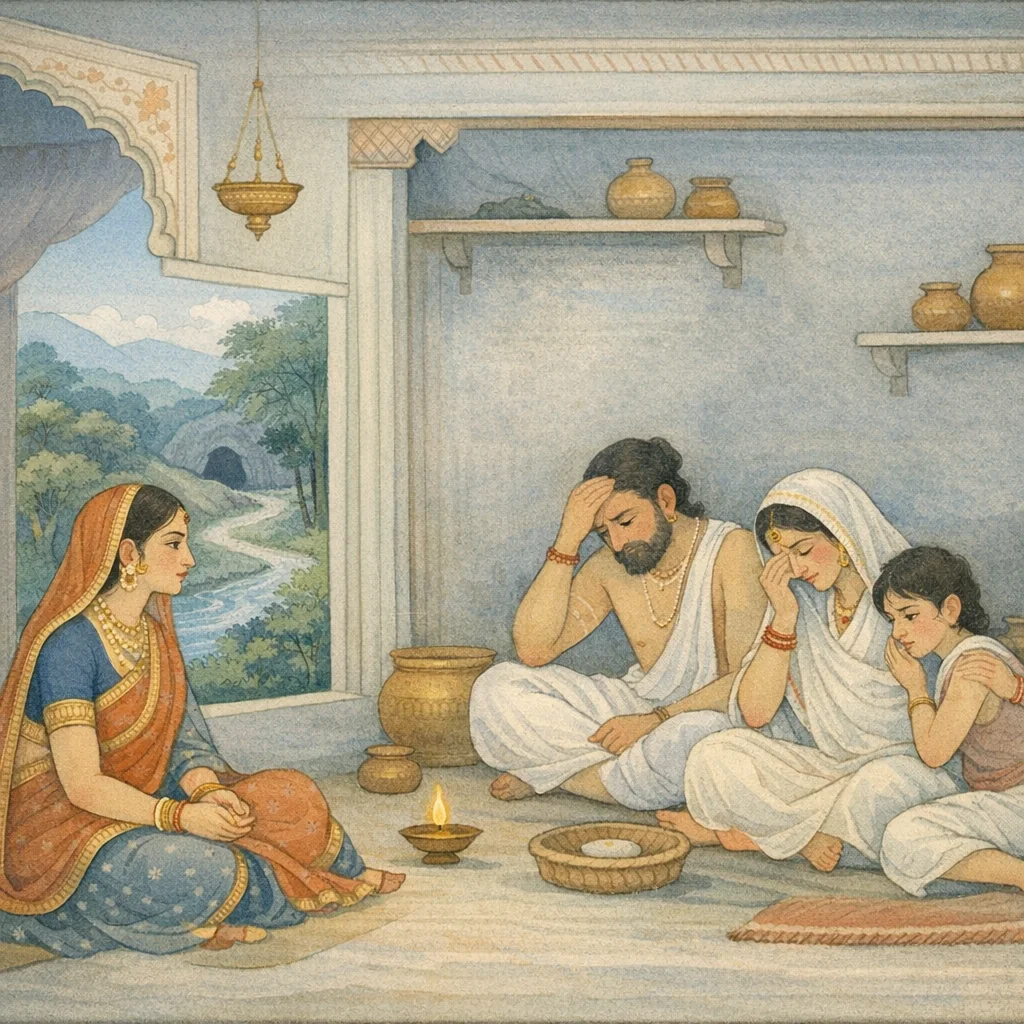
Chapter Arc: एकचक्रा नगरी में अतिथि-धर्म निभाते हुए कुन्ती ब्राह्मण-परिवार के घर ठहरी हैं; उनके घर में असामान्य शोक और भय देखकर कुन्ती पूछती हैं—“इस दुःख का मूल क्या है?” → ब्राह्मण बताता है कि नगर के निकट यमुना-तट की गुफा में बक नामक राक्षस रहता है—मानुष-मांस से पुष्ट, जनपद का स्वामी-सा, जो नगर और देश को अपने आतंक से ‘रक्षा’ करता है; बदले में वह नियमित रूप से मनुष्य-बलि और अन्न-कर लेता है। नगर भय से जकड़ा है, कोई त्राता नहीं। → ब्राह्मण अपनी विवशता का चरम निर्णय सुनाता है: नीति कहती है पहले राजा, फिर पत्नी, फिर धन—पर उसने उलटा पाया; अब इस आपदा में वह अपने बान्धवों सहित स्वयं राक्षस के पास जाकर बलि बनने को तैयार है, ताकि परिवार/कुटुम्ब बच सके। → कुन्ती के प्रश्न के उत्तर में संकट का पूरा स्वरूप स्पष्ट हो जाता है—बकासुर का अत्याचार, नगर की असहायता, और ब्राह्मण का आत्म-बलिदान का निश्चय; अध्याय का अंत इसी उद्घाटन और निर्णय पर टिकता है। → कुन्ती इस भयावह व्यवस्था को सुनकर क्या उपाय करेगी—क्या वह अपने पुत्र भीम को आगे करेगी या ब्राह्मण को रोक पाएगी?
Shlokas
Verse 1
ऑपनआक्रात छा सं: एकोनषष्टर्याधेकशततमो< ध्याय: कुन्तीके पूछनेपर ब्राह्णका उनसे अपने दुःखका कारण बताना कुन्त्युवाच कुतोमूलमिदं दु:खं ज्ञातुमिच्छामि तत्त्वत: । विदित्वाप्यपकर्षेयं शक््यं चेदपकर्षितुम्,कुन्तीने पूछा--ब्रह्मम! आपलोगोंके इस दुःखका कारण क्या है? मैं यह ठीक-ठीक जानना चाहती हूँ। उसे जानकर यदि मिटाया जा सकेगा तो मिटानेकी चेष्टा करूँगी
Kuntī said: “From what root does this sorrow arise? I wish to know it in its true nature. And having understood it, if it can be removed, I will strive to remove it.”
Verse 2
ब्राह्मण उवाच उपपन्नं सतामेतद् यद् ब्रवीषि तपोधने । न तु दुःखमिदं शक्यं मानुषेण व्यपोहितुम्,ब्राह्मणने कहा--तपोधने! आप जो कुछ कह रही हैं, वह आप-जैसे सज्जनोंके अनुरूप ही है; परंतु हमारे इस दुःखको मनुष्य नहीं मिटा सकता
The brāhmaṇa said: “What you say, O woman rich in austerity, is indeed fitting for the virtuous. Yet this sorrow of ours cannot be removed by any mere human effort.”
Verse 3
समीपे नगरस्यास्य बको वसति राक्षस: । (इतो गव्यूतिमात्रेडस्ति यमुनागद्नरे गुहा । तस्यां घोर: स वसति जिधघांसु: पुरुषादक: ।।) ईशो जनपदस्यास्य पुरस्थ च महाबल:,इस नगरके पास ही यहाँसे दो कोसकी दूरीपर यमुनाके किनारे घने जंगलमें एक गुफा है, उसीमें एक भयंकर हिंसाप्रिय नरभक्षी राक्षस रहता है। उसका नाम है बक। वह राक्षस अत्यन्त बलवान् है। वही इस जनपद और नगरका स्वामी है। वह खोटी बुद्धिवाला मनुष्यभक्षी राक्षस मनुष्यके ही मांससे पुष्ट हुआ है। उस दुरात्मा नरभक्षी निशाचरद्वारा प्रतिदिन खायी जाती हुई यह नगरी अनाथ हो रही है। इसे कोई रक्षक या स्वामी नहीं मिल रहा है। राक्षसोचित-बलसे सम्पन्न वह शक्तिशाली असुरराज सदा इस जनपद, नगर और देशकी रक्षा करता है। उसके कारण हमें शत्रुराज्यों तथा हिंसक प्राणियोंसे कभी भय नहीं होता
The brāhmaṇa said: “Near this city there lives a rākṣasa named Baka. Not far from here—about a gavyūti away—on the bank of the Yamunā, in a dense forest, there is a cave; in that cave dwells that dreadful being, eager to kill, a man-eater. He is exceedingly powerful and acts as the master of this district and of the city. The people endure his predation day after day, and the city is becoming helpless, as if without a protector. Yet, by the sheer force typical of rākṣasas, he also keeps other enemies and violent creatures at bay, so the land lives in fearful dependence upon a cruel guardian.”
Verse 4
पुष्टो मानुषमांसेन दुर्बुद्धि: पुरुषादक: । (तेनेयं पुरुषादेन भक्ष्यमाणा दुरात्मना । अनाथा नगरी नाथं त्रातारं नाधिगच्छति ।।) रक्षत्यसुरराण्नित्यमिमं जनपदं बली,इस नगरके पास ही यहाँसे दो कोसकी दूरीपर यमुनाके किनारे घने जंगलमें एक गुफा है, उसीमें एक भयंकर हिंसाप्रिय नरभक्षी राक्षस रहता है। उसका नाम है बक। वह राक्षस अत्यन्त बलवान् है। वही इस जनपद और नगरका स्वामी है। वह खोटी बुद्धिवाला मनुष्यभक्षी राक्षस मनुष्यके ही मांससे पुष्ट हुआ है। उस दुरात्मा नरभक्षी निशाचरद्वारा प्रतिदिन खायी जाती हुई यह नगरी अनाथ हो रही है। इसे कोई रक्षक या स्वामी नहीं मिल रहा है। राक्षसोचित-बलसे सम्पन्न वह शक्तिशाली असुरराज सदा इस जनपद, नगर और देशकी रक्षा करता है। उसके कारण हमें शत्रुराज्यों तथा हिंसक प्राणियोंसे कभी भय नहीं होता
The brāhmaṇa said: “He is a man-eater, nourished on human flesh, and of wicked understanding. By that evil-souled cannibal this city is being devoured day after day; it has become as if without a protector, finding neither lord nor savior. Yet that mighty lord of the asuras continually ‘protects’ this district—so that, because of him, we are not afraid of enemy kings or violent creatures, even while we ourselves are consumed.”
Verse 5
नगरं चैव देशं च रक्षोबलसमन्वित: । तत्कृते परचक्राच्च भूतेभ्यश्व न नो भयम्,इस नगरके पास ही यहाँसे दो कोसकी दूरीपर यमुनाके किनारे घने जंगलमें एक गुफा है, उसीमें एक भयंकर हिंसाप्रिय नरभक्षी राक्षस रहता है। उसका नाम है बक। वह राक्षस अत्यन्त बलवान् है। वही इस जनपद और नगरका स्वामी है। वह खोटी बुद्धिवाला मनुष्यभक्षी राक्षस मनुष्यके ही मांससे पुष्ट हुआ है। उस दुरात्मा नरभक्षी निशाचरद्वारा प्रतिदिन खायी जाती हुई यह नगरी अनाथ हो रही है। इसे कोई रक्षक या स्वामी नहीं मिल रहा है। राक्षसोचित-बलसे सम्पन्न वह शक्तिशाली असुरराज सदा इस जनपद, नगर और देशकी रक्षा करता है। उसके कारण हमें शत्रुराज्यों तथा हिंसक प्राणियोंसे कभी भय नहीं होता
The brāhmaṇa said: “Endowed with the might proper to a rākṣasa, he ‘protects’ this town, this district, and the whole region. Because of him, we have no fear from hostile kingdoms or invading armies, nor from wild creatures.”
Verse 6
वेतनं तस्य विहितं शालिवाहस्य भोजनम् । महिषौ पुरुषश्लैको यस्तदादाय गच्छति,उसके लिये कर नियत किया गया है--बीस खारी अगहनीके चावलका भात, दो भैंसे और एक मनुष्य, जो वह सब सामान लेकर उसके पास जाता है
The brāhmaṇa said: “For him, the stipulated payment has been fixed: food for Śālivāha—namely a meal of autumn-harvest rice—together with two buffaloes and one man, to be delivered by whoever takes all these items and goes to him.”
Verse 7
एकैकश्चापि पुरुषस्तत् प्रयच्छति भोजनम् । स वारो बहुभिरवर्षैर्भवत्यसुकरो नरैः,प्रत्येक गृहस्थ अपनी बारी आनेपर उसे भोजन देता है। यद्यपि यह बारी बहुत वर्षोंके बाद आती है, तथापि लोगोंके लिये उसकी पूर्ति बहुत कठिन होती है
Each householder, one by one, provides him with food when his turn arrives. Yet that turn comes only after many years, and even then its fulfillment proves difficult for people—showing how hard it is for ordinary men to sustain a long-standing obligation of charity and hospitality.
Verse 8
तद्विमोक्षाय ये केचिद् यतन्ति पुरुषा: क्वचित् । सपुत्रदारांस्तान् हत्वा तद् रक्षो भक्षयत्युत,जो कोई पुरुष कभी उससे छूटनेका प्रयत्न करते हैं, वह राक्षस उन्हें पुत्र और सत्रीसहित मारकर खा जाता है
Some men, at times, attempt to free themselves from that peril. Yet that rākṣasa kills them—together with their sons and wives—and then devours them. The statement underscores the terror of the situation: escape is not merely difficult but invites catastrophic harm to one’s entire household.
Verse 9
वेत्रकीयगृहे राजा नायं नयमिहास्थित: । उपायं तं॑ न कुरुते यत्नादपि स मन्दधी: । अनामयं जनस्यास्य येन स्यादद्य शाश्वतम्,वास्तवमें जो यहाँका राजा है, वह वेत्रकीयगृह नामक स्थानमें रहता है। परंतु वह न्यायके मार्गपर नहीं चलता। वह मन्दबुद्धि राजा यत्न करके भी ऐसा कोई उपाय नहीं करता, जिससे सदाके लिये प्रजाका संकट दूर हो जाय
The king resides in a place called Vetrakīya-gṛha, yet he does not stand upon the path of justice. Dull-witted, he does not—despite effort—devise any measure by which the people’s distress might be removed and their welfare secured in a lasting way. The Brahmin’s words frame kingship as a moral office: rule is judged not by residence or power, but by active commitment to nyāya and the enduring well-being of subjects.
Verse 10
एतदर्हा वयं नूनं वसामो दुर्बलस्य ये । विषये नित्यवास्तव्या: कुराजानमुपाश्रिता:,निश्चय ही हमलोग ऐसा ही दुःख भोगनेके योग्य हैं; क्योंकि इस दुर्बल राजाके राज्यमें निवास करते हैं, यहाँके नित्य निवासी हो गये हैं और इस दुष्ट राजाके आश्रयमें रहते हैं
Surely we deserve this suffering, for we live under a weak ruler. We have become permanent residents in his realm, and we subsist under the protection of a wicked king—therefore such misery has befallen us.
Verse 11
ब्राह्मणा: कस्य वक्तव्या: कस्य वाच्छन्दचारिण: । गुणैरेते हि वत्स्यन्ति कामगा: पक्षिणो यथा,ब्राह्यगोंको कौन आदेश दे सकता है अथवा वे किसके अधीन रह सकते हैं। ये तो इच्छानुसार विचरनेवाले पक्षियोंकी भाँति देश या राजाके गुण देखकर ही कहीं भी निवास करते हैं
The brāhmaṇas—who can command them, and under whose control can they truly be? Like birds that fly where they please, they choose their dwelling by discerning the qualities of a land or a king, and settle wherever virtue and good conduct are found.
Verse 12
राजानं प्रथम विन्देत् ततो भार्या ततो धनम् | त्रयस्य संचयेनास्य ज्ञातीन् पुत्रांश्व तारयेत्,नीति कहती है, पहले अच्छे राजाको प्राप्त करे। उसके बाद पत्नीकी और फिर धनकी उपलब्धि करे। इन तीनोंके संग्रहद्वारा अपने जाति-भाइयों तथा पुत्रोंकी संकटसे बचाये
The brāhmaṇa said: “One should first secure a worthy king (good governance and protection); next, a wife (the ordered household life); and then wealth. By gathering these three, a person should safeguard and carry across his kinsmen and his sons from distress.”
Verse 13
विपरीतं मया चेदं त्रयं सर्वमुपार्जितम् । तदिमामापदं प्राप्य भृशं तप्यामहे वयम्,मैंने इन तीनोंका विपरीत ढंगसे उपार्जन किया है (अर्थात् दुष्ट राजाके राज्यमें निवास किया, कुराज्यमें विवाह किया और विवाहके पश्चात् धन नहीं कमाया); इसलिये इस विपत्तिमें पड़कर हमलोग भारी कष्ट पा रहे हैं
The brāhmaṇa said: “I have acquired all these three in a perverse, improper way. Therefore, having fallen into this calamity, we are burning with intense distress.”
Verse 14
सो<5यमस्माननुप्राप्तो वार: कुलविनाशन: । भोजन पुरुषश्वैक: प्रदेयं वेतन॑ मया,वही आज हमारी बारी आयी है, जो समूचे कुलका विनाश करनेवाली है। मुझे उस राक्षसको करके रूपमें नियत भोजन और एक पुरुषकी बलि देनी पड़ेगी
“Now our turn has come—this dreadful turn that brings ruin upon an entire family line. I must deliver to that man-eating fiend the fixed due: the appointed food, and the sacrifice of one man.”
Verse 15
नच मे विद्यते वित्तं संक्रेतुं पुरुष क्वचित् । सुहृज्जनं प्रदातुं च न शक्ष्यामि कदाचन,मेरे पास धन नहीं है, जिससे कहींसे किसी पुरुषको खरीद लाऊँ। अपने सुहृदों एवं सगे-सम्बन्धियोंको तो मैं कदापि उस राक्षसके हाथमें नहीं दे सकूँगा
The brāhmaṇa said: “I have no wealth by which I could purchase a man from anywhere. And I will never be able to hand over my friends and kinsmen into that rākṣasa’s hands.”
Verse 16
गतिं चैव न पश्यामि तस्मान्मोक्षाय रक्षस: । सो<हं दुःखार्णवे मग्नो महत्यसुकरे भूशम्,उस निशाचरसे छूटनेका कोई उपाय मुझे नहीं दिखायी देता; अतः मैं अत्यन्त दुस्तर दुःखके महासागरमें डूबा हुआ हूँ
The brāhmaṇa said: “I see no course of action—no way at all—by which I might be freed from this rākṣasa. Therefore I am sunk in an ocean of sorrow, overwhelmed by a great and grievous distress that is hard to endure.”
Verse 17
सहैवैतैर्गमिष्यामि बान्धवैरद्य राक्षसम् । ततो नः सहितान् क्षुद्र: सर्वानिवोपभोक्ष्यति,अब इन बान्धवजनोंके साथ ही मैं राक्षसके पास जाऊँगा; फिर वह नीच निशाचर एक ही साथ हम सबको खा जायगा
I will go today to the rākṣasa together with these very kinsmen. Then that vile night-roamer will devour us all at once, united as we are.
Verse 159
इति श्रीमहाभारते आदिपर्वणि बकवधपर्वणि कुन्तीप्रश्ने एकोनषष्ट्यधिकशततमो<ध्याय:
Thus, in the Śrī Mahābhārata, within the Ādi Parva—specifically in the section concerning the slaying of Baka—during the episode of Kuntī’s inquiry, ends the one-hundred-and-fifty-ninth chapter (the 159th adhyāya).
Frequently Asked Questions
The chapter stages a tension between disciplined kingship (devotion, vows, public virtue) and the destabilizing immediacy of desire: Saṃvaraṇa’s composure and purpose are disrupted by an encounter that produces fixation and loss of agency.
Merit and legitimacy are depicted as cumulative—built through conduct, restraint, and devotion—yet the text also documents how powerful affect (kāma) can eclipse rational deliberation, requiring ethical regulation rather than denial.
No explicit phalaśruti appears here; the meta-function is etiological and genealogical—explaining an epithet (“Tāpatya”) and embedding a dynastic alliance within a cosmological lineage framework.